


Likes
Comments
Share


@GoodTimesOrganics
Follow
Welcome Back!💚
Nach der achten Blütewoche ist der Kampfzwerg allmählich fertig!
Der Trichomcheck, zeigt dass so ziemlich alle Trichome milchig sind. Nur die Bernstein Farben sind mir noch zu wenig, daher bleibt sie noch eine Woche stehen.
Sie zeigt ein schönes Blütenbild für ihr Größe. Die Buds wurden doch nochmal dicker und sind richtig fest und Kompakt.
Ihr frisches, säuerliches Aroma hat nochmal etwas an Susezdazu bekommen.
Für die Wachstumsdauert und das bisherige Resultat allerdings muss ich mich schon fragen, ob dass die Mühe Wert ist.
Schauen wir Mal wie das Geschmacksprofil sich nachher Kennzeichnet.
Die Umgebungsgegebenheiten sind richtig Hot und gerade top für die Endblüte.
—————
🌞 Temp: 27°C
🌚 Temp: 18°C bis 19°C
💨 RH: 49%
VPD: 1,42 kPa
😎 PPfD: 830 mqm
—————
Viele Grüße 👋
Likes
51
Share


@Coughy
Follow
Day 57- Did a light defoliation.
RO water at 66 PPM.
Running until more Ambers pop.
Day 58- checked trichromes, ambers are showing up in clumps, I’d say about 15-20% amber trichs at the moment. PPM 55.
Day 60: 4-5 day flush brings me to harvest. Cut down both plants, light trim of larger fan leaves and placed in tent.
I used 2 scrog nets to hang the buds, worked ok, need to make tighter next time... too much droops!
So far,
First 24 hours of tent at 68 F and 70% humidity.
At 48 hours 67F and reduced to 60% humidity
At 72 hours 69 F and reduced to 55% humidity, maintaining till dry.
Trying to get temps a little lower but no A/C...
Trying to stretch drying time close to 14 days. Anything after 7 and I’m happy.

Likes
17
Share

@TrickzGrowz
Follow
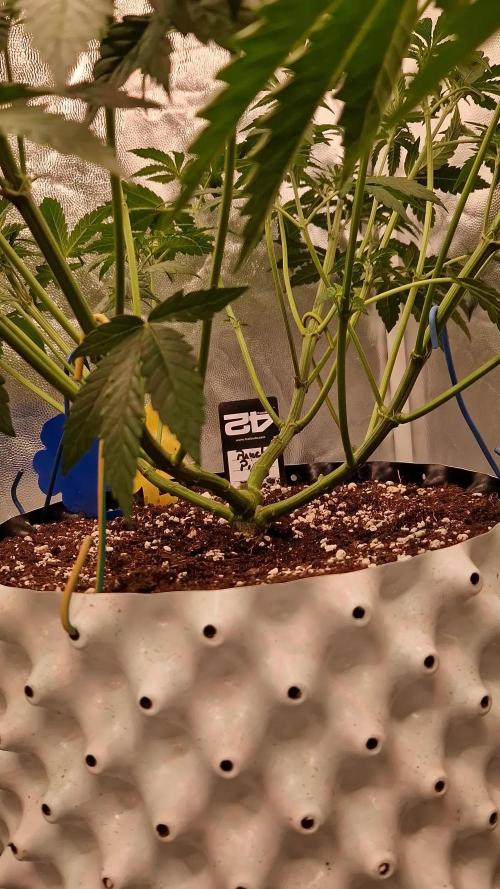
Die Punch Pie beginnt langsam mit dem Stretch. Sehr viele Triebe die sich ausgebildet haben. Ich bin mega zufrieden.

Likes
4
Share

@DogDoctorOfficial
Follow
# 💙 Project Blue Tent – Week 12
## 🥒 Pickle Lemon Haze F1 – Pheno B
### 🌸 Another Girl, Another Story, Another Ridiculously Frosty Week! ❄️📸
Hello everyone, and welcome back to another chapter of Project Blue Tent! 💙🌱
And honestly, my friends...
WHAT IS HAPPENING INSIDE THIS TENT?! 😂❄️
Every week, I think we're going to run out of ways to describe how beautiful these girls are becoming.
And every week, they prove me wrong.
The flowers are developing beautifully, the frost is becoming increasingly impressive, and the whole ecosystem is looking absolutely fantastic.
This week, we're giving Pickle Lemon Haze F1 Pheno B her individual spotlight.
And she certainly has something worth showing!
We spent some time behind the camera again, creating three detailed photo stacks from hundreds of individual photographs. We ended up with stacks containing 299, 299, and 333 photographs respectively.
That's 1,931 individual frames across the three stacks.
Yes, my friends, that's a lot of photographs for one girl! 😂📸
We also made a few environmental adjustments this week. We've brought the temperatures down slightly and increased the output power across the lighting setup.
The overall approach remains the same: observe, adjust when necessary, document the results, and give the plants the stability they need to continue developing.
So, let's take a closer look at Pheno B and see what she's showing us this week!
## 🌸 WEEK 12 – PHENO B IS LOOKING OUTSTANDING
Pickle Lemon Haze F1 Pheno B continues to impress.
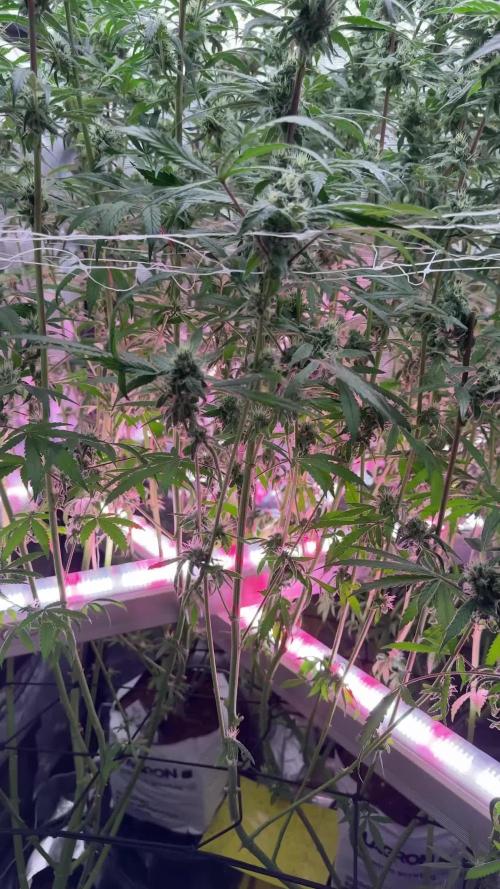
She's approximately 145 cm tall, and the plant structure we've established over the previous weeks is now supporting the flowering development beautifully.
The major training work is behind us. The canopy is established, the SCROG nets are providing support, and the flowering sites are developing throughout the plant.
We're no longer in the stage of trying to build the structure.
We're watching the structure do its job while the flowers continue to develop.
And that's one of my favourite transitions in a grow diary.
You spend weeks working on the plant's architecture, making decisions about topping, training, canopy management, and defoliation.
Then you reach a point where you can step back and appreciate the result.
That's where we are now.
The plant is looking beautiful, the canopy remains organized, and the flowers are giving us plenty of reasons to keep the camera close.
And the frost?
Oh, the frost! 😂❄️
## ❄️ THE FLOWERS ARE STEALING THE SHOW
Let's get straight to the obvious.
These flowers are becoming seriously photogenic!
The close-up photographs reveal the intricate details of the developing buds, the prominent pistils, and the trichomes covering the flowers and surrounding sugar leaves.
There's something special about reaching this stage of flowering.
From a distance, you can appreciate the plant's overall structure and how the flowering sites are distributed throughout the canopy.
But when you get close enough to examine the flowers properly, there's an entirely different level of detail to appreciate.
And that's precisely why I enjoy macro photography.
It lets us document the small details that are easy to miss when we're simply looking at the whole plant.
Pheno B is giving us some beautiful subjects to work with, and I wanted to capture that as clearly as possible.
So, instead of taking a handful of photographs and moving on, we spent more time creating detailed photo stacks.
And I think you'll understand why when you look at the results.
😂📸🌸
## 📸 THREE PHOTO STACKS – 931 PHOTOGRAPHS IN DETAIL
This week, we created three separate photo stacks of Pickle Lemon Haze F1 Pheno B.
Here's the breakdown:
- Photo stack 1: 299 photographs.
- Photo stack 2: 299 photographs.
- Photo stack 3: 333 photographs.
That's a combined total of 931 individual frames!
Each stack represents a considerable amount of work, both behind the camera and during post-processing.
And this is where patience becomes essential.
Focus stacking involves combining photographs taken at different focus distances to increase the depth of field in the final image.
When working with macro subjects, the area in focus can be extremely narrow. A small change in focus can bring one section of a flower into sharp detail while leaving another section outside the focus plane.
By combining multiple frames, we can capture more of those details in a single final image.
Of course, the results depend on the source photographs and how well the stacking process handles them.
But when everything comes together, the finished image can reveal a remarkable amount of detail.
And that's what I wanted to achieve with Pheno B this week.
Three stacks.
Hundreds of frames.
One very photogenic girl.
And plenty of frosty details to appreciate! 😂❄️
## 🌿 SAME TENT. SAME ECOSYSTEM. HER OWN STORY.
One of the defining features of Project Blue Tent is that we're documenting the plants individually while keeping their shared growing environment consistent.
The plants share the same tent, reservoir, irrigation system, lighting environment, nutritional program, and general cultivation approach.
That gives us an opportunity to observe their development side by side.
And the similarities remain fascinating.
The plants have developed remarkably similar structures, and their flowering progression has been impressively consistent.
But that doesn't mean the individual diaries are interchangeable.
Each plant deserves her own record, photographs, observations, and development history.
That's why we're documenting Pheno A, Pheno B, and the other cultivars separately.
Even when the plants look remarkably similar, their individual details remain worth recording.
For Pheno B, this week's story is about her continued flower development, the close-up photography, and how she looks following the latest environmental adjustments.
She's sharing the same ecosystem as her sisters, but she's still the star of this particular report.
And today, we're giving her the attention she deserves!
💙🥒🌸
## 💡 LIGHTING – INCREASING THE OUTPUT
We made another adjustment to the lighting setup this week, increasing the output power across the lighting equipment.
The main LEDs continue to provide the primary illumination from above, while the two LumiFlora 150W full-spectrum under-canopy fixtures supplement the lower portions of the canopy.
The under-canopy bars remain arranged in the X-cross configuration beneath the plants.
With the structure now established, this arrangement gives us another aspect of the growing environment to observe as flowering progresses.
We're interested in how the different parts of the canopy develop under the combined lighting arrangement.
At the same time, we've increased the lighting output, so we're keeping an eye on the overall environment and the plants' response.
It's important to remember that increasing light output doesn't automatically guarantee a particular result. The response depends on the conditions around the plants and how they develop over time.
That's why we're documenting these adjustments rather than assuming what the outcome will be.
We make a change, monitor the conditions, and observe.
And Pheno B will continue to be part of that story.
## 🌡️ ENVIRONMENT – SLIGHTLY COOLER CONDITIONS
Alongside the increase in lighting output, we reduced the temperatures slightly this week.
It's a small but meaningful part of the latest environmental adjustments.
Lighting and temperature are connected, so whenever we change the lighting setup or its output, we need to consider the wider environment rather than looking at each setting in isolation.
We're keeping an eye on the day and night temperatures, relative humidity, solution temperature, and substrate temperature while the plants continue flowering.
The idea isn't to keep changing everything for the sake of it.
It's to make deliberate adjustments and then observe how the environment settles.
The latest readings have been updated in the GrowDiaries record, so the conditions listed there are the reference for this week's report.
And that's another reason I appreciate keeping detailed records.
When we look back at the end of the project, we'll be able to see not only how the plants developed, but also which environmental changes took place along the way.
## 🕸️ SCROG AND CANOPY STRUCTURE – THE FRAMEWORK IS THERE
The SCROG structure continues to provide support as the flowering branches develop.
The first net helped us distribute the canopy, while the second net provides additional support to the established structure.
The earlier topping, training, and defoliation also remain important parts of this plant's story.
Those interventions helped us create the architecture we're looking at today.
And now, we're allowing that structure to do its job.
We don't need to keep moving branches simply because we can.
We don't need to keep reshaping a canopy we've already established.
The important thing now is to monitor the plant, observe how the flowers develop, and make adjustments only when there's a genuine reason.
Sometimes the most satisfying part of cultivation is seeing the results of work you completed weeks earlier.
You train the plant, give her time to respond, and eventually you get to appreciate the structure that training helped create.
That's exactly what we're seeing with Pheno B.
## ✂️ DEFOliATION – LETTING THE EARLIER WORK SPEAK
The substantial defoliation performed in the earlier weeks also remains part of this story.
At the time, opening the dense canopy made a dramatic difference to the plant's appearance.
Now, we can appreciate the structure that remained after that work and how the plant has continued developing.
The flowering sites are visible throughout the canopy, the branches are supported, and the plant has had time to respond to the earlier interventions.
This is why I believe it's important to think carefully about timing.
There is a time to train.
There is a time to remove foliage.
There is a time to provide support.
And there is a time to stop interfering and observe.
For Pheno B, the major structural work has already been done.
Now we're concentrating on the flowering development and the way the plant responds to the environment we've established.
## 🌬️ AIRFLOW – SUPPORTING THE ENTIRE CANOPY
The airflow arrangement remains an important part of the shared ecosystem.
With a substantial canopy, we want air moving through the upper, middle, and lower portions of the plants rather than allowing stagnant pockets to develop.
The earlier canopy management helped open the structure, while the circulation equipment supports air movement throughout the tent.
The under-canopy lights also make it important to keep the lower portion of the growing space in mind when assessing the overall environment.
We're looking at the complete picture.
Lighting, temperature, humidity, and airflow all interact.
The goal is to maintain a balanced environment rather than focusing on one parameter in isolation.
And as the plants continue developing, we'll keep monitoring those conditions and making adjustments when needed.
## 💧 IRRIGATION AND DRAINAGE – KEEPING THINGS CONSISTENT
The irrigation and drainage systems remain part of the established setup.
The recorded watering volume is approximately 1.6 litres per plant over 24 hours.
Because the plants share the reservoir and irrigation system, maintaining a consistent approach across the tent is an important part of this project.
We continue observing how the plants are responding and monitoring the system's operation.
The idea is simple: maintain the established setup, record what happens, and avoid unnecessary changes when everything is working as intended.
Good equipment should make our lives easier.
It should help us maintain consistency while allowing us to concentrate on the plants themselves.
And that's exactly the approach we're continuing with this week.
## ⚗️ NUTRITION – THE CORRECT PLAGRON RECIPE
The nutritional program remains unchanged this week.
We're using the PLAGRON Hydro line, with Green Sensation included in the current recipe.
The previous reports are also being corrected where necessary to ensure that Green Sensation is recorded accurately instead of Hydro Roots.
For this week's report, the recipe is:
- PLAGRON Hydro A — 2.2 ml/L
- PLAGRON Hydro B — 2.2 ml/L
- PLAGRON Power Buds — 1 ml/L
- PLAGRON Green Sensation — 1 ml/L
- PLAGRON pH Plus — 0.03 ml/L, as recorded
- PLAGRON pH Minus — 0.03 ml/L, as recorded
The recorded pH is 6.01, and the EC is 2.24 mS/cm.
As the recipe has remained unchanged, we're continuing to record the measurements and observe the plants rather than inventing an explanation for every variation.
The important thing is to document what was actually used, keep the record accurate, and monitor how the plants develop.
That's what makes these diaries useful when we eventually look back at the complete project.
## 🌡️ CURRENT BLUE TENT CONDITIONS
The GrowDiaries record for this week has been updated with the latest environmental readings.
The reference measurements shown in the current record include:
- Cultivar: Pickle Lemon Haze F1
- Phenotype: Pheno B
- Flowering: Week 12
- Height: Approximately 145 cm
- Light schedule: 12/12
- Day air temperature: 27°C
- Night air temperature: 27°C
- Relative humidity: 59%
- pH: 6.01
- EC: 2.24 mS/cm
- Solution temperature: 25°C
- Substrate temperature: 24°C
- CO₂: Approximately 666 ppm
- Pot size: 8 litres
- Watering volume: Approximately 1.6 litres per plant per 24 hours
- Under-canopy lighting: 2 × LumiFlora 150W full-spectrum fixtures
- Under-canopy arrangement: X-cross configuration
- Nutrient line: PLAGRON Hydro
- Green Sensation: 1 ml/L
The temperatures have been reduced slightly, and the lighting output has been increased for this week's update.
The values above reflect the updated record rather than the older Week 11 measurements.
## 🔬 FOUR PLANTS, FOUR STORIES
This is something I want to keep emphasizing throughout Project Blue Tent.
Yes, the reports share some common elements.
That's intentional.
The plants share the same ecosystem, so it makes sense that their reports will cover the same environmental systems, lighting arrangement, irrigation setup, and nutritional program.
But the individual reports are not simply copies of one another.
Each one focuses on a different plant and documents her own development.
For Pheno B, we have the three photo stacks, her individual flower development, and her response within the shared growing environment.
For her sisters, we'll continue documenting their own characteristics and the details that make each plant worth following.
The shared conditions provide context.
The individual observations give each diary its purpose.
And that's what makes the project interesting.
We're not trying to manufacture differences where there are none.
We're documenting what we actually see.
Sometimes that's variation.
Sometimes it's remarkable uniformity.
And sometimes it's a tent full of plants that look so similar you have to remind yourself that they're not clones!
😂💙
## 🔭 LOOKING AHEAD – MORE TO OBSERVE
As we continue through flowering, I'm particularly interested in watching how the flowers develop under the updated lighting arrangement and slightly cooler environmental conditions.
We'll keep observing the canopy, the flowering sites, and the details that become visible through the macro photography.
We'll also continue recording the environmental measurements and maintaining the shared nutritional program.
The next stage will bring more opportunities to document the plants and compare their development over time.
But we're not going to rush ahead.
We have the structure.
We have the established ecosystem.
We have the equipment in place.
And now we have the time to observe the results.
That's what we're here for.
## 💙 FINAL THOUGHTS – ANOTHER BEAUTIFUL WEEK FOR PHENO B
My friends, Pickle Lemon Haze F1 Pheno B is looking absolutely outstanding.
The flowers are beautiful, the frost is impressive, and the close-up photography has given us another opportunity to appreciate the intricate details of her development.
We created three photo stacks from 931 individual photographs, made some environmental adjustments, increased the lighting output, and continued maintaining the established ecosystem.
Nothing about this week required us to reinvent the entire setup.
Instead, we made deliberate adjustments, updated the records, and continued observing.
And that's an important part of cultivation.
You don't need to make dramatic changes every week to make progress.
Sometimes you simply need to understand what you're seeing, record it properly, and give the plants time to respond.
Pheno B is sharing her environment with her sisters, but her individual story is still unfolding.
And I'm looking forward to documenting every step of it.
The canopy is established.
The flowers are developing.
The trichomes are giving us plenty to admire.
The photography is looking beautiful.
And the whole ecosystem continues to be the foundation of this project.
So, for now, we're going to keep doing what we've been doing.
Observe.
Measure.
Document.
Adjust when necessary.
And appreciate the beautiful plants we're fortunate enough to follow.
💙🥒🌸❄️
## 🙏 A HUGE THANK YOU
A huge thank you to Zamnesia for making Project Blue Tent possible and giving us the opportunity to document these Pickle Lemon Haze F1 cultivars individually.
Thank you to PLAGRON for the Hydro nutrient line supporting the project, including Green Sensation as part of the current nutritional recipe.
Thank you to Mars Hydro for the irrigation and drainage equipment helping us maintain consistency throughout the tent.
A massive thank you to Zamnesia for the Phytonaut LED lighting, curved scissors, and clip fans that continue playing important roles in the project.
And a special thank you to LumiFlora for the under-canopy lighting that we're exploring as another part of our cultivation setup.
Thank you to GrowDiaries for providing the platform where we can document the experiments, share the photographs, and record the lessons we learn along the way.
And finally, thank you to everyone following Project Blue Tent! 💙
Your support makes sharing these individual chapters even more enjoyable.
Pickle Lemon Haze F1 Pheno B is looking beautiful, and I'm delighted to have another week of her journey documented.
Until next week...
Keep growing.
Keep learning.
Keep observing.
And keep appreciating the details!
Growers Love, happy growing, and take care everyone! 🌱💙🥒❄️

Processing
Likes
74
Share


@Sillyasswhitedude
Follow
9-27 I have lost track of days...we are in our 13th week...weird weather we are having...week of fall week of summer...I did a defoil last week...she is done with her training...heavy bloom nutes...this girl has bud sites every were...ive taken so many off her lower legs...ive done what I can for her its time to let her go I believe...she is going the distance and if any one has any tips or pointers on how to deal with frost or if I even need to worry would be greatly appreciated...other than that I crawled in her cage/cell and snapped random shots...its a tight fit in there above her she has plenty of room to rise though I'm ready to see what the time I put into training does and such she hasn't been topped...I wish I would have known not to take 5 COMPLETE LOWER branches when I cloned her and just took some tall shoots she woulda been a MONSTER...she is still a beast though and I'm glad that she's my girl...THANKS BOMB SEEDS...this plant is like a gift and I appreciate it!!!!

Likes
18
Share


@TheCannaProphet
Follow
~ FASTBUDS TESTER #2206 ~
Well friends, here we go on another 'canna-venture' together!
The grow room has had a complete remodel and some upgrades done to it including brand spanking new 4x8 and 4x4 tents and a Trolmaster Hydro X controller along with a new Control Panel.
This tester strain is one of six tester strains that FastBuds has graciously provided me with and I'm looking forward to seeing what this girl has to offer when she's grown to her full potential!
One drawback of 'testers' is I have little to no information on it other than its number and that it's an autoflower... 🤪 But, it's ALWAYS a blast growing them for me because not knowing a lot allows me to just concentrate on the essentials: Light, Environment, Water, Nutrients and possibly a bit of LST... not complicated, just basics like keeping a constant temperature and RH in the tent at a level that gives a good VPD, watering when almost dry and maintaining proper light levels according to their stage of growth.
____________________________________________________________________________________________________________________________________________________________________________________________________________________________________________________________________________________________________________________________________________________________________________________________________________________________________________________
~THE SETUP~
~Initially seeds were lightly scuffed, then soaked for 3 hours in 78℉ distilled water after which they were transferred to moist paper towels laid out in a Jiffy Pellet plastic starter tray with lid. Underneath the tray was placed a Vivosun Heat Mat with Controller that was set to 78℉ where they stayed until their tap roots emerged.
~Planted into Jiffy Peat Pellets that were hydrated with distilled water warmed to 78℉ with a 7.0 ph.
~Once roots emerge from the Jiffy Pellet they're transferred to their fabric pots.
~Grown 100% organic in a 4g Gronest fabric pot and a 3g fabric pot by Wraxly filled with Mother Earth 70/30 Coco/Perlite medium and initially amended with Dr. Earth 4-4-4 / Earthworm Castings / Dr. Earth Flower Girl 3-9-4 and Coast of Maine Stonington Blend Organic Plant Food 5-2-4.
~19/5 light cycle for the entire run with supplemental UVA added during flower. Lights are controlled by a Trolmaster Hydro X controller set for a 15min Sunrise/Sunset simulation.
~Top dressing every 3-4 weeks with slow release dry amendments and Earthworm castings.
~Straight water ph'd @ 6.2-6.8 when needed and bi-weekly Compost Tea's.
____________________________________________________________________________________________________________________________________________________________________________________________________________________________________________________________________________________________________________________________________________________________________________________________________________________________________________________
Weekly Updates:
1/19- Here we go into Week Four of flower and these testers are ON FIRE!🔥🔥🔥
Both testers are in a flower frenzy and are ready to eat! Today I gave both girls their last top dressing with Down To Earth 4-8-4 Flower Mix at a ratio of 2tbsp/g and Coast of Maine's Stonington Blend 5-2-4 Organic Plant Food at a ratio of 1tbsp/g which I simplified by using 1/3 cup of the 4-8-4 and 1/4 cup of the 5-2-4 in the 4g pot and 3/8 cup of 4-8-4 and 1/8 cup of the 5-2-4 in the 3g pot. After working the amendments into the medium, I watered it in with 1g of straight de-chlorinated water ph'd to 6.6 @ 74℉. It will take a week for the microbes to begin breaking it down and will last for 3-4 weeks after that which should coincide with them finishing up, or close to it, enabling them to naturally 'flush' themselves out.
I've also increased the power to the HLG 650R's the the Trolmaster Hydro X Controller to 75% which has them pulling 990w at the wall and have them hung 32" above canopy. I also starting adding in 4 hours of UVA during the middle of the light cycle for the remainder of flower. I've been monitoring their leaf temperatures and they're running 71-73℉ which is perfect! I have the AutoPilot APC8200 co2 Controller set to 1100ppm with a 100ppm window and the AC Infinity Cloudline T6 controller set to maintain a 74℉ temperature in the tent while the lights are on.
1/21- I'm watering these thirsty girls daily with straight de-chlorinated water ph'd it to 6.6 @ 74℉ and they're both thriving! The #1 pheno stays in a perpetual state of 'praying'.... a VERY happy girl she is and the #2 is just an enormous plant with tons of bud sites and flowers that are starting to get a coating of white trichomes giving them that frosty appearance!
1/23- I watered/fed both testers today with 0.75g of de-chlorinated water each with GreenGro's Natures Brix, Granular Myco and Flower Finisher mixed in, after which I added 1 tsp/g of unsulfured molasses and then ph'd it to 6.6 @ 74℉. They'll be getting straight water from here moving forward as the medium has enough food in it to support them until they finish.
1/25- Daily watering continued today with both girls receiving 0.75g of straight de-chlorinated water ph'd to 6.6 @ 74℉.
OMG they're both looking fantastic, both are amazing cultivars with a generous coating of trichomes beginning to cover their flowers. I'm really looking forward to Week Five of flower where these ladies should really start to turn it up a notch!! 😍💚
😎💚 Thank you for checking out my passion in life! Please visit as often as you wish and I hope you enjoy this journey as much as I know I will! Grow Strong! 💪😎🤙


Processing
Likes
24
Share


@GrowGuy97
Follow
Day 21 - Ladies are looking nice & healthy! Everything seems to be going great, one is still growing a little slow but all in all extremely happy with this grow so far! Thanks for following & happy growing friends!✌️🏼🌱
Day 22 - They are really starting to take off now😍😍
Day 23 - not sure if it’s the pheno type or the nutrient but the plant that is getting the Technaflora Nutrients is starting to get a little bigger🤷♂️🏼
Day 24 - Babies are really starting to take off😍😍 got my New420GuySeed gear in today as well👍🏼🙏🏼
Day 25 - Starting to really grow now, the smaller of the 3 I starting mainlining today to do another comparison at harvest time!
Day 26 - Another good day of growth! Thank you for following & happy growing friends!🌱✌️🏼
Day 27 - End of the week & these ladies just keep looking better & better😍

Likes
3
Share


@Ninjabuds
Follow
My Purple Kush is still the little guy of the group. It's so small, I don't think it's even started flowering yet, but that's alright! It'll have plenty of time to mature and do its thing. I'm guessing it'll probably be ready for harvest a couple of weeks after the others. I'm excited to see how this one turns out – Purple Kush is known for its beautiful colors and relaxing effects, so I've got high hopes!
This past week has been a whirlwind of work, leaving little time for anything else. My phone's camera roll is sadly neglected, with only a few snapshots to show for it. But finally, I'm finding a moment to catch up on my grow diaries. It's been exciting to see the progress, even if it's just through photos. I'm looking forward to documenting the next stage!


Likes
25
Share


@Sators
Follow
Add slightly nutrients. Day Nr 16 doing topping. Nutrient tank with capacity 10L turning little bit in alkaline, at the beginning I added 3ml ph down and reach 6.4 pH, than now it’s inccrise to 6.6 on 5 days time. Same I can telling about TDS. At the beginning it was 350 ppm, but now it’s step up on 400ppm without adding nothing. Day 18 start moving out new branches from places around where was topping. Keep watering with 1.5L with slight nutrients dosage… Day 20 we can see how flower keep moving ahead after topping days ago…
Likes
38
Share


@B4niTa
Follow
She started to stack up, in week 10 I will give her Overdrive and keep Big Bud. I think to cut off few fan leaves before she start fattening up
Likes
6
Share


@LAShugars
Follow
I thought I completed this harvest last year but noticed this morning it must not have saved.
She was one of the prettiest plants I’ve grown.
The bud was absolute 🔥 fire
Just finished the last of her rece
Likes
51
Share


@Corwinism
Follow
WEEK 8 (04/18/2021 - 04/24/2021)
Day 59: 04/18/2021
Defoliated some growth from each plant before I installed my custom-built SCRoG net made of: pvc piping, drywall screws, and jute twine for the netting. It’s slightly smaller than the tent, 41”x41” with a second level for another net. It fits perfectly, leaving plenty of room to work around the edges and move the fan around if needed.
Immediately after defoliation and installing the net, I watered using ½ strength Botanicare Hydroguard. Watering was different. I used a battery-powered liquid transfer pump to help water the plants a little faster and more efficiently. Also helps to reach the plants I can’t access as easily in the corner.
I am unable to test/collect any of the runoff at the moment since installing the net, which wouldn’t be an issue by itself, but my saucers are just barely large enough to fit the base of the 5 gallon pots into. I have no way of sticking a pH pen or TDS meter in the runoff. They simply won't fit between the pot and the saucer.
This is extremely unfortunate, as I am now unable to monitor the ppm of the soil with each watering. Will have to pick up some larger saucers soon or think of another solution.
-------------------------------------------------------------------------------------------------------------------------------------------
Day 61: 04/20/2021
‘Tis the season to be medicated. Happy Holidaze!
-------------------------------------------------------------------------------------------------------------------------------------------
Day 62: 04/21/2021
Upping the amount of water going into the pots this watering. Previously I was doing 1 gallon of water per 5 gallon pot. I’m increasing the amount of water to 1.5 gallons. Hopefully that will produce enough runoff for taking measurements. It’s going to be a painfully difficult task to take readings but I really need to know what the condition of the soil is right now. Will not be using any nutrients this time considering the runoff was kind of high when I fed on 4/10. This seems a little risky though since it has been 11 days since a nutrient feed, but I’d rather not burn the plants by blindly adding nutrients. Will return. Hopefully with measurements.
(some amount of time later)
Tap water: 245ppm, 6.1 pH (9 gallons)
pH Down: 30ml
JB#1 - 2730ppm, 7.0 pH
JB#2 - 2290ppm, (pH pen died again on this plant)
AP#1 - 2380ppm, 6.9 pH
AP#2 - 3610ppm (seems extremely high), 7.0 pH
GC#1 - 2320ppm, 6.9 pH
GC#2 - 2340ppm, 7.1 pH
I don’t know what was up with the measurements on the AP#2. The saucers the pots are sitting in are a little small so I think the ppm might have been reading high because the bottom of the fabric pot was sitting in the runoff. Maybe I’m just saying that to reassure myself. Either way, the 3000+ ppm seemed very off.
-------------------------------------------------------------------------------------------------------------------------------------------
Day 66: 04/24/2021
Defoliation + weaving/securing branches through SCRoG.
I'm not 100% sure that the SCRoG was the most optimal technique of choice given the very limited space within the grow tent. Also, I almost feel like I installed the screen a little late. Maybe not? Either way, I have read about them and the potential of increased yields, which got me excited enough to build one to try out for myself. I was aware going into it that there would be some difficulties using a SCRoG. I can no longer move my pots around is the main thing. Not being able to move the pots around has increased the difficulty factor of watering/feeding. I now have to access 3 different sides of the tent to get all 6 plants. I've clipped all the ties holding the branches down from previous LST sessions. There was just no way I was going to spend hours weaving in and out of all the ties trying to water each plant while also dealing with the difficulties of a SCRoG obstructing the work space. That would also wreck my poor back.
From here, things are going to get real exciting. Tomorrow (04/25) I am rescheduling the light cycle to 12/12 to initiate flowering. Another 60-70 days to go, growing buds and packing on trichomes. With that said, I'm excited to have made it through my very first full vegetative cycle. I've definitely made my fair share of mistakes, as expected, but as long as I keep learning from them future harvest will only continue to increase in quality and yield. Thank you for stopping by and checking out the diary this week! All your kind words and encouragement are fuel. Until next time! 🙏



Processing
Likes
8
Share


@eldruida_lamota
Follow
Bueno pues lo dicho familia, es una cepa dulzona y acaramelada, con un porcentaje medio de 16% thc , me parece bastante potente está indica en verdad es un cebollazo épico, si te pasas sentirás hormigueo en las extremidades asegurado.
Sencillisima de cultivar, muy rápida de verdad tamaño entre 45/60cms no es muy grande pero las flores son muy compactas.
Espero que os guste este último trabajo, os dejo muchas fotos y algunos vídeos finales , un saludo y buenos humos.

Likes
15
Share


@Organic_G
Follow
Ging doch deutlich schneller als gedacht, von wieso brauchen die so lange zu, sehen Ready aus 😊 aber nächste Mal werde ich weniger ernten damit alles in den Cure fridge passt
Likes
4
Share

@deseed_uy
Follow
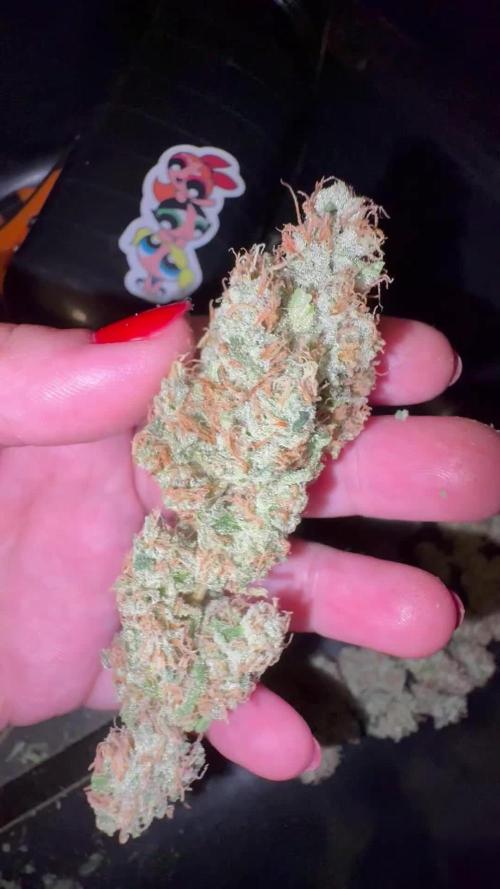
Tremenda planta hermosa, este fue uno de los fenotipos mas resistentes de los 4 que tuve, siempre estuvo a gusto con todo. Lo unico malo fue que la flora es un poco mas larga que los otros fenos entonces estaba descoordinada y la coseche antes, bien terminada debe ser una delicia porque aunque no termino su ciclo estaba bien rica dulzona

Likes
19
Share


@Basementganja
Follow
Fast to flower some decently large nugs! This girl is the only one that survived my "initial torture test" for my sf4000(dimmed to 75% (333watts) in quarter of my 3x3 tent)! She was very resistant to "too much light intensity" as a seedling, and didn't mutate! Once the light was at an ideal height, she started vegging very strong, but 1 week of important time had been lost. She started to flower, and stacked up a bunch of dense buds very nicely! I'm very excited to be growing this strain again next run!-with more training.
Likes
8
Share


@Designer_grow_pt
Follow
Special queen and special kush with one week into veg stage, ak-47 with 4 weeks so I started the lst, critical with 2 weeks
Likes
14
Share

@eldruida_lamota
Follow
Que pasa familia, vamos con la tercera semana de floración de estas Gorilla Zkittlez Auto de FastBuds.
La tierra que utilizamos que está en la publicación anterior es top crop all mix, aparte alimentamos nuestras plantas con Agrobeta.
Por supuesto el ph se mide en cada riego y se mantiene en 6.2, regando cada 48/72 horas e intentando mantener la humedad un poco alta al principio.
Se ven bien sanas tienen buen color y tamaño bueno, seguirán creciendo estas semanas espero.
Mars hydro:
Code discount: EL420
https://www.mars-hydro.com/
Agrobeta:
https://www.agrobeta.com/agrobetatiendaonline/36-abonos-canamo
Hasta aquí todo, Buenos humos 💨💨