


Likes
Comments
Share

@Ekoms
Follow
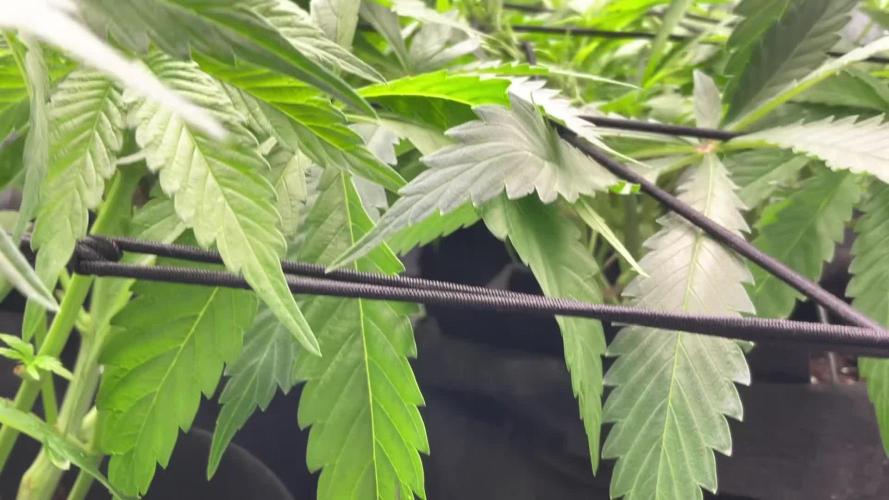
Waiting and waiting . Add more nutrients for bloom . Everything looks good ...i buy new box only 60x60 for veg phase . I cant wait 4 months 😀 so now every two monts i grow 4 plants . Next round mimosa orange punch and superboof from barney and maybe something for outdoor

Likes
5
Share


@RastaRick
Follow
Blackberry Gum Auto looks real hungry signs of deficiency... Bio Pk 5-8 dosage upped to 15ml in 1 liter per week for everyone
Buds starting to gain some weight

Likes
21
Share


@FatYappas
Follow
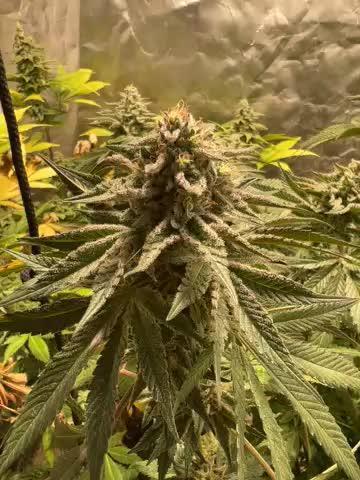
Its been a busy week in Fat Zappa's Garden, hence another late update.
I am no longer concerned about the gold patches on the plants, there has been a little more since the past update, particularly around the edges of some of the leaves but not much at all and it certainly doesn't appear to be anything serious so my fears have eased much in that regard.
The three older ladies in this grow are coming to the end of day 32 as I type this update, and have grown into fairly big plants over the past week or so. Despite having low stress training applied every two or three days they now stand around a foot tall. Not quite as tall as their Fastbuds label mate, the Wedding Cheesecake I am growing in Canna Coco and the same dry amendments, which stands an inch taller than these three sisters, but then she is nine days younger. These three girls are certainly more fuller plants though, and the past few days have seen the white hairs begin to appear, particularly on the bud sites, which have also began to turn light green, and the stem on one of these girls begin to turn more 'vine like' in texture.
Remaining on a schedule of about 2.5 litres of dechlorinated, aerated water of PH 6.4, day 28 also saw the garden revitalised by their usual tipple being replaced for an aerated compost tea of 2 cups of Worm Castings, 2 tablespoons of Alfalfa Meal, 2 tablespoons of Kelp Meal, and 1 tablespoon of Bat Guano in a cheese cloth bag, and placed in a UK 5 Gallon bucket with 2 tablespoons of Molasses mixed into the dechlorinated water I had aerated for 24 hours, and then brewed it for about 26 hours. It may just have been a well timed coincidence, but I do feel like the plants have shown a spurt of growth since receiving it, particularly the runt of these Mrs Banners, who received her first session of low stress training on day 30. Prior to this spurt of growth I was not going to perform any LST on her cos she just seemed way to small but has really filled out in the past week, although remains a very short specimen compared to her sisters, and the Wedding Cheesecakes who are 2 days younger than her.
I am starting to think something may have gone awry when I mixed my soil up, as the two pots which I struggled to germinate the initial seeds in, one which failed completely, have not seemed to thrive as much as the other four plants. When I mixed the initial mix into the 5 Gallon pots I did it in two batches, yet filled the all the pots a scoop at a time along a row so it does seem strange. I think next time I will mixed the medium with the dry amendments and castings a pot at a time to gain more control and see if things improve.
Also, in preparation for feeding the compost tea I did have a trim around the bottom of the larger plants as watering has become more difficult with all my wires and tucked leaves etc, which I immediately regretted, but actually, like I say, the plants seemed to have had a boost over the past few days so I am happy no harm has been done.
The lights are now running at the full 450w and set to around 25 inches from the top of the canopy. I have also increased the airflow through the intake fan, the canopy fans are both on high, my two 40 watt fans are now running on medium, and my AC Infinity T6 turned up to three on the OFF setting. My heater and humidifier remain on full on the environment has remained stable despite the ramping up of the light to full blast.
Lastly, day 32 began with a top dressing for all these plants, with the larger ladies showing signs of pre-flower. They got heaped portions of 1/2 cup of Worm Castings, 1/3 cup Dr Forest Organics 284 Bloom, and a table spoon of Dr Forest Organics Veg dry amendments which I mixed in as best I could with all my LST wires etc, and then watered at PH level 6.4. I'd like to mix the PH up a little more between 6.2 and 6.8 but it always seems to come out 6.4.
I will endeavour to update the pages for the two Wedding Cheesecakes as soon as time allows. Thanks for following my grow, and I hope yours are going well too


Likes
5
Share

@Kocicak
Follow
Zdarec,
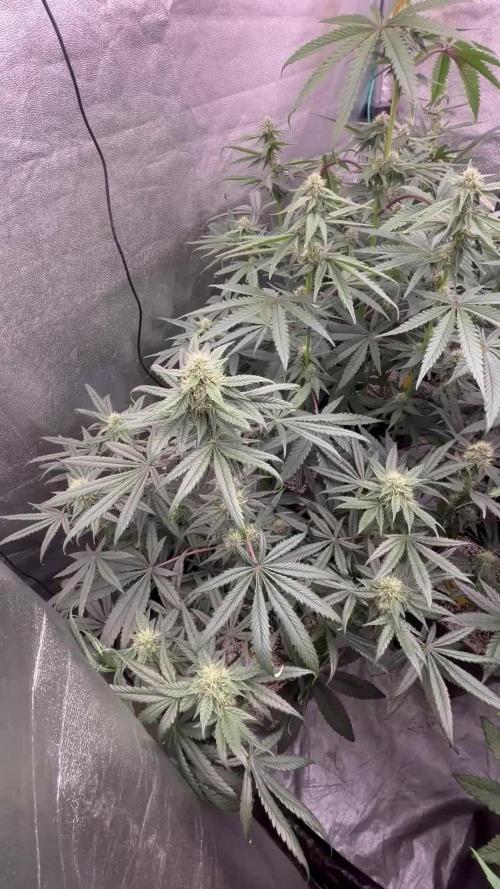
holky začínají krásně kynout a cukrovat. Pár z nich se už nádherně rýsuje, u pár dalších mi zatím přijdou palice trochu divné stavbou, ale možná se jim něco nelíbilo.
Krmení: 2 ml/l AN Connoisseur, 1,5 ml/l CalMag, 1 ml/l PK Shogun, 1 ml/l Atami – vzorek ze srazu – a Bud Candy 1 ml/l.
Zatím to vypadá, že jim krmení sedí. Další zálivka už bude bez Atami. Celkem 7 litrů.
Diky ať to roste
Processing
Likes
9
Share


@russrahl
Follow
Placed seeds in water for the night and the started sprouting in the glass before morning, very strong seeds! Put them directly in rock wool cubes in RDWC buckets and the we’re up and out the next day. Got the 1000w MH HID turned down to 600w and moving on a light rail about 2ft above seedlings.

Processing
Likes
16
Share


@Mr_Motalovah
Follow
Hello Growers and Tokers! 👋 👩🌾 🧑🌾.🔥💨
Finally got that transpant done.
Added a bit of root juice to help out the transplant.
Won't be adding nutes until next week, directly bloom nutes..
Took waaaay to long to transplant. They didn't get any growth becuase of the bad weather these past weeks.
Very bummed out about that. Two of the are already in prefower.. the tiniest i hope grows a bit more..
can't really ask for much more given the bad weather and that they're autos..
I'll for sure be doing a re run with this strain with better stable conditions.
Take care out there!
One love!

Likes
1
Share


@kauilmayel1996
Follow
Veo algunos pistilos así que lo tomo como pre floración....
No es la primera vez que las autos me quedan pequeñas .....
Pero confío que será un buen resultado....




Likes
16
Share


@Chucky324
Follow
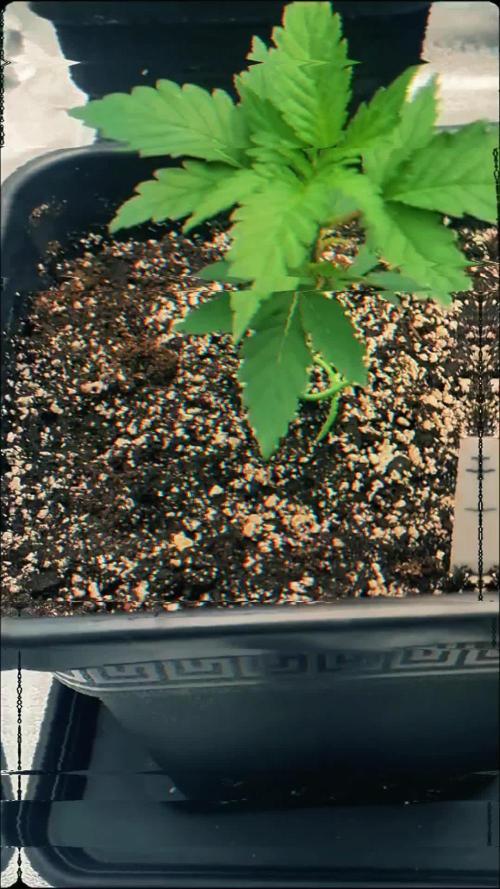
Hello. This is the end of week 8 and the beginning of week 9 of flowering.
Although the seed description said 10 to 11 weeks, I going to cut these girls down at 10 weeks.
I need the room to grow and flower some Mac and Crack that's already growing..
Getting close to harvest I'll start flushing, But I'll give them 1 more feeding and then nothing but water till the end.
I get much better taste and the buds smoke better if I flush and get the chemicals out of the soil before harvest.
Well, that's the end of the Freak Bros. book # 10... I think there are 3 or 4 more books left in that series. I'll show them in future diaries.
My other diaries have the old underground comic book, Weirdo by Robert Crumb if you want to check them out to see.
The buds are really getting solid now and some are getting heavy and heading for the floor. Good times...
Getting some great smells now. Musk is the most common. But some, smell of Citrus with Musk under tones.
The smell is overpowering my carbon filter. I can smell these plants out by the street if the wind is blowing that way.
Pure Lemon Skunk smell by the street. Nice.
Getting near the end of their lives now and there are more yellow leaves as the plants pull what they need from the big fan leaves before turning the leaves brown. Some plants have sticky resin and some have slippery resin.
OK. Have Fun.
Chuck.
Likes
1
Share


@Krautbauern
Follow
harvest time soon. Maybe making hash or some cookies out of her. Smell is very intensive right now. Unfortunately I repotted her way too late she didn‘t got dense buds. take a look at my other diaries for good plants haha :)
Likes
4
Share


@pzwags420
Follow
week 3 flower is going great. I increased my UVA lights to 8 hrs on. Gsc and Blueberry have decent bud-lets already on day 17. OG kush has preflowers. waiting on Blueberry muffin to show pre fowers should be soon. At the end of week 3 GSC and Blueberry are doing the best and starting to get more trichomes. Im waiting on OG kush And Blueberry Muffin to really get going!


Likes
20
Share

@3rnest
Follow
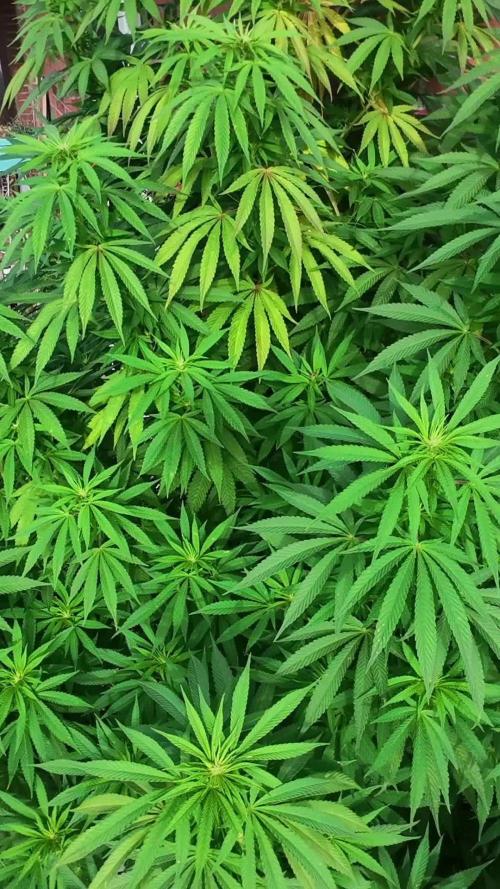
Weiter geht's!
Bis jetzt entwickelt sich die Pflanzen gut und bekommt weitere Blüten.
Hoffen wir mal, dass der Herbst schön wird...

Likes
2
Share


@DogDoctorOfficial
Follow
Amnesia Skunk — Week 4 Report
1. Week 4 Context (12/12 Cycle)
• Same room conditions as the rest of the garden.
• Same environmental parameters.
• Same nutrition, same measurements, no changes introduced.
• Stability across the room remains the guiding principle.
This consistency allows true genetic expression to be observed.
⸻
2. Growth Pattern & Structure
Amnesia Skunk is expressing very differently from other cultivars in the room:
• Node count: ~6–7 nodes
• Internodal spacing: Extremely compact
• Overall stature: Short, tight, and powerful
• Architecture:
• Dense vertical core
• Controlled lateral branching
• Strong apical presence without excessive stretch
This is a stocky, high-density phenotype, showing clear indications of structural strength.
⸻
3. Main Stem & Vascular Development
One of the most striking features this week is the main stem:
• Notoriously thick compared to other plants at the same stage
• Strong lignification already visible
• Suggests:
• Excellent nutrient transport capacity
• High future flower-support potential
• A plant built to carry weight
As you beautifully put it — this is the kind of stem that looks like it will harvest as timber.
⸻
4. Branching Behavior & Phenotypic Consistency
• Both phenotypes are:
• Very similar in overall structure
• Expressing healthy, proportional branching
• Producing smaller but well-defined side branches
This indicates genetic stability, not randomness.
Branching is present without chaos — everything feels intentional in how the plant is stacking itself.
⸻
5. Training & Plant Handling (Week 4)
• No aggressive training introduced
• No topping, no hard interventions
• Only:
• Gentle leaf bending
• Minimal leaf redirection
• Very careful handling to improve light exposure
Philosophy for this cultivar:
Let her grow as she wishes, without stress, and observe her natural form.
This approach respects her compact nature and avoids disrupting her internal balance.
⸻
6. Plant Health & Visual Quality
• Color: Deep, healthy green
• Leaf posture: Relaxed, confident, no stress indicators
• Growth rate: Steady and strong rather than fast and stretchy
• Overall vitality: Excellent
Amnesia Skunk is not racing — she’s building.
⸻
7. Studio Observations & Documentation Value
• Plants were taken to the studio for photography.
• Under controlled lighting:
• Structure becomes even more apparent
• Stem thickness and node density stand out
• Branch symmetry and internodal compression are clearly visible
Photos captured:
• Against the light
• On dark backgrounds
• Close-ups of stems and branching
• Full-plant context shots
This makes Week 4 documentation especially valuable for educational reference.
⸻
8. Pre-Flower Status
• No clear pre-flower signs yet.
• Development remains firmly in the transitional vegetative phase under 12/12.
• This slower, compact progression aligns perfectly with her morphology.
Nothing is rushed — and nothing needs to be.
⸻
9. Outlook Moving Forward
• Expect:
• Powerful flower support later in bloom
• Dense, structured stacking rather than long spears
• A cultivar that rewards patience
Training will remain soft and respectful, with future adjustments based on how she chooses to open up.
FOR DISCOUNT CODES AND MORE JUST FOLLOW THE LINK https://website.beacons.ai/dogdoctorofficial
📲 Don’t forget to Subscribe and follow me on Instagram and YouTube @DogDoctorOfficial for exclusive content, real-time updates, and behind-the-scenes magic. We’ve got so much more coming, including transplanting and all the amazing techniques that go along with it. You won’t want to miss it.
GrowDiaries Journal: https://growdiaries.com/grower/dogdoctorofficial
Instagram: https://www.instagram.com/dogdoctorofficial/
YouTube: https://www.youtube.com/@dogdoctorofficial
⸻
Explore the Gear that Powers My Grow
If you’re curious about the tech I’m using, check out these links:
🔆 Lighting & Environmental Control
• Future of Grow — Advanced LED lighting technology
https://www.futureofgrow.com/
DISCOUNT CODE: DOG20
• Lumiflora — Under-canopy LED lighting
https://lumiflorade.com/
• TrollMaster — Environmental controllers and automation gear (past collaboration)
⸻
Genetics
• Zamnesia Seeds — Genetics used in this project
https://www.zamnesia.com/
⸻
🌱 Soil, Substrates, Boosters & Root Support
• Plagron — Substrates, bio mixes, and supportive products
https://plagron.com/en/
⸻
🎒 Storage, Curing & Preservation
• Grove Bags — Curing and storage solutions
https://grovebags.com/
⸻
📸 Photography Equipment & Tools
(Not sponsors, but part of my creative toolkit)
• Sony A6700
• Sony full-frame macro lens + few more
• Stacking photography workflow - learning
• iPhone (for behind-the-scenes shots)
We’ve got much more coming as we move through the grow cycles. Trust me, you won’t want to miss the next steps, let’s push the boundaries of indoor horticulture together!
As always, this is shared for educational purposes, aiming to spread understanding and appreciation for this plant. Let’s celebrate it responsibly and continue to learn and grow together.
With true love comes happiness. Always believe in yourself, and always do things expecting nothing and with an open heart. Be a giver, and the universe will give back in ways you could never imagine.
💚 Growers love to all 💚
📸 P.S. – The Eye Behind the Lens
All photos in this diary (for now — except for the ones showing the camera, which I took with an iPhone) are taken with a Sony A6700 paired with a Sony full-frame macro lens and a few more.
Photography is part of the story — it’s how we share the fine textures, the glow, and the quiet details that words can’t always capture.
I’ve also started experimenting with photo stacking — a technique where multiple images, each taken at a slightly different focus point, are layered together to create one perfectly sharp image from front to back.
It’s not digital enhancement or AI; it’s pure photography — a way to reveal the plant’s beauty in microscopic depth, from trichome to petal.
You’ll even see a few shots of "ghost me" capturing the shots — camera, lens, setup — because every grow deserves not just to be cultivated, but documented like art.
FOR DISCOUNT CODES AND MORE JUST FOLLOW THE LINK https://website.beacons.ai/dogdoctorofficial
NEW DISCORD - Official Server Invite Link : https://discord.gg/ksjAkA5T74
Likes
3
Share

@Nonem420
Follow
Day 77
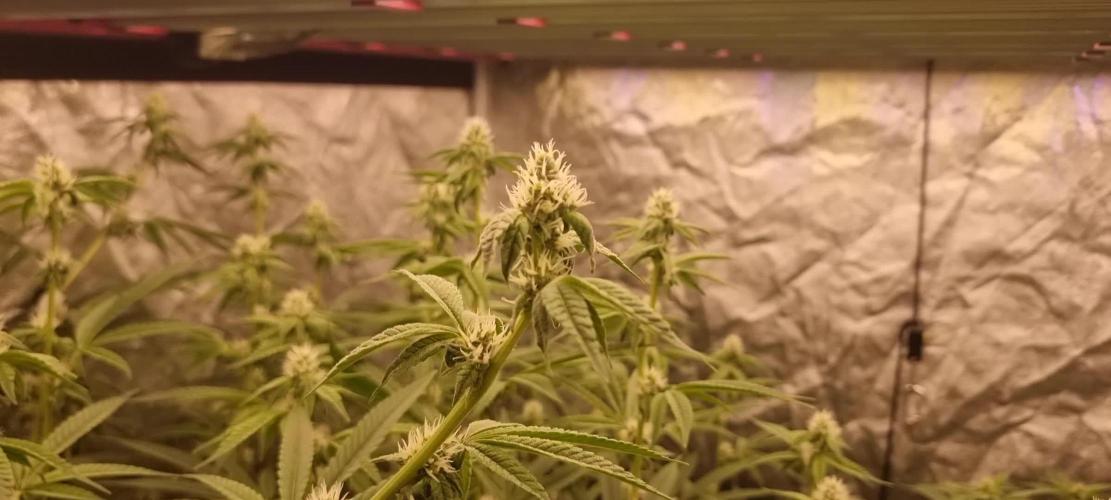
I'm running out of vertical space for pinus contorta, this weekend i will open the box to move the leds higher and will try to do some decent photos.
At this point i've added the Pinus purple matcha to the diary because she's huge and impossible to not notice, should be around 1,5m² almost 150cm tall. Had to do a very risky move and "soft crop" 2 apicals because of burn risk, too close to the leds.
I wasn't expeting a freakin' tree like that!
Day 79
Jeez plz stop growing in height!! After this shaky video i raised the leds 10 cm, now i'm for real out of space.. I'm adding 10 to 12 liters every day, alternating ro with only silica one day and the other with nutrients.


Likes
19
Share


@Mikado
Follow
Adding week 4, as I had it in "germination" in the diary a week too long. Brings it in line with it's size/maturity. Messed up my lighting for 48ish hours, left on 24hrs a day, due to flip flopping on going to flower.

Likes
16
Share

@Chucky324
Follow
Hello. This is the end of week 8 and the beginning of week 9 of flowering.
Although the seed description said 10 to 11 weeks, I going to cut these girls down at 10 weeks.
I need the room to grow and flower some Mac and Crack that's already growing..
Getting close to harvest I'll start flushing, But I'll give them 1 more feeding and then nothing but water till the end.
I get much better taste and the buds smoke better if I flush and get the chemicals out of the soil before harvest.
Well, that's the end of the Freak Bros. book # 10... I think there are 3 or 4 more books left in that series. I'll show them in future diaries.
My other diaries have the old underground comic book, Weirdo by Robert Crumb if you want to check them out to see.
The buds are really getting solid now and some are getting heavy and heading for the floor. Good times...
Getting some great smells now. Musk is the most common. But some, smell of Citrus with Musk under tones.
The smell is overpowering my carbon filter. I can smell these plants out by the street if the wind is blowing that way.
Pure Lemon Skunk smell by the street. Nice.
Getting near the end of their lives now and there are more yellow leaves as the plants pull what they need from the big fan leaves before turning the leaves brown. Some plants have sticky resin and some have slippery resin.
OK. Have Fun.
Chuck.
Likes
8
Share


@STAYINGONMYMAINCBATORUNTWO
Follow
Was a bit worried in the first weeks of flower as the buds formed early but... i was left with the most densest of buds literally hard like arnie in his terminator days lol! I didn’t quite get the amount I expected but defiantly enough! Will defo grow again!
After time went on she developed so much frost literally like diamonds 💎
Resistance was very strong on this one too and drank so much more than the rest had to be smart with watering! I’m the end the result was as intended can’t wait for the next couple of weeks for the flavour to really come out but as of now really reminds me of skittles as you can taste the sweetness but also that cake 🍰 comes right through too and this is before a full cure. Happy growing buddies I say this one is a top one to grow!
Added a few photos since cure! These buds are dense and colorful and fruity! Tastes like it smells until you get a lovely bit of cake come through! Heaven!
High is full body literally one point I felt it in my feet rose to my chest!
Likes
20
Share


@DreamIT
Follow
-Sponsored by:
🎆ANESIA SEEDS🎆-💡VIPARSPECTRA💡-💐GREEN BUZZ LIQUIDS💐-🛠️WEDRYER🛠️
🏁18/6 hello growerz, with today I start the resumption of diaries on GD. I have 13 new genetics in germination and as many diaries. I start by putting the seeds in water for 24 hours, after a day I will put the two seeds in two different jiffies, one with humic acid from greenhouseseeds and the other with just plain water. Get comfortable and follow the updates 😉👋🦄
19/6 The seeds were divided and placed in two different jiffies, one with humic acid and one with water only.
21/6 after another 24 hours in the dark the jiffies were moved under the lamp. let's start the dances!
23/6 nothing to report
24/6 still nothing to report
25/6 still no news
30/6 it was a really long wait, but the second one was finally born, just when I had lost hope. yeeeeee
__________________________________________
Personal advertising (contains affiliate links)
__________________________________________
🦄 The varieties of Anesia seeds all have an extremely high content of THC and cannabinoids. They were bred specifically for the effect and therefore find wide applications for medical purposes as well.
✅https://bit.ly/Anesiaseeds_
__________________________________________
Did you know that Green Buzz Liquids fertilizers are 100% vegan? A complete line of products ready to give the best to each of your plants! Visit the site and see my journals to see how they work 🦄
🤯 And with the code "dreami t" you will immediately receive a 15% discount on your purchases
✅https: //bit.ly/GreenBuzzLiquidsPro
__________________________________________
👀 Are you looking for a good lamp to start with? 👀
🌞Viparspectra has something more than the others, take a look at their site.
⏩ Use "GDVIP" for an extra discount on amazon or "DREAMIT3" for an extra 5 %% discount
👀 Search for it on Amazon
✅Amazon USA: https://amzn.to/30xSTVq
✅Amazon Canada: https://amzn.to/38udUVe
✅Viparspectra UE: bit.ly/ViparspectraUE
✅Viparspectra USA: bit.ly/ViparspectraUS
______________________________________________
🌈 Tired of blowing on your weed hoping it dries quickly? Check out the Wedryer website! You will find a well-made accessory that will help your weed dry in just 8-10 days without the annoying risk of finding mold or other annoyances! (no affiliate links)
✅https: //bit.ly/Wedryer_
______________________________________________
📷🥇Follow the best photos on Instagram 🥇📷
https://www.instagram.com/dreamit420/
Backup
https://www.instagram.com/dreamit4200/
🔻🔻Leave a comment with your opinion if you pass by here🔻🔻
🤟🦄💚 Thank you and good growth 💚🦄🤟

Likes
3
Share


@MayJorGrowers
Follow
Techniques acquired!! Guys... we really need some rain. The area were in is experiencing record high temperatures and its getting hotter and hotter everyday. :( Nevertheless the girls have prevailed and come out strong! A moment of silence please for ben, she will be missed.....
Now it's time for techniques. The LST is the main technique we are trying to go for and it seems to be working well for them. The HST was not intentional lol I just accidentally bent Osaka's stem and she started to flourish so I tried it on Prince and it seems to be working very well. Don't you just love how resilient plants are??
Were still keeping the watering to the same and the nutrient level did go up a little but only for the ones that are still standing...