


Likes
Comments
Share

@Bizarrr
Follow
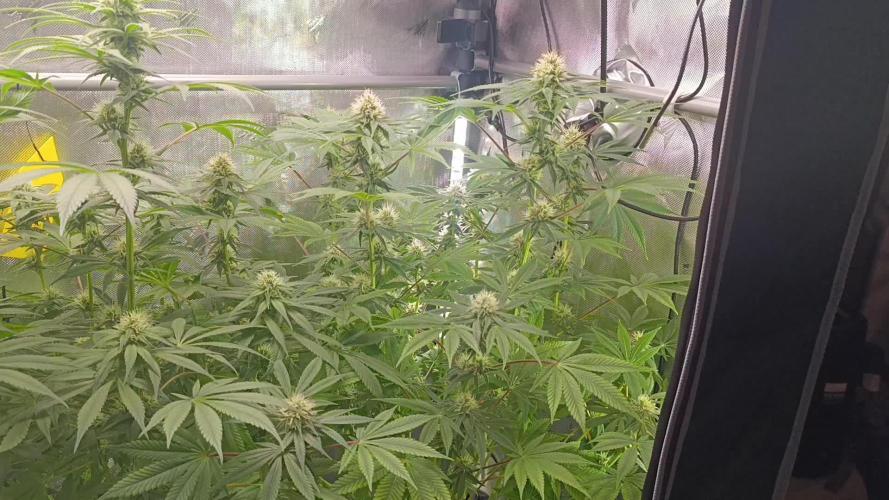
Cowabunga přátelé. Holky kynou,začínají už pěkně vonět po otevření boxu a vypadají celkem spokojeně. Začaly víc pít, minulou zálivku malý runoff z tich 4L,takže přidáno na 5L na kytku,ať to vyplachneme. přidáno Cal-A-Mic, který se možná bude hodit,tím že má snižovat stres. Počasí jak na houpačce,takže jeden den tlačíme vlhkost dolů,další den ji zase zvyšujeme,ale až na pár výkyvů,kdy jsem lízal i 43% se mi to celkem daří držet kolem 55%. Na místě byl i Channel 6 s nějakou April,prý je želvám na stopě 😜😝

Likes
17
Share


@Leonardo_DaGrower
Follow
On the last day of week 10 I brought it down to 18 hours lights. Then half way through week 11 I brought it to 16 hours. My plan was to reduce light until next week to 12/12 so I could try and induce resin development. One plant is done, as you can see from the trichomes. The other will finish this week. I wasn’t finished flushing and would prefer another week, but I also don’t want couch lock bud.

Likes
13
Share


@GlassesMan
Follow
Unfortunately I couldn't harvest full plant, because half of it was stolen.

Processing
Likes
10
Share


@Barcelona_Farmers710
Follow
Bueno entramos en semana 3 de flora... pasaremos usar pl booster y esperemos poder pasar led antes que acabe esté cultivo. El calor lo hace insoportable para las plantas están bastante resentidas a ver que tal sale! Salut y força al canut farmers!🔥

Processing
Likes
4
Share


@Ferenc
Follow
Week 10: 20/4 light schedule, 150 mp water per plant 2x, no fertilization anymore. Day 65: Next week Tueasday/beggining week 11/ we need to harvest because they will come from the council to check the house😂 Well, the previous one finished in 69 days, but I think they won't be properly ready by next week. I tried it and made me high anyways. I would give at least 2 weeks more to be done. Tomorrow I will check the trichomes with magnifying glass. They are beautiful stinky girls. Flowers are getting thicker and pistils are getting brownish. Day 66: I checked the trichomes with magnifying glass and it will be ready by next Tuesday. 7 days left with this day. They are beautiful just check in the video (Day 66).
Day 67: It is crazy the last 3 days was so hot here in London. Today was 38 degrees!!!!!! Poor plants even with ventilation it goes up to 30-31 degrees. Well, it is alright because direct ventilation goes on so they won't be cooked. 😓😛 Day 70: It is the last day when they receive water and they just get once and half of the daily intake. 2 days before harvest I will not water them. Harvest day is on Tuesday 30th of July when they are 72 days old. I have checked the trichomes all good they are matured nicely cloudy so now it is very strong. They are very stinky girls 😋 Day 71: No more water for them..... Tomorrow is harvest day!!!!!😋

Likes
15
Share


@TheBulldozerSicily
Follow
Dopp 1 settimana di sola acqua e ambiente molto umido, Aggiungiamo i nutrienti all'acqua, 50 ml gro 50 ml Micro 50 ml Bloom
Portando l'ec dell' acqua da 250 a 1000... ma domani aggiungeró un pp d'acqua per scendere l'ec a 850. Nelle foto ci sono anche 3 autofiorenti che non appena si sggiusta il tempo andranno fuori dalla tenfa, outdoor proviamo anche questo!

Processing
Likes
6
Share


Processing
Likes
26
Share


@DaddyPrime
Follow
8/2 everything looks good
8/5 watered and took 24 clones off both of these plants. Maybe they'll go through a spurt of growth now
8/7 scrog netted plant is 37 inches the other one is 55 inches

Likes
2
Share

@Ensign420
Follow
|»» LOG DISCLAIMER: Not intended as a grow guide. Grow log entries are usually posted 3-4 weeks later and are for my learning reference. ««|
Introduction - Week 22 Summary -
Ensign's log, stardate 17753.5,
Another grow week,
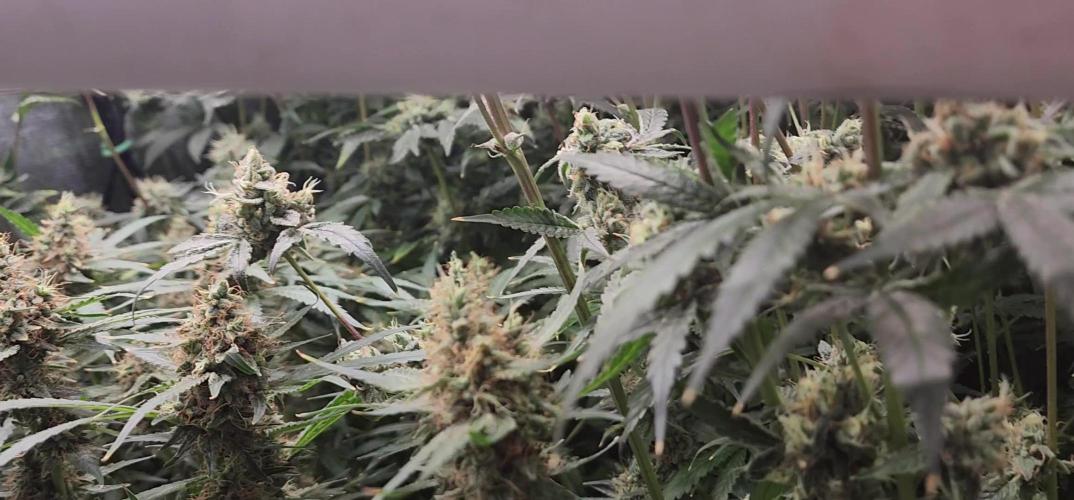
In the main tent, nothing but general checkups. Also did a second trichome check under the microscope. Decided to try ripening under and 11/13 light cycle and have also determined a harvest day.
In the veg tent, been keeping up with solo waterings. Also topped the garden.
Onwards to next week.
[START OF WEEK 22]
==========================================================
---------- [ 3x3 VEG TENT - GR3 ] ----------
Heady OG BX1 #1 - WEEK 14 - Full Veg
TKO #2 - WEEK 04 - Full Veg
Chill Out OG #3 - WEEK 11 - Full Veg
Chill Out OG #2 - WEEK 07 - Full Veg
---------- [ 4x4 MAIN TENT - GR30 ] ----------
Chill Out OG #2 - WEEK 22 - Full Bloom Wk8
TKO #2-2 - WEEK 16 - Full Bloom Wk8
Heady OG BX1 #1 - WEEK 18 - Full Bloom Wk8
03/30/26 → 04/05/26 [WEEK 22]
This Week's Estimated Goals
----------------------------------------------------------------------------------------------
DLI: ~16 mol/m²/d
PPFD: ~400 μmol/m²/s
VPD: ~1.2 kPa
This Week's Meter Readings & Averages
----------------------------------------------------------------------------------------------
Light On/Off: 16:00 - 10:00 | Wattage: ~268.6W [LV03]
Distance From Canopy: ~[19”, 3”, 3”]
Plant Height: ~[33”, 49”, 49”]
Max Plant Height: ~52” [Lamp-to-Soil Distance]
DLI: ~14.73 mol/m²/d
PPFD: ~372 μmol/m²/s
VPD: ~0.62 kPa
Soil %: ~[52.7, 41.4, 46.0, 41.0, 49.9, 58.7, 46.7, 60.1, 49.9, 88.0]
==========================================================
Day 01 - Monday - 03/30/26 - Total Days: 145
-----------------------------------
Daily Averages ~[+01:00]
- Temps: 80.2°F [26.8°C]
- Humidity: 82.7%
- VPD: 0.62 kPa
- Soil %: [52, 42, 46, 41, 51, 61, 47, 62, 49, 91]
-----------------------------------
- [21:08]: Night check on the 4x4 tent.
--- The garden is looking and smelling great and getting louder.
--- Buds are stacking and trichomes are ripening.
--- During the ripening phase, instead of increasing the DLI by switching to an 18/6 light cycle, decided to try something different.
--- Decided to reduce the light cycle a bit more.
- [21:12]: Within the AC Infinity App,
--- For the Main Tent [4x4] controller,
--- Adjusted the 'Flower [12/12]' Schedule for the grow light.
--- GROW LIGHT (MARS HYDRO FC-6500):
------ Changed the START/END time values from 07:00PM/07:00AM to 07:00PM/06:00AM
--- When trying to mimic nature, reducing the hours down to 11/13 makes more sense rather than increasing to an 18/6 cycle.
--- Anyways.
- [21:15]: Checked the Ecowitt soil moisture sensor data:
------------------ [ 3x3 VEG TENT – GR3 ] ----------------
------ 52% - [CH01 » M1 » VBL – Heady OG BX1 #1-1]
------ 42% - [CH02 » M2 » VBR – TKO #2]
------ 46% - [CH03 » M3 » VFL – Chill Out OG #3]
------ 41% - [CH04 » M4 » VFR – Chill Out OG #2]
----------------- [ 4x4 MAIN TENT – GR30 ] ---------------
------ 51% - [CH05 » P1 » FLT – Chill Out OG #2]
------ 60% - [CH06 » P1 » FLB – Chill Out OG #2]
------ 47% - [CH07 » P2 » BLT – TKO #2-2]
------ 62% - [CH08 » P2 » BLB – TKO #2-2]
------ 50% - [CH09 » P3 » FRT – Heady OG BX1 #1]
------ 90% - [CH10 » P3 » FRB – Heady OG BX1 #1]
--------- Veg: ~38%-45% | Flower: ~45%-55%
--------- General: ~30% [Dry] «| ~45-60% [Moist] |» ~70% [Wet]
- [21:37]: Checked the 3x3 veg tent.
--- Veg garden is looking great.
--- Two solo clones need watering.
- [21:40]: Here are the starting initial watering ranges:
------ TKO #2 » 252.5g → 335.5g
------ Gorilla Goat #1-2 » 294.4g → 325.4g
--------- General Weight Range: [Dry] ~275g «| [Dryback] ~300g |» ~325g-400g [Wet]
--- Both cups were last watered 2-3 days ago.
--- Took the starting weight of both clones before watering,
------ TKO #2 » 281.3g
------ Gorilla Goat #1-2 » 275.0g
--- While on a scale,
--- Evenly misted the top of both cups with RO water.
--- Did not spray the top growth.
--- Misted 10-20 sprays. Waited a moment, then misted again.
--- Repeated this process until both cups weighted at least 300g.
--- There was no runoff.
- [22:02]: Took the saturated weight of both cups after watering,
------ TKO #2 » 365.2g
------ Gorilla Goat #1-2 » 265.2g
--- Updated the wet weight and watering dates for both cups.
--- Placed both cups back into the tent.
--- Veg cuttings are looking great in the propagation tray.
- [22:23]: Checked the humidifiers.
--- Tanks are still full and no leaks found.
Day 02 - Tuesday - 03/31/26 - Total Days: 146
-----------------------------------
Daily Averages ~[+01:00]
- Temps: 80.4°F [26.9°C]
- Humidity: 83.2%
- VPD: 0.60 kPa
- Soil %: [52, 42, 45, 41, 51, 60, 46, 61, 49, 87]
-----------------------------------
- [20:59]: Night check on the 4x4 tent.
--- Garden is looking great.
--- The under canopy is looking clean all pots look good.
- [21:03]: Checked on the BluMat soil moisture sensors:
------ Chill Out OG #2 » 65mbars
------ Heady OG BX1 #1 » 61mbars
------ TKO #2 » 84mbars
--------- Watering Range: [Too Wet] ~25mbars «| [Ideal Target] ~40-80mbars |» ~125mbars [Too Dry]
--------- BluMat Max Values: [10mbars «||» 750mbars]
- [21:06]: Decided to make a slight adjustment to TKO #2’s watering carrot.
--- Using the BluMat key, increased the water moisture by rotating the tension cap slightly counter-clockwise.
- [21:10]: Checked the Ecowitt soil moisture sensor data:
------------------ [ 3x3 VEG TENT – GR3 ] ----------------
------ 52% - [CH01 » M1 » VBL – Heady OG BX1 #1-1]
------ 41% - [CH02 » M2 » VBR – TKO #2]
------ 45% - [CH03 » M3 » VFL – Chill Out OG #3]
------ 41% - [CH04 » M4 » VFR – Chill Out OG #2]
----------------- [ 4x4 MAIN TENT – GR30 ] ---------------
------ 51% - [CH05 » P1 » FLT – Chill Out OG #2]
------ 60% - [CH06 » P1 » FLB – Chill Out OG #2]
------ 45% - [CH07 » P2 » BLT – TKO #2-2]
------ 61% - [CH08 » P2 » BLB – TKO #2-2]
------ 50% - [CH09 » P3 » FRT – Heady OG BX1 #1]
------ 87% - [CH10 » P3 » FRB – Heady OG BX1 #1]
--------- Veg: ~38%-45% | Flower: ~45%-55%
--------- General: ~30% [Dry] «| ~45-60% [Moist] |» ~70% [Wet]
- [21:13]: Checked the 3x3 veg tent.
--- Veg garden is looking good.
--- Clones look good and no need to water.
--- Propagation tray cuttings are looking green.
--- Misted each Coco Coin with 15-20 sprays of RO water.
--- Also misted the top growth and added more water to the bottom of the tray.
- [21:23]: Checked the humidifiers.
--- Tanks are still full and no leaks found.
Day 03 - Wednesday - 04/01/26 - Total Days: 147
-----------------------------------
Daily Averages ~[+01:00]
- Temps: 80.9°F [27.2°C]
- Humidity: 83.7%
- VPD: 0.59 kPa
- Soil %: [53, 42, 45, 41, 50, 60, 45, 60, 49, 88]
-----------------------------------
- [16:09]: Evening check on the 3x3 veg tent.
--- Veg garden is looking healthy.
--- Gorilla Goat #1-2 needs watering.
- [16:14]: Here is the starting initial watering range:
------ Gorilla Goat #1-2 » 294.4g → 325.4g
--------- General Weight Range: [Dry] ~275g «| [Dryback] ~300g |» ~325g-400g [Wet]
--- Been 2 days since the last watering.
--- Took the starting weight before watering,
------ Gorilla Goat #1-2 » 275.2g
--- While on a scale,
--- Evenly misted the top of the cup with RO water.
--- Did not spray the top growth.
--- Misted 10-20 sprays. Waited a moment, then misted again.
--- Repeated this process until the cup weighted at least 300g.
--- There was no runoff.
- [16:24]: Took the saturated weight after watering,
------ Gorilla Goat #1-2 » 365.5g
--- Updated the wet weight and watering date.
--- Also decided to top.
--- Using a pair of clean trimmers,
--- Cut each of the taller branches and reduced each down to the lower sets of growth nodes.
--- Placed the cup back into the tent.
--- Veg cuttings look great in the propagation tray.
- [16:36]: Checked the Ecowitt soil moisture sensor data:
------------------ [ 3x3 VEG TENT – GR3 ] ----------------
------ 52% - [CH01 » M1 » VBL – Heady OG BX1 #1-1]
------ 42% - [CH02 » M2 » VBR – TKO #2]
------ 46% - [CH03 » M3 » VFL – Chill Out OG #3]
------ 41% - [CH04 » M4 » VFR – Chill Out OG #2]
----------------- [ 4x4 MAIN TENT – GR30 ] ---------------
------ 50% - [CH05 » P1 » FLT – Chill Out OG #2]
------ 59% - [CH06 » P1 » FLB – Chill Out OG #2]
------ 44% - [CH07 » P2 » BLT – TKO #2-2]
------ 59% - [CH08 » P2 » BLB – TKO #2-2]
------ 51% - [CH09 » P3 » FRT – Heady OG BX1 #1]
------ 88% - [CH10 » P3 » FRB – Heady OG BX1 #1]
--------- Veg: ~38%-45% | Flower: ~45%-55%
--------- General: ~30% [Dry] «| ~45-60% [Moist] |» ~70% [Wet]
--- Decided to lower the grow light intensity a bit.
- [18:08]: Within the AC Infinity App,
--- For the Main Tent [4x4] controller,
--- Adjusted the 'Flower [12/12]' Schedule for the grow light.
--- GROW LIGHT (MARS HYDRO FC-6500):
------ Decreased the MAX intensity from 5 to 3
- [19:37]: Checked the 4x4 tent.
--- Garden is smelling and looking incredible.
- [19:43]: Checked on the BluMat soil moisture sensors:
------ Chill Out OG #2 » 71mbars
------ Heady OG BX1 #1 » 59mbars
------ TKO #2 » 102mbars
--------- Watering Range: [Too Wet] ~25mbars «| [Ideal Target] ~40-80mbars |» ~125mbars [Too Dry]
--------- BluMat Max Values: [10mbars «||» 750mbars]
- [19:45]: Decided to make a slight adjustment to TKO #2’s watering carrot.
--- Using the BluMat key, increased the water moisture by rotating the tension cap slightly counter-clockwise.
- [19:59]: Checked the humidifiers.
--- Tanks are still full and no leaks found.
Day 04 - Thursday - 04/02/26 - Total Days: 148
-----------------------------------
Daily Averages ~[+01:00]
- Temps: 80.5°F [26.9°C]
- Humidity: 82.0%
- VPD: 0.64 kPa
- Soil %: [53, 41, 47, 41, 50, 59, 47, 60, 50, 88]
-----------------------------------
- [17:16]: Evening check on the 3x3 veg tent.
--- Veg garden is looking great.
--- Two solo cups need watering.
- [17:20]: Here are the starting initial watering ranges:
------ Heady OG BX1 #1-2 » 255.4g → 335.4g
------ TKO #2 » 252.5g → 335.5g
--------- General Weight Range: [Dry] ~275g «| [Dryback] ~300g |» ~325g-400g [Wet]
--- Both cups were last watered 3-6 days ago.
--- Took the starting weight of both clones before watering,
------ Heady OG BX1 #1-2 » 296.1g
------ TKO #2 » 274.7g
--- While on a scale,
--- Evenly misted the top of both cups with RO water.
--- Did not spray the top growth.
--- Misted 10-20 sprays. Waited a moment, then misted again.
--- Repeated this process until both cups weighted at least 300g.
--- There was no runoff.
- [17:40]: Took the saturated weight of both cups after watering,
------ Heady OG BX1 #1-2 » 365.7g
------ TKO #2 » 365.3g
--- Updated the wet weight and watering dates for both cups.
--- Decided to top TKO #2
--- Using a pair of trimmers,
--- Cut the main stalk down to the lower 3-4 nodes.
--- Placed both cups back into the tent.
--- Propagation tray cuttings look good.
- [17:59]: Checked the Ecowitt soil moisture sensor data:
------------------ [ 3x3 VEG TENT – GR3 ] ----------------
------ 53% - [CH01 » M1 » VBL – Heady OG BX1 #1-1]
------ 41% - [CH02 » M2 » VBR – TKO #2]
------ 47% - [CH03 » M3 » VFL – Chill Out OG #3]
------ 41% - [CH04 » M4 » VFR – Chill Out OG #2]
----------------- [ 4x4 MAIN TENT – GR30 ] ---------------
------ 50% - [CH05 » P1 » FLT – Chill Out OG #2]
------ 59% - [CH06 » P1 » FLB – Chill Out OG #2]
------ 46% - [CH07 » P2 » BLT – TKO #2-2]
------ 59% - [CH08 » P2 » BLB – TKO #2-2]
------ 51% - [CH09 » P3 » FRT – Heady OG BX1 #1]
------ 89% - [CH10 » P3 » FRB – Heady OG BX1 #1]
--------- Veg: ~38%-45% | Flower: ~45%-55%
--------- General: ~30% [Dry] «| ~45-60% [Moist] |» ~70% [Wet]
- [20:13]: Checked the 4x4 tent.
--- Wow the garden is smelling great.
--- Bud growth is ripening up and top buds are stacking weight.
--- The under canopy is looking clean.
- [20:17]: Checked on the BluMat soil moisture sensors:
------ Chill Out OG #2 » 79mbars
------ Heady OG BX1 #1 » 55mbars
------ TKO #2 » 82mbars
--------- Watering Range: [Too Wet] ~25mbars «| [Ideal Target] ~40-80mbars |» ~125mbars [Too Dry]
--------- BluMat Max Values: [10mbars «||» 750mbars]
- [20:33]: Checked the humidifiers.
--- Tanks are still full and no leaks found.
- [+00:53]: Decided to decrease temps in the veg tent a bit.
--- For the Veg Tent [3x3] controller,
--- Adjusted the 'Vegetative [18/6]' Schedule for the heater.
--- HEATER (AC INFINITY THERMOFORGE T3):
------ Decreased the Temp target value from 82°F to 75°F
Day 05 - Friday - 04/03/26 - Total Days: 149
-----------------------------------
Daily Averages ~[+01:00]
- Temps: 78.3°F [25.7°C]
- Humidity: 80.4%
- VPD: 0.64 kPa
- Soil %: [53, 41, 46, 41, 50, 58, 47, 60, 50, 87]
-----------------------------------
- [21:22]: Night check on the 4x4 tent.
--- Garden is looking good and smelling even better.
--- The under canopy also looks clean and all pots look good.
- [21:35]: Checked the Ecowitt soil moisture sensor data:
------------------ [ 3x3 VEG TENT – GR3 ] ----------------
------ 52% - [CH01 » M1 » VBL – Heady OG BX1 #1-1]
------ 41% - [CH02 » M2 » VBR – TKO #2]
------ 45% - [CH03 » M3 » VFL – Chill Out OG #3]
------ 41% - [CH04 » M4 » VFR – Chill Out OG #2]
----------------- [ 4x4 MAIN TENT – GR30 ] ---------------
------ 50% - [CH05 » P1 » FLT – Chill Out OG #2]
------ 58% - [CH06 » P1 » FLB – Chill Out OG #2]
------ 46% - [CH07 » P2 » BLT – TKO #2-2]
------ 60% - [CH08 » P2 » BLB – TKO #2-2]
------ 50% - [CH09 » P3 » FRT – Heady OG BX1 #1]
------ 87% - [CH10 » P3 » FRB – Heady OG BX1 #1]
--------- Veg: ~38%-45% | Flower: ~45%-55%
--------- General: ~30% [Dry] «| ~45-60% [Moist] |» ~70% [Wet]
- [21:36]: Checked the 3x3 veg tent.
--- The veg garden is looking good.
--- Mothers are getting a bit tall and the canopy has almost reached the grow light.
--- Decided to top the veg moms.
--- Using a pair of trimmers,
--- Cut the taller branches and reduced the canopy by a good 11-12 inches.
--- Mulched the trimmings.
--- Veg cuttings are looking good in the propagation tray.
- [22:06]: Checked the humidifiers.
--- Tanks are still full and no leaks found.
Day 06 - Saturday - 04/04/26 - Total Days: 150
-----------------------------------
Daily Averages ~[+01:00]
- Temps: 77.5°F [25.3°C]
- Humidity: 81.9%
- VPD: 0.58 kPa
- Soil %: [53, 41, 46, 41, 49, 57, 47, 59, 51, 88]
-----------------------------------
- [19:23]: Night check on the 4x4 tent.
--- Wow the garden is smelling dank and buds are ripening nicely.
--- Under canopy is good and clean as well.
- [19:27]: Checked on the BluMat soil moisture sensors:
------ Chill Out OG #2 » 93mbars
------ Heady OG BX1 #1 » 55mbars
------ TKO #2 » 80mbars
--------- Watering Range: [Too Wet] ~25mbars «| [Ideal Target] ~40-80mbars |» ~125mbars [Too Dry]
--------- BluMat Max Values: [10mbars «||» 750mbars]
- [19:34]: Decided to make a slight adjustment to TKO #2’s watering carrot.
--- Using the BluMat key, increased the water moisture by rotating the tension cap slightly counter-clockwise.
- [19:39]: Checked the Ecowitt soil moisture sensor data:
------------------ [ 3x3 VEG TENT – GR3 ] ----------------
------ 53% - [CH01 » M1 » VBL – Heady OG BX1 #1-1]
------ 41% - [CH02 » M2 » VBR – TKO #2]
------ 47% - [CH03 » M3 » VFL – Chill Out OG #3]
------ 41% - [CH04 » M4 » VFR – Chill Out OG #2]
----------------- [ 4x4 MAIN TENT – GR30 ] ---------------
------ 49% - [CH05 » P1 » FLT – Chill Out OG #2]
------ 57% - [CH06 » P1 » FLB – Chill Out OG #2]
------ 47% - [CH07 » P2 » BLT – TKO #2-2]
------ 58% - [CH08 » P2 » BLB – TKO #2-2]
------ 52% - [CH09 » P3 » FRT – Heady OG BX1 #1]
------ 88% - [CH10 » P3 » FRB – Heady OG BX1 #1]
--------- Veg: ~38%-45% | Flower: ~45%-55%
--------- General: ~30% [Dry] «| ~45-60% [Moist] |» ~70% [Wet]
- [19:45]: Checked the 3x3 veg tent.
--- Veg garden is looking great.
--- Growth is recovering nicely.
--- Gorilla Goat #1-2 needs watering.
- [19:48]: Here is the starting initial watering range:
------ Gorilla Goat #1-2 » 294.4g → 325.4g
--------- General Weight Range: [Dry] ~275g «| [Dryback] ~300g |» ~325g-400g [Wet]
--- Been 3 days since the last watering.
--- Took the starting weight before watering,
------ Gorilla Goat #1-2 » 280.0g
--- While on a scale,
--- Evenly misted the top of the cup with RO water.
--- Did not spray the top growth.
--- Misted 10-20 sprays. Waited a moment, then misted again.
--- Repeated this process until the cup weighted at least 300g.
--- There was no runoff.
- [20:06]: Took the saturated weight after watering,
------ Gorilla Goat #1-2 » 365.8g
--- Updated the wet weight and watering date.
--- Placed the cup back into the tent.
--- Propagation tray cutting look good.
- [20:19]: Checked the humidifiers.
--- Tanks are still full and no leaks found.
Day 07 - Sunday - 04/05/26 - Total Days: 151
-----------------------------------
Daily Averages ~[+01:00]
- Temps: 77.0°F [25.0°C]
- Humidity: 79.9%
- VPD: 0.63 kPa
- Soil %: [53, 41, 47, 41, 48, 56, 48, 59, 51, 87]
-----------------------------------
- [19:11]: Night check on the 4x4 tent.
--- The garden is looking great and smelling incredible.
--- Terpenes on both Heady OG BX1 #1 and TKO #2 are getting louder and are getting gassier and bud growth is getting greasy.
--- The under canopy looks clean and pots look good.
- [19:16]: Checked on the BluMat soil moisture sensors:
------ Chill Out OG #2 » 100mbars
------ Heady OG BX1 #1 » 57mbars
------ TKO #2 » 73mbars
--------- Watering Range: [Too Wet] ~25mbars «| [Ideal Target] ~40-80mbars |» ~125mbars [Too Dry]
--------- BluMat Max Values: [10mbars «||» 750mbars]
- [19:18]: Decided to make a slight adjustment to Chill Out OG #2’s watering carrot.
--- Using the BluMat key, increased the water moisture by rotating the tension cap slightly counter-clockwise.
- [19:34]: Took general PPFD readings.
------ Chill Out OG #2 was around 372 μmol/m²/s which gives a DLI of 14.73 mol/m²/d under an 11/13 light cycle.
------ Heady OG BX1 #1 and TKO #2 were around 819 μmol/m²/s which gives a DLI of 32.43 mol/m²/d under an 11/13 light cycle.
--------- Grow Light Intensity: LV3 @ ~268.6W
- [19:40]: Took height and light distance measurements.
------ Chill Out OG #2 was about 19" away from the grow light.
------ Heady OG BX1 #1 and TKO #2 were about 3" away from the grow light.
--------- Max Plant Height: ~52" [Distance From Grow Light To Top Soil]
------ Chill Out OG #2 was about 33" tall.
------ Heady OG BX1 #1 and TKO #2 was about 49" tall.
--- This will probably be the last PPFD and height check for this grow cycle.
--- Towards the back of the tent, both Heady OG and TKO have a few bud colas that are even closer to the grow light.
--- TKO also has a bud top that has stretched beyond the top of the grow light.
--- Can’t reach anything in the back quadrants so it is what it is.
--- Anyways.
--- Time to clip another bud sample for the microscope.
--- It’s been 10 days since the last check.
- [19:58]: Using a pair of trimmers, I gently clipped more bud samples from each plant.
--- All samples were clipped from the mid canopy.
--- Using a USB microscope, I carefully examined each bud sample for trichomes.
- [20:07]: First Chill Out OG #2,
--- Trichomes on the sugar leaves had some amber, but bud growth was mainly cloudy and clear.
--- On the finger rub, the trichome texture was more grainy with an earthy grape-citrus-vitamin terpene profile.
- [20:16]: As for Heady OG BX1 #1,
--- Trichome heads were looking more cloudy with some clear. Sugar leaves had some amber.
--- On the finger rub, wow the trichome texture was greasy with a gassy lemon-pine terpene profile.
- [20:22]: Last but not least, for TKO #2,
--- Trichome heads were mainly cloudy with almost no clear. Ambering on the sugar leaves, but none on the bud growth.
--- On the finger rub, trichomes were greasy with kushy/earthy fuel terpenes.
- [20:36]: Checked the Ecowitt soil moisture sensor data:
------------------ [ 3x3 VEG TENT – GR3 ] ----------------
------ 52% - [CH01 » M1 » VBL – Heady OG BX1 #1-1]
------ 41% - [CH02 » M2 » VBR – TKO #2]
------ 48% - [CH03 » M3 » VFL – Chill Out OG #3]
------ 41% - [CH04 » M4 » VFR – Chill Out OG #2]
----------------- [ 4x4 MAIN TENT – GR30 ] ---------------
------ 48% - [CH05 » P1 » FLT – Chill Out OG #2]
------ 56% - [CH06 » P1 » FLB – Chill Out OG #2]
------ 48% - [CH07 » P2 » BLT – TKO #2-2]
------ 59% - [CH08 » P2 » BLB – TKO #2-2]
------ 51% - [CH09 » P3 » FRT – Heady OG BX1 #1]
------ 87% - [CH10 » P3 » FRB – Heady OG BX1 #1]
--------- Veg: ~38%-45% | Flower: ~45%-55%
--------- General: ~30% [Dry] «| ~45-60% [Moist] |» ~70% [Wet]
- [20:38]: Checked the 3x3 veg tent.
--- Veg garden is looking great.
--- TKO #2 needs watering.
- [20:42]: Here is the starting initial watering range:
------ TKO #2 » 252.5g → 335.5g
--------- General Weight Range: [Dry] ~275g «| [Dryback] ~300g |» ~325g-400g [Wet]
--- Been 3 days since the last watering.
--- Took the starting weight before watering,
------ TKO #2 » 290.8g
--- While on a scale,
--- Evenly misted the top of the cup with RO water.
--- Did not spray the top growth.
--- Misted 10-20 sprays. Waited a moment, then misted again.
--- Repeated this process until the cup weighted at least 300g.
--- There was no runoff.
- [20:53]: Took the saturated weight after watering,
------ TKO #2 » 365.5g
--- Updated the wet weight and watering date.
--- Placed the cup back into the tent.
--- All rooting cuts in the propagation tray are look great.
- [22:07]: Back in the 4x4 tent,
--- The garden is look and smelling dank.
--- Decided to harvest in 10 days.
--- Also planning out my first breeding project will be cutting clones for the next grow cycle soon.
- [22:23]: Checked the humidifiers.
--- Tanks are still full and no leaks found.
--- Onwards to next week.
[END OF WEEK 22]

Likes
17
Share


@Glizzy420
Follow
had a lot of issues with my ph and overfeeding so i flushed her the last 2 weeks , overall im happy with the results. Not my best yield but it'll keep improving. She smells great citrus and lemon sense!
🙂

Likes
3
Share

@Smev1337
Follow
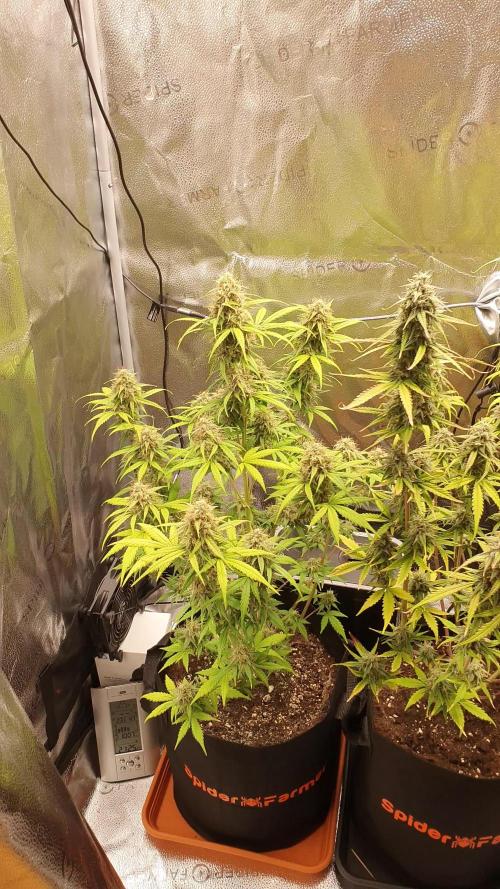
now the buds start to get really fat/thicker, also the terp profile is on point really fruity 😋



Likes
Comments
Share


@AlbStoned
Follow
So langsam geht es in die Endrunde. Das Zelt duftet herrlich, und die Pflanzen sind ein Traum. Die kleine hat 52 cm die große Dame hat 105 cm . Mein Meterstab war gebrochen und ich habe das viel zu spät bemerkt. Die Pflanzen nehmen die Nährstoffe nach wie vor auf, und Verhalten sich ruhig. Die Durban Poison wird am Ende mehrere kleine Buds liefern. Die Pflanzen hat insgesamt auch mehr Blattwuchs, und treibt auf die Seite. Die Mango Cream x Cinderella wächst hingegen Strukturiert mit wenigen Blättern nach oben. Ein Traum für das Trimmen der Pflanze..
Likes
19
Share


@JoeGrowsGas
Follow
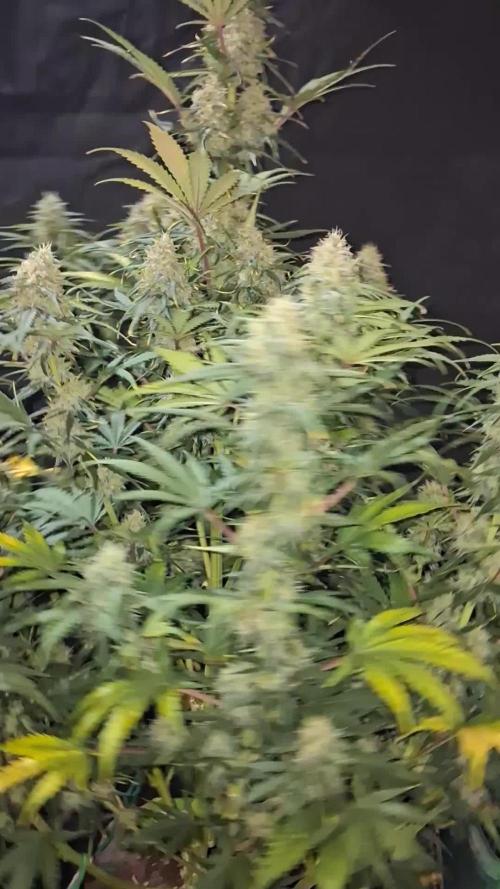
Flower is in its last week might push another half week out but i already stated flush at the beginning of the week as you can see the chlorophyll beginning to flush out ☃️😋🎄
Likes
9
Share

Processing
Likes
1
Share


Likes
5
Share

@Ensign420
Follow
Greetings fellow growers 🖖 and welcome to my first grow ever. This adventure actually started several months ago when I decided to stop buying flower from dispensaries and just grow my own bud. How hard can it be!?
This is actually my second seed of this strain. The first bean sadly died due to over watering (sorry girl, RIP). I was literally watering the cube to the point where water was dripping from the bottom, then heavily sprayed the humidity dome and tray with the vents completely closed. Everyday. Multiple times. I never let the dome or try dry out. So after about 8 days of not sprouting, there was a funky smell of rot. So that was that.
Later I learned that rockwool retains a lot of water and can easily drown seeds. So a wet/dry cycle is best for rockwool germination.
So even after hours of researching and digging through forums and tutorial videos, I was still under prepared for this journey. Did not consider how delicate the germination phase is. Oh well. Lesson learned. Reset and try again!
I hope everyone is safe and stoned during this corona crisis. Just like everyone else in the world, I want this pandemic to be over with. But in the meantime, let's grow some weed! 🖖
[START OF WEEK 01]
Day 01 - Monday - 08/03/20 - Total Days: 001
-----------------------------------
- [0830]: Light Schedule: 24Hrs/0
--- Soaked cube in 5.5 PH water for 10 min. Did not shake water out.
--- NO NUTES! Only PH'd down to control the PH levels.
--- Did not use the default hole (way too deep).
--- Flipped cube upside down and made a shallow hole for the seed (less than 0.25" deep).
--- Placed seed in and pinched hole close. No additional water added.
--- Sprayed the tray and dome with straight water (5.5 PH).
--- Vents are cracked opened a for ventilation (about 1/4 opened each).
--- Distance between the light and tray was 53"
--- AC was set to 80 °F
--- Exhaust fan was set to 86 °F
--- Room average temp was at 85 °F
--- Dome humidity was at 85-99% when sprayed.
--- Allowing to completely dry before respraying.
- [2200]: Dome and tray were completely dry! Sprayed only tray and dome with more water.
Day 02 - Tuesday - 08/04/20 - Total Days: 002
-----------------------------------
- [0845]: Sprayed dome and tray in the morning. Everything was dry.
--- Hoping for the best!
- [2130]: Everything was dry again, so sprayed dome and tray at night along with a light spray on the cube.
Day 03 - Wednesday - 08/05/20 - Total Days: 003
-----------------------------------
- [0830]: Everything was dry again. Resprayed dome and tray. Slightly sprayed cube.
- [2125]: Hooo damn!! She popped! Am little stub is visible! Resprayed dome and tray again.
--- Still going 24/0 for lights.
- [+0033]: Just checked up on her and I swear she grew a bit taller! Getting excited!
Day 04 - Thursday - 08/06/20 - Total Days: 004
-----------------------------------
- [0845]: Wow! Went from a little stub to fully sprouted overnight! Everything was pretty dry again so resprayed dome and tray.
- [2200]: Tap root is visible! Over 1" long too! Just resprayed dome and tray again.
-- Going to prep for hydroton transplant tomorrow!
Day 05 - Friday - 08/07/20 - Total Days: 005
-----------------------------------
- [0930]: She keeps growing!
-- Added a bit of CalMag to the spray bottle (8 drops to 650ml of distilled water). Resprayed dome and tray. Water was at a 5.4 PH with 141 PPM.
- [1045]: Prepped the bubble bucket with 4.5gal of water. Water is high enough to reach about 0.25" above the bottom of the net pot.
--- Added 3 drops of Superthrive
--- Added 3.5ml of CaliMagic
--- Added 2ml Hydroguard
--- Then PH'd down to 5.6
--- Solution Strengh: 120 PPM
--- Water chiller is set to 20 °C
- [1100]: Transplant time!
--- Filled the net basket 1/3 with hydroton. When placed in the bucket, air bubbles are not visible, but are slightly below the surface (slight digging will reveal the water/bubbles below).
--- Removed plastic on rockwool cube and placed in basket, then filled around and covered with hydroton. Making sure to block any light from passing through the net pot and into the nutrient solution.
--- Covered with a half-bottle dome sprayed with the CalMag water from earlier.
--- Hoping for the best!
- [1300]: Raised Bucket 5" higher. Now light distance is 48" to top of bucket.
- [1820]: Lowered tent exhaust temp to 76 °F
--- Lowered AC to 75 °F
--- Raised bucket even higher so light distance is 30" to top of bucket.
- [2300]: Looking good!
--- Sprayed dome and surrounding hydroton with more CalMag water.
--- Attached timer to light! So new 18 Hrs On/6 Hrs Off light schedule.
--- Lights On: [1600] (4pm)
--- Lights Off: [+1000] (10am the next day)
--- Decided to go with lights on during the evening/night and off during the later mornings/afternoon (the hottest part of the day) to see if temps can be controlled better.
--- Please survive girl!
Day 06 - Saturday - 08/08/20 - Total Days: 006
-----------------------------------
- [0800]: Everything was dry. Resprayed hydroton and dome.
- [2000]: Here first night cycle seemed to go well! Get'n taller!
--- Dry again. Removed the dome.
--- PH went up to 6.5 so PH'd down to 5.7
--- Ran the top feed drip ring for a bout a minute to wet the hydroton and rockwool with the nutient solution.
---Too scared to leave the top feed on 24hrs (I don't want over water her and cause dampening-off). Will let dry before re-watering.
- [2100]: After closer inspection, I think she's looking a bit yellow.
--- Decided to add a bit of grow nutes to the bubbler solution.
--- Added 2ml of Sensi Grow A
--- Added 2ml of Sensi Grow B
--- Solution strength after adding more nutes: 176 PPM
--- PH went up to 6
--- I hope that the extra chelating properties of the 'PH Perfect' solution is enough of a buffer for proper nutrient uptake.
Day 07 - Sunday - 08/09/20 - Total Days: 007
-----------------------------------
- [0800]: Water dropped a bit (mostly due to evaporation) so solution strength was at 190.
--- Checked PH again. Was still at 6, so PH'd down to 5.4
--- Ran the top feed for a minute to wet the hydroton a bit.
- [0915]: Since she's looking perky but still a bit yellow. So decided to up the nutrient concentration even more before lights out.
--- Added 2ml more of Sensi Grow A
--- Added 2ml more of Sensi Grow B
--- Solution strength after adding more nutes: 199 PPM
--- PH went up to 5.8
- [1700]: Checked nutrients.
--- PH: 5.9
--- Solution strength: 202 PPM
--- Added 4ml of Voodoo Juice
--- Added 4ml of B-52
--- PH after adding more nutes: 5.9
--- Solution strength after adding more nutes: 238 PPM
- [2130]: Decided to make a new foliar spray to address the continued yellowing.
--- Started with 500ml of distilled water.
--- Added 3 drops of CaliMagic
--- Added 3 drops of Sensi Grow A
--- Added 3 drops of Sensi Grow B
--- Added 3 drops of B-52
--- Added 1 drop of Superthrive
--- Solution strength: 164 PPM
--- PH was at 5.9 and did not adjust.
--- Gave her one spray.
--- Also sprayed the surrounding hydroton.
[END OF WEEK 01]

Likes
1
Share


@Randomjcb
Follow
Stoped the pk its done its job and the strech on the flower sites has gone well

Processing
Likes
13
Share


@RSAFirstOrganicGrow
Follow
We’ve had some nice weather this week. So far so good.
I just hope to get her through flowering, as she is supposed to be a very small plant.
Other than that the bottom leaves that may be dying I think she should be okay?
For now it’s just sticking to water + worm tea & a drop of Black Molasses.


