


Likes
Comments
Share

@SOme_Venutian_Weed
Follow
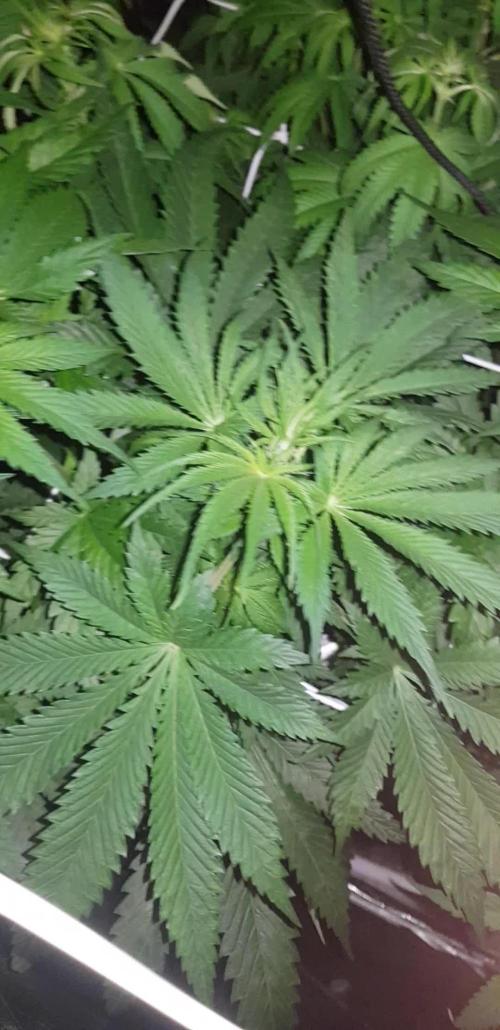
we start the 2nd week of strech , update coming :D
Nb after 14 days of strech some haven't declared her sex , this kind of worries me but it should be normal cause it's not in a particular spot of the box , as opposite you can see one pretty girl i zoom on , on a vidéo shoot


Likes
56
Share


@PEAKYPLANTERS
Follow
Hello everyone, weed brothers! these beautiful buds get bigger and bigger and their nutrition line is quite stable! their growth is going really well!

Likes
9
Share


@Mr_nugs_lover_David
Follow
The phenotype number #3 looks really tiny and small for the days that she is I don't know why is that because she has the same conditions as her sisters.

Likes
9
Share

@GoodTimesOrganics
Follow
Welcome Back liebe Community 🌱💚
White Noise von Paradise Seeds on the Run!
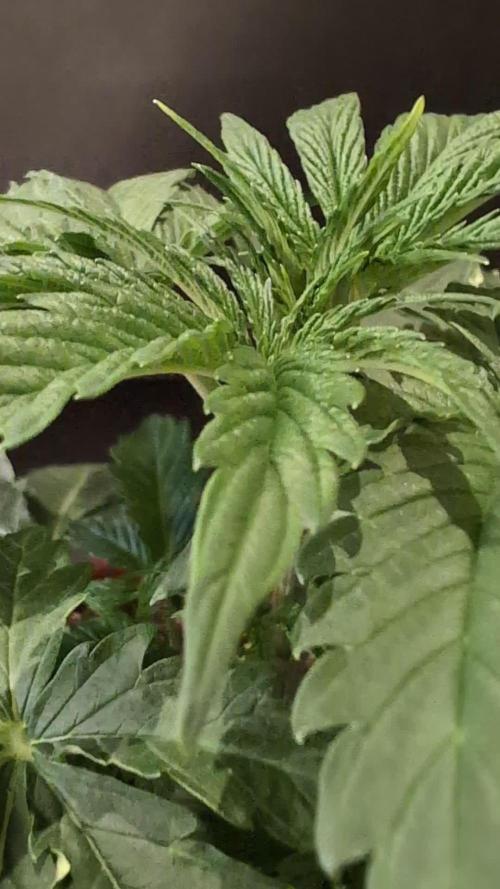
Die dritte Woche ist vorbei und wir haben eine kleine gesunde Jungpflanze.
Ihre Höhe liegt jetzt bei knappen 19cm.
Die unteren Seitentriebe kommen nun auch in die Gänge.
Diese Woche fahre ich die Düngung hoch. Den die Pflanze beginnt nun mit der richtigen Wachstumsphase.
Die Umgebungsgegebenheiten sind aktuell gut:
—————
🌞 Temp: 26
🌚 Temp: 18°C bis 19°C
💨 RH: 64%
VPD: 0,83 kPa
💡ppfd: 330 mpm
—————
Viele Grüße 👋

Likes
14
Share


@CURATI_DA_SOLO
Follow
Hehehe che dire! Pe so che le.foto.si commenti o da sole! L'odore di vaniglia e qualcosa di allucinante! Dopo 14 giorni di lavaggio (10 con flawess finish e 4 solo acqua a 200ppm) ha preso un colore autunnale stupendo! Tra tutte sicuramente salta molto all'occhio....gli ultimi due giorni l'ho lasciata denutrita in modo che capisse che stesse arrivando la sua fine ed oggi ha ricevuto il suo colpo di grazia 😔..... Pulita completamente da ogni tipo di foglia di zucchero il peso complessivo (senza rami e rametti) sono di 334g...molto molto soddisfatto del risultato e del prodotto finale! Pe. Sto che da me adesso fa caldo e non riesco a fare scendere la temperatura di più la sera per darli un colore un po' più violaceo...ma forse era un fenotipo proprio così, ma non mi interessa il colore onesto, l'importante e il risultato finale e sono veramente molto contento! Grazie infinite a fast Buds per l'opportunità che mi dà ogni giorno facendomi coltivare le loro genetiche e spero che questo diario possa essere di aiuto a qualcuno...un altro ringraziamento va sicuramente alla parte più importante del progetto, il pubblico! Tutti voi in parte avete contribuito a ciò motivandomi con i vostri commenti e like! Ringrazio infinitamente tutti quanti di cuore! Ciao a tutti al prossimo progetto! ( A breve💪🏼) 🌱🍄🌈

Likes
9
Share


@Godsgrower316
Follow
Not a fan of autos so I put it in garden soil but great for not having to do almost anything just started giving her food for flower was just giving her the run off from my other girls
Likes
3
Share


@blacknpearl
Follow
june 29. Megacrop ~2 litre feed number 8. 1.17gr/litre. ph 6.11
july 3. Megacrop ~2 litre feed number 9. 1gr/litre. ph 6.11. Snapped a branch by mistake. Tried to tape it without success :(
july 5. Megacrop ~2 litre feed number 10. 1gr/litre. ph 6.11
Keep performing some light defoliation almost every day.


Likes
160
Share

@Cauli
Follow
Week thirteen for the Sticky Broccolis.
Day 39 of 12/12.
#1:
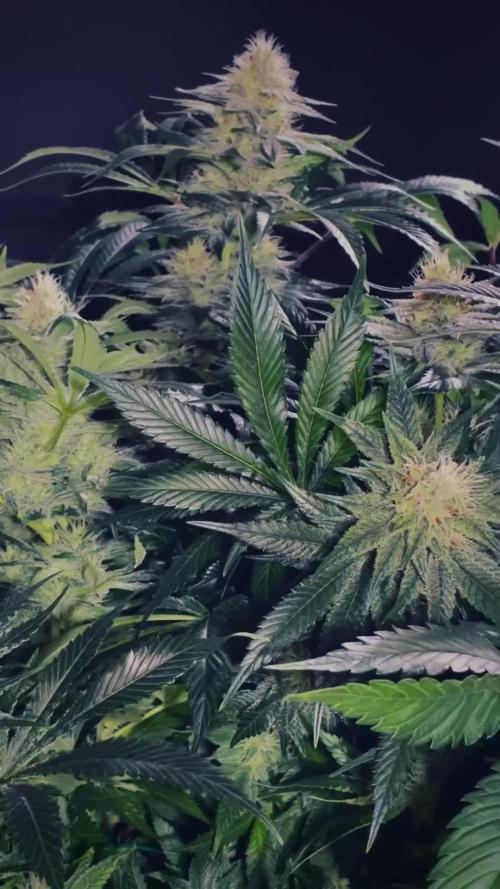
Well, did not take her out of the tent for pictures this week cause she will surely fall in all directions. This one is huge and looks like she will get some really long and big buds.
But this will be a very tight finish for the contest. She just got five weeks left when there should be some dry buds shown … let's see if she'll make it in time!
#2
This one is still going strong. Bud development and resin production are on a high level and just hoping for a smooth finish.
Had to fix her up a bit to stabilize her already but despite this there wasn't much to do :)
Likes
7
Share


@Ieiogrow94
Follow
Eccoci qui...
Tutto va per il meglio, questa settimana non ho applicato stress alla piccola, ma ho guardato l'evoluzione che ha avuto dando i nutrienti.
Ora ha un odore davvero intenso ed uno strato di resina pauroso, vediamo come si riprende dalla defogliazione che ho fatto settimana scorsa.
Seguiranno aggiornamenti, grazie a tutti per il supporto🔥🌲❤️


Likes
2
Share


@eldruida_lamota
Follow
Que pasa familia, vamos con la novena semana de floración de estas Gorilla Melón feminizadas de fastbuds.
Vamos al lío, de las 3 plantas, me quede con 2 por espacio, siempre pongo alguna semilla de más por si no abriese alguna por no perder ese hueco del indoor.
También se trasplantaron a su maceta definitiva, en este caso de 7 litros que además provocó un shock que también solucione.
El ph se controla en 6.2 , la temperatura la tenemos entre 20/24 grados y la humedad ronda el 50%.
Las flores están bien prietas y sacan unos aromas afrutados y dulces increible, está acabando de madurar pero no veas como se han puesto.
Hasta aquí todo, Buenos humos 💨💨💨
Likes
7
Share


@ChitownCannaChica
Follow
Flushing her out this week-
Only drawback this entire grow was she was super nitrogen sensitive. Barely fed in veg and followed the advance nutrients and green gro protocols cut in half— and she got a bit of a nitrogen claw.
Other than that, fading nicely.
Great structure, decent frost, terps are more earthy/piney now versus runtz (we know that can change)
These ladies have massive fan leaves and are shorter in stature- making it an easy grow. Will be harvesting soon.
🏻💚
Likes
101
Share


@DogDoctorOfficial
Follow
One more week up we go :)
i'.m doing 14h light 5h out 1h light 4 out since they are enjoying it so much i'm going to keep it up until i change to 12/12. the one hour ligth in the midle is just to prevent them from switching to flower.
I'm Trying too keep it arround 500 umol/s/m2 for a total of 15h a day ligth for now this guives me a 27.00Mol/M2Day, i know i could go up to 34.00Mol/M2Day but sometimes less is more and i dont want to take my girls to a point were they are so tired that they cant process more light
I'm learning and testing all this since it's my first time growing with this tecnologie , but i belive we have to keep moving fowerd and i belive this is the road to walk 😅
Girls:
1-BlueBerry
2-Alaskan Purple
3-Poyote Gorilla
4-Hindu Kush
5-Whitw Mango
6-Super Glue
7-Badazz Cookies
8-S.A.D.
tent -8x8 / 2.4x2.4 but i'm only using 1/2 so 4x4 / 1.2x1.2
Led - Lumatek 465w Compact Pro at 75%
All i Grow is medicine for myself,
Stay safe, stay tuned and B Happy
Peace out


Likes
37
Share

@DogDoctorOfficial
Follow
🌱 Week 6 Veg Report: Terpyz Mutant Croco Adventure 🌱
Hey, Grow Fam! It’s week 6 in our Terpyz Mutant Mentha de Croco veg journey, and what a ride it’s been! These mutants are taking their sweet time growing, but with each passing day, I’m falling more in love with their quirky, unique beauty. Every plant is a masterpiece of nature—peculiar and stunning in its own way. 💚
Growth Highlights:
The slow and steady growth continues to reflect their resilience. These Croco beauties are thriving despite cooler temperatures this week—daytime temps sitting around 18°C and dropping to 14°C at night, paired with 65% RH. They’re proving to be tough little warriors, adapting to the environment like champs!
Even though their growth is slower than usual, the details in their leaves are breathtaking. Each plant has its own story to tell, and I’m loving the diversity in structure, color, and patterns. It’s like watching art unfold in slow motion. 🎨
Nutrition Update:
This week, I’ve kept feeding consistent with Aptus Holland nutrients—but remember, we phased out the liquid All-in-One formula since the All-in-One Pellets provide everything they need for now.
Here’s the mix for this week:
• Regulator: 0.15 ml/L – Building resilience and helping them adapt to the colder temps.
• Start Booster: 0.25 ml/L – Encouraging root health and giving them a gentle push forward.
• CalMag Boost: 0.25 ml/L – Supporting robust leaf growth and preventing deficiencies in these chilly conditions.
The pellets are doing a fantastic job of slowly releasing nutrients, ensuring that the plants get a steady supply without any risk of overfeeding. Aptus Holland’s organic-mineral blend continues to impress me with its balance and efficiency. Truly a grower’s best friend!
Decisions Pending: Flip or Clone?
I’m still holding off on flipping to flower or taking clones. With their slow growth, I want to give them all the time they need to reach a size where I can confidently determine sex. Whether I decide to flip for a week and revert, or take clones for sexing, will depend on how they progress in the next couple of weeks.
It’s a reminder to embrace patience in growing. Every strain, every phenotype, every plant teaches us something unique about nurturing life. 🌿
The Beauty of Photography:
This week, I brought out my trusty Sony A6000 and Nikon DSLR to capture the intricate details of these plants. From the mesmerizing leaf patterns to water droplets reflecting their surroundings, these frames truly showcase their unique personalities.
Why Cameras Over Phones?
• Lens Power: Swapping out lenses allows me to get super close for those macro shots, capturing details that even the best phones can’t touch.
• Dynamic Range: Cameras handle light and shadow better, making every photo a true work of art.
• Depth of Field: Blurring the background helps highlight each plant’s unique features.
Sure, phone cameras are convenient, but nothing beats the joy of immortalizing these beauties with the precision and creativity of a good DSLR or mirrorless camera. 📸
Shoutouts & Love:
Massive thanks to Terpyz Mutant Genetics for these fascinating seeds, Aptus Holland for keeping the nutrition game strong, Pro-Mix Soil for the rich growing medium, and Future of Grow for providing stellar lighting!
A big shoutout to TrolMaster for making environmental control a breeze, and to Grow Diaries for being such an incredible platform to share this journey. Last but not least, a heartfelt thank you to the entire community—followers, supporters, and even the curious passersby. Your love, questions, and feedback fuel this adventure!
Final Thoughts:
This week has been all about patience, adaptation, and marveling at the uniqueness of nature. Each plant is a little piece of art, and I’m grateful for the opportunity to nurture and share their journey.
Keep following along here on GD, and don’t forget to check out my Instagram and YouTube for more behind-the-scenes content and stunning photos.
Growers Love to You All! 💚 Let’s Grow, Let’s Share, Let’s Thrive Together!
Genetics - Mentha De Croco
https://terpyz.eu/products/menta-de-croco-fern-type?_pos=1&_sid=e9237cbcb&_ss=r
DogDoctorOfficial Discount Codes @ terpyz.eu - DOCTOR 15% off
Nutrition - @aptusholland
https://aptus-holland.com/
Led Power @ F.O.G. Future Of Grow
https://www.thefuturofgrow.com/en/online-store/BLACK-SERIES-600-p489093171
Controls @ TrolMaster
https://www.trolmaster.eu/tent-x
As always thank you all for stopping by, for the love and for it all , this journey of mine wold just not be the same without you guys, the love and support is very much appreciloved and i fell honored with you all in my life
With true love comes happiness Always believe in your self and always do things expecting nothing and with an open heart , be a giver and the universe will give back to you in ways you could not even imagine so
As always, this is shared for educational purposes, aiming to spread understanding and appreciation for this plant. The journey with nature is one of discovery, creativity, and respect. Let’s celebrate it responsibly and continue to learn and grow together!
Growers Love To you All 💚

Likes
92
Share

@DogDoctorOfficial
Follow
Week 7 Veg Report 🌿✨
Hey Grow Fam! 🌱 Week 7 of veg is here, and let me tell you, the grow room is buzzing with life! Each of the girls is showing off her unique personality, and I’m especially stoked about the Papaya Zoap—she’s really coming into her own! The scrog net is nearly filled out just how I wanted it, and I can feel we’re so close to flipping to flower. The anticipation is real! 😁
But before we get to flowering, let’s take a dive into something that makes this grow so smooth—ThinkGrow LED drivers and cables.
ThinkGrow LED Drivers – Plugging Into Success 💡🔗
This week, I had a chance to work deeper with the ThinkGrow LED system, and honestly, it’s like a dream come true for efficiency. I’ve been using the TLD-4 Four Spectrum Control Channels Model One LED Driver, and let me break down how it works. The drivers attach directly to the bars—super sleek and no extra bulk. And, the connections? It’s a matter of matching the male and female connectors on the TDC-2 Daisy Chain Cord. It’s like a simple puzzle that snaps together perfectly. The TDC-4 cord takes it to the next level, connecting the top bars to the ICL-300 Inner-Canopy LED Bar, giving complete control and balance across every layer of my canopy.
Why is this important?
The driver-to-bar connection ensures that each LED bar is operating optimally, and the daisy-chain system makes it effortless to manage multiple bars without a ton of wires everywhere. It’s neat, efficient, and delivers even light distribution, which my plants are loving! 🌞
Are My Girls Ready for Flower? 🌸
When I look at the plants up close, it’s like they’re whispering, “Flip me to flower already!” 😆 Their growth has been so vigorous, each filling out the space with character, and that scrog net is almost fully covered. So, I’m thinking we’re super close to the big switch. Each plant has its own pace, but as a whole, the grow is looking fantastic!
Room Stats – Tuning Into the Environment 🌡️
The TrolMaster system is still killing it with data and control, making it easier for me to keep everything balanced. Here’s a quick breakdown of the week’s environmental numbers, and a few jokes along the way! 😜
• Room Temps: Max 25.5°C | Min 24.4°C (Keeping it cool but not too chill!)
• RH: Max 76.4% | Min 67.1% (Humidity stays right where it needs to be.)
• CO2: Max 832 ppm | Min 420 ppm (Shout out to that magical 420! 🌬️😂)
• VPD: Max 1.06 kPa | Min 0.64 kPa (All dialed in for peak veg mode.)
Light Levels – All in the Details 💡
• Max PPFD: 506 | Min 0 (because, you know, when the lights are off, it’s dark! 🌚😆)
Keeping the light intensity balanced, and using the ThinkGrow LED system to spread that goodness across the entire canopy, I’m seeing explosive growth. Those PPFD levels are perfect for this stage!
Water & Nutrients – The Lifeline 💧
• Solution pH: Max 6.32 | Min 5.78 (Keeping it in the perfect range.)
• TDS: 355 ppm steady (Every drop counts, right?)
• Solution Temp: Max 23.5°C | Min 22.3°C (Keeping things cool, just like the grow!)
And medium moisture? It’s a solid 100% thanks to my AutoPots and the genius of the AquaValve system. No electricity needed—just gravity doing its magic. It makes my life so much easier, and the girls are loving the consistent hydration! No more worrying about under- or over-watering.
Why I’m Obsessed with TrolMaster 📱
I can’t talk about this grow without shouting out the TrolMaster system. Every bit of data—whether it’s temperature, RH, VPD, CO2, light intensity, or pH—gets tracked and displayed in real-time on my app. It’s like having a grow assistant in my pocket, making sure I can monitor and adjust at any moment. The level of control I get with TrolMaster is out of this world, and it’s helping me keep everything dialed in perfectly.
Ready to Flip Soon 🌸
With the Papaya Zoap filling out so nicely and the rest of the plants following suit, I feel like we’re right on the edge of flipping to flower. It’s going to be a smooth transition, and I can’t wait to see these beauties bloom!
Stay tuned for next week, where we might just make that flip! 😉
Environment Stats Recap 📊
• Room Temp: Max 25.5°C | Min 24.4°C
• RH: Max 76.4% | Min 67.1%
• CO2: Max 832 ppm | Min 420 ppm (Seriously, shoutout to 420 again! 😂)
• VPD: Max 1.06 kPa | Min 0.64 kPa
• Light PPFD: Max 506 | Min 0 (obviously, when the lights are off! 😜)
• Solution pH: Max 6.32 | Min 5.78
• Solution Temp: Max 23.5°C | Min 22.3°C
• Medium TDS: Max 430 | Min 420 (I can’t get enough of these 420 jokes! 😆)
Final Thoughts 💚
This week has been a blast! Between the ThinkGrow LED system and the TrolMaster gear, I feel like I’m pushing the limits of what’s possible in indoor horticulture. Everything is dialed in, the plants are healthy, and the data just keeps showing that we’re right on track.
Shout Outs!
As always, huge thanks to TrolMaster and ThinkGrow LED for the amazing gear, to Aptus Holland for their top-notch nutrients and Pro-Mix for the best soil i have used so far. Big love to the seed banks, the amazing Grow Diaries community, and all my followers—you guys make this journey so much more exciting. Don’t forget to catch up on my social media, Instagram, and YouTube for real-time updates and exclusive content!
Stay tuned for more—next week is going to be epic!
DogDoctorOfficial Discount Codes so you can save big on your next check out 💚💚💚
Kannabia - DOGDOCTOR 30% off
SeedsmanSeeds - DOGDOCTOR 10% off
CannaKan- DOGDOCTOR 15% off
terpyz.eu - DOCTOR 15% off
The Neutralizer - PORKIT5-DOG 15% off
As always thank you all for stopping by, for the love and for it all , this journey of mine wold just not be the same without you guys, the love and support is very much appreciated and i fell honored and so joyful with you all in my life 🙏
With true love comes happiness 💚🙏 Always believe in your self and always do things expecting nothing and with an open heart , be a giver and the universe will give back to you in ways you could not even imagine so 💚
Friendly reminder all you see here is pure research and for educational purposes only
Growers Love to you all 💚💚💚


Likes
39
Share


@Belverde
Follow
Hello guys😊.. Final week with this two beautiful PEYOTE CRITICAL❤️😪🤗...
very good strain, for now..
The smell is intense...kushy definitely..but with some other notes.. Trichomes was super milky and, at list, 10% ambra..
The leafs still a little bit green, for my usual harwest time.. sometimes this happens with some genetics...but the final product always beeing clean and super tasty... But honestly, the one Peyote C. in the other diary, with S.Soil , was much more light green leafs and purple..
I don't know.. We will to see it.. Anyway... Next time.. Harwest day😎..
See you in 5/7 days..
Thank you so much for reading 🙏...
Hope you enjoy..
bye ✌️


Likes
6
Share


@Dopeyvan87
Follow
Pictures coming soon, they will be made by my friend Bean, he studies cinematography as well. I'm excited to see his pictures. Plants are doing very well. Sun has been out and the plants have been growing. Accidentally misread the dosage of fish force but they were able to handle it. I also just received some advanced nutrients, Carboload and Tarantula. It says to give tarantula at the beginning of the veg and flowering state but I was late..Still thought I would give it a try. I also have some leaf discoloration on Walvisje, its just half the leaf. Pictures wil come later!
07/14- Supercropped Pumpkin Scone yesterday, may have gone a little overboard but she still looked good today regardless..
Likes
15
Share


@BlaKX
Follow
Uiii ich habe es geschafft beide Grows vollständig hochzuladen auch wenn der erste lückenhaft und sehr früh ernten musste hat sich für diesen Grow schon rentiert.


Likes
25
Share


@Dunk_Junk
Follow
She is growing well this week. Making leaves to catch the lovely light!