





Likes
7
Share

@Sundancers
Follow
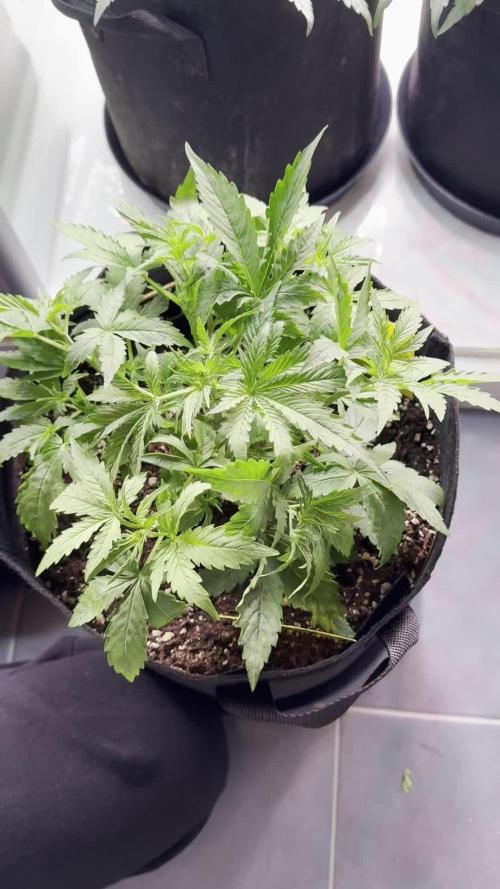
In der letzten Woche hat sie extrem an Biomasse zugelegt zu unserer Freude. :-)
Trotzdem ist sie im Verhältnis noch sehr klein. Deshalb haben wir uns entschlossen, sie nicht zu toppen und kein LST an ihr vorzunehmen. Im späteren Verlauf eventuell noch HST, aber als ersten Versuch lassen wir der Natur ihren Lauf. Die Cinderella soll einer der schönsten Pflanzen sein -- Wir werden sehen :-)

Likes
18
Share


@DaddyPrime
Follow
4/8 frosting up more and more and buds plumping up but not much. I feel its key to note that ine of the plants is more short stocky and the other has greater internodal spacing

Likes
50
Share


@Fibro_Witch
Follow
It was a good week for Night Nurse👍
Now that they're in the ground they're doing much better and putting out more growth.
The one on the end could have better color, since her new growth is a bit yellow. I gave her an extra feeding last night after I transplanted some Calendula into the bed since it's a good pest repelling companion.
We're getting some much needed rain today🙏
Otherwise there's not much else to report!
Update 6/26- I totally forgot to add that on Monday the garden got a spraying of horn manure. Horn manure is a biodynamic preparation of cow manure that's been fermented in a buried horn. This results in a material that's teeming with beneficial flora and fauna for the soil. Ideally it would be sprayed prior to planting in the spring as it encourages healthy root growth. I purchased the pre-potenized so that I only had to spend 20 mins stirring rather than an entire hour. That would have been brutal😵
I sprayed it at night when the earth is breathing in and used a spruce bough to sprinkle it over the plants in the garden. The extra icing on the cake was that there was a rain the day before, and another the day after I sprayed so it was well watered in.
Likes
12
Share


@CannaDiaries420
Follow
Week 7
Mars Hydro TS1000 has arrived.
plants starting up te flowering stage.
did some light defoliation.


Likes
Comments
Share


@Laylowandgrow
Follow
Start of week 5, everything is healthy. Most of the plants are short I’m guessing those are the ones thats grape ape dominant. Only 1 plant ( Z 1 ) is a fast grower. They are now under 750 watt hps for the rest of vegg. Last week of vegg. Then flower for 10 weeks.

Likes
35
Share


@Papablob
Follow
Pas sur que le fi ming est marché. A oui ! les 12/12 c'est pour deux photopériodiques en cour . Puis pour voir le résultat.
24/03 Mmmm.. fi ming un peu tôt peut-être.. Jai l'impression...Nuit froide aussi, 16 environ.
26/03 ouaip! fi ming raté. Ratée 😭
le log. de traduction déforme més phrases...
réorganisation des filles...
Likes
2
Share


@JakeTheGrower
Follow
That’s all she wrote ladies and gents! As seen previously in this grow diary, this was a micro plant. Only yielded a couple buds but they are glorious! Beautiful color, reasonably frosty, pungent sweet citrus and berry aroma. Looking forward to growing out this strain again - properly next time.

Likes
54
Share


@Fatnastyz
Follow
11-29
Bad news, Banana Purple Punch has been let go. 😭 She was very stunted and tiny, so I made the bold decision to call it. Thought about letting her finish, but she was really small.
But Strawberry cheesecake is making up for it!.
This thing seems super happy atm! She has jumped to around 12 inches. Stretch is officially on!
Triple grape is rockin too, few flimsy leafs, bud branches. One of the branches, kinda twisted itself. Imma look into that one. But both rockin and lovin the EM1.
More importantly than the rest! I still haven't over watered or fed. 😁💪
Time will tell, but I'm staying the course!
Happy Holidays 😁🤘
12-1
2k water, silica 3ml, cal/mag 3ml, drops balance 1ml and some dust of yucca. 6.2
Stripped GC of anything blocking anything else .
Couple blocked bud sites too. Wont touch for at least 3 days. Maybe 4, we will say next water? She may be a bit stressed 😂
Im sure the stripping didnt help. 💪🤘
3x- 11.5 inches tall
Scc- 12.5 in tall
.
.
Likes
6
Share


@masterofsmeagol
Follow
5/4 I stupidly watered everything this morning. They were pretty much perfect weight for transplant......then I watered them. Oh well. If that's the worst mistake I make I'll be ecstatic. Went back over and found my 1 gal and 2 of those wierd slanty airports that tapers and holds like a gallon and a half and washed them. I mixed up 12 gallons of soil in a garbage bag and mixed it thoroughly with my gloved hands. It's mixed good. Looking at my plants in sadness thinking, "today could've been the day" and noticed a Special Kush of average size I didn't water that weighed in the 220's. I was happy. I filled the pit arpund a cup before removing it leaving the perfect hole. Mykos and water were poured in. Plant came out of the cup REALLY easy. Suprisingly easy. This wasn't totally dry. I was amazed it came out so easy so I kinda rolled it around looking at the roots. I started lowering it in the hole and I felt something break away but it webt DIRECTLY into the hole made for it. I tucked some soil around it but it was pretty tight from packing it around the empty cup. Didn't take a picture but the plant is fine. That was an average size plant too. So I may have to give some of the strains I popped later a little longer before I transplant. After everything's been transplanted I'll need to change lighting again. I think I'll open the window and use the hps and the l.e.d on the days and nights cThat's these girls won't be hardening off. I so wanna go plant those others but my intuition tells me to wait until morning and it's been serving me well. A couple can stay in cups longer. Not much longer but still.
5/5 Transplanted everything but two this morning into 1 gals with 1/2 happy frog half ocean forest. Mykos and water used during transplant. Found put the l.e.d was on for 24hrs for a while. I made sure the timer switch was ON but it was a different cord plugged in. Oh well. All transplants went perfect. I'm picking up an adapter for the outlet so I can plug the power strip into the timer and only use one timer. I had to hang the 150watt hps back up with the 1,000 watt equivelant 105 true watts. I hope this lighting setup works. Chemdog #4 and One MK Ultra will be transplanted later today or later in the morning. I also opened the shade to the south facing window. Shits getting real.
EDÌT: I FINISHED TRANSPLANTING THE LAST TWO PLANTS AND PICKED UP THE ADAPTER SO I COULD HANG THE HPS NEXT TO THE L.E.D. THEY WERE FIBE WHILE I WAS GONE. EASIEST TRANSPLANTS EVER. THEY ALL LOOKED PERKY AND HAPPY SIX OR SEVEN HOURS POST TRANSPLANT. I OPENED THE CURTAIN TO (SOUTH FACING WINDOW) BUT I MADE SURE THE PLANTS WEREN'T IN THE DIRECT LIGHT. EVEN THOUGH IT WOULD PROBABLY BE FINE. LAST TIME I HAD SEEDLING IN DIRECT LIGHT. I'LL PLAY IT BY EAR BUT IM HAPPY.
EDIT 2. Went back over to meditate by the stream and do my qigong. It's 75 and BEAUTIFUL today. The girls will be going out for a few hours on days like this. Anyway when I went in I was surprised to see everything looking nice and happy with praying leaves. Nothing is in direct sunlight but damn that window let's in a lot of light.
5/6 Girls LOVED the transplant! They seem to be all happy. No stress. Easiest transplant I've done. Leaves are praying upwards so I think the lights are approx tje right distance. They'll be going outside soon to harden off. It's been in the 70s but it's rainy now. I'll play it by ear according to weather. I'll continue to monitor lighting and I may lower the hps.
5/7 The soil was super dry when I went over this morning. Everything looked awesome though. I used about a half gallon watering. I don't want to water to run off. I want to keep the nutes IN the soil. It's also easier to fix an undet watered plant than an over watered one. It came out to about a half gaterade bottle on the biggest and half that on the smallest. I'll gradually increase water after I monitor the response. The water sat on the soil for quit a while so they definitely needed it. Looking good so far.
5/8 Soil lookeddry this morning. I think I'm going to up the water. Last time I dod seeds I gave like a pink. Some plants still had a little dampness where I watered that I could see. Others looked dry but happy. I gave the REAL dry bigger ones a small circle around the rootball. Just in case. I'm thinking of lowering the hps slightly so it's at least level with tje L.E.D. That window being open gives tons of light. If u moved them slightly left they'd get DIRECT sun most of the time. I'll be bringing them outside soon to start hardening them off.
EDIT: WENT TO CHECK THE GIRLS AT 5 TO MAKE SURE THEY WERENT DRIED OUT. THESE GIRLS ARENT JUST GETTING BIGGER BY THE DAY THEYRE LOOKING BIGGER FROM MORNING TO NIGHT! ITS BEEN RAINING LIKE CRAZY BUT WE WILL HAVE GREAT WEATHER NEXT WEEK AND I'LL BE BRINGING THEM OUTSIDE. I'M SUPER HAPPY WITH GROWTH SO FAR. ILL PROBABLY HST (TOP/FIM) AT THE NEXT NODE. I WANT THEM TO SETTLE IN NICELY BEFORE STRESSING THEM.
5/9 I may have stupidly uploaded doubles of pictures from today. Soil LOOKED real dry. I gave the plants their first real watering. I still went light. Almost a gallon with all plants. I know many say I should be watering to runoff but I want to keep the nutes in the soul as long as I can I don't want to overwater. I always start out careful. Once they show they xan tolerate it I'll increase water next time. This weekend it will be raining but after that we are getting some real good weather and I'll he taking the girls out to begin hardening off. I also need to take a look and top/FIM the plants now that they are settled. Also need to wash grow bags and sanitize outside.
5/10 It's pouring out. Horrible night and morning but this is about cannabis. After the watering ALL the plants shot up in size! Substantially. Leaves are over the sides of containers. I think I'm somewhere close with the watering schedule. I may bring the hps light down a little. I also NEED to start HST. I need to FIM and/or top these girls. Unfortunately I've been dealing with medical problems of my wife so I haven't got to it. If I get some sleep I may do something this morning or in the afternoon.


Likes
5
Share


@Adkguerrilla44
Follow
This plant is the most robust vigorous marijuana plant I have ever grown! It is absolutely insane. I thought she was done stretching and bushing out but boy was I wrong shes going to be over 6ft tall and almost 10ft around and it smells like I dropped the plant in a bucket of 1 year old skunk piss lol very much looking foward to this one


Likes
11
Share


@Professor_Daank
Follow
Ummm... get Advanced Nutrients. The amazing difference is differently amazing. I can't say anything bad about GHE, it's just insanely better than over here on the Advanced Nutrient side of things. Noticeable differences in 3 days.
If you have any questions, send me a message. I've done a ton of research on Advanced Nutrients and can basically tell you "what's what" in comparison to GHE and save you a couple bucks. Knowledge is power, friends!
I'm still using my GHE Diamond Nectar in-place of Advanced Nutrients Rhino Skin until the bottle is gone. It's all humic acid, no big deal. I'll change to AN when I'm done.
My buds are purple. Never in a million years would I have guessed I got purple genetics on my first grow. We'll see if they stay around!
Defoliation: Only larger fan leaves to open canopy.
Day 46 - 8/12: We had a huge storm that did not knock our power out, luckily. All of the girls are thriving and tomorrow I receive the remaining nutrients. They are going fucking bananas. Temps are 77s and humidity is 45-55. Perfect.
Day 47 - 8/13: Holy fuck.

Likes
4
Share


@Sadom
Follow
15.08.: Die zweite Blütewoche hat begonnen und beide Pflanzen haben sich seit der Umstellung gut entwickelt. Da ich vermute, dass die G41 noch weiter wachsen wird, habe ich ein zweites Netz zur späteren Stabilisierung installiert. Das zweite Netz hängt jetzt auf einer Höhe von 1,30m, sodass die oberen Spitzen der G41 bereits durchgucken. Damit die Pflanzen ihre Energie auf die wichtigen Bereiche konzentriert, habe ich bei beiden Pflanzen ein Lollipopping durchgeführt. Dabei hab ich alle Blätter, Seitentriebe und Blütenansätze unterhalb des ersten Netzes entfernt. Diese Blütenansätze liegen so weit unten, dass hier kaum Licht ankommt und sie am Ende stark unterentwickelt sein werden. Idealerweise hätte ich damit noch ein wenig gewartet, aber da ich die kommenden 9 Tage im Urlaub bin wollte ich es vorher noch erledigt haben, das gleiche gilt für das Netz. Updates werden in der Zeit auch eher schwierig, aber vielleicht bekomme ich ein paar Fotos zugeschickt.
18.08.: Ich habe Fotos zugeschickt bekommen. Anscheinend steckt die G41 immer noch in ihrer Stretchphase, da sie das 2. Netz auch schon ein gutes Stück überwachsen hat.
20.08.: Heute kamen nochmal ein kleines Video und ein Foto von der G41. Der Wachstum wird langsam weniger und man sieht, dass sich der Stretch dem Ende neigt. Am Ende der 2. Blütewoche hat die G41 die PBB in Sachen Höhe komplett abgehängt. So wie ich vermutet hab, war der Stretch von der PBB nicht mehr allzu dolle, sodass sie wesentlich kleiner als die G41 geblieben ist. Das ist eins der Probleme, wenn man kein Monocrop anbaut. Außerdem ist der Wasserbedarf der Pflanzen gesunken, sodass die Bewässerung aktuell 10min läuft, wenn das Licht angeht. Nächste Woche bin ich wieder zuhause, dann überlege ich mir, wie ich das Problem löse, entweder mit einer Zusatzbeleuchtung, einem 3. Netz mit dem ich die G41 noch etwas runterbiege oder beides. Da mein Mitbewohner heute vor Beginn von Blütewoche 3 ebenfalls wegfährt, hat er mir gestern noch die aktuellen Daten der Pflanzen zugeschickt. Daher passt es nicht ganz mit dem Diary, ich denke aber, dass es der beste Kompromiss ist.

Likes
9
Share


@Oldwied
Follow
Day 63
Flower #18
The SCroG chapter closed.
The largest stretching phase is complete and the inflorescence is becoming denser. That's why I'm letting the lady grow now.
Light Power: 80 to 100% in two days
Day 61
Flower #16
Watered with 2,5L freshly brewed compost tea
Sprayed with freshly brewed compost tea
Likes
80
Share


@Qlimax
Follow
Hello and we are at the end finnaly!! I harvest them on day 64!!! Harvest was amazing some flowers diffrent then others but cus of my noob box and all i am rly imprest and heppy abaut whole journey,this site helped me alooot!!!TYWM!!
Buds are rly nice and they smell even better!! 😂
I was thinking of buying LED but.......i will grow indoor onley at winter and MH/HPS give alot of heat so is kinda rly nice....and i rly love how they grow this time so.....🤘
🤝For next grow i decided i will ..🤝
👉.more&sooner& etter LST then this time!
👉more def on ending.
👉Gonna buy CaMg fot sure! and mybe smth for roots/flowerig (didnt decide yet)
👉Better/stronger fans for better air flow
👉Alredy ordered magnify tool....60x 🔬zoom for 5€ from wish(with shiping)i had 32x zoom now but it wasn't enought. Still cant see tricomes clearly with 32x
👉Better reflector
👉Brought glasses so i dont destroy my eyes cus this briht light!😎
👉Ordered TDS metter
In few weeks i report final results:)...... and alredy 5 neew flowers are growing
3x blackberry 2x zkittlers from 42 😎😎🤗
Eejoy life!
Likes
15
Share


@Messypies
Follow
20/07/2020 - auto cinderella jack is exploding with new healthy growth.
Peanut butter cookies looks to be getting too big for its starter pot.
Auto critical cheese is lagging behind but was planted a couple of days after the rest as I was struggling to get the seed to pop


Likes
149
Share


@CBD_Sweden
Follow
Hi all the happy people here in GrowDiaries.
This is my second cultivation ever and it will be fun to try a bigger space than my closet grow.
First, I'm just going to say I'm done with the construction of my new growroom.
I put some pictures on the construction here in week one.
The room is 2.14 meters by 1.7 meters and has a ceiling height of 2 meters.
It provides a floor area of 3.6 square meters.
I use a 54 Watt Lightwawe T5 for germination and 2 Pcs 400 Watt HPS lamps.
I have a channel fan that replaces the room air about 40 times an hour to get a comfortable theme in the room, the air enters a fresh air intake from the outside.
The air is purified through a carbon filter to then leave the room to the rest of the basement.
Then I use that heat to heat the rest of the basement.
I will use 8 pcs 15 liter Autopots to grow with and a 100 liter water tank that supplies the pots of water and nutrition.
I will grow completely organically in soil and will watercure my buds to get the best possible medicine for me.
But there are no cultivation rooms to be displayed here, so I continue with what is most important.
Today I have put my seeds in my moisture dome and hope the seeds have germinated within a few days.
I am very excited to see how the new growroom will work and how this Blue cheese Auto from Royal queen seeds will turn out.
Blue Cheese automatic cannabis seeds are a cross of Blueberry Automatic and Cheese Automatic that has been perfected over five years of breeding and careful selection. The result is a feminized, autoflowering strain with superior yield, flavor, and effects to either of its distinguished parent strains.
THC: 16%
CBD: Low
Yield Indoor : 325 - 375 gr/m2
Yield Outdoor: 60 - 110 gr/plant
Height Indoor: 40 - 70 cm
Height Outdoor: 60 - 110 cm
Flowering: 7 - 8 weeks
Harvest month: 9-10 weeks after planting
Genetic Background: Blueberry x Cheese x Ruderalis
Type: Sa 35% In 40% Ru 25%
Effect: Cerebral and uplifting
Climate: Mild
..............................................................................................................................................................................................................................................................................................................................................
Update 2017-08-15. All 4 seeds have germinated and planted in small pots inside the humidity dome.
I'm so glad it worked so well and now it's just hoping they'll start growing and become 4 big healthy girls :)
...............................................................................................................................................................................................................................................................................................................................................
Update 2017-08-16. I have mixed my own soil today. Its 40% sieved peat harrow H2-H4 0-30 mm, 45% sieved peat harrow H4-H6 0-30 mm. 5% sand and 10% of compost soil. And i use 15% of perilite and mix it all together.
................................................................................................................................................................................................................................................................................................................................................
Update 2017-08.20. Nr1 and 2 grow and thrive.
Number 3 just got rid of the seedpod and is folding out the sheets.
Number 4 is a bit shy and can only be seen if you look carefully into the soil.
.........................................................................................................................................................................................................................................................................................................................................
Update 2017-08-21. Nr 1 and 2 is doing well. Nr3 is trying to catch up and Nr4 is still shy.
--------------------------------------------------------------------------------------------------------------------------------------------------------------------------------------------------------
2017-08-23. Transplanted 2 girls from humidity dome and the small germinating pots to 15 liter autopots. The other 2 girls have to wait a little more before transplant to the autopots.
................................................................................................................................................................................................................................................................................................................................................................................
2017-08-27. The girls have settled in to there new home of the 15 liters autopot after a little transplant chock. Now the real week 1 starts for me and the girls.
--------------------------------------------------------------------------------------------------------------------------------------------------------------------------------------------------------
2017-08-28. New pic and movies.
---------------------------------------------------------------------------------------------------------------------------------------------------------------------------------------
2017-08-28. Nr3 is transplanted in 15 liter autopot.
-------------------------------------------------------------------------------------------------------------------------------------------------------------------------------
2017-08-29. New movie of the girls. Its no water for 3 days now for Nr1 and 2 so the roots develop more and match the plant above the soil. The temp controlled fan is awesome, its easy to set what temp you like to have in the room. Right now its 28 celcius. And humidity is 56%.
------------------------------------------------------------------------------------------------------------------------------------------------------------------------------------------
2017-08-29.
Hello to you who read my diary, I just want to say that I am pleased that you have chosen to check in with me and in my diary.
I just want to say that I do this for myself and for a steady flow of my medicine.
Everything you read and see in my diary is 100% honest and I will never distort or beautify anything here.
I document my crops so that I can learn from my mistakes and also to look back at those different crops.
I try to update with pictures every day and with text if something special has happened in the garden.
This is my strainhunt for the best medicine and the beginning of my journey with cannabis and the cultivation of it.
-----------------------------------------------------------------------------------------------------------------------------------------------------------------------
2017-08-30. Cleaned the room this morning, just vacuuming and cleaning with chlorine solution. Im testing the fan to control temp and humidity, it works great.
Added some pics with measurements and movie. Everything is looking great right now.
---------------------------------------------------------------------------------------------------------------------------------------------------------------------------
2017-08-31. New pics and videos.
---------------------------------------------------------------------------------------------------------------------------------------------------------------------------------
2017-09-01. New pics and videos. Gave each of the girls with 2 ml Alg-A-Mic, 4ml Bio-Grow, 4ml Bio-Heaven and 10 ml Formulex mixed in 2 liters of water.
I hope they like it :)
-------------------------------------------------------------------------------------------------------------------------------------------------------------------------------------------------------------------------------------------
2017-09-02. New pics and the girls liked the water and nutrients yesterday.
-------------------------------------------------------------------------------------------------------------
2017-09-03. New videos of the girls this morning. Nr1 and 3 looks great and nr 2 is looking a little funny, maby a little stressed.
Kl. 16.00. Did some defoliation on the girls. Added video.
Kl.. 23.00. New videos, defoliation and leaftucking.
-----------------------------------------------------------------------------------------------------------------
Likes
8
Share

@Organic_G
Follow
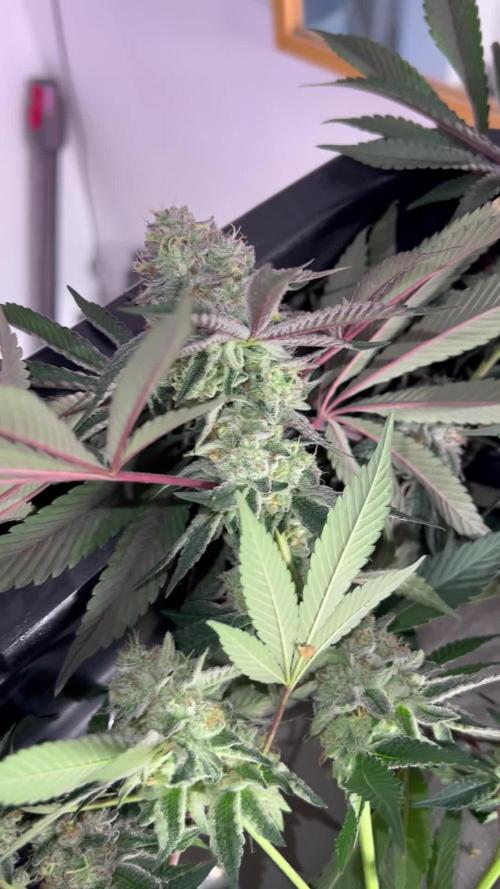
Das obere Drittel wird geerntet, sehen wunderschön aus.
Die Qualität wird von Grow zu Grow immer besser.
Super Juicy, richtig lecker und einfach wunderschön wie aus dem Lehrbuch.
Sind nun am Trocknen danach kommt der Rest ab.

Likes
37
Share


@Regenwurm
Follow
Es gibt nichts außergewöhnliches zu berichten! Man merkt das es langsam Richtung Harvest Day geht , da einige Blätter hell grün werden..... da es nur noch 2-2,5 Wochen sind, werde ich nichts dagegen unternehmen, da dies relativ normal ist. Tricome noch durchsichtig, vereinzelt 10% trüb. Düngemenge ist auf max. Menge nach Düngeplan eingestellt . Pflanzen entwickeln sich perfekt, man kann jetzt schön beobachten wie sich die Buds langsam verfärben. Schwankung pH Wert in dieser Woche = 5,7-5,85.... ec erhöht auf max nach düngeplan Hesi jedoch mit Regenwasser 1,35..... Temperaturen zwischen 18 und 24,5... Geruch sehr stark.