The Grow Awards 2026 🏆 








Likes
49
Share
@masterofsmeagol
Follow
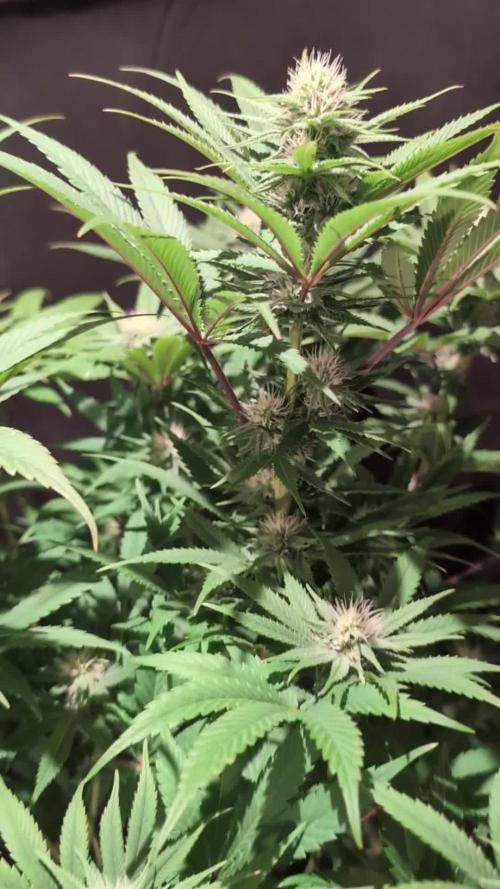
6/23 Due To The Two 8 Day weeks this week will only consist of five days to get me back on track. SEE LAST WEEK FOR DETAILS. I DID ANOTHER EIGHT DAY WEEK. I'LL DO THIS WEEK AS SIX DAYS. THAT WAY IM BACK ON SCHEDULE. WATERED 6/22. WENT BACK AT NIGHTCAND WATERED ANOTHER GALLON WITH 1/3 TSP Armor Si. I mixed the solution with kelp you kelp me but I dumped it out. I've mixed silica with other nutes before but I had read something earlier about bioavailability issues and I didn't want to risk it. My plants are the healthiest I've ever grown. I'm considering transplanting the large 10th planet that I'm light depping. I also need to develop my ipm and my nute schedule. Still gonna have to keep an eye onvthe water situation. Luckily I have a buddy in my corner that's co tinualkt Bern a great help.
WENT BACK OVER AROUND NOON. BEAUTIFUL OUTSIDE AND THE PLANTS WERE LOVING THIS SUN. I DEFOLIATED SOME BURNED LEAVES AND MIXED A SOLUTION IF KELP ME KELP YOU THAT I PLAN TO FEED TO THE GARDEN TODAY. IM HAPPY WITH HOW THINGS ARE GOING. WE HAVE SOME RAIN AND THINDERSTORMS COMING. I NEED TO GET MY IPM UP AND RUNNING AND THE NUTES ONLINE. I ALSO NEED TO DECIDE IF IM GOING TO TRANSPLANT THE LIGHT DEP 10th PLANET. Went back over to put the girls to bed at six and if was still 90 degrees. The water from yesterday had dissipated. The tops were dust dry. I mixed two gallons of kelp you kelp me and fed it to the garden. Afterwards I pointed qbd found a couple plants that were more open to the wind were a little lighter. I know tomorrow will be very hot. Maybe quarter inch of rain. However after that it will rain (showers) off and on for days. I wanted to make sure the girls had what the needed to make it through tjis heat wave until they get that rain. I had another gallon mixed up and I'm thinking I should've given it to them. Oh well. I'd rather underwater than overwater any day. I did notice a burnt top on the plant furthest from the tarp that the sun JUST BARELY TOUCHES when the rest are in shade. I'll just raise the tarp a little. These are tiny problems. Can't upload video until tomorrow.
6/24 Good thing u gave the plants that water. I know it wasn't much but we didn't get any rain. Suppised to get a qtr in today and another qtr in tomorrow. Then rain a couple more days. It's working our really good for my watering schedule lol. Yesterday the girls got there first dose of a bottled nute. They got two gallons of kelp me kelp you (1/3 tsp per gallon) and another gallon of just phed water. I was going to do another gallon but held off due to the threat of syring rain. Didn't get it bur it looks like the plants loved the kelp. It had reached 90 yesterday. They look better today. It's 70 at 9 today. I LST the 10th planet in the 3 gallon. It's getting huge. I should start a separate diary for those three light dep plants. Its cool as hell watching this. One of the purple punches is flowering pretty good. I probably should start another diary for them. I'll be starting to feed my plants soon. Wondering if I should pinch plants again. TUCKED THE LITTLE GIRLS IN AT SIX AND SHOT A VIDEO AND TOOK SOME PUCTURES. PLANTS LOOKED PHENOMINAL! GOT HOME AND AROUND SEVEN IT JUST STARTED RORREBTIAL DOWNPOURS! THE TYPE OF RAIN THAT BREAKS STEMS. I SHOULDVE PUT MY OTHET TARP UP BUT I DIDNT. I WISH I HAD. IM A LITTLE NERVOUS. I KNOW THESE GIRLS ARE STRONG THOUGH! TOMORROW. ILL ROLL THE RARP UP AND SECURE THE BOTTOM FOR FAST ACCESS. IM ALSO GOING TO KOOK INTO FINDING A TOP FOR MY CAGE I CAN USE IN INCLIMENT WEATHER.
6/25 That little qtr in of rain we were supposed to get turned into torrential downpours and high winds. Luckily no REAL damage. If you watch the video you'll see what I mean. I'm going to havecto be cognizant moving forward. Noticed a few chunks from leaves butvplants are still healthy. I'm surprised how well these girls withstood this storm. They are certainly resilient. The 2 purple punch 1 10th planet that I'm light depping are flowering nicely now. They missed all the commotion from the storm as they were inside. It's smelling good. I'm happy.
6/26 It's what a friend would say is "maineing") out. That mistcthe plants love. I'm surprised the plants are doing as good as they have been considering the wind. Will be adding nutes soon. Need to add extra supports too. Light dep
6/27 Brief periods or torrential downpours. Light depped 3 gallon 0lants are under an overhanfcwhete the hatsxrain can't hurt them but they still get sun. They are really starting to flower now! I'm going to begin feeding with a base nute and a flower nute I think. I'm thinking about giving the light dep some open sesame or something similar. I need to set up a nute program soon but the plants ALL look so healthy! And it's been raining! I've only watered like once or twice since they've been in the big pots. I've seen zero pests aside from a chunk missing from a grasshopper. Usually by now I'd have battled half a dozen things and be battling another half dozen. However I was posing from clones. These are seeds and boy don't I see the difference!



Likes
15
Share
@RDWCGrowing
Follow
2/1/2024- Pre-Germination Activities Day 1
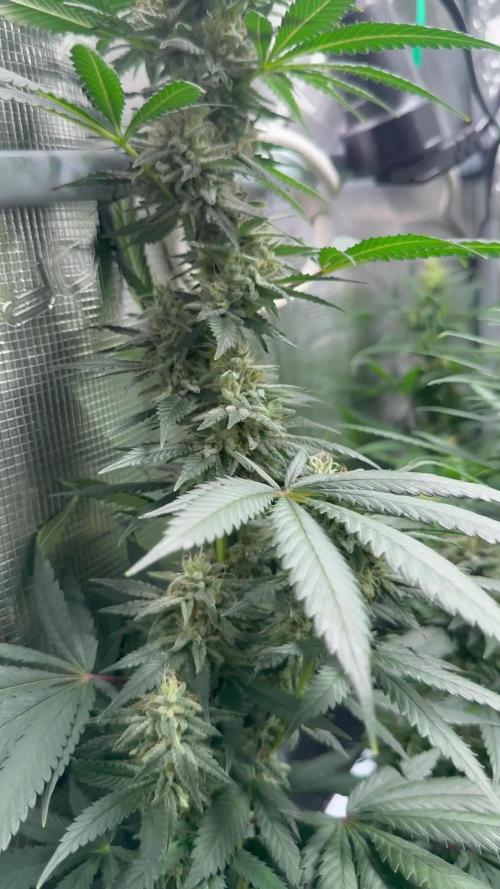
I have 21 weeks until final photo is do.. I took 3 seeds out of cold storage and will let them get to room temp for the next 48 hours before I go with Glass of water for germination. I have 3 beans because I will start from the very beginning helping ensure I present the best Pheno. This is going to be a fun one.. I am a few days away from being able to clear my tent out for this run.. I have a breeding run in right now and the Seeds are a few days away from being mature enough for me to take down the girls.
Once I get them down I will need to get my tent cleaned up and turned over right away. This is going to be close, I will have to time them to the water and into the tray at the right time.. because I will need to get lighting on them right away.. I have my 2X2 and my light ready incase I need to hold them in the cloning machine if the others are not done in the next few days.. Glad I have options that can stretch me out for a week or 2 to give me a little more time.
2/2/2024- Pre-Germination Activities Day 2
I checked on my breeding run to see how close the seeds are and if the tent is ready for me to clear and clean but alas I am still going to need a few days. I setup the emergency 2X2 and that should give me 2-3 weeks. The plan is to still wait one more day to allow the beans to warm up to room temp and then drop them in Water sometime tomorrow.
Form my Emergency 2X2 I have the following:
4" inline fan and carbon filter
Fan
VS-2000 light
2/3/2024- Germination Activities Day 0 - Dropped the Beans in.. Today is 0 day.. Go.. Go .. Go..
2/4/2024- Germination Activities Day 0-1 - Checked in on them this morning and no tap roots yet.. covered them back up and back in to the closet they went. I setup the Root Riots and the Seed tray for them. I Ensured my water that I was soaking the root riots in was PHed to 5.8 and I used RO water.
Afternoon Update: Checked on my Breeders and they are done. I started to harvest them, I took down the one I had reversed with STS and I took down the Black African Magic- All but one bud, I wanted to get some pics of that one today.
I was only able to get 2lbs into the Cannatrol because I had to be very careful to keep the bud from the plant that was treated with the STS separated from the other seeded bud that was pollenated from the plant I reversed.
Cannatrol could have held an additional 2oz of wet but not today. Ideally I need 1 more Cannatrol so I can take an entire Tent, but will figure that out. I put an additional 1.5lbs into the freezer to wait it's turn into the Cannatrol, I would have left it on the plant and taken it in 4 days when the dry cycle gets done but wasn't sure how much 2.2 lbs was equivalent to chopped and wet trimmed.
2/5/2024- Germination Activities Day 0-2 - Checked in on them this morning and 2 of them have very small tap roots out.. one still doesn't going to give them some more time. I will check in on them this evening and see if they are more open if so I will transfer the ones that are ready to their medium and seed tray.
2/6/2024- Planting Day TRUE Germination Day 0- Checked in on them this morning and all 3 of them have tap roots out. I broke the bottom of the tap root for #1 which was the biggest.. pretty sad.. I hope she survives.. I tried to be careful it just snapped off when I was trying to get it in the root riot right. Other than that all three are now in their in-between home in the 2X2 while if finish clearing and cleaning out their forever homes.
2/7/2024- Germination Day 1- Checked in on them and no surprise no sprouts yet. Sprayed the dome to moist it and light spray to the tops of the Root Riots.
2/8/2024- Germination Day 2- #3 is popped and it looks like #2 will be popped by this evening.. I got my second Cannatrol today so now I can take down the rest of the tent and get it into the dry/cure.
2/9/2024- Germination Day 3- #2 is popped as well.. so I have #2 and #3 up and still waiting to see on #1 but that might be a loss since I accidently broke off some of the Tap root when transplanting.
2/10/2024- Germination Day 4- #1 has Popped... We have ignition on all 3.. YAY!! I finished clean up and install of RDWC system, this time was unique the back left buckets 3 inch pipe wasn't seated correctly so I had to clean up about 12 gallons of water all of the floor. I also had two leaks coming from one of the Waterfall return junctions, this is why I do a full pressure test before I put anything in. I will continue to monitor it through tomorrow to ensure that I am good to go and then I will finish setting up the baskets and prepping the water to be ready for the ladies planting day!!!
2/11/2024- Germination Day 5- #1 Of course is going to be my trouble plant.. No matter what If she lives through planting in the system and making it, I think I might not cull her at all regardless, she has been such a problem, makes me wonder if she will be super worth it towards the end.. We will see as we go through this grow, but #1 has a piece of the shell on the leaves,
Other than that I set up a new thing I have been doing since last grow converting my Baskets into Sure plants so I can see exactly where the water is when I plant them and ensure I have the water up high enough that they are able to access it and grow but not too high were they are drowning.
2/12/2024- Germination Day 6- Everything seems to be going good.. will just keep them moist and let the roots grow for a few more days before I transplant to forever home.
2/13/2024 - Germination Day 7- Just keeping them Moist.
2/14/2024 - Germination Day 8 - Planting day.. they are now in the system.. :-)I had to fill the water to the bottom of the basket where I could see water on the bottom rocks and just coming up where I had created my whole/ sure plant.
2/15/2024 - Germination Day 9- Top fed just a little to keep them moist and encourage root growth towards the water. I ensured the PH is right at 5.98-6.02 range.
2/16/2024 - Germination Day 10- Top fed just a little to keep them moist and encourage root growth towards the water.
Likes
181
Share
@CaliGrown
Follow
Day 78- She is ready with about 5-10% Amber Trichomes. I can’t tell you how Amazballs she smells. Super limey like a green sour patch kid. So frosty I couldn’t be happier with Xmas around the corner I am going to be blitzed off of this for the Holiday😎 . Going into 2 days of dark then the choppers. I will upload more pictures beofore I chop and hang her. I defanned her before the dark period so I can just chop and full plant hang for about 10 days. Then into jars for cure.
Chopped Her and came out to 597 grams full plant. Can’t believe I got her on my scale but I did and was epic.

Likes
8
Share
@CRIPPYGROWS
Follow
I thought i was going too hard so I brought PPM down to 246 diluted with some rain water PH to 5.8. Leaves were coming out weird not sure if it was from the fimming i did or idk...But i did go ahead and topped her on all sites that i could top and gave her a haircut to expose those sites that were lacking exposure to light from the fan leaves blocking direct contact from the lights. Tied her down to maximize all angles of light exposure. She is pretty tough from all the shit i been putting her through to not fuck up this DWC


Likes
12
Share
@russrahl
Follow
Looking good so far, got a little bit of light burn at beginning of week but not to bad. Plants are really starting to shoot up now that the roots have hit the water. Topped all 4 at beginning of week 3 for LST prep. AC unit in tent is keeping it around 21 Celsius and water is keeping between 18-20 Celsius naturally so far. When the lights go up from 600w to 1000w though my tent will hit 25+ Celsius so I am currently testing a new water cooled thermoelectric peltier reservoir water cooler I built and I will be installing soon. So far testing it I can bring a 5gal bucket of water from 25 Celsius to 10 Celsius in about 6 hrs. So we will see what it can do with about 20gal of water in my set up once my lights get turned up. I will be posting pics/video once I get it all figured out. So far it’s way cheaper then a commercial water chiller and seems to work good.

Likes
72
Share
@BodyByVio
Follow
It was a longer road until here. With all the reading I did I still made rookie mistakes. To much nutrients and to much light stunt my plant and created some deficiencies ( CaMg). Hopefully I will do ok from now on....
Lifted the light at 3 feet on 100% power and decreased the PPM’s to 600. Hopefully that will help and I did not create to much damage.
Wish me luck. I invested a lot of time and money on this grow but the experience is not there yet. I’m ok with what it is, I’ve learned a lot from this grow.


Likes
10
Share
@barlobruz
Follow
08/30/2021
- Noticing more gnats than usual. Could be overwatering, anaerobic soil conditions, or both.
- Going to set up fly traps, starve both the plant and the gnats of water for about a week.
- Will observe any stress responses due to an extended dry period.

Likes
22
Share
@julian100614
Follow
El ciclo fué perfectamente desde el principio. Bien es cierto que puse dos plantas y una fué la que tiró realmente bien. Se realizó una poda apical que respondió perfectamente creando dos grandes puntas y con un pequeño LST conseguimos ajustar el resto de ramas a la misma altura para que crecieran uniformemente y la luz les diera de igual manera a todas las puntas.
En general me ha gustado mucho cultivar la AK48 DE WEEDSEEDSEXPRESS en primer lugar por la novedad, en segundo por la facilidad de cultivo y por ultimo por los resultados tan maravillosos de esta genetica 👌👏
Repetiré sin duda 😊💪
BUENOS HUMOS 🔥

Likes
2
Share
@GoodTimesOrganics
Follow
Welcome Back!💚
Die dritte Blütewoche ist vorbei und die Pflanze entwickelt sich weiterhin prächtig.
Die Blütenansätze bilden sich jetzt richtig aus und es wird eine schöne Budstruktur ersichtlich.
Die Sonnensegel gehen bei dieser Sorte richtig steil.😀
Außerdem ist ihr Wuchsverhalten eher Indica dominiert.
Jetzt ging die Pflanze etwas mehr in den Stretch und hat ihre indica Kolleginnen etwas überholt.
Die Werte im Zelt have ich nun etwas trockener eingestellt.
———————
🌞 Temp: 24°C
🌚 Temp: 20 °C
💨 RH: 48%
VPD: 1,21 kPa
😎PPFD: 830 mqm
———————
Stay Tuned! 💚

Likes
46
Share
@PEAKYPLANTERS
Follow
hi all, brothers of the old weed!
Welcome back for a new adventure in the PEAKY gardens
These beautiful little girls loved the scrog treatment and appear to be in excellent health
The MSNLs are the front and back ones while the Barneys are the central two
Good nuggets look forward! 🤗🌱
Likes
12
Share
@WestToEastBerlin
Follow
English
The first video was taken 2 days after the lollipopping/defoliation day, the rest on the last day of week 6.
Towards the end of week 6, the ladies showed a few symptoms of light stress, which is why I increased the distance to the lamp to 45 cm and since then things have been running optimally again.
However, I think I will continue to veg for another 1-2 weeks and only then switch to 12/12.
Deutsch
Das erste Video, wurde 2 Tage nach dem Lollipopping/Defoliation Tag aufgenommen, der Rest am letzten Tag von Woche 6.
Gegen Ende der Woche 6 hatten die Ladys ein paar Symptome von Lichtstress gezeigt, weswegen ich den Abstand zur Lampe nun auf 45 cm erhöht habe und seitdem läufts auch wieder optimal.
Ich denke, ich werde jedoch noch 1–2 Wochen weiter Vegen und erst dann auf 12/12 wechseln.


Likes
31
Share
@bioaccessory
Follow
Hey!
This week went smoothly, thanks to ZSU! 💪
Humidity dropped, and the pot began to dry noticeably faster. Otherwise, everything is according to plan, we continue to gain weight. The substrate is slightly acidic, but the view seems to be ok.
Glory to Ukraine! 🇺🇦

Processing
Likes
1
Share
@nausicaahime
Follow
week 7
first flowering week
when I finally discovered my princess was actually a prince.
12/12
flowermind ferts (6ml + 0.5g)
LST + defoliation
started seeing some thrips again, but just a few, nothing to worry
so, the plant stayed for 4 weeks in the tent, under COB LED 200W.
Likes
32
Share
@Dunk_Junk
Follow
20cm vertical growth this week!!
Things going well. Probably entering flowering in the next week.
Likes
2
Share
@LittleBigTrees
Follow
Feeding max recomended strength H&G soil A&B and they are loving it. Buds are swelling now and trichomes are more visable .
This plant is growing fast .
Likes
1
Share
@SessionMeister
Follow
I put the clones into bigger Pots once their roots were fully established. Immediately started LST and put in the clones at an angle so that light is distributed more evenly. Autos also growing well but Panty Punch is lacking because of crippled leaves. I still let her live to see how she develops. I plan to bend the clones in a circular shape so they grow into an even canopy.


Likes
9
Share
@pascal_dop
Follow
Bis auf ein paar kleiner Fehler läuft der Grow bisher eigentlich echt gut 💪