




@Mrdub
Follow
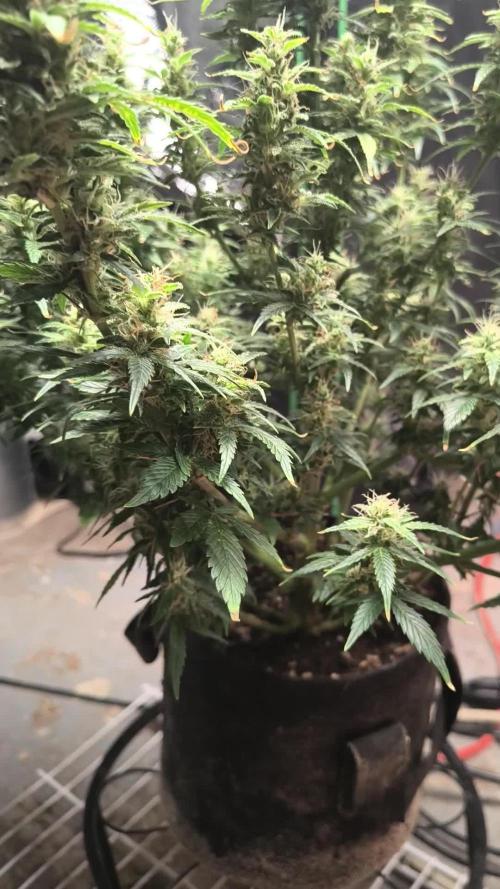
This is flexing hard bud sights every where colas starting to swell trichome coverage is getting heavy still has a little smell she has her own light cause how wide she stretches got a few burnt tips started seeing the calmag spots so increased the calmag cause they suck that up in the flowering stage she's running a little behind idk y prob cause of the lower temps but still looking gorgeous running lights at 100 percent 6.2 ph so here to another week of growing lfg


@PalmaGrow
Follow
12 - 18 noviembre
Realizamos poda apical y dejamos crecer libremente quitamos únicamente hojas grandes





@mingokoon
Follow
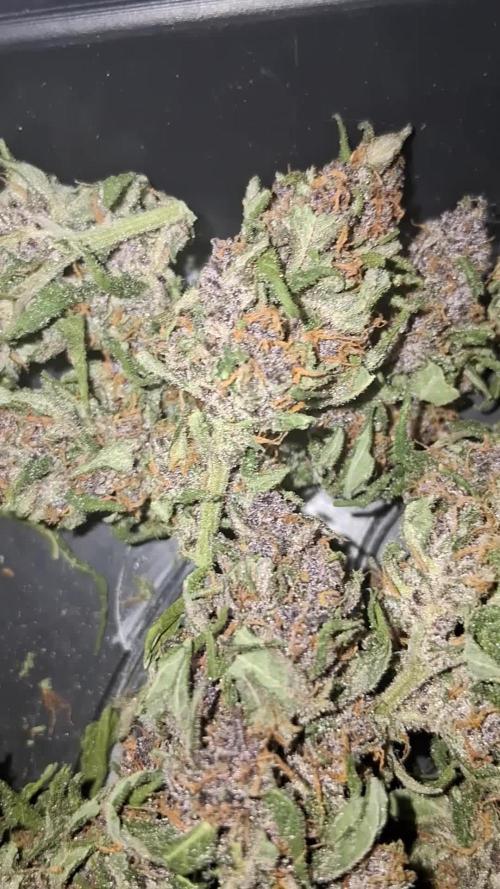
The back two parts are showing yellowing leaves so it’s time to start bleaching them for a couple of weeks. The front two pots appear to be about a week behind the front two. There are trichomes Covering the top leaves on the front Skywalker.


@TrapnTrade
Follow
So 4/5 weeks into these auto babies 👶 straight into flowering no veg then we gonna go for a crazy light switch from 7th week till finish with 10/14 darkness and see how the girls finish up after flushing.


@TgOgFaRms
Follow
Week 5 Update: Challenges and Optimism! 🌿💪✨
Hey there, fellow growers! 👋🌱 As we dive into the fifth week of this thrilling journey, I must admit that I've encountered a few obstacles along the way. But fear not, for challenges are merely opportunities in disguise! 🌱🚀
Currently, three of my plants are still looking a bit droopy, a consequence of my underfeeding mishap. 😔 However, I've taken decisive action to rectify the situation. I've increased their water intake from 0.5 liters each to a generous 1 liter each, provided every two days. Hydration is key! 💧💦
Let's talk environmental conditions. The temperature within the grow space ranges between 20°C and 22°C, maintaining a comfortable and optimal range for our leafy companions. The humidity levels hover around 60% to 68%, thanks to the diligent work of my trusty dehumidifier. Kudos to technology! 🌡️💨💨
In light of the recent droopiness, I've temporarily adjusted the LED power to 75%. It's a careful balancing act to ensure the plants receive the right amount of light without overwhelming them. We're all about finding that sweet spot! 💡🌿✨
Interestingly, I've noticed a similar issue with droopiness during my previous grow with sour stompers. Could it be a recurring pattern? 🤔 Moreover, upon activating the dehumidifier, I made an intriguing discovery. The CO2 levels have soared over 900ppm! It seems I've stumbled upon an unexpected correlation. I'll certainly be investigating this further to unravel the mystery. Science at work! 🔬🌿🔍
Well, my fellow enthusiasts, that wraps up the highlights for this week. Let's remain optimistic as we eagerly await our plants' recovery and resurgence. I have faith that they will bounce back stronger than ever, for nature has a remarkable ability to rejuvenate. 🌿🌱💚
Remember, challenges are but stepping stones on the path to growth. Embrace them, learn from them, and continue nurturing your green wonders with love and care. Together, we shall conquer any hurdle that comes our way! 😜💪🌿🌟
Wishing you all an incredible week of growth and exploration. Happy growing, lads! 🌱🌿✨😄



@Miketama
Follow
Black Opium - Week Update 🌿
Quick update on Black Opium! Reached unexpected heights with branches exceeding 50cm in length. Running a bit behind her tent mates but now bulking up nicely - the buds are doing excellent work despite inevitable light stress. For an 8L pot she’s absolutely massive! Takes up way more space than expected. Definitely keeping that in mind for the next Black Opium seed - this strain needs serious real estate!
Thanks to everyone for checking in! 🙏 Appreciate you taking a look!

shorts_status_processing


@Silverback_Guerilla
Follow
THURSDAY 11/29:
I foliar fed a few times and did a photo session.
Beatrice has given me no trouble at all. I am now a true believer in silica supplementation. I've never had plants with such excellent stalk turgidity. She is strong enough to support truly massive buds.
FRIDAY:
Beatrice is gonna be a buxom gal! She's stopped growing and is spending all her energy popping pistils now. Love it.
I foliar fed her and rotated her.
SATURDAY:
FIMing is so unpredictable..but I like surprises.😁
Her third cola isn't catching up with the other two....looks like they will possibly all merge into one massive bud. I'll spray her with ph'd spring water for another day or two to rinse off any residue and discontinue foliar feeding on her now. I watered today with ph'd water, bud candy, terpinator, calimagic, and a little boomerang.
She's directly under a 660nm spot and the 3000k quantum board..no sign of light burn, so I'm lowering it another couple inches and monitoring.
SUNDAY:
She's been very vigorously growing, she was fast to flower, she's got a really nice fragrance, and her structure allows all of her buds to get good light, but I'm a little disappointed that she hasn't shown me any of those special colors I see on other FB Blackberry diaries at week 6...😟
MONDAY:
She was still plenty moist so I'll hold off for another day on nutes.
I rinsed her with ph'd spring water again today a couple times. No worries...humidity has been below 30% for a couple days now and airflow in the tent is awesome.
TUESDAY:
I fed her a tiny dose (8oz) of ph'd water with some Fox Farms bat guano, calimagic, and boomerang, and misted her with ph'd spring water.


@Prototype0181
Follow
Day 21,
Even though i got these as a freeby, i'm happy i decided to put these among the bunch. These plants got the complete package👌Already @ Day 21 these 2 have a 👃 that just makes me happy. BTW i'm gonna up the dose P&K a bit in the next week to around EC 1.7/1.8
Rock on Growmies 🌱


@BlaKX
Follow
Willkommen 14 Tage in der Blüte,
Gorilla Punch Auto:
15.6 - 30,5cm 22.6 - 33,5cm /+3,5cm
Mimosa Cake Auto:
15.6 - 46,5cm 22.6 - 50cm /+3,5cm
Alter Tobi Auto:
15.6 - 48cm
22.6 - 59cm /+11cm
Der Sommer ist da samt Hitze es und wenn die draußen stehen würden müsste sie mit mehr Hitze fertig werden. Es herrschen von 12:00-18:00uhr Dunkelheit mit 23-25C° max 50%RLF 18:00- 23/00:00 Sind es maximal 30C° bei 80% light Leistung von 00:00-08:00 auf 100% Leistung wenn ich unter 30C° bleibe. 40-45%RLF bei Licht an.
Das Sorgenkind "Alter Tobi" ist mittlerweile sogar die größte von allen. Bud&Harz Produktion nehmen langsam Fahrt auf. Ich schätze aber mal das Autoflower auch bis zur 3 Woche ihren Strech abgeschlossen haben. Leicht entlaubt und 4 Seiten Triebe LST.
Gorilla Punch Auto fängt schon ordentlich es riechen an nach lecker Diesel und Kush. Die Buds schwellen unglaublich schön an sowie wie die Harz Drüsen. Habe eine Woche gewartet bis ich wieder richtig entlaubt habe. Vor und nachher Video hochgeladen wahrscheinlich habe ich was an den Augen aber ich entdecke lila dunkel Punkte auf den Buds hatte schon schiss wegen grauschimmel o.ä. Aber es Buds sind Knüppel fest.
Zum Schluss das HARZ MONSTER Mimosa Cake Auto!!!! Ich habe noch nie eine Pflanze gehabt die in der 2 Blüten Woche so vollkommen frostig weiß ist wie andere erst am ende der Blüte🤩😍 Ihr Mimosa typischer Geruch mit schweren Pound Cake abgang. Auch bei ihr nehmen die Buds zu vom Harz ganz zu schweigen^^
Werde den Dünger dosis erstmal so lassen und in Woche 4 nur bissi PK 13/14 . Wachsen gut und nur minimal verbannte Blatt Spitzen.


@Ema26
Follow
Day 29: she’s gone crazy since the last update, side branches have taken over the plant I’m very happy with how the LST is going, I’m hoping to get one last push up and one last bend on the main stem before leaving her to flower. I purchased a new pH Meter a few days back and it turns out I have been giving the plants ph of 6.8+ the whole time and since getting the new one and giving her 6.1 she started growing hell of a lot faster(hard to judge I suppose because of the age it could just be stretching) how ever the major curling has stopped to a extent and she just looks a lot happier, super excited to see this once continue to develop🙏 there’s a ton of roots growing out the bottom of the pot, should I be concerned about it? Thanks! Any advice is appreciated! Happy growing!✌️🍁


@DogDoctorOfficial
Follow
And the time to defoliate my freak tester as come, not that she needed that much but since i went in for the rest my giraffe went along with them all, she is lovely with her freaking weird leafs all over lets hope she likes defoliation hahahaha
cut my CaMag , figure if she is with a N block of some kind this will help, and she does not need it in flower any way so lets see
And a few days in to defoliation done and she is happy and never before, mb i should have done her sooner , she starting to put up with an amazing trichome production, this will be an amazing one for extraction mb lets see
And with the week coming to an end she is defiantly happier than she was before i spank her a bit , supper happy with this extra tall girl that aims to the moon
As always thank you all for stopping by for the love and support and for it all, i truly appreciate it all <3 <3 <3
Genetics - Fast Buds Tester 2308
Ligth - LUMATEK ZEUS 465 COMPACT PRO
Food - APTUS HOLLAND
#aptus #aptusplanttech #aptusgang #aptusfamily #aptustrueplantscience #inbalancewithnature #trueplantscience #fastbuds #dogdoctorofficial #growerslove
With true love comes happiness <3 <3 <3 Always believe in your self and always do things expecting nothing and with an open heart , be a giver and the universe will give back to you in ways you could not even imagine so <3 <3 <3
All info and full product details can be find in can find @
https://2fast4buds.com/ wen released
https://aptus-holland.com/
https://autopot.co.uk/
https://lumatek-lighting.com/
Have a few good more diaries going on fell free to drop by and say hi <3 <3 <3
<3 <3 <3 Growers love to you all <3 <3 <3





@Ultraviolet
Follow
What's in the soil? What's not in the soil would be an easier question to answer. 16-18 DLI @ the minute. +++ as she grows.
Probably not recommended, but to get to where it needs to be, I need to start now.
Vegetative @1400ppm 0.8–1.2 kPa 80–86°F (26.7–30°C) 65–75%, LST Day 10, Fim'd Day 11
CEC (Cation Exchange Capacity):
This is a measure of a soil's ability to hold and exchange positively charged nutrients, like calcium, magnesium, and potassium. Soils with high CEC (more clay and organic matter) have more negative charges that attract and hold these essential nutrients, preventing them from leaching away.
Biochar is highly efficient at increasing cation exchange capacity (CEC) compared to many other amendments. Biochar's high CEC potential stems from its negatively charged functional groups, and studies show it can increase CEC by over 90%. Amendments like compost also increase CEC but are often more prone to rapid biodegradation, which can make biochar's effect more long-lasting. biochar acts as a long-lasting Cation Exchange Capacity (CEC) enhancer because its porous, carbon-rich structure provides sites for nutrients to bind to, effectively improving nutrient retention in soil without relying on the short-term benefits of fresh organic matter like compost or manure. Biochar's stability means these benefits last much longer than those from traditional organic amendments, making it a sustainable way to improve soil fertility, water retention, and structure over time. Needs to be charged first, similar to Coco, or it will immobilize cations, but at a much higher ratio.
a high cation exchange capacity (CEC) results in a high buffer protection, meaning the soil can better resist changes in pH and nutrient availability. This is because a high CEC soil has more negatively charged sites to hold onto essential positively charged nutrients, like calcium and magnesium, and to buffer against acid ions, such as hydrogen.
EC (Electrical Conductivity):
This measures the amount of soluble salts in the soil. High EC levels indicate a high concentration of dissolved salts and can be a sign of potential salinity issues that can harm plants.
The stored cations associated with a medium's cation exchange capacity (CEC) do not directly contribute to a real-time electrical conductivity (EC) reading. A real-time EC measurement reflects only the concentration of free, dissolved salt ions in the water solution within the medium.
98% of a plants nutrients comes directly from the water solution.
2% come directly from soil particles.
CEC is a mediums storage capacity for cations. These stored cations do not contribute to a mediums EC directly.
Electrical Conductivity (EC) does not measure salt ions adsorbed (stored) onto a Cation Exchange Capacity (CEC) site, as EC measures the conductivity of ions in solution within a soil or water sample, not those held on soil particles.
A medium releases stored cations to water by ion exchange, where a new, more desirable ion from the water solution temporarily displaces the stored cation from the medium's surface, a process also seen in plants absorbing nutrients via mass flow. For example, in water softeners, sodium ions are released from resin beads to bond with the medium's surface, displacing calcium and magnesium ions which then enter the water. This same principle applies when plants take up nutrients from the soil solution: the cations are released from the soil particles into the water in response to a concentration equilibrium, and then moved to the root surface via mass flow.
An example of ion exchange within the context of Cation Exchange Capacity (CEC) is a soil particle with a negative charge attracting and holding positively charged nutrient ions, like potassium (K+) or calcium (Ca2+), and then exchanging them for other positive ions present in the soil solution. For instance, a negatively charged clay particle in soil can hold a K+ ion and later release it to a plant's roots when a different cation, such as calcium (Ca2+), is abundant and replaces the potassium. This process of holding and swapping positively charged ions is fundamental to soil fertility, as it provides plants with essential nutrients.
Negative charges on soil particles: Soil particles, particularly clay and organic matter, have negatively charged surfaces due to their chemical structure.
Attraction of cations: These negative charges attract and hold positively charged ions, or cations, such as:
Potassium (K+)
Calcium (Ca2+)
Magnesium (Mg2+)
Sodium (Na+)
Ammonium (NH4+)
Plant roots excrete hydrogen ions (H+) through the action of proton pumps embedded in the root cell membranes, which use ATP (energy) to actively transport H+ ions from inside the root cell into the surrounding soil. This process lowers the pH of the soil, which helps to make certain mineral nutrients, such as iron, more available for uptake by the plant.
Mechanism of H+ Excretion
Proton Pumps: Root cells contain specialized proteins called proton pumps (H+-ATPases) in their cell membranes.
Active Transport: These proton pumps use energy from ATP to actively move H+ ions from the cytoplasm of the root cell into the soil, against their concentration gradient.
Role in pH Regulation: This active excretion of H+ is a major way plants regulate their internal cytoplasmic pH.
Nutrient Availability: The resulting decrease in soil pH makes certain essential mineral nutrients, like iron, more soluble and available for the root cells to absorb.
Ion Exchange: The H+ ions also displace positively charged mineral cations from the soil particles, making them available for uptake.
Iron Uptake: In response to iron deficiency stress, plants enhance H+ excretion and reductant release to lower the pH and convert Fe3+ to the more available form Fe2+. The altered pH can influence the activity and composition of beneficial microbes in the soil. The H+ gradient created by the proton pumps can also be used for other vital cell functions, such as ATP synthesis and the transport of other solutes. The hydrogen ions (H+) excreted during photosynthesis come from the splitting of water molecules. This splitting, called photolysis, occurs in Photosystem II to replace the electrons used in the light-dependent reactions. The released hydrogen ions are then pumped into the thylakoid lumen, creating a proton gradient that drives ATP synthesis.
Plants release hydrogen ions (H+) from their roots into the soil, a process that occurs in conjunction with nutrient uptake and photosynthesis. These H+ ions compete with mineral cations for the negatively charged sites on soil particles, a phenomenon known as cation exchange. By displacing beneficial mineral cations, the excreted H+ ions make these nutrients available for the plant to absorb, which can also lower the soil pH and indirectly affect its Cation Exchange Capacity (CEC) by altering the pool of exchangeable cations in the soil solution.
Plants use proton (H+) exudation, driven by the H+-ATPase enzyme, to release H+ ions into the soil, creating a more acidic rhizosphere, which enhances nutrient availability and influences nutrient cycling processes. This acidification mobilizes insoluble nutrients like iron (Fe) by breaking them down, while also facilitating the activity of beneficial microbes involved in the nutrient cycle. Therefore, H+ exudation is a critical plant strategy for nutrient acquisition and management, allowing plants to improve their access to essential elements from the soil.
A lack of water splitting during photosynthesis can affect iron uptake because the resulting energy imbalance disrupts the plant's ability to produce ATP and NADPH, which are crucial for overall photosynthetic energy conversion and can trigger a deficiency in iron homeostasis pathways. While photosynthesis uses hydrogen ions produced from water splitting for the Calvin cycle, not to create a hydrogen gas deficiency, the overall process is sensitive to nutrient availability, and iron is essential for chloroplast function.
In photosynthesis, water is split to provide electrons to replace those lost in Photosystem II, which is triggered by light absorption. These electrons then travel along a transport chain to generate ATP (energy currency) and NADPH (reducing power). Carbon Fixation: The generated ATP and NADPH are then used to convert carbon dioxide into carbohydrates in the Calvin cycle. Impaired water splitting (via water in or out) breaks the chain reaction of photosynthesis. This leads to an imbalance in ATP and NADPH levels, which disrupts the Calvin cycle and overall energy production in the plant. Plants require a sufficient supply of essential mineral elements like iron for photosynthesis. Iron is vital for chlorophyll formation and plays a crucial role in electron transport within the chloroplasts. The complex relationship between nutrient status and photosynthesis is evident when iron deficiency can be reverted by depleting other micronutrients like manganese. This highlights how nutrient homeostasis influences photosynthetic function. A lack of adequate energy and reducing power from photosynthesis, which is directly linked to water splitting, can trigger complex adaptive responses in the plant's iron uptake and distribution systems.
Plants possess receptors called transceptors that can directly detect specific nutrient concentrations in the soil or within the plant's tissues. These receptors trigger signaling pathways, sometimes involving calcium influx or changes in protein complex activity, that then influence nutrient uptake by the roots. Plants use this information to make long-term adjustments, such as Increasing root biomass to explore more soil for nutrients. Modifying metabolic pathways to make better use of available resources. Adjusting the rate of nutrient transport into the roots. That's why I keep a high EC. Abundance resonates Abundance.


@Tower84
Follow
🇩🇪 Wochenkommentar – Pimabella & Sunviva 🍅🌱
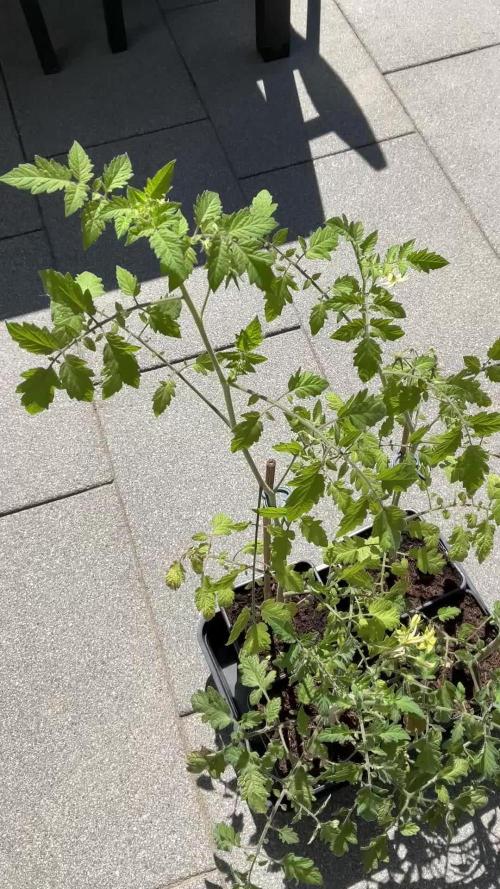
Die zwei Pimabella und zwei Sunviva schlagen sich trotz der aktuellen Topfsituation echt tapfer 💪🔥
Mit nur 2 Litern Volumen stoßen sie langsam an ihre Grenzen – man merkt, dass sie dringend mehr Platz für die Wurzeln brauchen ?➡️🌳
Trotzdem zeigen sich alle vier Pflanzen erstaunlich gesund und vital 🌿✨
Das Blattwerk ist kräftig grün, die Struktur stabil und insgesamt wirken sie gut im Saft. Besonders nice: Die ersten Früchte setzen bereits an 🍅😍 – ein klares Zeichen, dass sie sich grundsätzlich wohlfühlen.
Tagsüber geht’s schon raus an die frische Luft ☀️🌬️, was ihnen definitiv zugutekommt und sie gut auf das Outdoor-Leben vorbereitet. Jetzt heißt es noch etwas durchhalten bis Mitte Mai ⏳ – dann können sie endlich in die 30-Liter-Töpfe umziehen und ihr volles Potenzial entfalten 🚀🌱
Fazit: Leichter Platzmangel, aber trotzdem stabile, gesunde Pflanzen mit starkem Willen 💚🔥
---
🇬🇧 Weekly Comment – Pimabella & Sunviva 🍅🌱
The two Pimabella and two Sunviva plants are holding up really well despite their current pot situation 💪🔥
With only 2 liters of soil, they’re clearly starting to outgrow their space – they definitely need a bigger root zone soon ?➡️🌳
Still, all four plants look surprisingly healthy and vigorous 🌿✨
The foliage is strong and green, structure is solid, and overall they seem to be doing great. Even better: the first fruits are already forming 🍅😍 – a clear sign they’re feeling good despite the limitations.
They’re already spending their days outside ☀️🌬️, which helps them acclimate and build resilience for outdoor conditions. Now it’s just a matter of holding on until mid-May ⏳ – then they can finally move into their 30L pots and really take off 🚀🌱
Conclusion: Slightly root-bound, but still healthy, strong plants with great moment


@Olduffybastard88
Follow
Selection of plants i have at different stages i need to get around making diarys for everyone of these seeds just hit the ground running and haven't stopped growing hopefully flowering next


