


Likes
Comments
Share

@Piratebay
Follow
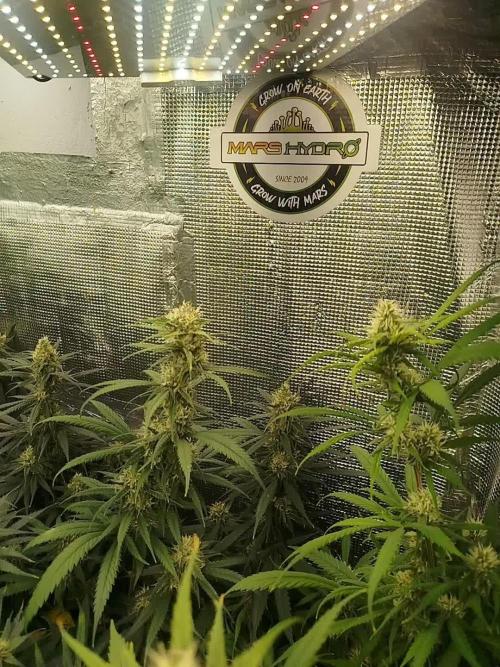
Nos vamos acercando a la recta final de los últimos 10 días.
Espectacular la cantidad de resina y los cogollos los grandes que se han quedado en esta última semana el olor se a vuelto muy marcado!
Poco a poco se va definiendo más los matices terrosos y inciensados por encima del toque a lima 🍋?
Hemos estado reduciendo la comida y la planta anda tirando de las reservas de las hojas se ve que aún está a tope comiendo.. por eso no le quite toda la comida de golpe no quiero que llegue tan justa al ultimo día.
Hoy estamos a día 62 de floración.


Likes
19
Share


@GrownwithLED
Follow
Since the humidity stayed at a very high level, it was only a matter of time...HORROR!😱 I FOUND BUD-ROT! 😭 On day 73 (=Flowering Day 49) I spotted a white fuzz on my ZHEETOS #2 plant from BIG BUDDHA SEEDS. I took it out and inspected her closer and found budrot on the main stem and in the main bud. I immediately cut off the infected parts and tried to save the rest of the plant. (see first video above) Since I do NOT want to spray my plants with any chemicals, because they are my medicine, I resort to UV-C light. I use the CLEANLIGHT HOBBY UNIT (a UV-C plant protection light from the Netherlands, that kills bacteria, viruses and fungi) and shine the UV-C light on all my plants and the soil-surface in the pots (see second video above). This will kill all the remaining spores of bud-rot (which are a kind of fungus) in my closet and stop it from further spreading to my other plants. I also immediately stop giving any BIO NOVA nutrients from this moment on, although the plants LOVE THEM. But I have to do this in order to flush the plants before harvesting them. I cannot risk and wait until the plants are fully matured, I have to do an emergency flush and harvest as soon as possible, so I dont loose the rest of my medicine to bud-rot. Hold your thumbs that I can save them for a week longer...👍

Likes
3
Share


@danielsegovia
Follow
28.05.20 Crecimiento normal.
Riego en suelo con agua y riego foliar con fertilizantes bien suave.
DÍA 11: Las transplanté a macetas de 15 litros pero con sólo 9 litros de tierra.
También agrandé el espacio de cultivo y puse un les de 1000w

Likes
9
Share


@Naujas
Follow
the girl went out into nature, although the weather is not very suitable for them yet, but I think she will manage perfectly :) I will visit them once a week :).

Likes
147
Share


@JamMAKEcan
Follow
There was a drive by shooting 4 houses over they hit a neighbor 2nd story wall..ahhh my neighborhood is a war zone lol.. An i still operating behind enemy lines lol lol.. That's a good neighbor too.. .. Have fun
Stay safe
Growers❤️💯💯
Likes
4
Share


@MADMANk
Follow
Think these will be done by end of week 8 possibly, adding UV + IR for terpes and pushing for an earlier finish!
🍋


Likes
11
Share


@Paying_Customer
Follow
Not stretching as much and the buds are starting to bulk up all the bud sights have a nice purple fade. She’s a short plant but looks like she will be productive in the end. Day 47 had to remove some of the big fan leaves that were blocking light on some of the bud sites below them. She's really starting to put on some weight.
Likes
45
Share


@Ultraviolet
Follow
2nd net is up. Early bud formations are promising. holding up to the extremes pretty well, some leaves taking minor damage, but overall, she is holding up, gave her 1 night at 50F see how she would react, stressful. Not advised as it messes with her metabolism, but I want to see if it triggers any anthocyanin response. Love to see her purp up but no signs yet.
Homework.
If Rubisco activity is impaired and it cannot properly function or regenerate its substrate, the plant's leaves are likely to turn a pale green or
lime green, a condition known as chlorosis. Essentially, Rubisco activity is highly regulated and susceptible to various environmental and metabolic factors that can cause it to become inhibited, leading to an apparent failure in RuBP regeneration due to a lack of consumption.
Rubisco regeneration is intrinsically linked to nitrogen supply because Rubisco is a major sink for nitrogen in plants, typically accounting for 15% to over 25% of total leaf nitrogen. The regeneration phase itself consumes nitrogen through the synthesis of the Rubisco enzyme and associated proteins (like Rubisco activase), and overall nitrogen status heavily influences the efficiency of RuBP regeneration. RuBisCO is a very large enzyme that constitutes a significant proportion (up to 50%) of leaf soluble protein and requires large investments in nitrogen. Insufficient nitrogen supply limits the plant's ability to produce adequate amounts of RuBisCO, thereby limiting the overall capacity for photosynthesis and carbon fixation. Maintaining the optimal, slightly alkaline pH is crucial for the proper function and regeneration of Rubisco. Deviations in either direction (too high or too low) disrupt the enzyme's structure, activation state, and interaction with its substrates, leading to decreased activity and impaired RuBP regeneration. (LIME GREEN CHLOROSIS)
Structural Component: Nitrogen is an essential building block for all proteins, and the sheer abundance of the Rubisco protein makes it the single largest storage of nitrogen in the leaf.
Synthesis and Activity: Adequate nitrogen supply is crucial for the synthesis and maintenance of sufficient Rubisco enzyme and Rubisco activase (Rca), the regulatory protein responsible for maintaining Rubisco's active state. Nitrogen deficiency leads to a decrease in the content and activity of both Rubisco and Rca, which in turn limits the maximum carboxylation rate, Vmax, and the rate of RuBP regeneration Jmax, thus reducing overall photosynthetic capacity.
Nitrogen Storage and Remobilization: Rubisco can act as a temporary nitrogen storage protein, which is degraded to remobilize nitrogen to other growing parts of the plant, especially under conditions of nitrogen deficiency or senescence.
Nitrogen Use Efficiency (NUE): The allocation of nitrogen to Rubisco is a key determinant of a plant's photosynthetic nitrogen use efficiency (PNUE). In high-nitrogen conditions, plants may accumulate a surplus of Rubisco, which may not be fully activated, leading to a lower PNUE. Optimizing the amount and activity of Rubisco relative to nitrogen availability is a target for improving crop NUE.
Photorespiration and Nitrogen Metabolism: Nitrogen metabolism is also linked to the photorespiration pathway (which competes with carboxylation at the Rubisco active site), particularly in the reassimilation of ammonia released during the process.
To increase RuBisCO regeneration, which refers to the process of forming the CO2 acceptor molecule Ribulose-1,5-bisphosphate (RuBP) during photosynthesis, the primary methods involve optimizing the levels and activity of Rubisco activase (Rca) and enhancing the performance of other Calvin-Benson-Bassham (CBB) cycle enzymes.
Biochemical and Environmental Approaches:
Optimize Rubisco Activase (Rca) activity: Rca is a crucial chaperone protein that removes inhibitory sugar phosphates, such as CA1P (2-carboxy-D-arabinitol 1-phosphate), from the Rubisco active site, thus maintaining its catalytic competence.
•Ensure optimal light conditions: Rca is light-activated via the chloroplast's redox status. Adequate light intensity ensures Rca can effectively maintain Rubisco in its active, carbamylated state.
•Maintain optimal temperature: Rca is highly temperature-sensitive and can become unstable at moderately high temperatures (e.g., above 35°C/95F° in many C3 plants), which decreases its ability to activate Rubisco. Maintaining temperatures within the optimal range for a specific plant species is important.
•Optimize Mg2+ concentration: Mg2+ is a key cofactor for both Rubisco carbamylation and Rca activity. In the light, Mg2+ concentration in the chloroplast stroma increases, promoting activation.
•Manage ATP/ADP ratio: Rca activity depends on ATP hydrolysis and is inhibited by ADP. Conditions that maintain a high ATP/ADP ratio in the chloroplast stroma favor Rca activity.
Enhance Calvin-Benson-Bassham (CBB) cycle enzyme activity: The overall rate of RuBP regeneration can be limited by other enzymes in the cycle.
•Increase SBPase activity: Sedoheptulose-1,7-bisphosphatase (SBPase) is a key regulatory enzyme in the regeneration pathway, and increasing its activity can enhance RuBP regeneration and overall photosynthesis.
•Optimize other enzymes: Overexpression of other CBB cycle enzymes such as fructose-1,6-bisphosphate aldolase (FBA) and triose phosphate isomerase (TPI) can also help to balance the metabolic flux and improve RuBP regeneration capacity.
Magnesium ions, Mg2+, are specifically required for Rubisco activation because the cation plays a critical structural and chemical role in forming the active site: A specific lysine residue in the active site must be carbamylated by a CO2 molecule to activate the enzyme. The resulting negatively charged carbamyl group then facilitates the binding of the positively charged Mg2+ion. While other divalent metal ions like Mn2+ can bind to Rubisco, they alter the enzyme's substrate specificity and lead to dramatically lower activity or a higher rate of the non-productive oxygenation reaction compared to Mg2+, making them biologically unfavorable in the context of efficient carbon fixation. The concentration of Mg2+ in the chloroplast stroma naturally increases in the light due to ion potential balancing during ATP synthesis, providing a physiological mechanism to ensure the enzyme is activated when photosynthesis is possible. At the center of the porphyrin ring, nestled within its nitrogen atoms, is a Magnesium ion (Mg2+). This magnesium ion is crucial for the function of chlorophyll, and without it, the pigment cannot effectively capture and transfer light energy.
Mg acts as a cofactor: Mg2+ binds to Rubisco after an activator CO2 molecule, forming a catalytically competent complex (Enzyme-CO2-Mg2+). High light + CO2) increases demand: Under high light (60 DLI is a very high intensity, potentially saturating) and high CO2, the plant's capacity for photosynthesis is high, and thus the demand for activated Rubisco and the necessary Mg2+ cofactor increases. Mg deficiency becomes limiting: If Mg2+ is deficient under these conditions, the higher levels of Rubisco and Rubisco activase produced cannot be fully activated, leading to lower photosynthetic rates and potential photo-oxidative damage.
Optimal range: Studies show that adequate Mg2+ application can enhance Rubisco activation and stabilize net photosynthetic rates under stress conditions, but the required concentration is specific to the experimental setup.
Monitoring is key: The most effective approach in a controlled environment is to monitor the plant's physiological responses e.g., leaf Mg2+ concentration, photosynthetic rate, Rubisco activation state, and adjust the nutrient solution/fertilizer to maintain adequate levels, rather than supplementing a fixed "extra" amount.
In practice, this means ensuring that Mg2+ is not a limiting factor in the plant's standard nutrient solution when pushing the limits with high light and CO2.
Applying Mg2+ through foliar spray is beneficial to Rubisco regeneration, particularly in alleviating the negative effects of magnesium (Mg) deficiency and high-temperature stress (HTS). While Mg can be leached from soil, within the plant it is considered a mobile nutrient, particularly in the phloem. Foliar-applied Mg is quickly absorbed by the leaves and can be translocate to other plant parts, including new growth and sink organs.
Foliar application of: NATURES VERY OWN MgSO4 @ 15.0g L-1 in a spray bottle.
Foliar sprays are often recommended as a rapid rescue measure for existing deficiencies or as a supplement during critical growth stages, when demand for Mg is high. Application in the early morning or late evening can improve absorption and prevent leaf burn.
The starting point [of creativity] is curiosity: pondering why the default exists in the first place. We’re driven to question defaults when we experience vuja de, the opposite of déjà vu. Déjà vu occurs when we encounter something new, but it feels as if we’ve seen it before. Vuja de is the reverse—we face something familiar, but we see it with a fresh perspective that enables us to gain new insights into old problems. Come walk in the enchanted forest.
Likes
5
Share


@Insaniac_0
Follow
Veg Week 4 Day 28 to 34 - 4/24 to 4/30
A lot more to talk about this week. It's time to start the AutoPot resevoir feed, 2nd Topping, and Wire Training
I waited until I saw 3 new nodes of growth (day 29) and then I topped those branches back to the first node leaving a stump for the new nodes to grab as they swell in growth. The branches are quite more stretched than I am used to, so a break is required on the Y branches as they thicken up. I tried not to break the skin and used knitting needles to smash the branches where I wanted them to bend. All went well. I then used ties to the soil to hold them down while they turn back up to the lights. By the end of the week I moved the wire ties to anchor on the main stem instead of the soil
Feed this week was a reservoir feed of 200ppm total before add-ins. I used 200ppm Veg concentrate mix (recipe week 2) and then added 1ml/gal of CaliMagic (General Hydroponics 1-0-0). I then also added 1ml/gal of CaliMagic (General Hydroponics 1-0-0) and ph balance this week was for 6.1
Feed plan next week will be a another ph decrease and nute increase. I will also Intro BloomMix - Intro AirDome Air Line - 3rd Top/Train
Videos:
Just an end of week spin
Likes
16
Share


@TAXFR33
Follow
Things are going well, the spot is almost set up. All my 16 auto holes are dug & filled with my super soil - got another 40/50 holes on the other side for my photos and semi autos


Likes
10
Share


@DrPredictor
Follow
They grew alot this week and pushed in height. Now they are producing nice buds. I started giving them nutrients this week. They loved them.

Likes
15
Share


@birdmountain
Follow
Es war keine sonderlich clevere Idee von mir die Düngegaben der Fruit Bomb P
unch für zwei Tage auszusetzen um zu sehen, wie sie reagiert. Es hat ihr nicht gut getan, die Blätter sind heller geworden und das Höhenwachstum dieser Woche hat insgesamt nur 5 cm betragen. Das sagt mir, dass der Dünger im Topf aufgebraucht ist sie von num an auf die Flüssigdüngung oder eine anderen externe Düngung angewiesen ist.
Die heutige erstmalige Düngung mit Komposttee wird sie hoffentlich wieder stärken und Kraft zum Wachsen geben.
Dem Komposttee wurde Wurmkompost, BioBizz PreMix, Wuxal Calcium Dünger, Seetangextrakt und Vinasse hinzugefügt. Das ganze in einem 20l. Eimer mir Sauerstoff angereichert und nach 22 Stunden wurden heute Morgen zum ersten Mal alle
Pflanzen 1:9 verdünnt damit gegossen.
Der Komposttee roch erdig, etwas rauchig, ganz leicht säuerlich und war auch etwas milchig geworden und nicht nur eine dunkle Brühe.
Mineralstoffmangel sollte somit ausgeschlossen sein. Diese Prozedor wird von jetzt an wöchentlich stattfinden. Da die großen Töpfe 72 L. fassen sollten die Mikroben eine Zeilt lang darin überleben können, bis zur Auffrischung in sieben Tagen.
Die anderen Tage wird weiter mit Vinasse und Bittersalz gedüngt. Ich hoffe, dass es zu keiner Überdüngung kommt. Wuxal Calcium ist neu hinzugekommen, da ich mir nicht sicher bin ob der Komposttee genug Calcium enthält.
Ich wünsche euch eine schöne Grow-Woche!

Likes
10
Share


@DeepRootsGrowTrees
Follow
ROYAL QUEEN 👸 CBG AUTO
WEEK #8 Overall
Week #3 Flower
This week she's starting to get some weight to her buds and she's looking good👍 bless to be growing CBG meds to help with cancer issues and residual side effects. Stay Growing!!
Likes
54
Share


@BudXs
Follow
Flowering, powering. Scatch an itch with loofah whilst im showering. Peanut butter sandwich washed with milk and im out again, no pleats on these slacks, a swell cardigan

Likes
14
Share


@GrowWithTheFlow710
Follow
She is slowly growing. I was able to raise light intensity up to 650 ppfd without the corner plant now. They are taking up much more water now!
*I am growing 4 plants here, but only tracking one.

Likes
6
Share

@soil2bud
Follow
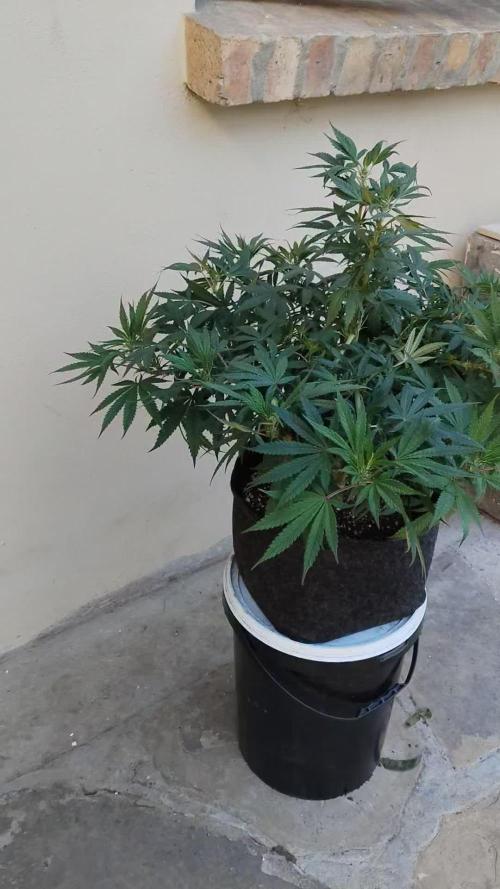
I didn't have space and started flowering her out. 1 week in I changed my mind and decided to veg her more to repot and get her bigger. I supercropped her quite hard but she has responded very well
I am going to leave the 2 tips to veg and take cuts from it...I am not sure if the hard supercrop falls under LST or HST ...
Likes
8
Share


@PlantParenthoodGenetics
Follow
Beautiful week of growth, caught up with the progress photos compared to last year at this time 💪🏽🙏🏽 We’ve started to blast past the pepper plants now, it only took 2 weeks! Since we’re into the beginning of flower we’ll be adding in the Advanced Nutrients this week to boost flavor and bud formation. Got the hay laid down as you can see and the medium to heavy rains this week are making my job of hand watering this whole garden way easier. Did some defoliation on the lower fan leaves and any early low bud formations that looked like they might not amount to much in the end. So excited to keep sharing photos of how they all progress! The best part is yet to come. Thanks to everyone learning from this diary and most of all to 42 Fast Buds for this dope sponsorship! 🚀


Likes
32
Share


@Ciocanna
Follow
From the 9th day I started adding Hesi Root Complex 1ml and 2ml PowerZyme per 1L of water. We poured out water only as needed and did not water the stem!
Day 13. I increased
Hesi Root Complex to 5ml/1L
Hesi PowerZyme
2ml/1L
We poured out water only as needed and did not water the stem!
