


Likes
Comments
Share


@DonEspas
Follow
Floraison se passe bien, les buds sentent pour le pheno
1 : Le "calippo tropical" 🌈
2 : La "runtz" 🍭🍬
3 : Zeste de citron vert 💚
4 : démarrage de la flo plus tard ou floraison plus lente je ne sais pas dire. Ce n' est pas la même variétés c'est une "Strawberry Gorilla"
Si le goût reste dans la fumée ce sera bien agréable 👌

Likes
11
Share


@sweetkaya
Follow
Harvested at day 116, had some problems of high inflow pH at week 11 that has a little decreased the final harvest, in my opinion. But I'm proud of my job cause that was the ONLY little problem in the entire grow. Keep Growing and learning everyday 🙏🏻💚🤞🏼🕉️
Likes
21
Share


@GRow_M8s
Follow
-🚿 Start "fast track" flushing in the bathroom, with the 2 plants in airpots (had the first signs of amber trichomes) + defoliation.
ℹ️ After the first drainage the TDS was 1600ppm & 1800ppm (second lemon).
- It took 30 min flushing and the final check (soil drainage) was at 600ppm & 700ppm.
- The other 2 plants are few days behind, flushing at the end of the week.
⚠️ Update week end
- 🚿 Flushed the other two plants at the last day of week.
ℹ️ Firat drainage for the big lady at the simple pot was 1750ppm, after the flush went under 600ppm, the plant in fabric was 1800ppm and went under 700ppm.
- Temps higher the last days (+30 C°) humidity 40% - 50%.

Likes
Comments
Share




Likes
4
Share


@DogDoctorOfficial
Follow
💜 Purple CousKush Auto by Zamnesia | Pheno A | Week 14 👑❄️
The Queen Has Come Down – One Massive Cola, Countless Beautiful Details 💜🌸📸
Welcome back to another chapter of the 8×8 Adventure! 🌱💚
Well, my friends…
Our Queen has come down. 👑💜
But not before we gave her one last opportunity to shine in front of the camera!
😂📸
And honestly?
I'm super happy with this girl.
She's beautiful.
She's impressive.
She's covered in details that make you want to grab the camera and get closer.
And that massive cola?
Oh, my goodness. 💜🔥
That's one of those structures that makes you stop for a moment, look at the plant, and appreciate what you've been watching develop throughout the entire journey.
But before we get carried away with the photographs, let's explain where we are, why this update is still being published as a flowering-week report, and what happens next.
Because, as with the other girls we've recently harvested, this is not the end of her story.
It's simply the end of her time standing in the tent.
The next chapter will cover the harvest and trimming process, with more details about the final result.
For now, let's celebrate Purple CousKush Pheno A.
Our Queen.
Our massive cola.
Our beautiful flowers.
And a photography session that gave us plenty to appreciate.
💜👑❄️✨
────────────────────────
📢 WHY ARE WE REPORTING THE HARVEST IN A FLOWERING-WEEK UPDATE?
Let's explain this again for everyone following the individual diaries.
Yes, this is a flowering-week report, even though Purple CousKush Pheno A has now been harvested.
And no, we haven't forgotten how the diary works!
😂💚
GrowDiaries has limitations on the number of photographs we can include in an individual update. When we reach a stage like this, there is simply too much we want to document to squeeze everything comfortably into one report.
We have the final photographs in the tent.
We have the studio session.
We have the macro photographs.
We have the stacking process and the behind-the-scenes work.
And then, of course, we have the harvest itself, trimming, and everything that follows.
Trying to put every part into one update would mean leaving out details that deserve their own space.
So we're following the same approach we've used for the other plants reaching harvest.
This flowering-week report documents her final appearance, the photography, and the transition out of the tent.
The harvest and trimming report will follow separately.
That way, we can give each stage the attention it deserves without sacrificing the photographs or the story.
And because these are individual phenotype diaries, each plant gets her own report.
Even when several girls come down around the same time, their stories remain separate.
That's the plan, my friends.
One plant.
One diary.
One story at a time.
💚🌱
────────────────────────
🌱 A QUICK RECAP – THE 12/12-FROM-SEED JOURNEY
Before we say goodbye to her flowering chapter, let's remember what this entire adventure has been about.
The 8×8 Adventure has been running on a 12/12 light schedule from seed.
We didn't give the plants a separate, extended vegetative period before changing the schedule.
Instead, we followed their development under the same overall light cycle and documented how the different cultivars and phenotypes expressed themselves.
And that's what makes this project so interesting.
We've had plants with different heights, structures, growth patterns, flowering characteristics, and individual personalities.
Some became tall.
Some remained compact.
Some developed more open structures.
Others produced dense, impressive flower formations.
And Purple CousKush Pheno A?
She's given us plenty of reasons to smile.
💜🌸
The same room provided the stage.
The same general environmental strategy supported the plants.
And the genetics gave us different expressions to observe.
We haven't tried to force every plant into the same shape or pretend they all developed identically.
We've simply grown them, documented them, and watched their individual journeys unfold.
And now, after all those weeks, our Queen has reached harvest.
I'm genuinely happy with what we've seen from her.
This is exactly why we keep these individual diaries.
Because the journey matters just as much as the final photograph.
────────────────────────
👑 OUR QUEEN HAS LEFT THE TENT
There are plants you enjoy growing.
There are plants you enjoy photographing.
And then there are plants that make you appreciate the entire journey when you finally stand back and look at them.
Purple CousKush Pheno A has given me that feeling.
💜👑
I'm super happy with her.
And I want to make that clear.
This isn't just about one massive cola or a handful of beautiful macro photographs.
It's about seeing the result of weeks of development and having the opportunity to document it properly.
She has her own character.
Her own flower structure.
Her own visual expression.
And now, we have the photographs to preserve that final moment before the next stage begins.
We took her out for a studio session, and of course, I couldn't resist taking a whole bunch of shots.
😂📸
You know me by now.
Give me a beautiful plant, a camera, and a little time in the studio…
and suddenly, everything else can wait.
But honestly, I think she deserves it.
She's our Queen.
Let's treat her like one.
────────────────────────
🔥 THAT MASSIVE COLA!
Let's talk about the obvious.
That cola.
💜🔥👑
Because some structures deserve their own moment in the report, and this is definitely one of them.
When you look at a plant throughout its development, you become familiar with its overall shape.
You see the branches.
You see the flowers.
You watch the individual structures develop.
But when you finally get to look at the plant in the studio, with the opportunity to photograph it properly, certain details suddenly stand out.
And that massive cola is one of them.
It's the kind of structure that makes you want to move around it, look at it from different angles, and see how much detail the camera can capture.
From a wider view, you appreciate the overall form.
Move closer, and the individual flowers begin to reveal themselves.
Move closer again, and suddenly you're looking at an entirely different world.
😂💜🔬
That's one of the things I love about documenting plants this way.
The whole plant tells one story.
The individual cola tells another.
And the macro photographs reveal yet another layer.
One plant.
Different perspectives.
Plenty to appreciate.
────────────────────────
📸 STUDIO TIME – ONE LAST CHANCE TO SHINE
Before moving into the next stage, we took Purple CousKush Pheno A into the studio and captured a collection of photographs.
And I'm glad we did.
💜📸
The studio gives us a different opportunity to appreciate the plant.
In the tent, we're looking at her as part of the complete environment.
We're looking at the canopy, the neighbouring plants, and the overall structure.
In the studio, we can focus entirely on her.
No distractions.
No other plants competing for attention.
Just Purple CousKush Pheno A and the camera.
👑💜
And when you have a beautiful plant in front of you, that's a very enjoyable place to be.
I wanted to preserve her appearance at this stage of the journey.
The overall structure.
The massive cola.
The individual flowers.
The frost.
The details that can easily be missed when you're simply walking past the plant every day.
Because once she's harvested, we can't recreate this exact moment.
The plant has moved on.
The flowering chapter is complete.
So these photographs become part of her record.
And honestly, I think they make a beautiful way to close this stage of the diary.
────────────────────────
🔬 MACRO PHOTOGRAPHY – WHEN THE FLOWERS BECOME A WORLD OF THEIR OWN
If you've followed the previous Purple CousKush updates, you'll know that I love getting close to these flowers.
😂💜🔬
And this week is no different.
The macro world has a way of changing your perspective.
You start with the whole plant.
Then you look at an individual cola.
Then you choose one flower.
And before you know it, you're exploring tiny details that are almost impossible to appreciate from a normal viewing distance.
The texture.
The layers.
The trichomes.
The pistils.
The little variations in the surface of each flower.
Every photograph gives you another way to appreciate the same plant.
And that's what makes macro photography so enjoyable for me.
It's not simply about making something look bigger.
It's about looking more closely.
It's about noticing.
It's about taking the time to explore details that might otherwise pass unnoticed.
And Purple CousKush Pheno A gives us a beautiful subject for that.
💜❄️📸
────────────────────────
BEHIND THE SCENES – HOW DO WE MAKE A FOCUS STACK?
This week, I also want to show you a little of what happens behind the photographs.
Because when you see a macro image with so much detail in focus, you might wonder how it was created.
And that's where focus stacking comes in.
🔬📸
When photographing a tiny subject at high magnification, the depth of field can be extremely shallow.
In simple terms, only a small part of the subject may appear sharply focused in a single photograph.
You can focus on one section of a flower, but other sections in front of or behind that focus plane may appear blurred.
And that's completely normal.
The closer you get, the more noticeable this limitation becomes.
So, for certain photographs, we can use a technique called **focus stacking**.
Instead of relying on a single photograph, we capture a series of images with the focus shifted slightly between frames.
Each image records a different part of the subject in sharp focus.
Then, using software, we align the photographs and combine the sharp areas into one composite image.
The goal is to produce a photograph with more apparent depth of focus than a single frame could provide under the same conditions.
That's the basic idea.
One photograph captures one slice of the subject.
A stack combines the useful focused details from several slices.
And when it works well, the result can reveal an incredible amount of detail.
💜🔬✨
────────────────────────
🖥️ FROM CAMERA TO COMPUTER – THE STACKING WORKFLOW
The photographs you see aren't always the end of the process.
Sometimes, they're the beginning.
😂📸
The general workflow looks something like this:
📷 **1. Capture the sequence**
We take a series of photographs of the same subject, shifting the focus gradually between frames.
🔍 **2. Review the images**
We check the sequence and make sure we have the frames needed to cover the different areas we want in focus.
💻 **3. Align the photographs**
The images may need alignment before they're combined, especially if there are tiny changes in framing between shots.
**4. Stack the images**
The software analyses the photographs and combines the areas it identifies as being in focus.
🖥️ **5. Inspect the result**
We review the composite for artefacts, soft areas, halos, or details that haven't blended cleanly.
✨ **6. Finish the image**
If necessary, we make final adjustments to the composite so the photograph represents the subject clearly and naturally.
And that's how we go from a series of individual frames to one detailed macro image.
Of course, not every stack comes out perfectly.
Sometimes movement causes problems.
Sometimes the software struggles with certain textures.
Sometimes the final image needs a little more work.
And sometimes, everything comes together beautifully.
That's part of the process.
It's photography, not magic.
Although, when you see a really good result…
it can feel a little like magic.
😂💜🔬
────────────────────────
🎥 THE BEHIND-THE-SCENES WORK MATTERS TOO
I enjoy sharing the finished photographs, but I also like showing some of the work that goes into creating them.
Because a beautiful image can involve more than simply pressing the shutter.
There's the subject.
There's the camera.
There's the lighting.
There's the focus sequence.
And then there's the time spent reviewing, aligning, stacking, and checking the final result.
📸💻
When everything comes together, the photograph can reveal details that a single frame might not capture clearly.
But I also think it's important to be transparent about the process.
A focus stack is a composite made from multiple photographs.
It's a photographic technique designed to extend apparent depth of focus.
It's not one single exposure, and it's not a substitute for the original photographs.
For me, the original images and the final stack both have their place.
One documents the individual frames.
The other lets us appreciate the subject in a different way.
And when the subject is a flower as beautiful as this one…
I'm happy to spend the time exploring it.
💜🔬✨
────────────────────────
❄️ DENSE FLOWERS, FROST, AND BEAUTIFUL DETAILS
Let's not let the photography discussion distract us from the plant herself.
Because the reason we're doing all of this is simple.
Purple CousKush Pheno A is beautiful.
💜🌸❄️
The flower structure is what catches the eye first.
Then the density.
Then the details that start appearing as we move closer with the camera.
And the macro photographs give us another way to appreciate all those little features.
The individual flowers.
The trichomes.
The pistils.
The textures.
The tiny differences from one area to another.
When you're looking at a plant every day, it's easy to become familiar with it.
You know what you're seeing.
But photography encourages you to stop and examine it again.
And sometimes, you discover something that makes you appreciate the plant all over again.
That's what I enjoy about this girl.
She's already beautiful as a whole plant.
But when we start looking at her details…
there's even more to appreciate.
💜👑
────────────────────────
🌿 THE 8×8 ADVENTURE – SAME ROOM, DIFFERENT GENETIC EXPRESSIONS
And once again, let's return to the reason this project exists.
The 8×8 Adventure brings different plants and phenotypes together in one shared environment.
They have the same general room conditions, the same overall lighting ecosystem, and the same grower observing their progress.
But they don't all develop in the same way.
Different sizes.
Different structures.
Different flowering patterns.
Different individual characteristics.
And that's what makes comparing them so interesting.
Purple CousKush Pheno A has developed her own identity throughout the journey.
Now that she's harvested, we can preserve the final photographs and look back at the complete record of her development.
The aim isn't to claim that one plant proves everything about a cultivar.
It's to document what happened in this particular run and build a useful record for future comparisons.
That's why the individual diaries matter.
They let us follow one plant from the beginning to the end without losing her identity among the other girls.
And our Queen has certainly earned her place in that record.
💜🌱
────────────────────────
💡 SAME PHOTONS, DIFFERENT EXPRESSIONS
The lighting environment has remained part of the upgraded Future of Grow Black Series setup used throughout the room.
The additional Black Series 600W fixtures gave us more lighting capability and flexibility, while allowing us to control the output according to the setup rather than simply running everything at maximum power.
LumiFlora also contributes to the lighting ecosystem deeper in the canopy.
And throughout this project, one of the most interesting things has been seeing how different plants express themselves under the same general conditions.
The environment is shared.
The photons are part of the same lighting system.
But the plants still develop their own structures and individual characteristics.
That's the beauty of the experiment.
We provide the stage.
The genetics give us the performance.
And Purple CousKush Pheno A has given us a beautiful final act in the tent.
💜☀️🌿
A massive thank you to Future of Grow for helping us expand the lighting setup and explore what this system can offer.
────────────────────────
😂 THE GROWER IS HAPPY – AND THE CAMERA IS BUSY
Honestly, my friends, I'm really happy with this girl.
And sometimes that's the whole story.
😂💜
You don't always need a dramatic problem to solve.
You don't always need a major change to report.
Sometimes you reach the end of a flowering journey, look at the plant you've grown, and feel genuinely satisfied with what you're seeing.
That's where I am with Purple CousKush Pheno A.
I'm happy with her.
I enjoyed documenting her.
I enjoyed taking her into the studio.
I enjoyed exploring the macro photographs.
And I enjoyed having the opportunity to preserve these final images before moving on to the next stage.
Now the camera work can take a little break.
Well…
until the next girl catches my attention.
😂📸
────────────────────────
📋 WHAT HAPPENS NEXT?
Her time in the tent is over, but there's still more to document.
🌸 **This report:** Her final flowering chapter, studio photographs, and focus-stacking behind the scenes.
✂️ **The next report:** The harvest and trimming chapter, including the details we can properly document at that stage.
📸 **The photographic record:** We'll keep the photographs connected to her individual diary so the journey remains easy to follow.
💚 **The bigger picture:** We'll continue building the 8×8 Adventure record, one phenotype at a time.
I'm not going to squeeze the entire harvest report into this update.
It deserves its own space.
For now, I want to celebrate the plant we have in front of us in these final photographs.
And when the next chapter is ready, we'll continue the story.
────────────────────────
👑 FINAL THOUGHTS – THE QUEEN HAS EARNED HER CROWN
Week 14.
Purple CousKush Auto by Zamnesia.
Pheno A.
Our Queen. 💜👑
She's come down, but before moving on, we gave her the studio time she deserved.
We captured the overall plant.
We admired that massive cola.
We explored the flowers up close.
And we spent time with the macro photographs and the focus-stacking process.
I'm genuinely happy with this girl.
She's been a beautiful part of the 8×8 Adventure, and I'm glad we've been able to document her journey individually.
This report isn't the final word on her harvest.
That chapter comes next.
For now, this is a celebration of her final days in the tent and the photographs that preserve this moment.
The 12/12-from-seed experiment continues to teach us about the differences between plants sharing the same environment.
And Purple CousKush Pheno A has given us another beautiful story to add to the collection.
So let's give her the spotlight.
Let's appreciate the massive cola.
Let's appreciate the flowers.
Let's appreciate the macro details.
And let's appreciate the photography that lets us look at her from a completely different perspective.
💜❄️📸
Thank you, Queen.
You've given us plenty to admire.
And I'm looking forward to documenting the next chapter.
────────────────────────
🙏 THANK YOU
A huge thank you to GrowDiaries for giving us the space to document the individual journeys of the 8×8 Adventure and share them with growers around the world. 💚🌱
Thank you to Zamnesia for the Purple CousKush genetics and for giving us this beautiful girl to follow from seed to harvest. 💜🌸
Thank you to Plagron for supporting the nutritional side of the adventure. 🌱
A massive thank you to Future of Grow for the Black Series lighting and for supplying the additional fixtures that expanded our lighting capabilities. 💡☀️
Thank you to LumiFlora for helping illuminate the deeper areas of the canopy.
Thank you to TrolMaster for helping us monitor and manage the environment behind the scenes.
And thank you to everyone following the 8×8 Adventure.
Every comment.
Every question.
Every observation.
Every person who takes the time to stop by and appreciate these individual journeys.
It genuinely means a lot. 💚
────────────────────────
🌿 COME JOIN OUR DISCORD COMMUNITY!
If you're not already part of the community, come and say hello!
💚 DogDoctorOfficial Discord:
https://discord.gg/dogdoctorofficial
Join us to discuss grows, equipment, photography, experiences, and the many things we learn along the way.
We also have community activities, discount codes, competitions, and giveaways.
Whether you're experienced or just starting out, you're welcome to join the conversation and be part of the community.
Come share your journey, ask questions, and meet other growers.
We'd love to see you there! 🤝🌱💚
────────────────────────
💚 GROWERS LOVE, MY FRIENDS!
See you in the next chapter of the 8×8 Adventure.
The tent has one less Queen in it.
The studio has a collection of beautiful photographs.
The macro stacks have given us another view of the details.
And the harvest and trimming report is waiting for its turn.
😂💜👑
One plant.
One journey.
One beautiful chapter completed.
Purple CousKush Pheno A…
you've earned your crown.
Let's keep documenting, keep learning, and keep appreciating every individual expression these girls bring into the room.
Growers Love, my friends. 💚🌱
Let her shine. 💜👑✨


Likes
Comments
Share


@Santaclaus
Follow
Bueno como siempre innovando... He aprovechado y he cambiado de agua ,antes de no poner abonos he dejado recirculado 2 días agua , con peróxido de hidrógeno... Para limpiar raíces , y excesos también limpio cubos... La mezcla es de 1ml /litros me han dado carencias , pero es normal porque he dejado la planta sin abono 2 días en pero habré limpiado perfectamente la raíces y preparándola para abono floración..

Likes
48
Share


@AsNoriu
Follow
Day 29. Garden is just perfect. Will update more after first feed, monday - most likely !!!
Day 30. Its Jungle officially !!! ;)))
Size of some leaves impress and gives big hopes for me a lot ! Girls are super strong and healthy, thinking to do defoliation session at the end of the week.
First feed done ! Next watering they will get silica acid.
Day 31. Plan change in feed, they got Great White Mycorrhizar tea, next watering will be without aditives and then Silica acid. Girls are very healthy, so healthy that powdery mildew not far away ;))))) had to take down loads of leaves to improve air circulation. Heavy defoliation for most big girls, all bottoms cleaned from weak branches, HST to all toped plants too...
But size of leaves!!@!! All girls are very strong plants, really nice genetics from Zamnesia !
Happy Growing !
Likes
8
Share


@CK-OrgGrow
Follow
Woche 12
Blüte Woche 8
Die Money Maker von den Strain Hunters ist jetzt in der 8ten Blüte Woche.
Die Blüten entwickeln sich weiter hin gut.
Es entstehen immer mehr Trichome und die Blüten bilden sich weiter aus.
In der Woche habe ich die Money Maker einfach wider wachsen lassen und habe sie nicht gestresst.
An der Nährlösung habe ich in der Woche wie die Woche zu vor nix verändert.
Ich denke nächste oder über nächste Woche geht es in die reife Phase.
Bei Fragen einfach die Frage stellen, genauso bei Verbesserungen und Tipps für mich.
Danke und viel spaß mit euren Pflanzen.


Likes
13
Share


@Rob691
Follow
D-70 : Chaco Haze. They just look amazing, even 1/4 is very small (about 40cm). At this stage she should be 60 or 70 cm high... Anyway, the flowers are doing great. I really hope the will continue to grow. I dream of a grow room full of flowers between 1 and 1.4 m high ! Still 8-9 weeks to go, so they have time :)

Likes
4
Share

@DogDoctorOfficial
Follow
🥒 Project Blue Tent – Pickle Lemon Haze F1 – Plant A
Week 3 – A Change of Direction
Hello everyone, and welcome back to another week of Project Blue Tent! 💙🌱
This diary follows one individual Pickle Lemon Haze F1 from Zamnesia, grown completely independently from its siblings so we can appreciate each plant’s unique development from seed to harvest.
The goal of this project remains the same: growing multiple genetics side by side under identical environmental conditions while documenting how each cultivar expresses itself. Every plant shares the same home, the same feeding schedule, the same lighting, and the same care, allowing genetics to tell their own story.
This week certainly kept me busy.
Just after the reservoir refill, a small irrigation incident turned into an unexpected flood inside the tent. Thankfully, because everything is built around the Zamnesia ecosystem, the water never escaped the tent itself. The tray contained every drop, preventing what could have become a much bigger disaster. After drying everything thoroughly, checking every dripper, and making sure the substrate was still in perfect condition, it was business as usual.
The plants barely seemed to notice anything had happened.
But while nature stayed calm… I decided to interfere.
This week marked the beginning of this plant’s training journey with its very first topping.
⸻
Environment
Conditions remained extremely stable throughout the week.
• 🌡️ Day temperature: 27°C
• 🌙 Night temperature: 25°C
• 💧 Relative humidity: 67%
• 🥥 Root zone temperature: 24°C
• 💦 Nutrient solution: 18°C
• ⚡ EC: 1.61 mS/cm
• pH: 5.8
• 💨 CO₂: Ambient (~450 ppm)
• ☀️ Light schedule: 18/6
Nutrient strength was increased slightly to match the plants’ accelerating vegetative growth. The Pickle Lemon Haze accepted the stronger feed without showing any signs of stress or nutrient burn, indicating that the roots are becoming well established inside the Plagron Premium Growbag.
⸻
The Genetics Continue to Impress
One thing that immediately stands out with this phenotype is its beautiful structure.
Internodal spacing remains compact while side branches continue to develop evenly. The stem has thickened considerably over the last few days, giving the entire plant a sturdy appearance despite its relatively young age.
Like its neighbours in the tent, the foliage continues displaying that lighter shade of green I’ve been seeing across all four plants. Since every genetic is showing exactly the same coloration under identical feeding, environment and irrigation, I believe this is simply how these young plants are expressing themselves rather than indicating any nutritional issue.
Growth remains vigorous, leaves are standing proudly toward the light, and fresh growth appears every single day.
Exactly what we like to see.
⸻
Time to Top
This week I made the decision to top this plant.
Unlike low-stress training, topping intentionally removes the plant’s primary growing tip. By doing so, apical dominance is interrupted and the plant redirects its energy into the lateral branches.
Instead of producing one dominant central cola, the plant now has the opportunity to develop two equally vigorous main leaders, creating a much wider and more balanced canopy later in life.
The cut itself was clean, quick, and performed above the selected node, leaving healthy growth tips ready to take over.
Now comes the important part.
Topping isn’t about what happens immediately after making the cut.
It’s about what happens over the following week.
Over the next several days I’ll be watching carefully to see how quickly both new tops begin accelerating. If everything continues as expected, those two branches should soon become the new leaders while the lower side branches also receive increased hormonal signals, creating a much bushier structure.
For a project like this—where every plant is documented individually—it’s always fascinating to compare topped plants with untouched ones grown under identical conditions.
Sometimes the smallest decisions create the biggest differences by harvest day.
⸻
Recovery
The best part?
The plant barely reacted.
Within a short period, fresh growth had already resumed, and the remaining foliage stayed perfectly turgid without drooping or showing signs of stress.
Healthy roots, stable environmental conditions, and consistent irrigation make all the difference when performing high-stress techniques like topping.
A healthy plant recovers remarkably quickly.
⸻
Looking Ahead
Next week should be exciting.
I’ll be watching for the formation of the two new dominant tops while continuing gentle canopy management if necessary. As vegetative growth accelerates, the structure created by this topping will begin revealing itself.
This is one of my favourite moments in the grow—watching a plant completely change its architecture after a single cut.
The foundation is now in place.
Everything from here will build upon it.
⸻
Final Thoughts
Despite an unexpected flood inside the tent, this week turned into another successful chapter.
The environmental parameters remained stable, nutrient uptake continued improving, the plant accepted the stronger feeding schedule without hesitation, and the first topping was completed successfully.
Every week these genetics continue giving me more confidence, and I honestly can’t wait to see how this Pickle Lemon Haze F1 develops once both new leaders begin stretching toward the light.
The adventure is only getting started.
Thank you all so much for following along.
Your support, comments, advice, and encouragement make documenting these grows even more rewarding. I truly hope these weekly updates help other growers learn something new while enjoying the journey with me.
A huge thank you goes to Zamnesia for the incredible genetics and the complete ecosystem, Plagron for keeping these ladies perfectly fed in coco, and everyone following this diary from around the world.
Growers Love and see you all next week! 💚🌱
⸻
P.S. One final shout-out has to go to the Zamnesia ecosystem itself. As dramatic as the flood looked at first, the Zamnesia tent tray proved exactly why it’s part of the setup. Every drop of water remained safely contained inside the tent, with absolutely nothing leaking onto the floor. What could have turned into a much bigger mess ended up being nothing more than drying the tray, fixing the issue, and carrying on with the grow. Moments like these remind us that great equipment isn’t just about making life easier on the good days—it’s about saving the day when something unexpected happens. Huge thanks to Zamnesia for designing an ecosystem that’s ready for real-world growing. 💙🌱
Likes
37
Share

@MisterZ
Follow
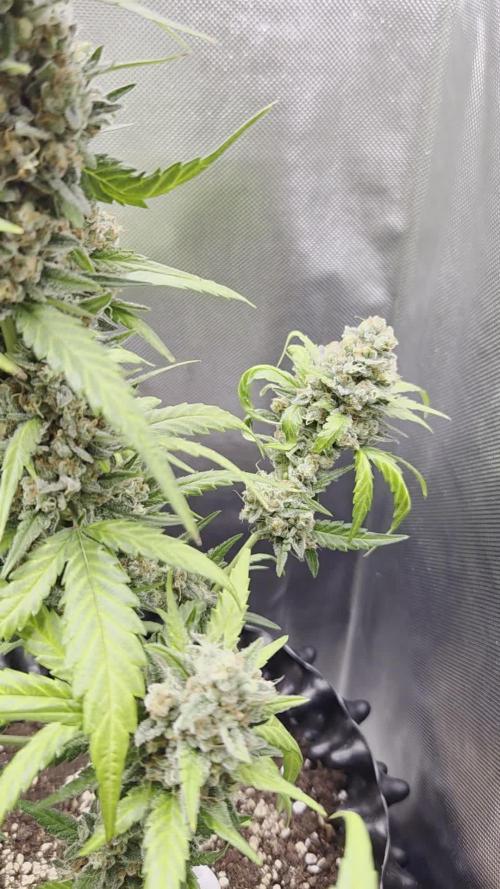
Bonjour les petits amis, voilà, c'est fini ! Cette petite plante a produit 110 g frais de belles têtes très denses. Pas besoin de lst ni aucune contrainte. Elle a formé un petit sapin magnifique. Il reste très peu de grandes feuilles. L'odeur est très douce. Je ne sais pas dire si la canicule a eu un effet sur son développement. Merci à tous pour vos likes et commentaires, à bientôt pour la dégustation de la crème au caramel, M.


Likes
3
Share


Likes
15
Share


@bobtheblob
Follow
Seeing burned tips makes me feed it differently, 2 days with fulls set of nutrients, 2 days with Cannazym only.
I pruned them a bit more, not sure if it was a good idea but those little branches didn't develop a lot during this time.
On day 4 of the week, after HSO's comment on a weekly report, I've measured runoff and it was insane! 3k-5k ppm
Flushed them all so that runoff was around 800 ppm, and watered them with Cannazym only (PH around 6.1, EC 440 ppm).
Also moved them around a bit
Most likely the reason for conductivity going so high was that I removed the pots from platforms at some point and old runoff was probably soaking in.


Likes
21
Share


@Fullmeltalchemist
Follow
6.6 D66 - Hail satan motherfuck3rs
6.7 D67 -
6.8 D68 - Just keep growing just keep growing just keep growing just keep growing just keep growing just keep growing just keep growing just keep growing just keep growing just keep growing just keep growing just keep growing just keep growing just keep growing just keep growing just keep growing just keep growing just keep growing
6.9 D69 -
6.10 D70 -
6.11 D71 -
6.12 D72 -


Likes
25
Share


@AlexanderBeeswax
Follow
Beginning of week 10. At the point now, where I really need to start checking trichomes more closely. Some branches are clearly weeks behind, so I will be doing partial harvests. Planning on chopping the first part in a few days. (About 15% of one plant that was always ahead of the others).
On day 65, I partially harvested one of the plants, I would have liked to wait longer but these were clearly done. Still most of the plant remains, will see how she responds!
A few days later now. The now exposed buds from the partially harvested plant are loving all the new light, very glad I used this method. Nothing notable otherwise, all the rest are just packing on more weight by the day
Likes
95
Share


@Ferenc
Follow
Day 51, 4th of November 2020:
The 3rd day since the lamp switched to be 12/12...
I raised up the nutrition intake as it can be seen above only the BioBizz family 2ml/l and removed some LST because the plant remains in shape or just set a bit but nothing significant....
She looks good....strech is on the way..... 😅
Nothing really to report there is crazy 2-3 weeks from now ;)
;)