


Likes
Comments
Share

@Growfather1
Follow
Hello everyone,
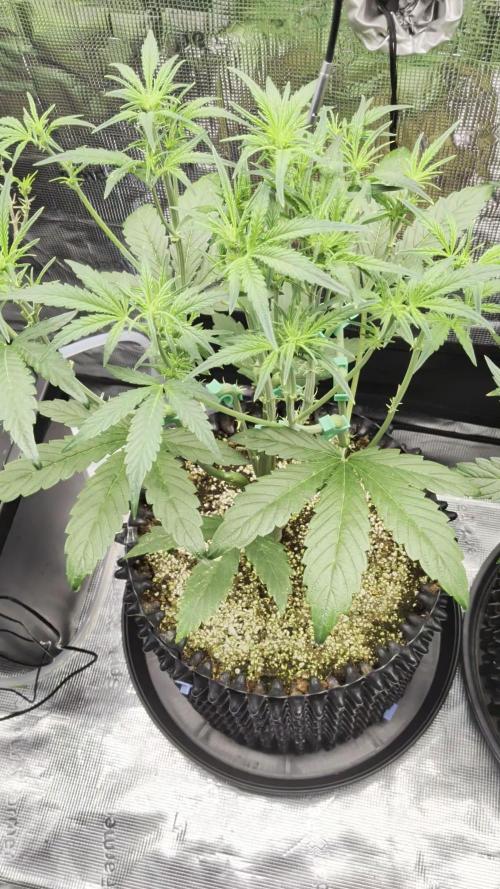
Starting week 5 and the blueberry glue auto is showing since of flowering 💐.
I did a defoliation on her gave her something to drink and put her back under 24 hours of lightening.
Let's see how she looks next week.
Thanks for stopping by and have a nice day.
Growfather

Likes
12
Share


@HerbalBlazer
Follow
Time to put them in there new home, I'm using around 45l of living soil per pot.

Likes
25
Share


@BudGardener420
Follow
This week I had almost no time at all due to family commitments - I'm also completely at a loss as to what deficiency my plants are suffering from. I would say a serious calcium magnesium deficiency. But why? I mixed every watering with calmag - I suspect that the pH value in the soil was not right at times. The deficiency came overnight with the second compost tea. Oh well - I hope I can still salvage something. I would be very grateful for help. Thank you 🙏

Likes
15
Share

@Kominest
Follow
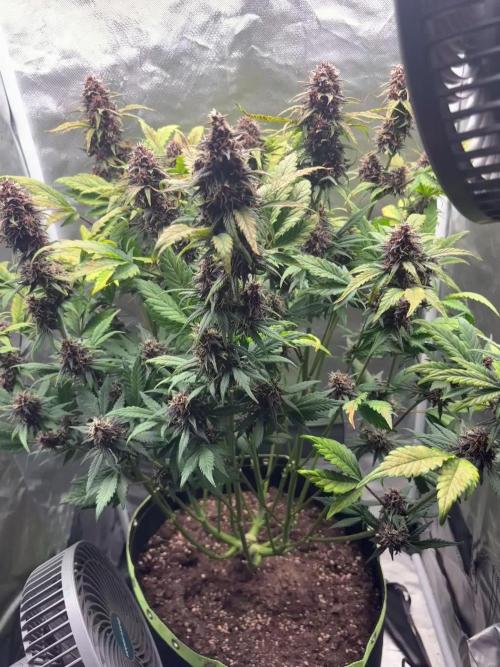
Watered on day 2 with around 4L tap water and 5ml canna magnesium .
Buds are fattening up still . Slight fruity smell .pistils are turning orange more and more . Will check on trichomes again in the next days

Likes
10
Share


@Skinnytalls420
Follow
Day 16-27/12/21 that lemon baby is getting strong!!!! Day20-31/12/21 all loooking good just need space in other tent so I can move half of them!!!!
Likes
5
Share


@Ensign420
Follow
Greetings fellow growers 🖖 and welcome to my first grow ever. This adventure actually started several months ago when I decided to stop buying flower from dispensaries and just grow my own bud. How hard can it be!?
This is actually my second seed of this strain. The first bean sadly died due to over watering (sorry girl, RIP). I was literally watering the cube to the point where water was dripping from the bottom, then heavily sprayed the humidity dome and tray with the vents completely closed. Everyday. Multiple times. I never let the dome or try dry out. So after about 8 days of not sprouting, there was a funky smell of rot. So that was that.
Later I learned that rockwool retains a lot of water and can easily drown seeds. So a wet/dry cycle is best for rockwool germination.
So even after hours of researching and digging through forums and tutorial videos, I was still under prepared for this journey. Did not consider how delicate the germination phase is. Oh well. Lesson learned. Reset and try again!
I hope everyone is safe and stoned during this corona crisis. Just like everyone else in the world, I want this pandemic to be over with. But in the meantime, let's grow some weed! 🖖
[START OF WEEK 01]
Day 01 - Monday - 08/03/20 - Total Days: 001
-----------------------------------
- [0830]: Light Schedule: 24Hrs/0
--- Soaked cube in 5.5 PH water for 10 min. Did not shake water out.
--- NO NUTES! Only PH'd down to control the PH levels.
--- Did not use the default hole (way too deep).
--- Flipped cube upside down and made a shallow hole for the seed (less than 0.25" deep).
--- Placed seed in and pinched hole close. No additional water added.
--- Sprayed the tray and dome with straight water (5.5 PH).
--- Vents are cracked opened a for ventilation (about 1/4 opened each).
--- Distance between the light and tray was 53"
--- AC was set to 80 °F
--- Exhaust fan was set to 86 °F
--- Room average temp was at 85 °F
--- Dome humidity was at 85-99% when sprayed.
--- Allowing to completely dry before respraying.
- [2200]: Dome and tray were completely dry! Sprayed only tray and dome with more water.
Day 02 - Tuesday - 08/04/20 - Total Days: 002
-----------------------------------
- [0845]: Sprayed dome and tray in the morning. Everything was dry.
--- Hoping for the best!
- [2130]: Everything was dry again, so sprayed dome and tray at night along with a light spray on the cube.
Day 03 - Wednesday - 08/05/20 - Total Days: 003
-----------------------------------
- [0830]: Everything was dry again. Resprayed dome and tray. Slightly sprayed cube.
- [2125]: Hooo damn!! She popped! Am little stub is visible! Resprayed dome and tray again.
--- Still going 24/0 for lights.
- [+0033]: Just checked up on her and I swear she grew a bit taller! Getting excited!
Day 04 - Thursday - 08/06/20 - Total Days: 004
-----------------------------------
- [0845]: Wow! Went from a little stub to fully sprouted overnight! Everything was pretty dry again so resprayed dome and tray.
- [2200]: Tap root is visible! Over 1" long too! Just resprayed dome and tray again.
-- Going to prep for hydroton transplant tomorrow!
Day 05 - Friday - 08/07/20 - Total Days: 005
-----------------------------------
- [0930]: She keeps growing!
-- Added a bit of CalMag to the spray bottle (8 drops to 650ml of distilled water). Resprayed dome and tray. Water was at a 5.4 PH with 141 PPM.
- [1045]: Prepped the bubble bucket with 4.5gal of water. Water is high enough to reach about 0.25" above the bottom of the net pot.
--- Added 3 drops of Superthrive
--- Added 3.5ml of CaliMagic
--- Added 2ml Hydroguard
--- Then PH'd down to 5.6
--- Solution Strengh: 120 PPM
--- Water chiller is set to 20 °C
- [1100]: Transplant time!
--- Filled the net basket 1/3 with hydroton. When placed in the bucket, air bubbles are not visible, but are slightly below the surface (slight digging will reveal the water/bubbles below).
--- Removed plastic on rockwool cube and placed in basket, then filled around and covered with hydroton. Making sure to block any light from passing through the net pot and into the nutrient solution.
--- Covered with a half-bottle dome sprayed with the CalMag water from earlier.
--- Hoping for the best!
- [1300]: Raised Bucket 5" higher. Now light distance is 48" to top of bucket.
- [1820]: Lowered tent exhaust temp to 76 °F
--- Lowered AC to 75 °F
--- Raised bucket even higher so light distance is 30" to top of bucket.
- [2300]: Looking good!
--- Sprayed dome and surrounding hydroton with more CalMag water.
--- Attached timer to light! So new 18 Hrs On/6 Hrs Off light schedule.
--- Lights On: [1600] (4pm)
--- Lights Off: [+1000] (10am the next day)
--- Decided to go with lights on during the evening/night and off during the later mornings/afternoon (the hottest part of the day) to see if temps can be controlled better.
--- Please survive girl!
Day 06 - Saturday - 08/08/20 - Total Days: 006
-----------------------------------
- [0800]: Everything was dry. Resprayed hydroton and dome.
- [2000]: Here first night cycle seemed to go well! Get'n taller!
--- Dry again. Removed the dome.
--- PH went up to 6.5 so PH'd down to 5.7
--- Ran the top feed drip ring for a bout a minute to wet the hydroton and rockwool with the nutient solution.
---Too scared to leave the top feed on 24hrs (I don't want over water her and cause dampening-off). Will let dry before re-watering.
- [2100]: After closer inspection, I think she's looking a bit yellow.
--- Decided to add a bit of grow nutes to the bubbler solution.
--- Added 2ml of Sensi Grow A
--- Added 2ml of Sensi Grow B
--- Solution strength after adding more nutes: 176 PPM
--- PH went up to 6
--- I hope that the extra chelating properties of the 'PH Perfect' solution is enough of a buffer for proper nutrient uptake.
Day 07 - Sunday - 08/09/20 - Total Days: 007
-----------------------------------
- [0800]: Water dropped a bit (mostly due to evaporation) so solution strength was at 190.
--- Checked PH again. Was still at 6, so PH'd down to 5.4
--- Ran the top feed for a minute to wet the hydroton a bit.
- [0915]: Since she's looking perky but still a bit yellow. So decided to up the nutrient concentration even more before lights out.
--- Added 2ml more of Sensi Grow A
--- Added 2ml more of Sensi Grow B
--- Solution strength after adding more nutes: 199 PPM
--- PH went up to 5.8
- [1700]: Checked nutrients.
--- PH: 5.9
--- Solution strength: 202 PPM
--- Added 4ml of Voodoo Juice
--- Added 4ml of B-52
--- PH after adding more nutes: 5.9
--- Solution strength after adding more nutes: 238 PPM
- [2130]: Decided to make a new foliar spray to address the continued yellowing.
--- Started with 500ml of distilled water.
--- Added 3 drops of CaliMagic
--- Added 3 drops of Sensi Grow A
--- Added 3 drops of Sensi Grow B
--- Added 3 drops of B-52
--- Added 1 drop of Superthrive
--- Solution strength: 164 PPM
--- PH was at 5.9 and did not adjust.
--- Gave her one spray.
--- Also sprayed the surrounding hydroton.
[END OF WEEK 01]

Likes
28
Share


@Kitties_and_Colas
Follow
The CP are becoming pretty top heavy and i find myself picking 1-2 from the ground each visit, I waited the containers with stones to see if this would help. The 3 remaining CP stand as tall as me in their containers (6ft) and are 107 days from seed, i'm expecting a pretty decent yield from them in October :)

Likes
13
Share


@SillyTrippyHippy
Follow
I was in the process of getting my plants ready for flip, and realized I never posted my weekly update yesterday.
Last week:
I did notice some light intensity issues starting to show so I raised the lights up and adjusted back to 50%.
I did get overzealous with my training and broke a main stem last Wednesday.
Taped her back no real issues or anything (yet) with the break the branch seems to be fine sofar.
This week:
Ill do a small top dress this week. (some compost, ewc and bloom fertilizer.)
I plan on Flipping Mid / late week, unless the branch shows any stress signs then I'll wait a week.
Any advice, tips or tricks are always welcome.


Likes
41
Share

@Roberts
Follow
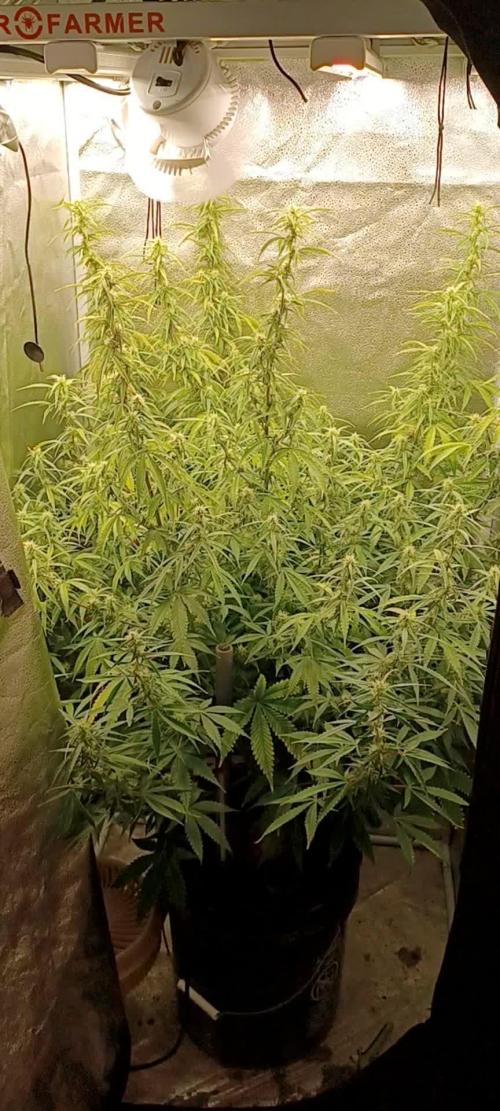
Deepforest Super auto is doing okay. She is super hungry and in need of a solution change. I will be doing that in the next few days when I have time. Everything is looking good considering the fight with rising ph. Which is the hunger. Thank you Doctor's Choice, Spider Farmer, and Athena nutrition. 🤜🏻🤛🏻🌱🌱🌱
Thank you grow diaries community for the 👇likes👇, follows, comments, and subscriptions on my YouTube channel👇.
❄️🌱🍻 Happy Growing 🌱🌱🌱
https://youtube.com/channel/UCAhN7yRzWLpcaRHhMIQ7X4g.

Likes
11
Share


@eldruida_lamota
Follow
Que pasa familia, vamos con la sexta semana de floración de estas Gorilla cookies Auto de FastBuds.
Por el momento todo va bien tienen buen color, van madurando esas flores.
Alimentamos la última semana nuestras plantas con Agrobeta.
Por supuesto el ph se mide en cada riego y se mantiene en 6.2 y riego en intervalos de 48h.
La temperatura está entorno al 22/24 grados y la humedad anda sobre el 50%.
Las plantas en si ya están bien sanas, tutore la rama principal para que no se fuese de madre, y así controlaré la altura.
Yo creo que en 1 o 2 semanas podré darles machetazo, pero ya vamos viendo estas semanas.
Mars hydro:
Code discount: EL420
https://www.mars-hydro.com/
Agrobeta:
https://www.agrobeta.com/agrobetatiendaonline/36-abonos-canamo
Hasta aquí todo, Buenos humos 💨💨💨
Likes
17
Share


@rockbo47
Follow
SUMMARY: Last week of early bloom nutes this week. She's flowering but slowly and I wonder if its due to the stress I caused with the big defoliation on Sunday 14/02 where I removed most fan leaves and all lower shoots of which the bud sites would not receive enough light and just create larfy poor quality low strength buds.
She smells very strong now as well.
DAY 51
--------
Friday 12th February 18:30
I fed Jesus 3L of early bloom nutes which produced 570ml runoff (19%).
DAY 52
--------
Saturday 13th February 18:00
I fed Jesus 3L of early bloom nutes which produced 610ml runoff (20%).
DAY 53
--------
Sunday 14th February 11:45
I made 10L of early bloom nutes with dechlorinated tap water (no rain water left), 5L at a pH of 5.7 and 5L at a pH of 5.6.
Sunday 14th February 18:00
I fed Jesus 3L of early bloom nutes which produced 800ml runoff (27%). [24°C/46%]
I did a second defoliation on Jesus which was supposed to just be removing some fan leaves and inner foliage I missed last time but I ended up getting carried away again. Every bud site has plenty of light now so hopefully shell bounce back quick.
I also raised the light again so that it is 16" above the canopy of Jesus as it was too close now Jesus has grown.
DAY 54
--------
Monday 15th February 18:30
I fed Jesus 3L of early bloom nutes which produced 1350ml runoff (45%).
DAY 55
--------
Tuesday 16th February 11:30
I made 10L of early bloom nutes with rainwater, 5L at a pH of 5.8 and 5L at a pH of 5.9.
I forgot to turn the heat down over night and the humidity is at 56% currently. [22°C/56%]
Tuesday 16th February 18:30
I fed Jesus 2.9L of early bloom nutes which produced 1250ml runoff (43%). Shes still not back to her usual intake after the defoliation 2 days ago.
I turned the dehumidifier on and set it to 45% as the RH had climbed to 62%. [22°C/62%]
DAY 56
--------
Wednesday 17th February 12:00
I made 10L of early bloom nutes with dechlorinated tap water, 5L at a pH of 5.7 and 5L at a pH of 5.6.
Wednesday 17th February 18:30
I fed Jesus 2.5L of early bloom nutes which produced 590ml runoff (24%).
DAY 57
--------
Thursday 18th February 18:30
I fed Jesus 2.5L of early bloom nutes which produced 800ml runoff (32%). At the wknd I think I'm going to try and bend the 2 tallest shoots down in the centre as they are taller than the rest by a bit now. I adjusted a couple of ties to expose more bud sites.
I had to move the light up again by 2 inches to accommodate for growth as it was sitting at 14" above the canopy. [24°C/52%]


Likes
27
Share

@eldruida_lamota
Follow
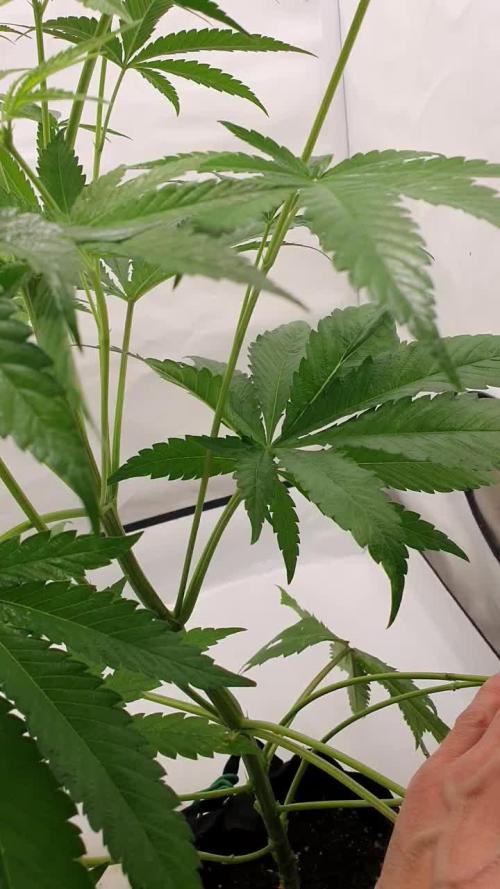
Do sweet dos será la variedad más tardía de todo pero no por ello va a ser lo peor.
Al contrario esta variedad tan reconocida de sweet seeds es una bomba y que si se tiene paciencia suficiente se logran flores muy ricas tanto en sabor como en potencia.
.
La humedad esta al 45% la temperatura está entre 21/25 grados , y como siempre el ph , ya que es de lo más importante,está en 5,8/6,0.
.
AgroBeta:
Ya tenemos el lavado de raíces realizado, y hemos retirado los nutrientes para aplicar un estrés hídrico.
.
Hasta aquí todo familia 🕸️ , un saludo y buenos humos fumetillas💨💨💨.




Likes
59
Share


@Jsammy09
Follow
Not a lot happened last week, just monitoring, feeding, and keeping everything in check while the girls did their thing. I did switch over to my finishing nutrients and have cut out calmag according to feeding chart I have been following. I think we are gettting pretty close to harvest though! The trichomes are starting to get a little milky. I am going to wait until about 30% amber to harvest though. I am getting super excited to finish this one and start my next run!
9/2 - The girls have been doing great and are starting to pack on the size and frost nicely! Nothing to do to them really except monitor and keep checking and making sure everything is running at an optimal level. The closer it gets I start to get a little nervous for the dry. I am prepared and have a plan, just hopefully I can get my dry set up as dialed in as I was able to get my grow tent. I will try to post more updates this week. Last week I had company from out of town, so it was difficult to get around to it.
9/5- Just continuing to monitor and check the trichomes, once about 25-30% turn amber I will be harvesting! They are starting to get pretty cloudy right now. When I did the res change yesterday, I switched to just root drip and full tilt and have started flushing, hopefully not too early, but im following my feeding chart.
As always tips and recommendations always welcomed and appreciated! Thanks for checking out my diary!


Likes
8
Share


@S3LB5T
Follow
😎 Ahuuu,
siebente Woche und sie wachsen und wachsen, trotz hoher Luftfeuchtigkeit ist nirgends Schimmel zu finden. Was mich sehr glücklich macht. Das bekämpfen der hohen Luftfeuchtigkeit ist gar nicht so einfach, zumal die Temperatur nicht optimal zu regeln ist für einen guten VPD Wert.
Es ist noch viel zu tun und ich freu mich drauf.


Likes
24
Share


@weedacouple
Follow
Easiest harvest we ever did (in our short career lol), the plant lost many leaves by herself. she has a strong flavour and we literally cant wait to smoke her.