





Likes
133
Share


@PapaNugs
Follow
Great week in the tent. Everything's on auto pilot. Self watering pots full. Top watering every two to three days. Smells starting to kick in.
Lights at 100% power.
Here are the lights details:
Medic Grow Mini Sun-2 150W LED
Model: MN150-022
Spectrum mode: V1
Efficacy: 2.8 umol/J
Thanks for stopping by!
You can find the light on Grow Diaries:
https://growdiaries.com/grow-lights/medic-grow/mini-sun-2-150-watts
You can find the light on Medic Grow's website:
https://medicgrow.com/

Processing
Likes
7
Share


@Kushizlez
Follow
Day 49-56
(Day 50) I hooked up my carbon filter to the humidity controller and it is keeping the room exactly at 65-70% RH night and day. It looks like it turns on about every 45 minutes for about 5 minutes so it allows me to run the co2 bag properly. I don’t even have to use my dehumidifier. The room is 100% dark now too. Even the small red lights on the space heaters.
Not going to feed anything other than foliars this week.
(Day 51) Blackberry #4 & #8 #9 and white widows #2 & #3 are all confirmed males. Chopped them down and recycled the soil. White widow #1 is the first official female and I’m starting to see pistils on the m39/zkittlez too.
Plants seem to be responding to the light fairly well. It’s hung 32 inches above the canopy which is as high as it can go without strapping it to the roof, which may have to happen one day. The plant can get within 6 inches of the light so I’m probably good. The ppfd output is 1800umols which is super high so I want to hang them as high as possible in veg. I wish I could rent a ppfd meter to see if I’m in range at 32”.
(Day 52) Blackberry breath #3 is the first official bbb female to show. I decided to scrap BCTG #2. It sounded like a good strain but after looking at pictures of people who have grown it online, it doesn’t look up to my standards. I found a very small patch of powdery mildew on one of the leaves so I’m not even going to start with that shit again. I’m really thinking about scrapping the m39/zkittlez and the white widow too. I’m praying that I get at least 4 females of BBB.
I tried super cropping for the first time today. A few of the branches I definitely squished a bit too much as they turned quite brown and looked dead within a day.
(Day 53) Despite the m39/zkittlez vigorous growth, I know it will be a shitty strain that will most likely herm as it’s from a bag seed of low grade weed. I’ve decided instead of scrapping it, I will use it for experimenting with a new chemical powdery mildew preventative. If it dies oh well. I doused it and chopped a limb off a few hours ago during lights on and it seems fine.
(Day 54) I’m about 90% sure BBB 6&7 are both female. #2 & #5 are looking like males but too early too tell. #1 is really tough to say. Just gotta be patient I guess. #3 has a great spread out structure, I hope it doesn’t stretch too much. The scrogging is a priority. I put up the scrog net just to see how it fits. It’s a little small around the edges but that’s fine. So it’s looking like out the 9, I would be lucky to get 4 fems if #1 & 7 would show forsure already. If #1 is a female I have my 4 and I can throw out the white widow. The white widow is just insurance at this point.
Super cropped plants have recovered nicely. Going to continue doing this more.
I’ve noticed that the plants that were put into my custom soil mix have very small fan leaves compared to the fabric pots of straight promix and dry amendments. Could also be the fabric pot is helping dry downs too.
(Day 56) I’m seeing some yellowing so I’m going to give a foliar spray just too keep some deficiencies at bay. All of the plants are stunted except the m39 and bbb#3. Node spacing has also reduced significantly. I can’t help but feel it’s from the intensity of my lights but maybe they just need a transplant into some new soil something. Luckily the stunt and droop is only really happening to what I suspect are male plants anyway.
Leaves are looking twisted and gnarled on #5. Going to move it into the veg tent for a while.
I’m going to mix up and amend my Destiny/coco blend today and transplant bbb#3 and 6 & 7 in a few days.
I mixed them up in contractor bags making sure to toss and turn vigorously.
Here is my blend:
2 bags 40L Destiny soil
2 bags 40L coco
700ml glacial rock dust
700ml oyster shell flour
700ml nature’s pride bloom
300ml basalt rock dust
150ml langbeinite
150ml nature’s pride veg
I am also going to try the Destiny top dress as it’s only 13 bucks a bag and full of good shit. I’m trying to not feed heavy in flower other than 2 or 3 top dresses and 2 teas and nothing after week 5. Because it’s taken so long for the plants to show sex, when I transplant into the 10 gallon pots, they should have more than enough nutrients too keep them going strong all the way through flower with just water. I’m a little skeptical about that though. Besides teas and dressings are fun. Everything should be broken down by week 8 or so.
Will transplant in a few days.
Likes
18
Share


@Coopmc
Follow
Hear we go test growing the new batch of seeds!! So far nice split going on!
7 out of 10 split and planted!!
7 heads popping up!
Likes
5
Share


@Mr_Puff_N_Stuff
Follow
Start of week 9. They are fading now so they look rough. Give them time to completely fade and they will look better. Hurt my tips but you live and learn. Their smell is still pretty normal for now. It’s like a piney tropical fruity smell. The colas are starting to get fat and decent sized buds are showing. I’ll check back at the end of the week to show their progress.


Likes
16
Share


@Ultraviolet
Follow
Terpenes are aromatic compounds that give cannabis some of its most distinct aromas from citrus and berry, to more earthy tones. Many species of plants produce and emit terpenes in a diurnal, or daily cycle that is regulated by a complex web of signaling. There are also many plants that emit terpenes at night to attract nocturnal pollinators (Marinho et al., 2014346). Regardless of when the terpenes are produced or emitted, these processes are often dependent upon cues derived from natural light/dark cycles via a native circadian clock (Dudareva et al., 2004). Several light-sensitive pigments are involved in these processes of production and emission, and the different photoreceptors are dependent upon different wavelengths of light to be activated or deactivated. Emission of terpenes is a process that is entirely dependent upon phytochromes and red/far-red light cues in most plant species (Flores and Doskey, 2015). For example, repeated light/dark phytochrome signaling is necessary for the emission of terpenes in tobacco plants (Roeder et al., 2007). Based on previous findings, we hypothesized that a lack of red light and phytochrome-mediated light/dark signaling on the part of the plant is responsible for an increase in terpene content in cannabis. The plant continues to synthesize terpenes, but a lack of red light to trigger the Pr-Pfr shift results in a lack of terpene emission by the plant, thus causing the terpenes to accumulate in the maturing flowers.
REFERENCES
Dudareva N, Pichersky E, Gershenzon J. Biochemistry of Plant Volatiles. Plant Physiology. 2004;135(4):1893-
1902.
Flores, R.M., Doskey, P.V., Estimating Terpene and Terpenoid Emissions from Conifer Oleoresin Composition.
Atmospheric Environment. 2015. 113, 32-40.
Marinho, C.R.; Souza, C.D.; Barros, T.C.; Teixeira, S.P.; Dafni, A. Scent glands in legume flowers. Plant Biology ,
Volume 16 (1) – Jan 1, 2014
Roeder S, Hartmann AM, Effmert U, Piechulla B (2007) Regulation of simultaneous synthesis of floral scent terpenoids by the 1,8-cineole synthase of Nicotiana suaveolens. Plant Mol Biol 65: 107-12
Abstract
Sound waves technology has been applied to different plants. It has been found that sound waves were at different frequencies, sound pressure levels (SPLs), exposure periods, and distances from the source of sound influence plant growth. Experiments have been conducted in the open field and under greenhouse growing conditions with different levels of audible sound frequencies and sound pressure levels. Sound waves at 1 kHz and 100 dB for 1 h within a distance of 0.20 m could significantly promote the division and cell wall fluidity of callus cells and also significantly enhance the activity of protective enzymes and endogenous hormones. Sound waves stimulation could increase the plant plasma-membrane H+-ATPase activity, the contents of soluble sugar, soluble protein, and amylase activity of callus. Moreover, sound waves could increase the content of RNA and the level of transcription. Stress-induced genes could switch on under sound stimulation. Sound waves at 0.1–1 kHz and SPL of (70±5) dB for 3 h from plant acoustic frequency technology (PAFT) generator within a distance ranged from 30 to 60 m every other day significantly increased the yield of sweet pepper, cucumber and tomato by 30.05, 37.1 and 13.2%, respectively. Furthermore, the yield of lettuce, spinach, cotton, rice, and wheat were increased by 19.6, 22.7, 11.4, 5.7, and 17.0%, respectively. Sound waves may also strengthen plant immune systems. It has been proved that spider mite, aphids, gray mold, late blight and virus disease of tomatoes in the greenhouses decreased by 6.0, 8.0, 9.0, 11.0, and 8.0%, respectively, and the sheath blight of rice was reduced by 50%. This paper provides an overview of literature for the effects of sound waves on various growth parameters of plant at different growth stages.
https://doi.org/10.1016/S2095-3119(13)60492-X

Likes
8
Share

@CalGonJim
Follow
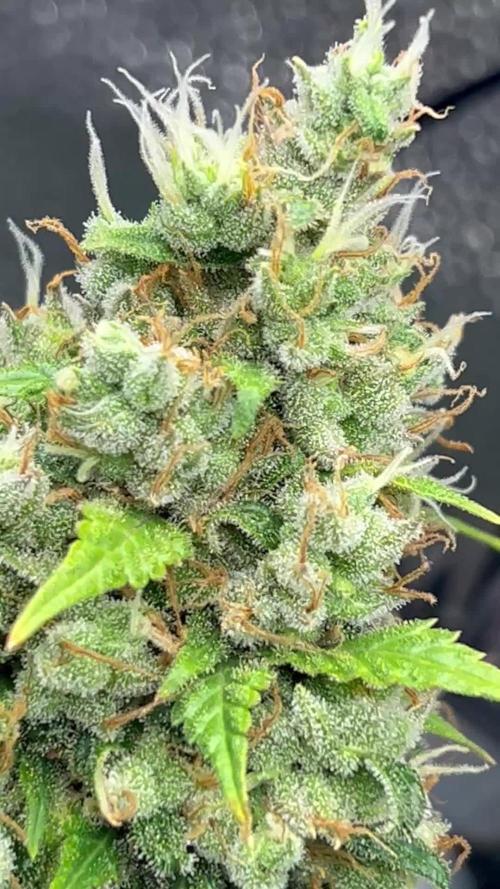
4/13 11AM MONDAY RQS Gelatto 44 and Punch Pie Tyson 2.0 are Finished!!! I will let them go a couple weeks longer but they are good to go! 9/10 Srong, good in coco/ no problems at all!
MONTEL DREAM WIDOW 11/10 ANOTHER WINNER!! So much resin, AMAZING BUDS SHAPED LIKE SPIDERS...SO GREAT. My ICE t is a little small, I didnt have enough space so she stayed compact and perfect small. Bubbles, Julinan and Ricky are doing better than ever
4/14 4:09 AM I just had an idea flash for my next grow so I need to make some notes. I have a cutting I took from a gorilla gas F1 fast flower by seedsmen I did it last year. I took the cutting when she was in flower. I put her in an organic grow plug that I got from seats man as well and I tortured her and I forgot to water it and I left it in there and then I put her in 1 gallon and I haven’t tried to do anything but she survived everything so I’m gonna grow her out into a full-size plant. I’ll probably put it in a bigger pot and do a small smaller grow not so many plants next time I think she’ll really be something.
4/14 1;23pm I turned the light up to 114 W and I’m just under 120. I’m trying to feel the driver and keep it cool so it doesn’t heat the room up. I have some plants in there that I didn’t veg right so they’re kind of screwed up and I have too many of them. I’m gonna have to take some down. The extra plants are preventing the better plants from growing so my experiment making my own seeds, it actually worked, but it’s still not as good as getting it from the actual breeders. And I have a series of medical problems that disable me for several days at a time so plans not look good and then I get behind a little bit so that.
4/18 1:30 PM I used FloraKlean and did a heavy flush on the Tyson plants gelato 44 and punch pie. I also used a little bit of it on the Montell Williams plant, which is amazing. Montel‘s dream widow is just incredible and she’s growing in an unusually small container and doing very well corkscrew auto however, was not an auto flower from Royal Queen seeds, but she’s behaving like a normal photo and her color is going great so even though it’s not an auto at 12:12 she did develop photo traits and is going to grow very successfully. I think as a photo she’s doing really good and I have a bubbles blueberry in there. I grew her terribly so she’s not doing as good as she could, but that’s on me.
4/19 11:30PM. Thinking of flushing the Tyson Plants in the Tub....THEN I thought, why not do a Doors movie ending?? Film the plants dead in the bathtub...the Jim Morrison ending!!!!! BUT then I would have to make that stupid white and red bead necklace he wore on that album cover...and the bead work alone would take me 6 months....so maybe. ALSO I would have to learn to play "The END" on out of tune recorder or kazoo, something deep and dramatic

Likes
9
Share

@CheeRz
Follow
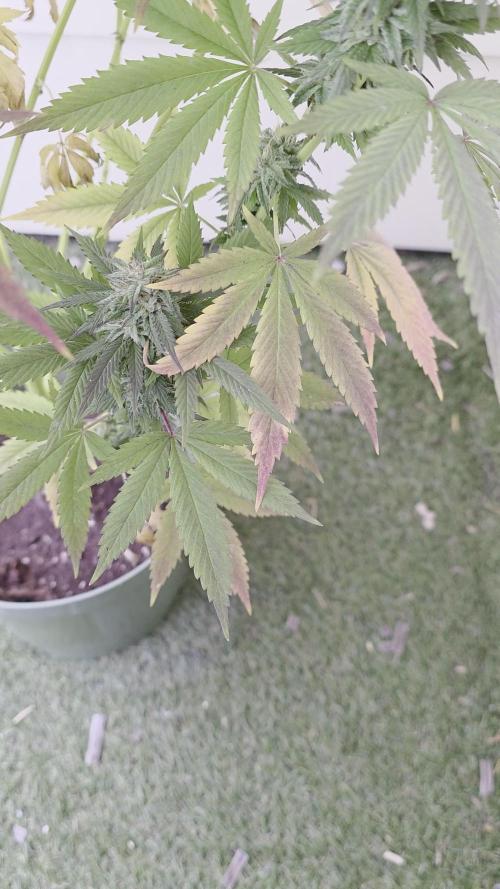
The last week has begun. Weather isn't very sunny anymore, with daytime temperatures around 17 °C and nighttime temperatures around 10 °C. 💚💚💚


Likes
5
Share

@Growfather1
Follow
Hello everyone.
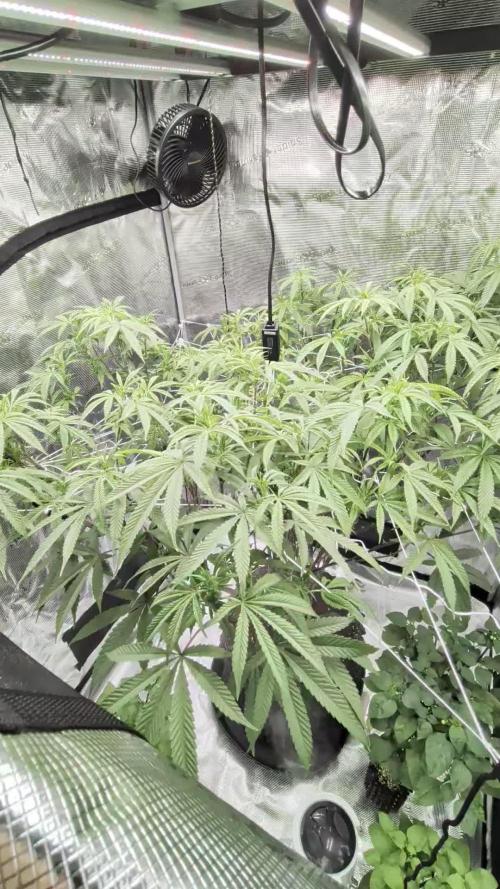
Everything is dialed in and cruising along on day six of the flower cycle.
I went ahead with some light defoliation to open up the canopy and improve light penetration.
Today, I added a second trellis net to continue spreading the plant and fill out the one hundred twenty by one hundred twenty centimeter tent.
I removed a couple of leaves, not too much, and I plan to remove more in the next few days.
Thanks for stopping by and have a nice day.
Best regards,
Growfather.
Likes
27
Share


@adam_pawloski87
Follow
Over all was an amazing grow, super sticky dense nugs with smell of berries, highly recommended for everyone!!
Likes
17
Share

@RakonGrow
Follow
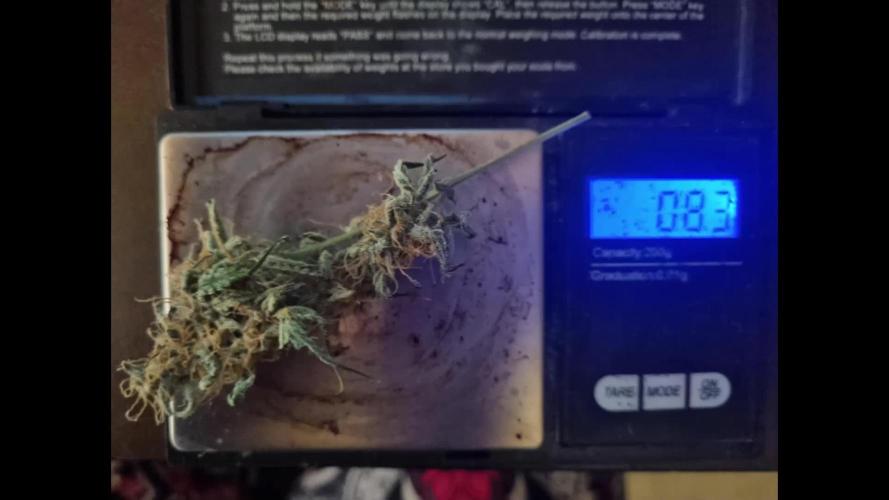
Harter ritt diese Dame , alles viel zu schwer das es gleich umknickte beim defolieren .
Hab mal ein getrockneten Bud aus der mitte genommen und Trichom analyse (Videos und Bilder) gemacht . ja viel klar wenig milchig und einige rot . Ergo , zuviel Licht an der Spitze (abstand zum licht viel zu gering) und im Boden zu kalt ist keine gute Kombination .

Likes
27
Share

@Z420Organics
Follow
🦍 Monkey Grease — Harvest Report! 🦍
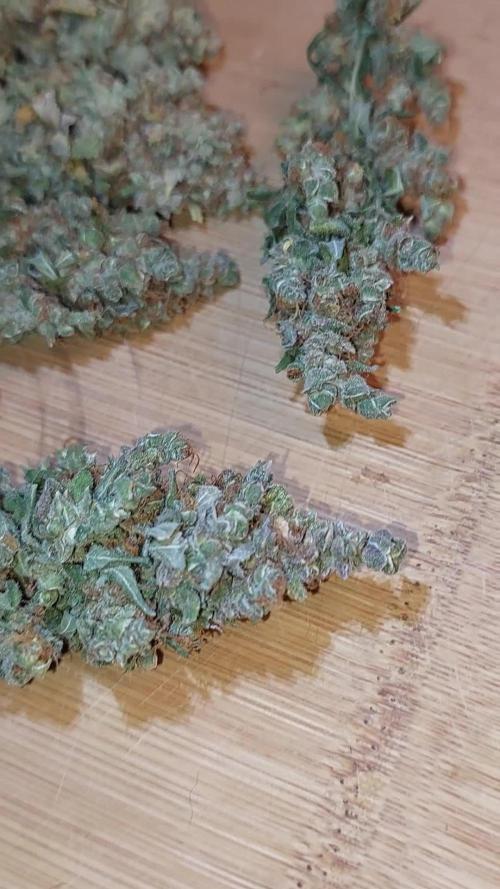
The first strain harvested from the grow was Monkey Grease, with one pheno coming down at 63 days.
Flavor & Aroma:
The first pheno gives dry nutty notes with a really unique chocolate milk vibe 🍫🥛 — such a distinctive taste!
The other pheno leans more toward a chamomile-like aroma, though I’m still not entirely sure 🌼. Very interesting!
Effect:
I’d classify it as indica-dominant vibes. Very clean, pleasant relaxation!
The aroma is super strong and fills the room.!

Likes
81
Share


@m0use
Follow
SPONSORED DIARY===SPONSORED DIARY===SPONSORED DIARY
TRANSPLANT #2 THIS WEEK!!!!
This week was a great one, lots of sun and gave the plants their 2nd transplant of the cycle. only one left to go in a few weeks, the plan was to do 3gal but I feel it would be best to go upto 4gal a 1extra gallon will not be all that much extra root space to expand into. Will have to check if they even make them in 4. I have a feeling its only 1,2,3.
Root wise they are looking similar but not identical. I would say the Dynomyco treated plant has a thicker rootball and more of them. but not by a massive amount. More white on the Dynomyco treated plant as well. added in some more Acti-Sol into the transplant medium. same mix as before. Then watered in with some LAB Serum. should do the plants well. I did not add in anymore of the MIIM microbial mass product as I thought it might alter the results of the grow. so we will see how they do now with out it. I'm really liking how well the plants are bushing up. I might have to take some clones and try them indoors as well. I think I prefer to grow more indica leaning strain for their growth habits.
SPONSORED DIARY===SPONSORED DIARY===SPONSORED DIARY
This is my diary entry into the Dynomyco Show Us What You Got Contest!
#DynomycoShowUsWhatYouGot!
@DynomycoShowUsWhatYouGot!
@Dynomyco
Big Shoutout to @Dynomyco for picking me in their contest. Happy to be involved and as a user of Dynomyco I am curious to see this side by side with my own eyes. I will be honest I am a little skeptical it will show any major differences. but we will see what happens. Some disclaimers, I am still using LABS serum I made, This is also beneficial to the root mass however it's a bacteria based product and not fungal or mycorrhizae like Dynomyco.
https://growdiaries.com/giveaways/DYNOMYCO_Show_Us_What_You_Got
Likes
23
Share


@MadeInGermany
Follow
Flowering Day 19
Since time chance
To 12 / 12 h .
Hey guys :-)
She grows great .
Today everything below was cleaned and defoliated :-) .
A lot was removed because this time it was quite cramped in the tent and you don't lose your energy in the lowest shoots :-) .
This week it was poured twice with 1.2 l each.
You flowers are developing beautifully 💚
Everything was checked and it looks like all trips are slowly but surely gone :-)
have fun and stay healthy 🙏🏻💚
👇🏼👇🏼👇🏼👇🏼👇🏼👇🏼👇🏼👇🏼👇🏼👇🏼👇🏼👇🏼
You can buy this Nutrients at :
https://greenbuzzliquids.com/en/shop/
With the discount code: Made_in_Germany you get a discount of 15% on all products from an order value of 100 euros.
👇🏼👇🏼👇🏼👇🏼👇🏼👇🏼👇🏼👇🏼👇🏼👇🏼👇🏼👇🏼
You can buy this strain at :
https://www.thegratefulseeds.com/shop/feminized-seeds/limited-edition/blue-javaz/
Water 💧 💧💧
Osmosis water mixed with normal water (24 hours stale that the chlorine evaporates) to 0.2 EC. Add Cal / Mag to 0.4 Ec Ph with Organic Ph - to 5.8 - 6.4
MadeInGermany


Likes
8
Share


@HackneysFinest420
Follow
Week 2 of veg and these girls have started to really grow!! Keeping up with LST as I know these can be really big girls.
No defoliation yet, will do just before flower
UPDATE: LST everyday this week in preparation for them to switch to flower.
I will defoliate and lollipop at the end of the week.

