Likes
Comments
Share

@hassehujasse
Follow
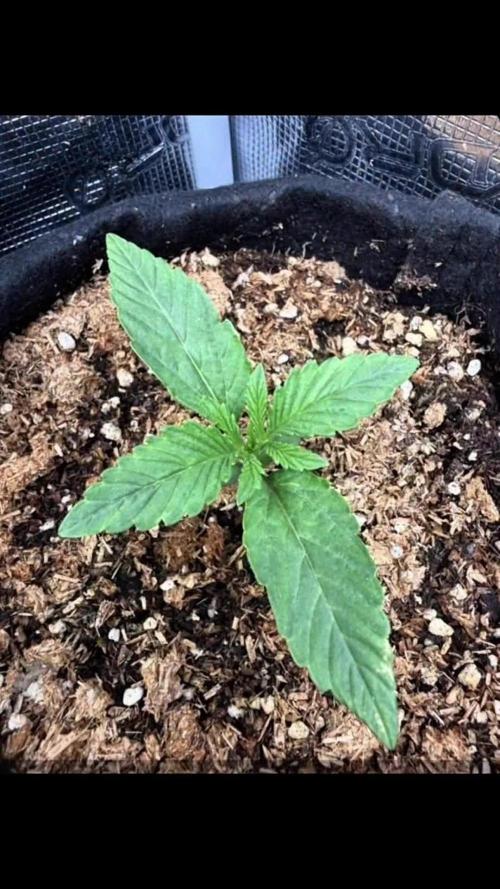
@Barneys Runtz auto 2 topped Twice.
Second topping after first node on second and third colas
20 days from seeding
Awaiting transplantation and cloning)

Likes
6
Share


@InsideAz
Follow
Not much growin on this week just watering and letting them grow.
No smell yet
Increasing light to 80%
Nutrients in previous week and next week
Likes
23
Share


@Master_weeda
Follow
Bonjour à tous les padawans et maîtres jedis
Pour la germination j'utilise la technique du sopalin
Pour faire germer vos graines dans du sopalin, vous aurez besoin :
Un Tupperware avec couvercle
Du Sopalin, ou autre quel papier de cuisine qui soit épais et qui retienne l’eau
Un verre d’eau
Si c’est l’hiver, vous placerez le Tupperware près d’une Box ou d’un Modem pour donner un peu de chaleur
Étapes de la germination:
faire germer vos graines de cannabis dans du sopalin
La première chose à faire est de tapisser le fond du Tupperware avec du sopalin, 2-3 feuilles suffiront. Si vous ne mettez qu’une feuille, elle captera peu d’eau et pourra sécher, vous mettrez donc plus de feuilles que pas assez.
Une fois les feuilles placées, versez l’eau du verre dessus, mais pas trop, juste de quoi imbiber toute la surface couverte par les feuilles. Vous aurez ainsi l’eau suffisante pour faire germer les graines sans avoir besoin d’essorer la feuille de papier.
Une fois les feuilles humidifiées, mettez vos graines par-dessus, et recouvrez le tout avec une autre couche de quelques serviettes. Une fois en place, humidifiez cette nouvelle couche.
faire germer vos graines de cannabis dans du sopalin
Lorsque vous graines seront placées entre les 2 couvertures de feuilles, fermez le Tupperware hermétiquement pour que l’eau reste bien dedans et que l’ensemble ne sèche pas malgré la chaleur.
Si vous êtes en hiver lorsque vous mettrez vos graines à germer, ou que les températures sont inférieures à 20°C, vous placerez le Tupperware sur votre Box ou modem jusqu’à germination, mais toujours en évitant le contact avec la lumière. Si vous êtes dans une zone au climat tempéré ou chaud, vous n’aurez qu’à placer le récipient avec les graines à l’ombre dans une armoire ou une caisse de rangement. Toutes les 24h, vous devrez vérifier l’état d’avancement de la germination. Si quelques-unes sont sorties mais pas d’autres, prenez celles qui ont germé pour les planter, laissez les autres dans le Tupperware et vérifier de nouveau le lendemain.

Likes
12
Share


@Siriuz
Follow
Alright guys she's definitely doing pretty good and developing buds already
We've been taking care of them
We've been working hard on them
We hope to get good yield and good weight
Fatten the buds and get flavor and highness alright let's see what's up over the next weeks, this was our first time adding molasses and so we did a great tea combination as well since we know this girl is super fruity and it smells already, she's a nice lady and we love when the room smells like her ^^!
I think we going to be adding more molasses over the Flowering weeks until the last week's so that they get full in resin and because we want to see the difference between not adding sugar nor molasses because that's what we did before and we just figured it out..
.
Yo any advise is more than welcome
Please don't hesitate to ask anything
Just shoot your comment
We're here to make friends with all growers and to evolve
Please help us get bigger community and thanks for all the support at the grow diaries love and peace to you all brothers and sisters
Check out the video and let us know what you think of her right now :)
What else do you think we should do to her?
Hey remember to follow me @cannagrowersiriuz Instagram if you wanna check out more stuff randomly updates and some more stuff!!!

Likes
6
Share


@GoodTimesOrganics
Follow
Nach dem sich die Pflanze wunderbar ernten ließ. Wenig Sonnensegel und sehr gut zu bearbeitenden Zuckerblätter ein echter Hingucker.
Auch die Aromen sind wie schon erwähnt unfassbar Einzigartig mit einem Profil nach Früchten, Zuckerwatte, Energiedrink oder auch gebrannten Mandeln.
Wirklich unglaublich dieser Strain!
💚🍭🍇

Likes
36
Share


@pifflestikkz
Follow
Day 200
18/11/24 Monday
It's her last day today of light, no more watering. She will then enter 48 HR dark period. Her trichomes have reached a nice amount of amber's, and flooded with cloudy trichomes... The end is so close 🤤😋😂
The smell is intoxicating, sweet pungent guava fruity smell. It's amazing. Seeing her colours fade out on the fans is like watching a sunset.
Deep oranges radiating against her red veins, with purple and violet tipped buds, engulfed in trichomes and orange pistils, but she holds a deep dark green underneath in the core of the buds.
She is a menace to look at 😈💞
It's been fun to grow this, and I won't lie, trouble free. Easy with nites she took what I gave, next time around I'll be lollipoping a shit load more to encourage them fatter tops 💪💚
Sorry for the shit quality video this week so far, soon as she enters her dark period I'll get some nice flash pics and video tomorrow and upload 🙌💚
Day 201
19/11/24 Tuesday
She entered her dark period at 5am this morning. She is still relatively moist so the next 48 hours should be fine to dry off in the dark too.
Noticed a couple more mildew spots on leaves, removed these now. Don't want it wasted in the last 2 days 🤦♂️😅💚
Next update will be the chop on Thursday.
Updated pictures 📸💚
Day 203
21/11/24 Thursday
Its finally time 🙌!!
She has had 48 hrs of dark and more mildew started to set in so thank goodness I chopped her today!!
Have not had time to weigh her yet, but wet trim, and deeper wet trim of sugar leaves affected with mildew have been removed.
She is now hanging in tent to dry, with heat mat, and extraction on low. Humidity is 66% and 18'c.
Her colours have deepened and her aroma is potent!!
Strong sweet floral smell , similar to the perfume 😍
Uploaded pics and a short vid of before the chop. Will update harvest tomorrow with wet weigh.
Thanks for following along my journey, big shout out and thank you to @Divineseeds for this cultivar. Next time , bigger pot, more lollipoping 😎💪💚

Likes
4
Share


@Hello_Jeff
Follow
Too Tall, Almost touching LEDs and lightburn is becoming an issue as well as the outer parts receiving too little light. After some more desperate attempts at LST and even fumbling the scrog net on top again..... The girls need to move out of the budget home and get something proper!
Never thought the additional growth during flowering is this much x)

Likes
26
Share


@mi_auto_grower
Follow
This raspberry diesel smells like fruit punch so much just imagine the most fruit punch smelling drink you like and picture this plant smelling just like that the sour kosher has the sour diesel smell and the lemon chem 18 smells like lemon/sprite so much


Likes
4
Share


@m0use
Follow
***Sponsored Grow*** = Medic || https://medicgrow.com || Grow = ***Sponsored Grow***
Made the call to chop this plant as it was only going to make nanners if I left it to long. Overall a giant disappointment, the Fast Flower FF was an Autoflower AF, Its put me off fast flowers and really whats one week when you grow indoors for an early harvest. Not something that's in my list of things I need. The smell of the plant is nice, basic weed scents, nice and sticky and full of crystals. Will see what happens in cure once it finishes drying. It made a weird nub of plant at the base of its stalk. have not seen that before, IDK what it was/means. Will provide more details in smoke report week.
***Sponsored Grow***
Official Website: https://medicgrow.com/
Facebook:
https://www.facebook.com/medicgrowled
Twitter:
https://twitter.com/medicgrow
Instagram:
https://www.instagram.com/medicgrow420/
YouTube:
https://www.youtube.com/channel/UCNmiY4F9z94u-8eGj7R1CSQ
Growdiaries:
https://growdiaries.com/grower/medicgrowled
https://growdiaries.com/grow-lights/medic-grow


Likes
3
Share


@MicroHidroGrow
Follow
Día 18. Estoy en la 3ra semana de crecimiento. Apliqué HST en las dos ramas altas para poder igualar la altura con las otras dos. Por el momento viene todo en marcha. Solamente hubo un poco de stress con hojas un poco arrugadas por exceso de nutrientes. Así que hoy rebajé la solución con un poco de agua. En 3 o 4 semanas debería estar en condiciones de cortar los esquejes que voy a necesitar para el sistema completo. Inicialmente voy a usar un módulo que ya tenía armado que hice con un cajón plástico. Ese es para 4 esquejes y la madre. Pero es muy chico para el espacio que tengo. Así que inicialmente usaré este y luego armaré uno para 9 o 7 plantas. Veremos cuan cómodo queda con 5 plantas por ahora, porque quizá prefiero hacer 7 plantas cómodas y no meter 9 y después no poder manejar el espacio. La idea es que la madre vaya al medio y los esquejes alrededor.
Día 21. Rocíe la planta con tierra de diatomeas como preventivo. Sigo aplicando HST para lograr que las ramas bajas tomen protagonismo,y ya que van a ser los esquejes que use. De todos modos estoy viendo en el crecimiento que la genetica no está bien estabilizada. Los bancos de semillas argentinos, hasta ahora han sido decepción en cada siembra que hice, por lo cual no me sorprendería que esta también lo sea. Estoy analizando la idea de pasar a floración la planta así cómo está en el indoor grande y arrancar con una genética europea que tengo guardada para la próxima. Porque correr riesgos innecesarios me costaría mucho tiempo. Por el momento mantengo la solución, ya que en crecimiento la suelo hacer durar 10 o 15 días. Principalmente cuando la planta tiene menos de 4 semanas. Esta semana que arranca voy a definir que hago con esta genética. De paso subo un video con la configuración casi terminada del indoor. Pero cuando esté funcionando se va a entender mejor.
Likes
1
Share


@JayJay72
Follow
G'Day me ol muckers, this week I've mostly been teaching Koalas to tap dance and rubbing the bellies of funnel web spiders.
04.6.25 - leaf tucking and heavy spray of water. very thirsty girls.
05.6.25 - feed 1.5ltr - did some defoliation on the really bushy plant as covering flower sites as leaf tucking wasn't cutting the mustard.
also a few leaves on the other plant. it will stress the plants but its gone past the veg stage so not too bothered.
06.6.25 - water 1tr in morning for taller plant. 1lt other plant at lunch time. heights 38cm, 45cm heights. using soil meter now.
07.6.25 - feed 1.5 ltr - light defoliation. ppfd 550 height 24"
08.6.25 - water 1.5 ltr
09.6.25 - water 1.5ltr - defoliation and took off any very low bud sites that will not get any light. 54cm tallest plant.
10.6.25 -
These girls are starting to get their legs now and shooting upwards. cant wait to see what next week has in store. thanks for stopping by. 😁
See ya next week ya bogans.
Likes
25
Share


@XperencdGmanXG
Follow
not much to say they are beasting out! while they sit waiting to be planted outside. This weekend is go time. cant wait to see these girls at the end of the season.
Likes
8
Share


@R1pp3r
Follow
Tan solo esperando la flora ajajsjsjs no puedo estar más conforme con la estructura que alcanzó, sin duda hasta ahora es una de las mejores cepas que eh probado


Likes
8
Share


@huyngoquang12
Follow
This time the plant grew up pretty big buds but in the last 2 weeks the climate turned to summer so my plant was under heat stress and showed signs of herma but nonetheless it is a very wonderful plant.

Likes
13
Share


@Ieiogrow94
Follow
Eccoci qui...
Siamo quasi alla fine del cultivo, odore, resina e colore ci sono. Attendiamo solo la maturazione delle cime che richiederà 1/2 settimane....
NON VEDO L'ORAAAA...
Seguiranno aggiornamenti, grazie a tutti per il supporto🔥🌲❤️

Likes
88
Share

@Tower84
Follow
Cherry Limeade Doja – Wochenupdate 🌱
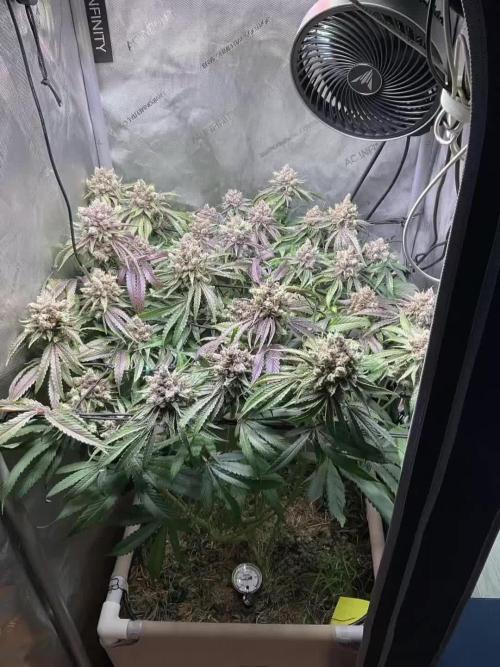
Der Herbst schreitet bei der Cherry Limeade weiter voran 🍂. Einige Blätter zeigen mittlerweile wunderschöne violette und gelbe Farbtöne und auch die Buds selbst entwickeln zunehmend eine schöne Purple-Färbung 💜. Das gibt der Pflanze in der Endblüte wirklich einen tollen Look. Gleichzeitig geht der Wasserverbrauch langsam, aber deutlich zurück. In der vergangenen Woche lag er nur noch bei etwa 1,4 Litern pro Tag 💧.
Leider ist es mir nicht gelungen, die Temperaturen in der Endblüte noch deutlich zu senken. Bei eingeschalteter LED lagen wir im Durchschnitt bei etwa 27 °C 🌡️. Aber bei einem Spätsommer-Grow im Dachgeschoss lässt sich das ohne Klimatisierung eben nicht immer vermeiden. Gerade in Kombination mit dem Entfeuchter ist es schwierig, die Temperatur noch weiter herunterzubekommen. Damit muss ich bei einem solchen Setup einfach leben.
Am Freitag habe ich außerdem noch einmal 3 Liter Almicanna Flower Komposttee gegossen 🌸. Dieses Mal habe ich beim Brauen erstmals einen Aquarium-Heizstab verwendet und den Tee bei konstanten 21 °C gebraut 🌡️🫧.
Was die Pflanze und vor allem das Aroma betrifft, bin ich momentan etwas zwiegespalten 🤔. An manchen Tagen bin ich wirklich begeistert von ihr, an anderen bin ich doch etwas enttäuscht über den bisher eher unspektakulären Geruch. Sie riecht definitiv angenehm und hat eine schöne Zitrusnote, aber es ist kein Vergleich zu der unglaublichen Süße meiner Blueberry Pancakes oder dem extrem intensiven Aroma der linken Mentha de Croco 🌿.
Vielleicht ist es einfach eine Frage der Erwartung. Bei einer Cherry Limeade hatte ich mir ehrlich gesagt beim Öffnen des Zeltes eine richtige Kirschexplosion erhofft 🍒💥. Genau diese intensive Kirschnote ist bisher leider ausgeblieben. Für ein endgültiges Fazit ist es aber definitiv noch zu früh – vielleicht überrascht sie mich in den letzten Tagen und vor allem nach der Trocknung und Reifung noch.
Die Buds selbst sind dafür wirklich beeindruckend 🌸. Sie sind extrem dicht gewachsen, relativ groß, sehr harzig und mittlerweile teilweise wunderschön purple 💜. Ich bin deshalb trotz der bisherigen Enttäuschung beim Aroma sehr gespannt darauf, wie das Endergebnis aussehen und sich nach dem Curing entwickeln wird.
Ab heute reduziere ich die Lichtintensität auf 800 PPFD bzw. etwa 35 DLI 💡. Ich werde die Pflanze anschließend noch ungefähr 1,5 bis 2 Wochen ausreifen lassen. Unter dem Mikroskop konnte ich bisher noch keine bernsteinfarbenen Trichome entdecken 🔬. Mein Eindruck liegt momentan ungefähr bei 50:50 zwischen klaren und milchigen Trichomen. Es ist also definitiv noch etwas Zeit.
Jetzt geht es eigentlich nur noch darum, die letzten Wochen möglichst ruhig zu Ende zu bringen und abzuwarten, was die Cherry Limeade am Ende tatsächlich abliefert 😎🌱. Ich bin auf jeden Fall sehr gespannt auf das Endergebnis.
📊 Aktuelle Parameter:
💡 Licht: 900 PPFD / DLI 39 → 800 PPFD / DLI 35
🌡️ Temperatur: ca. 27 °C bei Licht an
💧 Luftfeuchtigkeit: 57 %
📈 VPD: 1,5 kPa
🌿 CO₂: Ø 740 ppm
💦 Wasserverbrauch: ca. 1,4 l/Tag
Cherry Limeade – Weekly Update 🌱
Autumn is progressing on the Cherry Limeade 🍂. Some of the leaves are now showing beautiful purple and yellow colors, and the buds themselves are also developing an increasingly beautiful purple coloration 💜. It gives the plant a really nice late-flower appearance. At the same time, water consumption is slowly but steadily decreasing. Last week, the plant was using only around 1.4 liters per day 💧.
Unfortunately, I wasn’t able to bring the temperatures down as much as I would have liked during late flower. With the LED on, temperatures averaged around 27 °C 🌡️. But with a late-summer grow in an attic, this simply isn’t always avoidable without air conditioning. Especially when running the dehumidifier, getting the temperature down any further is difficult. That’s just something I have to accept with this setup.
On Friday, I also gave her another 3 liters of Almicanna Flower Compost Tea 🌸. This time I used an aquarium heater while brewing and kept the temperature at around 21 °C 🌡️🫧.
When it comes to the plant itself, and especially the aroma, I’m currently a little torn 🤔. Some days I’m really impressed with her, while on other days I’m somewhat disappointed by how unspectacular the aroma still is. She definitely smells pleasant and has a nice citrus character, but it’s nowhere near the incredible sweetness of my Blueberry Pancakes or the extremely intense aroma of the left Mentha de Croco 🌿.
Maybe it’s simply a matter of expectations. With a Cherry Limeade, I honestly hoped for a massive cherry explosion every time I opened the tent 🍒💥. Unfortunately, that intense cherry note has not appeared so far. It’s definitely still too early for a final verdict, though – maybe she’ll surprise me during the final days, and especially after drying and curing.
The buds themselves are genuinely impressive 🌸. They have grown extremely dense, are relatively large, very resinous, and are now showing some beautiful purple coloration 💜. So despite being somewhat disappointed by the aroma so far, I’m still very curious to see what the final product will look and smell like after curing.
Starting today, I’m reducing the light intensity to 800 PPFD, which gives me around 35 DLI 💡. I’ll let the plant ripen for another roughly 1.5–2 weeks. Under the microscope, I haven’t seen any amber trichomes yet 🔬. My current estimate would be roughly 50:50 between clear and cloudy trichomes, so there is definitely still some time to go.
At this point, the goal is simply to keep things stable for the final weeks and see what the Cherry Limeade ultimately delivers 😎🌱. I’m definitely very curious about the final result.
📊 Current parameters:
💡 Light: 900 PPFD / DLI 39 → 800 PPFD / DLI 35
🌡️ Temperature: approx. 27 °C with lights on
💧 Humidity: 57%
📈 VPD: 1.5 kPa
🌿 CO₂: Avg. 740 ppm
💦 Water consumption: approx. 1.4 L/day

Likes
26
Share


@Bread_n_Buds
Follow
It was a wonderful journey, I really had the honor of doing this girl many times, this time even close to the Monster Zkittlez with which they generated the Runtz who was also in the grow. Super modern family situation, I wanted to try to figure out which one I liked best, and I still haven't been able to. at least I'm still tasting Runtz's first flowers and it's heavenly but the freshly picked Gelato and the upcoming Zkittlez are scary just to see them. Super resin, it really looks fake, I also have some macro photos that will make you cry. The resin is everywhere the trichomes are even in the largest leaves the scent is of the garden of eden. wow. Show. Really nice. It was freshly cleaned I want to try to do the resin the first time and then I have freshly cleaned and hung the whole girl upside down under the crop data next week when I clean and can give the detail. Gorgeous. Before being collected, she did two music therapy days, one of which in the dark with frequencies for plants and together we listened:
1 - Paolo Conte - "Gelato" al Limon
2 - Raekwon - Ice Cream to stay on the "Geato" theme and then all the M83 discography to be collected with the very famous Outro of Interstellar really seems to pass to a better life listening to that stuff. Top of the top

Likes
89
Share


@nonick123
Follow
Dia 20 (05/02) Han pasado 8 días desde el ultimo riego. El sustrato de PRO-MIX HP se encuentra esponjoso al tacto a pesar de que está seca la parte superior
Riego 1 Litro H20 + Wholly Base 1,25 ml/l + Solid Green 0,5 ml/l + Rise Up 1 ml/l de Gen1:11 - pH 6,23 TDS 660 PPMs
Día 22 (07/02) Vamos a probar a hacer este ciclo con LST
Día 23 (08/02) A +24 horas la planta ha reaccionado muy bien al LST. Se han estirado las ramas inferiores y la rama apical se sigue estirando
Día 25 (10/02) Sigo con ajustes de LST para abrir la canopia. La planta está reaccionando con mucho vigor 😍💥
Este día añado a la carpa el sistema TrolMaster TCS-1 Tent-X
Día 26 (11/02). Riego 1 Litro H20 + Wholly Base 1,5 ml/l + Solid Green 0,75 ml/l + Rise Up 1,25 ml/l de Gen1:11
TDS 780 PPMs - pH 6,36 (mínimo ajuste con pH+ para subirlo desde 6,2)
La planta avanza vigorosa. En una semana pasamos a 12/12 😁
Nutrients by Gen1:11 - www.genoneeleven.com
Substrate PRO-MIX HP BACILLUS + MYCORRHIZAE - www.pthorticulture.com/en/products/pro-mix-hp-biostimulant-plus-mycorrhizae
Controlled by TrolMaster TCS-1 Tent-X System Main Controller - https://www.trolmaster.com/Products/Details/TCS-1