


Likes
13
Share


@Growyourownathome2x2
Follow
Tuesday the 20th of June day 55 of 12/12 the buds have got really dense in the last couple of weeks and swelling up I plan to harvest between day 60 and 65 gonna check the thrics tomorrow and see how gbey are looking smelling so good, looking forward to see what kind of weight I got on this run seems to be getting better each time so hopefully I pass 116g let me know what yous think 🍁😎

Likes
21
Share

@G_Germination
Follow
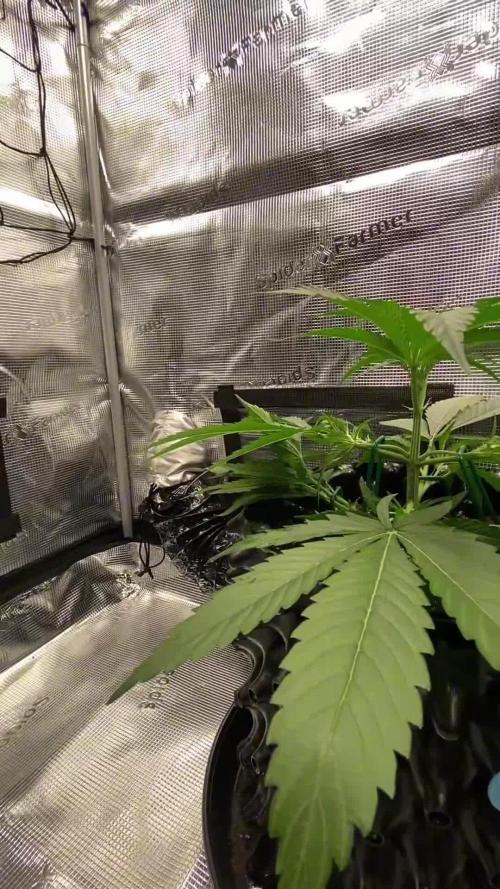
The girls have really gotten bushy so some light defoliation this week and they’re developing nicely starting to flower however one of the girls is lagging behind.
Feed have has been 1ltr every other day (or until the pots are light and can easily pick up with one hand)
My PH is 5.6-5.8… EC 1.6-2.0


Likes
9
Share


@Headies
Follow
So this week after I gave it under nutrients I apparently gave it too much nitrogen while having a potassium deficiency. Shiney dark leaves, So i fixed that, but some didn't bounce back, and I tried nitrogen. I think they are doing pretty good considering everything I've put them through SO FAR. lol. Nutrients are NPK Raw's total lineup, follow their instructions at first, Fastbuds adjustments as of this week.

Likes
11
Share
@ThatsmyGrow
Follow
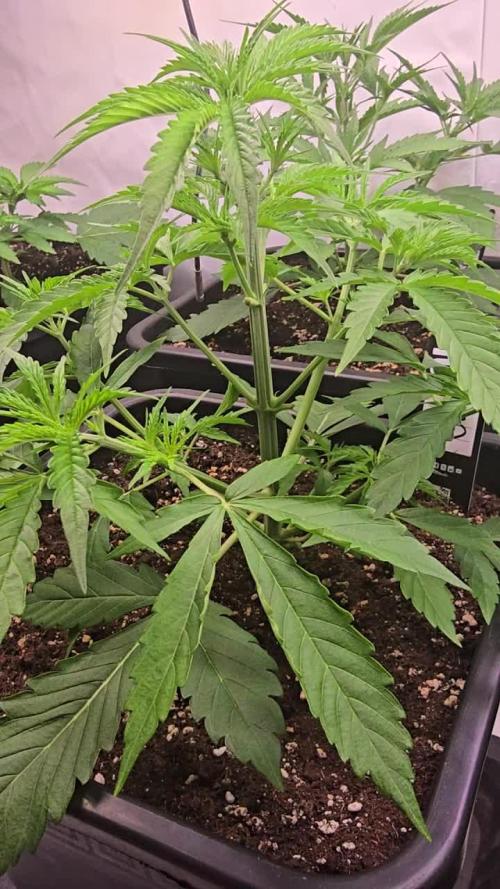
🌱 Week 3 – Gorilla Cookies Auto Pheno Hunt
Another week down and the differences between the phenos are becoming more obvious every day 👀🔥
The environment stayed very stable this week with temperatures, humidity, and VPD remaining consistent. Because all plants are growing under the exact same conditions, it’s really interesting to see how differently each phenotype develops genetically.
📈 Current observations:
Several phenos are already reaching close to 30 cm in height
Meanwhile, some smaller phenos — especially Pheno #6 — are still around 13 cm
Leaf structure and overall plant shape continue to vary a lot between phenos
Growth vigor is clearly different from plant to plant now
💧 Feeding & maintenance:
This week the plants received their first proper feeding with around 4 liters of nutrient water.
Some phenos seem to react more sensitively to the nutrients, as a few plants are starting to show slight brown leaf tips, so I’ll keep a close eye on them over the next days 👀
I also removed more large fan leaves to improve light penetration and allow the lower branches to develop more evenly.
📊 Current environment:
Temperature stable around 26°C
Humidity staying between 63–65%
VPD maintained around 1.3 kPa
Light intensity remaining at 35%
Now I’m really curious to see when the first flowering signs will appear 🌸🔥
💬 Which pheno would you pick so far?
Likes
16
Share


@BLAZED
Follow
1-11
At the end of the day i chopped her down, did a small wet trim removing some big leaves, and hang the buds to dry.
2-11
Temps: 19.3 to 20.5 degrees
Humidity: 55% to 64%
3-11
Temps: 17.1 to 20.4 degrees
Humidity: 54% to 66%
4-11
Temps: 18.1 to 19.6 degrees
Humidity: 62% to 66%
5-11
Temps: 17.9 to 20.1 degrees
Humidity: 56% to 64%
6-11
Temps: 17.6 to 19.4 degrees
Humidity: 59% to 67%
7-11
Temps: 17.8 to 19.2 degrees
Humidity: 60% to 66%
8-11
Temps: 17.4 to 19.9 degrees
Humidity: 58% to 67%
9-11
Temps: 17.8 to 20.1 degrees
Humidity: 62% to 64%
10-11
Temps: 18.2 to 20.5 degrees
Humidity: 62% to 65%
11-11
Temps: 18.7 to 20.4 degrees
Humidity: 57% to 65%
12-11
Temps: 18 to 20.1 degrees
Humidity: 54% to 66%
13-11
Temps: 17.8 to 20.2 degrees
Humidity: 61% to 67%
Started trimming today.
14-11
Finished trimming.
I was afraid of finding a lot of budrot, luckily it was only the one cola.
The buds are very frosty, the bottom at the base of the branch looks a bit brownish on some buds, i inspected it with a microscope and didnt find any mold or weird things. There are a lot of amber trichomes tho.
I think that's why it looks brown like that. It smells and smokes good, so i think its fine.
If someone thinks otherwise, let me know!
End results:
Buds: 92 Grams
Small Buds: 18 Grams
Trim: 16.7 Grams
Total weight of the buds: 110 Grams.
I calculated that i used a total of 72.3 watts this grow, that makes it 1.52 grams per watt!
Very happy with the end results, and its by far my personal record hahaha.


Likes
1
Share


@RussianGrower
Follow
So it's time to harvest Russian machine guns. The plants were high because we pulled them with a lamp and did not use LST. The final product was removed on the shelf of the refrigerator.00

Likes
12
Share


@MichaelPearson
Follow
Day Zero:
Seeds from FASTBUDS. Cotton pads washed with purchased water, moistened with the same water. I immersed two seeds in each cotton pad.
In an ordinary plastic bag, put the discs and inflated with air.
The first day:
24 hours passed, the seeds showed white roots, left in the bag in its original state for another day.
Likes
9
Share


@Garamantes
Follow
After 3 days, when the temperature rose above 11 degrees, I could finally remove the greenhouse from the pet bottle.
I did the first fertilizing with Advanced nutrients Voodoo juice, Piranha and Tarantula for better development and protection of the root.
Unfortunately, the pet bottle greenhouse, which was dewy and dirty from snail slime, caused the main stem to pull out more than I would have liked.
I like it when the main stem is low and immediately starts to form secondary branches
Likes
4
Share


@Autofutur
Follow
A joy for the eyes,easy trimming,it was mostly big buds.dense,frosty.the vidéo says it all.
Was smelling like watermelon and gas as it was drying.
Likes
5
Share


@Deli_Weed
Follow
Esta semana fue solamente de flush 🚿 en esta ocasión decidí usar florakleen para ver con cual obtengo mejor resultado si con este o con flawless finish, lo hice así, primero hice un lavado con pura agua con ph de 6.2 lo hice desde el ultimo día de la semana anterior, fue lavado doble, uno en cuanto se encendio la luz y otro justo antes de apagarse, luego empezando esta semana regué dos dias usando el florakleen y ph de 6.2, el tercer día no regué y al final de ese día le di corte ✂️ y la colgué, actualmente ya la tengo curando, la tuve 10 días secándose con una humedad de entre 50 y 60% para un secado lento.


Likes
13
Share


@Lfuego22
Follow
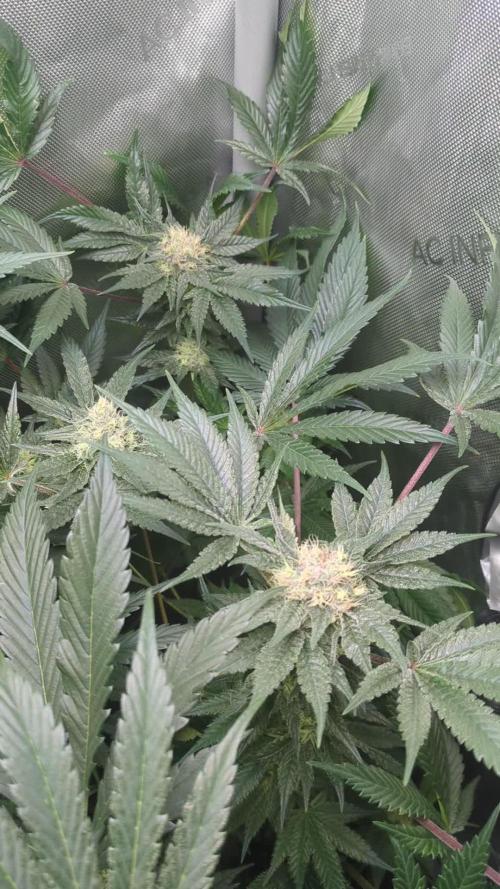
First week from clone. Started at day 5. Good week. Worked on the discoloration and growth this week


Processing
Likes
32
Share


Likes
18
Share


@eldruida_lamota
Follow
Esa familia, actualizamos las northern light xL, hay una de las 3 que destaca del resto por tamaño y flores, pintan muy bien, se ve buen color y bastante vigorosas, tutelamos 1.
Bajamos humedad y temperatura, a estas alturas estamos pensando en el siguiente proyecto con varias geneticas de zambezaseeds.


