


Likes
Comments
Share

@Borberad
Follow
Woche 9
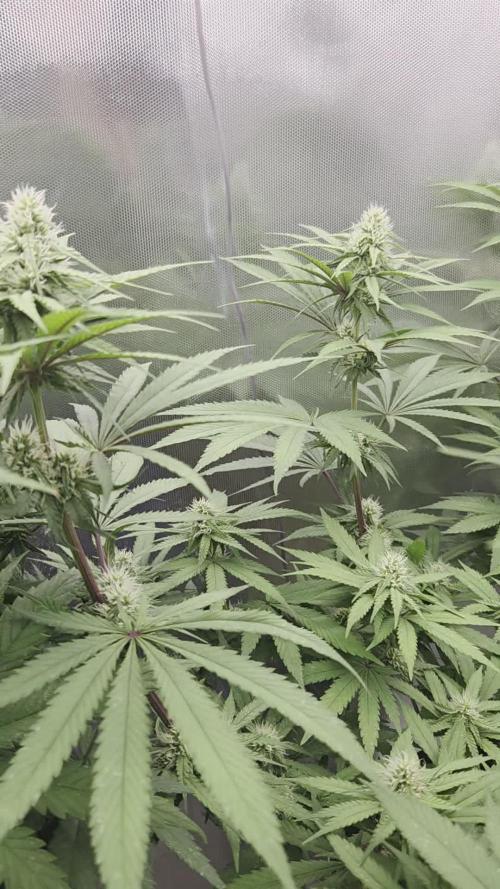
Das Training wurde gut überstanden, sie wächst gesund und kräftig. So langsam muss aber mal wieder Luft durchs Blattwerk pusten, daher wird diese Woche Schrittweise das unterste Drittel entlaubt, sowie Blüten und Triebe entfernt.

Likes
4
Share


@DeepRootsGrowTrees
Follow
CHERRY 🍒 COLA by FASTBUDS
WEEK #10 Overall
Week #5 Flower
This week she's dealing with the heat she had to grow in the hot ☀️ summer here however she's managed to grow and flower in the heat. Stay Growing!!
FASTBUDS CHERRY 🍒 COLA


Likes
32
Share


@BB_UK
Follow
Greeeeeat week! Dynomyco has truly helped these Girlies get off to an amazing start and gave them the force to gain thick stems and more branches! It could also be the addition of Co2 in the grow area! I also give them a diluted foliar feed of formulex as they go through the day as I have a very low humidity for that week but I can bring it up now as I don’t need it so low in my home! Was drying other plants basically! I’ve decided to top these girls too as they run down the centre I can train them! It’s going to be an exciting week! Zamnesia strains once again proving to be a top hit 🤘🏽💚 I’m also running their collab strain with ripper seeds of amnesia punch!


Likes
13
Share


@Kayotic
Follow
🍓
Day 14
- 2 1/2 inches, 24 from SF1000
- Half gallon of tap water, PH'd to 6.2, 75 degrees
- soil 67 degrees
-First time watering since put in 5 gallon
-PH 6.7, didn't check TDS
Zkittles
Day 15
Waiting on soil to move to 5 gallon fabric pot
Northern Lights
#1
- first seed I thought I killed sprouted in the same pot!!
- Day 8
- Going to do this one outside, been bringing out during the day
#2
- The replacement for #1 when I thought I lost her
- Day10
-
Likes
6
Share

@Aeromatics
Follow
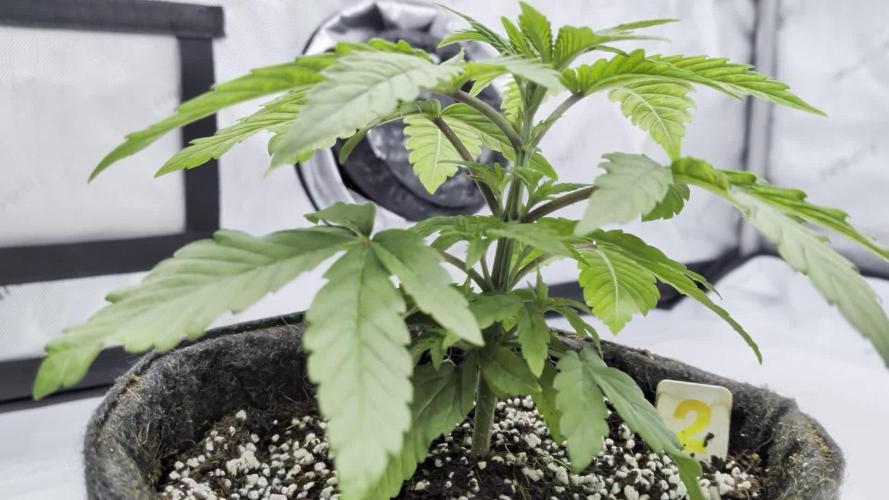
Clementine Slush #2: A bit lighter fan leaves this week, not sure why but also not too worried, as her nodes are looking beautiful. She got a top on day 27 (see video above) and is really developing a nice structure. As all 5 of Clementine Slush start to develop, I am increasingly happy that I had 5 empty autopots ready to take them all.
She took to the top wonderfully, and I hope the ease of this strain will continue through late veg.
Tent-wide update: This week was very relaxing in the tent, as we prepare for the major transplant into their final 5-gallon autopot home!
I did a major water to runoff, which they absolutely loved!
The recipe was, for 2 gallons of water:
2 Gallons RO Water
1 ml Ventana Plant Science Structure
4 ml Ventana Plant Science Grow
12 ml Ventana Plant Science Support
ec .89 ph 5.7
Additionally, on day 25, I moved to 300 PPFD since the plants looked ready for an increase in light. The responded great, and the rest of week 4 has been devoted to topping plants when ready, and preparing for that big transplant.
I also realized I've been a bit slack on my mixing order for Ventana Plant Science, which could be a reason for some of my cloudy reservoir issues when my autopots are on, so I will be very diligent about the proper and recommended order moving forward:
Liquid Line Mixing Order
Structure (first)
FlaVUH
Grow / Flower
Expand
Support (last)
It's going well thus far, though I think this may be my longest grow yet!
Likes
28
Share


@tislam95
Follow
As I was planning to harvest this week, I started flushing Mishka with PH 7.5 water and no nutrients as per guidelines.


Likes
13
Share


@drzoidberg
Follow
green wild shark #2 has been such a great accident this week i am going to put her on a stool to get her closer to the light was letting it stay low hoping to get some stretch i think she is as tall as she is going to be put a nice video up of her #1 has been easy and not needed much from me except nutes and water

Likes
21
Share


@Cali_Grown_420
Follow
Day 43, pH is at 6.0 currently. Plants are praying towards the light so that’s a good sign. Some spots still show up on a couple leaves, just a couple small spots, could still be adjusting. Will know in another day or so if the problem has been corrected or not.
Day 44, they seem to be responding better to the change in nutrients. They’re eating and still putting on growth. Some spots are appearing but that’s probably just still an affect of last weeks overload.
Day 45, PPMs have continued decreasing and they have consumed about 1.5 gals of water over the past 72 hours. I topped off their res a little bit and readjust pH to 5.9 (it rose to 6.6 because they’re consuming a lot of nutrients)
Day 47, Nutrients was almost gone, changed nutrients and bumped up to 800PPM (0.5 scale)
Day 48, the nutrient solution inside the buckets gets up to 78-79° by the end of the day (lights on). When lights go off, they drop down to about 70-72°. I built some insulation sleeves out of double layer bubble foil. Should insulated them enough to maintain their lower temp without increasing throughout the day. You can see in photos but in the video I also created tops for each of the buckets to help reflect light and heat from the buckets.
Day 49, plants are doing great PPMs are staying pretty stable meaning they have about the perfect ratio of nutrients which is 815PPM currently. Insulating the buckets was a great idea it’s kept the res temps stable and stopped them from rising throughout the day! Today marks day 14 of flower.


Processing
Likes
9
Share


@NightsAssassian
Follow
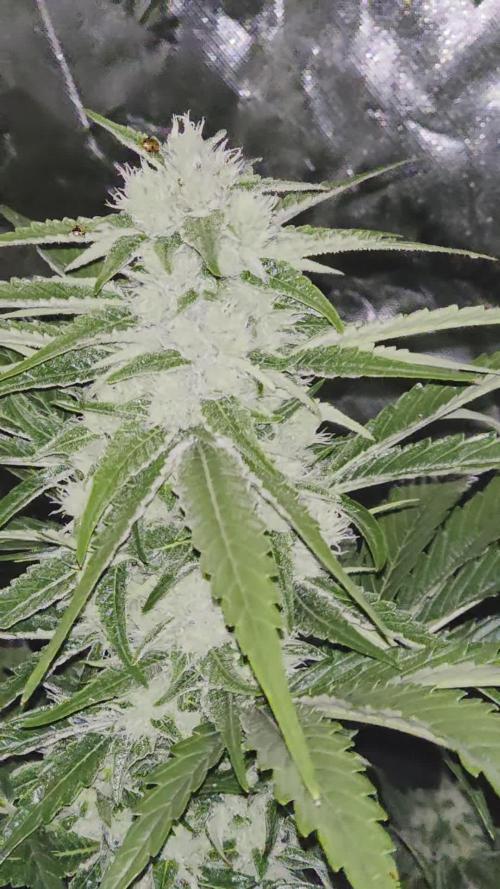
Day 36: My plants went to flower and now i am starting to have problems with 2 plants. If anyone can inform me on how to fix these problems that would be great. I havent really changed anything during the grow yet i top feed on day 34 other than the normal. Thanks for looking and happy growing.


Likes
4
Share



Likes
1
Share

@Calo
Follow
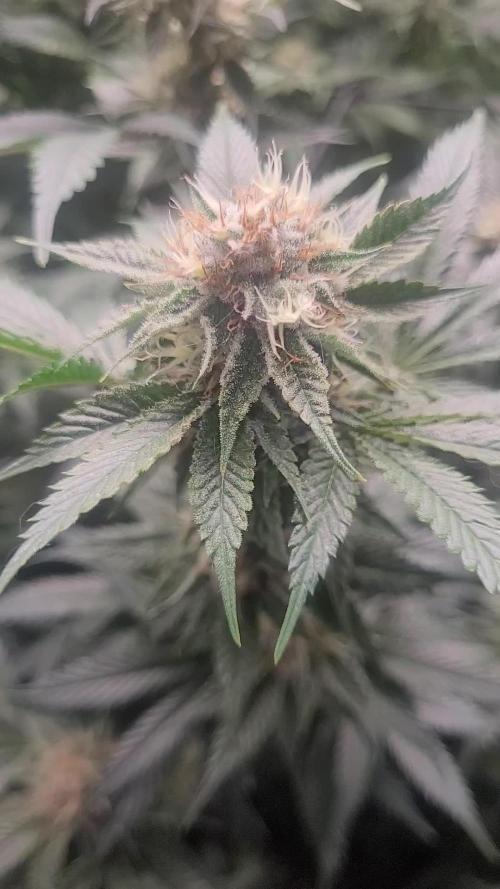
We're in the sixth week of flowering, and now the scents are starting to get very strong, and the buds are completely covered in resin. I've decided to only feed them microorganism-enriched water from now on. The compost tea has eliminated any deficiencies, and the plants are now in perfect shape for the final weeks. Harvest is about 25-30 days away. I can't wait to harvest these buds.

Likes
36
Share


@Cannabeast40
Follow
Here we go 😊
Planning & germination 👍
I´m really looking forward to this run, the SpectrumX from Medicgrow with
build in PPFD, 4 spectrums V1, F1, VS, FS and 880 Watt is definitely serious business 👊
Trying out a new soil in this grow.
The plant mulch is an exclusive mixture of harped mulch, nutrient-rich natural fertiliser,
hill sand and long-term matured compost. The mixture provides a porous and airy structure,
which ensures that both water and nutrients are easily accessible to the plant's roots.
Stay tuned and Keep it green 😎

Likes
31
Share


@420DeepGrow
Follow
Gracias al equipo de AnesiaSeeds, Marshydro, XpertNutrients y Trolmaster sin ellos esto no sería posible.
💐🤯 39%Thc Wham Boom:
Sube al ring con WHAM BOOM de Anesia Seeds, donde la energía electrizante de Wham choca con las vibraciones frías de RS54, creando una variedad que es todo equilibrio, potencia y sabor. Este peso pesado feminizado ofrece una mezcla perfecta de 50% Sativa y 50% Indica, proporcionando una experiencia que te hará flotar de euforia mientras tu cuerpo se sumerge en una serena relajación.
WHAM BOOM es una productora prolífica, con rendimientos en interior de 600g/m² y en exterior que alcanzan la asombrosa cifra de 900 - 1200g por planta. Con una floración de entre 65 y 70 días, esta variedad está lista a principios de octubre, lo que la convierte en una competidora ideal para los cultivadores que aspiran a una cosecha de campeonato. Con una imponente presencia de 100-140 cm en interior y 160-220 cm en exterior, WHAM BOOM se alza como testimonio de su destreza genética.
🏠 : Marshydro 1.50 x 1.50 x 1.80, carpa 100% estanca con ventanas laterales para llegar a todos los lugares durante el grow
https://marshydro.eu/products/diy-150x150x200cm-grow-tent-kit
🌬️💨 Marshydro 6inch + filtro carbon para evitar olores indeseables.
https://marshydro.eu/products/ifresh-smart-6inch-filter-kits/
💻 Trolmaster Tent-X TCS-1 como controlador de luz, optimiza tu cultivo con la última tecnología del mercado, desde donde puedes controlar todos los parametros.
https://www.trolmaster.com/Products/Details/TCS-1
🍣🍦🌴 Xpert Nutrients es una empresa especializada en la producción y comercialización de fertilizantes líquidos y tierras, que garantizan excelentes cosechas y un crecimiento activo para sus plantas durante todas las fases de cultivo.
Consigue aqui tus Nutrientes:
https://xpertnutrients.com/es/shop/
📆 Semana 2:
Fantástica semana, estan creciendo de una forma espectacular gracias a la ayuda de @marshydro, @xpertnutrients y @trolmaster.
Se puede apreciar un tercer nudo aunque la aplicación de cola de caballo y el estar en una maceta pequeña ha influido en el tamaño de ella, parece una planta algo sensible,se recupera muy rápido 😁.
Esta semana espero trasplantar a la maceta definitiva.
Potencia de la lámpara: 50%

Likes
33
Share


@FreshCoastOrganics
Follow
The White Widows are growing bigger and fading out more and more every day! I’m getting anxious for chop because they smell so good!
I’m just a bit worried about how faded some leaves are getting, I’m doing my best at removing them because I absolutely do not want to encourage bud rot or WPM!
My cousin and I built the worlds SMALLEST Vortex Air Lift Brewer for my nutrients and compost teas. This unit is only 3.5 gallons which is perfect for my setup, as I never need more than a gallon or two for each grow box containing up to four plants. We designed and built this thing in a single day, the only thing that took time was waiting on all of the parts to finish it. Unfortunately the pump needs to be stronger so she’s only running off of one pipe, but on Wednesday a pump twice the size will be coming in to save the day! Things are about to get real good for these upcoming grows 😎😈

Likes
19
Share


@spyder
Follow
Please Like and/or Follow the Diary..... May all your grows be plentiful and trouble free....
UPDATE: Switched out my UnitFarm UFS3000 for my "NEW" UnitFarm UF4000 v2 Upgrade version, 400 Watts, check out the unboxing/setup video....
she has her legs under her now and should kick into high gear soon,,, stay tuned

Likes
4
Share


@MonkeyGrower
Follow
It grows very well. The substrate was watered with top dressing next to the pellet.
Likes
132
Share


@Grow4Releaf
Follow
** Mar 27th/28th few bud shots added, checking the trichomes on the purple were getting cloudy so shes moving along. Shouldnt be long for her!***
**Mar 26th- added a few more photos , purple plant is getting close, she's on a water only diet till harvest ***
*25th- Added a few photos using a phone app, gonna try this till the computer is back up ***
Everything going well so far still, still Trying to get my computer and Adobe program up and running right but gonna get some more photos during the week.
So far the purple one is moving well starting to thickin up, and the other jusy stopped getting length and hopefully will bulk a bit.
Buds are crazy dense. Can't wait to show a good video of them once closer to Harvast.
The SMELL is intense off the purple one already. I can't wait !!
It's been ALOT of fun growing out these runtz can't wait to see how the smoke is!! Getting closer tho, got another week before I'll check out some lower buds trichomes then see their progression.
Can't wait tho. Should have my camera and laptop up this week , hopefully.
But besides that's I hope ur all doing well !!
Till next update, thanks for checking this one out !!