


Likes
Comments
Share

@CheeRz
Follow
FLOWER WEEK 5: Big Bang | Divine Seeds 💥
🌱 FLOWERING PROGRESS
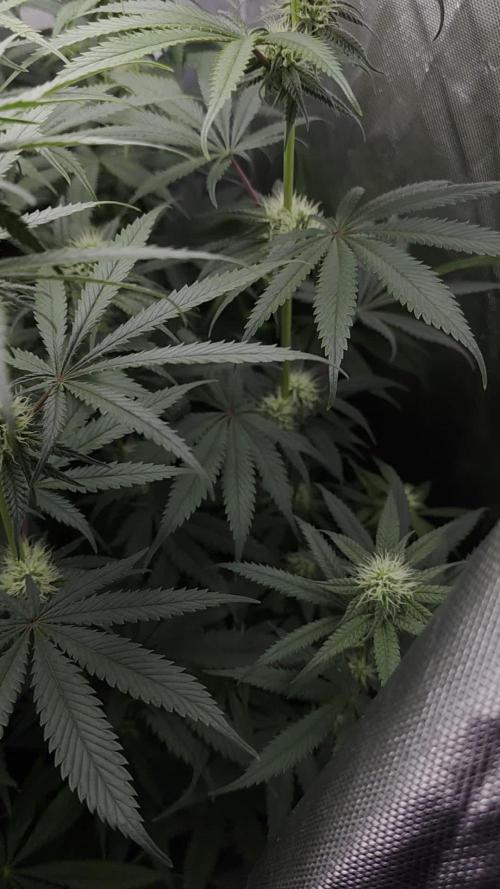
The Big Bang is hitting her absolute prime mid-bloom phase this week! 💥 The flower production has taken over completely, and the colas are swelling at a notable rate. The canopy is holding its uniform structure above the Scrog line, and the stacking is looking tight and intense. 📈
Trichome development has accelerated massively over the past few days, coating the main bud clusters and surrounding sugar leaves in a frosty layer of resin. The pistils are incredibly dense and long, forming thick, hairy white crowns on every single top. Overall plant vitality is outstanding as she continues to channel all her internal resources into maximizing bud volume and flower density. 🕸️✨
💧 NUTRIENT FEEDING & WATERING
I’ve dialed up the organic nutrition line to match her peak-flowering hunger, pushing the main sugars, bio-stimulators, and energy enzymes to maximum levels. ⚡
Current Feeding Schedule (per Liter):
Bio-Bloom: 3.0 ml/l
Bio-Heaven: 4.0 ml/l
Acti-Vera: 4.0 ml/l
Bio-Grow: 1.0 ml/l
Top-Max: 1.0 ml/l
Calmag: 1.0 ml/l
Parameters:
pH: 6.5
Relative Humidity (RH): 59.0% 💧
Temperature: 30.0 °C 🌡️
VPD: ~1.73 kPa
CO2: 675 ppm 💨
💭 GROWER'S NOTE
👀 Status Report: Things are heating up in the tent! With temperatures hitting 30°C and a matching 59% RH, the VPD has pushed up to around 1.73 kPa. This high-performance climate means the Big Bang is transpiring at full speed. By upgrading the diet to 3 ml/l Bio-Bloom and boosting both Bio-Heaven and Acti-Vera to 4 ml/l, I'm giving her the massive energy reserves she needs to process nutrients at this high transpiration rate. Luckily, this solid Divine Seeds phenotype handles the summer-like conditions like an absolute tank. The buds are noticeably packing on frost and thickness daily. Keeping the airflow high and pushing hard through peak bloom! 🚀🌱✨

Likes
49
Share


@Ferenc
Follow
Day 64, 22nd of November 2021:
Hi there! Here we go..... so basically pistils are appearing stronger this is the 2nd weeks since they started producing pre flowers.
The plants getting a bit light might be some air circulation problem? However they look good and of course closer to the end the gettin' older so the leaves also die.
Set up and timing is the same since flower season started.
ViparSpectra XS2000 is on full power which is 240W so 100% capacity.
Ventilation: 12 hours period when the lamp is on it switches 1 hour on and after one hour off mostly to keep the temperature and of course because of fresh air flow. When the lamp is off it switches on in every 2 hours for 15 min at the same time with the extraction fan.
The extraction fan is on 12 hours when the lamp is, and then it switches on in every 2 hours for 30 min.
That's all a bit more water for them from today also. Humidity quite the same approx 50%, temperature as well approx 26-27 Celsius.
Fertilization remains the same since last week, the BioBizz family raised up to be 2ml/L each so it is like 2ml/L of BioGrow, 2ml/L of BioBloom, 2ml/L of TopMax... see the ratio above.
The schedule of the fertilization has not changed happnes 2x a week except epsom salt just 1x a week.

Likes
43
Share


@Esoteric_growing
Follow
Low humidity seems to be causing what looks like heat stress, apart from that they are growing at a phenomenal rate. Going to try and raise the light another inch but it’s already mounted pretty much to the top of the tent.
I forgot how insane hydro growth is lol, next time I will be sure to flip them to 12/12 when they are a little smaller lol

Likes
27
Share


@Smokepurple137
Follow
All are going strong, zkittles OG auto is nearly 30cm bigger than the rest and has started showing bud sites, the rest are not far behind at all. I think they will be into flowering stage at the end of next week and by then hopefully 30-40cm taller. Do si dos is very different, looks short and stout so will be doing some LST on her. Seems to be happy with the nutrients and strengthening nicely. Added another 600w light on 11/12/20 so 3 600w lights in now.
Likes
4
Share


@FlowerPower559
Follow
I think she's about ready to be bent over and trained.. I'll definitely do a video. Wish me luck because I've never done this before so it should be interesting to say the least. Lol
Likes
4
Share

@GREENPHOENIX6262
Follow
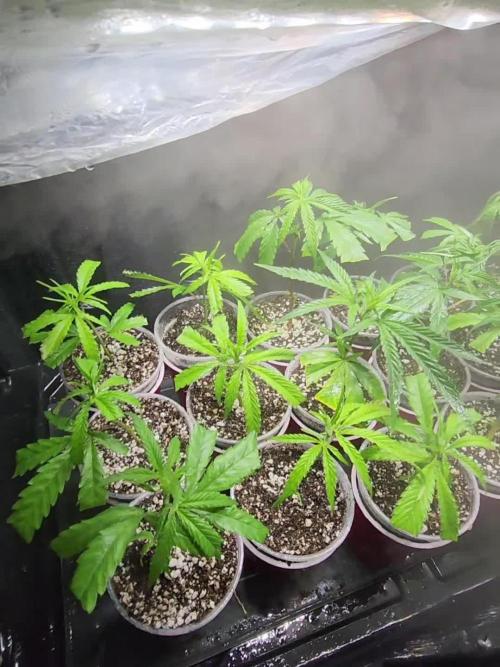
09/07 - Reveg still in process - Mother plant in recover from clone clipping - unhealthy clones disposed - cutting new clones this week - Myco and Superthrive feed increased - Net dropped an LST.

Likes
11
Share


@DesDeGrower
Follow
It’s the time....Luke is now ready to finish his training.
He changed location to much bigger and taller tent for his flowering period.
Everything under MarsHydro TS3000 light 💡
Before switching to 12/12 got quick defoliation and transplanted to final 30l pot 🤘
Tomorrow getting his trellis net #
Keep it locked and stay tuned!
😎🤘
Couldn’t resist and managed to put trellis in place before sleep 😎
🚨 —-> second plant (one on left side) is LemonWalker OG as well from DNA Genetics started in same time as Skywalker. There was some issues with it on early veg stages and to be honest I was almost sure she will not make it.....surprise, surprise as you can see recovered to the point where I decided to switch her to flower and see what she will bring 😉
Day6 update
Girls going both strong 💪 We can see first flowers starting to shape.
Second and probably last defoliation today to push all the power into forming tops 🤘
Stay tuned!


Likes
12
Share


@2Stones1Bird
Follow
Checkout my Instagram @smallbudz to see the Small budget grow setup for indoor use, low watt, low heat, low noise, step by step.
01/11/2019 -
Started using BioBizz Alg-a-Mic on spray, using it once per day at lights off, 1 or 2 puffs to create a light mist, only on non feed days,
I mixed 0.1ml on 100ml water 6.4 PH.
03/11/2019 - Gave her 250ml plain water with 6.4PH
05/11/2019 - Gave her 0,15ml of each BioBizz Grow, Max and Bloom on 300ml water 6 PH didn't manage to get it higher to 6.3 at least.
06/11/2019 - She started to show some pistols, probably entering pre-flower.
07/11/2019 - Soil was to dry due to 2930c temps gave her 0,500ml of 6.5PH water with 0,25ml Grow, 0,25ml Max, and 0,45ml Bloom BioBizz.

Likes
7
Share


@FourTwenty_Plants
Follow
Date: 30.09.2024
So the green gelato is doing fine inside shes kinda starting to turn purplish red on some parts of her buds.
The 2 Lemon Cherrys are still outside Im starting to lose hope for the 2 girls but fck it hope will still get smth out.
Date: 04.10.2024
Sooo I think that the gelato is going to get chopped down in the next 2-3 weeks.
The 2 Lemon Cherrys aint getting any where with the weather atm so I think im just gone give them a few more weeks and hopefully this strain will be good enough for a bit of rosin or IceOLator

Likes
2
Share


@Krissci
Follow
Day 3 Light LST as stems are still growing, but nice and green.
Clean pots is always a must

Processing
Likes
3
Share


@Ogbangbang2981
Follow
we entered flowering that's so beautiful purple color everywhere but she just started so let's watch her full out . still on bat poo diet


Likes
410
Share


@Rock_n_Roll_Randy
Follow
It's been 23 days of flower now and
The gals are still loving the fc4800 and their new 8x8 mars hydro grow tent as much as I do👍 leaves are sticking straight up towards the light. Love how easy the zippers are to open and close. Nice and strong and guaranteed to last. It has extra material on the backside of the zipper that helps for light leaksand enough ports and vents for anything you need in it👍. the tsw2000 is still going strong and is also a very good light. Its been going almost nonstop for 6 months and still working the same as when I got it👍. not much heat off both lights but the fc4800 is alot cooler and the heat-sinks work extremely well. I have it daisy chained to the tsw2000 and 1 dimmer controls the other and i don't need to be reaching in too far to dim the other light, it's awesome and I can't wait to buy more lights to daisy 4 together👍. I would recommend this light to everyone that grows with leds and have trouble with temperatures getting too high. Even if you grow with HPS lights I think any mars hydro light is a MUST TRY. I like how heavy both lights are because I know it means they are built soild and strong 💪. Very good sign with the frost they are starting to get thanks to bith mars hydro lights. I can notice more frost under the fc4800 and I'm thinking it's from the UV DIODES they put on the fc4800 👍. 2 days ago they all smelt like my nuken, sweet marshmallows. But now I can smell the monkey dough and gorilla glue and skunk monkey coming through👍. I touched a bud on the gorilla and monkey fingers smelt like fruit loops👍 really pleasant smell. Lingered on my fingers for atleast 30 min. I'm glad mars hydro is under priced compared to some brands and for how popular they are usually companies would charge more. Thanks mars you guys are awesome 🤘🥁🎸. I'm getting a new exhaust fan soon. An 8 inch that will work alot better than my 4 inch lol. Wayyy to small for a 8x8 Grow Tent. Dehumidifier is going almost non stop to try and get the humidity down. I love how both lights on 100% power only raise my temperature 2 or 3 degrees 👍. You can rest your hand on the lights and not much heat comes off them. Obviously there is some heat but for the brightness of the lights and only raising the temp that much is awesome 👌. And if I wanted to I could remove the driver from the fc4800 and run it on the outside of my tent because the cord is so long but 2 or 3 degrees is barely nothing👍. The girls are starting to bulk up abit now and only 3 weeks of flowering, these lights are awesome 👌. My last run of monkey dough and gorilla glue didn't start showing alot of crystals until week 4. These were only 2.5 weeks and I started noticing some frost. Next week I will be able to tell more about what these custom bred seeds will be like. I love how the smell is changing now. Didn't want all them to smell like nuken marshmallows lol. It's awesome that I can get right inside the tent to do any work i need👍. Even if I wanted an 4x8 tent. I'd rather this 8x8 because it's so easy to work with the plants and have so much room to move around and massive headroom when I'm in there chillin with the gals🤣🤘.
FOR EVERYTHING MARS HYDRO VISIT:
Www.mars-hydro.com
PROMO CODE: rocknroll
Instagram: @marshydropenny
https://youtube.com/channel/UChU5ZWwNi-DvnO3oWVU3ceA
Thanks for taking the time to read and check out my shit🤜🤛
GET THE MAX FROM MARS👍: Welcome one of the newest members of the Mars Hydro family🤜🤛🤘. The Mars Hydro FC 4800 480W LED Grow Light can accommodate up to a 4' x 4' area for flowering. It has OVER 2000 LED chips consisting of the best selling Samsung LM301B diodes which has a Luminous Efficacy of: 220 lm/W
0.2 W, 3 V mid power,
Osram 660nm Diodes, Infrared light and UV LIGHT👍. It boasts the incredible efficiency of 2.8 µmol/J, maximum 2.5gram yield per watt with 30% higher Average PPFD. This High-intensity spectrum is beneficial for plants at all stages - from veg to bloom, and creates Big dense Buds👍. achieve 50% higher yields & quality compared with the old lights! Only consumes 480W for 4x4ft personal grows, and 3x3ft for commerical grow. It comes with a dimmer and daisy chain function with a maximum of up to 15 lights, the master light controls the rest👍. Wide 6-bar design offers even & wide canopy coverage and can maximizes your grow space. slim 180° FOLDABLE DESIGN... YES I SAID FOLDABLE🤘🤣 , making it compact and easy to install, it's IP65 WATERPROOF and will give you no worries while growing in a humid environment and makes it a flexible high performance commercial grow light for enormous SUPER FROSTY yields.😛😛😛. MARS GETS EM FROSTY BOYS👍
AWESOME HEAT DISSIPATION: The Low energy consumption FC4800 growing light has 6 passive-cooled bars and an aluminum heat-sink a removable driver you can upgrade later or have it outside your tent. with zero noise you can save up to 50% in your electricity bill compared to HID's or HPS lights!
It also has a removable driver so you can upgrade it in the future or have it outside your grow space for better heat control in your growroom👍
UPGRADED FULL SPECTRUM: Yield Max Spectrum with enhanced red (Top-Bin Samsung 3000k-5000knm, Osram 660nm Deep Red), speed up blooming & fruiting, perfectly suited for full-cycle growing. The FC4800 LED grow lamp was born for Big Buds, perfect for commercial, grow tent, grow room, hydroponics, and all soil grows.👍
THE BEST SAMSUNG DIODES: THE FC4800 has Top Bin genuine Samsung Osram Diodes, combined with remarkable 2.8 µmol/J Efficacy, 30% higher Average PPFD, 50% less energy consumption, to maximize your yields. They give you a TRUSTED 3 years warranty 100% Satisfactory guaranteed!!!
The MARS HYDRO 8x8 Grow Tent interior is made of a unique diamond design mylar which is highly reflective. (Other companies mylar and reflective rate is as low as 50%, and it won't provide efficient light. They use thick 1680D oxford canvas, and being double stitched, it is tear proof and perfect for locking in the light. Their grow tent keeps 100% of the light inside the tent and helps your plants absorb more light. EXTRA-THICK material means No light leaks or rips at all.👍
Strong Stable metal corner adapters and poles are the trustful supporters of the tent. It's very sturdy, neither rusting or paint flaking off. quick and easy tool-free setup. They use heavy-duty metal zippers, with double layer black lining, by far the best on the market which creates a light-proof seal.
The Easy observation windows are made by double layers of cloth. Observe the growing conditions of your plants without opening the tent and avoid disturbing your plants. The observation windows also serves to dissipate heat and ventilate the air.
The tent includes 2 removable waterproof floor trays to hold soil and water. The removable tray can be taken out to wash easily.
They guarantee the grow tents are easy to install even if you've never done something like this before. Clear Instructions and no tools needed! They also offer 30-day unconditional refunds for quality problems. Just contact their friendly 24 hours customer service 👍
Www.mars-hydro.com
PROMO CODE: rocknroll
Instagram @marshydropenny
Track: Ethan Meixsell - Thor's Hammer [Rock]
Music promoted by BreakingCopyright
Watch: https://youtu.be/o6Gr0xn6U88
Download: https://www.youtube.com/audiolibrary_...
Likes
21
Share


@ChristianGrower
Follow
Report Tag 15 :
Herzlich Willkommen in Wachstumswoche Nr.2🌿
Es ist Tag acht der vegativen Phase.
Die kleinen gewöhnen sich gerade an ihre neue Umgebung und für mich gibt es nichts zu tun.
Auch die Mädels sind in der Größe fast alle gleich gebliebenen.
Frostbanger Auto 8 cm
Purple Haze Auto 8 cm
Z-UP Auto 9 cm
Ich wünsche euch eine schöne Woche!
Report Tag 16 :
Hey, Hey ... Es ist der neunte Wachstumstag 🌿
So langsam fangen die Kleinen an sich breit zu machen und ihr Blätter auszustrecken.
Das Wachstum beginnt 🙂
Auch heute nicht spektakuläres zu berichten, weniger ist manchmal auch einfach mehr.
Die Pflanzen haben folgende Größen :
Purple Haze Auto 8 cm
Frostbanger Auto 9 cm
Z-UP Auto 9,5 cm
Ich hoffe es gefällt euch mein Grow Report.
Freue mich über jedes Feedback.
Bis morgen.. 👋🏼
Report Tag 17 :
Willkommen zurück 🙂
Wachstumstag Nummer 10 🌿
Auch heute schaue ich den Pflanzen einfach nur beim wachsen zu und lass sie sich einfach entwickeln.
Pflanzengrößen :
Frostbanger Auto 9 cm
Purple Haze Auto 9 cm
Z-UP Auto 9,5 cm
Lampenleistung weiterhin auf 25% gedimmt.
Entspricht 75 Watt insgesamt und aufgeteilt auf die 3 Pflanzen hat jeder in diesem Stadium 25 Watt zur Verfügung.
Ich sag Tschüß und bis morgen!
Report Tag 18 :
Hey liebe Growmmunity,
wir sind bei Wachstumstag 11🌿
langsam aber sicher, fangen die kleinen an ihre Kraft zu nutzen und mit dem Wachstum so richtig loszulegen. Die Blätter werden von Tag zu Tag sichtbar größer.
Für mich ist das super spannend, da sie Strains erst neu released wurden und ich keine Ahnung habe wie die Pflanzen sich machen werden
Wegen der Stammdicke der Z-UP Auto bin ich am überlegen sie zu gegebener Zeit zu toppen.
Noch einmal schnell vermessen :
Frostbanger Auto 9 cm
Purple Haze Auto 9,5 cm
Z-UP Auto 10,5 cm
Ich verabschiede mich für heute und wünsche euch allen ein schönes Wochenende 💚
Report Tag 19 :
Shabbat Shalom,
es ist der zwölfte Wachstumstag und auch Ruhetag. 🌿
Größe der Pflanzen :
Purple Haze Auto 10 cm
Frostbanger Auto 10,5 cm
Z-UP Auto 11 cm
Schönen Samstag Abend 💚
Report Tag 20 :
Happy Sunday 🌞 Wachstumstag 13🌿
Ich hoffe es geht euch gut und eure Pflanzen wachsen so wie ihr es euch vorstellt 🙂
Ich konnte mich nicht beklagen als ich heute morgen ins Zelt geschaut habe.
Die drei Mädels machen sich von Tag zu Tag.
Es ist einfach schön zuzusehen wie sie sich entwickeln.
Heute habe ich die Damen mit einer Lösung von 5ml auf 1 L Wasser Bio Tabs Boom Boom Spray von oben und unten tropfnass eingesprüht.
Damit werden sie schonmal auf ihre dritte Wachstumswoche vorbereitet.
Die aktuellen Größen :
Purple Haze Auto 10,5 cm
Frostbanger Auto 11 cm
Z-UP Auto 11,5 cm
Ich wünsche euch einen gesegneten Sonntag, der Friede Gottes sei mit euch 🙏🏼
Report Tag 21 :
Schönen Wochenstart 🙂
Wir sind bei Wachstumstag 14 und beim letzten Tag der zweiten Woche, nachdem die Kleinen ihr ersten Blätter gezeigt haben.
1,5 Liter Nährlösung bestehend aus chlorfreien Wasser, 0,5g/L Biotabs Bactrex + 2ml/L Biotabs Orgatrex angemischt und jede Pflanze mit 500ml
von der Nährstofflösung gegossen.
Die Pflanzen haben ihren Rhythmus zurück, sie wachsen pro Tag 0,5 cm in die Höhe.
Purple Haze Auto 11 cm
Frostbanger Auto 11,5 cm
Z-UP Auto 12 cm
Damit verabschiede ich mich aus Woche Nr.2 🌿
Ich bin bisher sehr zufrieden mit den drei neuen Strains von FastBuds. Alle gekeimt, alle wachsen gut und sehen gesund aus.
Der Herr segne und behüte dich, er lasse sein Angesicht leuchten über dir. 🙏🏼
Likes
11
Share


@TerpTurtle
Follow
Great 50/50 hybrid, terp profile is a creamy gas with phunky rancid fruitypine kush tones, fruity coffee tones, Doughy, Candy GMO
Dried for 15 days in dark dry tent at 58RH 67F | Dry hand trim | Curing in Grove bag
Likes
8
Share


@JohnnyBarrel
Follow
Week 14 - July 30
Last vegetation weeks. On 4 plants: 2 healthy / 2 injured.
Royal Moby and GMOxZombieK were seriously contaminated with aphids. To stop the propagation I did many washes with black soap and neem oil but may be I treated at the wrong time: morning, even soon; is too late by a hot sunny summer day. I think the 2 plants are suffering from sunburn… and they still have aphids…
I stopped soap treatments and try another recipe which seems working very good against aphids and revitalizing all plants: spraying Garlic + Laurel
-I cooked separately during 1h garlic (5 cloves) and Lauren leaves (12) in approximately 1L of water
-filtered the preparations and wait 4 days
-for 1L of water to spray: 15cl garlic mixture + 5 cl laurel BEWARE: checking Ph… last year I burned plants with garlic + chili mixture: it was catastrophic.
Brake Pad Breath and Flash Back are beautiful and healthy. Aphids aren’t interested by this 2 plants.
I did preventive treatments Neem oil and soap but not so much. Good reaction to the Garlic+Laurel.
Plants are bushy, densely ramified. Deep green color, the female sexual signs are visible.
Ready for flowering.
Watering with a little bit of nutrients 1.5L/plants each 2 or 3 days
Defoliation
Now I quit the “garden” for 7 days…traveling to Amsterdam (NL) and Prague (CZ) for holidays.
I installed automatic watering systems (Blumat) and sticky traps, locked the veranda, programmed the Ventilation and crossed fingers.
I’m not afraid about heat or dry…. More about pests and diseases….and rubbery too cause I have 6 auto flowering quasi ready.
I’m writing this in Prague, returning in my country to the west side in 2 days.
After smoking lot of joints in Amsterdam (3 days)
Amnesia haze
Tangerine dream
Kush Mints
Super Lemon Haze
Dynamite cookie
Intergalactic toad
Super Silver Haze
In Prague Weed (THC) is prohibited. But I discovered that you can buy pre roll joints (100% pure hemp-Thc-sativa, hybrid etc…) in strange gifts shops for 6€. It’s really not the best weed but it’s Strong and easygoing.

Likes
31
Share


@Alex8o
Follow
Last full week till Harvest,plants are very solid and smell so fruity😍. Can't wait till next cycle to do better!
NOTE: I usually start counting days from the first couple of serrated leaves
Likes
4
Share


@4F1M6
Follow
Shes booming through the stretch! Got branches rowing up great as she fills right out. Did a big defoliating of most the leaves under the first net. Allow some air flow through the under skirt. Did a preventative treatment using dr zhymes. Than gave her a good shower to wash off any residual build up.
I'm just starting to see pre flowers coming in at the nodes. So she will still have some stretching period to go. I'd say atleast another week of stretching out and filling up my net. Before I start seeing those white stigma pom poms coming in at the bud sites. Lets see what this lady can do.
Until next update. Happy growing and stay lit fam.
Likes
24
Share


@TheGreenLeopard
Follow
easy enough week. added dehumidifiers in both tents as i really have them packed and its best we take care of that now than run into diffs later. nutrients all good, much the same. harvested bday cake auto 45g wet weight. maybe was hard on her at the start but whatever.. looks good, hopefully tastes as good. 3rd week in and these girls are massive.. like really impressive. no hype.
Likes
16
Share


@GODSGIFT_2005_JM
Follow
🍼Greenhouse Feeding BioGrow & Bio Enhancer
⛺️MARSHYDRO
The ⛺️ has a small door 🚪 on the sides which is useful for mid section groom room work. 🤩
☀️ MARSHYDRO FC 3000 LED 300W
☀️Also special thanks to VIPERSPECTRA P2000 (200W) & XS2000(240w) LED growlights
🌱 DUTCH HEADSHOP SEEDS:
www.dutch-headshop.eu
www.dutch-headshop.nl
ONE STOP SHOP
. 100% germination success on first try! with HUGE seed selection!
. Very friendly customer service
. Best bio-seed packaging
. Sells other products @ best prices:
. Nutrients
. Vaporizers
. Smoking accessories (grinders, cones)
. CBD Tinctures
. Resin Extracts
. Boveda humidity packs
. Ziplock bags
. Other health supplements such as:
. Lion’s Mane Organic Capsules
. Hemp Seed coffee


