


Likes
Comments
Share


@Vet4weed
Follow
Getting closer to harvest every day. In fact, had to start early with Grace, as all of her leaves turned yellow and the trichomes are starting to cloud up. Decided to try the top bud harvest method and allow the smaller buds on the lower portions of the plant to develop more. Read somewhere that it'll allow me to reap an additional 25-50% more flower.

Likes
5
Share


@pzwags420
Follow
I installed a PH controller but it didn't work right and only the ph up peristaltic pump is working. I will use this over my vacation as my PH drifts down naturally so this should work until i get a replacement. I watered in my gsc and other seedlings until runoff with 850 ppm heavy in nitrogen to green them up as the organic top dressing is taking too long.will see how they respond.on week 4 day 4 They are responding well to nitrogen Gsc is taking off!!!will continue nitrogen until end of this week as needed.


Likes
17
Share


@420DeepGrow
Follow
Gracias al equipo de AnesiaSeeds, Marshydro, XpertNutrients y Trolmaster sin ellos esto no sería posible.
💐🍁 Sticky Boof:
Prepárate para dejarte llevar por Sticky Boof, nuestra última obra maestra que está poniendo el listón muy alto para los amantes de las índicas. Nacida del legendario cruce de Super Boof y Cadillac Rainbow, Sticky Boof es una potente planta con un asombroso 80% de dominancia Indica que promete una relajación sin igual.
Prepárate para un viaje épico con el asombroso 37,5% de THC de Sticky Boof.
Sumérgete en una cosecha abundante con Sticky Boof, que produce hasta la friolera de 500 g/m² en interior y 800 - 900 g por planta en exterior. Esta variedad es generosa y está lista para llenar tu alijo de cogollos de la mejor calidad.
Sticky Boof es todo rapidez y eficacia, acelerando el tiempo de floración en sólo 7 u 8 semanas.
💡TS-3000 + TS-1000: se usaran dos de las lámparas de la serie TS de Marshydro, para cubrir todas las necesidades de las plantas durante el ciclo de cultivo, uso las dos lámparas en floracion para llegar a toda la carpa de 1.50 x 1.50 x 1.80.
https://marshydro.eu/products/mars-hydro-ts-3000-led-grow-light/
🏠 : Marshydro 1.50 x 1.50 x 1.80, carpa 100% estanca con ventanas laterales para llegar a todos los lugares durante el grow
https://marshydro.eu/products/diy-150x150x200cm-grow-tent-kit
🌬️💨 Marshydro 6inch + filtro carbon para evitar olores indeseables.
https://marshydro.eu/products/ifresh-smart-6inch-filter-kits/
🍣🍦🌴 Xpert Nutrients es una empresa especializada en la producción y comercialización de fertilizantes líquidos y tierras, que garantizan excelentes cosechas y un crecimiento activo para sus plantas durante todas las fases de cultivo.
Consigue aqui tus Nutrientes:
https://xpertnutrients.com/es/shop/
💻 Trolmaster Tent-X TCS-1 como controlador de luz, optimiza tu cultivo con la última tecnología del mercado, desde donde puedes controlar todos los parametros.
https://www.trolmaster.com/Products/Details/TCS-1
🍣🍦🌴 Xpert Nutrients es una empresa especializada en la producción y comercialización de fertilizantes líquidos y tierras, que garantizan excelentes cosechas y un crecimiento activo para sus plantas durante todas las fases de cultivo.
Consigue aqui tus Nutrientes:
https://xpertnutrients.com/es/shop/
📆 Semana 6:
Buena semana, ha habido sol agradable y buenas temperaturas, empieza q tomar fuerza.
Mantengo las dosis de nutrientes a 1/3 de lo recomendada por el fabricante al estar en suelo virgen ☘️🌲🌳.

Likes
14
Share


@goeser
Follow
The ladies started to flower
They dont need a lot of attention even if the leafes are looking a bit meeeh .
Lets see what the next days being

Likes
11
Share

@Yamamoto420
Follow
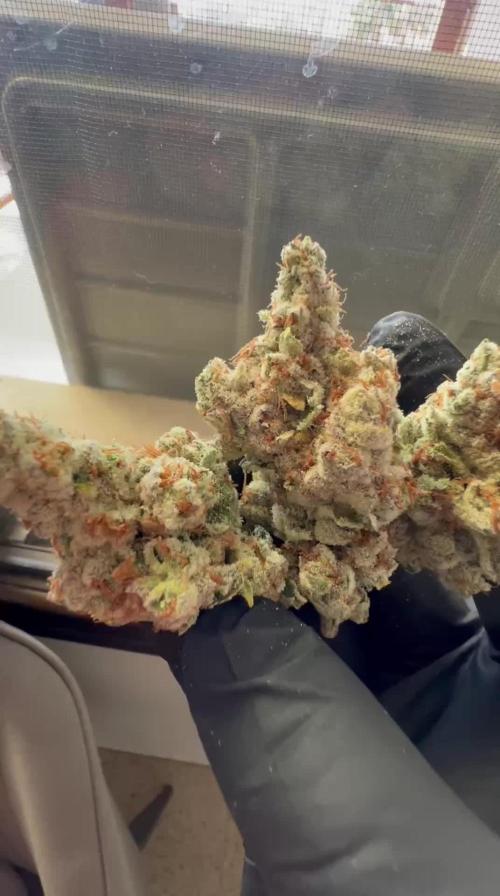
Day 66 harvest day i harvested the ladies after i let it dry with no watering for 2 days, i cousin cut the whole plant because its difficult with the scrog nets so i cut brach brach.. i then hang them in the tents after i cleaned the whole growing tents and set the humidity 60 and the temp 65-68 it was hard to go lower becuse it is summer and i leave in a city that in summer is reaches 35c outside.. anyway i dried it for 10 days and then trimmed them hand trimming it took me 5 days.. 1.7k aint easy to trim by yourself
bro..i dried them bit too long the humidity inside the bud was under the 62 58%
It was arouned 50% soo i selled it in big glass jars with 62% bovids packs after 2 weeks it did well. After i cured the for 2 month the buds smell was amazing and the teste was nice, it is definitely indica dominant, if u smoke too much you go to sleep like a baby, buds full of tricoms they look like a diamond, the only downside that the taste flavor wasn’t so strong in my opinion but
The high was strong, not for rookies.


Likes
1
Share

@Trichoma
Follow
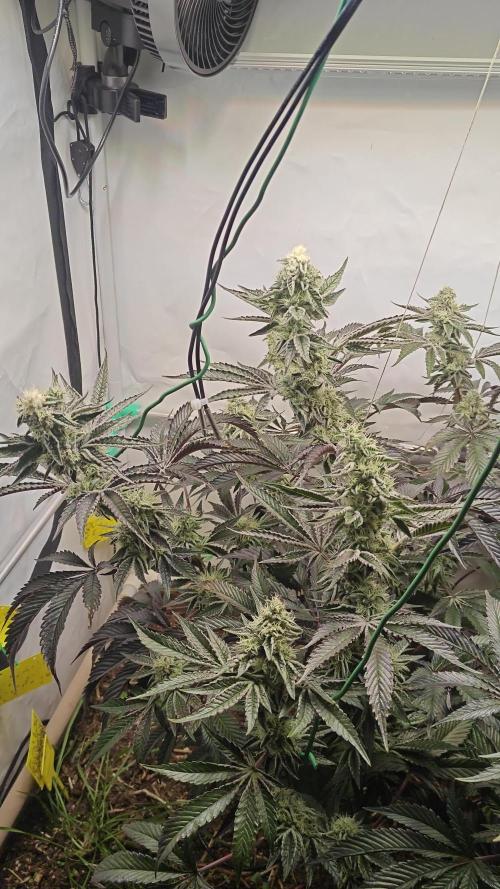
@ 1.4-1.6 kPa
Feels like she is developing her buds pretty slow for 8 week flower strain likely gonna need 2-3 weeks I would guess in my case.


Likes
7
Share


@L8bloomr1008
Follow
Day 35 and I can finally see them putting weight back on after the light situation. Debating on top dressing one more time or not, we’ll see in a couple of days.
Likes
152
Share


@EBxAH
Follow
Sunday, July first was the start of week 5. Having slight issues with the mothers but the clones are doing awesome! So even if they die I have 17 more tries, lol.
UPDATE: Saturday, July 10...final step in mainline. I was super excited to do this 😁 Here goes nothing, lol. Oh, and the clones are rooted and potted!!!

Likes
142
Share


@MadeInGermany
Follow
Hey everyone :-)
This week a lot has happened 🤗🍀.
The 5 that are already in the 12/12 cycle explode day after day 😍😅.
All others have been repotted, and will remain in the vegi phase for 1-2 weeks.
Otherwise there is not much to say 😃.
I wish you all a good start into the week, let it grow and stay healthy 🙏🏻🍀🌱


Likes
57
Share


@PhunkyPhallus
Follow
6/27 - Sorry I missed my update yesterday guys, but here it is.... I flushed another 2 gallons of ph'd tap water through the soil. I think the clawing is improving.
6/28 - The clawing is noticeably better today, its still clawing hard at the top but the lower branches have flattened out. And by golly this thing has grown a massive amount just overnight. I noticed I can see roots popping out the side of my smart pot, that honestly makes me very happy. I tied down some more of the tops to help them grow into the light. I cut off one of the tops at the very bottom that was growing slowly and not getting any light, For fun I put it in a cup of water to see if it will take root.
6/29 - Incredibly explosive growth. Clawing has improved further. She grew tored the light so fast the top leaves were beginning to prey. Pulled the top down some more. Now I'm playing her some Rebelution so she'll relax into her new restraints 😎
6/30 - Shes looking awesome. Soil is till very wet. nothing to do today except observe. also pretty sure she's been in preflower for at least 4 days, and I'm pretty sure she's in flower now.
7/1 -Watered her today, also decided to tie her top down again. Since I'm pretty sure she's in flower now, and I wanna make sure she has what she needs but I don't think she needs nitrogen yet I decided to give her some Humboldt Secret Flower stacker 0-7-5. I mixed it at 1/4th of what is calls for at the beginning of flower and fed it separate of my routine water. first I flooded the soil with plain PH'd tap water then I applied the flower stacker with a spray bottle around the main stem.
7/2 - On the way to the lake this morning, just wanted to update, I moved my light up away from the plant, kept the power the same. Lowered the PPFD from 1200 down to a max of 900, gonna see how she responds. Might lower the PPFD more tonight.
7/3 - Phone got wet in the lake, sorry for the wide angle shots, the other lens was fogged up with moisture. but I missed adding photos yesterday so I got it done for you. Today I raised my light up some more, now the tops are only getting 800ppfd. Just gonna see how she responds to that. I cut off two lower leaves that were damaged from the soil and no longer getting light. no water today, soil is still moist.

Likes
21
Share


@Demonus
Follow
The Good:
----------------
- Conditions within the bin are stable.
The Bad:
---------------
- Noticed pistils at the top node site on the 26th day as well as a Phosphorus deficiency.
Might be the sudden change in the light schedule from 24h/d to 20h/d after germination that triggered flowering.
Likes
10
Share


@JeyGanesha
Follow
Questa panty punch inizia a ingrossare i fiorellini.bene bene...
Ancora non si sentono profumi ma la prossima settimana esploderà di buoni odori in tutto il box😜💪👍

Likes
17
Share

@IberianRootcraft
Follow
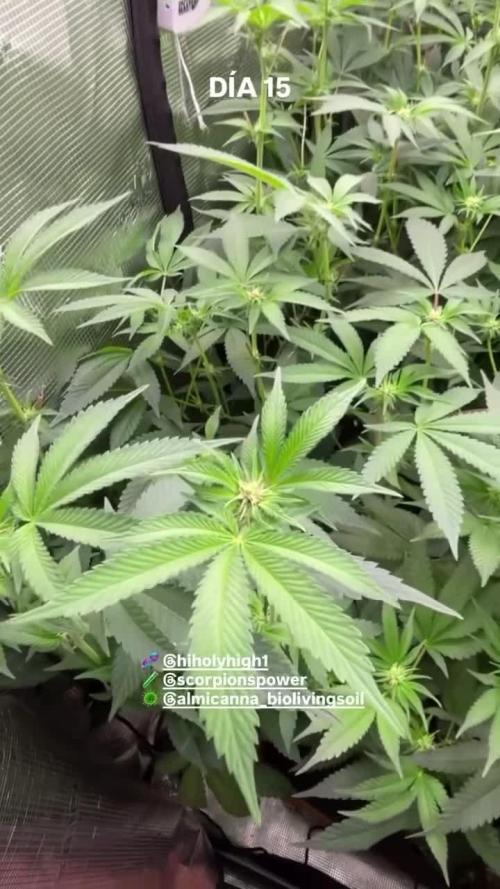
3º week of flower, Day 15.
Cuts from HiHolyHigh.
Already showing some colours.
Temperature rising fast since summer is already here in Extremadura, Spain, 37°-40º.
In trying to maintain 25-27º.





Processing
Likes
54
Share


@rhodes68
Follow
1/22 Week 4!
Folded in some CalMag temporarily for a slight def showing up in Jool, foliar of same on all.
Recovering nicely from topping will decide on 2cd later
Jool recovered her normal color in just a few hours after feedings. Can pull the Cal-Mag for a while.
Thought of increasing nuets a tad to 10ml but no need to rush just may have to hit them with Cal-Mag once in a while.
Time to hit the roots again 10ml/gal Kangaroots one feed only
1/25 Leaving in a small amount - 2ml/gal - of Cal-Mag with CocoTek more for peace of mind than anything else
Keeping them small till I have a place to flower then... then we pour it on.
1/27 Continuing to walk the line between keeping them healthy and keeping the size down - working ok so far
Growing nicely although some concern found on Zhaan, feeding pattern on just the two tops shown, no where else.
Nothing seen , sticky trap put up will check often for further.
Not grabbing the Soap just yet see if anything else pokes up
1/28 Sticky trap clean so no flying critters
Think hes right about strange leaves but I want to add I may have done some of this during topping. Just from what I see
Bit of a conundrum the plants are near-ish to the size we wanted to flower them at BUT there is no room at the Inn, (sativas...) so we have one path to getting this done.
Keeping them as small as we can without risking defs for another week then beginning the flowering in the veg tent Moya while the sativa finishes in 2 weeks.
Thats one week of flower in the small tent at best, not sure about that. I swear two tents and one is a 4x4 and still space problems... good to have that problem too 😃
That's the plan but we know there is about a ton of crap that will go wrong like that sativa taking longer.
Re-eval in a week
Feeding remains as before
1/29 Pic and vid to end week no further issues and the tent is now full. Good problem to have but its convinced us that flowering in Moya is problematic
Raised lights to 24" to see if they will go up instead of out for a while.
Defol the bottom end of the plants just a bit in attempt to encourage some vertical growth with that as well.


Likes
1
Share

@RooftopFarmer
Follow
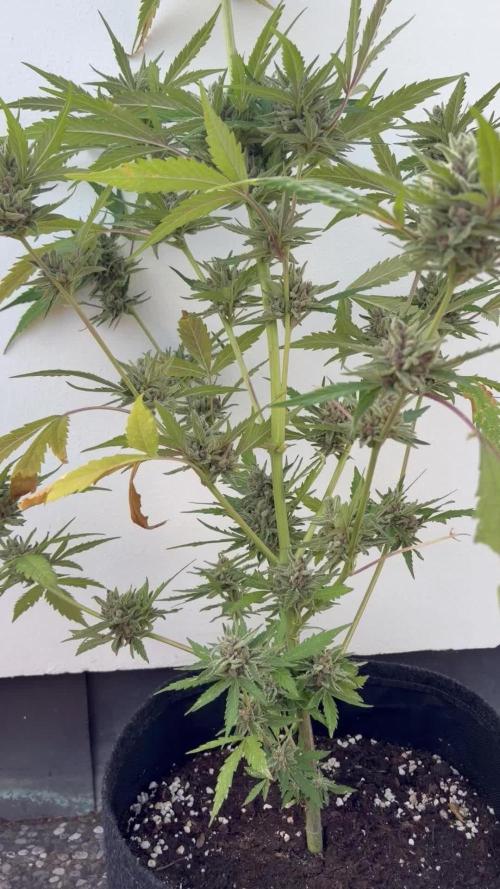
Banana Guava – Week 10 (Fast Buds Outdoor 2026)
The weather was okay this week. Banana Guava is almost done and is receiving less nutrients. The plant is fully in flower.
The aroma is extremely strong at this point. Trichomes were checked again and are noticeably more milky than last week. She has reached a good size and is progressing well toward harvest.
Likes
165
Share


@SlowpokeFuegobud
Follow
🐟 🐠 🐙 🐡 🐟 🐠 🐙 🐡 🐟 🐠 🐙 🐡 🐟 🐠 🐙 🐡
Welcome to week 9, dear fish lovers! 💙
The fish is doing great for her age, haha! 🐟
I can't water as often as needed, and I start getting a bit worn out. We are going to chop the little sweetheart soon! 🙏 I had such a great time! 😍
You can see all kinds of problems on the leaves, but the buds swell and smell. 🍪 🍍 🍎 🍊
I will flush and get some nice weed out of this grow! Woohooo!!! 🎉
Thanks, growmies, for checking in! 💚 💚 💚 😘
Always remember, we are not our thoughts, nor are we our emotions, or experiences, we are limitless, immortal and divine souls making a 3D experience. 🙏 ❇️
____________________________________________________________________
Strain info:
Tropicana Cookies Auto is the perfect variety for growers of all levels, especially beginners as this strain performs very well outdoors and indoors, and can produce up to 500gr/m2 in 56-63 days without needing extra maintenance. Reaching up to 110cm, this strain grows fairly tall with medium-sized branching, showing its mixed heritage. Definitely the right choice for those with a high tolerance looking to get their hands on the strongest autoflowers out there. Thanks to the 27% THC, you can expect an extremely powerful and long-lasting high that’ll boost your mood and give you that extra push you need to start your days on the right foot. This variety offers the whole range of citrusy and woody flavors with a strong candy-sweet background that will keep you coming back for more and more.
Bud description
Tropicana Cookies Auto produces gorgeous dark purple flowers, so expect really dark buds with gorgeous hues of pink, purple and blue, and thick dark-orange hairs that get completely covered in resin by harvest time, giving them an almost shiny-white appearance.
This variety develops a typical Indica-like structure and very few sugar leaves that will make your trimming sessions a breeze. But make sure to store your trimmings as the gorgeous flowers reek of a mouth-watering blend of lemon peels, orange juice, and sandalwood that gives it almost a citrus candy-like flavor that makes for the most aromatic hash and extractions.
Smoke report
Thanks to the 27% THC, Tropicana Cookies Auto’s effect starts with an energizing head rush that gets your mind up and running while leaving you in a nice calm state. As the Indica-dominant side kicks in, the powerful cerebral effect gradually moves downwards and hits your whole body with a deep relaxation that leaves you with a joyful stoney sensation that alleviates chronic pain while leaving you in an overall happy and positive state of mind.
It’s the perfect daytime and nighttime strain as it can boost your mood and enhance a night out with friends but can also quiet your mind as you get ready for a good night of sleep. No matter the scenario, expect a powerful high that lasts for hours on end.
Plant appearance
Tropicana Cookies Auto reaches up to 110cm and develops a tall main cola with shorter side branches, typical of hybrid strains. You can expect a stocky yet tall main cola with medium-sized side branches and thin fan leaves that fade into a yellowish hue with a beautiful dark purple tint. Thanks to the excellent selection, this variety develops a short internodal spacing that makes the medium-sized flowers look like they’re growing stacked on top of each other. It’s the ideal choice for growers who want to get big yields without having to deal with huge plants, as this monster yielder can produce up to 150g per plant while growing relatively short.
Grow tips
This variety grows super dense buds so make sure to space out the branches by tying them down, this way you improve airflow which helps prevent mold and other pests. Tropicana Cookies auto reek of a delicious sweet and sour smell so make sure to flush thoroughly to enhance the aromas even more. This terpene heavyweight finishes with lots of resinous sugar leaves that make for fantastic hash and extractions so remember to have your trim bucket ready!
Flavor
Tropicana Cookies Auto boasts remarkably sweet flavors that resemble a blend of lemon peels and fresh orange juice, with subtle floral undertones that make it the perfect choice for extractors looking for unique terpene profiles.
Expect an overall citrusy zest that’ll coat your whole mouth and leave a delicious tropical candy-like flavor aftertaste. The sweet and sour flavors get balanced out with a herbal background that gets stronger as you exhale and gradually opens up, bringing out the whole range of woody, floral, and spicy flavors, making it the perfect choice for the most flavorful extracts.
https://2fast4buds.com/seeds/tropicana-cookies-auto
_________________________________________________________________________________
SETUP:
80x80x180 cm Zelsius
240W Full Spectrum LED IR UV dimmable
DW240H-A6-HS
Heatsink color red
LED Chips:
512pcs SAMSUNG LM301H + 24pcs Osram 660nm + 8pcs Osram IR 730nm + 8pcs UV 385nm
Color mix: 2700K + 4000K
2,8umol/J
Driver HLG-240H-C2100B
Coverage: veg 5x3ft / flower 4x2ft
Product size: 628x205x68mm
Green Buzz Nutrients
Shouts go out to my sponsors @GreenBuzzNutrients, thanks so much for your support! ❤️
If anyone would like to try their amazing organic products, use code GD42025 for generous 25% discount (for orders of minimum 75€) ✨
https://greenbuzznutrients.com/
Mills Nutrients
Biobizz Lightmix
custom exhaust fan 320/270cm³/h
Carbon Active Granulate 240cm³/h
tab water pH 8 - EC 0,25 with Calmag to 0,5
Advanced Hydroponics pH minus Grow + Bloom to pH 6.2
🐟 🐠 🐙 🐡 🐟 🐠 🐙 🐡 🐟 🐠 🐙 🐡 🐟 🐠 🐙 🐡
Likes
5
Share


@GanjaGecko
Follow
Alle 5 Samen wurden in ein Glas mit Wasser und 2 Tropfen Seedbooster von Plagron für ca 20 Stunden eingelegt. Nach ca 20h im Wasserglas ging es für die Ladys in kleine Anzuchttöpfe. Nach 3 Tagen in den Anzuchttöpfen haben 4 Ladys und nach 4 Tagen hat dann auch die 5 Lady das Licht der Welt erblickt. Nächste Woche werden die Ladys dann in jeweils 8l Stofftöpfen Platz finden. Durch die kurze Vegetation sollten die 8L Töpfe ausreichen. Die 4 Ladys die den stabilsten Eindruck machen und sich am meisten im Wachstum ähneln werden behalten.
Das Substratgemisch besteht aus ca 70% BioBizz Lightmix und ca 30% Cocos mit Perlien. Ich gebe bei dem Run etwas mehr Cocos hinzu damit das Substrat noch etwas luftiger wird und die Ladys es etwas leichter haben ihre Wurzeln zu bilden und damit vielleicht einen kleinen Wachstumsschub zu erhalten.
Auf das ganze kommen dann noch ca 10% Megaworm von Plagron und ein wenig BioGrow das es den Ladys anfangs an nichts fehlt.
Die Ladys haben leider etwas weniger Zeit für ihr Wachstum, weil der Contest zeitlich begrenzt ist. Der letzte Grow hat leider auch etwas Zeit in Anspruch genommen. Mal gucken, ich hoffe das es reicht. Mit FarRed als Einschlafhilfe in der Blütephase kann man vielleicht ein paar Tage einsparen.
Ich hoffe auf das Beste. Am Ende muss man ja auch etwas Glück mit den Phenos haben.
Angegossen wurde mit 1g/L BioEnhancer und 1ml/L PowerRoots. Der ph-Wert wurde vor dem gießen auf 6.0 korrigiert. Jede Lady bekam für den Anfang ca 30-40ml in die Anzuchttöpfe.
Mit einer kleinen Heizmatte und den Kuppeln auf den Töpfen wird für das warm/feuchte Klima gesorgt, das die Ladys anfangs benötigen um zu keimen.
Am Tag an dem die Ladys das Licht der Welt erblickt haben, kamen die Kuppeln ab und die Ladys spüren dann auch ihre ersten Luftzüge.
