Likes
Comments
Share
@squalino
Follow
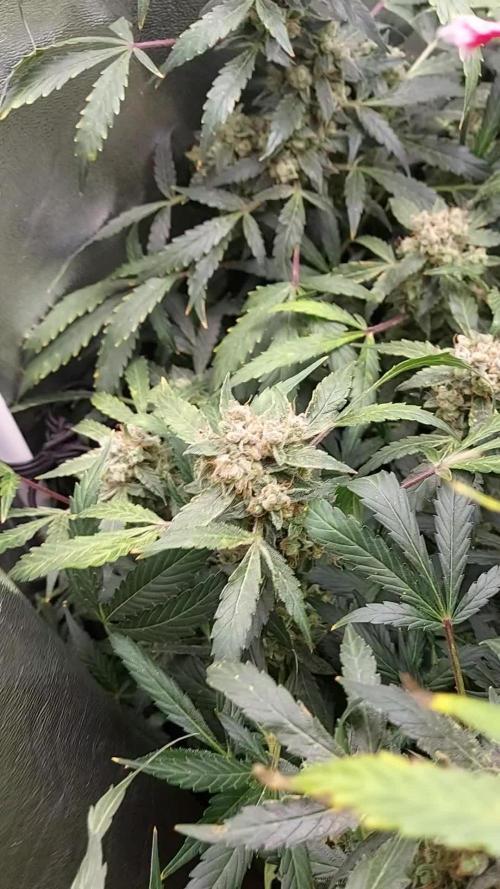
🌿 Journal de Culture : Mac 1 Autoflower – "Bee Happy" 🐝 (Semaine 12) ​#Dryrocket ​Nous y voilà, l'avant-dernière étape avant le grand jour. Ma petite abeille a reçu son tout dernier apport de nutriments la semaine passée et est entrée officiellement dans sa phase finale. ​Un Grand Merci ​Un immense merci à @mia_biotabs pour avoir été présent à chaque étape de ce run à travers ses conseils. Un grand merci également à @Dryrocket : l'appareil va bientôt arrivé et est prêt sera pret à entrer en action pour le séchage, j'ai hâte de voir le résultat ! Merci enfin à toute la communauté qui vibre avec moi depuis le premier jour. ​Paramètres de Culture & Climat Extrême ​Taille : Stable à 91 cm. ​Climat : C'est le gros point noir et la principale bataille de cette fin de run. La chaleur dans la cave est devenue excessive avec de grosses hausses de température ces derniers jours. J'atteins des pointes compliquées à 29 - 30°C. Malgré ces conditions loin d'être idéales, "Bee Happy" fait preuve d'une résistance remarquable et encaisse le coup sans broncher. ​Humidité : Toujours stabilisée à 50% pour éviter tout problème de moisissure sur les fleurs compactes en fin de vie. ​Gestion de l'eau : Le rinçage est entièrement géré par l'Autopot. Le réservoir a été basculé à 100% sur de l'eau claire pour nettoyer le substrat et pousser la plante à consommer ses dernières réserves. ​État des Buds & Observations Visuelles ❄️ ​Les têtes sont devenues extrêmement denses et sont littéralement blindées de trichomes. Le manteau de résine est lourd et collant. ​En jetant un œil attentif aux détails des photos, on constate que le cycle se termine en beauté. Malgré le manque de contrôle global que je regrette sur cette session (entre la colocation serrée avec Spirit, les caprices de pH du bulleur au début et les températures actuelles de la cave), la génétique a fait des miracles. Les calices sont gonflés au maximum, formant ces fameux blocs compacts typiques de ce phénotype "chou-fleur". La sénescence commence doucement à s'installer sur les pointes et les petites feuilles, signe que le rinçage à l'eau claire fait son travail en profondeur et que la plante puise ses derniers retranchements. ​Cap sur la récolte ✂️ ​Le compte à rebours est lancé. Les têtes sont dures, la résine est mûre, et le rinçage libère les derniers arômes de la plante. La semaine prochaine sera celle de la récolte ! --- Merci à tous d'avoir suivi ce run mouvementé mais ô combien riche en enseignements ! Rendez-vous dans sept jours pour le point final, la coupe, et le passage officiel dans le Dryrocket. Restez connectés, le meilleur reste à venir !

Likes
9
Share
Last week of my grow and I am excited to cut her down. Its been a long 15 weeks but I think I did a great job with what I had. Bag seed is a toss up and you never know what is going to happen. This was a good week with no issues. I flushed her and gave her last feed with water PH to 6.4. She started off strong grew well, then hermed on me i think around week 8 or 9. I was lucky enough to take whatever pollen sacks I found and she didnt end up getting pollenated. She is going to sit in the dark for 24-36 hours and will be getting chopped down after that. I am really excited to see how she looks. Her buds are dense and the trichomes are milky. Not to toot my own horn but she looks better than the pot I found the seed in. Next grow will be a clone that I am getting from another grower but i have also ordered some auto flowers, just not sure when they will be in, seems like most seed banks are sketchy on time frames. Hoping things turn out well for me and i hope things turn out well for all of you. Happy Growing!
Likes
15
Share
Week 7 for Peyote Zkittlez by seedsman Her structure just gets better & better each week. She got another round of topping were up to 32 tops now😍. She also got a nice bit of defoliation done to her bottoms that weren't getting any lights at all. Canopy is as flat as it could be to distribute those growth hormones as even as possible. The bottom branch as caught up to the rest of the canopy as well which last week was struggling to do so. Shes getting fed 3L of water every 4 days or so until pot feels light in weigh. Have a new LED light coming in this week to handle the temps of the summer better. No more yellowish looking photos 😂
Likes
100
Share
Hi people :-) This week everyone has developed very nicely and is slowly coming to an end 🤗🌱🍀. The Orange Sherbert was placed in the darkroom yesterday and will be harvested tomorrow :-). Everyone else will continue to be flushed. Blue Gelato # 41, Her Majesty F1 and Sour Diesel will be harvested next week. The next week is the gelato letzt. Then I will gradually add all the harvest pictures 😍👍 I wish you all a good start into the week, let it grow 🌱🍀 and stay healthy 🙏🏻
Likes
25
Share
ANTHOCYANIN production is primarily controlled by the Cryptochrome (CR1) Photoreceptor ( !! UV and Blue Spectrums are primary drivers in the production of the pigment that replaces chlorophyll, isn't that awesome! 1. Diverse photoreceptors in plants Many civilizations, including the sun god of ancient Egypt, thought that the blessings of sunlight were the source of life. In fact, the survival of all life, including humans, is supported by the photosynthesis of plants that capture solar energy. Plants that perform photosynthesis have no means of transportation except for some algae. Therefore, it is necessary to monitor various changes in the external environment and respond appropriately to the place to survive. Among various environmental information, light is especially important information for plants that perform photosynthesis. In the process of evolution, plants acquired phytochrome, which mainly receives light in the red light region, and multiple blue light receptors, including his hytropin and phototropin, in order to sense the light environment. .. In addition to these, an ultraviolet light receptor named UVR8 was recently discovered. The latest image of the molecular structure and function of these various plant photoreceptors (Fig. 1), focusing on phytochrome and phototropin. Figure 1 Ultraviolet-visible absorption spectra of phytochrome, cryptochrome, phototropin, and UVR8. The dashed line represents each bioactive absorption spectrum. 2. Phytochrome; red-far red photoreversible molecular switch What is phytochrome? Phytochrome is a photochromic photoreceptor, and has two absorption types, a red light absorption type Pr (absorption maximum wavelength of about 665 nm) and a far-red light absorption type Pfr (730 nm). Reversible light conversion between the two by red light and far-red light, respectively(Fig. 1A, solid line and broken line). In general, Pfr is the active form that causes a physiological response. With some exceptions, phytochrome can be said to function as a photoreversible molecular switch. The background of the discovery is as follows. There are some types of plants that require light for germination (light seed germination). From that study, it was found that germination was induced by red light, the effect was inhibited by subsequent far-red light irradiation, and this could be repeated, and the existence of photoreceptors that reversibly photoconvert was predicted. In 1959, its existence was confirmed by the absorption spectrum measurement of the yellow sprout tissue, and it was named phytochrome. Why does the plant have a sensor to distinguish between such red light and far-red light? There is no big difference between the red and far-red light regions in the open-field spectrum of sunlight, but the proportion of red light is greatly reduced due to the absorption of chloroplasts in the shade of plants. Similar changes in light quality occur in the evening sunlight. Plants perceive this difference in light quality as the ratio of Pr and Pfr, recognize the light environment, and respond to it. Subsequent studies have revealed that it is responsible for various photomorphogenic reactions such as photoperiodic flowering induction, shade repellent, and deyellowing (greening). Furthermore, with the introduction of the model plant Arabidopsis thaliana (At) and the development of molecular biological analysis methods, research has progressed dramatically, and his five types of phytochromes (phyA-E) are present in Arabidopsis thaliana. all right. With the progress of the genome project, Fi’s tochrome-like photoreceptors were found in cyanobacteria, a photosynthetic prokaryotes other than plants. Furthermore, in non-photosynthetic bacteria, a homologue molecule called bacteriophytochrome photoreceptor (BphP) was found in Pseudomonas aeruginosa (Pa) and radiation-resistant bacteria (Deinococcus radiodurans, Dr). Domain structure of phytochrome molecule Phytochrome molecule can be roughly divided into N-terminal side and C-terminal side region. PAS (Per / Arndt / Sim: blue), GAF (cGMP phosphodiesterase / adenylyl cyclase / FhlA: green), PHY (phyto-chrome: purple) 3 in the N-terminal region of plant phytochrome (Fig. 2A) There are two domains and an N-terminal extension region (NTE: dark blue), and phytochromobilin (PΦB), which is one of the ring-opening tetrapyrroles, is thioether-bonded to the system stored in GAF as a chromophore. ing. PAS is a domain involved in the interaction between signal transduction-related proteins, and PHY is a phytochrome-specific domain. There are two PASs and her histidine kinase-related (HKR) domain (red) in the C-terminal region, but the histidine essential for kinase activity is not conserved. 3. Phototropin; photosynthetic efficiency optimized blue light receptor What is phototropin? Charles Darwin, who is famous for his theory of evolution, wrote in his book “The power of move-ment in plants” published in 1882 that plants bend toward blue light. Approximately 100 years later, the protein nph1 (nonphoto-tropic hypocotyl 1) encoded by one of the causative genes of Arabidopsis mutants causing phototropic abnormalities was identified as a blue photoreceptor. Later, another isotype npl1 was found and renamed phototropin 1 (phot1) and 2 (phot2), respectively. In addition to phototropism, phototropin is damaged by chloroplast photolocalization (chloroplasts move through the epidermal cells of the leaves and gather on the cell surface under appropriate light intensity for photosynthesis. As a photoreceptor for reactions such as escaping to the side of cells under dangerous strong light) and stomata (reactions that open stomata to optimize the uptake of carbon dioxide, which is the rate-determining process of photosynthetic reactions). It became clear that it worked. In this way, phototropin can be said to be a blue light receptor responsible for optimizing photosynthetic efficiency. Domain structure and LOV photoreaction of phototropin molecule Phototropin molecule has two photoreceptive domains (LOV1 and LOV2) called LOV (Light-Oxygen-Voltage sensing) on the N-terminal side, and serine / on the C-terminal side. It is a protein kinase that forms threonine kinase (STK) (Fig. 4Aa) and whose activity is regulated by light. LOV is one molecule as a chromophore, he binds FMN (flavin mononucleotide) non-covalently. The LOV forms an α/βfold, and the FMN is located on a β-sheet consisting of five antiparallel β-strands (Fig. 4B). The FMN in the ground state LOV shows the absorption spectrum of a typical oxidized flavin protein with a triplet oscillation structure and an absorption maximum wavelength of 450 nm, and is called D450 (Fig. 1C and Fig. 4E). After being excited to the singlet excited state by blue light, the FMN shifts to the triplet excited state (L660t *) due to intersystem crossing, and then the C4 (Fig. 4C) of the isoaroxazine ring of the FMN is conserved in the vicinity. It forms a transient accretionary prism with the tain (red part in Fig. 4B Eα) (S390I). When this cysteine is replaced with alanine (C / A substitution), the addition reaction does not occur. The effect of adduct formation propagates to the protein moiety, causing kinase activation (S390II). After that, the formed cysteine-flavin adduct spontaneously dissociates and returns to the original D450 (Fig. 4E, dark regression reaction). Phototropin kinase activity control mechanism by LOV2 Why does phototropin have two LOVs? Atphot1 was found as a protein that is rapidly autophosphorylated when irradiated with blue light. The effect of the above C / A substitution on this self-phosphorylation reaction and phototropism was investigated, and LOV2 is the main photomolecular switch in both self-phosphorylation and phototropism. It turns out that it functions as. After that, from experiments using artificial substrates, STK has a constitutive activity, LOV2 functions as an inhibitory domain of this activity, and the inhibition is eliminated by photoreaction, while LOV1 is kinase light. It was shown to modify the photosensitivity of the activation reaction. In addition to this, LOV1 was found to act as a dimerization site from the crystal structure and his SAXS. What kind of molecular mechanism does LOV2 use to photoregulate kinase activity? The following two modules play important roles in this intramolecular signal transduction. Figure 4 (A) Domain structure of LOV photoreceptors. a: Phototropin b: Neochrome c: FKF1 family protein d: Aureochrome (B) Crystal structure of auto barley phot1 LOV2. (C) Structure of FMN isoaroxazine ring. (D) Schematic diagram of the functional domain and module of Arabidopsis thaliana phot1. L, A’α, and Jα represent linker, A’α helix, and Jα helix, respectively. (E) LOV photoreaction. (F) Molecular structure model (mesh) of the LOV2-STK sample (black line) containing A’α of phot2 obtained based on SAXS under dark (top) and under bright (bottom). The yellow, red, and green space-filled models represent the crystal structures of LOV2-Jα, protein kinase A N-lobe, and C-robe, respectively, and black represents FMN. See the text for details. 1) Jα. LOV2 C of oat phot1-to α immediately after the terminus Rix (Jα) is present (Fig. 4D), which interacts with the β-sheet (Fig. 4B) that forms the FMN-bound scaffold of LOV2 in the dark, but unfolds and dissociates from the β-sheet with photoreaction. It was shown by NMR that it does. According to the crystal structure of LOV2-Jα, this Jα is located on the back surface of the β sheet and mainly has a hydrophobic interaction. The formation of S390II causes twisting of the isoaroxazine ring and protonation of N5 (Fig. 4C). As a result, the glutamine side chain present on his Iβ strand (Fig. 4B) in the β-sheet rotates to form a hydrogen bond with this protonated N5. Jα interacts with this his Iβ strand, and these changes are thought to cause the unfold-ing of Jα and dissociation from the β-sheet described above. Experiments such as amino acid substitution of Iβ strands revealed that kinases exhibit constitutive activity when this interaction is eliminated, and that Jα plays an important role in photoactivation of kinases. 2) A’α / Aβ gap. Recently, several results have been reported showing the involvement of amino acids near the A’α helix (Fig. 4D) located upstream of the N-terminal of LOV2 in kinase photoactivation. Therefore, he investigated the role of this A’α and its neighboring amino acids in kinase photoactivation, photoreaction, and Jα structural change for Atphot1. The LOV2-STK polypeptide (Fig. 4D, underlined in black) was used as a photocontrollable kinase for kinase activity analysis. As a result, it was found that the photoactivation of the kinase was abolished when amino acid substitution was introduced into the A’α / Aβ gap between A’α and Aβ of the LOV2 core. Interestingly, he had no effect on the structural changes in Jα examined on the peptide map due to the photoreaction of LOV2 or trypsin degradation. Therefore, the A’α / Aβ gap is considered to play an important role in intramolecular signal transduction after Jα. Structural changes detected by SAXS Structural changes of Jα have been detected by various biophysical methods other than NMR, but structural information on samples including up to STK is reported only by his results to his SAXS. Not. The SAXS measurement of the Atphot2 LOV2-STK polypeptide showed that the radius of inertia increased from 32.4 Å to 34.8 Å, and the molecular model (Fig. 4F) obtained by the ab initio modeling software GASBOR is that of LOV2 and STK. It was shown that the N lobes and C lobes lined up in tandem, and the relative position of LOV2 with respect to STK shifted by about 13 Å under light irradiation. The difference in the molecular model between the two is considered to reflect the structural changes that occur in the Jα and A’α / Aβ gaps mentioned above. Two phototropins with different photosensitivity In the phototropic reaction of Arabidopsis Arabidopsis, Arabidopsis responds to a very wide range of light intensities from 10–4 to 102 μmol photon / sec / m2. At that time, phot1 functions as an optical sensor in a wide range from low light to strong light, while phot2 reacts with light stronger than 1 μmol photon / sec / m2. What is the origin of these differences? As is well known, animal photoreceptors have a high photosensitivity due to the abundance of rhodopsin and the presence of biochemical amplification mechanisms. The exact abundance of phot1 and phot2 in vivo is unknown, but interesting results have been obtained in terms of amplification. The light intensity dependence of the photoactivation of the LOV2-STK polypeptide used in the above kinase analysis was investigated. It was found that phot1 was about 10 times more photosensitive than phot2. On the other hand, when the photochemical reactions of both were examined, it was found that the rate of the dark return reaction of phot1 was about 10 times slower than that of phot2. This result indicates that the longer the lifetime of S390II, which is in the kinase-activated state, the higher the photosensitivity of kinase activation. This correlation was further confirmed by extending the lifespan of her S390II with amino acid substitutions. This alone cannot explain the widespread differences in photosensitivity between phot1 and phot2, but it may explain some of them. Furthermore, it is necessary to investigate in detail protein modifications such as phosphorylation and the effects of phot interacting factors on photosensitivity. Other LOV photoreceptors Among fern plants and green algae, phytochrome ɾphotosensory module (PSM) on the N-terminal side and chimera photoreceptor with full-length phototropin on the C-terminal side, neochrome (Fig. There are types with 4Ab). It has been reported that some neochromes play a role in chloroplast photolocalization as a red light receiver. It is considered that fern plants have such a chimera photoreceptor in order to survive in a habitat such as undergrowth in a jungle where only red light reaches. In addition to this, plants have only one LOV domain, and three proteins involved in the degradation of photomorphogenesis-related proteins, FKF1 (Flavin-binding, Kelch repeat, F-box 1, ZTL (ZEITLUPE)), LKP2 ( There are LOV Kelch Protein2) (Fig. 4Ac) and aureochrome (Fig. 4Ad), which has a bZip domain on the N-terminal side of LOV and functions as a gene transcription factor. 4. Cryptochrome and UVR8 Cryptochrome is one of the blue photoreceptors and forms a superfamily with the DNA photoreceptor photolyase. It has FAD (flavin adenine dinucle-otide) as a chromophore and tetrahydrofolic acid, which is a condensing pigment. The ground state of FAD is considered to be the oxidized type, and the radical type (broken line in Fig. 1B) generated by blue light irradiation is considered to be the signaling state. The radical type also absorbs in the green to orange light region, and may widen the wavelength region of the plant morphogenesis reaction spectrum. Cryptochrome uses blue light to control physiological functions similar to phytochrome. It was identified as a photoreceptor from one of the causative genes of UVR8 Arabidopsis thaliana, and the chromophore is absorbed in the UVB region by a Trp triad consisting of three tryptophans (Fig. 1D). It is involved in the biosynthesis of flavonoids and anthocyanins that function as UV scavengers in plants. Conclusion It is thought that plants have acquired various photoreceptors necessary for their survival during a long evolutionary process. The photoreceptors that cover the existing far-red light to UVB mentioned here are considered to be some of them. More and more diverse photoreceptor genes are conserved in cyanobacteria and marine plankton. By examining these, it is thought that the understanding of plant photoreceptors will be further deepened.
Likes
7
Share
Likes
4
Share
@AustinRon
Follow
OG 4Q24 Flower Week 7 Orangegasm (Fem) [ IRIE Genetics ] 12/12 @ Bolt (Day 21) Germination: 20 November 2024 #3A Earliest Harvest Date: 9 February 2025 #3B Latest Harvest Date: 19 February 2025 _________________________________________ Start of Week: [Wed Jan 22, 2024 CR2 4Q24 43:F:6:1] End of Week: [Tue Jan 28, 2024 CR2 4Q24 49:F:6:7] OrangeGasm Fertigation: - MAX: EC: [ 2.4, mS] - LightIntensity MAX: [ 850, µMol/m2/s] ______________________________________ __ Wed Jan 22, 2025 OG 4Q24 43:F:6:1 - [x] R&R Each Drip Ring Assembly (Assure NO Fertigation/Bio Build up) Runoff - Amount: [ .5, l] - EC: [ 3.8, mS/cm] - EC∆: [ 1.2, mS/cm] # Danger! Refresh Res (Filtered, pH’d Tap Water) - [x] Amount: [ 2, gal] - [x] Primer A&B: [ 35, ml] - [x] SLF-100: [ 10, ml] __ Thu Jan 23, 2025 OG 4Q24 44:F:6:2 Refresh Res (Distilled Water, pH: 7, EC: 0.0) - [x] Amount: [ 2, gal] - [x] Primer A&B: [ 39, ml] - [x] SLF-100 Runoff - Amount: [ 1.2, gal] - EC: [ 4.3, mS/cm] - EC∆: [ 1.6, mS/cm] # DANGER __ Fri Jan 24, 2025 OG 4Q24 45:F:6:3 Runoff - Amount: [ 0.3, gal] - EC: [ 4.1, mS/cm] - EC∆: [ 1.4, mS/cm] # DANGER  __ Sat Jan 25, 2025 OG 4Q24 46:F:6:4 Dump Res - [x] Remove Chiller and Fertigation Pumps - [x] Dump and CLEAN Reservoir, Note Sediment - [x] Detach Main Feedline - [x] Clean Chiller Pump - [x] Clean Fertigation Pump - [x] Dry ALL Components - [x] REASSEMBLE When Dry - [x] Clean 1/2” Fertigation Mainline Watered In Primer A&B, CalMag Fuel, Silica Skin - Amount: [ 1.9, l] - EC: [ 2.7, mS/cm] Refresh Res w/ Full Hydro (Primer A&B, Silica Skin) - [x] Amount: [ 4, gal] - [x] EC: [ 2.7, mS/cm] - [x] Primer A & B: [ 73.1, ml] - [x] SLF-100: [ 40, ml] Runoff - Amount: [ 0.25, gal] - EC: [ 4.1, mS/cm] - EC∆: [ 1.4, mS/cm] # DANGER __ Sun Jan 26, 2025 OG 4Q24 47:F:6:5 Refresh Reservoir - 2 Gal, EC: 2.7 - [ ] Check, R&R Fertigation Manifold Filter as Needed - [x] SLF-100: [ 10, ml] - [x] Primer A & B: [ 40, ml] Runoff - Amount: [ 1.25, gal] - EC: [ 4.2, mS/cm] - EC∆: [ tbd, mS/cm] __ Mon Jan 27, 2025 OG 4Q24 48:F:6:6  Watered In Primer A&B, CalMag Fuel, Silica Skin - [x] Amount: [ 1.9, l] - [x] EC: [ 2.7, mS/cm] IPM - [x] Spray sides - cover Air holes of Airpot - [x] Spray tops of pots to drench - [x] Dr. Zymes, 28ml/quart @ 85°F - [x] APPLY Mosquito Bits to Top of Containers Runoff - [x] Amount: [ 1.5, gal] - [x] EC: [ 4.9., mS/cm] - [x] EC∆: [ 2.2, mS/cm] # *** Plants Should Be Fried! Need to R&R Pre-Filter again. Fan Flow significantly diminished. __ Tue Jan 28, 2025 OG 4Q24 49:F:6:7  Replace ACI Pre-Filter - [x] Remove Plants - [x] Disconnect Irrigation Emitters - [x] Remove and Rinse Drain Tray - [x] Drop Front of Light - [x] Remove & Replace Pre-Filter - [x] Verify Airflow (Make sure we don’t need to change the carbon in the filter) - [x] Raise front of light to run position - [x] Replace Drain Tray - Reposition Shims - [x] Replace Plants AS THEY WERE - [x] Replace Emitters - [x] Verify Irrigation Runoff - [x] Amount: [ 0.5, gal] - [x] EC: [ 4.8, mS/cm] - [x] EC∆: [ 2.6, mS/cm] # *** Plants Should Be Fried!
Likes
7
Share
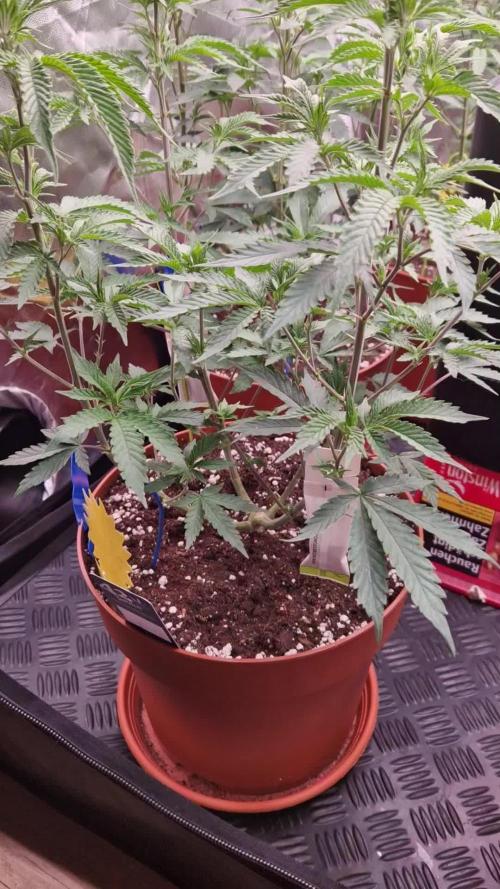
3 weeks down and this girl is finally (but slowly) coming into her own. I'm hoping now her fan leaves are getting a bit bigger she'll start to take off. As for environment, today I've turned the ventilation fan on 24hrs with no breaks. I started getting paranoid that hour on hour off is not doing them any favors and I'm just gonna have to suck it up and bare the brunt of the power bill. This will also drastically reduce the RH, which I'm not totally sure of the effects it will have on the girls. Low RH has got to be better than RH too high, right? 🤷‍♂️
Likes
25
Share
17-05-2021: As you might have seen I have added some reflective foil to reduce heat on the water. This helps a lot. Growth is as expected but they are a bit on the bright side. Well yesterday the set EC was raised from 1.3 to 1.6 so probably new leaves will be a bit darker. Also added a bit of Calmag. Still great to see that as soon the roots touch the water the growth is exploding. Well yet 13 days till 12/12 so I am excited to see how big these ladies will be by then. Hoping for a seventh node before that. 18-05-2021: Today I dosed 18ml of H2O2 (50% silver stabilized). I have seen a few algae so if they are gone by tomorrow I keep this dose, if they are not I will give them a shock treatment of 50ml. In this system I don't have to worry about clogging (50mm tubes) but I also believe that if it is not necessary I shouldn't do it. Dosing is advised from the supplier based on tomatoes by the way. 19-05-2021: All survived the H2O2. Today I have added additional 18ml. Just to see what happens. Growth seems a bit faster last night 22-05-2021: Blue is not doing great... I hope they survive. Red is still OK
Likes
4
Share
Está semana echamos te de compost aireado + 200gr de humus de lombriz
Likes
11
Share
I really enjoyed watching the ladies grow.i just sprayed again against bugs.but did not see anymore damage by bugs..so ecocure seems to work.one was really infected at so cut some away.the focus is really on the other one.maked her a grid so I can tie the buds when they getting big and hopefully heavy.this is a strong strain. I'm impressed by the way she bounces back from root problems do to wrong container and heat.also bugs.Also broke main stem at top. Started bloom so I give grow and bloom nutritions.cannacure is hopefully preventing molds..
Likes
38
Share
I've been pulling fan leaves this week . 1. To slow the top down . 2. To encourage side branch growth. 3. So they can remain in very small pots in a small space until I have space to let them grow properly.
Likes
7
Share
In der letzten Woche hat sie extrem an Biomasse zugelegt zu unserer Freude. :-) Trotzdem ist sie im Verhältnis noch sehr klein. Deshalb haben wir uns entschlossen, sie nicht zu toppen und kein LST an ihr vorzunehmen. Im späteren Verlauf eventuell noch HST, aber als ersten Versuch lassen wir der Natur ihren Lauf. Die Cinderella soll einer der schönsten Pflanzen sein -- Wir werden sehen :-)
Likes
8
Share
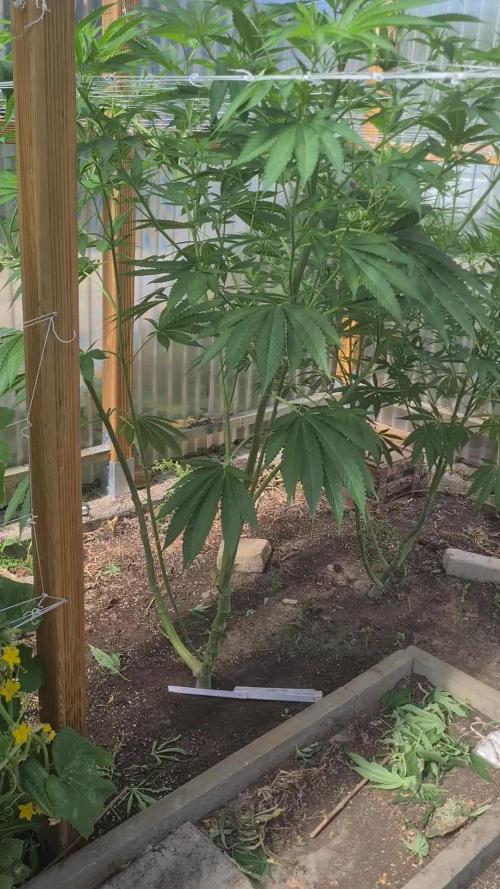
Day 140 decided to water everyone one more time with nutrients. Added some Overdrive to the mix for all my outdoor gals. Some probably need it more than others as I think come next week I might be able to harvest a few of my plants. Plus it is like super hot the past few days and have a little breeze pushing a lovely weed scented breeze out front of the house. Hopefully I don’t attract the wrong type of people to visiting my backyard 😱 Day 141 wow on the overdrive kicking in on everyone outside. Noticeable plumping of my buds when I went to take today’s pictures. Also added a few more doweling into the ground to help support her as she gets plumber, and because it was a little breezy last night Day 144 they just got huge and fat overnight. Plus a first for me, a little walk around my beauty
Likes
2
Share
Day 8 flower Plants look like they will end up small. This was a short veg. This is a great time to train plants. _____________ Day 9Flower Plants need to be tied down to have wide arms by day 7 Day 11 flo 18.5inches tall 12inches from light 1300ppm _____________ Day 13 Aggressive defoliation and Lollipop ___________ Day 14 Secret sauce microbe blend .7/gal
Likes
6
Share
Harvest Tag 72 2 Ladys haben den Morgen nicht uberlebt und hängen jetzt zum Trocknen 😌 Eine steht noch, sie bekommt noch 2 Wochen. Wirklich schöne Pflanzen geworden, bin soweit zufrieden mit dem wuchs und die Performance. Hoffe sie haben ordentlich Zündung hehe... Weitere Updates Folgen 😍
Likes
15
Share
@BlaKX
Follow
Aloah Growmies am Tag 49, es liegt wahrlich ein einzigartiger Terpene Geruch in der Luft! Sauer Süßer Erdiger Geruch mit Kush Nadelholz note. Sobald man nur ein Zuckerblatt oder Blüte leicht berührt klebt sofort alles vom Harz. Sie hat einzigartige schwarze Blätter und mit dem Harz sieht sie mittlerweile wie gezuckert aus ❤️ Hat auch sichtbar an Volumen zugelegt. *update * Habe die Trichomen gecheckt und seht selbst wie weit sie ist;)
Likes
25
Share
@AsNoriu
Follow
Outside girls now inside, hope they will add up a bit of weight, during first 5 days i didn't noticed any changes in bud size, but pots are getting lighter, all leaves praying and i don't see any budrot - so all is good !!! Thinking to give them 3 weeks or so ... Fifth day of the week. Found budrot, had to chop again BIGGEST cola, budrot loves big ;))) But other girls ok, drink 6.5 water, trichs are still clear mostly... Max 3 weeks, min one ... Would love max, but one more budrot and all are chopped. Happy Growing !!!