Likes
Comments
Share

@Organic473
Follow
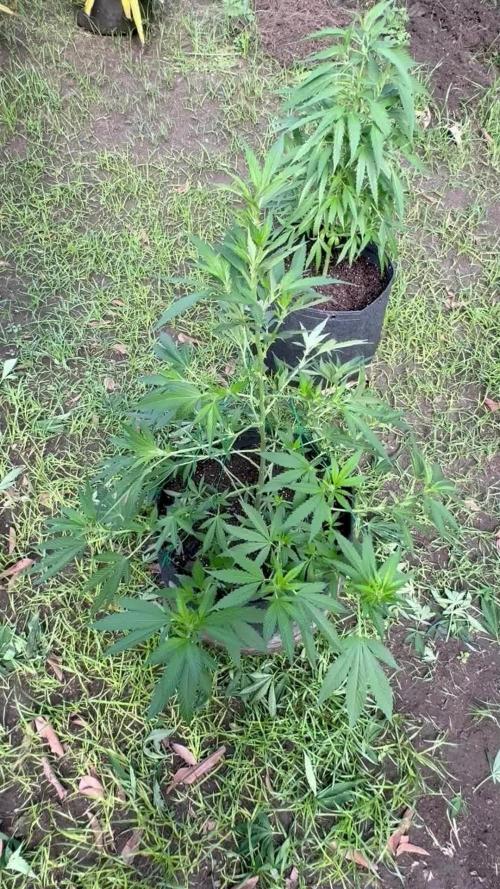
She was defoliated and low stress trained. I noticed some seeds pods forming however she is not in flower mood as yet.

Processing
Likes
13
Share


@Rambazamba
Follow
Hallo Du,
ich habe heute(Sonntag), wieder den Wochencheck absolviert. Bei einigen ist eine kleine Dünger Überreizung, wahrscheinlich bräuchten sie die letzten Tage nicht soviel oder haben es langsamer verarbeitet.
Ansonsten ist alles im grünen Bereich.
Sie wachsen und meine Damen blühen stärker und werden Praller. Der Duft ist leicht Süß/Zitrusartig.
Ich muss entgegen aller Berichte und Negativ Erfahrung die ich mitbekommen habe sagen das ich bisher vollends begeistert bin von der Mars LED.
Die Vorzucht habe ich extra mit einer Pflanzen Wachstumslampe vollzogen und die Blüte mit der LED nun vollzogen, ich bin auf das Ergebnis gespannt muss aber schon jetzt sagen ich habe gute 75 % an Strom-Kosten jetzt schon eingespart- auch mit der Wärme ist nicht Negativ es ist weniger heiß aber immer noch im Rahmen dessen was die Sweet Ladys benötigen.
Mein nächsten Durchlauf werde ich dann aufjedenfall Kontinuierlich aufschreiben denn ich denke die Kombination aus
Wachstumslampe
Led Mars
Royal Queen Seeds Critical
Composana 3 Monate Nährstofferde
Kleine Vorzucht Bugs
11 Liter Töpfe
Ist für das Ergebnis bei einem reinen Lauf Ideal!
Auch hatte ich bis jetzt bei den Critical am meisten einwandfreie Läufe.
Diese werde ich auch nächstes Jahr als Outdoor nutzen.
Ich freue mich für jeden Kommentar Bemerkungen und oder anderes lieben Gruß an dich als Leser, bleib gesund.

Likes
11
Share


@420DeepGrow
Follow
Gracias al equipo de MSNL Seeds y XpertNutrients sin ellos esto no sería posible.
💐🍁 CBG SOUL FEMINIZED:
CBG Soul es un híbrido rico en CBG con una proporción Indica/Sativa 50/50, creado por sus efectos calmantes y relajantes. Sus sabores dulces, limón y cítricos se complementan con terpenos limoneno y mirceno, ofreciendo una mezcla única para el alivio y disfrute terapéutico.
🚀🌻 Consigue aqui tus semillas:
https://www.marijuana-seeds.nl/cbg-soul-feminized-seeds
🍣🍦🌴 Xpert Nutrients es una empresa especializada en la producción y comercialización de fertilizantes líquidos y tierras, que garantizan excelentes cosechas y un crecimiento activo para sus plantas durante todas las fases de cultivo.
Consigue aqui tus Nutrientes:
https://xpertnutrients.com/es/shop/
📆 Semana 11:
Por fin comienza el buen tiempo y parece que a ella le gusta, ha explotado esta semana y parece que quiere crecer bastante.
De momento no tiene mucha rama lateral y ya no se aprecia carencia alguna.
Continuo con las dosis de nutrientes recomendada por el fabricante.

Likes
9
Share


@Luv2Grow
Follow
Day 43 - Starting week 7 and she’s looking good. She’s starting to stretch more every day and flowers are starting to fatten up a bit. Gonna continue with the foxfarm feeding schedule. Can’t wait for her to finish!
Day 44 - The room is really starting to smell amazing. Just keeping on with the foxfarm nute schedule until she’s ready to be cut in a couple more weeks. Still plenty of fattening
and growing to go.
Day 45 - No major changes, she’s just chugging along. Gave a feeding of just water today and tomorrow will be the foxfarm feeding. I love her look and the smell starting to really come from her.
Day 46 - No major changes, just continuing to fatten, grow and definitely getting really frosty!
Day 47 - What can I say? This thing is an amazing grow and smelling amazing. She just growing and fattening each day. Still to early to really look at the trichs but wanted to look anyway. Got a few decent pics and there’s a few cloudy ones in there. Gave her straight pH’d water today and tomorrow and will give another feeding on Saturday.
Day 48 - No big changes, just continuing to fatten up. Held off on watering today, she didn’t really drink munch compared to the GC. Will give her an actual “feeding” tomorrow.
Day 49 - All is looking good and she’s plumping up each day. Gave her the foxfarm feeding today. Tomorrow starts week 8 so will continue with the feeding schedule until the end. She’s really starting to smell up the room in my house and loving it.

Likes
16
Share


@Captainonthego
Follow
Struggled with possibly a calcium and magnesium deficiency on #4. Had to remove some damaged leaves and now have separated it to her own reservoir. Has not stunt her growth, she is bout 5 inches taller atm then her sisters.
Flow has been a struggle, if I was do one thing different is go with a 1" drain system instead of the 1/2" it presently has. Started with a drip, yet due to clogs and wanting a faster circulation, I changed to a steady flow over the clay. Presently #1 - #3 are on one reservoir and #4 on its own reservoir (In the video above shows #4). It's been a matter of adjusting the output flow and tubing size to get maximum flow without backing up the drain system.
Likes
21
Share


@BlackDragon22
Follow
Omg. Ha delle tonalità pazzesche. Anche questa bimba ha prodotto delle gemme di prima qualità. Gelide, puzzolenti, compatte e Cremose. La sto appena fumando e anche se deve stagionale, il suo sapore ed odore è pazzesco. Non vedo l'ora che diventi qualcosa di ancora più buono 🙏🏽💣 aspettando con impazienza la stagionatura.. Grazie per essere passati amici, fratelli.
Likes
42
Share


@MadeInGermany
Follow
Info:
Unfortunately, I had to find out that my account is used for fake pages in social media.
I am only active here on growdiaries.
I am not on facebook instagram twitter etc All accounts except this one are fake.
Hi everyone :-) .
This week she continued to develop very well 😊.
It was poured twice with 1 l each time.
She got training again (topping) and will get it a few more times so that she becomes a real bush :-).
Otherwise everything was cleaned and checked.
Have fun and stay healthy 🙏🏻
You can buy this Nutrients at :
https://greenbuzzliquids.com/en/shop/
With the discount code: Made_in_Germany you get a discount of 15% on all products from an order value of 100 euros.
You can buy this Strain at :
https://sweetseeds.es/de/cream-caramel/
Type:
Cream Caramel
☝️🏼
Genetics:
Blue Black
x
Maple Leaf Indica
x
White Rhino
👍
Vega lamp:
2 x Todogrow Led
Quantum Board 100 W
💡
Bloom Lamp :
2 x Todogrow Led
Cxb 3590 COB 3500 K 205W
💡💡☝️🏼
Soil :
Canna Coco Professional +
☝️🏼
Nutrients :
Green Buzz Liquids :
Organic Grow Liquid
Organic Bloom Liquid
Organic more PK
More Roots
Fast Buds
Humic Acid Plus
Growzyme Big Fruits
Clean Fruits
Cal / Mag
Organic Ph - Pulver
☝️🏼🌱
Water:
Osmosis water mixed with normal water (24 hours stale that the chlorine evaporates) to 0.2 EC. Add Cal / Mag to 0.4 Ec Ph with Organic Ph - to 5.8 .

Likes
3
Share


@Tzoptzobe
Follow
It was my first grow
They were 1meter80 tall.
The soil was mixed with othe one from market, because they got to be yellow color,
No Nutrients ,watered always before to take photos.
I always preffer to give them the Sunn they know.
It was a pleasure to care of Them,
The next one hope will be Pandora or Sensi Star.


Likes
65
Share


@MiyaguiOkPolilla
Follow
Hola amigo!
Arrancamos un nuevo proyecto, esta grandísima cepa Feral Fuel ABC de @TERPYZ
Semillas regulares, con una mutación muy estable, de porte medio a grande, gran poder sativa, larga floración y poca necesidad hídrica.
La marca recomienda sembrar directamente al sustrato, aquí, en suelo vivo funcionó perfectamente, una no dio a luz pero ya tenemos dos nuevas representantes!
Debo decir que la marca me envió mi paquete de 10 semillas y dentro había 12!!!
Que alegría!!!
Los brotes tardaron 5 a 7 días en aparecer pequeños entre el húmedo ambiente inicial.
Se mantendrán en el tupper hasta que se vea estabilidad.
Saludos a todos y éxitos, este proyecto viene cargado de una gran aventura

Likes
8
Share


@NiceGuyOllie
Follow
Starting to look like a bag of cheesy dusting has been wafted around by unicorn farts on a barmy summers evening. Turned her around to slap her naughty side with equal and opposite neutrons or some shit like that. Boss
Likes
98
Share


@OrganicNature420
Follow
Germination date 🌱 28/11/2021
Day 105 16/03/2022
Strain 🍁 Solfire Gardens Bahama Bussdown
(Runtz x Bahama Mama)
THC% • Unknown
💡 Mars Hydro FC-E6500
• Power draw 650W + 5%
• Max coverage 5 x 5
• LED 3978 pcs high quality chips
• Max Yield 2.5g / watt
• Noise level 0 DB
• Removable Driver & Light bars
• Daisy chain
• Fast cool system
https://marshydroled.co.uk/ 🇬🇧
PROMO CODE • (organicnature420) DISCOUNT
https://www.mars-hydro.com/ 🇺🇲
PROMO CODE • (ORG420) DISCOUNT 👍🏻
⛺ Mars Hydro 150 x 150 x 200cm
📤📥 AC infinity 6inch
💧 10lt dehumidifier
❄️ 3.1kw air con system
💉 Nutrients GreenBuzzLiquids 🇩🇪
⭐⭐⭐⭐⭐
Organic Grow Liquid • 1-4ml until 2wk flower
Organic Bloom Liquid • 2-4ml flower stage
Organic More PK • 2-4ml +wk3 of flower
Organic Calmag • 1-2ml/lt whole grow
Fast Plants Spray • first 2wks at night lights off
More Roots • 2-5ml veg +2wks flower
Fast Buds • 5ml 12days before flower until wk1
Humic Acid Plus • 2-5ml whole grow
Growzyme • 2-5ml whole grow
Big Fruits • 2-5ml flower stage
Clean Fruits • 5ml flush 1wk
Ph powder
Root Gel
Living Organics
https://greenbuzzliquids.com/
PROMO CODE • organicnature420 15% off ✌️🏼
🥥 Growing Media • Coco Coir
💡 80%
Notes 📝
Again it's been a very lazy week. Both my partner and boy come down with covid with me. All 3 of us having horrible symptoms. Girls look fine though and all will get a proper feed tomorrow as my GreenBuzzLiquids delivery should be here and I'm now covid free 👍🏻 I could easily pull half the girls in there as the trics are cloudy but I want some Amber this time round. I don't mind them going longer as the mystery is taken ages. My reveg problem wasn't as bad as first thought. It looks like I've lost one girl (Frosted Biscotti soil) to herming from the light leak. It's either a bad case of fox tailing or its packed with seeds. I can't see seeds from looking but it look like it has. So Impressed with solfire I've ordered some more. The v2 Bahama Mama are due out soon so keep an eye out for them. Happy growing fam 💚🌱
✌️🏼 if your thinking of changing nutrient company's please think of GreenBuzzLiquids. They honestly are a game changer and you can thank me later 😉
Discount codes in bio for Mars and GreenBuzzLiquids 👍🏻

Likes
12
Share


@thonhash
Follow
Simplemente aplique una PEQUEÑA poda de bajos antes de trasplantar y pasar a floración.
Empezamos la aplicación de enzynabis para crear una buena vida microbiana (también muy útil para evitar excesos o aprovechar cualqier “resto” que contenga nuestro suelo).
También empezamos a regular los watts del led mars hydro ts1000,y a medida q vayan pasando las semanas se irá regulando a mayor potencia, hasta llegar al maximo (150w)

Likes
13
Share


@Jocolope
Follow
32 one foot colas . This will be a long trim. Not too many leaves I was happy with the outcome


Likes
19
Share


@Little_E
Follow
Day 105-
So we are on week 8 of flower as of 2 days ago. Day 105 from seed. I watered both plants today with Jack's. I'm hoping this is the last time with nutes for at least one of the girls. My sativa has mostly cloudy trichomes so I'm going to start flushing her after this. I'm thinking she will be where I want her to be in a week. Maybe a tad longer. I'm waiting out the indica a little while longer because I'm shooting for a decent amount of amber. I can see the finish line What a major learning experience. So humbled to share this journey with you all. Not a perfect grow by any means but I hope to use this knowledge and crush my second grow.
Day 109-
Started 36 hours of dark at 5:30am
Day 110-
Trimmed and hung. What a ride it has been! Can't wait to update with a dry weight.

Likes
6
Share

@Shivashamboom1
Follow
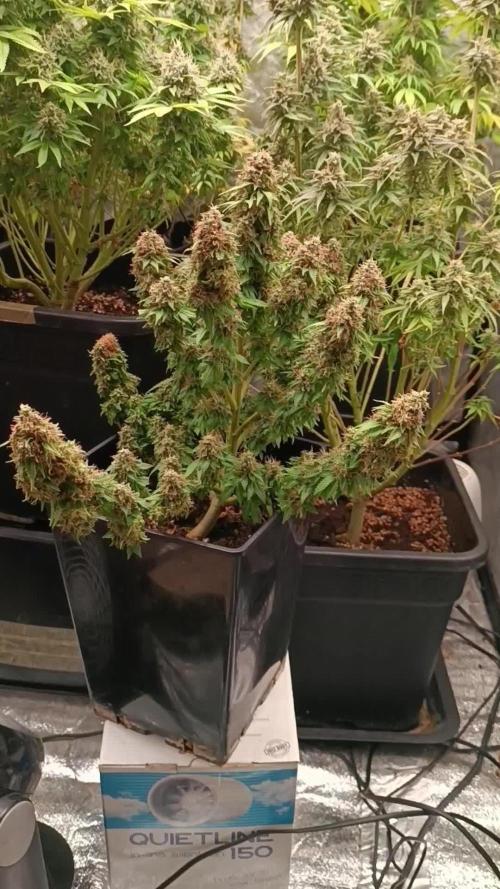
Ultimi giorni,lavaggio radici stanno iniziando a scaricare tutto quello che non serve alla pianta......il colore e il profumo sono ogni giorno più belli e buoni

Likes
20
Share


@Canadian
Follow
This girl has surprise me tremendously because for an auto plant it has a fairly generous vegetable time and with genetics that make them grow very big and tall and deliver such beautiful white snow coated buds looking forward for this one looking and smelling great. Thank you for reading I will continue to update have a happy grow
Likes
5
Share


@Lifesgarden420
Follow
The last week of edge for these beautiful ladies and then we can flip