


Likes
Comments
Share


@DogDoctorOfficial
Follow
🥒 14B – Pickled Lemon Haze F1 | Week 3
The Second Sister Takes the Crown
Welcome back to the Project Blue Tent, my little experiment where every plant receives individual attention from seed to harvest.
For anyone joining the journey for the first time, this project follows multiple Zamnesia Genetics grown side-by-side inside the same environment. Every phenotype gets its own diary so we can truly appreciate how genetics express themselves under identical conditions.
This week certainly wasn’t boring.
A malfunction in the irrigation system flooded the entire tent, leaving every growbag sitting in far more water than intended. Thankfully, the problem was caught quickly, the system was repaired, and every bag was allowed to drain naturally. Thanks to the incredible aeration of Plagron Cocos Premium, the roots never complained, oxygen remained available, and the plants simply carried on growing as if nothing had happened.
If anything, this little accident became another reminder that good substrates forgive our mistakes.
And this beautiful Pickled Lemon Haze F1 was no exception.
⸻
Week 3 Development
She has been an absolute pleasure to watch.
Although sharing the same genetics as her sister, she’s already showing her own personality. Her structure became incredibly symmetrical during the week, producing thick internodes, broad leaves and, most importantly, exceptionally vigorous lower branching.
Sometimes a plant tells you exactly what she wants.
This one practically asked to be topped.
Instead of growing vertically with a single dominant apex, she was already investing heavily into her side branches, making this the perfect candidate to redirect her energy and begin building a much wider canopy.
Looking underneath the plant was enough to make the decision.
Healthy secondary shoots were already racing upward, ready to become future main colas.
⸻
Why I Chose to Top This Plant
Many growers see topping as simply cutting the tip off.
It is actually much more than that.
The main growing tip naturally produces auxins that suppress the lower branches through what’s known as apical dominance. By removing that single growing tip, the plant redistributes hormones and allows the side branches to take over.
Instead of one dominant leader…
…we create several.
Since this Pickled Lemon Haze already had such impressive lower development, topping should allow those branches to explode with growth over the coming weeks, producing a much flatter, more even canopy.
For indoor cultivation, that means:
• Better light distribution
• More productive flowering sites
• Stronger structural balance
• Easier canopy management
Of course, topping is a high-stress technique, so timing matters.
I only perform it when the plant is completely healthy, actively growing, and has enough established nodes to recover immediately.
Judging by her response only days later, she barely noticed the haircut.
⸻
A Tiny Surgery
Using the Zamnesia trimming scissors, I carefully removed the apical shoot just above the selected node.
One of my favorite macro photographs this week captures the fresh cut perfectly.
Looking through the lens, it almost resembles a tiny green well filled with crystal-clear sap. It is fascinating how much beauty exists in details we rarely notice with the naked eye.
Nature never disappoints.
The removed growing tip itself was almost too pretty to throw away.
Sometimes I think photographers become sentimental about the strangest things.
⸻
Recovery
Recovery has been outstanding.
Within a very short time the remaining growth tips had already begun pointing upward, clearly responding to the hormonal redistribution.
There is no sign of stress, drooping or stalled development.
The stem continues thickening nicely, while the side branches seem eager to compete for dominance.
Exactly what I hoped to achieve.
⸻
Environment
The entire tent continues sharing the exact same environmental conditions.
🌡️ Day temperature: 27°C
🌙 Night temperature: 25°C
💧 Relative humidity: 67%
🌱 Root zone: 24°C
💡 Light schedule: 18/6
⚡ EC: 1.61
💧 pH: 5.8
? Pot size: 8 L Plagron Premium Growbag
💨 CO₂: Ambient (~450 ppm)
Everything remains stable, giving the plants every opportunity to recover from both the flooding incident and the topping session without unnecessary stress.
⸻
Feeding
As the plants continue accelerating their vegetative growth, I increased nutrition slightly.
Current feeding per litre:
• Plagron Hydro A — 1.6 ml/L
• Plagron Hydro B — 1.6 ml/L
• Plagron Hydro Roots — 1 ml/L
• pH adjusted to 5.8
The slight increase in EC is already being rewarded with faster growth and richer colour throughout the canopy.
The new growth remains bright lime green—a perfectly normal characteristic of rapidly dividing young tissue—while the older leaves continue holding a healthy medium green without burnt tips or nutrient deficiencies.
Everything points toward a happy, hungry plant.
⸻
Looking Ahead
Now comes the fun part.
Over the next several days I’ll simply let nature do its work.
The goal is to allow the two new dominant tops to establish themselves while the lower branches continue stretching upward.
Once the canopy begins filling evenly, gentle LST will likely follow to keep every future flowering site exposed to as much light as possible.
She has all the ingredients to become a beautifully balanced bush.
⸻
Thank you so much for stopping by and following another chapter of Project Blue Tent.
Every week these plants continue reminding me that growing isn’t just about producing flowers—it’s about observing, learning, adapting and appreciating how incredibly resilient these genetics can be.
I truly appreciate everyone who takes a few minutes to read, comment, share advice or simply enjoy the journey with me.
Happy growing, and I’ll see you all next week! 🌱💙
⸻
PS
A huge thank you to all the amazing companies making this project possible.
💙 Zamnesia for the outstanding genetics, the fantastic trimming scissors that made this topping effortless, and for believing in this adventure from day one.
? Plagron for providing the Premium Growbags, Cocos Premium substrate and the Hydro nutrient line that continues delivering healthy, vigorous growth week after week.
Your support allows this project to become the detailed educational diary I always dreamed of creating.
Growers Love and see you all in Week 4! 🌿💙
Likes
1
Share


@Ultraviolet_
Follow
Remember that, however you are played, or by whom, your soul is in your keeping alone. Even though those who presume to play you be kings or men of power, when you stand before God, you cannot say, 'But I was told by others to do thus,' or that virtue was not convenient at the time. This will not suffice. Remember that.
Day:18
84°F and 65% RH (VPD) for the vegetative stage. Approximately 1.15kPa(assuming leaf temperature is about 2°F cooler than the air), which falls right into the ideal vegetative sweet spot (0.8kPa to 1.2kPa). At 1.15kPa, plants can draw water and nutrients efficiently without risking stress or wilting. It keeps the leaf pores (stomata) open, allowing for ideal carbon dioxide intake and maximizing vegetative growth. VPD is determined by the leaf's temperature, not just the ambient air. Because leaves usually run 1° to 3°F cooler than room air under bright grow lights, my actual VPD will be slightly lower, closer to the 1.0kPa mark. As she transitions from vegetative growth to flowering, one can gradually lower the humidity (to around 45–60%) and drop temperatures slightly to prevent disease from settling inside dense buds when they appear.
Night:6
At 70°F and 60% relative humidity, Vapor Pressure Deficit (VPD) is 0.86 kPa. This is right on the cusp of whats optimal for the vegetative stage. During the nighttime, plants generally close their stomata and undergo cellular respiration rather than photosynthesis. Transpiration slows to a near stop, making VPD less critical at night than during the day. However, maintaining a nighttime VPD between 0.8 and 1.0 kPa is highly beneficial in that it ensures the air is dry enough to prevent powdery mildew or bud rot, but moist enough to keep the plant from undergoing unnecessary stress. This range keeps the environment comfortable for cellular processes and prevents large atmospheric swings. Keeping it all flowing.
(Not pushing them yet, these are photoperiods)
The optimal soil (root zone) temperature for cellular root respiration and nutrient uptake in cannabis is between 68F & 72F This narrow range balances biological energy production (cellular respiration) with the dissolved oxygen levels in the soil, maximizing plant growth and health. Warmer soils hold significantly less dissolved oxygen. When soil temperature exceeds 74F oxygen depletion occurs, inhibiting cellular respiration almost entirely, At 68-72F root cells generate optimal adenosine triphosphate (ATP) via respiration to power root-tip elongation and the active transport of water and nutrients.
Too Hot (Above 78F) Root respiration increases, demanding more oxygen, while the water's oxygen-carrying capacity drops. This creates a prime environment for anaerobic pathogens and Pythium (root rot).
Too Cold (Below 60F) Root metabolism and cellular respiration slow to a crawl. This severely impairs nutrient and water absorption, leading to yellowing, wilting, and phosphorus deficiencies.
A lot depends on whether it's automatic or photoperiod; with photoperiod, there is not as much of a need to push "hard" as the real countdown only begins once the flower is initiated. Automatics, on the other hand, the chronological "clock" begins ticking the moment the seed germinates. It is of critical importance that the seedling growth gets off to the races, understanding that early growth is like compound interest, which will pay off come harvest. This reality is why getting autoflowers "off to the races" early on yields such exponential benefits. The "compound interest" is directly related to the surface area of the leaves. Larger, faster-growing seedlings process more light and build bigger root networks early on, which translates into an explosion of vertical and lateral growth during their short vegetative window.
The margins for error are so thin with autoflowers; this early-stage momentum depends on several critical practices. Seedlings exposed to increased atmospheric CO2 levels early in life will develop at an increased rate. To effectively "extend" or optimize the capacity of Photosystem II (PSII) for increased photosynthetic efficiency. In standard oxygenic photosynthesis, Photosystem II (PSII) is naturally limited to the red-light spectrum, peaking at 680nm. Extending its light-harvesting capacity past 700nm into the far-red region requires bypassing the natural limits of standard chlorophyll a. Adding 730 nm (far-red) LEDs alongside standard red/blue lights has been shown to increase canopy photosynthesis by 20–30% in several crops by acting synergistically with shorter wavelengths. However, the limitation is that excessive, pure IR/Far-red light (without accompanying red light) can trigger the "shade avoidance response," causing plants to grow tall, weak, and spindly rather than robust. Utilizing infrared light (specifically the 700-750 nm far-red range) is a viable method to boost photosynthetic efficiency. It acts as a bridge to allow PSII to utilize a broader spectrum of light, breaking the traditional 700 nm barrier. UVR8-mediated signaling (often in conjunction with CRY proteins) triggers protective mechanisms that maintain the stability of the photosynthetic apparatus (including LHCII and reaction center proteins), thus ensuring that the efficiency of Photosystem II remains higher in UV-B-exposed plants compared to plants lacking this receptor. ΦPSII indictates the rate of electron transfer from water to plastoquinone, which drives the production of ATP and NADPH. There is a close link between ΦPSII and the true rate of CO2 fixation (Φ*co2).
ETR stands for Electron Transport Rate. It measures the speed at which electrons are moved through the thylakoid membranes in a plant's chloroplasts during the light-dependent reactions of photosynthesis. Infrared light (particularly Near-Infrared or NIR) improves cellular energy by interacting directly with the electron transport chain (ETC) in mitochondria. This process boosts adenosine triphosphate production, which acts as a metabolic coefficient multiplier by accelerating enzyme activity dramatically.
Extend then multiply.
Far-Red photons interact with plant photoreceptors to accelerate the plant’s biological "clock" or trigger a shade-avoidance response. Autoflowers don't use the plant's biological clock, although the IR will initiate a shade avoidance and make them stretchy. You can just add equal measures of 660nm-680nm to negate the shade avoidance effect. Replacing nights' "darkness" with a combination of IR+ and 660nm. Because autoflowers don't require a dark period to flower, many growers just blast them with light. 18/6 24/0. However, this ignores the plant's metabolic rhythms, where daytime photosynthesis (light reactions) must be perfectly balanced with nighttime carbon fixation and assimilation (Calvin cycle) to avoid bottlenecking plant development. Cellular respiration is a 24/7 process, but it can only function while the plant has the free oxidative capacity to do so. A 100% photosynthetically active leaf cannot perform cellular respiration. The viral trend of defoliation of every leaf that isn't "getting enough light" is of great detriment overall, putting 100% of the cellular respiratory "workload" and responsibility on the 0/4/6 hours of darkness in sub-optimal conditions for enzymatic activity. Photosynthesis captures nearly 100% of the initial energy as carbon, while cellular respiration is the process that unlocks 90% of that captured energy into usable ATP so the plant can use it. Respiration is considered roughly 30% to 40% efficient. It captures enough of the potential energy in glucose to synthesize around 30 to 38 ATP molecules per glucose molecule. The remaining 60% to 70% of the energy in the sugar is not captured in ATP; instead, it naturally escapes into the environment as heat, which helps regulate plant temperature. In plants, the primary enzymes of the Electron Transport Chain (ETC) and the ATP synthase complexes are typically adapted to function optimally in warmer temperatures (roughly 25°C to 35°C depending on the specific plant strain). As temperatures rise within this physiological range, molecular collisions increase, speeding up respiration and ATP production. The cannabis plant has a branched respiratory pathway. During heat or cold stress, plants activate Alternative Oxidase (AOX). AOX burns sugars to dissipate energy as heat rather than coupling it to ATP production. This pathway actually functions optimally at elevated temperatures to help protect the cell from the damaging build-up of Reactive Oxygen Species (ROS) during heat stress. Enzyme activity generally scales with heat; there is a strict biological limit. If canopy temperatures in a grow room exceed 40°C, the enzymes and their supporting lipid membranes lose stability. Not saying you need to go crazy, just optimize nights the same as we optimize days.
Phosphorus is the driving force behind early seedling development. It acts as the "energy hub" of the plant, directly driving cell division, robust root growth, and the creation of DNA. Without an adequate, easily accessible supply early on, the plant's overall growth potential and final yield can suffer permanently.
E=MC2 looks like a simple multiplication problem; it describes a fundamental physical truth: mass and energy are the same thing. The equation doesn't just calculate a value; it reveals that mass is effectively "congealed" energy. Energy is just numbers. Energy isn't a physical "substance" you can hold or touch. It is essentially an abstract, calculated number that we assign to a system to predict how it will change, interact, or move. A numerical label we attach to matter to track how it behaves. Because the universe runs on laws of symmetry (specifically, that the laws of physics don't change over time), a single global number must be conserved. We call that number "energy".
We don't grow; we facilitate energy conversion.
How well a seedling grows is essentially down to how much knowledge one can acquire to increase the level of conversion to occur. Applying knowledge effectively requires intuition, which comes from hands-on experience. A seasoned stoner learns to read subtle signs—like a slight change in leaf turgor (stiffness), subtle color shifts, or the specific texture of the soil—before a textbook diagnosis can be made. Ultimately, growing is the application of botanical science blended with active observation. Knowledge dictates your potential, but adaptability and attentiveness to the plant's immediate environment determine your results.
1.618 nature mathematically optimizes quantum energy transfer and light absorption efficiency within the photosynthetic machinery, as it naturally dictates energy scaling hierarchies and resonance dynamics. External vibration or electromagnetic wave that perfectly matches a plant's natural frequency directly influences plant growth. Low-frequency sound waves and targeted electromagnetic fields stimulate cellular processes and boost photosynthetic efficiency
Does it produce better yields?
How long is a piece of string? As long as you cut it. But isssss the juice worth the squeeze? The quantum framework of the IVM seems to think so. Good enough for the quantum firmware, good enough for the DNA software. Genetics are not dictated; they are expressed; the rate of that expression is dictated by the environment in which growth occurs.
Quantum Coherence in Photosynthesis occurs When a photon of sunlight strikes a leaf, the energy it carries must travel to a reaction center to be converted into chemical energy. This process operates at nearly 100% efficiency. If the energy moved in a traditional "bunching" or random hopping manner, a large portion of it would be lost as heat. Instead, plants utilize quantum superposition. The energy particle (exciton) doesn't just take one path; it exists in a wave state and explores multiple pathways simultaneously. It essentially "chooses" the most efficient route to the reaction center simultaneously. Research shows that molecular vibrations and the specific network arrangements of chlorophyll molecules (like the naturally evolved Chlorophyll A & B ratios) actively protect against energy overflow, optimizing light capture across different light intensities. Enzymes are the biological catalysts that speed up chemical reactions within a plant's cells, allowing them to grow, metabolize, and repair. Rather than relying solely on the classical kinetic energy of molecules colliding, plants use quantum tunneling. Subatomic particles like electrons and protons (hydrogen ions) can literally "teleport" through energy barriers that they normally wouldn’t have the energy to climb over. This makes vital metabolic reactions happen far faster than classical physics could ever explain.
Chloryphyll b has peak absorption at 460nm (Blue) and at 647nm(Red). If we take the blue peak wavelength 460nm and a UV-B, UVR8 peak absorption wavelength 285nm, Tryptophan-285 (W285) Sensing protein. 460/285=1.618 Φ If we take chlorypyhll b's Red absorption peak 647nm and a UV-A of 400nm, we get 647/400=1.618 Φ. "Structure of light". The cryptochrome photoreceptor (CRY) is a UV-A/blue light receptor that shares this dual sensitivity with several other biological structures and functions, including significant sequence similarity and a common evolutionary ancestor with DNA photolyase enzymes. These are light-activated enzymes that use blue/UV-A light to repair DNA damage caused by UV-B radiation in plants. Synergistic. But Shhh, it's a secret.
Effective quantum efficiency of photosystem II, often denoted as ΦPSII, represents the proportion of light absorbed by Photosystem II (ΦPSII) that is actually used in photosynthetic electron transport. It is a key indicator of how efficiently a plant is using light for photosynthesis, as opposed to losing it as heat or fluorescence. ΦPSII (effective quantum yield of photosystem II) functions primarily as a "multiplier" (a coefficient of efficiency) rather than an additive factor when estimating the overall photosynthetic electron transport rate (ETR). Multipliers are considered far more beneficial than additions because they generate exponential growth, leverage existing resources to their full potential, and create sustainable, self-multiplying capacity, rather than just incremental, linear increases. This fascinating observation is rooted in the intersection of subatomic geometry, fractal scaling, and quantum dynamics. In specific molecular arrangements—such as in conjugated polymer networks or biomolecular architectures—the Golden Ratio (PHI) naturally dictates energy scaling hierarchies and resonance dynamics. Mathematically tied to the fine-structure constant, which defines the strength of the electromagnetic interaction. The Golden Ratio can be mapped geometrically as the Golden Angle (137.5 degrees) in atomic structures, linking the charge of the electron to fundamental quantum constants like Planck's constant.
Electromagnetic.
The Golden Angle (137.5): This angle is derived from the Golden Ratio (1.618). It is the smaller of two angles created when a circle is divided such that the ratio of the arcs equals the Golden Ratio.

Likes
95
Share


@Ferenc
Follow
Day 58, 11th of November 2020:
I set the lamp 15 minutes shorter to switch off earlier so she receives 11:45 of darkness. I would like to imitate the nature when longer nights come with time till the 4th week (when she will receive 13 hours darkness a day 15 minutes minus 4 times = 1hour) so every week 15 min longer darkness for 4 weeks and then back to 12/12 to have bigger buds from the 4th week....
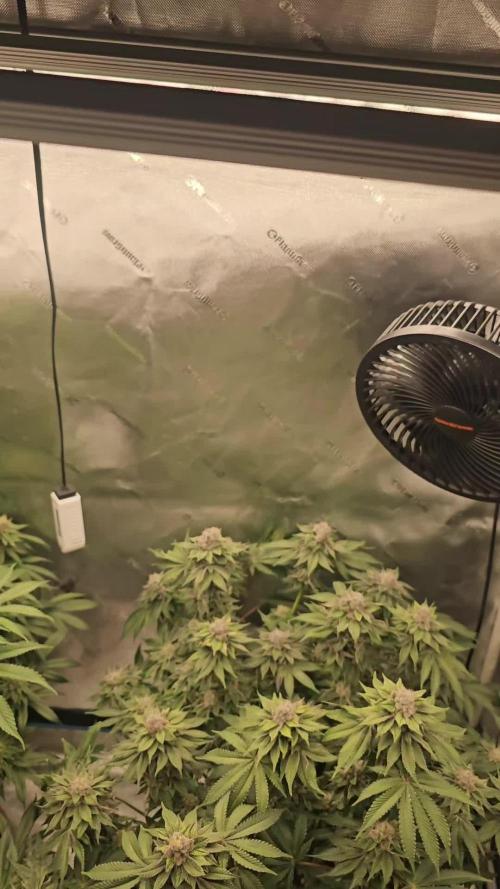
Tropicanna poison... Nice plant well done Sweet Seeds....
Little beauty sex appears by the pistils are coming out so I assume strech is ending soon :)
All good look at her fertilization happnes every 2nd day by the mix above and the ratio.
Let's see....
She is promising haha :)

Likes
1
Share


Likes
4
Share


@I_Identify_As_A_Dan
Follow
Start of week 3 for Black Lebanon by SSSC
These girls just got their day 21 strip..
Pheno 3 didn't get a massive strip because she seems to be a few days behind everyone else so I'm going to wait before i do the same to her but i did snip a few fan leaves that were blocking light.
They've been getting fairly watered heavy when they do get watered 2/3 times a week but I'm trying to water more often in smaller amounts.
Pheno 1 & 2 have been stretching like crazy😍Was really hoping pheno 4 would catch up but doesn't seem like the case.
Plants are loving the Taurus TRS600 every time i come in they are praying.
The feed is BioBloom by greenhouse Feeding at 2.5g per L of medium.

Likes
20
Share


@Basementganja
Follow
Fed/watered with 1 gallon of the above listed nutrients, every 3 days. (when the growing medium becomes 95% dry)
Gave her a light selective de-leafing, to open up the inner bud-sites to more light.
The timelapse shows me why I won't be transplanting like this again. (Slow growth/lost time from constricted root mass)

Likes
22
Share


@Appoldro420
Follow
All going well now, just lowered my setup by 35cm to gain more space for the ladies... also now my reservoir is below the cabin instead of inside, so much cooler water now (in fact I had to pace a heater to avoid temperature below 18˚C)

Likes
4
Share

@eldruida_lamota
Follow
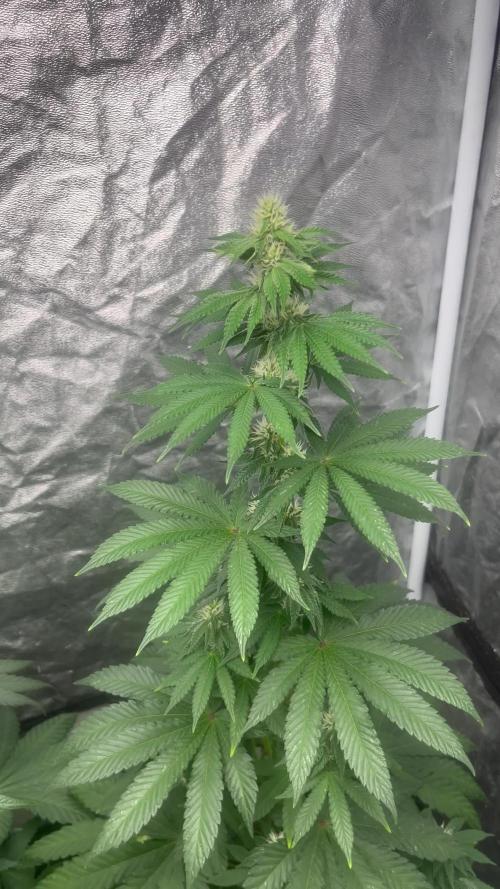
Que pasa familia, vamos con la cuarta semana de floración de estas F.U.H. feminizadas de Seedstockers.
Vamos al lío, las plantas se trasplantaron a macetas de 7 litros.
El ph se controla en 6.5, la temperatura la tenemos entre 24/21 grados y la humedad ronda el 50%.
El ciclo de crecimiento puse 12h de luz, el foco está al 75% de potencia.
Tenemos como visitante de nuevo los trips, compré depredadores que colocaré a principios de semana.
Me gustaría estar más encima este cultivo pero la salud me está impidiendo un poco estar 100% con el proyecto.
- os dejo por aquí un CÓDIGO: Eldruida
Descuento para la tienda de MARS HYDRO.
https://www.mars-hydro.com
Hasta aquí todo, Buenos humos 💨💨💨

Likes
26
Share


@KingSalomonsWeed
Follow
Duftet. DUFTET hervorragend. Total irre. Caramel Schokolade, vanille süß.
KLEBRIG. ALLES!
GRINS
BUD MACHINE!
Day 51 laut breeder fertig. Ok noch 5 tage.
Aber fertig, ja. Defenitiv. Lasse sie trotzdem noch im Reaktor, denn sie dürfen gerne noch ein wenig reifen. Heute nochmal mit dünger. Den Rest ihrer Zeit dann nur noch Wasser.
19.09.16 16? Ok 17? Egal.
TRICHOME CHECK was successfull..
Har har ok mostly milky. A lot of trychomes not ready.. Buds re not rock hard. Like you touch a dog. Not the fat ones i mean.
And they grow up. Everyday. The buds. I mean theyre not the biggest. But i saw gelato buds spend in dispenserys
(www). Who re smaller than mine.
They grow up in height, tall and weight. Trichomes re the same as always... 😛
Har har.. GANJA THERE EVERYWHERE.
STEAM.
SOME LEAVES(heavy you can see there where she eats aphids. NO JOKE.(@sugarleaves)
First trichomes surrounded it. Than one day later you see them stuck in some trichoms. Than Abracadabra NO JOKE after a few days and nights only some darker trichomes left there. By the time they go brighter again as the others, but bigger).
Sticky smell girl. Mjam
HALLEJUULIA 13 FINGERS A LEAF!
Ganjaloveriamtobringsomedelicious GELATO41FASTfromSEEDSTOCKERStomyworld.
Im satisfied :)
Day 54 of flower. Anything going well.
Did a little pre chop. 3 buds like( with milky trichoms) because of room problems.
They hang dark inside the tent.
And switched my blue light off.
Now only white and red. For faster ripening
20.09.,growing growing growing.
21.09 trichomes re ready. Milky most but ready. 8 weeks of flower, and they're ready. GOOD WORK SEEDSTOCKERS
But i will give her1or 2 more weeks.
Because this strain is so
OUTSTANDING..
She DESERVES a little more time because of some inaccuracies from me......................
And i really want this indica Punch.
For this is better to become some amber trichoms... And weight.. 😛 💪
DAY 58 OF FLOWER.
She is ok. Ripening.
But the aphids.
NOW ITS TIME TO GO TO WAR
☣️ ☣️ BIO LOGICAL WEAPON ☣️ ☣️
BASIL WATER
B weapon for aphids.
Day 59 of flowwring: in progres.
And found the first trichoms going amber.!!!!!!! YES.!!!!!
Day 61. Nuggets or Buds? BUDS!
Day 63. Waiting.
Day 65 Chop of Buds the Rest needs more time. Where re my buds? Fallen, washed, now about to dry.


Likes
19
Share


@BB_US
Follow
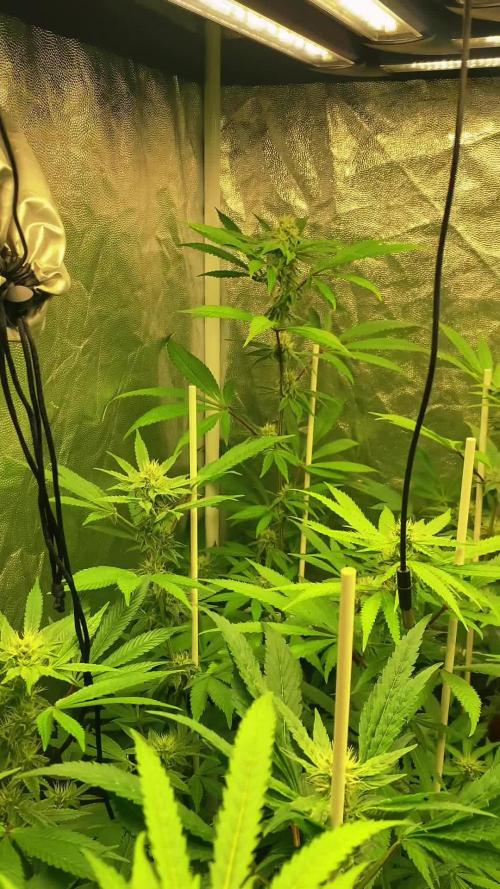
Wonder are being made here. These ladies are doing amazing things. Did lots of defoilation of them this week, making some new light depth for the lower branches. 🌿💚 Comment and like my grows, need to get to master stage



Likes
6
Share

@Phatlad187
Follow
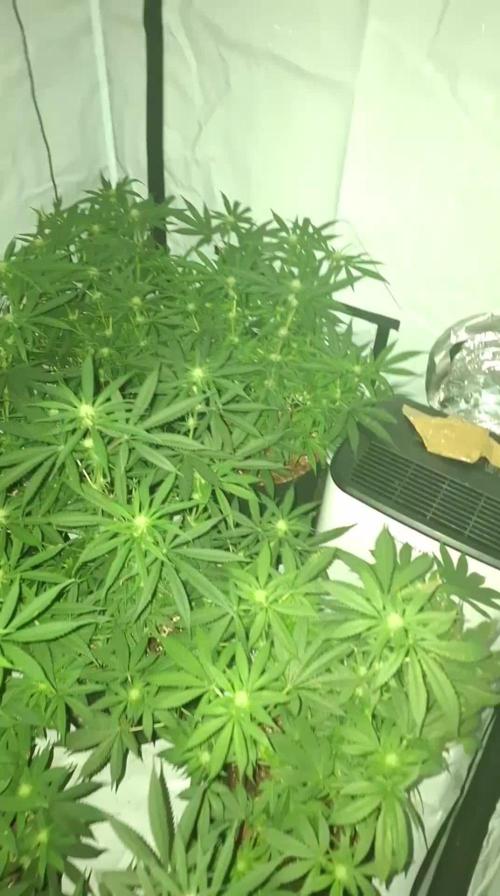
Week 3 of flower. Plants are growing amd av streched a lot. Av done some deleafing and lolly poping on them will let them recover now bit the are growing good with no problmes at all got a bit of a smell coming of them there geting feed 3litters everi other day now so driking good
@growerchoice
@SHOGUN COCO A 4ml/L 160ml
@SHOGUN COCO B 4ml/L. 160ml
@SHOGUN ACTIVE BOOST 2ml/L. 40ml
@SHOGUN CAL MAG 1ml/L 20ml
@SHOGUN ZENZYM 2.5ml/L. 100ml
@SHOGUN KATANA ROOTS 0.2ML/ 8ML

Likes
34
Share


@MadeInGermany
Follow
Info:
Unfortunately, I had to find out that my account is used for fake pages in social media.
I am only active here on growdiaries.
I am not on facebook instagram twitter etc All accounts except this one are fake.
Have fun with the Update 😃.
Flowering day 49
since the time
change to 12/12 h.
Hi everyone 😀.
We are about 10 days before the harvest 👍.
The trichomes are 70% milky, 10% amber and 20% clear.
as soon as 30% is amber and 70% is milky it is harvested.
Today I am going to rinse you thoroughly so that you can use up your last nutrients.
Have fun with the update.
Stay healthy 🙏🏻
You can buy this Strain at :
https://www.exoticseed.eu/
Type:
Quick Sherbet
☝️🏼
Genetics:
75% Indica / 25% Sativa
Sunset Sherbet X Black Lemon
👍
Vega lamp:
2 x Todogrow Led
Quantum Board 100 W
💡
Bloom Lamp :
2 x Todogrow Led
Cxb 3590 COB 3500 K 205W
💡💡☝️🏼
Soil :
Canna Coco Professional +
☝️🏼
Fertilizer:
Green House Powder Feeding
☝️🏼🌱
Water:
Osmosis water mixed with normal water (24 hours stale that the chlorine evaporates) to 0.2 EC. Add Cal / Mag to 0.4 Ec Ph with Organic Ph - to 5.5 - 5.8

Likes
2
Share


@toriyama
Follow
Hinten sind zwei Keimlinge des F1 Epsilon Autoflowers, und vorne ist ein Apple Flitter, ein billiger Autoflower-Samen, den ich kostenlos von Royal Queen Seeds erhalten habe.
Nachdem die Keimlinge herauskamen, habe ich 4 ml/L Root Juice von Biobizz gegeben und das Licht auf 30% sehr schwach eingestellt.
後ろに2つの芽が出たのはF1エプシロンオートフラワーで、前のはロイヤルクイーンシーズから無料でもらった安いオートフラワーのApple flitterです。
芽が出た後、BiobizzのRoot Juiceを4ml/L与え、ライトは30%に非常に弱く調整しました。

Likes
4
Share


@URB_COLOMBIA
Follow
The bud growth with the administration of URB is well evident.
June 27, fungus leaves defoliated by hand.

Likes
1
Share


@VirginiaGrownExotics
Follow
This phenos taking off like a rocket growth is excellent she’s very healthy going into week 4 she’s starting to preflower


Likes
2
Share

@Ultraviolet_
Follow
"You will know them by their fruits"
46-47 days from germination, she fills the canopy herself, and the apical dominance is broken.
It's not all about the amount of light, but the ratio too, as this will dictate growth through the ratio of phytohormones. In order for correct bud development, there needs to be a correct ratio of RGB. Different wavelengths have different penetration depths. When one grows using top-down lighting, only the entire canopy is limited to 2-3 layers of leaf, meaning there will only be correct bud development in those layers, regardless of getting 45DLI.
The biomass potential of a plant is linked to root mass. Generally, when a plant reaches its maximum biomass, you can help to chop off parts of the plant that are in less than efficient areas of the plant (low light). So that it can create new biomass growing towards the light.
Strength is the maximum potential, and power is the rate of conversion. You can have the biggest veg period of 18 weeks, and it means nothing, as soon as you start flower, the chronological clock starts ticking, the only metric that matters to bud size is how much energy you convert each cycle, not by how long it took you to build the framework.
Each leaf is like a satellite receiver attached to an antenna called a stem; each leaf removed lowers the energetic potential of conversion.
Not saying you cannot defoliate for a reason, only that you should have one, and at the right time. Don't defoliate 30+% on autoflowers or 4 weeks into the flower period and expect an increase in yields; it doesn't work like that. There is certainly room for dictating growth patterns and clearing out overcrowded nodes, but it needs to be done in veg because once that timer starts and buds start growing, it's all just energy conversion. Most grows I barely defoliate at all in a 4x4 because with side lighting, turning a 2d canopy penetration into a 3d, even lower buds are 90% the quality and density of top ones. The rate of photosynthesis and the ultimate density of lower buds aren't just about the sheer number of photons PPFD. The specific ratio of R:G:B dictates canopy penetration and drives different photochemical reactions. The Electron Transport Rate (ETR) measures the speed at which electrons are driven through Photosystem II (PSII) during photosynthesis. The ratio of Red, Green, and Blue (RGB) light heavily dictates this rate.
Plant leaves continuously perform cellular respiration regardless of the time of day, using energy and oxygen to fuel essential metabolic maintenance. If you over-defoliate, the remaining canopy may be unable to produce enough net sugars during the day to offset the constant respiratory demands of the plant. Must balance fixation with assimilation; there's no point in capturing 45 DLI if you only convert 20% every cycle due to an extreme lack of respiratory capacity to perform cellular oxidative phosphorylation.
A crinkle-cut French fry has more surface area. When it cooks, it has a higher capacity for energy transfer/conversion, which is what makes it slightly crispier than a regular straight-cut French fry when it comes out of the oven.
You can have a 4x4 canopy or a 4x4x4 canopy. Oversimplified, but you get the idea, yes, we know that side lights are not as effective at absorption from the sides or underneath, but it's not about DLI, it's never been just about efficiency, it's about the penetration ratios of RGB that drive ETR of/photosynthesis and trigger correct bud development. The size of each bud is its own ability to perform the ETR required for its own personal growth, and bud development is dictated by the ratio of RGB. It drives localized growth and acts as a regulatory switch for that development. Turgor pressure is another very important factor in understanding if you want big buds, for it is the "steam engine" that dictates the rate of bud expansion. Simply, never going to happen playing it safe metabolically at ambient 75F.
Because buds have less chlorophyll, they do not suffer from the same photosynthetic shutdown that over-exposed, light-stressed leaves do. They can soak up direct light energy to swell in density and size. Their tolerance to intense light is heavily limited by the temperature and humidity, but if you can control those temps and keep the rot away, buds have a much, much higher tolerance to high light than leaves. Beneficial to hammer with high light before trichomes appear. Balancing this with trichome maturity is key for rich terpene and flavonoid profiles, want it just right, somewhere in the middle, not too much, not too little. Find cannabis plants can defoliate themselves come harvest, given the right signals. Every last ounce of potential is recycled into buds by the plant itself (senseceance), given you can keep the level of conversion high enough to prompt a need to do so.
Get the canopy @ optimal PPFD range, 45-55DLI, then let the plant "stretch" the stems into a "PPFD range much higher, one that leaves don't like to grow in, but buds thrive in. What is optimal for a bud is different than what is optimal for a leaf photosynthetically. Genes provide the blueprint, but the environment dictates how, when, and if those genes are expressed. Must first signal the condition to increase the expression you want to exist through stress and response, cause and effect. A well-buffered CEC medium prevents extreme nutrient swings, allowing plants to maximize their dedicated genetic expression.
A plant is either genetically expressing "growing" or "recycling" genes based on its nutrient starvation level in the medium. Constantly toggling between "growing" and "recycling" hormonal states creates a futile cycle that wastes valuable metabolic energy. Plants rely on sophisticated biochemical switches to manage this trade-off, and prevent rapid fluctuations that disrupt that balance.
This energy inefficiency is a recognized biological challenge. Plants avoid this costly "flip-flopping" by using hierarchical master regulators (like the TOR and SnRK1 protein kinases) that act as strict molecular switches. These networks enforce cellular commitment to either growth or survival, preventing mixed signals.
This is something that was missing from previous grows.
Under nutrient-rich conditions, TOR promotes protein synthesis, cell division, and structural expansion.
Under starvation, TOR is inhibited and SnRK1 is activated. This triggers autophagy—where the plant breaks down old macromolecules and organelles to scavenge and reallocate essential nutrients to critical sinks.
"What's the point in flushing?"
The core idea behind a PK booster is to deliver a massive, concentrated surge of P&K exactly when buds are swelling in conjunction with a N starvation. Because these are short, targeted windows, the nutrients must be highly bioavailable so the plant can process them immediately. As soon as you go "organic," that's out the window. Much slower release, uncontrolled, very difficult to "spike". to cause the ratio that will initiate a response.
High-volume PK spikes rely strictly on the immediate uptake capabilities of mineral fertilisers. Making it far less efficient in organic/living soil setups.
When you use organic nutrients, it changes the dynamic with which the plant delivers and trades its nutrients; organic is always releasing new nutrients into the immediate EC. This prevents a lot of autophagic responses from occurring due to a constant stream of new nutrients into the immediate medium's EC. This can prevent nutrient starvation signalling.
PK boost is essentially just N starvation, triggering an autophagic response. Concentrated ratio of P&K while tapering off the Nitrogen base. To the plant, the sudden drop in Nitrogen registers as a severe environmental stressor—essentially, the beginning of starvation protocols. She aggressively strips nutrients and proteins from older leaves and vegetative structures and shuttles them directly to the developing flowers and fruit. Ta daaa. Call it a PK booster and sell it. Nothing to do with the P and K itself, it's the ratio immediately available in the medium triggering a nutrient recycling mechanism within the plant itself; all the "booster" sells is the trigger to the signal.
Very difficult to initiate a response when organic nutes are doing their thing. It takes 4x5x more water significantly to leach or wash ammonia out than it does nitrates. This alone will prevent flushing from having its normal impact.
I'll be manipulating the C:N ratio in the medium instead. One autophagic response has multiple potential signal triggers. Nutrient starvation is not an option. Well, it is, just it's going to be manipulated Nitrogen starvation through Excess Carbon, instead of starving the medium entirely(EC).
Likes
18
Share


@BudMunchies
Follow
10/22: wow… what a mess. I should have defoliated last week. They were incredibly overgrown and now i had to stress the hell out of them to get the tent cleared up for light.
Hopefully the stress does not cause any issues.
As if the defoliation was bot enough stress on them, my light height has reached its top, and PL1 had two colas starting that were already pressed into the light. And so i removed their tops a node or two down. Im sure this was as good as hitting the plant in the face with a brick. Hope she recovers!
If youve been following along, you know i planted these with hopes for the extremely purple pheno. And i believe that if i had it, she would have started showing her colors by now.
Looking forward to seeing what these turn into and if they make it without any issues after i kicked them around a bit.
Likes
9
Share


@Deceptive
Follow
This last week has been a good one. I've been watching the girls get so much fatter, it's actually awesome haha
All 3 ladies look beautiful & are starting to display signs of the end in the leaves. I imagine next weeks flush will exacerbate these signs too.
I dropped my feed down slightly as per the Professors Nutrients feeding schedule & pumped up the watering to 1L per day. The plants had no issues with taking the extra water & I would imagine it's helping the buds get that much thicker.
I started defoliating mid week & particularily on Plant 3 to clear out any bigger leaves & leaves gaps to hopefully be filled + give the bigger buds some air. She's gotten the least amount of defoliation this grow as she's at the back of my tent. But she also has by far the bigger buds... so a good lesson learned for future grows.
I also cut all LST wires at the end of this week & now all plants are holding their own.
All plants trichs are looking nice & Plant 3 has more amber in the colouring, it also happens to have the bigger colas 😏 Plant's 1 & 2 trichs however appear to be more dense.
The change of light cycle from last week has seemed beneficial with no negatives sighted, which has been good.
It's hard to believe that this coming week is the start of the flush & my next post will be harvest. It's exciting!
Check back for the harvest ✌️🏼