


Likes
Comments
Share

@Mr_Santos
Follow
Hey Leute;
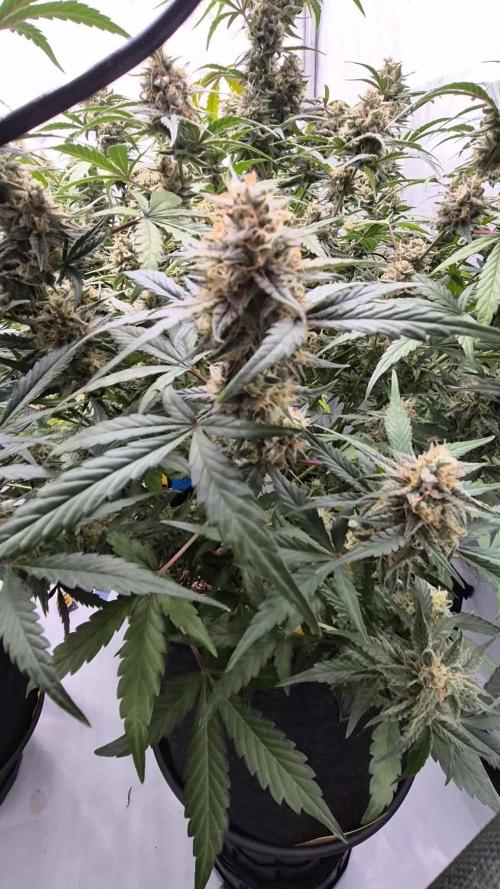
Umgezogen in das 120x120x200 Zelt.
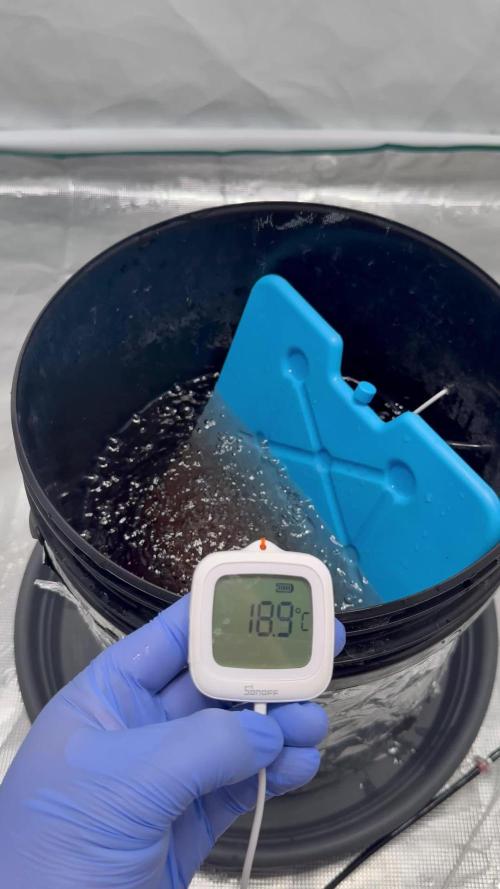
Der Pflanze geht es an sich wirklich gut und die Wurzeln scheinen sehr Vital zu wirken. Mit dem EC-Wert bin ich von 2,0 auf ca 1,75. runter gegangen, da ich eine sehr schnelle Transpiration habe (den hohen Außentemperaturen geschuldet). Das Wasser im Resservoir wir von mir täglich immer zwischen 18Grad-23Grad gehalten. (Kühlakku)
Ich bin echt gespannt wie die Pflanze an Masse noch gewinnen wird. Wie gesagt mein aller erster DWC-Run.
Also es ist jetzt schon ein großer Busch. Haha
Ps: Mit meiner neuen super Leistungsstarken Luftpumpe bin ich mehr als zufrieden. Ich habe sie extra überdimensioniert ausgewählt.
Peace

Likes
15
Share

@All_our_small_plants
Follow
Hier ein paar Daten zu der Sorte.
Eltern: Larry Bird Kush x God´s Gift
Genetik: ist eine Indica/sativa hibrid
Blütentyp: Autoflower
Blütezeit: 8-9 Wochen
THC: 22%
CBD: 0-1%
Innenhöhe: 85-120cm
Außenhöhe: 150cm
Ertrag Innenanbau: Bis zu 500g/m²
Ertrag Außenanbau: 150/Pflanze
Gattung: Feminisiert
Bewässerung: 100ml
pH-Wert: 5,8
EC-Wert: 0
Temperatur: 30ºC
Luftfeuchtigkeit 55%
Schädlingsbekämpfung:
PPFD: 200 µmol/m²/s
DLI: 12.96
Düngemittel:
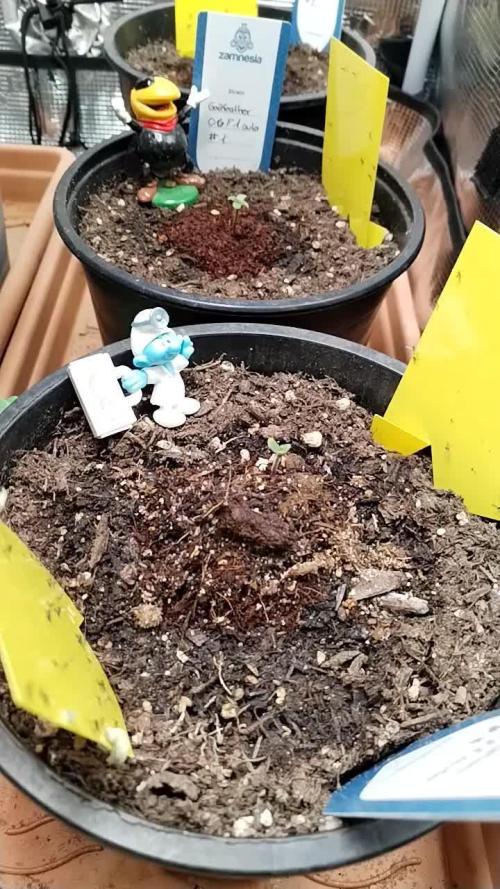
Besonderheiten: Wurden direkt in die erde gepflanzt in einer Kokos-Quelltabletten.
-Tag 1 Heute ist sie gekeimt und sie hatte Probleme mit der Samenschale, diese ist nicht von alleine abgefallen und mussten präzise entfernt werden 😱
-Tag 3 Heute sieht sie etwas besser aus, aber sie macht uns noch immer Sorgen. mal sehen ob sie es überlebt.
-Tag 5 sieht sehr gut aus, so wie es aussieht hat sie es überstanden 😘
-Tag 7 heute ist sie eine Woche alt. Sie sieht soweit in Ordnung
Likes
31
Share


@BigBadLion
Follow
Sorry for the huge delay, I wanted to update this earlier but COVID-19 happened everywhere and many things happened where I live. Nonetheless, I have all the photos and I'll be finishing this diary soon.
The smell of both of my babies was quite, quite strong. It even made me feel very dizzy every time I checked them.
During the week the leaves from Pistachio started to turn yellow while the ones from Matcha finally started to show signs of the excesses and burn, the mistakes I made earlier started to become more and more apparent so it was only a matter of time. Also, everytime a leaf started to die I removed it as soon as possible... but that might become more evident at the time lapse I uploaded!
This was the last week of flower for Pistachio, and I'll leave Matcha a couple more days with some direct light on her (I want her pistils to mature a bit more), but next week is finally the week when I cut them. Trichomes on both plants are ready! 😲
Thanks for reading!
Likes
54
Share


@MadeInGermany
Follow
Hey guys :-)
We come to the end of the diary and thus to the penultimate update before the Smoke Report.
As always, the lady was hung upside down to dry.
At temperatures of 18-21 degrees and 54-60 % humidity.
After 14 days they were neatly hand trimmed and placed in jars for remote harvesting.
Report:
I am very happy to write this report.
The lady's overall growth was perfect from start to finish.
And I don't just mean perfect, I've never seen such a beautiful variety with such beautiful flowers 😍.
She had no problems with training ( topping ) and was very easy to grow.
The yield was above average, which plays a minor role.
In the end, the best yield and the most beautiful appearance of the buds mean nothing if the taste doesn't match.
And here is exactly the miracle where all 3 features not only fit but are perfect.
Now we come to the third and most important feature the taste :-).
It not only smells incredibly delicious but tastes just as delicious ☺️😍.
In the smell you can clearly see the choco notes as if you were opening a pack of chocolate.
In the taste, this tone comes into its own a little more easily, but the notes of cheescake and fruit are all the stronger.
It really tastes extremely delicious and has a very strong terpene profile 💚.
I absolutely love it and will be making more phenotypes of this strain.
Clearly deserves 10 out of 10 stars and a huge compliment to the Amsterdam Genetics Team 🙏🏻💚.
The smoke report with the finished flower pictures will follow shortly.
Until then, I wish you lots of fun with the update and stay healthy 💚🙏🏻
👇🏼👇🏼👇🏼👇🏼👇🏼👇🏼👇🏼👇🏼👇🏼👇🏼👇🏼👇🏼
‘Powered by GreenHouse Feeding’
Copy the link for 10% off all Nutrients 👇🏼
http://shop.greenhousefeeding.com/
affiliate/madelngermany_passiongrower/
👇🏼👇🏼👇🏼👇🏼👇🏼👇🏼👇🏼👇🏼👇🏼👇🏼👇🏼👇🏼
You can buy this strain at :
https://www.amsterdamgenetics.com/product/choco-cheesecake/
Water 💧 💧💧
Osmosis water mixed with normal water (24 hours stale that the chlorine evaporates) to 0.2 EC. Add Cal / Mag to 0.4 Ec Ph with Organic Ph - to 5.8 - 6.4
MadeInGermany

Likes
31
Share


@Santica_Garden
Follow
So at the end of Week 2 and all the ladies are looking really healthy and growth is on under way, really excited about this grow, can't wait for the end product!

Likes
7
Share

@viejo
Follow
June 8th
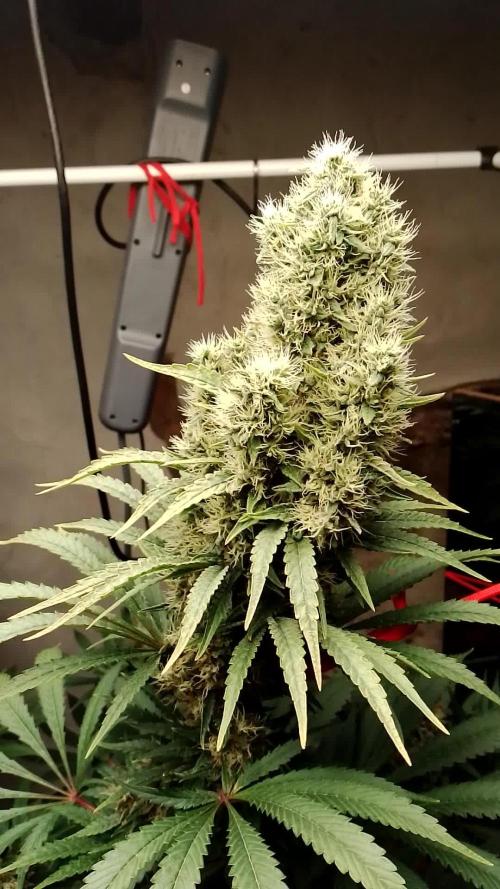
There's little doubt that the light is too close, and has been too close for too long. There's nothing I could do about it two weeks ago, and there's nothing I'll be able to do before harvest either. Lesson learned. The main cola doesn't seem stressed as in burned or bleached, but it's definitely looking a little odd. It's huge, and has no orange pistils, whereas the buds below are a mix of the older orange pistils and newly grown ones.
Weird. There's also a lot of foxtailing going on, which i'm guessing is a direct cause of being far too close to the light. Temps, pH, humidity, and watering are all dialed in, so that's my best guess.
Even though only the top of the plant is light-stressed, the foxtailing seems to spread throughout. Is this a thing?
I'm thinking next time I'll do the same, a single plant in the large pot, but I'll top her once or twice to lessen her height avoid this issue altogether. One huge cola is impressive, but the way things have shaken out has robbed some of the lower flowers of a more optimal distance to the light, so everything is out of balance. We're top heavy, folks :):)
All is well, fingers crossed as always.
Likes
3
Share


@BioGrowBayer
Follow
Der Stretch ist nun offiziell vorbei – die Mädels haben ihre endgültige Größe erreicht.
Alle Pflanzen stehen gesund und stabil da. Die Blätter zeigen ein sattes Grün, keine Anzeichen von Mangel oder Stress. Die Blütenbildung schreitet gut voran – erste Ansätze von Frost sind bereits sichtbar.
Heute war außerdem das letzte Mal Entlauben und Lollipoppen angesagt.
Jetzt können die Pflanzen ihre Energie voll und ganz auf die Buds konzentrieren.
Es gibt keine neuen Komplikationen, alles verläuft weiterhin planmäßig.
Ich bleibe bei meinem aktuellen Schema und beobachte weiterhin genau – ab jetzt liegt der Fokus voll auf der Blütenentwicklung.


Likes
97
Share

@JonnyTerpen
Follow
Blütetag 58
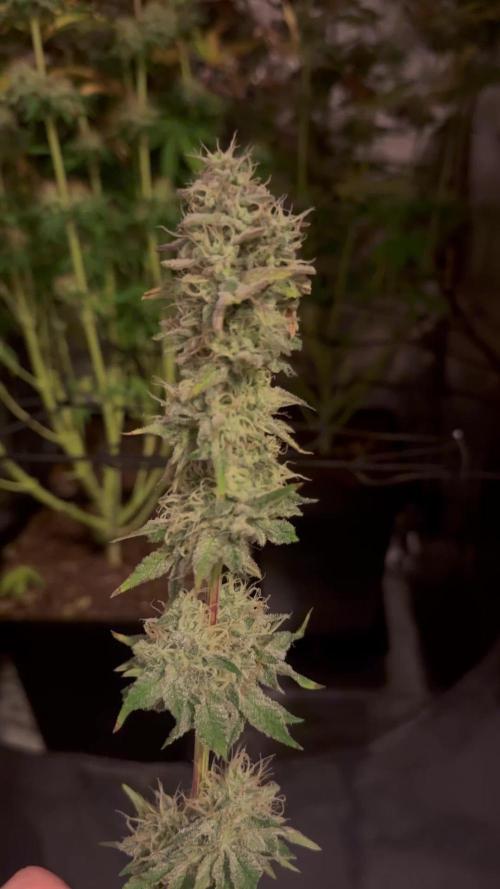
Hey Freunde, ich hab heute spontan geerntet (leider etwas zu früh), aber jetzt kann ich mich auf Weihnachten konzentrieren und die Trichome waren fast alle milchig, also halb so wild und die Lemon Cherry wär eh nicht mehr fertig geworden. 🤓
Für den ersten Run nach über 10 Jahren bin ich relativ zufrieden, vor allem in der kurzen Zeit! 🦊
Die Bilder sind Leider nicht wirklich gut geworden, war ohne Lampe leider zu dunkel, aber ich mach nochmal welche wenns getrocknet is!
Ich wünsch euch und euren lieben schöne Feiertage und frohe Weihnachten! 🎄💚


Likes
12
Share


@Siriuz
Follow
End of the first week, we feel victorious
Even tho we had our ups and down.
I had an accident while moving them, almost fell down with the plants, thank God they didn't suffer and I didn't fall but I almost had a heart attack!!! Phew!!!
Anyhow, we built a greenhouse for indoor growing since we noticed they were suffering from hot temperatures while being outdoor after 10.00am, weather gets real hot and they still too young to take that kind of sunlight.
Well around here temperatures can raise above 40 degrees and that's way too much.
Now we have them in a very comfortable zone, last picture can give you a heads up bout what's going on, we planned to upload more soon!
Beginning of the week #2 Starts now!
Guys feel free to comment
Any advise, any tips, it's more than welcome, we are new in the world of growing cannabis but we have a heart for mary Jane so help us have her comfortable at home so we can taste sweet Buds ^^!
Day 8
She's happy with her new greenhouse
INDOOR CFL while sun is way too hot
AC/on all day plus
Sunbathing early morning and late noon
Until sun is gone then they go to CFL
Until they have to go to sleep and rest
Until next day of course!
Day 9
Looking good tho, decided to feed her first meal, 0.4ml/1 gallon of water and added only 200ml per plant followed by 200/300ml.plain water with a little runoff so they can get all nutrients in good shape
Day 10
Went outside for some sunlight at the rooftop early morning
Day 11
Sunbathing her around 4.20 until sun is gone so she gets extra light
Day 12
Looking great I'm in love!
Day 13
Decided to change her pot for a bigger one and also readjusted her feeding schedule to once per week, since she only had her first meal at week #2 and only 171ppm, since she's doing so good and almost the start of the third week, today she got her second meal and its going to be like this until next Sunday.
Guys she's bout 3 weeks tomorrow after 6pm so I'm planing at the very end of this 3rd week increase her food to 5ml.
Today she got 1.5ml of Flora Nova grow / mix in 1 gallon of water thats 314ppm.
Followed by 200ml.of plain water and little runoff
Let's see what are the results she gives us this week, any comments, tips or advise is more than welcome!!
DAY 14
They are doing good - usual light schedule
Not much has changed
DAY 15 She's looking awesome guys
Thank you for taking the time to read my diary :)

Likes
52
Share


@Salokin
Follow
The High intensity was to strong (clearly my fault) in the beginning which stunted her overall stretch, she however still delivered super dense, terpene and trichome loaded buds.
Likes
13
Share


@Canadian
Follow
The plant seems to be doing great growing an incredible rate and speed it's in full flowering and it is showing a lot of sativa train on the Leafs. smell is incredibly powerful definitely looking forward to see this flower grow .
thank you for reading I will continue to update have a happy grow

Likes
6
Share


@AZMamaBear
Follow
In the beginning of the week she was standing a bit crooked. I will be mainlining soon and I want her central stem to be strong. So I tied her stem to a chop-stick to do a bit of low stress training prior to topping her.
Also hit the hydro store and picked up some Fishsh!t and Recharge. Added that, worm castings and some Down to Earth dry amendments to brew up a compost tea. Gave her a big sip on 3/4.


Likes
2
Share


@pzwags420
Follow
Plants are growing well. set up veg tent with new ac infinity tent and fan.
Likes
16
Share


@ZackTaylor
Follow
Changed the setup completely. Moved them into their new home, a 2x2 tent. For weeks 1-4 they will remain under a 150 Watt Mars Hydro LED.
Created an automatic dripper system. Goes off twice, once an hr after lights on and another 5 hrs later, each watering lasts 1 minute.

Likes
4
Share


@adam_pawloski87
Follow
@twenty20mendocino Ateam R&D Update ~ Let’s go day 91 an these girls are doing amazing! Looking nice an healthy we will let these girls recover for a few more days from the heavy defoliation and on Sunday we will be giving them the big flip , Let’s go flower!! Updates coming soon !
Sangria has been doing her thing , been drying for12 days now so Sunday we will be giving her the trim and jar her up, but updates coming soon yall!! Let’s have an amazing productive day as well as a great safe weekend, peace love an positive vibes to y’all Cheers an blaze on 😶🌫️💨💨💨💨

Likes
147
Share


@MrJones
Follow
What can I say this was my largest single yield harvest to date - The BlackBerry OG from Emerald Triangle Seeds are worth growing and just be prepared to have a load of bud to trim, there are other strains that are east to trim than this one, it was laced with sugar leaves and took a while to trim up,, it was in the dry tent for 15 days, honestly I was worried and should have trusted my instinct and left it in longer, this may have made it easier to clean.. If you do not buy this stran and give it a try you are missing out!

Processing
Likes
11
Share


@Andres
Follow
I do not know what happened ... she germinated the same day as GSC and GC ... and the seed came badly ... so it will die ... it only takes up space ....
Likes
10
Share

@Skunky420
Follow
➡️ Day+63, the Purple Punch Auto outdoors received 2.5 liters of PK Booster Compost Tea yesterday. The buds are starting to develop little by little. We can see some brown pistils, probably due to the recent heat.
Some days, one or two dull stinging bugs reappear, but they don't seem to be doing much damage at the moment.
The Dosidos Autos plants are continuing to mature, but the least mature phenotype started senescence quite early, either due to the heat or because it should perhaps have received a third tablet or some Orgatrex or Silicium Flash on the soil surface a few weeks ago. It will still be mature enough to be harvested with the other two in a week.
As a precaution, for the past week all the plants, including those outside, have been receiving water that has been oxygenated with an air pump and cooled to 20-22°C with ice packs (I was worried it might be the beginning of Pythium at one point with temperatures between 28 and 29°C in the tent, and the lower leaves drooping slightly).
Currently at 750-800 PPFD


