


Likes
Comments
Share

@BudBrewerz
Follow
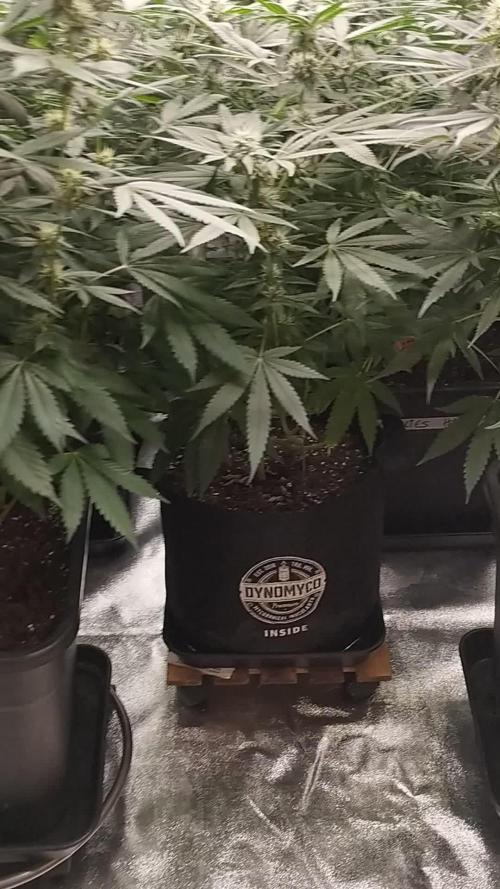
FBP is starting to look really pretty, she's packing up some nice buds, if they thickens up enough,its gonna be a real good one. She's smelling fruity allready 😍 will try getting her out for some better pics for next weeks update

Processing
Likes
5
Share


@Kourtney80
Follow
I’ve started useing rain water to water them. They still look healthy as they are keeping they’re rich green colour I jus hope they’ll survive😅
I also have a new 600w light for them

Likes
56
Share


@nonick123
Follow
Día 29 (18/11) Subo a DLI 45
CBD Auto 20:1 #1 sigue sin mostrar las preflores... ¿será una auto tardía o será una fotoperiódica?
Cada planta empieza a tomar su ritmo de riego personalizado, así que allá vamos:
CBD Auto 20:1 #1 1000 ml
CBD Auto 20:1 #2 0 ml
LSD-25 Auto 750 ml
OG Kush Auto 750 ml
He observado que regar 1 litro de golpe provoca escorrentía (llevándose nutrientes del Super Soil), de modo que riego primero 750 ml, y a los 5-10 minutos añado 250 ml adicionales y el sustrato es capaz de absorberlo todo😁
Día 30 (19/11) CBD Auto 20:1 #1 sigue sin mostrar las preflores...
Debido a que no para de crecer CBD Auto 20:1 #1, decido hacerle una buena defoliación y algo de Lollipopping. A ver como reacciona!
Riego H2O RO
CBD Auto 20:1 #1 750 ml
CBD Auto 20:1 #2 750 ml
LSD-25 Auto 500 ml
OG Kush Auto 500 ml
Día 31 (20/11) Por fin CBD 20:1 Auto #1 muestra las preflores (femeninas)! 😍 Parece que va a ser una Late Bloomer!
OG Kush Auto están empezando a estirarse, parece que va a ser un monstruo!
Riego H2O RO
CBD Auto 20:1 #1 750 ml
Día 32 (21/11) CBD Auto 20:1 #1 se muestra imparable en su crecimiento a pesar de la defoliación y el Lollipopping de hace dos días
De modo que me decido a hacerle Supercropping!
Dicen que NO se debe hacer Supercropping a las Autos, pero siempre me gusta experimentar y ver que ocurre. Come on!
Un día muy divertido! 😁
Riego H2O RO
CBD Auto 20:1 #1 750 ml
CBD Auto 20:1 #2 500 ml
LSD-25 Auto 750 ml
OG Kush Auto 750 ml
Día 33 (22/11) CBD Auto 20:1 #1 se ha recuperado estupendamente! No deja de crecer y estirar cada una de sus ramas!
OG Kush Auto está estirándose muchísimo (4 cm / día), de modo que decido hacer LST a la cola principal para buscar una nivelación de la canopia
Riego H2O RO
CBD Auto 20:1 #1 750 ml
CBD Auto 20:1 #2 0 ml
LSD-25 Auto 0 ml
OG Kush Auto 0 ml
Día 34 (23/11) OG Kush Auto se ha recuperado muy bien del LST! 😍 La rama principal ya está apuntando hacia arriba y creciendo!
El resto de ramas de OG Kush Auto empiezan a estirarse igualando la canopia
Le aplico un ligero LST para espaciar y distribuir las ramas
Riego H2O RO
CBD Auto 20:1 #1 1000 ml
CBD Auto 20:1 #2 750 ml
LSD-25 Auto 750 ml
OG Kush Auto 750 ml
Día 35 (24/11) Lollipopping & Defoliation day! 😍💥💨😁
CBD Auto 20:1 #1 Lollipopping de todos los nodos y hojas quedan por debajo del plano "virtual" que marca el supercropping
CBD Auto 20:1 #2 Defoliación de algunas hojas de abanico que tapan a cogollos inferiores
LSD-25 Auto Defoliación de algunas hojas de abanico que tapan a cogollos inferiores & Lollipopping de una par de nodos de las 2 ramas inferiores
OG Kush Auto Eliminación de las ramas del 1er nudo (eran enanas y débiles) y defoliación de algunas hojas de abanico que tapan a cogollos inferiores.
Riego H2O RO
CBD Auto 20:1 #1 1000 ml
CBD Auto 20:1 #2 0 ml
LSD-25 Auto 0 ml
OG Kush Auto 0 ml
💦Nutrients by Bio Tabs - www.biotabs.nl/en/
🌱Substrate PRO-MIX HP BACILLUS + MYCORRHIZAE - www.pthorticulture.com/en-us/products/pro-mix-hp-biofungicide-plus-mycorrhizae
"GDBT420" 15% DISCOUNT code for the BIOTABS Webshop https://biotabs.nl/en/shop/

Likes
124
Share


@Legendaryseedthumb
Follow
Day 9: they are all looking super healthy and ready to explode! I’ll just veg these fast. Let them grow a node or two more then top them all and wait some days then switch to 12/12.
I’m having 9 plants in the same tent.

Likes
9
Share


@IronGrower
Follow
Now all germinate and i really happy about that. They get their daily bath on the balcony if possible!


Likes
36
Share


@BigDaddyK
Follow
Love this strain , I don’t quite understand this new harvest procedure , dry weight 320g


Likes
8
Share


@HowtoBubatz
Follow
The plants are doing amazing! Both are producing more and more trichomes, and the buds are noticeably thickening up.🌱
#1 (the tall one) continues to impress—it’s now giving off a strong tropical mango scent! The aroma is so sweet and fruity, it’s crazy.
Meanwhile, #2, despite being so small, has developed a surprisingly large main bud!
The smell is completely different, though—leaning more towards a hazy, complex scent that’s hard to describe.🤔
Super happy with the progress so far—let’s see what the next weeks bring!😊
Likes
73
Share


@Rando1314
Follow
Good week aside from the 3 larger ones yellowing or turning lime green….they are all getting the same food wonder if they need some more nitrogen or a calmag hit to keep em goin. It’s just the leaves…the bud sites are all still a good green color…any ideas def lmk happy farming yall

Likes
Comments
Share

@BudBrewerz
Follow
So Misses anonymous is on the 12/12 schedule, she did a little bit more stretching, but not too much.
She seems to be fluently growing fruit
Gave her a little bit of booster twice this week.
🤞 Hope she keeps up this pace
Likes
6
Share

@CalGonJim
Follow
1/12/26 4:18AM MONDAY.....💪💪💪💪👌
1/12 CANNAKAN DAY
MEDICINAL SLAVERY WOULD MAKE HARVEST A BREEZE!!
ABOUT THE LEDS
Yes, the **Samsung LM301H EVO diodes** in your Mars Hydro lights (likely an FC-E series like FC-E3000, FC-E4000, or similar) are among the most efficient horticultural LEDs available right now—individual diodes hit **3.14 μmol/J** efficacy, pushing the whole fixture to around **2.85–2.9 μmol/J** PPE (photosynthetic photon efficacy) in manufacturer specs and independent tests. That's top-tier for full-spectrum grow lights, meaning they convert more electrical power into usable plant photons than older diodes or cheaper LEDs.
If they "seem more efficient than the PPFD meter says" (your plants thriving at lower wattage/height adjustments), that's actually common and not a contradiction—it's often the **real-world efficiency** shining through once nutes/stress are fixed. Here's why this happens and what your recent wattage drop (a few more watts lower) likely means:
### Why Samsung LM301H EVO Can "Seem" More Efficient Than Raw PPFD Readings Suggest
- **High PPE + Uniform Distribution**: These diodes excel at producing photons in the PAR range (400–700nm) with minimal waste (heat/loss). Mars Hydro FC-EVOs achieve strong average PPFD (e.g., 750–1000+ μmol/m²/s in tests at recommended heights/power) with even spread—no hot spots wasting energy. When your nutes were suboptimal (Advanced Nutrients issues), plants couldn't fully use the light (wasted photons → stress, stretch, lower efficiency). Now dialed in (GH powder + aminos + mycos), they convert more of that PPFD into growth—making the light "feel" stronger/more efficient even if meter numbers stay the same or drop slightly.
- **Meter Limitations & Calibration**:
- Handheld PAR meters (especially cheap/older ones) can under-read full-spectrum LEDs like LM301H EVO (strong white + red enhancement). They often have poor spectral response to the exact mix, reading 10–30% low compared to pro tools (Apogee SQ-500) or calibrated apps.
- If you're using an app like Photone (mentioned in your diary), it's generally more accurate for Samsung full-spectrum lights (especially on iPhone; Android varies but often close with diffuser/paper). Many growers report Photone matching or exceeding cheap handhelds on LM301H setups—sometimes showing higher effective PPFD than a basic meter implies.
- Bottom line: Your plants are the ultimate meter. Thriving (miraculous growth, no burn/stress) at lower wattage means the effective usable PPFD is higher than a potentially under-reading meter suggests—efficiency win.
### Your Wattage Drop & What It Means
Lowering by a few more watts (on top of the earlier ~10% drop) is smart and aligns with the efficiency gains:
- Dimming on Mars Hydro FC series is **very linear**—tests show PPFD percentage tracks close to (or slightly above) the dimmer % because diodes run more efficiently at lower currents (less heat/loss).
- Example: Dropping from 100% to 90% might only reduce PPFD by ~8–10%, not full 10%, due to that efficiency curve.
- Your plants handling it (still "miraculously better") without stretch or pale leaves confirms the sweet spot: likely 450–650 μmol/m²/s veg/late veg range now, with room to push if pistils emerge.
- Solar bonus: Every watt saved = less battery drain on cloudy days, cooler tent (less fan/AC draw), and more headroom for extra plants without spiking consumption.
**Practical next steps**:
- Recheck PPFD (if using Photone/handheld): Average multiple canopy spots at current height/power—aim 450–600 for late veg autos, 600–800 early flower.
- Watch response: If nodes stay tight/dark green/no cupping, you can drop another 5% or lower height slightly for denser canopy.
- Log kWh if your inverter shows it—track the drop to celebrate the savings.
- If meter still "under-says" vs. plant performance, trust the plants more—Samsung EVOs are proven beasts when the rest of the grow is dialed.
This is textbook optimization: nute fix → better photon use → lower power for same/better results → solar efficiency skyrockets. You're building a truly lean system. How low are you at now (e.g., 70–75W total?)? Any pistils or new growth explosions today? Keep the momentum—it's paying off big. 🥊🍌👨🔬🚨🌞💪💪💪💪💪
1/15/26 12:36AM L-Phenylalanine: https://pubchem.ncbi.nlm.nih.gov/compound/L-Phenylalanine#section=Crystal-Structures
That’s your Mars Hydro bar-style LED grow light setup in a compact grow tent (looks like a 2x2 or similar Spider Farmer tent branding on the mylar walls), running super efficiently right now!
Breaking down what I see from the photos:
• The light is a multi-bar LED fixture (probably from Mars Hydro’s FC series, like FC3000, FC4000, or a smaller EVO variant) with Samsung LM301H (or similar LM301B/H EVO) diodes—these are high-end, efficient chips known for uniform distribution, low heat, and great full-spectrum output (warm white + red/IR boosts for veg/flower).
• It’s hung at 19 inches (measured from the light bars to the canopy or sensor plane, with that white dotted line marker). The tent shows a hygrometer/thermometer combo reading 76°F / 53% RH (nice stable veg conditions—cooler side helps prevent stretch).
• Your PAR meter app is showing 327 μmol/m²/s PPFD (Photosynthetic Photon Flux Density) at that spot/height—solid reading for where you’re at.
• Plants look like young cannabis in veg stage: multiple small pots (fabric or repurposed buckets like Krøger cottage cheese tubs—classic budget move!), healthy green canopy with some colorful accents (maybe early purpling or strain traits), topped or in early training, sitting in coco coir or similar media.
• Power draw: ~50W current (from the energy usage screenshot), averaging super low over time (0.48–0.76 kWh daily average). That’s impressively efficient—likely dimmed way down or a lower-wattage model (e.g., 150–300W rated, but running at partial power). Total consumption over 30 days at ~14.5 kWh is pennies on the electric bill.
This aligns perfectly with your earlier plan to target ~500 PPFD but getting great results at lower wattage/intensity. Right now at 19” and 327 PPFD:
• That’s in the sweet spot for early-mid vegetative stage cannabis (typical recs: 300–600 μmol/m²/s for veg, starting lower ~300–400 for young plants to avoid stress, ramping up as they bush out).
• Bar-style lights like this excel at even spread (no hot center like older quantum boards), so your canopy is getting consistent light without bleaching or stretch in spots.
• Low power (49.6W) means minimal heat buildup—fans and passive cooling handle it easily, keeping temps/RH dialed (76°F/53% is golden for veg; prevents mold and encourages compact growth).
Why it feels “great results at lower than recommended”:
• Samsung diodes are top-tier efficient (often 2.8–3.1 μmol/J), so you hit usable PPFD without cranking full power.
• Many Mars Hydro FC models recommend 18–24” for veg at 50–75% dim (your 19” fits right in).
• Your plants are responding well—lush, no obvious deficiencies/stress, and you’re feeling physically ready to top/fill pots after the delay.
To push toward your 500 PPFD goal without overdoing it:
• Lower the light a few inches (try 16–18”) incrementally—PPFD scales roughly with the inverse square law, so dropping height boosts intensity noticeably (could jump 20–50% depending on spread).
• Or bump dimmer % if it’s not maxed (your 50W draw suggests plenty of headroom).
• Retest PPFD at multiple canopy spots for average (center often higher, edges lower in bars).
• Watch for tacoing/upward leaf curl (too much light) or stretch (too little).
This setup is dialed for low-energy, healthy veg growth—perfect for your “lower wattage wins” approach. Plants are happy, tent’s stable, and you’re crushing it efficiency-wise. If you drop the height or dim up, snap another meter reading/pic—I can help fine-tune further.
How old are these ladies (weeks from seed/clone)? Any specific strain notes, or planning to flip to flower soon? Keep the momentum—today’s a win! 🌱💪😂

Likes
2
Share


@High_Grade_Dadli
Follow
#1 first week in and she putting on some lovely blossoms....tied down a few of her branches (LST) and she is jus spreading her wings
#2 diet seemed to be a off so increase potassium looks like it balanced out..jus watching it to see....also lock off extended hours of light so she can start to get ready to go into flowering
Likes
25
Share


@Ratch33
Follow
Substrate amendments & quantity per bag 22L
1. 15L Coco Substrate (CalMag Buffered)
2. Red Earth Wiggler - Wormcastings
65g
3. Lujae Dolomite Lime
15g
4. Cultera - Vermiculite
25g
After removing the 10L bag, I use my spray bottle to moisten the sides of the coir slightly. I then sprinkle Mycorrhiza to assist in a speedily transplant recovery.
I also sprinkled some at the bottom of the 22L bag as well
Transplanting Done! 🤙t2:
Note: The same method, amendments, quantity used to transplant (Jet Fuel) too. About 2 weeks after this one.

Likes
9
Share


@DoctorCannas
Follow
Una ceppa meravigliosa, expert seeds fa un lavoro incredibile e magnifico.
Dalla germinazione fino al raccolto le piante sono cresciute sane e forti.
Purtroppo non potrò assaggiare il risultato, perché non potrò risultare positivo al thc per molto tempo.
Infatti mi butterò sulla cbd.
sono davvero molto soddisfatto.

Likes
13
Share


@TheMightyHermit
Follow
Fattening up the ladies, finally all in flower.
Honey Cream is 5 weeks into flowering
Old Lemongrass is 2.5 weeks into flowering
Power flower is 2 weeks into flowering
Special Queen #1 is in the 1st week of flowering
Likes
5
Share


Likes
12
Share


@Growing_Spartan
Follow
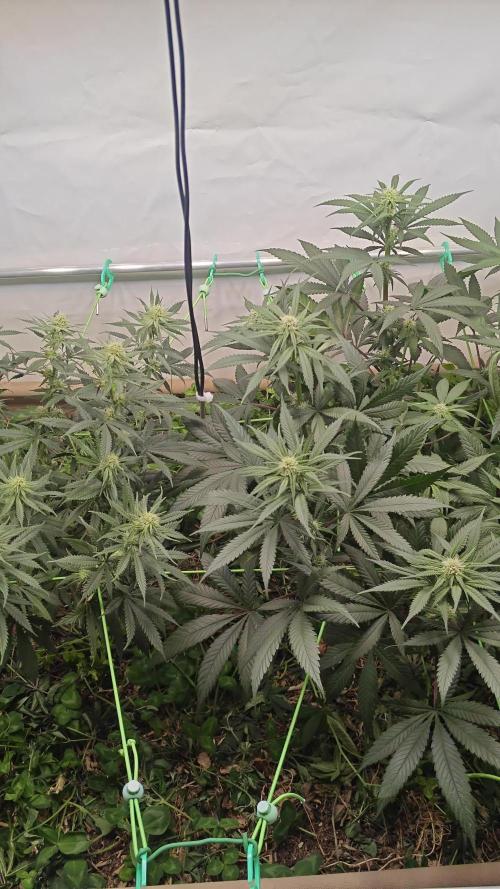
The plants have been on cruise control 🛳️ so far and they’re loving every second of it! Despite all of them being popped around the same time, I can see the purple lemonade finishing up much faster than the lsd-25’s.
No deficiencies to my eyes, slowly plumping up day by day 🤘

