


Likes
Comments
Share

@squalino
Follow
🌿 Journal de Culture : Mac 1 – "Spirit" (Plante #2) – LE HARVEST (Récolte)
#Dryrocket
Date du jour : 11/07/2026
Âge de la plante : J+91 (Semaine 13 - Jour de récolte)
Taille réelle : 170 cm (mesurée du sol)
Évolution :
Le cut final d'un monstre sacré extraterrestre
Nous y sommes ! Après 13 semaines de suivi côte à côte, le jour de gloire est arrivé pour Spirit. Aujourd'hui, samedi 11 juillet, les ciseaux ont chauffé pour le grand Harvest. Le résultat est tout simplement irréel, c'est un truc de malade !
? Le Grand Cut & L'Épreuve du Manucuring
Un travail de titan :
Commencé à 7h du matin, le manucuring s'est terminé à 2h du matin, avec seulement 4 petites pauses de 1h.
C'était extrêmement long et pénible car les têtes sont tellement denses que les petites feuilles étaient logées tout au fond. Mais le résultat en valait chaque seconde.
Une taille impressionnante :
Une fois sortie de la tente pour la mesurer en réel, Spirit affichait pas moins de 170 cm de haut depuis le sol et 140 cm depuis le pot . Une stature monumentale, presque ma taille, ce qui est totalement exceptionnel pour une variété autofloraison.
Solidité confirmée :
Contrairement à sa sœur, Spirit est restée fièrement debout jusqu'au bout grâce à la robustesse incroyable de ses branches.
🛸 Des Fleurs Extraterrestres & Pesée Humide Monstrueuse
Le verdict de la balance :
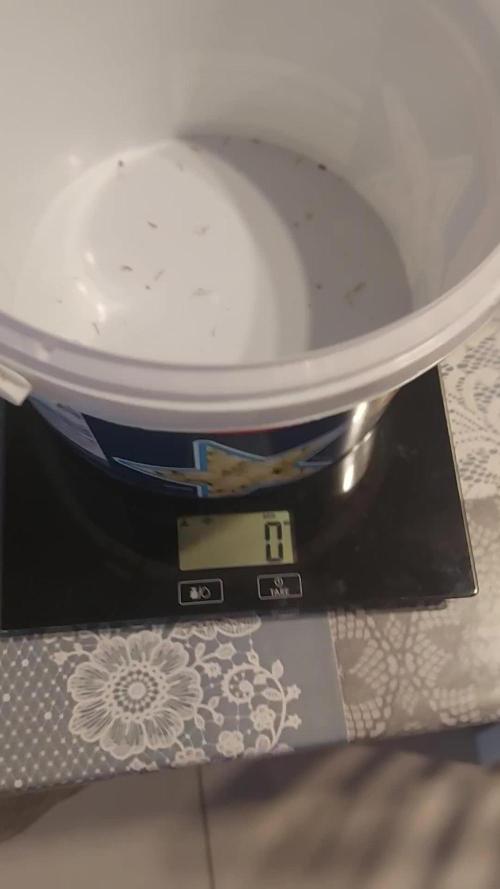
C'est ma plus grosse récolte jusqu'à présent... Spirit affiche un score hallucinant de 694 grammes humides !
Les plus grosses têtes ont été posées en premier sur la balance dans la vidéo, et le poids est impressionnant.
Aspect des buds :
Je n'ai pas de mots pour décrire ces têtes. Elles sont énormes, denses comme jamais et complètement saturées de trichomes. En raison de la chaleur et de la proximité de la lumière en fin de run, la cime ne fait plus de simples foxtails mais de véritables tentacules de résine, accentuant son look d'alien.
plusieurs têtes mesuraient plus de 50 cm de long .
Préservation génétique :
Lors de la manucure, j'ai trouvé 3 graines précieuses au cœur des branches.
Elles sont gardées très précieusement pour voir si je pourrai retrouver exactement cette même génétique dantesque lors d'une prochaine session.
🌬️ Paramètres & Stratégie de Séchage
La récolte de Spirit est officiellement divisée en deux secteurs pour s'adapter à mon environnement :
Secteur DryRocket (Le Test Final) :
Les plus grosses têtes, massives et dures au toucher, sont placées dans l'appareil DryRocket avec mon dernier sachet disponible (prévu pour un demi-kilo de weed). C'est le test idéal pour sécuriser le cœur de ces buds compacts.
Ancien Secteur :
Toutes les autres têtes, plus petites et secondaires, sont réparties de manière classique.
🙏 Remerciements
Un immense merci réitéré à @mia_biotabs et à Mrs_Larimar pour ce programme de nutrition Biotabs et les conseils qui ont permis d'obtenir ces têtes géantes, dures et résineuses. Et bien sûr, un grand merci à
@Dryrocket :
l'appareil est en place pour le test final sur les plus gros morceaux de cet alien ! Merci à tous d'avoir suivi les aventures de Spirit pendant ces 1🌿 Journal de Culture : Mac 1 – "Spirit" (Plante #2) – LE HARVEST (Récolte)
#Dryrocket
Date du jour : 11/07/2026
Âge de la plante : J+91 (Semaine 13 - Jour de récolte)
Taille réelle : 170 cm (mesurée du sol)
Évolution : Le cut final d'un monstre sacré extraterrestre
Nous y sommes ! Après 11 semaines de suivi côte à côte, le jour de gloire est arrivé pour Spirit. Aujourd'hui, samedi 11 juillet, les ciseaux ont chauffé pour le grand Harvest. Le résultat est tout simplement irréel, c'est un truc de malade !
? Le Grand Cut & L'Épreuve du Manucuring
Un travail de titan : Commencé à 7h du matin, le manucuring s'est terminé à 2h du matin, avec seulement 4 petites pauses de 1h. C'était extrêmement long et pénible car les têtes sont tellement denses que les petites feuilles étaient logées tout au fond. Mais le résultat en valait chaque seconde.
Une taille impressionnante : Une fois sortie de la tente pour la mesurer en réel, Spirit affichait pas moins de 170 cm de haut depuis le sol. Une stature monumentale, presque ma taille, ce qui est totalement exceptionnel pour une variété autofloraison.
Solidité confirmée : Contrairement à sa sœur, Spirit est restée fièrement debout jusqu'au bout grâce à la robustesse incroyable de ses branches.
🛸 Des Fleurs Extraterrestres & Pesée Humide Monstrueuse
Le verdict de la balance : C'est ma plus grosse récolte jusqu'à présent... Spirit affiche un score hallucinant de 694 grammes humides ! Les plus grosses têtes ont été posées en premier sur la balance dans la vidéo, et le poids est impressionnant.
Aspect des buds : Je n'ai pas de mots pour décrire ces têtes. Elles sont énormes, denses comme jamais et complètement saturées de trichomes. En raison de la chaleur et de la proximité de la lumière en fin de run, la cime ne fait plus de simples foxtails mais de véritables tentacules de résine, accentuant son look d'alien.
Préservation génétique : Lors de la manucure, j'ai trouvé 3 graines précieuses au cœur des branches. Elles sont gardées très précieusement pour voir si je pourrai retrouver exactement cette même génétique dantesque lors d'une prochaine session.
🌬️ Paramètres & Stratégie de Séchage
La récolte de Spirit est officiellement divisée en deux secteurs pour s'adapter à mon environnement :
Secteur DryRocket (Le Test Final) : Les plus grosses têtes, massives et dures au toucher, sont placées dans l'appareil DryRocket avec mon dernier sachet disponible (prévu pour un demi-kilo de weed). C'est le test idéal pour sécuriser le cœur de ces buds compacts.
Ancien Secteur : Toutes les autres têtes, plus petites et secondaires, sont réparties de manière classique.
🙏 Remerciements
Un immense merci réitéré à @mia_biotabs et à Mrs_Larimar pour ce programme de nutrition Biotabs et les conseils qui ont permis d'obtenir ces têtes géantes, dures et résineuses. Et bien sûr, un grand merci à @Dryrocket : l'appareil est en place pour le test final sur les plus gros morceaux de cet alien !
Merci à biotabs pour leurs engrais incroyable
Merci à growers choice pour leurs belles génétique
Merci à tous d'avoir suivi les aventures de Spirit pendant ces 13 semaines !
on se voit pour la Pesée final et le hash prochainement. ❤️❤️❤️❤️

Likes
22
Share


@HillCountryHempCo
Follow
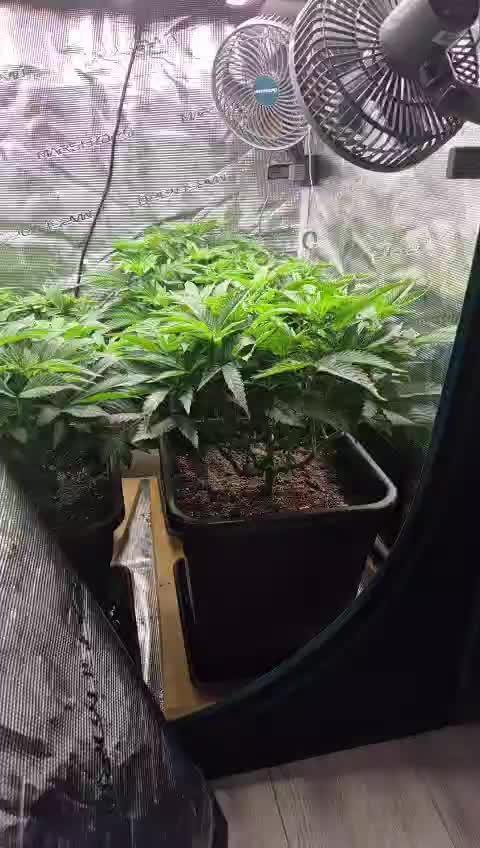
I started feeding liquid nutrients this week. Although I’m using Nature’s Living Soil Super Soil Autoflower Concentrate mixed with Fox Farm Ocean Forest—so technically I could water only until harvest—I decided to begin liquid feeding in Week 3 at half the recommended dose.
I also have a Tray2Grow Autopot system for automatic bottom feeding, but I haven’t activated it yet. When using liquid nutrients via top feeding, I’d need to turn the Autopot system off and wait until the plants absorb all the water in the tray before feeding from the top. Afterward, I’d have to manually turn the system back on. That seems like a hassle compared to just hand-watering and feeding.
I could technically add the liquid nutrients to the Autopot reservoir, but that somewhat defeats the purpose of the system. The tank holds 25 gallons—enough to last a few weeks—but if I want to change or rotate nutrients weekly, I’d have to dump the remaining water and remix the solution each time. If I wanted to feed nutrients every other watering, I’d be changing out the tank every 3 days. Plus, liquid nutrients can cause buildup, so I’d need to clean the reservoir and all the tubing regularly.
For now, I’ll stick with hand-watering and top feeding. I’ll only switch to the Autopot system if I need to leave town.



Likes
16
Share


@OrganicBuds030
Follow
Ich kann mich über rein gar nichts beschweren. Bis jetzt würde ich dem Durchgang eine 9,5/10 geben und dem Strain sogar eine 10/10. Diesen intensiven beerigen, süßen Candy Geruch habe ich noch nie in meinem Leben gerochen. Ich bin überwältigt. Nichtmal in Californien habe ich so etwas gerochen.

Likes
8
Share


@MrMayhem1134
Follow
Stripped and lollipopped most of the plants this week and will finish the rest tomorrow. Ninja Smash and Strawberry Starburst #3 seem to have the biggest caps and may yield the most, but we will see. The Gaia green seems to be working great and I will give them their final top dress on the next watering in a couple days. Lights were turned up to 100% at the begging of this week and readjusted them to 18 inches above the canopy so I don't get any bleaching or burning as they stack and bulk. That's it for now.



Likes
5
Share


@Ninjabuds
Follow
My OG Kush is a contender for the biggest plant in the tent, tied for second place! It's got an amazing structure with perfectly spaced nodes and it's stacking up beautifully. This plant is a beast, and I'm expecting a huge yield of those classic OG Kush buds. It's got that unmistakable OG aroma – earthy and pungent with hints of citrus and spice. This one's gonna be a knockout
This past week has been a whirlwind of work, leaving little time for anything else. My phone's camera roll is sadly neglected, with only a few snapshots to show for it. But finally, I'm finding a moment to catch up on my grow diaries. It's been exciting to see the progress, even if it's just through photos. I'm looking forward to documenting the next stage!


Likes
6
Share


@AlbasDiary
Follow
Buenos días queridos compañeros jardineros!!!
Ya estamos de vuelta otra semana más con nuestras preciosas Llimonet, no os imaginais lo agradecida que estoy por tener estas semillas en estos tiempos que estamos viviendo de encierro y cuarentena.
Como veis en unos días se han puesto realmente hermosas, no han dado ningun problema ni susto, la realidad es que lo único que las diferencia es que tienen distinto tamaño, por todo lo demás no están pidiendo ni demasiado abono, ni agua ni nada. Si que noto que sufren si la temperatura sube de los 28 grados, pero no es nada que no pueda controlar, así que todo bien.
No hay rastro de plagas, revisad siempre muy bien las hojas por la cara inferior, ahí podremos encontrar pequeños maleantes de los que nos tendremos que deshacer.
En el siguiente y último transplante, haremos pruebas entre macetas de tela y de plástico, para comprobar en cual crecen mejor.
Nos vemos para la semana con más, pero no mejor, ajajaja
MUY BUENOS HUMOS COMPAÑEROS😘

Likes
13
Share


@ElegantBuds
Follow
Hello growers.
This week was a normal flowering week.
Stopped with giving pk13/14 and started normal flowering nutes again.
Hopefully the buds fatten a little bit more.
We will see.
See you next week.
ElegantBuds
Likes
8
Share


@Youngun
Follow
we are at the business end now flowers all over the scrog, reacting really well to the defoliation and tying down, really should have taken cuts from the 1 on the right. Hopefully I’ll get a Keeper when I pop the next set of beans


Likes
67
Share


@Roberts
Follow
Been flowering very well. I backed off nutrition a little. Minor nute burn on tips. Beside that it took to lst training great. Flowers are looking dense and potent. Will see in a few more week. Thanks again for likes and follows. Support means a lot. Happy growing
Likes
12
Share

@Roberts
Follow
Ze Chem Bang is vegging right along. I hope this update works. She had a solution change a few days ago. I previously have removed the lower leaves as they were struggling with signs from my inability to care for them proper after hand surgery. I am back now and she is back on track. Thank you Terpyz Mutant Genetics, and Medic Grow. 🤜🏻🤛🏻🌱🌱🌱
Thank you grow diaries community for the 👇likes👇, follows, comments, and subscriptions on my YouTube channel👇.
❄️🌱🍻 Happy Growing 🌱🌱🌱
https://youtube.com/channel/UCAhN7yRzWLpcaRHhMIQ7X4g.

Processing
Likes
20
Share


@eldruida_lamota
Follow
Buenas noches familia, aquí ando fumando un plajo, actualizando esta farm cheese que no veáis cómo empieza a oler, bastante sana, acepta muy bien la alimentación , un fallo podría ser que me pidieron agua y hasta el día siguiente nanai, pero nada serio.
Ph controlado en 6.2 la temperatura no sube nunca de 26 grados con el led de mars hydro y la humedad se mantiene por debajo de 50%. Todo va muy bien.
Poco más que decir estoy deseando que pasen las semanas para cosechar, buenos humos fumetillas.


Likes
2
Share


@Ultraviolet_
Follow
The nighttime VPD does not need to mirror the daytime VPD. Daytime VPD dictates the pull of water and nutrients, while nighttime VPD acts mostly as a prevention tool. A high nighttime VPD increases the risk of the leaf temperature dropping below the dew point, which can trigger bud rot and powdery mildew.
Switched down to 12's hours of light mid-week, changed spectrum, increased light intensity from 840umol up to 1150umol at current height. Overnight from 800ppm to 1500ppm, morning compensation point (microorganisms) 46-47 days from germination, she fills the canopy herself, once the apical dominance is broken.
Measuring a plant's overnight CO2 emissions provides an accurate estimate of its dark respiration rate. Because photosynthesis stops in the dark, you are isolating the respiration process, which allows you to gauge how much stored energy (glucose) the plant has consumed and estimate the scale of oxidative phosphorylation. Oxidative phosphorylation is the final stage of respiration that generates the bulk of the plant's ATP (90%) and relies directly on the oxidation of these respiratory substrates NADH and FADH2 along with the consumption of oxygen.
From a thermodynamic standpoint. Growth is an energy-capturing process, and the rate of that growth is bound by the available free energy (Gibbs free energy) and the First Law of Thermodynamics. While the ceiling or upper limit is dictated by free energy (such as photosynthetically active radiation), the actual amount of growth relies on how the plant balances that energy with other limiting factors. These are often described as the nine cardinal parameters of plant growth. 4 Above, 5 Below. If any one of the 9 becomes bottlenecked, the entire plant's cycle is restricted.
Operating an 80F+ environment at night to force rapid carbon conversion comes with major drawbacks, as the biochemical processes work differently than the deductive logic suggests. While raising nighttime temperatures to 80F indeed accelerates respiration and speeds up the conversion of captured sugars (sink activity), doing so also radically increases the plant's overall metabolic baseline. If the plant's metabolic rate is artificially forced too high via heat, it can actually "burn" through more energy than it managed to assimilate during the day. This leads to carbohydrate starvation, stretching, and a net loss in final biomass yield.
400 ppm is near the standard ambient level; the plant's stomatal intake is the primary limiting factor, not the dark-reaction enzymes. To push 45 DLI without burning out the plant. Trying to force the conversion of a massive daylight DLI in a compressed time frame (12 hours) becomes highly inefficient because the Rubisco enzyme simply hits a saturation limit. To successfully convert a 45 DLI into dense, productive mass, the ambient CO2 generally needs to be elevated to the 1000 to 1200ppm range. This creates a steeper concentration gradient, driving the stomata to inhale CO2 fast enough to match the high photon energy.
It's not all about the amount of light, but the ratio too, as this will dictate growth through the ratio of phytohormones. In order for correct bud development, there needs to be a correct ratio of RGB. Different wavelengths have different penetration depths. When one grows using top-down lighting, only the entire canopy is limited to 2-3 layers of leaf, meaning there will only be correct bud development in those layers, regardless of getting 45DLI.
The biomass potential of a plant is linked to root mass. Generally, when a plant reaches its maximum biomass, you can help to chop off parts of the plant that are in less than efficient areas of the plant (low light) so that it can create new biomass growing towards the light.
Strength is the maximum potential, and power is the rate of conversion. You can have the biggest veg period of 18 weeks, and it means nothing, as soon as you start flowering, the chronological clock starts ticking, the only metric that matters to bud size is how much energy you convert each cycle, not by how long it took you to build the framework, it helps a lot nonetheless.
Not saying anyone should not defoliate for a reason, only that you should have one, and at the right time. Don't defoliate 30+% on autoflowers or 4 weeks into the flower period and expect an increase in yields; it doesn't work like that. There is room for dictating growth patterns and clearing out overcrowded nodes, but it needs to be done in veg because once that timer starts and buds start growing, it's all just energy conversion. One barely needs to defoliate at all in a 4x4 because with side lighting, turning a 2d canopy penetration into a 3d, even lower buds are 90% the quality and density of top ones. The rate of photosynthesis and the ultimate density of lower buds aren't just about the sheer number of photons PPFD. The specific ratio of R:G:B dictates canopy penetration and drives different photochemical reactions. The Electron Transport Rate (ETR) measures the speed at which electrons are driven through Photosystem II (PSII) during photosynthesis. The ratio of Red, Green, and Blue (RGB) light heavily dictates this rate.
Plant leaves continuously perform cellular respiration regardless of the time of day, using energy and oxygen to fuel essential metabolic maintenance. If you over-defoliate, the remaining canopy may be unable to produce enough net sugars during the day to offset the constant respiratory demands of the plant. Must balance fixation with assimilation; there's no point in capturing 45 DLI if you only convert 20% every cycle due to an extreme lack of respiratory capacity to perform cellular oxidative phosphorylation.
You can have a 4x4 canopy or a 4x4x4 canopy, yes, we know that side lights are not as effective at absorption from the sides or underneath, but it's not about DLI, it's never been just about efficiency, it's about the penetration ratios of RGB that drive ETR of/photosynthesis and trigger correct bud development. The size of each bud is its own ability to perform the ETR required for its own personal growth, and bud development is dictated by the ratio of RGB. It drives localised growth and acts as a regulatory switch for that development. Turgor pressure is another very important factor in understanding if you want big buds, for it is the "steam engine" that dictates the rate of bud expansion. Simply, a lot harder to achieve metabolically at ambient 75F than at say 86F
Because buds have less chlorophyll, they do not suffer from the same photosynthetic shutdown that over-exposed, light-stressed leaves do. They can soak up direct light energy to swell in density and size. Their tolerance to intense light is heavily limited by the temperature and humidity, but if you can control those temps and keep the rot away, buds have a much, much higher tolerance to high light than leaves. Beneficial to hammer with high light before trichomes appear. Balancing this with trichome maturity is key for rich terpene and flavonoid profiles, want it just right, somewhere in the middle, not too much, not too little. Find cannabis plants can defoliate themselves come harvest, given the right signals. Every last ounce of potential is recycled into buds by the plant itself (senseceance), given you can keep the level of conversion high enough to prompt a need to do so.
Get the canopy @ optimal PPFD range, 45-55DLI, then let the plant "stretch" the stems into a "PPFD range much higher, one that leaves don't like to grow in, but buds thrive in. What is optimal for a bud is different from what is optimal for a leaf photosynthetically. Genes provide the blueprint, but the environment dictates how, when, and if those genes are expressed. Must first signal the condition to increase the expression you want to exist through stress and response, cause and effect. A well-buffered CEC medium prevents extreme nutrient swings, allowing plants to maximise their dedicated genetic expression.
A plant is either genetically expressing "growing" or "recycling" genes based on its nutrient starvation level in the medium. Constantly toggling between "growing" and "recycling" hormonal states creates a futile cycle that wastes valuable metabolic energy. Plants rely on sophisticated biochemical switches to manage this trade-off and prevent rapid fluctuations that disrupt that balance.
This energy inefficiency is a recognised biological challenge. Plants avoid this costly "flip-flopping" by using hierarchical master regulators (like the TOR and SnRK1 protein kinases) that act as strict molecular switches. These networks enforce cellular commitment to either growth or survival, preventing mixed signals.
This is something that was missing from previous grows.
Under nutrient-rich conditions, TOR promotes protein synthesis, cell division, and structural expansion.
Under starvation, TOR is inhibited, and SnRK1 is activated. This triggers autophagy—where the plant breaks down old macromolecules and organelles to scavenge and reallocate essential nutrients to critical sinks.
"What's the point in flushing?"
The core idea behind a PK booster is to deliver a massive, concentrated surge of P&K exactly when buds are swelling in conjunction with a N starvation. Because these are short, targeted windows, the nutrients must be highly bioavailable so the plant can process them immediately. As soon as you go "organic," that's out the window. Much slower release, uncontrolled, very difficult to "spike". to cause the ratio that will initiate a response.
High-volume PK spikes rely strictly on the immediate uptake capabilities of mineral fertilisers. Making it far less efficient in organic/living soil setups.
When you use organic nutrients, it changes the dynamic with which the plant delivers and trades its nutrients; organic is always releasing new nutrients into the immediate EC. This prevents a lot of autophagic responses from occurring due to a constant stream of new nutrients into the immediate medium's EC. This can prevent nutrient starvation from being signalled.
PK boost is essentially just N starvation, triggering an autophagic response. Concentrated ratio of P&K while tapering off the Nitrogen base. To the plant, the sudden drop in Nitrogen registers as a severe environmental stressor—essentially, the beginning of starvation protocols. She aggressively strips nutrients and proteins from older leaves and vegetative structures and shuttles them directly to the developing flowers and fruit. Ta daaa. Call it a PK booster and sell it. Nothing to do with the P and K itself, it's the ratio immediately available in the medium triggering a nutrient recycling mechanism within the plant itself; all the "booster" sells is the trigger to the signal.
PK BOOST with 50% ammoniacal N signals floral maturation.
PK BOOST with N starvation signals nutrient recycling/sinking.
Very difficult to initiate a response when organic nutes are doing their thing. It takes 4x5x more water significantly to leach or wash ammonia out than it does nitrates. This can prevent triggering N starvation from having its normal impact.
Manipulating the C:N ratio in the medium. One autophagic response has multiple potential signal triggers. Nutrient starvation is not an option.
Likes
3
Share


@High_Grade_Dadli
Follow
Lil youngin on their way home should be home for 4/20 along with 2 of their mother...as for the breeding project pollination is a success also been harvesting pollen(feminized) for later use
Mothers are growing well jus to continue cut and set aiming for about 1000 already cut 3 and got 100...happy growing
Likes
12
Share


@HighKing
Follow
All in all a good run but because of my fault with the wrong lightcolour. Wont Happen again. On to the next one. (After I smoked All these)


