




Likes
7
Share

@KannaGrowing
Follow
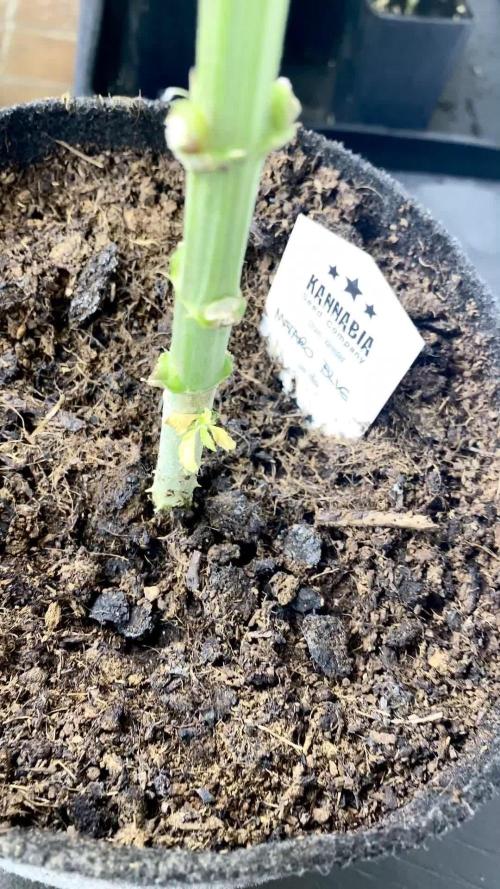
Estamos en la última etapa del cultivo.
Eliminamos la dieta de fertilizantes y regamos con Canna Flush, para lavar las raíces.
Bajamos la potencia lumínica al 50%.

Likes
4
Share


@Sato_Growing
Follow
Going to add week comment soon cause i have a lot of work to dooo ! :P
You can understand i suppose happy new year with a lot of trimming job to do <3


Likes
88
Share


@ILoVeThiSpLaNt
Follow
Giorno 42. Peccato per una watermelon zkittlez che non sta bene. Lavo terreno e ricomincio da metà dose levando le foglie malate


Likes
422
Share


@Crashoverite
Follow
Hi all🧑🌾
Welcome to my final 🍌💜👊 week update.
First of all. I would like to thank you all for such an amazing support on this bananas journey. I am amazed of the amount of love received from community here. Thank you Grow Diaries and Fastbuds for opportuniy to share and grow this amazing genetics. Love you all❤️💜💚
Was looking for strong indica dominant strain and after reading and hearing so much about this one. Just couldn't resist to not give a go. Was a bit worried before planting seeds that my final yield outcome may not be satisactionary as only have 0.26msq and Fastbuds advertising this strain as 450-550g msq but thankfuly my result was way above this scale.
My 2 beautiful ladies
Athena - right corner lady. She was slighlthly more dominant over entire grow cycle. She got more space on scrog earlier and that's why she developed the most.
Xena - left corner lady, I belive that she could outgrew her sister if she just have more space and another week of time. Did not expect her to turn so well on the end.
Both girls were put in darkness for 48h before chop. Wet trimmed and hang for a week. Daily jars burbing for 10 days and every 2-4 days now.
Weights
Wet trimmed
Athena 870g
Xena 632g
Total 1502g
Dry trimmed
Athena 172g
Xena 147g
Total dry 319g
Bubble hash 6g (37g of trims)
I am very happy with this result.
In my opinion Banana Purple Punch Auto its a masterpiece.
Thank you so much for all the support, likes, follows and comments 🙏❤️💜❤️
Peace and love brother and sisters ✌️💚🧑🌾
Smoke review coming in shortly
Links
https://2fast4buds.com/seeds/banana-purple-punch-auto
https://plagron.com
https://www.biobizz.com/
https://fishheadfarms.com/
Likes
11
Share

@Ribemarti
Follow
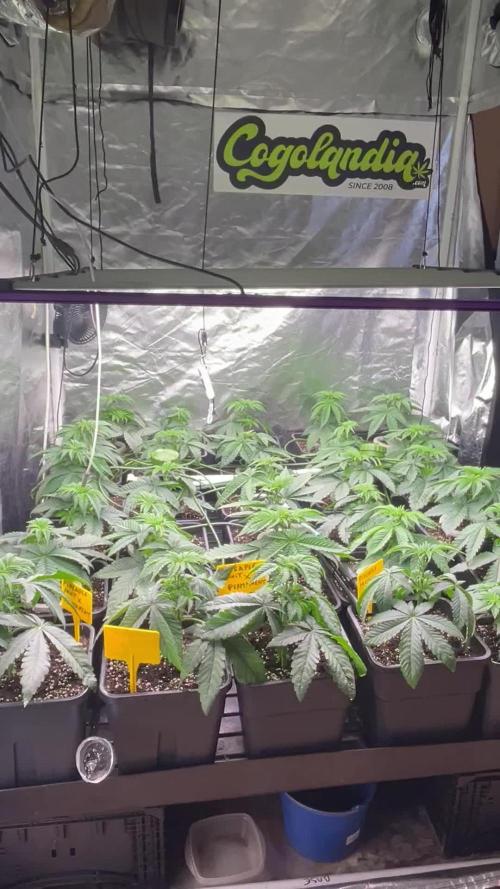
Las plantas estan podadas ya, esta vez le he quitado a todas los 2 nudos bajeros de una vez, asi aprovechamos para hacer esquejes para exterior, por aqui ya hace 25/30 grados afuera
Esta semana, sera la ultima de crecimiento ya en unos dias pasaremos a floración y a esperar a que empiezen a tirar hacia arriba, las raizes son una barbaridad mucho vigor,
Estoy regando cada planta con 1L y el PH 6,3 EC 1140 toda la tabla que marca el fabricante de biobiz y complemento con el Gold Complet de la marca Gold Green son una pasada
Las Pineaple fruit estan las 4 iguales se notan las semillas frescas de www.cogolandia.com

Likes
9
Share


@Flixus
Follow
Willkommen zur BW1, die Pflanzen befinden sich mittlerweile im Stretch und haben das SCROG Netz fast erreicht. Ab nächster Woche werde ich dann beginnen müssen, die Triebe nach und nach ein zu Flechten. Leider hat #2 nicht die selbe Höhe, aber da kann ich mit leben. Die ältere Pflanze zeigt leichte Anzeichen von Überdüngung, auch das ist nicht so tragisch aber wertvoll für die nächsten Grows. Mittlerweile hat GHF auf ihrer Seite die Empfehlung auf 3G/L Substrat angepasst, ich würde jedem empfehlen erst einen Teil und ab Blütenbildung den Rest der gesamten Düngermenge zu geben. Mittlerweile lässt sich auch ein leichter Geruch im Zelt vernehmen.
Likes
10
Share


@Ieiogrow94
Follow
Eccoci di nuovo qui!!!
Super eccitato per questa nuova collab con Anesia Seeds, team davvero al top, che mi ha dato l’opportunità di testare questa nuova genetica e di condividere i progressi con tutti voi!!!
Come sempre partiamo nei bicchieri per poi travasare.. Questa volta verrà svolto tutto sotto la Lumatek Zeus 465 ProC, mi aspetto molto da questo ciclo!!
Che bellezza finalmente il raccolto ed il test e...
UNA GENETICA SPAZIALE DAL SAPORE UNICO E ODORE TROPICALE INTENSO, un vero piacere per i sensi la seconda miglior genetica del ciclo SUPER CONSIGLIATA A TUTTI..
Grazie a tutti per il supporto ❤️🍀🔥


Likes
22
Share


@Aedaone
Follow
Temperature and measurements listed in grow conditions are averaged for the week. The listed pH is the soil pH. Nutrients listed in nutrients section are ml/per gallon of soil.
Day 1 we had rain showers in the morning and throughout the day. They showed first sign of flower.
Day 2 we had rain in the morning, drizzle and showers in the afternoon. The ferrous sulfate reduced the soil pH from just above 7 to just below. I added 10ml blood meal and 10ml ferrous sulfate top dressed to each pot. The nitrogen should boost the stretch during early flower. The additional ferrous sulfate should keep the pH in the 6.5-7 range and help with chlorosis during early flower.
Day 3 we had more rain, drizzle, and mist all day. The soil pH is coming down slowly. It's 6.9 on day 3.
Day 4 it rained all morning. The pots are soaked.
Day 5 we missed the scattered showers but it was 80-90% humidity all day. We did have lots of sunshine
Day 6 we had lots of sunshine and temperatures above 80°F.
Day 7 we had sunny skies. Temperature was in the mid 80'sF. I had to water about .5 gallons directly from the hose. 7.6 pH and 50°F
Both plants doubled in height. There's still a small excess of phosphorous in the soil. The plants will grow into the phosphorus during flower. Overall a successful week.
Likes
12
Share

@420DeepGrow
Follow
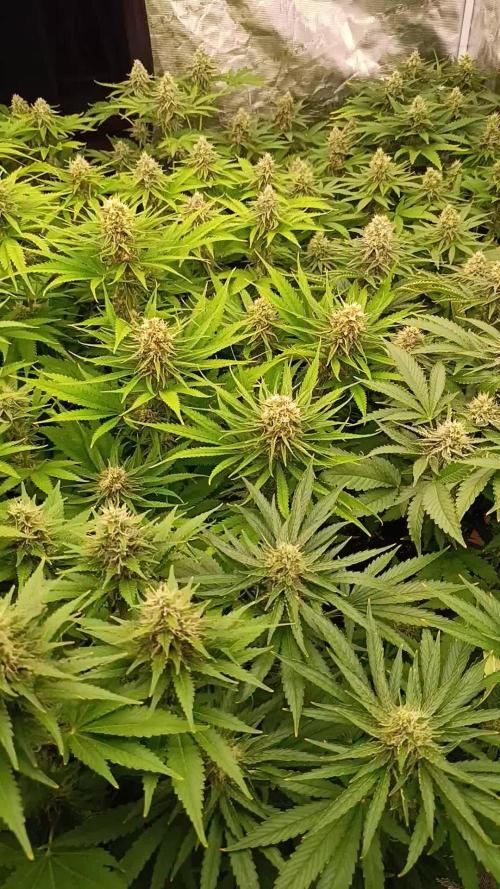
📆 Semana 6
La fase de engorde alcanza su máximo ritmo. Los cogollos continúan aumentando de tamaño y densidad, los cálices se apilan formando colas cada vez más compactas y la producción de tricomas cubre gran parte de las flores y las hojas cercanas. Los primeros pistilos comienzan a oscurecerse, mientras el aroma gana intensidad y complejidad.
Bloom Booster sigue apoyando el desarrollo floral durante esta etapa decisiva. La planta mantiene un elevado consumo de agua y nutrientes, aunque conviene vigilar la respuesta al abonado para evitar excesos y conservar un follaje sano hasta el final de la floración.
⚡ EC: 1.8 - 1.9
💧 pH: 6.2–6.5
🌡️ Agua: 21°C
🌫️ Humedad: 35–40%
💡 Intensidad: 1000–1050 PPFD
🔥 Nota: Semana de máxima formación de biomasa floral. Un clima estable, una buena ventilación y una nutrición equilibrada favorecerán cogollos más compactos y una producción de resina abundante.
¡Seguimos creciendo fuerte 💪!
Likes
66
Share


@Prof_Weed
Follow
Ich hätte noch locker 2 Wochen dranhängen können..
Aber ich habe bewusst jetzt schon geerntet da ich die kleinen Buds und Sugar Leafs zu Bubble Hash verarbeiten werde, das sind satte 479g,ich habe keine Ahnung was das dann an Bubble Hash ergibt.
Falls das jemand weiß schreibt es mir in die Kommentare..
Ich habe ein wet trimming gemacht, hat mich 4 Stunden gekostet, aber:
857g Nass Gewicht !!
Wandert jetzt für 8 Tage in den Cannatrol Cool Cure.
Edit: 186g Trocken Gewicht nach Curing, alle Stängel sind zudem entfernt.
Riecht sehr frisch.
Der Smoke ist sehr mild, aber die Wirkung haut mächtig rein, eher Sativa Effekte, hatte nen mega Laber Flash..
Auf jeden Fall viel THC.
Das war ein Hochsommer Grow, die Sour Jealousy von FastBuds hat die hohen Temperaturen problemlos weggesteckt.
Man muss dazu sagen, dass mein Zelt prinzipiell immer offen steht, so kann auch kein Schimmel entstehen denke ich.
Nur muss ich eben mit 2 Luftentfeuchtern arbeiten..
Ich bin mega happy und auch stolz, das ist erst meine 4. Ernte, ich habe erst Mai 2023 angefangen mit dem Anbau.
Vielen Dank lieber Grow Gott für die reiche Ernte!!


Likes
14
Share

@tuzeus
Follow
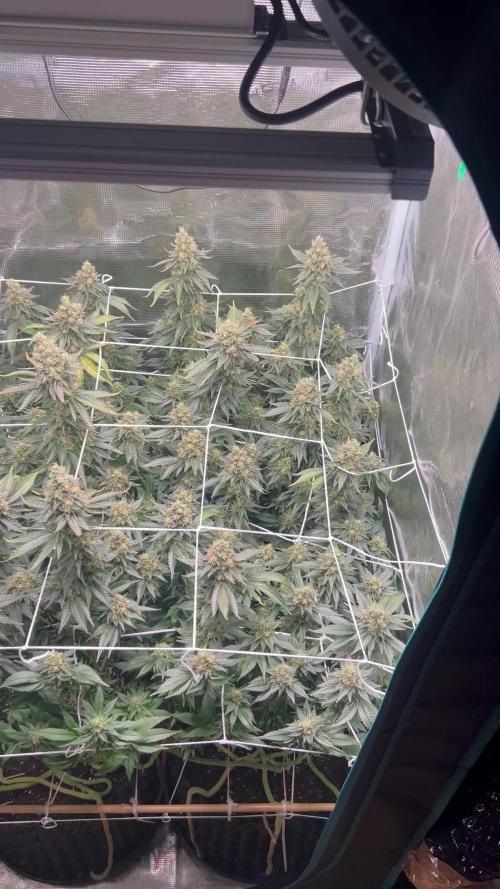
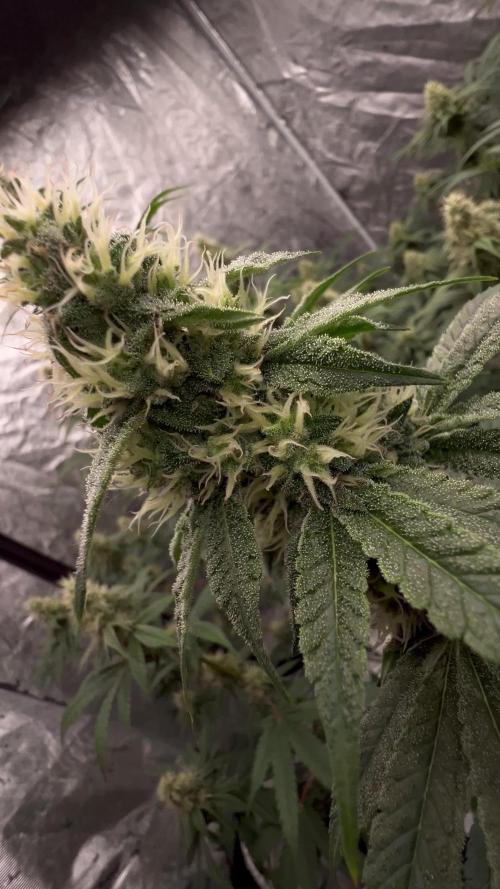
This is maybe the last week. Trichomes are milky but also clear, I’m still waiting for the amber. Even though I don’t want much amber. Maybe I will chop this weekend, I’ll decide in the next days. I fucked up a bit with the light. I see some foxtailing even though it’s not really concerning. I changed to the Athena fade to eliminate nitrogen. I’m expecting way more fade in the next days. The end is near. Cheers.

Likes
10
Share


@valiotoro
Follow
Photoperiod buds 🤩
The smell is absolutely divine very fruity,sweet & tropical🍋🍊🍉🍌
Solid like a diamond 💎
Bay harbor butcher’s trim to show the density


Likes
53
Share


@Pr3m_85
Follow
Hi Grow Diaries Fam,
It' s the last week for those girls.
It was a pleasure to grow her.
Day 65 : It smells extremely strong. The neighbors are going to ask ❓❓ ❓. I think I'll have to cut earlier than expected.🤷🏼🤷🏼🤷🏼
Day 67 : Harvest Day 😁😁😁😁
See you later for the taste test.
Peace to all ✌️🏻✌️🏼✌️🏿✌️🏾✌️✌️🏽


