




Likes
18
Share


@Grower_Of_Persia
Follow
week intel:
its time for second pruning they grew up too fast and need second pruning as below :
first i remove big fan leaves and only leaves then let them rest for 1 day then the second part of pruning will get done that is removing branches based on these conditions:
1-if the branch is very low and never can make it to the top ,
2- if branch is in shade even after pruning fan leaves ,
3- if there are too many branches at the small space then non of them will get resources so if there is no space for branch then , they must get remove.
everything is perfect!
stresses :
pruning big fan leaves and lower branches + a little E.C stress around 1.7 once a week
feeding:
i feed them 3 times this week with this order :
day 1 : i feed them heavy with silicate +base nutrients(calcium & micros + Bloom) about 884 ppm - 1.7 e.c to cause a little stress.
day 3 : i feed them low dose of Feeding Booster + Karbo Boost around 325 ppm - 0.6 e.c to let them recover a little but not fully recover still a little stress will caused.
day 5 : i feed them with low dose of Top-Max + B-52 around 213 ppm - 0.4 e.c to let them recover the stresses to get ready for another stress next week.
guide of the week :
no more stresses from now on till the end and from next week i'll reduce the amount of nitrogen and calcium to below half to the end.

Likes
8
Share


@FirstTime97
Follow
Been abit lst with posting and both with the plants as I say first time grow me and pal ain’t got a scooby ran into few problems with nutes this week and rust spots showing on leaves after reading online have been feeding nutes once a week on a saturaday and watering 2 days after with 6.2 water n calmag 1ml per litre (in hindsight was feeding the nutes it said on back of bottle and ended up burning couple the plants )





Likes
35
Share


@Pot_Portraits
Follow
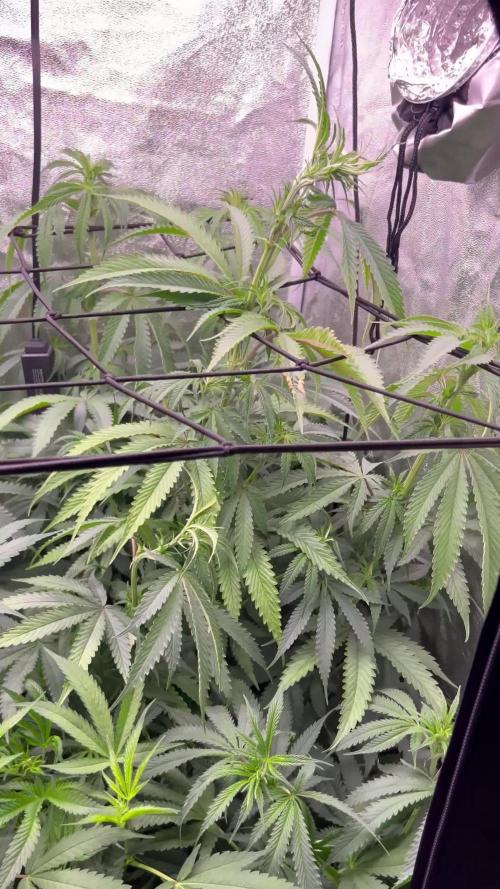
Week 7, we are in full flower and I show you the feeding today, very simple and not much to it.
The plant drinks this 25 liter tank empty like nothing, that's a good sign, she takes in the nutrients and grows rapidly.
Still cleaning some leaves and branches here and there, will update when we made some more progress, so far everything is going well.

Likes
16
Share


@Plantinator
Follow
Week 2 and the training has already started.
I was inspired by Canamatoes, this is his LST method.
Day 17 - when LST turned into HST aka FIS technique (fuck I snapped).
So it started as a really harmless routine, I wanted to tie down the plant when at the weak point where the previous tie down was (1st nod) the main stem just snapped 😬
First I tried to use some duct tape and it did not holding the plant together. I grabbed the super glue and it seems like it does the job. ⚕️
When I got home in the evening two fan leaves were wilted. Will she survive?
Let's say she will survive, I am sure due to stress the harvest day will be delayed and it won't be a massive yield.
Day 19 - I decided to go ahead with a VEEERY GENTLE LST. We don't have the luxury to wait for the full recovery.

Likes
7
Share


@hooolian
Follow
24/02: Colas again have become real heavy in places and have had to strap them together to prevent the stalks from falling and snapping. Over all blooming well have been on maximum dose of nutrients now for a few weeks. lots of orange hairs. water now for a week and then to harvest. the topping in this grow really paid off.

Likes
290
Share


@Ferenc
Follow
Beautiful.... a lot of LST made her like a snake. She would be very tall otherwise. Crazy...... a lot of rain by the way the temperature is getting low.... but it seems to be good all the things :)
I am not sure about her height may be even 100 cm over 🤪
Day 111: She looks like kind a strated the flowering cycle I mean the greenish tops I need to force her to flower shit weather UK it will be too late so I decided to do it manually covering her first 36 hours and then every day to get less than 12 hours light or smthg like that l. 🙄 So in case she started it helps her to go on if not then she will. I am sure she started 🙃

Likes
80
Share


@Greenwolvesfarmer
Follow
Muy complicado . He notado un color verde amarillento , he buscado y todos dicen que es carencia de micro micronutrientes y nitrógeno , además un excesivo uso de P K haciendo bloqueo de nutrientes , según algunos amigos cultivadores ... estamos tristes pero siempre tratando de darle lo mejor . Te amo
Likes
21
Share


@WildeWeed
Follow
This was the boss lady’s first grow. This was under a spiderfarmer sf1000 which did a amazing job. I’m really surprised with the light in a 2x2. It did wonderfully.
Now to the bubblegum. Once again fastbuds delivers for us with a plant that does exactly as they said it would. She didn’t top the plant or do any HST just from a time standpoint for the originals contest. This one could have actually went a little longer, however we have cloudy and amber trichomes already, and we flushed the last week. So with the contest ending today, might as well let her come down.
This was a great plant for a beginner like they said it was. Even without me standing on her shoulder, she could have grown this one. The density of these buds is down right surprising. Super dense and super sticky. She smells exactly like big league bubblegum chew. We can’t wait until this dries and cures. I’m sure it will be amazing. I’ll update this diaries as soon as it’s dry with the final weight. Thanks for looking!


Likes
16
Share


Likes
11
Share

@TrickzGrowz
Follow
Servus Moin!
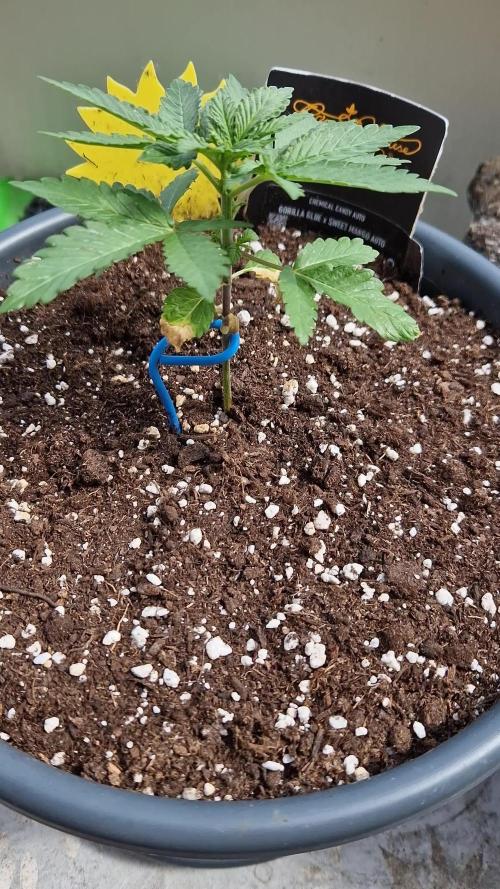
Langsam startet die Chemical Candy richtig durch. Der Stamm wird jetzt dicker und die Blätter bilden sich schön aus.
Likes
11
Share


@midEastern
Follow
just before flowering 8 weeks ago-I took 2 clones of each strain from my last 4 diaries - 8 clones total and vegged them with CFL then went to LED reflector mars 192 (400w wall).
now,my flowering room has just finished the last crop so i moved all 8 grown ups to veg another week and today i started 1212.
i will be adding 2 X 300w BloomSpect LED panels in a week so total flowering led power is
Mars Reflector 192 plus the 2units bloomspect 300 (660w wall).
This diary records only flowering weeks without the clones vegging.
I am having 8 plants with 660w @ 1.2m by 1.2m room - 10-12 oz dry is expected.
Pictures soon
Cheers


Likes
44
Share


@Chedderbob112
Follow
Rite early days so dunno exactly wot methods a fancy trying this time maybe transplant one of the clones maybe not tho mite make an attempt at main lining but a know am goin to struggle for space so it iz wot it iz got a scrog n al squeeze a sexy as fuk sea of greenery they can lock the locks 🔐 but cannot stop the clocks ⏰ if ye know ye know @chedderbob112@s2340420 🏴


Likes
5
Share

@gkpowa
Follow
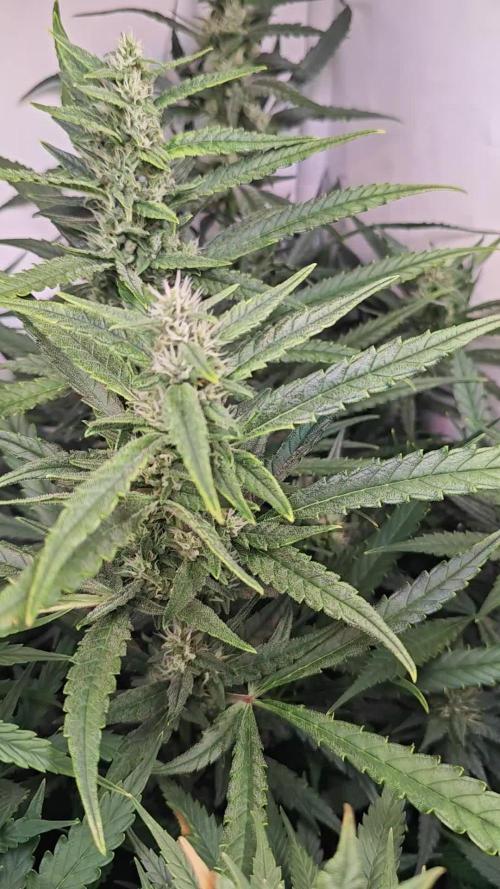
Tento týden jsem přidal green sensation na 2ml/l a nejspíš je to už moc, tak zase snížím na 1. Návod pro Hombreho - k určení výkonu sanlight evo stačí první číslo.
3=200W 4=265W 5=340W 6=400W
Likes
3
Share


@CaptonianMoneymaker
Follow
Had rain For 2 days high humidity buds also added another wave of pistills on 1 cheese strain


Likes
9
Share

@Phaleg
Follow
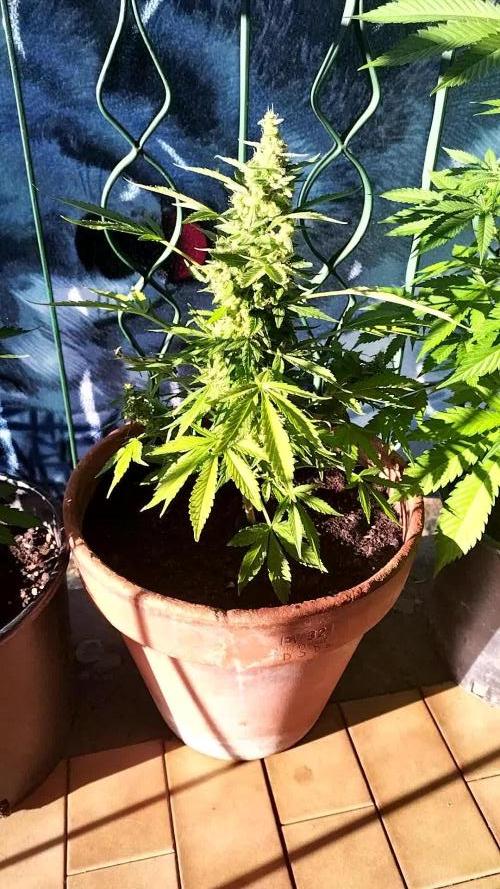
After a previous fresher week, heat is back and daytime temperature reach 25-27° C again, plants are now flowering and the only automatic is close to be ready (about 2 weeks left I think). I will inspect triconomes with my lenses and microscope.
2x ICE 78cm (+6cm) & 69cm (+2cm) === No idea why this difference!
White Widow 85cm (+5cm)
Cookies Gelato 90cm (+5cm)
Do-Si-Dos Automatic 39cm (same as last week)
Processing
Likes
67
Share


@CommanderCannabis
Follow
Another uneventful week.Daphne continues to bud and no issues with the Chamber. pH is staying steady @ 6.5 for now. Humidity continues to stay in low 40's and she is starting to acquire a very nice scent. Hopefully another two weeks on nutrients then a third week of no nutrients then hopefully a completed harvest.

Likes
11
Share


@CampExotic
Follow
Starting week 2 and the bud sites have come outta nowhere. Got some LST hooks in but I’ll take them out soon. Gonna use more CalMag but besides that she looks cool!
Changed the nutes to flower nutes of course. Adding some new LST to see what happens.
So far the buds are growing and expanding. Went from one cola to many. Not sure if I’ll remove the hooks yet
