





Likes
19
Share


@GuerillaSweed
Follow
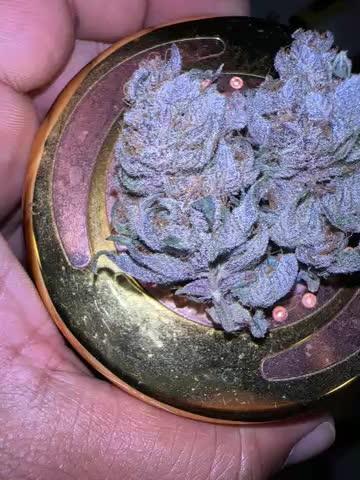
Did some defoliation 3-4days earlyer 🤘🏾 looking good, no bugparty or any mold (yet)🤪
Waterd them with the good good n we out 🤘🏾

Likes
39
Share


@Roberts
Follow
Bubble OG Gum auto is doing great. She took to the neem oil treatment good. I usually do it a few times. I only did it once, but soaked everything for a good 30 mins. So hopefully tge pest stay gone till I can get to the finish. Everything is looking great, and she will likely be ready for a solution change in about a week. Thank you Athena, Spider Farmer, and Ganja Farmer. 🤜🏻🤛🏻🌱🌱🌱
Thank you grow diaries community for the 👇likes👇, follows, comments, and subscriptions on my YouTube channel👇. ❄️🌱🍻
Happy Growing 🌱🌱🌱
https://youtube.com/channel/UCAhN7yRzWLpcaRHhMIQ7X4g

Likes
48
Share


@Theia
Follow
I am very happy with the Chiquita Bananas in the end. Clones were total seed factories but I think we may have a go at making some hash with those as the foot long buggers are caked in crystal.. 62g and 63g .
Plant 1 is just a monster for me 365g wet. Long dense buds thick dank smell of tropical sweets. Not as much seed as I thought there would be so glad I was convinced to push her a bit more.
Plant 2 is smaller but has taken a pure turn in the last week.i don't think she was stressed at Al. I did switch to just water for last 10 days but apart from that I dunno. I don't think she has any thing with pure in her genetics but either way she looks beautiful. 169g wet from her.
Everything is drying for the next 10 days when I shall report back.
Happy grows.🌿🌱👊
Stay safe.😷

Likes
12
Share


@MichaelPearson
Follow
Day Zero:
Seeds from FASTBUDS. Cotton pads washed with purchased water, moistened with the same water. I immersed two seeds in each cotton pad.
In an ordinary plastic bag, put the discs and inflated with air.
The first day:
24 hours passed, the seeds showed white roots, left in the bag in its original state for another day.

Likes
52
Share


@Ultraviolet
Follow
Lacewings seemed to have mostly killed themselves by flying into hot light fixtures. I may have left the UV on which was smart of me :) Done very little to combat if anything but make a sea of carcasses, on the bright side its good nutrition for the soil.
Made a concoction of ethanol 70%, equal parts water, and cayenne pepper with a couple of squirts of dish soap.
Took around an hour of good scrubbing the entire canopy.
Worked a lot more effectively and way cheaper.
Scorched earth right now, but it seems to have wiped them out almost entirely very pleased.
Attempted a "Fudge I Missed" for the topping. So just time to wait and see how it goes.
Question?
If I attached a plant to two separate pots but it was connected by rootzone, one has a pH of 7.5 ish the other has 4.5. Would the Intelligence of the plant able to dictate each pot separately to uptake the nutrients best suited to pH or would it still try to draw nitrogen from a pot with a pH where nitrogen struggles to uptake?
Food for stoner thought experiments!
Another was on my mind.
What happens when a plant gets too much light?
Well, it burns and curls up leaves.
That's the heat radiation, let's remove excess heat, now what?
I've always read it's just bad, or not good, but when I look for an explanation on a deeper level it's just bad and you shouldn't do it.
So I did.
How much can a cannabis plant absorb, 40 moles in a day, ok I'll give it 60 moles. 80 nothing bad ever happened.
The answer, finally. Oh great........more questions........
Reactive oxygen species (ROS) are molecules capable of independent existence, containing at least one oxygen atom and one or more unpaired electrons.
"Sunlight is the essential source of energy for most photosynthetic organisms, yet sunlight in excess of the organism’s photosynthetic capacity can generate reactive oxygen species (ROS) that lead to cellular damage. To avoid damage, plants respond to high light (HL) by activating photophysical pathways that safely convert excess energy to heat, which is known as nonphotochemical quenching (NPQ) (Rochaix, 2014). While NPQ allows for healthy growth, it also limits the overall photosynthetic efficiency under many conditions. If NPQ were optimized for biomass, yields would improve dramatically, potentially by up to 30% (Kromdijk et al., 2016; Zhu et al., 2010). However, critical information to guide optimization is still lacking, including the molecular origin of NPQ and the mechanism of regulation."
What I found most interesting was research pointing out that pH is linked to this defense mechanism. The organism can better facilitate "quenching" when oversaturated with light in a low pH. Now I Know during photosynthesis plants naturally produce exudates (chemicals that are secreted through their roots). Do they have the ability to alter pH themselves using these excretions? Or is that done by the beneficial bacteria?
If I can prevent reactive oxygen species from causing damage by "too much light".
The extra water needed to keep this level of burn cooled though, I must learn to crawl before I can run.
Reactive oxygen species (ROS) are key signaling molecules that enable cells to rapidly respond to different stimuli. In plants, ROS plays a crucial role in abiotic and biotic stress sensing, integration of different environmental signals, and activation of stress-response networks, thus contributing to the establishment of defense mechanisms and plant resilience. Recent advances in the study of ROS signaling in plants include the identification of ROS receptors and key regulatory hubs that connect ROS signaling with other important stress-response signal transduction pathways and hormones, as well as new roles for ROS in organelle-to-organelle and cell-to-cell signaling. Our understanding of how ROS are regulated in cells by balancing production, scavenging, and transport has also increased. In this Review, we discuss these promising developments and how they might be used to increase plant resilience to environmental stress.
Temperature stress is one of the major abiotic stresses that adversely affect agricultural productivity worldwide. Temperatures beyond a plant's physiological optimum can trigger significant physiological and biochemical perturbations, reducing plant growth and tolerance to stress. Improving a plant's tolerance to these temperature fluctuations requires a deep understanding of its responses to environmental change. To adapt to temperature fluctuations, plants tailor their acclimatory signal transduction events, specifically, cellular redox state, that are governed by plant hormones, reactive oxygen species (ROS) regulatory systems, and other molecular components. The role of ROS in plants as important signaling molecules during stress acclimation has recently been established. Here, hormone-triggered ROS produced by NADPH oxidases, feedback regulation, and integrated signaling events during temperature stress activate stress-response pathways and induce acclimation or defense mechanisms. At the other extreme, excess ROS accumulation, following temperature-induced oxidative stress, can have negative consequences on plant growth and stress acclimation. The excessive ROS is regulated by the ROS scavenging system, which subsequently promotes plant tolerance. All these signaling events, including crosstalk between hormones and ROS, modify the plant's transcriptomic, metabolomic, and biochemical states and promote plant acclimation, tolerance, and survival. Here, we provide a comprehensive review of the ROS, hormones, and their joint role in shaping a plant's responses to high and low temperatures, and we conclude by outlining hormone/ROS-regulated plant-responsive strategies for developing stress-tolerant crops to combat temperature changes.
Onward upward for now.
Next!
Adenosine triphosphate
(ATP) is an energy-carrying molecule known as "the energy currency of life" or "the fuel of life," because it's the universal energy source for all living cells.1
Every living organism consists of cells that rely on ATP for their energy needs. ATP is made by converting the food we eat into energy. It's an essential building block for all life forms. Without ATP, cells wouldn't have the fuel or power to perform functions necessary to stay alive, and they would eventually die. All forms of life rely on ATP to do the things they must do to survive.2
ATP is made of a nitrogen base (adenine) and a sugar molecule (ribose), which create adenosine, plus three phosphate molecules. If adenosine only has one phosphate molecule, it’s called adenosine monophosphate (AMP). If it has two phosphates, it’s called adenosine diphosphate (ADP).
Although adenosine is a fundamental part of ATP, when it comes to providing energy to a cell and fueling cellular processes, the phosphate molecules are what really matter. The most energy-loaded composition for adenosine is ATP, which has three phosphates.3
ATP was first discovered in the 1920s. In 1929, Karl Lohmann—a German chemist studying muscle contractions—isolated what we now call adenosine triphosphate in a laboratory. At the time, Lohmann called ATP by a different name. It wasn't until a decade later, in 1939, that Nobel Prize–-winner Fritz Lipmann established that ATP is the universal carrier of energy in all living cells and coined the term "energy-rich phosphate bonds."45
Lipmann focused on phosphate bonds as the key to ATP being the universal energy source for all living cells, because adenosine triphosphate releases energy when one of its three phosphate bonds breaks off to form ADP. ATP is a high-energy molecule with three phosphate bonds; ADP is low-energy with only two phosphate bonds.
The Twos and Threes of ATP and ADP
Adenosine triphosphate (ATP) becomes adenosine diphosphate (ADP) when one of its three phosphate molecules breaks free and releases energy (“tri” means “three,” while “di” means “two”). Conversely, ADP becomes ATP when a phosphate molecule is added. As part of an ongoing energy cycle, ADP is constantly recycled back into ATP.3
Much like a rechargeable battery with a fluctuating state of charge, ATP represents a fully charged battery, and ADP represents a "low-power mode." Every time a fully charged ATP molecule loses a phosphate bond, it becomes ADP; energy is released via the process of ATP becoming ADP.
On the flip side, when a phosphate bond is added, ADP becomes ATP. When ADP becomes ATP, what was previously a low-charged energy adenosine molecule (ADP) becomes fully charged ATP. This energy-creation and energy-depletion cycle happens time and time again, much like your smartphone battery can be recharged countless times during its lifespan.
The human body uses molecules held in the fats, proteins, and carbohydrates we eat or drink as sources of energy to make ATP. This happens through a process called hydrolysis
.
After food is digested, it's synthesized into glucose, which is a form of sugar. Glucose is the main source of fuel that our cells' mitochondria
use to convert caloric energy from food into ATP, which is an energy form that can be used by cells.
ATP is made via a process called cellular respiration that occurs in the mitochondria of a cell. Mitochondria are tiny subunits within a cell that specialize in extracting energy from the foods we eat and converting it into ATP.
Mitochondria can convert glucose into ATP via two different types of cellular respiration:
Aerobic (with oxygen)
Anaerobic (without oxygen)
Aerobic cellular respiration transforms glucose into ATP in a three-step process, as follows:
Step 1: Glycolysis
Step 2: The Krebs cycle (also called the citric acid cycle)
Step 3: Electron transport chain
During glycolysis, glucose (i.e., sugar) from food sources is broken down into pyruvate
molecules. This is followed by the Krebs cycle, which is an aerobic process that uses oxygen to finish breaking down sugar and harnesses energy into electron carriers that fuel the synthesis of ATP. Lastly, the electron transport chain (ETC) pumps positively charged protons that drive ATP production throughout the mitochondria’s inner membrane.2
ATP can also be produced without oxygen (i.e., anaerobic), which is something plants, algae, and some bacteria do by converting the energy held in sunlight into energy that can be used by a cell via photosynthesis.
Anaerobic exercise means that your body is working out "without oxygen." Anaerobic glycolysis occurs in human cells when there isn't enough oxygen available during an anaerobic workout. If no oxygen is present during cellular respiration, pyruvate can't enter the Krebs cycle and is oxidized into lactic acid. In the absence of oxygen, lactic acid fermentation makes ATP anaerobically.
The burning sensation you feel in your muscles when you're huffing and puffing during anaerobic high-intensity interval training (HIIT) that maxes out your aerobic capacity or during a strenuous weight-lifting workout is lactic acid, which is used to make ATP via anaerobic glycolysis.
During aerobic exercise, mitochondria have enough oxygen to make ATP aerobically. However, when you're out of breath and your cells don’t have enough oxygen to perform cellular respiration aerobically, the process can still happen anaerobically, but it creates a temporary burning sensation in your skeletal muscles.
Why ATP Is So Important?
ATP is essential for life and makes it possible for us to do the things we do. Without ATP, cells wouldn't be able to use the energy held in food to fuel cellular processes, and an organism couldn't stay alive.
As a real-world example, when a car runs out of gas and is parked on the side of the road, the only thing that will make the car drivable again is putting some gasoline back in the tank. For all living cells, ATP is like the gas in a car's fuel tank. Without ATP, cells wouldn't have a source of usable energy, and the organism would die.
Eating a well-balanced diet and staying hydrated should give your body all the resources it needs to produce plenty of ATP. Although some athletes may slightly improve their performance by taking supplements or ergonomic aids designed to increase ATP production, it's debatable that oral adenosine triphosphate supplementation actually increases energy.
An average cell in the human body uses about 10 million ATP molecules per second and can recycle all of its ATP in less than a minute. Over 24 hours, the human body turns over its weight in ATP.
You can last weeks without food.
You can last days without water.
You can last minutes without oxygen.
You can last 16 seconds at most without ATP.
Food amounts to one-third of ATP production within the human body.

Likes
12
Share


@Kayanesta
Follow
Smells amazing, buds are greesy to the touch…serious genetics from fast buds!


Likes
28
Share

@SkunkyDog420
Follow
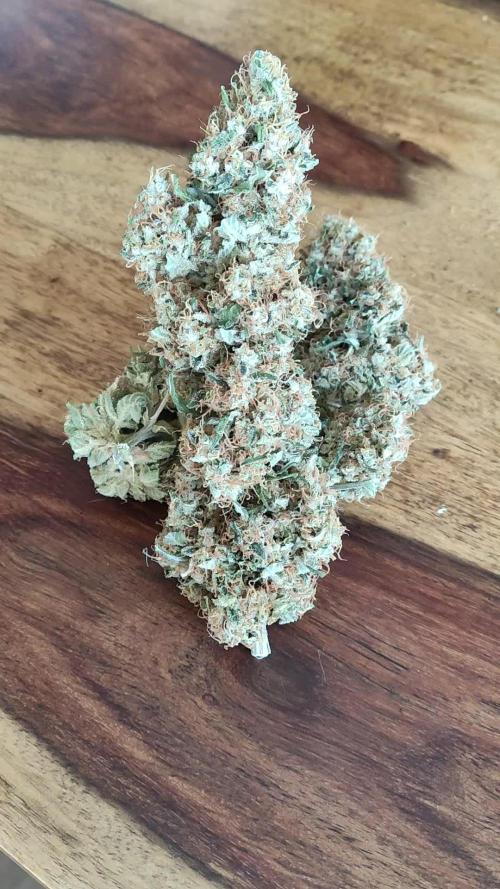
Hallo zusammen 🤙.
Das High ist stark wer schon mal eine Power Plant geraucht hat weiß wie stark sie ist.
Das ist einer meiner Lieblingspflanze .Habe sie schon so oft angebaut und das High ist immer gleich und der Ertrag ist immer im XXL Bereich.
Eine Perfekte Pflanze
Ende

Likes
33
Share


@FlavoursUk
Follow
Day 78 - pheno 1 was cut down, id normally hang dry the whole plant but decided to do it in branches instead. Second pheno has been left in darkness as i haven't had the time to cut.
Pheno one is hung up and drying.. Room Humidity 60/60. As soon as she's dry enough I'll finish trimming her up. Then put them into jars. Might use boveda 60% packs but I'll see. Smells strong! Will post a harvest when both plants have been dried fully an in jars. Hope you enjoy the videos and pictures.
Stay tuned.
Likes
4
Share


@ShambhalaGardens
Follow
Everything is looking good. Gave these girls a shot of recharge and fish shit. Prepping there new homes and getting ready to transplant.


Likes
4
Share

@Stacy_smokez
Follow
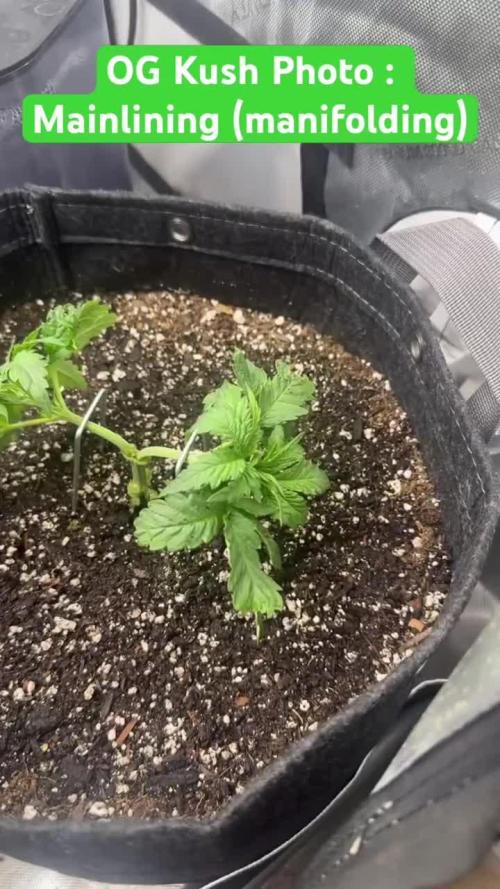
Plant was transplant into 5 gallon and decided to do manifolding for the first time so far is going very well. She recovered and I decided to talk again today. I’m gonna give it time to recover before I decide what to do next.

Likes
3
Share


@HowtoBubatz
Follow
The plant is doing well overall this week! 💪
To handle a few fungus gnats that started showing up, I introduced nematodes into the soil and placed some yellow sticky traps, seems to be keeping things under control so far.
She's growing quite tall now, definitely stretching up nicely, but not really filling out much in width. A true lemony skyscraper in the tent!😂💚

Likes
10
Share


@MrJones
Follow
Original Sensible Seeds White Crystal Meth Auto finished out nicely compared to where it had started out, there was a time within the first 3 weeks that I was going to trash the plant, the plant looked fried, I am sure it was just a weird start, but Original Sensible Seeds genetics are always strong, and this girl bounced back and yielded 197 grams of pre-dried weight of truly great looking buds, I would love for an opportunity to gro this one outgain.

Likes
2
Share


@bbs42
Follow
Something was causing my predator mites to eat my leaves. I added lady bugs and nematodes which solved the issue.

Likes
64
Share


@MadeInGermany
Follow
Hey guys :-) .
This week I will use LST again, and everything radically shorten 🙈.
Not because I want to, but because I still have to save some time and height because there is still no space in the bloom chamber for 35 days 😂.
It grows great so far, and as with the last grows it is beautiful with it 😍👍.
I wish everyone a nice week 🍀🌱.
Type:
Blue Gelato 41 Clone from Mother
( Barney‘s Farm )
☝️🏼
Genetics:
Blueberry x Thin Mint Girl Scout Cookies x Sunset Sherbert
👍
Vega lamp:
2 x Todogrow Led
Quantum Board 100 W
💡
Flower Lamp :
2 x Todogrow Led
Cxb 3590 COB 3500 K 220 W
💡💡☝️🏼
Earth:
Canna Terra Professional +
☝️🏼
Fertilizer:
Canna Terra Vega , Canna Terra Flores , Rizotonic , Cannazym , CANNA Boost , Pk 13 / 14 ,
Canna Cal / Mag , Canna Ph - Grow ,
Canna Ph - Flores
☝️🏼🌱
Water:
Osmosis water mixed with normal water (24 hours stale that the chlorine evaporates) to 0.2 EC. Add Cal / Mag to 0.4 Ec Ph with Organic Ph - to 6.0
💦💧


Likes
32
Share


@Ganjagrandaddy
Follow
Day 42 flowering: What a start to this update with the #3 Mango cream being ready for harvest NOW!!!. She has been maturing very quickly during the last few weeks and I have been concerned that she was somehow going towards a toxicity issue. Her buds began darkening really early in flower and I thought it looked very different to the others. As the last week has passed I have been looking at her trichrones with the microscope as they oustils had all gone majority brown too. They had mostly clouded and a couple of odd amber spheres were visible too. as the week went on I saw more begin to amber so took her out a day ago too have a dark period before trimmed for drying . She is the first I have ever had this quick in decades of growing !. The video shows her colours off well and her maturity to harvest too. @exoticseeds have a winner here. lol she smells amazing too with a really nice icky sticky feel . I will update her progress once trimmed.
#1 is the smaller of the 3 remaining ladies now ansneven with the #4 beingna week behind her she is still the smallest in height. Her buds are nice and chunky and just as we hit the budswell period too , so shebshould finish with some nice sized colas.
#2 Mango is a beast of a plant and by far the largest. Her main is a beast of a cola already with the side branching really picking up some size now too. A brilliant example of the strain I think. Her main is really tacky to touch and the nice smell it leaves all over my fingers is mouth-watering now. She should yield very well.
#4Mango at day 35 looks very like the #3 plant for her bud appearance. slightly different pheno i think. More like a wedding cake strain but still very nice and colourful. She has been using pellets in the soil mix and just waterings but they are not good in my opinion and I have had to add megacrop to keepnher growing well now I waited as long as I dare to see if the pellets helped in flower but even using the second part of the feed has not helped. The megacrop has already begun to colour them back up to a more healthy green so i am hoping I can keep her happy until harvest now. She is pushing out a very nice fruity smell now too.
I am looking forward to trying the photoperiod strains I have from exotic now and will be germinating Herz Og and Quick sherbet in a couple of weeks time for the summer run.
Top genetics from a great breeder . Thank you Exotic.
###UPDATE###UPDATE###UPDATE###
The Mango cream #3 has been in the dark for the past 48hrs and has now been trimmed and is hanging to dry. She will be dried low and slow now for approx 10-14 days at around 15-17°C in a large cardboard box with a steady air exchange. She has a surprising size and weight to her for such a short time from seed and is as finished as any plant i have harvested before . What an amazing little lady she has been to grow She looked a little stunted initially and soon filled the pot she was in. 20L was way too small for these genetics to flourish and at least a 30L would be my advice. Happy days , let's see what she yields dried while we wait for her sisters to join her. Be well Growmies


Likes
Comments
Share


@BudBrewerz
Follow
She packing up buds pretty good
She is still on same diet and looks to be doing great
If she thickens up she will become muy bien 🙌😎
Likes
2
Share


@Marbanya
Follow
2025-01-21 to 2025-01-27
This week, she really put on the lemon-lime smell of Chernobyl. I've pollinated her (once again) with Chemdog #2 pollen from a previous grow. I'm looking for a "stay lifted" effect, as both of these cultivars have. But, I'm hoping for more of the earthiness to come through from the Chemdog in the potential seeds that are produced.