Likes
Comments
Share

@IslandTerps
Follow
Strain: Guava Sundae
Grow Type: Indoor
Nutrient Line: Athena
Harvest Update ✂️🌿
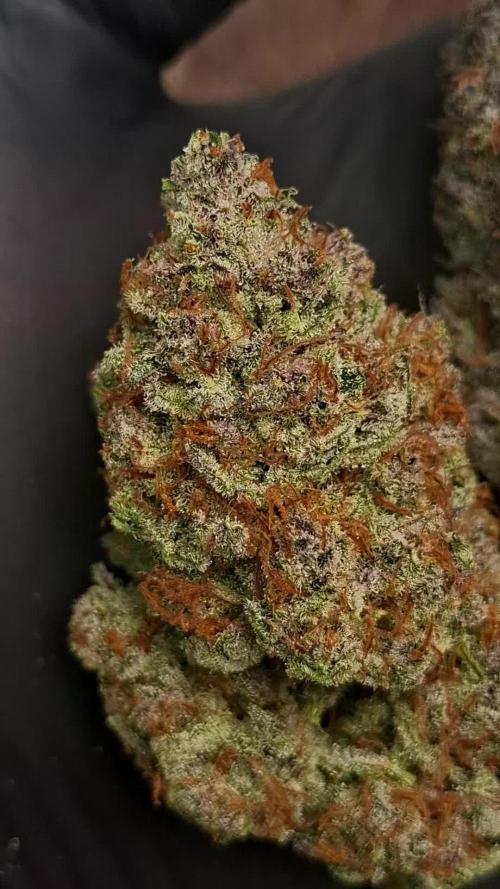
This was another beautiful one to bring across the finish line. The buds came out dense, colorful and absolutely covered in gorgeous deep purple hues.
The smell was just simply amazing a really nice fruity smell. Between the colours, structure and terps, these girls definitely were amazingggg
Overall, I'm really happy with how this strain turned out. The buds look amazing, smell even better and I'm definitely looking forward to seeing how those fruity terps come through after a proper cure 🌿🔥
Recommended Drying Conditions
🌡️ Temperature: 18–20°C
💧 Humidity: 55–60%
⏳ Dry Time: Approximately 10–14 days
And don’t forget to use my discount code ISLANDT for 15% off your next order at Fast Buds 🌿🔥

Likes
1
Share


@Big-Daddy
Follow
Es ist meine erste fast reine Sativa, daher leider kein vollständiger Report. Die Erwartungen wurden mehr als erfüllt bisher.

Likes
6
Share


@Kordo1990
Follow
I really notice the flowers on the northern lights. The three easy bud are following suit. My box is small and i am might be forced to move them if i cant get them trained. I have also seen a small hole in one leaf and what looks like a small bleach spot on newer leafs. Only two spots at the bottom.
Likes
10
Share


Likes
11
Share

@KnightRider
Follow
Hey Cannafam Happy Monday,
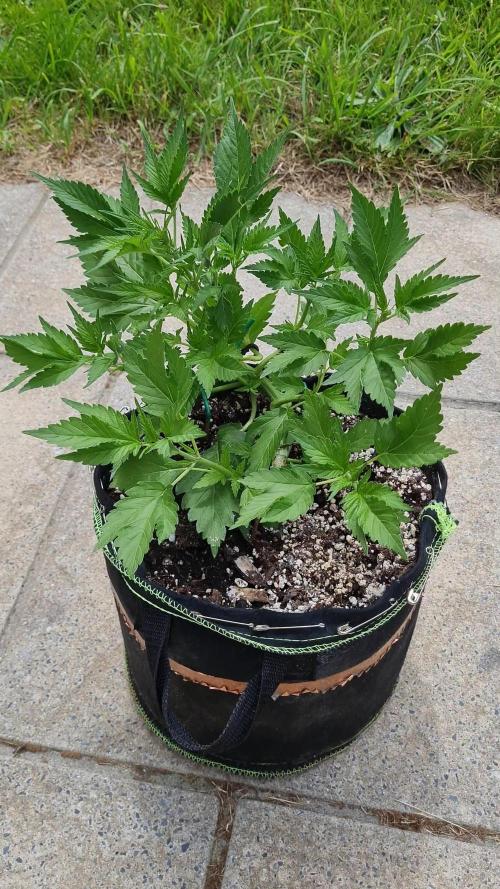
My Apricot gal has had a fairly good week overall, mainly due to a rare bout of very hot weather.
Its been absolutely scorchin, Monday and Tuesday 28c ,Wednesday and Thursday 30c with continuous Sun and average nighttime temps of 24c, Friday through to Sunday thing tapered of a bit down to 23c with Sunshine and clouds.We did also have a thunderstorm Thursday night ,but its been pretty solid on the weather front 😊
Daylight hours are currently at 16 hrs 22 minutes.
We are now in Flower and her first Pistils have appeared! 😊
Training has continued a bit each day and ive been guiding her branches away from the middle and trying to keep them fairly level with some more light defoliation There was one shoot which had grown from the underside of the plant which was struggling for light which has now been exposed.
All shoots have had really good growth this week and ive virtually got her in to the shape i want trying to give spacing for decent airflow in flower, but its a case of constant tweeking.
The leaf miner problem has now ceased but my other friends the slugs appeared after a thunderstorm thurday night and had a go a couple of the fan leaves. This occured after the rain had washed away the diamatous earth from around the pot and the copper tape dididnt work 😑 Ive therefor now decided to roll put some local ale in a beer trap for them to try as id rather they drink than eat, hopefully i can take lock the in beer jail!
Feed wise ive actually managed two feeds this week with the plagron n trace to help power that growth and il be flippin over to flower nutes next week. Although this gal has been attacked a bit shes coming along nicely and doin her Daddy proud 😁
Thats all from me for now, thanks for stopping by ✌️💚
Processing
Likes
6
Share


@Greenwizhun
Follow
First grow in My own soil(less) mix. Peat+vermiculite+lime+gypsum
Likes
33
Share


@Master_weeda
Follow
Bonjour à tous les padawans et maîtres jedis
Je me fais plaisir à cultiver cette souche qui m'offre une véritable joie en tant que cultivateur
Arrosage avec 2 litres d'eau ph6.3 à laquelle j'ajoute 5 millilitres de Hesi bloom 2 millilitres de Hesi boost, 2.5 millilitres de Hesi phosphorus

Likes
63
Share


@Roberts
Follow
Strawberry Amnesia is growing well. She had a solution change today. She is gonna get some defoliation come next week. Everything is going great. Thank you Herbies seeds, Athena, and Spider Farmer. 🤜🏻🤛🏻🌱🌱🌱
Thank you grow diaries community for the 👇likes👇, follows, comments, and subscriptions on my YouTube channel👇.
❄️🌱🍻 Happy Growing 🌱🌱🌱
https://youtube.com/channel/UCAhN7yRzWLpcaRHhMIQ7X4g.

Likes
13
Share


@ChitownCannaChica
Follow
Harvesting in a few days! She’s ready! Purple Punch is more like pinesol! Very earthy piney aroma—- guess it’s perfect for Christmas!
Considering this is a solo grow, I’m very happy with the bud quality! Must be that dynomyco! ✌️💚🌿💨
Likes
Comments
Share


@Ogbangbang2981
Follow
missed a whole week in this I deliberately didnt post or take any pics in week 7 because I burned my baby( used my cucumber feeding water which is stronger) so bad I was ashamed to show her to the world I did a flush but the damage done to her beautiful leaves is permanent but she still coming buds coming in nice small from the shock of the burn but still healthy plant .
Likes
54
Share


@AsNoriu
Follow
Day 65 since seed touched soil. Big disaster in garden !!! I added epsom salt and didnt phed , was in a rush to overtime, they dranked in 3 days , that was unexpected ....
AK has root damage as rest, but on canopy i found 5 spotted leaves too, reminds calcium .... Hate myself, ph test kit was on table too, prepared, i just f@cked up in rush ...
Running out of space. Mars Hydro TSL2000 is doing great job, two plants are like 5 cm away , still no signs of burn.
Try to keep humidity in 65-70 % range, temps around 22, nights 20. All works.
Will top up this week with next watering, want to give one plain.
Wrong Ph led to slow uptake, AK is in limbo, behind couple days by weight, if troubles are bigger than i see now - maybe even 3-4. So sad .... One time wrong ph and you can damage garden heavily ...
Close up bud photos were taken under max light, so colours are false.
Day 66. Damage is done, see calcium rusty spots around,leaf colour not the best ... At least drinking normally, loaded 5 liters yesterday eve. Hope to do watering and top up this Friday.
Day 68. They drink fast, 3 days were needed only. Loaded 5 liters again. Made top up. See bleaching, raised lights , have 10 cm left.
Top up was dosed, mixed well and laid on top, then i rough and mix top lair of soil with top up and only then i water.
All pots are 30 litres ( grams and ml , have in mind ) :
Plant Success - Great White - 5 ml / pot
Ecothrive - Biosys - 5 ml / pot
Ecotrive - Charge - 120 ml / pot
Ecothrive - Life Cycle - 60 g. / pot
Ecothrive - Bio Blend - 200 ml / pot.
Happy Growing !!!

Likes
26
Share


@franc
Follow
показывает первые признаки цветения, в целом смог вывести лишние удобрения из листа в начале цветения.
Likes
2
Share


@Ringo
Follow
Great easy cultivar to grow, even with the pythium issues in the higher temp DWC. The harvest was very resinous, the terpenes are amazing. The final weight should be pretty good, plants are finishing dry, I'll post dry weight when known. Thanks for hanging out and watching this girl grow :)😎

Likes
65
Share


@Dendegrow
Follow
Week 4 update! 🌱 Week 3 is done, and the ladies are now three weeks into their flowering phase. So far, everything has gone really well. However, one bud and the plants in the front showed slight signs of potassium overfertilization, which likely caused a calcium uptake issue and led to minor necrosis.
No worries, though – today I completely flushed the entire system and replaced it with a fresh solution. With this reset, everything should be back on track 💪💧.
On top of that, I decided to bring out an old Cree& Osram LED lamp as a booster. This will provide the two smaller front plants with more light intensity so they can metabolize the higher nutrient levels more effectively 💡🌿.
Everything is looking great so far! Stay tuned, follow along, and let’s see how this journey continues 🌺📸.
Woche 4-Update! 🌱 Woche 3 ist geschafft, und die Ladies sind jetzt drei Wochen in der Blütephase. Bis jetzt lief alles super. Eine Bud und die Pflanzen vorne zeigten jedoch leichte Anzeichen von Kalium-Überdüngung, was wahrscheinlich zu einer Kalzium-Aufnahmehemmung geführt und leichte Nekrosen verursacht hat.
Kein Grund zur Sorge – heute habe ich das komplette System gründlich durchgespült und die Lösung durch eine frische ersetzt. Mit diesem Reset sollte jetzt wieder alles reibungslos laufen 💪💧.
Außerdem habe ich beschlossen, eine alte Cree& Osram LED-Lampe als Booster herauszuholen. Damit bekommen die beiden kleineren Pflanzen vorne eine stärkere Lichtintensität, damit sie die höheren Nährstoffwerte besser verstoffwechseln können 💡🌿.
Es sieht alles richtig gut aus! Bleibt dran, folgt mir, und lasst uns schauen, wie sich die Reise weiterentwickelt 🌺📸.

Likes
128
Share


@Tropicannibis_Todd
Follow
💩Holy Crap We Are Back At It And Loving It💩
Growmies we are at DAY 14 and she's just killing💀it👌
So I'm starting to see she needs watering every single day and now need nutrients 🙃
Lights being readjusted and chart updated .........👍rain water to be used entire growth👈
👉I used NutriNPK for nutrients for my grows and welcome anyone to give them a try .👈
👉 www.nutrinpk.com 👈
NutriNPK Cal MAG 14-0-14
NutriNPK Grow 28-14-14
NutriNPK Bloom 8-20-30
NutriNPK Bloom Booster 0-52-34
I GOT MULTIPLE DIARIES ON THE GO 😱 please check them out 😎
👉THANKS FOR TAKING THE TIME TO GO OVER MY DIARIES 👈


Likes
8
Share


@valiotoro
Follow
A wonderful genetic thank you Fast Buds ❤️🔥🤩
The trim was super easy the buds are FAT & FROSTY full of resin 🤤
I’m very happy with the harvest 96g !!
For the light i’ve used the Spider Farmer SE-7000💡