




Likes
17
Share


@4chuk
Follow
Jan. 1 - Happy New Year!!! Week 13 begins.
Jan. 7 - Going to cut her down today or tomorrow, the trichomes told me to.

Likes
2
Share

@Janerussel
Follow
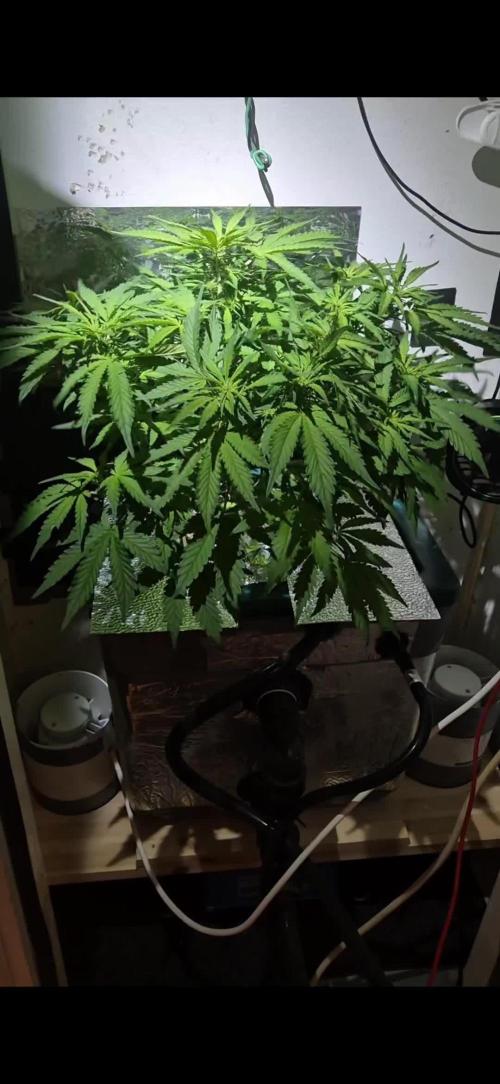
F week 3. It gets really bushy. I had to do a second defoliation. At this point everything seems to go well.
Likes
Comments
Share


@Laylowandgrow
Follow
Had to defoliate again in week 5 day 32 so far we defoliated 3 times , day 19, day 26, and day 32.
Start of week 6, this next 2 weeks the plants should triple in size and start crowning,and all defoliation are done.

Likes
58
Share


@AsNoriu
Follow
Day 97. Fast Buds Thank You !!!!
Day 109. Girl is in jars and waiting for Christmas ;)))
Happy Growing !
Likes
40
Share


@Secretflower
Follow
Hello my friends,
...June 14, 2022..Day N°84..
...Flowering day N°38...
My 2 Feminized Runtz Gum, 2 Feminized zkittzy Gorilla and 2 Feminized Banana Sherbet are fine and they growing healthy. The flowers developing very good.
I gave them water with some Hybrid and Booster powder from Green House Feeding and some Cal-Green from Metrop.
My babys are under a Mars-Hydro SP 3000 at 70% of power and at 35 cm of the canopy.
www.originalsensible.com
www.mars-hydro.com
That's all for now my friends, thx for passing through here.
Wish you the best with your green projects.
See you soon..💨💨💨

Likes
3
Share


@zZzfromspb
Follow
это был первый запуск системы и тут была допущена ошибка слишком рано были высажены в систему на 3 день после сброса каски...

Likes
2
Share


Likes
Comments
Share


@Iblis83
Follow
Starting the hardening process on all 5 plants. Buds are starting to stack really nicely and the smell is heavy and potent. 2 weeks of hardening than switching to 2 weeks of flushing. Indoor plants are getting heavy and need support hence all the strings in the pictures 😎 looking forward to the harvest.
Likes
2
Share


@Brasson
Follow
She's doing great. Heats been giving me a little problem still but no more fungus I can see an the bugs havent bothered her much. I've noticed that I let her go kinda long 😅 I still would like too flush her before cutting down so like what 2-3more weeks? Should I go ahead an start flushing?

Likes
20
Share


@Ultraviolet
Follow
Not particularly growing for speed or any dedicated reason this time round, just adding water and a abundande of positivity, gotta admit I do like the autoseed logo. Off we go again into the magical forest.
(Arthrospira platensis) cultivated in high-alkaline, mineral-rich water in Kailua-Kona, Hawaii. It is renowned for having a higher nutrient content, including more carotenoids and essential fats, compared to other spirulina brands. It is frequently cited as a "complete food" due to its dense concentration of proteins, vitamins, minerals, and pigments.
The nutritional profile of standard dried Spirulina platensis biomass. 3kg of spirulina powder has an approximate NPK ratio of 10-2-1 (or 10% Nitrogen, 2% Phosphorus, and 1% Potassium).
Here is the breakdown of the nutrient content for 3kg of powder:
Nitrogen (N): ~300g (10% of total mass)
Phosphorus (P): ~60g (roughly 2% of total mass)
Potassium (K): ~30g (roughly 1% of total mass)
3kg of spirulina powder is more than enough nitrogen for 4 cannabis plants in a 100-gallon pot—in fact, it is likely excessive and could cause severe nutrient burn or toxicity if not properly managed. Spirulina has a very high protein content (46% to 63% dry weight), which translates to a significant nitrogen source. It is often described as a 5-1-1 NPK fertilizer.
3kg (3000g) of powder in 100 gallons means 30g per gallon. General organic recommendations for potent amendments (like frass) are often around 1–3 tablespoons per gallon. 30g of powder is roughly 2-3 tablespoons, making this a very high-strength application rate if added all at once. Balance this with calcium/magnesium, and organic nutrient delivery in soil growing can lead to deficiencies in these nutrients.
Not all of that 100 gallon is used, so figuring out precise measurements was ballpark, but there is about 10kg of engineered biochar in that pot. Mostly in the top half. Ideally, I'd have 25kg in a full active 100-gallon, but......... don't mess with something that is not broken. Roots do not utilize the entire 100 gallons. This has been a couple of years of trial and error, mostly error. The amount of cations you can add in grams depends entirely on the specific cation exchange capacity (CEC) of your biochar and the type of cation being added. Biochar CEC values vary widely, typically ranging from 4 to over 300cmolc/kg. Multiple Biochars in use, ranging upwards of 100cmolc/km.
Different cations have different atomic weights
Potassium K+ 39.1g/mol.
Calcium Ca2+ 40.1g/mol.
Magnesium Mg2+ 24.3g/mol.
Nitrogen NH4+ 18.04g/mol.
You get more nitrogen bang for your buck. It all depends on the CEC of the biochar you use, but brrrrrrrrrr roughly I'm looking at 500-600 grams worth of elemental cation exchange capacity, give or take. That's just for the biochar alone. Elemental cation exchange capacity refers to the ability of materials—such as soil, minerals, and biochar to adsorb, hold, and release positively charged ions Ca2+, Mg2+, K+, Na+, Al3+, and Zn2+. This capacity is a critical measure of nutrient availability in soil and energy density in electrochemical systems.
Added calmag 2:1 to complement spirulina.
Calcium (Ca): Approximately 150g - 300g of elemental calcium.
Magnesium (Mg): Approximately 75g - 150g of elemental magnesium.
So long as pH stays in 6.3 to 6.7 ish, the plant will unlock hydrogen. Plants will be able to cycle CEC for their own needs. Hydrogen ion pumping (proton pumping) is a fundamental mechanism used by plant roots to facilitate the cycling of nutrients within a medium's Cation Exchange Capacity (CEC), directly increasing nutrient availability. A growing medium's Cation Exchange Capacity (CEC) does not contribute directly to Electrical Conductivity (EC). CEC represents potential nutrient storage, while EC represents active nutrients in the water/soil solution. A medium with a high CEC can hold many nutrients, but if there is no water present, the EC will be low.
98% of plant nutrient uptake comes directly from the soil solution.
2% of nutrient uptake is directly from soil particles.
Nutrients held on exchange sites (CEC) are not directly measured by EC until they are released into the soil solution through exchange with other ions (e.g., hydrogen ions from roots or fertilizer).
Plants source the H+ ions (protons) used in cation exchange primarily by exuding carbon sugars into the rhizosphere, then microorganisms perform root respiration, which reacts with soil water to form carbonic acid H2CO3 that dissociates into H+ and bicarbonate. Roots also actively pump out H+ ions directly to acidify the rhizosphere, plants trade hydrogen produced through metabolism for essential nutrients held by the soil.
In plant cells, the H+ (protons) used in proton pumping across the plasma membrane come primarily from the cytoplasm (cytosol). The protons are derived from internal cellular sources, including metabolic processes that release H+, and the regulation of intracellular pH homeostasis.
Distilled water is highly useful in managing the electrical conductivity (EC) of a growing medium by allowing for precise control over nutrient concentration and assisting in the mobilization of nutrients from the cation exchange capacity (CEC) into the active, plant-available nutrient solution.
Just add water & positive energy.
Potential hydrogen. pH. + - , potential charge balance for hydrogen.
So long as there is adequate oxygen in the soil and air and water moves at a decent interval, its practically impossible for the pH to skew in a soil that is taking in oxygen and releasing CO2 and nitrogen, I say practically, but meh, even with plenty of oxygen, the process of converting ammonium NH4+ to nitrate NO3- by bacteria releases hydrogen ions H+, which directly causes acidification (lowering pH). While water movement is necessary, consistent water moving through the soil can leach away basic cations Ca2+, Mg2+, K+, Na+, leaving behind acidic hydrogen and aluminum ions, causing pH to drop, especially in humid regions. High levels of CO2 in the soil (from intense respiration) dissolve in soil water to create carbonic acid, H2CO3, which lowers the pH. (barometric pumping removes that possibility) The pH in a cannabis cultivation environment, particularly in hydroponic or soilless setups, will often naturally drift towards acidic (lower pH) over time. Understand how to know when to lime the pH back up. Complex but critical. Once I understood this it helped ease the pain of understanding pH.
Base saturation directly reflects the percentage of CEC occupied by base cations. Generally, as base saturation increases, soil pH increases because fewer acidic cations, H+ and Al3,+ are present on the soil colloid surfaces.
At a pH of 7 or higher, the soil colloids are saturated with base cations, resulting in a base saturation of 90+%.
While many sources include Sodium Na+ as a base cation, some calculations focused specifically on plant nutrients (like in some nutrient management contexts) may focus solely on the "Big 3": Ca2+, Mg2+, and K+. However, in soil science and CEC (Cation Exchange Capacity) measurements, sodium is usually included in the definition of total base cations, making it the "Big 4" base cations.
At a pH around 5.5, soils often have a 45–55% base saturation, while a soil with a pH between 6.5 and 6.8 generally has an 80–90% base saturation.
Base saturation is considered a reliable, albeit complex, indicator of soil fertility and the degree of soil weathering, acting as a crucial metric in soil classification and management.
Once you take full control of the pH, so long as there is oxygen, and one keeps tabs on base saturation levels. Its near impossible for anything to go wrong. All you are essentially doing is adding water and waiting for any sign of deficiency. Not so much growing as eliminating the possibilities of things going sideways. Can't over or under water, can't skew pH, can't go anaerobic. Everything runs in optimal cycles, watering every 2 to 3 days or as required, depending on the rate of combined ET. A little warmer, a little drier, but never short on water. All the nutrients are already there in the medium, we still focus on the water, just not adding salts, but to mobilize nutrients held in the Cation Exchange Capacity (CEC) and move them into the active soil solution for plant uptake, the best supplements to add to water are fulvic acid, humic acid, or seaweed/kelp extract. Liquid solutions with high concentrations of essential trace elements. Distilled water has no alkalinity or minerals to help buffer or release nutrients. Adding these supplements turns the "empty" water into an active agent that forces nutrients off the CEC colloids into the solution for plant uptake.
When to water? When Electrical Conductivity of soil gets low. No water, no conductivity.


Likes
25
Share


@RastaGrow
Follow
GldaniGrowShop Thank you so much for bringing and giving me the strongest :)
Likes
52
Share


@GuerrillaNo_4
Follow
OVERALL:
~ Very happy with the grow, I really dialled everything in well this run.
~ She grew super fast, I put it down to the constant oxygenation of the rootzone along with consistent and constantly optimized light DLI and leaf to air temp variance. The extra Co2 helped push the plant to its limit in terms of heat, allowing it to push its hardest.
~ The lack of HST and Defoliation I feel let it finish faster due to lack of stress and stunting. The faster finishing time along with the big yield and efficient MarsHydro light, it hugely reduced my electricity costs per gram and freed up space much sooner for the next plant.
~ Turned into a very dense bush of buds, there is even smokable dense buds at the base of the plant due to the under canopy lighting (Not as dense as top canopy buds but still decent)
~ Ran a thin line between stressing the plant and letting it flourish. The buds came out big and very dense, also it's hard to see on camera but they're very frosty too (Prob from UVB)
YIELD:
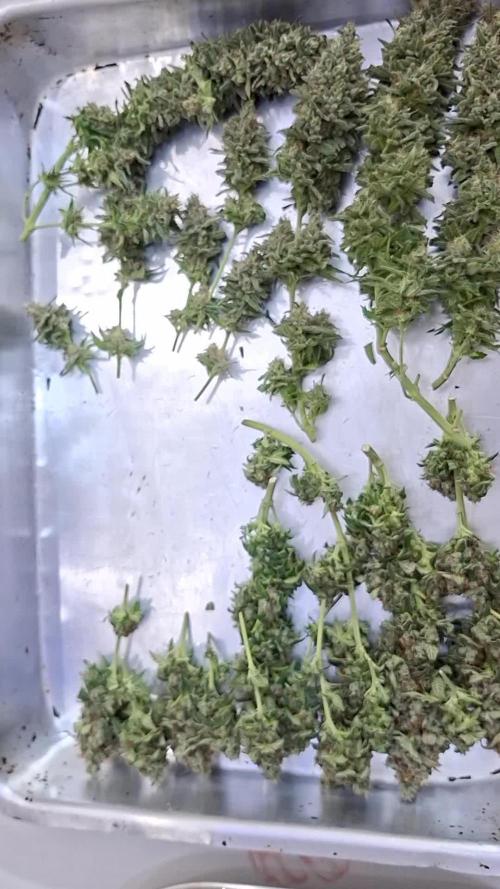
~ 145g (dry) in just 9 weeks from seed.
~ 753g (Wet)
~ 0.91g/watt
GENETICS:
~ MSNL - Gorilla Glue Auto ~ my favorite strain, as you can tell by my username!
STRAIN REVIEW:
~ Heavy hitter, like an indica but has some of that "feel it in your face" sensation of a strong sativa. Not as heavy or as strong as other GG#4's I have smoked, which would make me question the genetics used to produce the auto version. I will wait till after a cure and judge it again.
TRAINING:
~ No defoliation or HST (Bar last week for pics)
~ A little LST and leaf tucking but largely just left the plant alone to do its thing. I felt chopping healthy parts off the plant would slow the plant down and leave it with less chlorophyll to photosynthesize the light.
~ I did prune by lightly plucking dead leaves away, when the plant was ready to let them go easily.
DRYING
~ 20/21'C 50% RH with air circulation.
~ Homemade Drybox made using: 2 x Bankers Boxes ~ 2 x USB Desk Fans ~ 1 x Carbon Filter ~ 6 x Clothes Hangers
UPDATE: Day 5 after Harvest:
~ Fast dried some small batches, as we couldn't wait to sample.
~ Chopped off branches as some are down to 12% moisture whilst bigger buds are up at 18%. Moving to paper bag for couple of days to even moisture out then transferring to jars
CURING:
~Curing in jars 3/4 full.
~ Dark closet/18'C/50% RH
~ Jars burped once Hygro passes 65% and sealed when it drops to 58%.
~ Stabilised it at 62% and after 2 weeks I'll drop it some more and stabilise it at 58% to bring out more of the flavour.
~Sitting in jars with Boveda 62% at this stage.
~ Already tastes and feels great.
WATER:
~ Condensed (Starting at 40ppm)
~ Disinfected prior to adding nutrients etc. (Using COOSPIDER UVC - 253nm & 187nm bulb)
CLIMATE:
~ Ambient Air Temp = 29'C ~ 28'C LST ~ Leaf to air temp variance of between 1'C
~ Night Temp = 22/23'C ~ Day/Night temp differential 6-7'C
~ Under Canopy Temp: 26'C (Day) ~ 21'C (Night)
~ Relative Humidity = 50-60%RH (Avg. 55%RH)
~ VPD = 1.45kPa (Avg.)
~ Co2 ranges from 900ppm to 1500ppm (Avg. 1200ppm)
AIR PRESSURE:
~ Ambient Air Pressure (outside tent) = Mean Avg. 1010 mbars (101 Kilopascals)
~ Actual Air Pressure (inside tent) = Mean Avg. 1005 mbars (100.5 Kilopascals)
~ Air Pressure Differential = up to 0.5 kPa range between inside & outside
LIGHT:
~ UVB (High intensity @ 45cm) ~ 2 hours daily mid light cycle.
~ Warm White 3000K/White 5000k/Far Red (660nm)
~ At plant canopy = PPFD 900-1000umols/s/m2 ~ Lux 45,000-55,000 ~ Daily Light Integral 55-65
~ Under canopy lighting ~ Blue (460nm)/ Red (630nm)
NUTRIENTS:
~ Mostly Advanced Nutrients (For base nutrients and most additives, as only company I could find scientific data on)
~ Canna (For Calmag Agent and Cannazym)
~ Plant Success (Great White Mycorrhizae)
ADDITIONAL GROW TECHNIQUES:
INFECTION PREVENTION & CONTROL:
Infection control practices i.e
~ PPE, Alcohol Hand wash
~ Gray room outside tent,
~ Carbon filter
~ HEPA filter
~ Plasma Ionizer
~ Inline UV-C germicidal bulb
~ Also using an additional higher powered COOSPIDER (UVC) 253nm & 187nm bulb, to disinfect the gray room outside of the tent once a week for 30 mins.
~ Ozone (o3) gas that is produced using the COOSPIDER, is then directed into the tent to further control any unwanted pathogens.
~ Ed Rosenthal (Zero Tolerance organic pesticide), sprayed once a week as preventative measure. On hand for heavier use (Once every 3 days before lights out for 15 days) in the case of an outbreak
(No outbreaks yet, due to aforementioned preventative measures)



Likes
15
Share


Likes
5
Share


@Elevated_97
Follow
I am no longer going to be using the fox farm nutrient line not for any other reason than I just want to switch it up and go with something else before I go into flower. I'm not saying fox farm if a bad line, I just want something different. I feel fox farm is the line you go to when your first starting out and buying from Amazon, not downing anyone I've done it myself we've all been there and it works well for the price. But if you get their full line including Bush doctor and all it gets to be a bit mutch. I haven't went that far yet because of that, I don't want to feel like I have to buy 12 different nutrient solutions and when you do you find out you really only needed 5 or 6. Its for this reason I've decided to go with the Mills line of bottled nutrients their line up is 6 solutions total they are a bit pricy for the 6 one of the bottles being $120.00 US alone, but I'm also a firm believer in you get what you pay for and every resource and review I've seen makes me have high expectations for this nutrient line. Updates soon to come over the next few weeks as I have been currently flushing my plants for the past 2 days getting ready for the new neuts. I flushed with just straight water ph 6.0 the first day and again the next day (today Jul 25) and once again a few hours later with cal mag, silica and a little bit of recharge to help hold the plant over until I feed the new neuts and help ease them in as well. Until next time happy growing fellow growmies

Likes
2
Share


@DaddyPrime2
Follow
10/11/2024 been struggling with keeping the soil from over drying and becoming hydro phobic. she's been root bound for so long, there's barely any soil for her to keep water in. i had to dig into the sides of the pot and break of roots and find the dry spots to keep her wet.
10/15 shes showing pistils.
Likes
15
Share


@tokesly
Follow
This week the flowers really started to come out. Got some nice closeups on their formation. Video includes a quick rundown of the nutrient line and supplements. Apologies for the sideways viewing, going to straighten out all the videos soon.
