Likes
Comments
Share


@CalGonJim
Follow
10/10 2 PM Must be another week messed up. I added more flowers deleted last week and planted four more seeds today four on the third and four on the 10th.
10/17, 11:53 AM. I had a near fatal crash with sweet seeds gorilla girl XL auto I must not have flushed the cocoa properly and she hit a hotspot so I poured some RO water on it to hopefully flush anything away and I think she might make it I’m actually very surprised 👍👍 one of the cotyledons is burned out, but I’m still growing half a plant so that’s something 😂👍👍👍all the others are doing fine
Sweet seeds makes unusually strong plants they’re phenomenal and some of them are strong like they just like came right out of a mountain so they can survive quite a bit and this is a seed stock from 2021.
10/17 1:47 PM I was distracted by my Zinnia
10/18 8am I asked Grok to make a printable reference guide.




Likes
47
Share


@Ultraviolet
Follow
The cannabis strain Grape Guava can be a purple strain, depending on its specific phenotype and genetic makeup. While not all phenotypes of Grape Guava are purple, some variations, such as the Zatix Grape Guava, are noted for their striking purple appearance due to the genetic expression of anthocyanin pigments.
https://www.youtube.com/watch?v=cKdVmdoKJ5k
In a garden of green, Grape Guava gleams,
With its fruity aroma, enchanting dreams.
Clusters of grapes, guava's sweetness ignite,
A strain so divine, in purple and white.
Euphoria whispers, a lush fruity haze,
Grape Guava's embrace, a tranquil daze.
Off and away.@1400ppm. The increased CO2 allows plants to thrive at higher temperatures, which in turn necessitates higher humidity to maintain the ideal VPD for healthy growth and transpiration. 80F -5F = 75F LST with 70% RH = 0.72 kPa. Higher temperatures and humidity promote rapid growth, nutrient uptake, and photosynthesis while maintaining a lower stress level. Temperature influences the rate of enzymatic reactions involved in aerobic respiration. Enzymes, such as those involved in glycolysis, the Krebs cycle, and the electron transport chain, work most efficiently at an optimal temperature range. In low temperatures, enzymatic activity will slow down, thus reducing the rate of aerobic respiration. In high temperatures, enzymes can become denatured, thus impairing their function and stopping the process of aerobic respiration. Glucose is the primary fuel for aerobic respiration. The rate of aerobic respiration increases with the availability of glucose, as it is the starting point for glycolysis. If glucose levels are low, cells may rely on alternative energy sources such as fatty acids or amino acids , but these processes may yield less ATP or be less efficient. To determine this effect, carbon dioxide volume was measured (as carbon dioxide is an output of aerobic respiration)
18/6 with the 6 being IR. The near infrared (IR-a) borders around 700nm up to 1400nm @ photon par flux density of 1.8 instead of darkness, keeping temps overnight a neat 77F-80F.
Think of my tent as a lung. What goes in must come out. When the rate of air going out exceeds the amount of air coming in, it creates a negative pressure. Tent concaves (bends in). If set up correctly, your RH will begin to drop slowly to the desired level you set, and the extraction turns off when it reaches desired% RH. The plant, as it performs cellular respiration, will always be releasing more water into the air, so the RH% of the tent overnight will always increase, so long as oxidative phosphorylation is occurring. As soon as the RH% creeps back up to 55%, the extraction turns back on, over and over. This creates a strong pressure differential which will work wonders on your grow. Replicating high and low-pressure fronts in nature. Critical for oxygen diffusion at the critical time of peak cellular respiratory function..
Moisture will not transfer from a saturated atmosphere to another if that air is already at or above its saturation point, meaning the air can't hold any more water vapor. Once I understood that water is produced as a by product during cellular respiration, specifically at the very end of the electron transport chain (ETC) where electrons are finally transferred to molecular oxygen, the higher the RH of the air, the more resistance there is for more moisture to be added to that environment, and effects the ease with which it does so. But none of that water comes from the pot; it's pulled from the air. If you run high daytime RH, your medium/pot is 100% reliant on transpirational root pull to move water. ZERO evaporation happens across the atmosphere if the tent air has high RH%, the medium cannot release its water through evaporation. Once a canopy develops, light no longer slowly wicks and evaporates from the topsoil. The Soil-Plant-Atmosphere Continuum (SPAC) describes the continuous pathway and process of water movement, driven by a gradient in water potential, from the soil, through the plant's roots, stem, and leaves, and finally evaporating into the atmosphere through transpiration. There is evaporation, there is transpiration, and then there is evapotranspiration; Evapotranspiration (ET) is the combined total of two processes: evaporation (water lost directly from soil and surface water into the atmosphere) and transpiration (water released from plants to the atmosphere through their leaves). Evapotranspiration represents the total amount of water that moves from the medium into the air. There is no such thing as a medium with too much water, only a medium that retains too much for too long.
The water must always flow efficiently from one atmosphere(Medium) to another(Air) in a timely manner. Moisture is a critical factor for bacterial growth and decay. Dictating how long it's allowed to sit in any one location for any given period is a key preferred control. To ensure a net reduction in a bacterial population, the rate of removal (ET) must exceed the rate of bacterial growth (decay rate), which is often modeled as a growth rate for the specific bacterium under the given conditions. By optimizing daytime VPD, we also optimize conditions for bacterial growth to explode exponentially above 77°F.. If water is allowed to sit in a medium without an escape within a timeframe, nothing good will happen. IF High RH is maintained overnight as well as during the day, placing 100% of water movement at the behest of daytime transpiration, roots can only pull where they can reach, and if soil is compressed above a certain point, moisture will become trapped in a medium with no way of moving day or night. This will begin the countdown for decay to take hold. When water stagnates in a medium, it loses oxygen, creating anaerobic conditions that foster the growth of harmful microorganisms like bacteria and fungi, which can produce toxins and disease vectors.
Thigmomorphogenesis, the process by which plants respond to mechanical stimuli like touch by altering their growth and development, results in significant morphological changes to improve survival against mechanical perturbations. This complex response involves sensing touch and initiating physiological and genetic responses, leading to changes in form and structure over days or weeks. The process is triggered by physical forces such as wind, rain, or touch. Plants adapt to these stimuli by changing their shape and structure, which may include slower growth, thickened stems, or altered leaf development. Plants possess sophisticated mechanisms to detect even subtle mechanical stimuli and initiate responses. A variety of molecules, including calcium ions, jasmonates, ethylene, and nitric oxide, are involved in signaling these mechanical inputs. Touch can induce the expression of genes that encode proteins for calcium sensing, cell wall modification, and defense mechanisms. A plant exposed to constant wind may become shorter and sturdier. A plant that is touched frequently might grow more slowly to conserve energy and develop thicker cell walls. These changes increase a plant's resilience and ability to survive in harsh environments.
Let's get Thiggy with it.
Likes
18
Share


@Sti_Cazz
Follow
Using Root booster and carefully spraying once or twice a day, as I see the soil dry... so far so good...

Likes
2
Share


@YehGreen420
Follow
Uma semana muito boa mas com muitos fazeres por isso foi deixar andar só no fim dos dias é que começarei os treinamentos.
Algumas estão refilando bem outras estão criando poucos braços mas é deixar andar.
Likes
150
Share


@RussianGrower
Follow
I welcome all my like-minded people who are in different parts of the world. I thank everyone who provides moral support to Russian plant growers. 👍
It's me again-an underground Russian grower with some experience with different strains of cannabis. Subscribe to my diary if you want to follow my progress and learn a lot about the life Of Russian growers, and the difficulties they face every day👊
Today my have my plants 62 day life. 9 weeks. today I visited my underground production.
As I will have difficulties in financial investments, I had to collect from improvised materials additional ventilation and air filtration. In addition, I installed forced ventilation at the entrance with a computer power supply.
Bubblelicious Auto-with the genetics of this cannabis variety I was familiar before, so knew what to expect from these plants. I can say one thing, it is the most delicious and sweetest sort of marijuana I grow. Also, it produces a lot of oils which I think it is suitable for extraction or cooking cannabis food. I look forward to the harvest
Neville's Haze Auto - this variety of cannabis shows an unprecedented strength in growth, its flowering only in the early stages, and should take a long time before its full sexual maturity.
In addition, I made my girls an intimate haircut, so that their genitals become like full-fledged women.
In General, I'm doing well, thanks to this resource and the advice received here, I manage to fight with the stench, I'm free and I'm not going to finish my activities. Until next time. 😉


Likes
7
Share



Likes
23
Share


@Ganjagrandaddy
Follow
What can i say about this amazing success story from Barneys Farm. They were a breeze to grow and took whatever i theew at them without a hitch. the bigger pheno girls were amazi g with growth spurts and went easily more than double in stretch. I ran out of silicon and calmag which did hold them back a little during flower. In true Gorilla strain style , they were floppy with their weights from about week 6 and i suggest staking early on for a better control of their bud position. Without my lazy growing practices ( being resolved for the fast bud run shortly !) , i feel this strain is a winner. rhe smaller phenos were unfortunate but still gave nice buds to smoke. I would recommend this stesin to growers at all levels. easy if you want it to be but would meet you every step of the way with more complex training methods too. Love Gorilla Skittelz. Thanks for sticking around and commenting. Would happily share a bowl with you all.

Likes
45
Share

@Ultraviolet
Follow
My homework.
Rubisco regeneration is intrinsically linked to nitrogen supply because Rubisco is a major sink for nitrogen in plants, typically accounting for 15% to over 25% of total leaf nitrogen. The regeneration phase itself consumes nitrogen through the synthesis of the Rubisco enzyme and associated proteins (like Rubisco activase), and overall nitrogen status heavily influences the efficiency of RuBP regeneration.Structural Component: Nitrogen is an essential building block for all proteins, and the sheer abundance of the Rubisco protein makes it the single largest storage of nitrogen in the leaf.
Synthesis and Activity: Adequate nitrogen supply is crucial for the synthesis and maintenance of sufficient Rubisco enzyme and Rubisco activase (Rca), the regulatory protein responsible for maintaining Rubisco's active state. Nitrogen deficiency leads to a decrease in the content and activity of both Rubisco and Rca, which in turn limits the maximum carboxylation rate, Vmax, and the rate of RuBP regeneration Jmax, thus reducing overall photosynthetic capacity.
Nitrogen Storage and Remobilization: Rubisco can act as a temporary nitrogen storage protein, which is degraded to remobilize nitrogen to other growing parts of the plant, especially under conditions of nitrogen deficiency or senescence.
Nitrogen Use Efficiency (NUE): The allocation of nitrogen to Rubisco is a key determinant of a plant's photosynthetic nitrogen use efficiency (PNUE). In high-nitrogen conditions, plants may accumulate a surplus of Rubisco, which may not be fully activated, leading to a lower PNUE. Optimizing the amount and activity of Rubisco relative to nitrogen availability is a target for improving crop NUE.
Photorespiration and Nitrogen Metabolism: Nitrogen metabolism is also linked to the photorespiration pathway (which competes with carboxylation at the Rubisco active site), particularly in the reassimilation of ammonia released during the process.
To increase RuBisCO regeneration, which refers to the process of forming the CO2 acceptor molecule Ribulose-1,5-bisphosphate (RuBP) during photosynthesis, the primary methods involve optimizing the levels and activity of Rubisco activase (Rca) and enhancing the performance of other Calvin-Benson-Bassham (CBB) cycle enzymes.
Biochemical and Environmental Approaches:
Optimize Rubisco Activase (Rca) activity: Rca is a crucial chaperone protein that removes inhibitory sugar phosphates, such as CA1P (2-carboxy-D-arabinitol 1-phosphate), from the Rubisco active site, thus maintaining its catalytic competence.
•Ensure optimal light conditions: Rca is light-activated via the chloroplast's redox status. Adequate light intensity ensures Rca can effectively maintain Rubisco in its active, carbamylated state.
•Maintain optimal temperature: Rca is highly temperature-sensitive and can become unstable at moderately high temperatures (e.g., above 35°C/95F° in many C3 plants), which decreases its ability to activate Rubisco. Maintaining temperatures within the optimal range for a specific plant species is important.
•Optimize Mg2+ concentration: Mg2+ is a key cofactor for both Rubisco carbamylation and Rca activity. In the light, Mg2+ concentration in the chloroplast stroma increases, promoting activation.
•Manage ATP/ADP ratio: Rca activity depends on ATP hydrolysis and is inhibited by ADP. Conditions that maintain a high ATP/ADP ratio in the chloroplast stroma favor Rca activity.
Enhance Calvin-Benson-Bassham (CBB) cycle enzyme activity: The overall rate of RuBP regeneration can be limited by other enzymes in the cycle.
•Increase SBPase activity: Sedoheptulose-1,7-bisphosphatase (SBPase) is a key regulatory enzyme in the regeneration pathway, and increasing its activity can enhance RuBP regeneration and overall photosynthesis.
•Optimize other enzymes: Overexpression of other CBB cycle enzymes such as fructose-1,6-bisphosphate aldolase (FBA) and triose phosphate isomerase (TPI) can also help to balance the metabolic flux and improve RuBP regeneration capacity.
Magnesium ions, Mg2+, are specifically required for Rubisco activation because the cation plays a critical structural and chemical role in forming the active site: A specific lysine residue in the active site must be carbamylated by a CO2 molecule to activate the enzyme. The resulting negatively charged carbamyl group then facilitates the binding of the positively charged Mg2+ion. While other divalent metal ions like Mn2+ can bind to Rubisco, they alter the enzyme's substrate specificity and lead to dramatically lower activity or a higher rate of the non-productive oxygenation reaction compared to Mg2+, making them biologically unfavorable in the context of efficient carbon fixation. The concentration of Mg2+ in the chloroplast stroma naturally increases in the light due to ion potential balancing during ATP synthesis, providing a physiological mechanism to ensure the enzyme is activated when photosynthesis is possible. At the center of the porphyrin ring, nestled within its nitrogen atoms, is a Magnesium ion (Mg2+). This magnesium ion is crucial for the function of chlorophyll, and without it, the pigment cannot effectively capture and transfer light energy.
Mg acts as a cofactor: Mg2+ binds to Rubisco after an activator CO2 molecule, forming a catalytically competent complex (Enzyme-CO2-Mg2+). High light + CO2) increases demand: Under high light (60 DLI is a very high intensity, potentially saturating) and high CO2, the plant's capacity for photosynthesis is high, and thus the demand for activated Rubisco and the necessary Mg2+ cofactor increases. Mg deficiency becomes limiting: If Mg2+ is deficient under these conditions, the higher levels of Rubisco and Rubisco activase produced cannot be fully activated, leading to lower photosynthetic rates and potential photo-oxidative damage.
Optimal range: Studies show that adequate Mg2+ application can enhance Rubisco activation and stabilize net photosynthetic rates under stress conditions, but the required concentration is specific to the experimental setup.
Monitoring is key: The most effective approach in a controlled environment is to monitor the plant's physiological responses e.g., leaf Mg2+ concentration, photosynthetic rate, Rubisco activation state, and adjust the nutrient solution/fertilizer to maintain adequate levels, rather than supplementing a fixed "extra" amount.
In practice, this means ensuring that Mg2+ is not a limiting factor in the plant's standard nutrient solution when pushing the limits with high light and CO2.
Applying Mg2+ through foliar spray is beneficial to Rubisco regeneration, particularly in alleviating the negative effects of magnesium (Mg) deficiency and high-temperature stress (HTS). While Mg can be leached from soil, within the plant it is considered a mobile nutrient, particularly in the phloem. Foliar-applied Mg is quickly absorbed by the leaves and can be translocate to other plant parts, including new growth and sink organs.
Foliar application of: NATURES VERY OWN MgSO4 @ 15.0g L-1 in a spray bottle.
Foliar sprays are often recommended as a rapid rescue measure for existing deficiencies or as a supplement during critical growth stages, when demand for Mg is high. Application in the early morning or late evening can improve absorption and prevent leaf burn.
The starting point [of creativity] is curiosity: pondering why the default exists in the first place. We’re driven to question defaults when we experience vuja de, the opposite of déjà vu. Déjà vu occurs when we encounter something new, but it feels as if we’ve seen it before. Vuja de is the reverse—we face something familiar, but we see it with a fresh perspective that enables us to gain new insights into old problems.
Likes
30
Share


@Roberts
Follow
Watermelon auto is growing great in the Gen1:11 nutrition, under the Medic Grow Mini Sun-2. She got a solution change today to more of a blooming mix. Her colas are starting to form. 🤞🏻she performs great in next few weeks. Everything is going good and not much else to report at the moment. Thank you Medic Grow, Gen1:11, and Royal Queen Seeds. 🤜🏻🤛🏻🌱🌱🌱
Thank you grow diaries community for the 👇likes👇, follows, comments, and subscriptions on my YouTube channel👇. ❄️🌱🍻
Happy Growing 🌱🌱🌱
https://youtube.com/channel/UCAhN7yRzWLpcaRHhMIQ7X4g
Likes
1
Share


@nefcxt
Follow
These 2 are growing amazing, especially plant 1 is doing great.
I've had the humidity on about 40% for most of the time since I have another flowering auto in the tent but these don't seem to mind. I've also had them on about 400umol/m2/s

Likes
7
Share


@ExoticoSativo
Follow
Week 13 (Harvest Week)
M14 Day 85 - 24/0 (12am-12am)
Not check up
M15 Day 86 - watered regulars .
Not ph. Left only 1 light dimmed at 50%. 24/0 (12am-12am)
M16 Day 87 - 24/0 (12am-12am)
Not check up 🙏
M17 Day 88 - Dark Period 8pm/ watered regulars not ph.
M18 Day 89 - 24/0 (12am-12am)
First 24h D at 8pm. Bring electric extension/ for air circulation.
M19 Day 90 Jueves - Harsvestday ❤️ Water Regulars/
Harvested autos
Bud wash Bk, purple punche big cola only,
Hang dry buds, place air 2.
Trimmed bigger fan leaves with hands only.
M20 not check up
M21 water regular, transplant
Tools:
- scissors ✂️
- bandeja
- alcohol
- dry paper
- extension
- jars
- gloves
Water curing experiment
Jar con cogollitos de bk, 2 ramitos de purple punch y demas cogollos de gorilla glue.
M19 1st water 11:50 pm
M20 at 11:50pm Day 1
M21 at 11:30pm Day 2
M22 at 10:22pm Day 3
M23 at 9:50pm Day 4
M24 at 8pm Day 5
M25 at 9pm Day 6
M26 at 8pm Day 7
Dry process
Secador 1 hora, secando en la interperie
Necesito
- malla
-agua destilada
Driying Process
Temp 18⁰-22⁰ Humd 55-65%
M19 Day 0 Harvested
M20 Day 1 - T34 ⁰ H40-70
M21 Day 2 - T33 H55
M22 Day 3 - T32 H50
M23 Day 4 - T30 H52
M24 Day 5 - T25 H70 dif loq
M25 Day 6 - T26 h75
M26 Day 7 - T25 h80
M27 Day 8 - T23 h80
M28 Day 9 - T25 H80 (Pp bud test was amazing, crazy body high, mind as well, munchies, cotton mouth. The smell is super strong but im too used to it.)
M29 Day 10 - changed to warmer place, T30 H55
M30 Day 11 - T25 H80
M31 Day 12 - curing process jar buds
Will open jar every 24h for one full month.
First smoke july 1st ❤️
Likes
8
Share


Likes
8
Share


@Dark_Shadow_420
Follow
La punta de las hojas están amarillas, no se si es por falta de alimento o por exceso de luz, estoy probando regarla solamente con agua para ver si mejora.
Likes
7
Share


@CCSAUTOGROW
Follow
Thickening up nicely. I recently did a light defoliation to make sure nothing was blocking the light. Nice medium sized buds. Nicely frosted. She smells delicious. Like cookies & cream. 😏
Processing
Likes
22
Share


@Luv2Grow
Follow
Day 43 - First day of week 7 today and she looks really good just not sure if she’s really starting to flower yet. I’m hoping this is just typical of the GC strain.
Day 44 - No major changes, she’s growing and I’m loving the looks of her. Will continue uploading daily pictures.
Day 45 - She’s looking really good and budding more and more each day. Gave her straight pH’d water today and tomorrow and will give her another feeding on Saturday. She’s drinking almost a gallon of water a day.
Day 46 - Things are looking good with this girl. Bud sites are growing daily and this thing is a beauty. Gave her another feeding of just pH’d water and will “feed” her tomorrow.
Day 47 - ALL is looking good and she’s looking purdy. Gave her a feeding with the foxfarm nutes today. Did a true measurement to the biggest branch and she’s at 25.5”. Will continue to measure each day to see how much she’s growing in a 24 hour period.
Day 48 - Looking gorgeous and still stretching. Grew another two inches and is sitting at 27.5” right now. She’s really starting to fill in now and looking forward to the next few weeks.
Day 49 - The way thing thing is growing, she’s gonna be a beast. Gave her straight pH’d water tonight and will give her a feeding tomorrow. Looks like she finally stopped stretching, sitting at 27.5” still so hopefully she’ll start putting on the weight.
Likes
2
Share


@MatthewVC
Follow
Update; February 14th, 2023.
From the moment I flipped to flower, they’ve been exploding with growth! They are super healthy! They grow back and fill in so fast after defoliating, no matter how heavy I go.
I’ve added the supplemental lighting (Viparspectra 600) this week to really get the most I can. Figuring out a way to mount it higher.


Likes
15
Share


Likes
80
Share

@Ganjagrandaddy
Follow
Day 28 flowering: Another enjoyable week using this little ray of sunshine.. The 2 plants under it are thriving and showing perfect health. The coverage is plenty enough for both plants in their 30L pots and at a height of approx 18 inches above them both, has enough depth penetration to reach the lower growth developing.
The Northern lights has some nice stacking colas forming which will hopefully end with a stout but bud heavy girl. Her golf ball tops are a good sign for the 3rd week flowering too. She has plenty of mains to help this happen I think.
My Grandaddys Mimosa is also doing brilliant now and has so much growth on her to build nice buds onto. She looks a little more productive than the Northern light too so should be an interesting race.
The others moved out of the lights canopy are all going well too. Looking forward to the Gorilla cookies too.
All in all another great weeks performance from the Xs1500. Onward and upward growmies
Be well .
Likes
8
Share


@CannabisCultivate
Follow
We have unfortunately lost the Black Opium in this line up but the other three are doing well. We have some albinism throughout the White Widow and she looks lovely to say the least, Kabul is well on her way and doing great along with the Purple Opium. Hopefully we have a great week and these girls keep in their groove!

Likes
4
Share

@Oyziphar
Follow
🌿
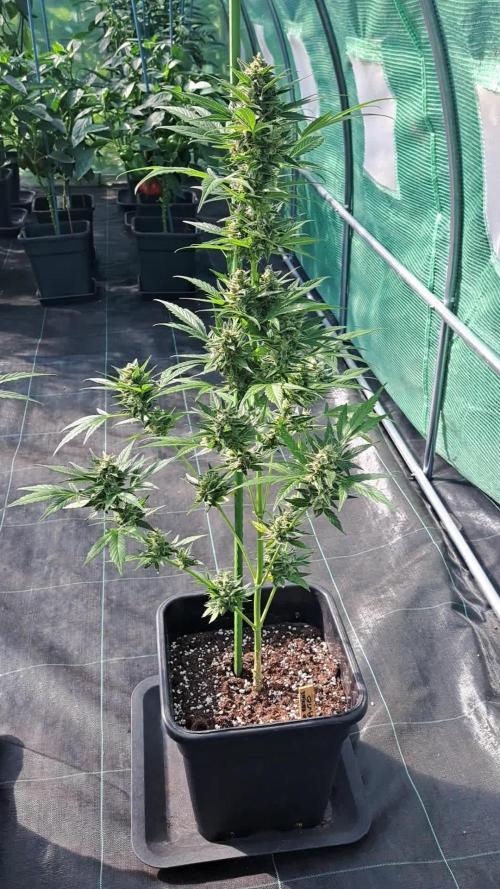
Once again, we had very sunny days this week 🌞🌞🌞and another heat wave is coming 😍😍😍
Plants are ready to harvest and they are very smelly 🌷🌷🌷
Some leaves went yellow. I defoliated these leaves 🍂
Only 3 plants on the photos 😲 Last week I noticed a little bit of budrot in plant #3 😱 I harvested the plant to prevent the mold to spread 👹