


Processing
Likes
Comments
Share


@Lifted
Follow
Week 8 ,not much has changed..Trying to get more height still and haven't used any nutrients. Would raising my light give my plant more height?


Likes
8
Share

@OS_Farmz
Follow
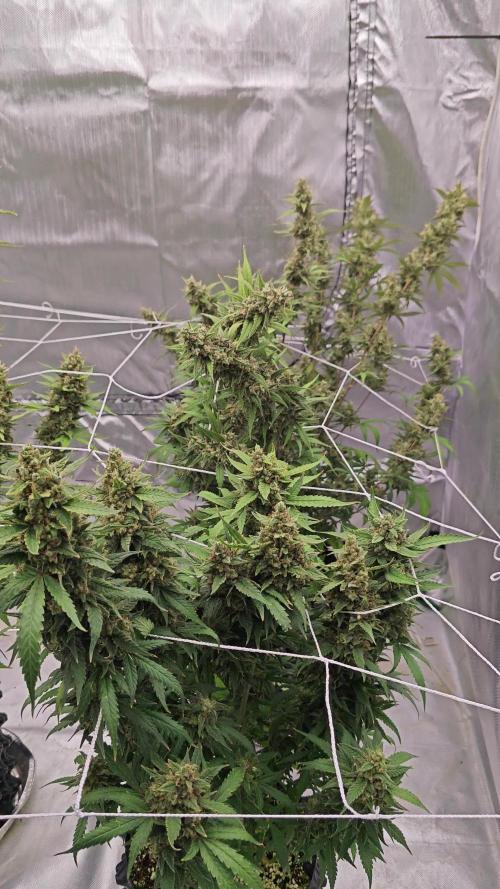
This week will be the last one for these babies, already started flushing them with water. Plan to continue so for 2-3 more days until reach around 700-600 ppm and Bob is your uncle. It was my first experience with auto flowering strains. It gives much less amount of products comparing to photo, but less stress as well, easy growing, plants are quite are unpretentious. Let's see how potent they will be.


Likes
13
Share


@GanjaFarmar
Follow
To be honest overall this strain done good so as the others. Reflecting back on how i started with just a tent and light, and slowly buying the fans and filters whiles the plants were growing.
But i did want these plants to grow naturally without topping and Low Stress Training. I regret not removing the lower branches becuase i did get alot of small airy buds down there. But it was all trial and error. All i done was remove some fan leaves when good to do so every now and then. Not on a mad level tho, i did have alot of sugar leaves which i will be making some stuff with!
At veg the plants had deficiencies due to out of date Biobizz bottles. But that got sorted with the magic of Algimac and Calmag.
Overall
Next time I will definitely train the plants and maybe top a few.
Final Yield:
Plant #1 21.88 Grams
Plant #2 33.36 Grams
Plant #3 56.06 Grams
Which yield exactly 110 grams! Ounces come out very fat with these light buds
Not bad for the conditions they were brought up in, and with no training!
Thanks for everyone who has followed this diary throught out the journey! I hope this diary will help people out.
And thank you to Seedstockers for very cheap and quality seeds.
And special thanks for the GrowDiaries Team for providing the best platform for growing journals! I couldnt explain how much this Diary helped me. Its like a dream come true finding a site like this! And if you do see this message, i would love to see a Iphone app coming soon!
Kind Regards!
One love!
Likes
43
Share


@MadeInGermany
Follow
Flowering day 59
since time change
to 12/12 h.
Hey guys :-)
The lady is slowly coming to an end 😍.
The buds start to swell extremely .
The trichomes mature day by day.
This week she was given a very light flush with Clean Fruits so that she can use up her remaining nutrients in the coming days 👍.
It will be harvested in the next 6-10 days 😍.
I can't wait to try them all :-) .
Otherwise everything was cleaned and checked.
Have fun and stay healthy 💚🙏🏻
👇🏼👇🏼👇🏼👇🏼👇🏼👇🏼👇🏼👇🏼👇🏼👇🏼👇🏼👇🏼
You can buy this Nutrients at :
https://greenbuzzliquids.com/en/shop/
With the discount code: Made_in_Germany you get a discount of 15% on all products from an order value of 100 euros.
👇🏼👇🏼👇🏼👇🏼👇🏼👇🏼👇🏼👇🏼👇🏼👇🏼👇🏼👇🏼
You can buy this strain at :
https://www.exoticseed.eu/
Water 💧 💧💧
Osmosis water mixed with normal water (24 hours stale that the chlorine evaporates) to 0.2 EC. Add Cal / Mag to 0.4 Ec Ph with Organic Ph - to 5.8 - 6.5
MadeInGermany

Likes
10
Share


@Medgrow93
Follow
The Wonder Pie were showing signs of deficiencies so I added 2ml/L of liquid worm castings to see if it helps, also top-dressed diatomaceous earth to help get rid of the fungus gnats. Will top dress the powdered nutrients again in 1-2 weeks. Also foliar sprayed them with Sugar Candy Syrup to help with the deficiencies. I'll go with bigger plants next time because I think I won't get much from these smaller plants. Other than that, just waiting for them to do their thing and hopefully harvest in 5 weeks or so.

Likes
6
Share

@Yahti
Follow
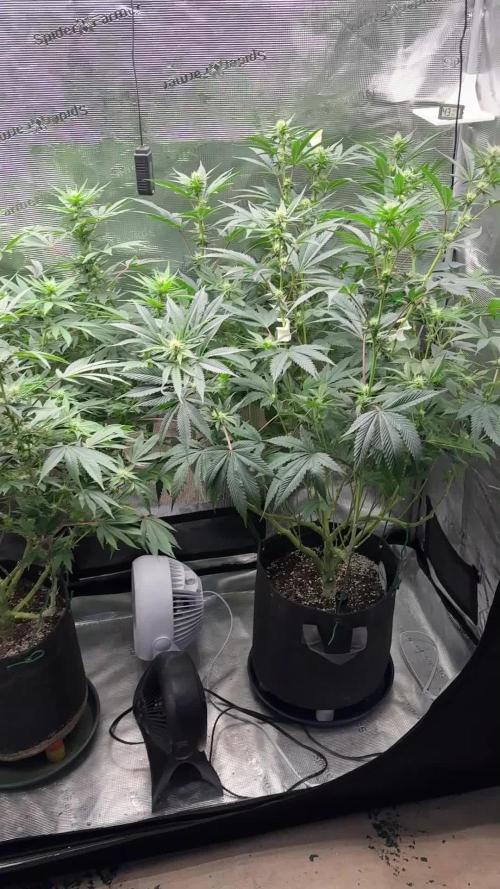
Having to feed every other day and she is drinking 7L of water. (3mL CalMag | 5mL Micro | 5mL Gro | 7.5mL Bloom (per gallon)
She seems to be done stretching.
Did a final prune and have the final form set.
Going to start dialing back the N, she certainly has enough, and going to do a 0.5g top dressing of Sulphur.
I want to start building up the mercaptans but don't want to over acidify the soil and prevent P uptake.
Hopefully fall temperatures kick in soon, I'm seeing peak temps at canopy of 84°F @ 850PARR.
The end of this week will be day 30 of flower (50%) so this will be the last week running this hot.
**Update | She is still stretching**
Plant has great vigor but terp wise so far not really impressed.
Its certainly got some fruit to it but is also has this earthyness to it that just isn't my number.
Regardless the update next week will be good. She is putting on some great colas much faster than its tent mate

Likes
66
Share


@ButterfliesLittleFarm
Follow
Hello Diary.
A pretty stressful week is behind us. It is now clear that the plants do not respond well. I suspect the lack of Cal-Mag. It's also possible that I put in too much BioBizz. Royal Haze # 1 is the most affected, I get Epsom salt and start watering them with only water and epsom salt.
I am sad that this is what is happening right now, I hope to be able to recover them before the cycle is over.
--------------------------------------------------------------------------------------------------------------------------------------
12/12/2019. Day 43.
Watering. After adjusting the pH to 6.3, I added epsom salt. One tablespoon per 3.5 liters of water. I usually water the plants in the evening, but today I watered them in the morning.
13/12/2019. Day 44.
Watering. This time I watered in the evening, less than 48 hours since the last watering. I did the same thing as the day before.
15/12/2019. Day 46.
Watering and taking photos. Today I watered the same as the two previous times. Adjust pH to 6.3 with BioBizz pH- and add epsom salt.
I also measured the height of the plants and they may have grown 1 cm.
17/12/2019. Day 48.
Watering. Today I only watered with pH regulated water. For now I don't see any changes to recover, I plan to go to a grow shop for some advice.
18/12/2019. Day 49.
Photography.
---------------------------------------------------------------------------------------------------------------------------------------------------------------------
All three plants have grown differently but they grow beautifully, the smell is strong, the flowers are filling well. I have to put them back in balance and everything will be great.
Since Christmas is approaching and Grow Diaries has released a video contest, I have decided to celebrate my first grow diaries Christmas and made a video. I hope you will like it.
Merry Christmas everyone.

Likes
12
Share


@HIAZ_urbanbudfarmer
Follow
Hi gromie's welcome to week 8.
These girls are going great, started flushing on Monday 11/11/24 with plain ph'd water and Resin from Green Planet Nutrients at 2ml/ltr.
I also reduced watering to just 2 times a day for 15 minutes on each time.
Just trying something different as I usually do high fertigation . 15 minutes on watering cycle every 2 hours.
From what I've read, I was hoping they would draw moisture from within themselves to help with drying but also some people believe it can increase THC??
It has worked at bringing out some more of that beautiful colour with in the buds but you can really notice the back plant has started canabilising itself!
Starting to see some really nice fading of colours on the vegetation of the plant at the back, which is something I don't usually get with hydro because you usually feed them right to the end & Only need to flush for 2 to 3 days. Gave them a long flush this time.
I've been waiting on a new microscope to arrive to check trichomes, but these girls are looking about done going off pistills turned orange/brown & curling in , Calyx closed & swelling up, looking really frosty!!! Will harvest this week! As I need to get veging plants into Flower
Come on Grow diaries get your act together!!!
I'm tired of updating my
Diary only to see it's all wrong, things have been changed, put my day temp at 28°c save it & it shows -2°c & it's like that All through the diaries????


Likes
6
Share

Likes
24
Share


@DeepRootsGrowTrees
Follow
SWISS DREAM ROSE 🌹 CBD AUTO
KANNABIA SEEDS
WEEK #8 Overall
Week #6 Flower
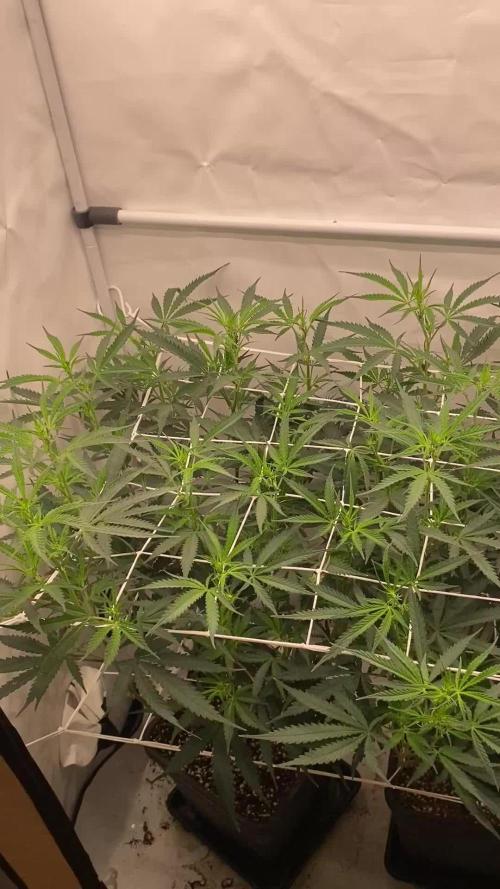
This week she's looking beautiful dense purple buds that have trichomes along with the white and orange colored hairs. Great Genetics 👍 from Kannabia Seeds of your looking to grow some CBD!! Stay Growing!!
Kannabia.com
SWISS DREAM ROSE 🌹 CBD AUTO


Likes
77
Share


@SooSan
Follow
Le stretch est vraiment ridicule, je voulais que ça monte jusqu'en haut... Tant pis...
En tout cas la flo est lancée 😁
Dans l'ordre:
1) Afghan Peach x Blue Monkey
2) Gelato Cake
3) Fast Critical Poison
4) Tropical Fuel
5) Hindu Kush
6) (Blueberry x Black Domina) X (Kosher Kush x Mk-Ultra)
7) Blueberry
8) Herz OG
9) (Blueberry x Black Domina) X (Kosher Kush x Mk-Ultra)


Likes
92
Share


@Roberts
Follow
Apple Fritter is growing good. I applied frest lst, and a defoliation. She is growing in a 5 gallon New Level Hydro bucket. Under a Spider Farmer SE5000 at 60 percent power right now. Has a nice root mass, and am looking forward to making a clone if space provides it in future. Thank you New Level Hydro, Spider Farmer, and Amsterdam Marijuana Seeds who been providing quality for over 25 years to your doorstep. 🌱🤜🤛🌱
Http://amsterdammarijuanaseeds.com
Thank you grow diaries community for the 👇likes👇, follows, comments, and subscriptions on my YouTube channel👇. ❄️🌱🍻 Happy Growing 🌱🌱🌱
https://youtube.com/channel/UCAhN7yRzWLpcaRHhMIQ7X4g
SE5000
https://amzn.to/3qFpAML
Spider Farmer Official Website Links:
US&Worldwide: https://www.spider-farmer.com
UK: https://spiderfarmer.co.uk
CA: https://spiderfarmer.ca
EU: https://spiderfarmer.eu
AU: https://spiderfarmer.com.au
Coupon Code: saveurcash
Www.newlevelhydro.com
Www.hygrozyme.com


Likes
24
Share

@BunnyBud
Follow
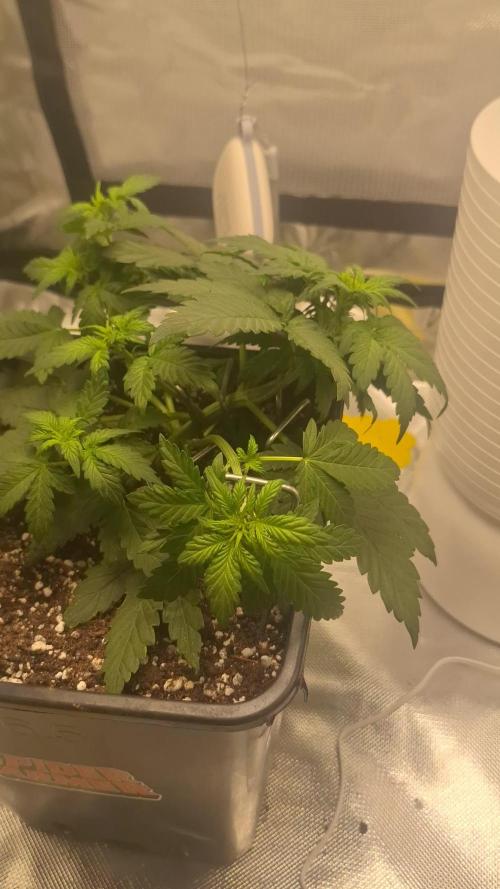
Phenological stage: the plant has entered pre-flowering.
Structure / LST: adjusted the Low-Stress Training to keep the canopy open and light spread even.
Leaf appearance: leaves are drooping slightly downward with a very light green tone, likely due to slight overwatering and previous pH issues.
Feeding:
800 ml nutrient solution
0.4 ml/L Biobizz Grow
0.2 ml/L Biobizz Bloom (to support early pre-flower development)
EC/PPM reading: ~430
Runoff observation: no runoff was produced with 800 ml, so next watering I plan to give at least 950 ml, possibly up to 1 liter, to ensure at least ~10% runoff.
Environment:
Temperature: min 24 °C – max 30 °C (average ~28 °C)
Humidity: 60–65 % (planning to gradually reduce to 55–50 % over the coming weeks)
Ventilation: installed an automatic oscillating fan to improve air circulation.
Notes: despite mild chlorosis and the downward leaf posture, the plant appears stable. Main focus for the next weeks: correct pH, careful watering, and progressive humidity adjustment.


