


Processing
Likes
Comments
Share


@XoticGROW666
Follow
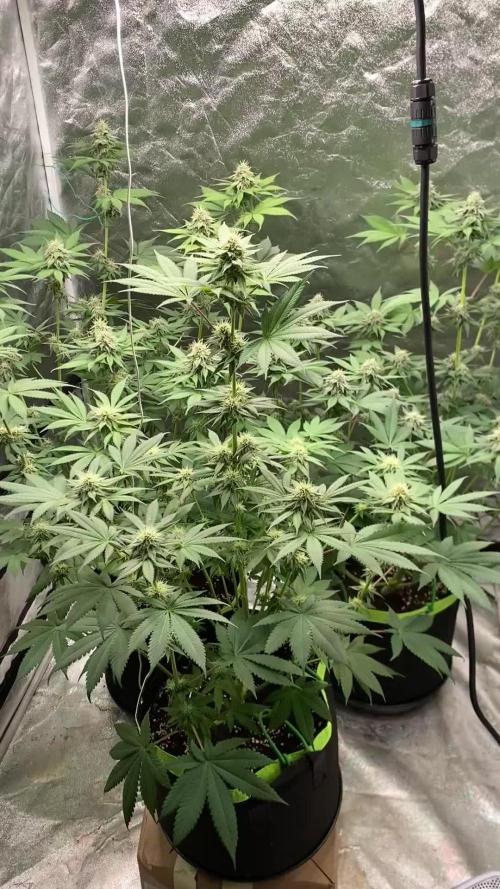
FIRST WEEK ON THIS GSC ON THE LEFT IN THE MIDDLE G41 SS ON THE RITE



Processing
Likes
16
Share


@MG2009
Follow
3/11/2019
All going well, Fed with grow,micro,bloom, + Overdrive. Calyxs really filling out nicely one more week of feeding them, then flushing for 1-2 weeks .
In video of #2 i show where it broke, she healed and kept budding any way.😁


Likes
233
Share


@Tropicannibis_Todd
Follow
🐶 🐕 🐶 🐕 🐶 🐕 🐶 🐕 🐶
So this diary is dedicated to my Big Boy Midnite 🐶
Due to his age and trouble with his hips , he needs a little help so I will be making him special CBD and CBG Treats ....
So keep in mind that I will be doing a Bubble Hash Water Extraction with the SDR and CBG once that's done and dried I will be Decarbing it by then placing it on a sheet of parchment paper and placing in over at 220 degrees F for 20 to 25 min to fully decarb it .
Get ready for a paw-some treat that your furry friend will go nuts for! These peanut butter CBD or CBG treats are made with wholesome ingredients like flour, rolled oats, and natural peanut butter. Perfect for a special treat or a relaxing snack, your pet will love these bite-sized delights!
Ingredients:
• 2 cups of flour
• 1 cup of rolled oats
• 1/2 cup of natural peanut butter
• 1/4 cup of water or beef and or chicken broth
• 2 teaspoons of decarbed CBD or CBG
Instructions:
• Preheat your oven to 350°F.
• In a large mixing bowl, mix together the flour, rolled oats, and natural peanut butter.
• Add in the water and or broth and the CBD or CBG, and continue to mix until well combined.
• Roll out the mixture to about 1/2 to 5/8 inch thickness on a lightly floured surface.
• Cut the mixture into bite-sized treats using a cookie cutter.
• Place the treats on a baking sheet lined with parchment paper.
• Bake for 20 minutes, or until lightly golden brown.
Allow the treats to cool completely before serving to your pet.
Who says bacon is just for humans? These CBD or CBG treats are made with a yummy mix of flour, rolled oats, and cooked bacon. Your pet will love the taste and the benefits of CBD or CBG in each bite.
Ingredients:
• 2 cups of flour
• 1 cup of rolled oats
• 1/2 cup of cooked bacon
• 1/4 cup of water or Chicken and Beef Broth
• 2 teaspoons of decarbed CBD or CBG
Instructions:
• Preheat your oven to 350°F.
• In a large mixing bowl, mix together the flour, rolled oats, and cooked bacon be sure to grind up the bacon.
• Add in the water and or broth as well as the CBD or CBG, and continue to mix until well combined.
• Roll out the mixture to about 1/2 or 5/8 inch thickness on a lightly floured surface.
• Cut the mixture into bite-sized treats using a cookie cutter.
• Place the treats on a baking sheet lined with parchment paper.
• Bake for 20 minutes, or until lightly golden brown.
Allow the treats to cool completely before serving to your pet.
Happy Growing And Happy Smoking and for all the Puppies out there Happy Snacking 😊
Side Note , I will be adding future pictures and video of the process of making the cookies as well as letting everyone know how it helped Midnite 🐶 Plus I will also give it a go and give my thoughts on the terps and the effects ...
👉Soil Provided by ProMix.ca
👉Nutrients Provided by Agrogardens
👉Lighting Provided by MarsHydro.ca
👉Seeds Provided by Kannabia Seeds
...

Likes
3
Share


@Dmars
Follow
10/20 Day 86. Not really sure when to chop right now. I was hoping for a nice fade with some reds and purples but maybe it just won’t happen. Everything looks and smells great though.
10/24 Day 90. Finally getting some more leaf fade to go along with the trichs getting more cloudy. There’s still some clear trichomes in the mix so I’ll keep going a few more days, but at least I’m finally getting some signs she’s close.

Likes
11
Share

@All_our_small_plants
Follow
Bewässerung: 500 ml jeden 3 Tag in der zehnte Woche
pH-Wert: 5,8
EC-Wert: 0,4 mS/cm
Temperatur: 20ºC
Luftfeuchtigkeit: 65%
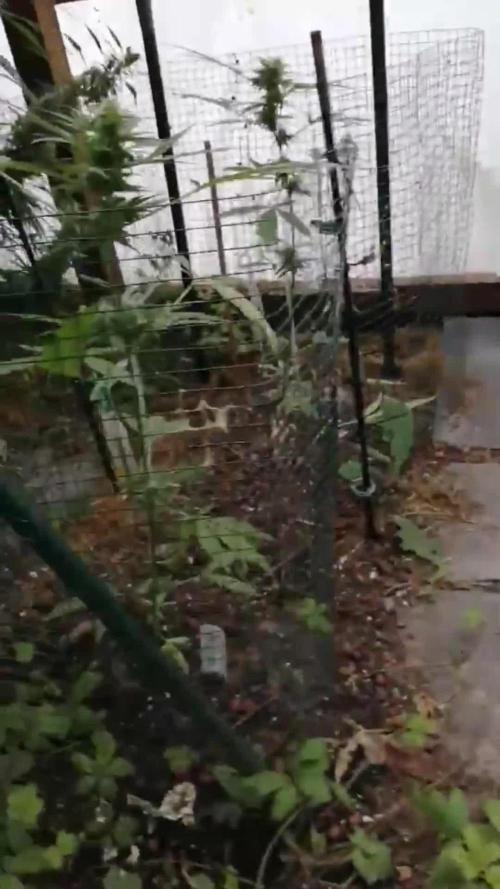
Schädlingsbekämpfung: Diese Woche haben wir ihr Wasser mit Nematoden gegeben da sich doch vermehrt Trauermücken im Bereich aufhalten.
PPFD: Direktes Sonnenlicht
DLI: Direktes Sonnenlicht
-Tag 59 Sie werden naja... aber wir haben die ganze Hoffnung auf die Candy Bubatz XL #3 gesetzt diese sieht schon sehr stabil aus im vergleich zu denn anderen zwei, Sie werden Trotzdem noch etwas wachsen und ein paar kleine Buds abgeben.
-Tag 64 die Candy Bubatz #1 ist dünner als die #2, aber beide werden so langsam dichter 😪


Likes
5
Share


@TheFlowerMan
Follow
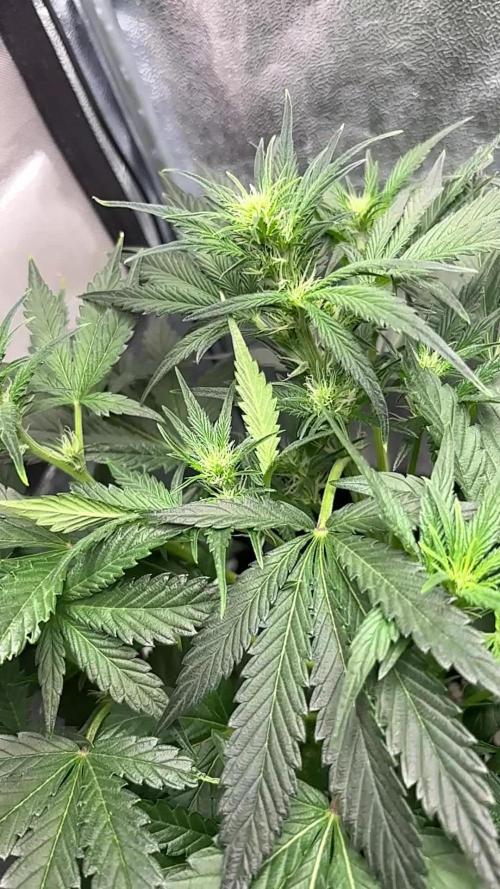
The third day of the third week(14,11,2022). To date, I have stretched my widow a little (I did it for the first time in my life). Pushing aside the upper leaves of the pineapple, thereby the lower floors will receive light. The lower branches have already begun to develop, they look the same as the main one. Pineapple has already shown its gender on the 18th day. This week we have a new feed BioBizz Top max and Bloom.Let's see what happens at the end of the week... 😏🙏




Likes
8
Share


@Artyparty
Follow
So far it's going steady. The dwc pH has been dipping to the low 5s. I'm only feeding bloom, calmag, cha-ching and water probably for the next week to be safe until flush. The PP seems to be doing great. Wondering if it will get purple colors or did I drop the wrong damn seed 🤣. But she smells lovely
Likes
16
Share


@PoshGrow
Follow
Welcome to Ultimate Auto Grow by PoshGrow!
🍀 Week #5 2020 September 28th. - October 5th.
General Info:
When planted: 2020 September 1st.
Week: 5
Days: 28 - 35
Last Update Day: 2020 September 30th.
Plants:
4 x OG Kush Auto
3 x Amnesia Auto
5 xAlaskan Purple Auto
2 x Blueberry Auto
1 x Northern Lights Auto
Total: 15 girls.
NOTICE: Check week 1 for full equipment list!
UPDATE: I got 8 ltr. Or 2 gallon Spear&Jackson Pressure Sprayer to help me with watering.
Comment:
Welcome boys and girls to Season #2 by PoshGrow! So alongside my 1sq. meter tent I got my new 2nd tent and setup. So at this time i will be running 2 tents.
Well, finally I solved all problems, everything seems to be going well. Girls started flowering, responded well to LST and nutriens. Feeding every other watering. Ill keep close eye on them too and update info at the end of the week.
Peace! ✌️

Likes
21
Share

@Borberad
Follow
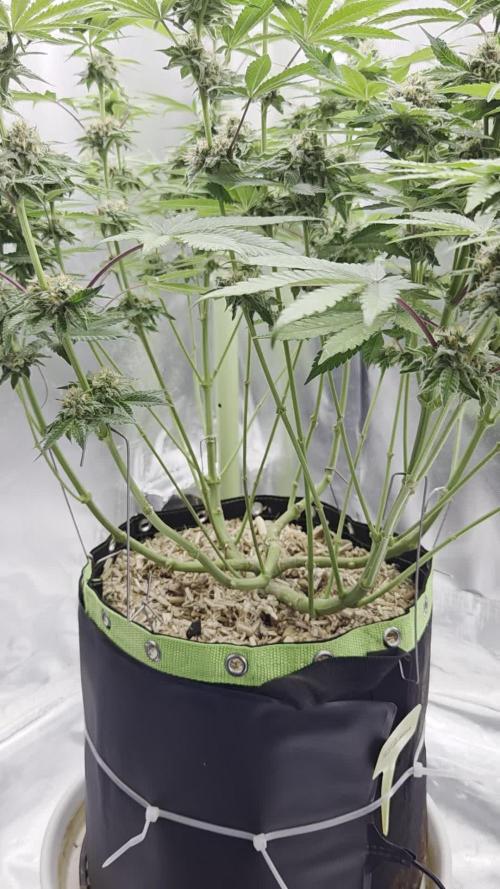
Woche 12
Solangsam wird sie bunt und es es deutet sich an das sie aus dem Soil nicht mehr viel rausholt. Da sie noch gut 20 bis 30 Tage stehen soll gibt es zur Unterstützung etwas Hesi Boost und ab und an etwas Plagron Green Sensation.

Likes
74
Share


@MrHightimes
Follow
They got to get in the big tent because now THAT is the small tent lol!
My friend gave me a bigger tent for flower so now I no longer have to worry about Veg Space.
Its hard to tell but I made some big decisions here and went out and lollopped these girls hard!!!
I'm trying real hard no to get alot of LARF and REALLY concentrate all bud formation to the top of the canopy.
I should have done a better job documenting it, but i was so concentrated on beating these girls up!!!
___________________________________________
I did quite a bit of tucking and gave em a midweek water They seem like they are all a bit diffrent timeline. its annoying, but I hope everything is just great.
They are getting a heavy feed but as long as they dont get burn I'm not worried!

Likes
16
Share


@MrGoonai
Follow
She finally stopped her heightgrowth. Happy with that, because i don't have more space to hang the growlight any higher.
I decided to give her more nutrients this week. She also did trink more water (4.2L in this week), although she was only exposed to the growlight and had no direct sun anymore.
She smells incredibly sweet. I quite enjoy it, and sniff here every day 😅 Really curious how long it will take until i'm going to harvest her. I decided to wait until she has 60 to 80% brown trichomes.
One of her leafes on the bottom still isn't looking too good and is more yellow, so i probably going to cut it in the next few days.
Likes
9
Share


@SnoopyShaggy
Follow
Both of them Purple Punch sprouted. Surprised me that, within 24hours in glass of water she showed her root.
Will let her veg from now on, as for this grow i am experimenting a fully organic grow without big-bud. Damn it big bud, i wish you are organic hahaha🙃.
As for the soil, i doubt there is enough nutes for her to grow so i am going to top dress with bat guano.
Likes
14
Share

@MG2009
Follow
02/23/2022
Lots of stretching this week,not much to say so I let the pics and videos talk for them selves🙏🏻
Enjoy
Grape Skunk tall and lanky one I'm loving! I will number her for future reference.
Biscotti Skunk has some droopy leaves, it's watering day.

Likes
18
Share


@Gdubgrows
Follow
Day 39 - Watered the Gold Leaf today by dunking it. 8.4 PH going in and 6.3 for the runoff. The PPM was only 500 or so, but I'm guessing it is because of the dunk. The soil test was still 5.3 on one side and up to 5.7 on the other. I checked right away so maybe it has gone up. GDP #1 seems to need water, but GDP #2 will need another day. The Gold Leaf is reaching the 25" limit for flipping, but the net should help show things down a little so the other 2 can catch up.
Day 40 - Both GDPs needed water and got dunked. PH was 8.5 and the runoff showed 6.2. A soil PH check came back at 5.9. I am hoping that the small jump will help. I realized I would not be able to test the runoff with the stand and saucers I was using so i got new ones. This lowered my potential flipping height, but with the SCROG I am hoping to keep the goldleaf down long enough for the GDP to catch up.
Day 41 - The Gold leaf is tall enough to bend down and the GDPs are almost there. I'm anxious to see how many bud sites I can get through the net before I defoliate and flip to flower. I don't think I should wait much longer with 3 plants in a 2x4 and the gold leaf getting close to 25 inches.
Day 42 - 2x4 is too crowded so decided to order a 5x5 and move them over before I flip to flower. The gold Leaf is dry again. Watering with 3 gallons to try and get the PH up and the PPM down. The PH of the water I am using is 7.5
Day 43 - Watered Gold Leaf today. Going in the PH was 7.5 and the PPM 250. The runoff showed 5.9 and the PPM was 870. The soil test after work showed on one side as 6.1 and the other 6.0. Getting better, but I want to be closer to 6.5 before I flip them. The 5x5 tent will give me the room needed for that.
Day 44 - Watered the GDPs today. The water going in had a PH of 7.5. The PPM was around 255. The runoff had a PH of 6.2 and a PPM of over 850. Both were very similar. At least one more week without nutes unless there is a problem.
The ladies all seem to be showing a bit of magnesium deficiency. I started using a foliar spray for now with 1ml cal mag in 500ml of water with a PH of 6.5. Might need to add cal-mag to the next watering. The 2x4 is way too crowded with the 3 of them in there together. Hopefully the new tent shows up soon.
Day 45 - The Gold Leaf is getting worse. It looks like lockout again. The other side of the spectrum this time. Probably too alkaline... 😒 From now on I will be feeding with water with a PH of 6.5. For now I added a few drops of micro and bloom to the foliar spray and applied it once more. It seems like it will need more water in a day or two so that should help.

Likes
64
Share


@Prof_Weed
Follow
Ich hätte noch locker 2 Wochen dranhängen können..
Aber ich habe bewusst jetzt schon geerntet da ich die kleinen Buds und Sugar Leafs zu Bubble Hash verarbeiten werde, das sind satte 479g,ich habe keine Ahnung was das dann an Bubble Hash ergibt.
Falls das jemand weiß schreibt es mir in die Kommentare..
Ich habe ein wet trimming gemacht, hat mich 4 Stunden gekostet, aber:
857g Nass Gewicht !!
Wandert jetzt für 8 Tage in den Cannatrol Cool Cure.
Edit: 186g Trocken Gewicht nach Curing, alle Stängel sind zudem entfernt.
Riecht sehr frisch.
Der Smoke ist sehr mild, aber die Wirkung haut mächtig rein, eher Sativa Effekte, hatte nen mega Laber Flash..
Auf jeden Fall viel THC.
Das war ein Hochsommer Grow, die Sour Jealousy von FastBuds hat die hohen Temperaturen problemlos weggesteckt.
Man muss dazu sagen, dass mein Zelt prinzipiell immer offen steht, so kann auch kein Schimmel entstehen denke ich.
Nur muss ich eben mit 2 Luftentfeuchtern arbeiten..
Ich bin mega happy und auch stolz, das ist erst meine 4. Ernte, ich habe erst Mai 2023 angefangen mit dem Anbau.
Vielen Dank lieber Grow Gott für die reiche Ernte!!
