Likes
Comments
Share
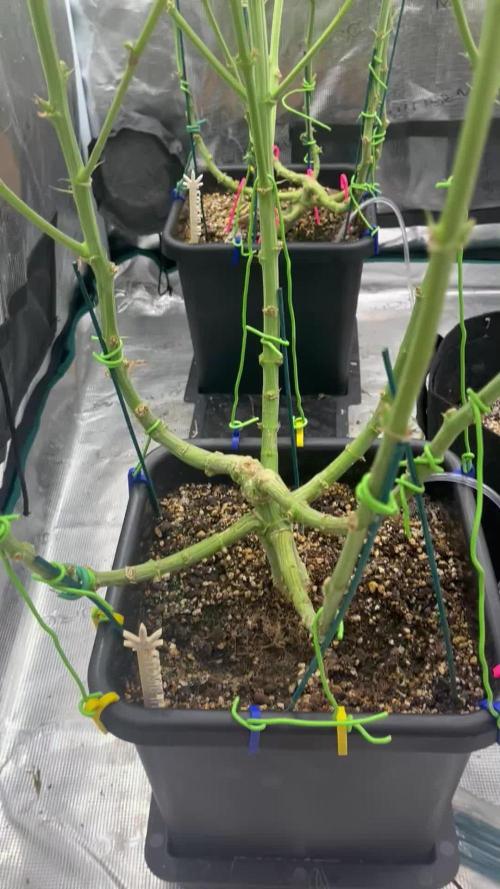
Males decided to show themselves, had 3 males out of 6 plants, after pulling the males I ended up with 2 sour 60 females and 1 berry Ryder female, Starting nutes next watering and continuing the lst
Likes
9
Share
@JoeyGonz
Follow
Ultimately they are all healthy and doing great. Still have few weeks left of flowering but White Widow and Peyote getting frosty already. BlackSugar healthy but still little slower then the rest. Super happy with the White Widow, just lots of bud sites from the bottom to the top. I think maybe 3.5 weeks left close to end of the month. Super Happy
Likes
6
Share
@Floryx
Follow
-plants are looking good but trichomes still need time -only fertilized the Mimosa and Gorilla Z because Blue Sunset looked a bit overfed -nothing much else to say, just waiting for the right moment to cut them down ;) Happy for any comment :)
Likes
2
Share
@ChiTaN
Follow
These are the last moments of veg, soon switching to flowering 💪
Processing
Likes
6
Share
Looks like she's not gonna have any issue so far,everything goes smoothly,let's see how she develops day by day,Hope you like my work guys! I work with passion and dedication everyday,I love my cannabis and I love to grow this amazing plant!.
Likes
100
Share
@AsNoriu
Follow
Day 92. Few more days for last Alaskan Diesel , amazing strain ! While chopping first two I ripped small bud and yesterday I tried it - piney, eucalyptus sweet diesel flavour ! Loved it ! Green Cracks getting frosty and calaxies start to form and fattening up ! So I think 2-3 weeks from now. Northern Lights are way behind, but smallest plant becomes a frosty tower ! Day 93. Last Alaskan Diesel is down. All info on strain harvest week . Rest keep going, think two weeks is max for Green Cracks. Happy Growing !!!
Likes
46
Share
Hello growers and tokers! 👋 👩‍🌾 🧑‍🌾.🔥💨 It's my first harvest on this community and I'm loving it. Everyone always ready to help each other and have great feedback. Tracking my grow on here has made it way easier. There were times that I misplaced notes or forgot what I did or when with a certain strain and all I had to do was come on here and check it. Also motivated me take more pictures and do more logs. All out great site. Don't know how I haven't found it earlier. HIGHLY recommend for all growers. The grow cycle went pretty smooth. She's easy to grow and flowers early so you can't do much training. That being said it's great for beginners. 👌 Had no problems with pests on these, while on the other plants (none cannabis) in the balcony I had issues with spider mites. They grew better than expected given the few hours of direct sunlight they received. Results were good, I was expecting 10-15 grams per plant and ended up with a tad bit more. Drying went a bit fast because there were few buds. I probably could have took it down a few degrees as well.. my fault on that part. They dried in 4 days, they've been curing for 10 days. I normally test them after 15 days but they smelled so good I had to try them. Smell: Lovely earthy, woody, slightly like diesel. Quite pungent for being autos. Taste: Just as it smells.. leaving a nice after taste of diesel. Touch: Very sticky, dense buds. They break down finely in the grinder. Cleaned the grinder before testing and after 4 joints ( 2 grams or so) I already have a good amount of kief collected in the bottom. (Check photo) Might grow this one again just to make some bubble hash. The high is awesome nice uplifting, long lasting energetic but without a heavy euphoric rush. Reminds me of a smooth haze high, although if you smoke a lot even being an experienced smoker, she'll get to you. Only down side is dry mouth, very dry mouth! Have some water on hand because your mouth will transform into a desert. 😂 Great strain to kick start the day. Beginner smokers take it easy with this one. She hits hard! 👊
Likes
14
Share
@EaRtH
Follow
18.5. - Entering new week, probably the last one with feeding. I've ran out of Biobizz juice, so I have already fed them the new mix with Advanced Nutrients and it seems they like it. Buds are ripening, smell is strong. I just think that Apricots and Gorillas will need some more time than Jack and Lemon. 20.5. - Last feeding for Jack and Lemon. Only water, from now on and harvest next week ✂️ Others still have one or two more weeks to go. Watered 💧 22.5. - Jack and Lemon are fully matured based on the looks of trichomes. Very yummy looking and smelling buds. Very dense too. I'm flushing them tomorrow and I'm super excited for the harvest 😎 23.5. - This day marks exactly 10 weeks from the day all seeds sprouted through soil. I have flushed Jack and Lemon. Those plants are looking stunning. Watered 💧 24.5. - Week wrap-up: Very successful week. After I switched to Advanced Nutrients my plants exploded. Next week, when Jack and Lemon are dried out after flushing, I'll harvest them. Others will still go at least one more week with feeding. 18.5. - 24.5.2024
Likes
31
Share
@Pedrojuan
Follow
En esta semana mantendré todavía los Led por 24 horas al día, el EC lo tendré a 2,5, el PH tratare de mejorarlo, todavía lo tengo a 6,3 mas o menos. Las plantitas están creciendo bien, ya se ven las puntas de las raíces saliendo del substrato y tocando el agua. Para el fin de semana próximo cambiaré la solucion nutritiva y bajaré el nivel del agua. Decidí también poner un generador de CO2 casero(bidón con agua, levadura, azúcar y pulpa de tomates) consejo de mis amigos de zamnesia. En la semana nos iremos actualizando.
Likes
97
Share
~_~_~_~_~_~_~_~_~_~_~_~_~_~_~_~_~_~_~_~_~_~_~_~_~_~_~_~_~_~_~_~_~_~_~_~_~_~_~_~_~_~_~_~_~_~_~_~_~_~_~_~_~_~_~_~_~_~_~_~_~_~_~_~_~_~_~_~_~_~_~_~_~_~_~_~_~_~_~_~_~_~_~_ ❤️💡🌱😽💨 Everyone was up-potted 2 days ago and showing a little new growth since then. They're all very healthy looking, one has some slight yellowing which should disappear soon with our change but all plants are extremely small for their size.. we've been letting these dry out completely between watering so I'm convinced there's a genetic component to this. We've had a few other strains start extra slow for us in the past and one in particular that started slow and then took off like wildfire around week 5 so I'm not too concerned ..they're each using 3gal square (plastic) pots willed with fresh Promix-HP..they're getting a little bit of Big Bloom with smaller amounts of Grow Big with every other watering now and this has corrected the odd hue we noticed around wk3.. The Mars SP-3000 is about 2.5 away, it sounds far but despite the distance, node spacing is always really tight in that tent all through veg We're hoping for some explosive growth this week now that everyone is officially settled, we're still on the fence as to how we'll train these but odds are we'll do our typical 4 way LST after topping and keep under their skirts bare.. ..there no telling how long we'll veg these as size is always our determining factor but when the time comes, we plan to flower in this tent as well.. not too much else to report, its been an effortless week.. thanks as always for dropping by and happy harvests everyone!! 👊😺 ~_~_~_~_~_~_~_~_~_~_~_~_~_~_~_~_~_~_~_~_~_~_~_~_~_~_~_~_~_~_~_~_~_~_~_~_~_~_~_~_~_~_~_~_~_~_~_~_~_~_~_~_~_~_~_~_~_~_~_~_~_~_~_~_~_~_~_~_~_~_~_~_~_~_~_~_~_~_~_~ 8/17 We've gotten some fast growth in the last few days.. we figured they were just late to the party.. we topped all plants at the 3rd node yesterday and we'll eventually pull each plant 4 ways..apparently the "weird hue" is genetic, they all have a unique purple undertones..neat strain for sure.. we dropped the SP-3000 a few inches and they're praying to it almost around the clock..we're debating on building a 4x2 PVC scrog table for these girls if we find the time.. thanks for dropping by Growmies! Much love!❤️ ⚡Mars Hydro/SP-3000⚡ Specifications ⚙️: Diodes: Samsung LM301B / Osram 660nm (960 total!) Driver: Meanwell 300watt 🔌 (300W±5% @AC120V-277V) PPF: 824umol/S ☢️ PPE: 2.8 µmol/j 〰️〰️ Lifespan: 50k+ hrs ⌛ Weight: 10.1 lbs (4.6kg) Veg Coverage: 3 x 5 ft 🌱 Flowering Coverage: 2 x 4 ft 🌼 -The SP-3000 uses an aluminum heatsink (no fan) and the driver can be placed outside the tent 🌡️⬇️ -IP65 waterproof ratings, tolerant to high humidity grow environments 💦 .. -Up to 15 can be daisy-chained together and all controlled from a single light! 💡~💡~💡~💡~💡 ~_~_~_~_~_~_~_~_~_~_~_~_~_~_~_~_~_~_~_~_~_~_~_~_~_~_~_~_~_~_~_~_~_~_~_~_~_~_~_~_~_~_~_~_~_~_~_~_~_~_~_~_~_~_~_~_~_~_~_~_~_~_~_~_~_~_~_~_~_~_~_~_~_~_~_~_~_~_~_~_~_~_~_
Likes
15
Share
@CG420
Follow
Últimas semanas para las pequeñas ,a alguna ya la hemos empezado a hacer el lavado de raíces. En el armario empieza a predominar los pelitos naranjas y la resina en los cogollos . En nada prepararemos la tijera para terminar con esta tanda de black domina . El olor está siendo el más notorio de los cultivos que he tenido. Seguimos informando 💚. - en el día 75 desde la germinación sacamos 6 plantas a oscuridad total durante 48h .....serán las 6 primeras en caer ✂️💚.
Processing
Likes
16
Share
@Dunk_Junk
Follow
So I'm having another go at LSD-25. Day 1 she looked quite sickly if I'm honest. She's picked up ever since. I've put the timelapse camera on her for the forthcoming week so I can keep a very close eye on her growth.
Processing
Likes
12
Share
Checkout my Instagram @smallbudz to see the Small budget grow setup for indoor use, low watt, low heat, low noise, step by step. 04/01/2020 - Did the last defoliation, removed about 1/4 of plant material. 06/01/2020 - Fed her 1.5l of 6.5PH water with 0,3ml Cal Mag (Atami) 0,25ml of Grow, 0,6ml of Bloom and 0,5ml Max, and 1ml of each: Heaven, Alga-mic and Vera, noticed some run off, I use about 1/3 of the nutrient dosage on the chart, to achieve about 200/300PPM (500 scale).
Likes
223
Share
💩Holy Crap We Are Back At It And Loving It💩 Growmies we are at DAY 14 and all three are doing great👌 So I'm starting to pull some of them over and doing some light LST training 🙃 Nutrients are now going to feed NutriNPK Grow 28-14-14 Lights being readjusted and chart updated .........👍rain water to be used entire growth👈 👉I used NutriNPK for nutrients for my grows and welcome anyone to give them a try .👈 👉 www.nutrinpk.com 👈 NutriNPK Cal MAG 14-0-14 NutriNPK Grow 28-14-14 NutriNPK Bloom 8-20-30 NutriNPK Bloom Booster 0-52-34 I GOT MULTIPLE DIARIES ON THE GO 😱 please check them out 😎 👉THANKS FOR TAKING THE TIME TO GO OVER MY DIARIES 👈
Likes
29
Share
Vamos familia que viene la quinta semana de floración de las Titan f1 y jodo cómo se notan los cambios de una semana a otra al menos está semana si note buen cambio, las flores se están formando guay y se están poniendo repletas de tricomas. Es de las cepas nuevas más potentes en thc tengo ganas de probarla. En general tienen buen color , un poco pequeñas pero para el armario que tengo tampoco da para mucho más . Los demás si este no tanto. Pero para autos va guay. Temperaturas máximas de 27 y mínimas de 24 grados. La humedad relativa está en torno al 50% Agrobeta: https://www.agrobeta.com/agrobetatiendaonline/36-abonos-canamo Mars hydro: Code discount: EL420 https://www.mars-hydro.com/ Hasta aquí es todo , espero que lo disfrutéis, buenos humos 💨💨.
Likes
2
Share
@Meshugga
Follow
Jdu do květu tento týden mi začíná pořádná zábava, pokoukáníčko, vyvoňený byt a radost na čím dál tím větší úrovni!! Tento týden jsem ve 42 den udělal defoliaci pravé a dal jsem jí síť. Levá mě furt tak nějak trápí protože pořád nechce přepnout do květu. Nevím možná tý levý nebudu moct dát síť a snad se nezhermí... PK 13 14 jsem dal až včera a jenom pravé, protože už má docela pěkný květy, taaak ať jede bomby. Uvažuji jestli a jak hodně to případně defoliovat dál, tu pravou, u té se bojím víc jak u té levé tam je jasné že nějaká defoliace bude muset proběhnout ale otázkou je kdy?A jak moc...?
Likes
19
Share
Yellow butterfly came to see me the other day; that was nice. Starting to show signs of stress on the odd leaf, localized isolated blips, blemishes, who said growing up was going to be easy! Smaller leaves have less surface area for stomata to occupy, so the stomata are packed more densely to maintain adequate gas exchange. Smaller leaves might have higher stomatal density to compensate for their smaller size, potentially maximizing carbon uptake and minimizing water loss. Environmental conditions like light intensity and water availability can influence stomatal density, and these factors can affect leaf size as well. Leaf development involves cell division and expansion, and stomatal differentiation is sensitive to these processes. In essence, the smaller leaf size can lead to a higher stomatal density due to the constraints of available space and the need to optimize gas exchange for photosynthesis and transpiration. In the long term, UV-B radiation can lead to more complex changes in stomatal morphology, including effects on both stomatal density and size, potentially impacting carbon sequestration and water use. In essence, UV-B can be a double-edged sword for stomata: It can induce stomatal closure and potentially reduce stomatal size, but it may also trigger an increase in stomatal density as a compensatory mechanism. It is generally more efficient for gas exchange to have smaller leaves with a higher stomatal density, rather than large leaves with lower stomatal density. This is because smaller stomata can facilitate faster gas exchange due to shorter diffusion pathways, even though they may have the same total pore area as fewer, larger stomata. Leaf size tends to decrease in colder climates to reduce heat loss, while larger leaves are more common in warmer, humid environments. Plants in arid regions often develop smaller leaves with a thicker cuticle and/or hairs to minimize water loss through transpiration. Conversely, plants in wet environments may have larger leaves and drip tips to facilitate water runoff. Leaf size and shape can vary based on light availability. For example, leaves in shaded areas may be larger and thinner to maximize light absorption. Leaf mass per area (LMA) can be higher in stressful environments with limited nutrients, indicating a greater investment in structural components for protection and critical resource conservation. Wind speed, humidity, and soil conditions can also influence leaf morphology, leading to variations in leaf shape, size, and surface characteristics. Small leaves: Reduce water loss in arid or cold climates. Environmental conditions significantly affect gene expression in plants. Plants are sessile organisms, meaning they cannot move to escape unfavorable conditions, so they rely on gene expression to adapt to their surroundings. Environmental factors like light, temperature, water, and nutrient availability can trigger changes in gene expression, allowing plants to respond to and survive in diverse environments. Depending on the environment a young seedling encounters, the developmental program following seed germination could be skotomorphogenesis in the dark or photomorphogenesis in the light. Light signals are interpreted by a repertoire of photoreceptors followed by sophisticated gene expression networks, eventually resulting in developmental changes. The expression and functions of photoreceptors and key signaling molecules are highly coordinated and regulated at multiple levels of the central dogma in molecular biology. Light activates gene expression through the actions of positive transcriptional regulators and the relaxation of chromatin by histone acetylation. Small regulatory RNAs help attenuate the expression of light-responsive genes. Alternative splicing, protein phosphorylation/dephosphorylation, the formation of diverse transcriptional complexes, and selective protein degradation all contribute to proteome diversity and change the functions of individual proteins. Photomorphogenesis, the light-driven developmental changes in plants, significantly impacts gene expression. It involves a cascade of events where light signals, perceived by photoreceptors, trigger changes in gene expression patterns, ultimately leading to the development of a plant in response to its light environment. Genes are expressed, not dictated! While having the potential to encode proteins, genes are not automatically and constantly active. Instead, their expression (the process of turning them into proteins) is carefully regulated by the cell, responding to internal and external signals. This means that genes can be "turned on" or "turned off," and the level of expression can be adjusted, depending on the cell's needs and the surrounding environment. In plants, genes are not simply "on" or "off" but rather their expression is carefully regulated based on various factors, including the cell type, developmental stage, and environmental conditions. This means that while all cells in a plant contain the same genetic information (the same genes), different cells will express different subsets of those genes at different times. This regulation is crucial for the proper functioning and development of the plant. When a green plant is exposed to red light, much of the red light is absorbed, but some is also reflected back. The reflected red light, along with any blue light reflected from other parts of the plant, can be perceived by our eyes as purple. Carotenoids absorb light in blue-green region of the visible spectrum, complementing chlorophyll's absorption in the red region. They safeguard the photosynthetic machinery from excessive light by activating singlet oxygen, an oxidant formed during photosynthesis. Carotenoids also quench triplet chlorophyll, which can negatively affect photosynthesis, and scavenge reactive oxygen species (ROS) that can damage cellular proteins. Additionally, carotenoid derivatives signal plant development and responses to environmental cues. They serve as precursors for the biosynthesis of phytohormones such as abscisic acid () and strigolactones (SLs). These pigments are responsible for the orange, red, and yellow hues of fruits and vegetables, while acting as free scavengers to protect plants during photosynthesis. Singlet oxygen (¹O₂) is an electronically excited state of molecular oxygen (O₂). Singlet oxygen is produced as a byproduct during photosynthesis, primarily within the photosystem II (PSII) reaction center and light-harvesting antenna complex. This occurs when excess energy from excited chlorophyll molecules is transferred to molecular oxygen. While singlet oxygen can cause oxidative damage, plants have mechanisms to manage its production and mitigate its harmful effects. Singlet oxygen (¹O₂) is considered a reactive oxygen species (ROS). It's a form of oxygen with higher energy and reactivity compared to the more common triplet oxygen found in its ground state. Singlet oxygen is generated both in biological systems, such as during photosynthesis in plants, and in cellular processes, and through chemical and photochemical reactions. While singlet oxygen is a ROS, it's important to note that it differs from other ROS like superoxide (O₂⁻), hydrogen peroxide (H₂O₂), and hydroxyl radicals (OH) in its formation, reactivity, and specific biological roles. Non-photochemical quenching (NPQ) protects plants from damage caused by reactive oxygen species (ROS) by dissipating excess light energy as heat. This process reduces the overexcitation of photosynthetic pigments, which can lead to the production of ROS, thus mitigating the potential for photodamage. Zeaxanthin, a carotenoid pigment, plays a crucial role in photoprotection in plants by both enhancing non-photochemical quenching (NPQ) and scavenging reactive oxygen species (ROS). In high-light conditions, zeaxanthin is synthesized from violaxanthin through the xanthophyll cycle, and this zeaxanthin then facilitates heat dissipation of excess light energy (NPQ) and quenches harmful ROS. The Issue of Singlet Oxygen!! ROS Formation: Blue light, with its higher energy photons, can promote the formation of reactive oxygen species (ROS), including singlet oxygen, within the plant. Potential Damage: High levels of ROS can damage cellular components, including proteins, lipids, and DNA, potentially impacting plant health and productivity. Balancing Act: A balanced spectrum of light, including both blue and red light, is crucial for mitigating the harmful effects of excessive blue light and promoting optimal plant growth and stress tolerance. The Importance of Red Light: Red light (especially far-red) can help to mitigate the negative effects of excessive blue light by: Balancing the Photoreceptor Response: Red light can influence the activity of photoreceptors like phytochrome, which are involved in regulating plant responses to different light wavelengths. Enhancing Antioxidant Production: Red and blue light can stimulate the production of antioxidants, which help to neutralize ROS and protect the plant from oxidative damage. Optimizing Photosynthesis: Red light is efficiently used in photosynthesis, and its combination with blue light can lead to increased photosynthetic efficiency and biomass production. In controlled environments like greenhouses and vertical farms, optimizing the ratio of blue and red light is a key strategy for promoting healthy plant growth and yield. Understanding the interplay between blue light signaling, ROS production, and antioxidant defense mechanisms can inform breeding programs and biotechnological interventions aimed at improving plant stress resistance. In summary, while blue light is essential for plant development and photosynthesis, it's crucial to balance it with other light wavelengths, particularly red light, to prevent excessive ROS formation and promote overall plant health. Oxidative damage in plants occurs when there's an imbalance between the production of reactive oxygen species (ROS) and the plant's ability to neutralize them, leading to cellular damage. This imbalance, known as oxidative stress, can result from various environmental stressors, affecting plant growth, development, and overall productivity. Causes of Oxidative Damage: Abiotic stresses: These include extreme temperatures (heat and cold), drought, salinity, heavy metal toxicity, and excessive light. Biotic stresses: Pathogen attacks and insect infestations can also trigger oxidative stress. Metabolic processes: Normal cellular activities, particularly in chloroplasts, mitochondria, and peroxisomes, can generate ROS as byproducts. Certain chlorophyll biosynthesis intermediates can produce singlet oxygen (1O2), a potent ROS, leading to oxidative damage. ROS can damage lipids (lipid peroxidation), proteins, carbohydrates, and nucleic acids (DNA). Oxidative stress can compromise the integrity of cell membranes, affecting their function and permeability. Oxidative damage can interfere with essential cellular functions, including photosynthesis, respiration, and signal transduction. In severe cases, oxidative stress can trigger programmed cell death (apoptosis). Oxidative damage can lead to stunted growth, reduced biomass, and lower crop yields. Plants have evolved intricate antioxidant defense systems to counteract oxidative stress. These include: Enzymes like superoxide dismutase (SOD), catalase (CAT), and various peroxidases scavenge ROS and neutralize their damaging effects. Antioxidant molecules like glutathione, ascorbic acid (vitamin C), C60 fullerene, and carotenoids directly neutralize ROS. Developing plant varieties with gene expression focused on enhanced antioxidant capacity and stress tolerance is crucial. Optimizing irrigation, fertilization, and other management practices can help minimize stress and oxidative damage. Applying antioxidant compounds or elicitors can help plants cope with oxidative stress. Introducing genes for enhanced antioxidant enzymes or stress-related proteins over generations. Phytohormones, also known as plant hormones, are a group of naturally occurring organic compounds that regulate plant growth, development, and various physiological processes. The five major classes of phytohormones are: auxins, gibberellins, cytokinins, ethylene, and abscisic acid. In addition to these, other phytohormones like brassinosteroids, jasmonates, and salicylates also play significant roles. Here's a breakdown of the key phytohormones: Auxins: Primarily involved in cell elongation, root initiation, and apical dominance. Gibberellins: Promote stem elongation, seed germination, and flowering. Cytokinins: Stimulate cell division and differentiation, and delay leaf senescence. Ethylene: Regulates fruit ripening, leaf abscission, and senescence. Abscisic acid (ABA): Plays a role in seed dormancy, stomatal closure, and stress responses. Brassinosteroids: Involved in cell elongation, division, and stress responses. Jasmonates: Regulate plant defense against pathogens and herbivores, as well as other processes. Salicylic acid: Plays a role in plant defense against pathogens. 1. Red and Far-Red Light (Phytochromes): Red light: Primarily activates the phytochrome system, converting it to its active form (Pfr), which promotes processes like stem elongation and flowering. Far-red light: Inhibits the phytochrome system by converting the active Pfr form back to the inactive Pr form. This can trigger shade avoidance responses and inhibit germination. Phytohormones: Red and far-red light regulate phytohormones like auxin and gibberellins, which are involved in stem elongation and other growth processes. 2. Blue Light (Cryptochromes and Phototropins): Blue light: Activates cryptochromes and phototropins, which are involved in various processes like stomatal opening, seedling de-etiolation, and phototropism (growth towards light). Phytohormones: Blue light affects auxin levels, influencing stem growth, and also impacts other phytohormones involved in these processes. Example: Blue light can promote vegetative growth and can interact with red light to promote flowering. 3. UV-B Light (UV-B Receptors): UV-B light: Perceived by UVR8 receptors, it can affect plant growth and development and has roles in stress responses, like UV protection. Phytohormones: UV-B light can influence phytohormones involved in stress responses, potentially affecting growth and development. 4. Other Colors: Green light: Plants are generally less sensitive to green light, as chlorophyll reflects it. Other wavelengths: While less studied, other wavelengths can also influence plant growth and development through interactions with different photoreceptors and phytohormones. Key Points: Cross-Signaling: Plants often experience a mix of light wavelengths, leading to complex interactions between different photoreceptors and phytohormones. Species Variability: The precise effects of light color on phytohormones can vary between different plant species. Hormonal Interactions: Phytohormones don't act in isolation; their interactions and interplay with other phytohormones and environmental signals are critical for plant responses. The spectral ratio of light (the composition of different colors of light) significantly influences a plant's hormonal balance. Different wavelengths of light are perceived by specific photoreceptors in plants, which in turn regulate the production and activity of various plant hormones (phytohormones). These hormones then control a wide range of developmental processes.
Likes
5
Share
Plants exploded this week once put into the Scrog. All tops topped once this week to help promote all tops below the main canopy to catch up with the rest.
Likes
7
Share
@Snakeking
Follow
I received art genetix seeds late this girls are about 2 mouths late from the best weather for germination in my area but i love to see what they got because in my country many people growing this breeders genetics and they are all happy. Lets see how beautiful their arts are