


Processing
Likes
Comments
Share


@Dre25
Follow
How they looking Growers!?! Saw white tips developing on my babies and I just flush them last week to fix the problem. They bounce back and Looking Beautiful 😭. Going to feed them tomorrow back to the nutrients.
Northern on the left, Amnesia in mid, purple lemonade on the right. Happy Growing and Be Safe!


Likes
5
Share


@midEastern
Follow
move to larger 6L pot
using neem oil (1%) to foliar spray on the lady every 3 days.
it wont the bugs reproduce there.
very effective,organic,safe and un-harming the plant since it leaves oily protection layer - only during veg and bloom 1st week
https://www.ebay.com/itm/Khadi-Pure-Natural-Neem-Oil-For-Skin-And-Hair-100-Ml/143613469479?hash=item217007a327:g:DGoAAOSw6GteyhfJ
additionaly,there is an organic bio pestisize store near and i got a few lady bugs for cheap.they constantly eat all pests
intense LST here to control height and nodes

Likes
8
Share

@OnlyBuds
Follow
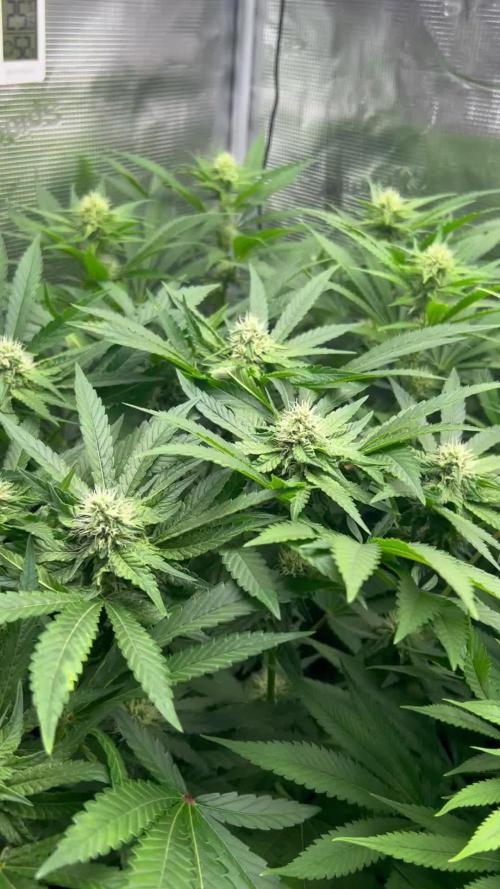
Week 5 – All calm before the swell 🌊🌿
The Lemon OG girls are moving into mid-flower and staying true to their name: calm, consistent, and frosty. The structure is set, stretch is over, and now it’s all about stacking. Buds are forming nicely and trichomes are coming in stronger each day. No major issues, just some fine-tuning and observation.
This week’s feeding:
💧 15L water
🌸 60ml Biobizz Bloom
🌿 20ml Topmax
30ml CalMag
⚖️ 1.6g Epsom salts
🍯 50ml molasses
30ml EM (effective microbes)
Everything looks on track. The girls are doing what they’re supposed to – building fat, sticky flowers. Nothing more to wish for at this point.
Stay lifted,
OnlyBuds

Likes
31
Share


@BigBadLion
Follow
Happy 4:20 everyone! 🙌 I hope everyone's doing well and please remember to stay safe!
The buds in my plant are getting bigger! Two of the side branches of Pistachio could not hold the weight of the buds (you can see when they fall on the timelapse!) so I had to "hang" them to the tent, yikes! 👽
I also increased the amount of Silver PK by 0.5 but I believe the PPM was a little too high, so next week I'll try lowering the dose of CalMax to see if that helps.
Some of the trichomes on the leafs are starting to turn ambar (while the rest of the plant are transparent or very milky) so I suppose the girls are getting there! They need a liiiiittle more time since there are still some immature hairs, specially on Matcha. The leaves of Pistachio are also turning lighter in color and I've been removing them everytime one pops up.
Anyway, see you all in my next update! 👍

Likes
88
Share

@GanjaGecko
Follow
WEEK14/8F // D92/50F-D98/56F
Budporn-Phase1-Zielgerade
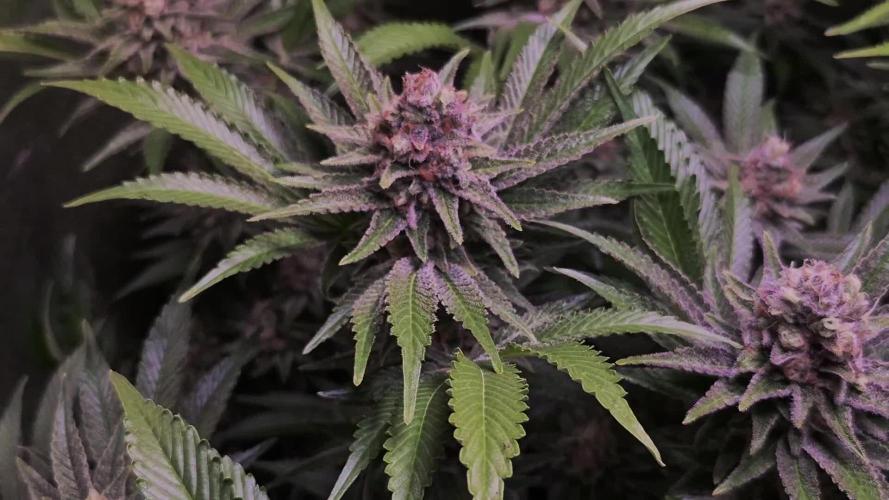
In Blütewoche 8 gehen viele Blätter der Ladies #3 mittlerweile sichtlich ins purple und bringen wunderschöne Farben ins Zelt. Auch Lady#1 fangen langsam an rot/pinke Spitzen an den Calyxen zu bekommen.
Die Ladies ohne Zusätze sind dem Ende etwas näher. Vielleicht wirklich weil nicht so viel Biomasse fertig werden muss wie bei den Ladies mit Zusätzen. Ein Stickstoffmangel konnte ich auch schnell wieder ausschließen.Bei einem Stickstoffmangel würde es zuerst die unteren Blätter betreffen. Ich bin mir ziemlich sicher das es der natürliche Fade ist und auch der natürliche Flush weil das Substrat nicht mehr viele Nährstoffe hat. Die unteren Blätter sehen alle noch Top aus. Klar werden die Blätter minimal heller als bei Lady#1 die Zusätze und Booster bekommen haben, dafür das es aber "nur" Langzeitdünger einmal zu Beginn der Wachstumsphase und dann nochmal zum switch in die Blüte gab, dazu alle zwei Wochen mal den BioEnhancer zugeben, war es super entspannt und die Ladies haben sich mega entwickelt. Keine Mangelerscheinungen, nichts. Wenn man dazu eine automatische Bewässerung ins Setup nimmt könnte es nicht entspannter sein. Für jemanden der recht wenig Zeit hat und/oder viel unterwegs ist wäre das eine sehr Stressfrei Lösung.
Auf gehts in die letzte Woche💪🏼
______________________________
Düngen/Gießen:
Düngermengenangabe nur für Lady 1&2 (links), Lady3&4 (rechts) bekommen nur ph-korrigiertes Wasser und alle 2 Wochen BioEnhancer. Die Menge die gegossen wird ist bei allen gleich.
Tag92/50F gab es 1ml/L SilicRock, 0.5ml/L CalMag, 1ml/L PowerBuds, 1ml/L SugarRoyal, 3ml/L PK 5-8, 0.5ml/L GreenSensation, 3ml/L Alfaboost, 2ml/L StickyFingers. Für alle gab es 600ml in den Topf und 200ml in den Untersetzer.
Tag94/52F gab es 1ml/L SilicRock, 0.5ml/L CalMag, 1ml/L PowerBuds, 1ml/L SugarRoyal, 3ml/L PK 5-8, 0.5ml/L GreenSensation, 3ml/L Alfaboost, 2ml/L StickyFingers. Für alle gab es 600ml in den Topf und 200ml in den Untersetzer.
Tag97/55F gab es 1ml/L SilicRock, 0.5ml/L CalMag, 1ml/L PowerBuds, 1ml/L SugarRoyal, 3ml/L PK 5-8, 0.5ml/L GreenSensation, 1ml/L Orgatex, 3ml/L Alfaboost, 2ml/L StickyFingers.
Für alle gab es 600ml in den Topf und 200ml in den Untersetzer.
________________________________
Höhe ab Substratoberfläche: 96cm
________________________________
Licht:
Zyklus: 12/12h
Abstand: 26cm
Watt: 120W (100%)
Ppfd: ~800ppfd
DLI: ~35
_______________________________
Umgebung:
Temp: 24-26°C
RLH: 45-55%
VPD: 0.8-1.3 kPa
Likes
7
Share


@Cannibalgardens
Follow
Not a whole lot to report you guys she is happy healthy and finally starting to get bulky now ... This strain does produce rock hard buds inside and outside grows have been good for me with this strain .The whole plant minus a few buds will be made into hash with this one can't wait ..
Likes
10
Share


@FrostyBudZGenetics
Follow
The germination i forgot to take pictures so i just have a video of the first 3 strains i started before the other seeds arrived.
I used the same metod for all of them
24h in the glass of water after that 48h in the cotton pads in the zip lock bag with 3 sprays of water on the cotton pads and 1 spray when inside the zip lock bag is closed untill 80% leaving a small gap for them to breath.
I decided to plant them after that in the final resting pot for this strain in a 5 gallon fabric pot.
I used the following media on the bottom of the fabric pot i used 10% of Goldlabel HydroCorn after filled up with Ecothirve coco (70% coco 30% perelite) and i made a hole for my potting soil where i used Advanced Nutrients coco cultivator (50% coco 30% perelite 20% pebbles) and i mixed on the media some Azos , Mykos and Great white.
The light schedule for the first 5 days was 24/0 and after that i change for 18/06 schedule.
Just water the plants on the 15/06 i think all my seedlings are stuned because my light is too strong for them and the light is dimed to 25% waiting on my new seedling light the Spider Farmer SF1000EVO LED should arrive just on wednesday. And my light meter for lux is saying i have 8600Lux converted is 148 and my dli on meter from the phone is saying 150 so its 3x times more the recomended i just dont understand if this phone app is working correctly.
Update on the order from spider farmer from Ebay (Order the item on a thursday and the order was not updated on ebay on the following Monday so decided to contact them to understand when i am gonna receive my order i was told true ebay that my item as been shipped and i will receive an update within 1 hour to tell what time the item will be delivered. So never received any message giving my time slot delivery. Never received the item and at 21pm the tracking updeted on Ebay saying delivered so i contected them next day to be told that the courrier actually lost my order and that they will reshippe the order again but was told i need to wait 2 buiness days for the warehouse to processe my order beacuse they are busy what i replied that why should be me the costumer that needs to wait 5 or 6 more days for the order to arrive to me that they should send me the item on the same day and send me with one day delivery. The ansewer was they could not do it so i cancell the order asked for a refund and never more use their products appailing costumer service)

Likes
19
Share


@Wilstang
Follow
Very easy grow and strong disease resistant. Recommended for anybody looking for that easy grow with a large canopy 🌳💣
Likes
77
Share


@SooSan
Follow
Dans l'ordre:
1) Afghan Peach x Blue Monkey
2) Gelato Cake
3) Fast Critical Poison
4) Tropical Fuel
5) Hindu Kush
6) (Blueberry x Black Domina) X (Kosher Kush x Mk-Ultra)
7) Blueberry
8) Herz OG
9) (Blueberry x Black Domina) X (Kosher Kush x Mk-Ultra)


Likes
7
Share


@Hommero75
Follow
End of week 4 for the Purple Lemonade. She just got fed with Goldleaf feterlizer and cal-mag.
So far no new changes. She keep growing slow, no signs of pre- flower. She's been a hand full. Leave are still getting the brown spots and dying even with cal-mag added to the feeding. Let's see how week 5 goes.
Likes
6
Share


@Edwinbarragan
Follow
Cada día crecen más esta semana las pasamos a floración y mostraron un buen desarrollo sin estrés ni deficiencias alguna, detectamos en la candy crush que se volvió hermafrodita,posteriormente la retiramos del cuarto de cultivo........
Likes
1
Share


@Baltimoregrower
Follow
So this week I added nutrients for the flowering stage. I gave her a little trim as well as added her netting. I flipped her on last Sunday PP
Likes
38
Share


@GroloCup
Follow
She's moving along into flower and I've started using a little bloom nutes now that the stretch is tapering off. Took off a few fan leaves that were blocking some bud sites and removed some lower growth that wouldn't make much more than underdeveloped larf. She's definitely crowded in the tent, but she's continuing to go through her paces and should stay on track. She's starting to effervesce and it's a sweet earthy note with a more skunky stem rub. Lets see where this week takes us!

Likes
17
Share

@Growcilla
Follow
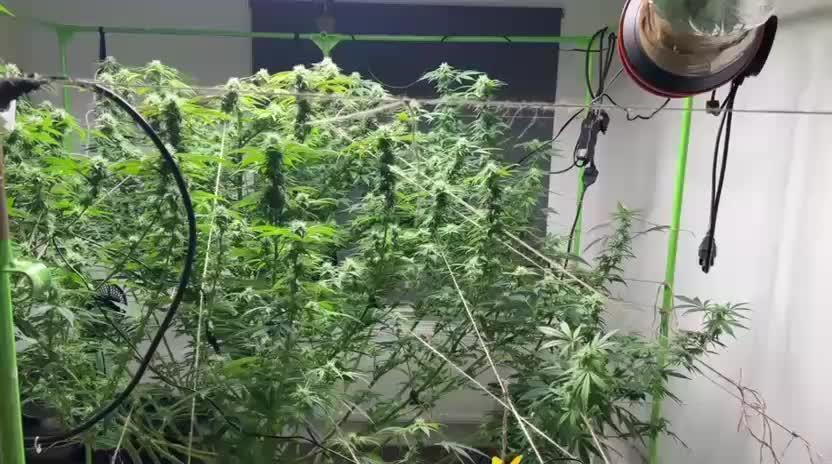
So wie man in diesem Video sieht, der Raum hat 12 m² das Gestell von dem Zelt ist 2 M mal 2 M mal 2 M. Und die Pflanze ist entlaubt, gebunden und gebogen. Und sie geht schon in die Blüte ?😁?


Likes
3
Share


@Mr_nugs_lover_David
Follow
Anotheer amaazing Black cherry punch pheno, beautiful colas, they looks just like rockets, so fat dense and sticky colas man. So in love with this black cherry punch, same sweet aroma, very fruity and sweet just like her sisters. I'm very happy with how this strain has performed in my garden. All my plants are 100%organic grown. She's been grown with florganics FLO Living soil, guanokalong organic dry amendments and Silicium flash by biotabs which contains bug shit and helps to keep a good microbial activity in your soil, it also contains silica, Flo living soil is full of life too man, I'm getting top clean aromas, very clean medicine for myself. It's such a pleasure to work with what I love the most. My cannabis 🤞💚😋🍪 peace everybody!!

Likes
7
Share


@Chronnoisseur
Follow
week was good I ran in to some problems got nutrient deficiency and some burnig on my leaves. But I fixed that by doing a nice good rinse of straight water and than fer them some good olnutes and back to good. Smell is strong and funky so strong I finally ordered a carbon filter. If you like my diaries check out my Instagram for more pics.
Processing
Likes
11
Share


@Microsun
Follow
Flowering is going amazing, this candy cane is growing some very fast weight and caking up with Trichome’s. The sweet and slightly minty berry smell is growing in power day by day, and I’m very happy with how the size of the buds are developing since adding the increase of 2-8-4 and fish bone meal, just a little bit, not too much at all and she’s reacting great, knowing that the candy cane is a larger auto in size makes me a bit sad with the total size of this plant, but in its young age as my very first auto I believe I probably stunted it, but after all this and how she looks now Im more than happy with the growth, yield and quality of it, just speaking now as I do not obviously know how much I Will revive from it, I’m guessing about a ounce. No small bud sites other than maybe one on a lower branch that already has a main top cola on it. The main cola is massive and packing on a lot of size. I’ve switched the light to a hour less now as I am growing 2 photo indica L.A grape and with the season change I am having to fix my temp and humidity more for the photos, so changing to a 17-7 schedule has actually helped quite a lot and also has helped my other autos veg slightly better. But all in all I’m very exited!


