


Likes
Comments
Share


Likes
78
Share


@Basementganja
Follow
Gave her a heavy defoliation! She's growing very strong, and needed a little thinning out!
The defoliation promotes the lower buds growth, by allowing more light penetration!
The defoliation also ensures that airflow throughout the plant is strong!

Likes
Comments
Share

@grimm420
Follow
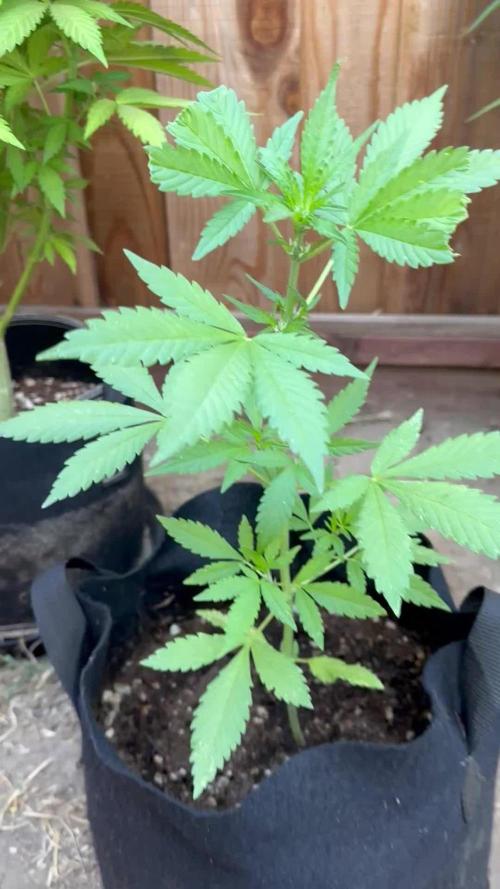
Decided to fim because I was kinda sad with my Slime Machine yield, always had more success with topping and fimming. Gave her a bit of Flower Girl Fertilizer. So far it’s looking great! Looking forward to buying a greenhouse to control all the pests eating my poor plants 😭 I see a lot of mites.


Processing
Likes
24
Share


@Ironlungs
Follow
Gave her a fresh haircut for the start of week three flowering. Excited to see how much she fills out. This is my first attempt at a scrog and I love the difference in my last grow where I just did some light stress training.
I will post some more pictures once she's perks up. She's a little upset at the moment from the trim
Likes
Comments
Share


@Cultiv8or
Follow
It was fun to grow in the back yard.
I wouldn’t grow again though.
They get stressed and stunted very easily. Don’t smell. Low yield. Low potency.
Likes
Comments
Share

@SubliminalSociety
Follow
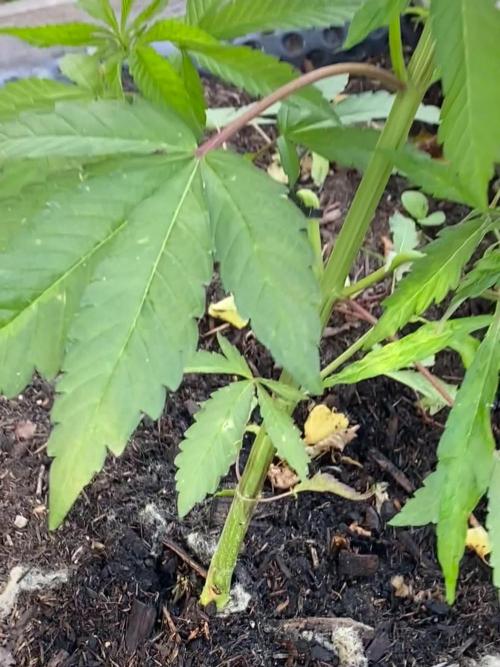
More sun this week, hello summer!
She’s a sun catcher and started to grow crooked. I fixed it with a stick.
Her growths is stretchy. A lot different than my last mimosa. We’ll see!


Likes
10
Share


@Cannibalgardens
Follow
Skipping way ahead this round and. Into the flowering cycle now .. lots to see and plenty of beautiful genetics in here...
All organic grow ..


Likes
11
Share


@Chubbs
Follow
420 Fastbuds
Amnesia Haze Auto
Week 8
This week has been an interesting one to say the lease. It's been in the 100's in my grow tent even with air circulation. So I decided since my outdoor has been growing good I put them with um. Over all still watering straight well water 2 liters daily with no nutes. I do spray once a week for preventive maintenance with no issues. All in all Happy Growing.


Processing
Likes
23
Share


@PrairieFrostGrow
Follow
*
********* Week 11 - June 20 to 26, 2020 - Days 71 to 77 from germination ***********
*
It is the end of flush week and she went into darkness on Wednesday night, day 75, for two days. Saturday will be harvest day and start and the dry process👍
She has certainly been going through the beautiful stage of senescence and her fade is gorgeous. The purples and yellows coming out are great......covers up the brown spots😂😂 Her buds are densing this week as we work on bring down the humidity. Running in the mid 60’s for humidity late in flower is a different experience and one that takes some getting used to. Bring down further to low 50’s has really helped to bring out her frost as well. Kept the humidity high to form big buds......now lowering to make them more sticky👍👍
I am feeling very strongly that the big part of the pH issues this run was a change in feed water. I have always used bottled RO water for all my grows, except outdoors, but this grow I switched to tap water. Dechlorinated the water with air stone and gave it 24 hours min before using. Wanted to save some money and tired of lugging bottles downstairs a couple of times a week☹️ This is worked out nicely and a lot more convenient. However, the city must be putting some crap in the water that is causing issues in my media and raises the pH after the watering. Out of the tap it is 8.4pH and 275ppm. Since ppm were not too bad in my opinion I moved forward without filtering the water.......oops🤬🤬🤬 Out of options on what is causing the issue, I switched back to RO water late last week........all the girls are happier!!!! F......missed the cause for weeks. Always learning from this plant and my own mistakes to get better every run😉👍
Also wanted to add a little more stress to girl to help push out some increased resin. I drilled a 5/16” hole into the main stem to cause her stress. I did this rather than trying to break a branch and will see how it goes this run. Sterilized a new bit in Alcohol and went for it. They went into darkness about a couple of hours later. Excited to see what happens when she comes out to get chopped😃😃
Little more detail......
June 20/20 - Day 71
- Rezin and Liquid Weight @ 2ml/L = 285ppm and 4.0ph
- 8L given to get a good flush
- Runoff in pots already were 7.8pH and 485ppm.
- after 8L water runoff was 7.0pH and 370ppm.
- she is 29” tall and 30” wide.
- tricombs still mainly cloudy.....review again in couple of days.
June 21/20 - Day 72
- Dry out day
- buds are firming up......squeezed a couple🧐
- temps are nice outside so tent able to hold 75 degrees and 51% humidity.
June 22/20 - Day 73
- Rezin @ 1ml/L = 120ppm and pH the water to 2.7!!!!!!!!!
- Given 2L watering.
- No runoff water and I am good with that as I want the low pH water to stay in the medium.
- She will be ready soon. Thinking darkness on Wednesday and harvest on Saturday??
June 23/20 - Day 74
- 2L plain water feed - 80ppm and pH to 2.4!!!!!!
- not excited about these crazy low pH numbers but doing what we can
- her tops are getting really pointy now and her leaves are very yellow.
- checking tricombs, I think we are done and tomorrow will be her last day so that I can take down on Saturday.
June 24/20 - Day 75
- 2L plain water feed - 80ppm and pH to 3.0
- Going into darkness tonight so this was her last bit of moisture.
- drilled a hole into the stem.....was going to do a couple of holes but not trying this method before I decided to leave it with one hole.
- into darkness tonight
So we finish up the week with her in the dark. Next update will be the harvest!!
Thanks very much for taking the time to review my diary!! Sorry for running behind often on this run.........everyone has had a busy life the last couple of months in the world and its been no different here...........a huge Kudos to all the Growmie‘s that are able to keep up with their diaries on daily basis on GrowDiaries.......its a commitment😃👍👍
Mephisto has bread a very nice girl. She is big and sticky and grown very well considering the environment she has been given. Battling the high pH and still turning out as she has is awesome and much respect!!!! Great job Mephisto, can’t wait to run her again.......just so happens I have several more seeds of her😃👍

Likes
23
Share


@WolverineGreens
Follow
Still got 2 do si dos and an amnesia in the cloner waiting to finish.
30 in the ground that is a mix of Alaskan purp, gelato, do si do, and amnesia haze and 1 huge blue headband.
4 in pots that are a mix of Skywalker, white widow, and Bruce banger.
My goal is 20 lbs. In the fall.


Likes
23
Share


@HirdoWeirdo
Follow
Here we are with another super strain from Royal Queen Seeds!!! This one was my first choice, but she was still not available on March, so I had to wait to have the chance to grow this super plant!
Royal queen seeds sent me this amazing package full of gadgets and goods for cultivate, so I'm testing their organic nutrients to see the differences and the yield they will have on my tiny plants :)
During this week I was not at home, I waited germination then I went to holiday, but everything was ok when I came back!
For the moment the Hulkberry auto is under led light -a cheap one, just for first two weeks-
I’ll move her outside when she will become a little bit stronger (I have a lot of snails and parasites in my garden and they literally love this kind of plant 😒)
Thanks Royal Queen Seeds to gave me the opportunity to grow this beauty ❤️


Likes
19
Share


@4Haut
Follow
Hi folks, now it’s almost the end of the fourth week. Three days ago, I had to repot from a 1.5-liter container to an 11-liter fabric pot. Everything went smoothly. I was a bit nervous, but it turned out to be no problem. The roots have spread throughout the entire pot and along the edges, and they looked fresh and healthy. 🌿
She is growing very well in my opinion. Two of the lower leaves are yellow and limp, but the rest are beautifully green and juicy.
Happy growing boysNgirls :)

Likes
5
Share


@Mr_nugs_lover_David
Follow
This plant was planted a week after the other six plants in the tent and she stretched very good during the first week of flower, in veg I saw she was gonna get big fast, she grows super fast and ended up the same size if not bigger than her sisters, very recomended strain, amazing powerful smell, very strong cerebral happy high, I enjoy a lot sativas, diesel it's not my favorite flavor but it's definitely awesome for everyone specially you diesel fans! Congratulations to Gea Seeds providing amazing quality strains to the growers!

Likes
19
Share


@BB_UK
Follow
The grape is still a little slower than her sister but was last time and she’s destined to be a smaller plant it’s in her genetics! Her max height is 120cm and that’s what I’m aiming for! The purple urkle is thriving! She’s growing an inch a day or so and producing so many extra branches! Thanks to dynomyco! I have added a new light in there too! Mars hydro TSW2000 so will get a better yield! I literally have no light loss! I’ll be flipping anytime soon now! As my elder girls are at 6 weeks nearly! I’ve also added a transparent PNG logo for WeedSeedsExpress for anyone else growing there strains just save the picture directly! And you can overlap it on videos and photos!

Likes
18
Share


@Nurse
Follow
day 11 from germination
5 litres to the pots with different ph between 6.2-6.5 with 0.5 MLG bio grow for litr.
day 12 from germination
its my bad day
I noticed that my plants are very stretched and Fragile; compared to their peers that I saw on the site, are very behind. I think the reason is that I got a 110 watt Amazon lamp, put it 100 cm away and gave them a lot of fertilizer and water. To solve this problem, I ordered a spider sf 1000 and i gathered the soil of pots from the side and poured it around the stem
(And I brought the air to 20 c°, which I do not know is correct or not).
Current situation: Plants are giving new leaves and I see a tendency to grow in them.
My question is, are my plants very backward for 12 day after germination? Do you think that if plants are not going to grow enough and their start flowering quickly when their are still small plants, it is not better to throw these away and plant new seeds?
Does it cause the amount of yield to decrease?Or I still have a chance to fix it?
There is a way to increase their growth period?
After I buried the stems and changed their height from 14cm to 8cm, can the stems have new roots? And that now a few cm empty flowerpots do the roots have enough space to grow according to the photos?
Thank you very much for your help.
day14:
Today is the 14th day and the last day of the second week. Today I installed the fan and ventilation and a new lamp arrived Spider Farmer sf1000. Very high humidity, someone can help me. And that there is a way to grow four plants with this lamp? Do not miss today's video.
Processing
Likes
49
Share


