


Processing
Likes
Comments
Share


@EasyName
Follow
Week...12🤠
So we're getting cold mornings, days are still sunny and worm
She's a strawberry..well sorta speak😁 but tbh, I don't like the look of her😕
I did some re-tying, so she has a flatter and a bit more even canopy (you can't see that on the photos) and found what has been eating my leaves, cute but annoying🤠
I've also tied some string to the branch wires so it all grows level with the ground
I know I said I won't, but I had to, so I did..I cut some leafs. She had to many whitch needed to go, so I decided to cut them before she starts to flower
I've watered her with 17L of water, ph 7.15 because of my bad soil
Also soon in the next week or two I'll start making my drying box, hopefully my plants won't die before harvest😁🤠
Looks like that's it for this week, it was a good week in terms of growing, so I'll see you next week!🤠


Likes
26
Share


@420DeepGrow
Follow
Gracias al equipo de Seedsman y XpertNutrients sin ellos esto no sería posible.
💐🍁 Bubba Cheescake:
Bubba Cheesecake es un cruce de Bubba Kush anterior al 98 con Cheese Cake (Wedding Cake x Exodus Cheese). Se trata de un híbrido 70% índica con muy buenos rendimientos, alto en THC y bajo en CBD. Bubba Cheesecake prospera en interiores y exteriores. En interior se aconseja un corto periodo de crecimiento vegetativo debido a la cantidad de estiramiento que presentan las plantas. Las plantas pueden crecer hasta una altura de 250 a 350 cm. cuando se deja crecer naturalmente al aire libre. En interior, la floración dura entre 60 y 65 días, con rendimientos entre buenos y altos, de 400 a 550 gr/m2. Las plantas de exterior son capaces de producir entre 700 - 800 gr. peso seco. En las latitudes norteñas, en exterior, los productores pueden esperar cosechar a principios de octubre. Los cogollos son grandes y duros como piedras. Las plantas maduras muestran atractivos colores púrpuras y azules y brillan con una resina pegajosa que cubrirá las manos del cultivador si no tiene cuidado. El componente Wedding Cake agrega dulzura al sabor del regaliz y el aroma es terroso y musgoso. La producción de THC es muy alta con un nivel bajo de CBD. El efecto es intensamente narcótico, fuerte y duradero.
🌻🚀 Consigue aqui tus semillas:
🍣🍦🌴 Xpert Nutrients es una empresa especializada en la producción y comercialización de fertilizantes líquidos y tierras, que garantizan excelentes cosechas y un crecimiento activo para sus plantas durante todas las fases de cultivo.
Consigue aqui tus Nutrientes:
https://xpertnutrients.com/es/shop/
📆 Semana 12:
Ultima semana de crecimiento antes de pasar a floración tras el solsticio de verano.
He aprendido mucho sobre el cultivo de exterior, el próximo año será diferente....
Continuo con las dosis de fertilizantes recomendada por el fabricante. 📆 Semana 12:
Ultima semana de crecimiento antes de pasar a floración tras el solsticio de verano.
He aprendido mucho sobre el cultivo de exterior, el próximo año será diferente....
Continuo con las dosis de fertilizantes recomendada por el fabricante.

Processing
Likes
5
Share


@FrightNiteFreddy94
Follow
Everything's good buying a 600watt ZNet 4 to add more light!


Likes
154
Share


@CBD_Sweden
Follow
@FAST_BUDS,
Hi all the happy people here in GrowDiaries.
This is my second cultivation ever and it will be fun to try a bigger space than my closet grow.
First, I'm just going to say I'm done with the construction of my new growroom.
I put some pictures on the construction here in week one.
The room is 2.14 meters by 1.7 meters and has a ceiling height of 2 meters.
It provides a floor area of 3.6 square meters.
I use a 54 Watt Lightwawe T5 for germination and 2 Pcs 400 Watt HPS lamps.
I have a channel fan that replaces the room air about 40 times an hour to get a comfortable environment in the room, the air enters a fresh air intake from the outside.
The air is purified through a carbon filter to then leave the room to the rest of the basement.
Then I use that heat to heat the rest of the basement.
I will use 8 pcs 15 liter Autopots to grow with and a 100 liter water tank that supplies the pots of water and nutrition.
I will grow completely organically in soil and will watercure my buds to get the best possible medicine for me.
-----------------------------------------------------------------------
2017-09-25. Week 6 starts. Added a video of the girls. Gave the girls water and nutrients. Girl N1 is 60 cm high and have grown 14 cm in 7 days. Nr 2 is 37 cm and has grown 4 cm in 7 days.
I flushed the girls yesterday with 40 liters of tap water. Im lowering the humidity in the room with a dehumidifier and try to have 50% air humidity.
----------------------------------------------------------------------
2017-09-29. Installation of the New light rail in the grow room. Its Advanced star light V 5.0. Added a video of it.

Likes
8
Share


@GrowingABushWithButch
Follow
It's Day 54 Week 08 0f Flower For My 02 Kombucha Cream by atlasseed . And For My Snow White and SpliffStrawberry by Spliff Seeds Amsterdam . So Today I Started My Day By Checking My Tricomes On My 2 Kombucha Cream. The 02 Where Looking Fully Milky So My 02 Kombucha Cream Got Flushed TODAY with Some Flawless Finish by Advanced Nutrients . The 2 Received 80ml of Flawless Finish mix with 1OGallons Of Water Ph at 6.0. Tomorrow they will get Rinse off with ph balance water. Yesterday I watered my Snow White and SpliffStrawberry Ppm where down to 100ppm. All 4 Plants will get a nice ice bath in a few days. My plan is to check the Tricomes on the SpliffStrawberry In a few more days she was still Milky when I check her yesterday. I will chop her down next weekend. And the rest will get the chop at 30%Amber Tricomes.
Happy Growing Growmies 🤘🏻


Likes
8
Share


@AERO_Grower
Follow
6° Semana- Aeroponía - Están muy bellas las raíces, están 100% sanas. Se realiza poda apical al quinto nodo,una pequeña defoliación y luego se aplica LST a las más grandes, muy contento con el crecimiento actual.
---------------------------------------------------------------------------------------------------------------------------------------------------------------------------------------------------------------------
6th Week- Aeroponics - The roots are very beautiful, they are 100% healthy. The fifth node is topped, and a little defoliation and then LST is applied to the largest ones, very happy with the current growth.


Likes
23
Share


Likes
346
Share


@Canna96
Follow
Hey now, was a pretty good week for the Sour D, I didn't really make any changes as far as the nutes, still at EC of 1.6, with water from my dehumidifier, then cal mag, then maxi bloom powder, then liquid kool bloom. Only real issue I had this week was on day 58 I noticed her leaning a little bit, and I went to move her pot, and she almost toppled over. It really scared the crap out of me, so that is why you now see all the wire tires wrapped around her base. Definitely something I will be more mindful of in the future. Still dealing with high temps and humidity, but my dehumidifier has been a real Beast. I will also add that when I open that tent, the smell of Diesel Fuel, and Lemons smack me in the face like a 2x4. I have never smelled anything that pungent before. I am amazed at how well my Terra bloom carbon filter is doing, although I am sure it helps I have an 8x24" inch filter and Infinity T8 exhaust running on the lowest possible setting in my tiny little tent. Really hoping for some thick and sticky flowers! Thanks for checking me out and and Blaze On....

Likes
35
Share


@SmokingTiki
Follow
This week I slightly defoliated the Two mandarin Punch.
The dehumidifier is now always ON and the humidity is always around 50% but I cannot go lower. I poor 2l of tap water during each watering for the 26l pots and 1,5l for the 10l pot.
After one week of 12h of light, the two photoperiod have started to stretch and the two auto are still stretching a lot and begin the flowering phase.
Plants heights at the end of the week:
Honey Melon Haze : 70cm (+20)
O.G. Kush : 48cm (+4)
Mandarin Punch #1 : 76cm (+22)
Mandarin Punch #2 : 71cm (+19)

Likes
17
Share


@Optimus
Follow
The Dwarf was sick from the very beginning because of the shitty peat soil with insects. I didn't think he'll make it, but it did. The buds are beautifully purple!
29/03/2022 stopped drying, started curing

Likes
5
Share


@CanarianGrow92
Follow
Last week of veg, i think these girls will start to flower the next couple of days! At the moment great results under this TS1000 as always! We gave a very light nutrients this week just to jave some nitrogen as im using a light mix as soil, lets see how it goes the next weeks 😁💪
Likes
4
Share

@The_Doctor_Green
Follow
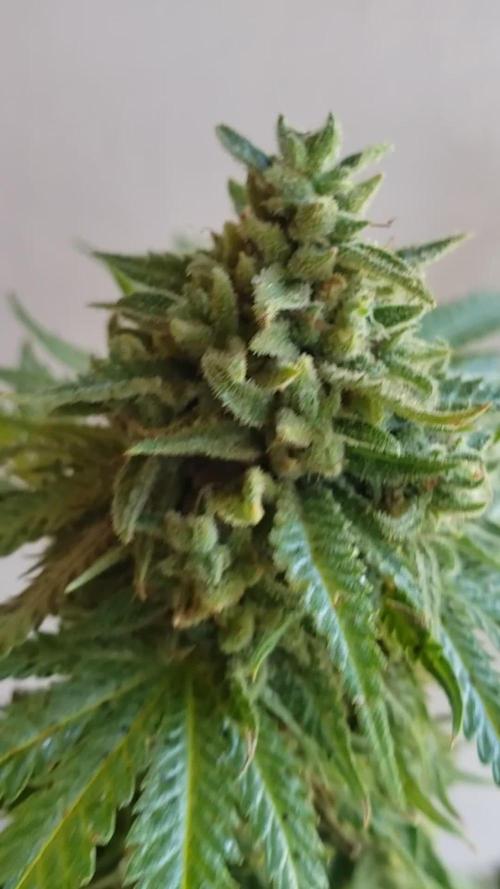
Hola a todo el mundo!!!
Espero que anden bien!..
Las plantas ya han recibido su lavado de raíz, y están esperando el dia de corte , es todo lo que voy a decir😅.

Likes
23
Share


@Lerome
Follow
📆 [27.08. - Day 1]
💬 Going to change the light cycle to 18/6 tomorrow, i want good temperature during the night for MC 2 to pop. I hope she will do so tomorrow...
💬 MC1 is looking healthy.
💦 Watered 10ml filtered rainwater per plant
📆 [28.08. - Day 2]
💬 Looking good so far. Im going to be taking clones anyway, so it would be fine with having just one plant. We will see if MC 2 makes it.
- Adjusted lights from 24/0 to 18/6 cycle
💦 Watered 10ml filtered rainwater per plant
📆 [29.08. - Day 3]
- Nothing -
📆 [30.08. - Day 4]
💦 Watered 10ml filtered rainwater per plant
📆 [31.08. - Day 5]
💦 Watered 20ml filtered rainwater
📆 [01.09. - Day 6]
💬 Noticed low temperature (23 Celsius). Raised the plant up about 20cm.
📆 [02.09. - Day 7]
- Nothing -
💬 Waiting for root development before i start watering (probably around Day 10-12)

Likes
229
Share


@Crashoverite
Follow
Week 9
Hi everyone 😁
I am very pleased how girls are developing in recent days. Aroma is very fruity and a bit gasy. Sort of riped mango / pineapple. They are so frosty alraady and buds are developing very well. Was little bit worried that last week defoliation may stunt girls too much but really this strain showing no signs of any stress. The way things are looking these girls may be ready for harvest in about 2 weeks😁
Will keep updating progress of this week every couple days.
Have a great week everyone 🍀✌️
18/09 Day 57
Started watering with approx. of 2.5 ltr of solution until runoff per pot and this should last for 2 days. Girls like this magic mixture very much 😁
21/09 Day 60
Cant belive it's only 2 months since planting seeds. Everything is going well. Thankfully no issues at all.
Slow develop girl "Nuna" it's way behind the other 2 girls soon to be ladies "Luna" and "Sweet Mary Jane". but I'm glad that I have kept her as her flowers are small but frosty and she will be perfect for some cannabutter or bubble hash. Other 2 girls as all see they are absolutely gorgeous. Buds are gaining weight and that frost OMG love it. Will get some close up pics of trichomes over the weekend.
23/09 Day 62
Still lots of white pistils and currently trichomes level at 2-5% amber and rest are clear and milky. My personal preference for harvest 60-80% amber so will keep feeding with nutrients for few more days and will keep monitoring trichomes before switching to only water.
24/09 Day 63
End of week 9
Not much work this week. All been going great. Buds are now very sticky and they are smelling very fruity sort of lemony, zesty, apples and mangos.
Thank you all for all the support, comments and likes. It's some great community here.
Stay tuned for more updates in coming week.
Peace and love ✌️💚
Likes
85
Share

@420DeepGrow
Follow
Octava semana de floracion, se ha formado una linda pequeña cola, uniforme y compacta que continua cargándose de blanca resina 🤩. Esta semana aplico nutrientes porque todavía no esta formada del todo.
📅 Dia 50: Descanso, come mucho mas lento, se aproxima el lavado de raices
📅 Dia 51: Riego con nutrientes EC 1300 EC escurrida 1850
📅 Dia 52: Riego con nutrientes EC 1200 EC escurrida 1750, en una semana comenzare el lavado de raices, porque esto esta engordando todavia
📅 Dia 53: Riego con nutrientes EC 1200, EC escurrida 1700
📅 Dia 54: Riego con nutrientes EC 1200, no dejo escurrir agua.
📅 Dia 55: Descanso
📅 Dia 56: Riego con nutrientes EC 1200, EC escurrida 1750, creo que en 2 semanas estará totalmente lista.
Likes
7
Share


@Banditho
Follow
She finished later then other ladys in same tent, and she is a lot bigger then other amnesia plants I had in same tent. Dry bud weight from her 102g.

Likes
18
Share


@Mr420
Follow
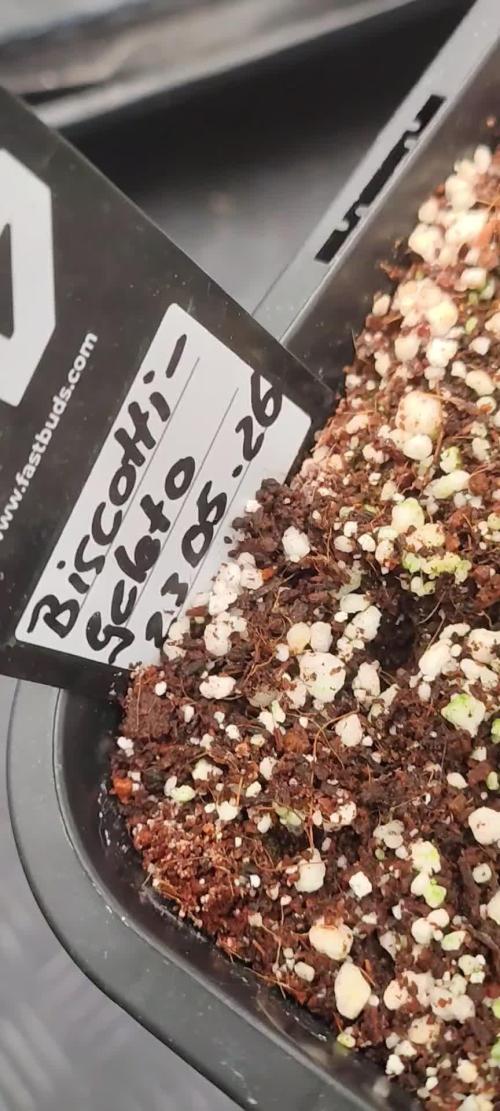
Harvest was easy pulled all fan leafs off five days ago but left bud leafs on top to help drying process and it makes trimming easier as you can see I trim plant as it stands then I cut branches off or the whole plant. Only took 1hr to harvest.

Likes
42
Share


@Only4passion
Follow
Harvest time I decide two hang the entire plant for a slow drying !!
I finally removed the plant to much humidity it was around 80%😥 it’s raining hard those days anyway I checked every buds and no mold so I switched to my old method .
📦 humidity now it’s 55% 👌
5 days of drying I try to keep humidity around 60 and 17 degrees to keep all terpenes n flavour, terpene don’t like low humidity ,heat ,and of course lightning ,see y’a next update 💪💪💪
I had 34g of nice frosty trim ,for the first time I’ve made some nice bubble hash amazing I love it!!!
I watch all of he’s videos he was the marster of hash RIP French cannoli 🙏🙏🙏
