


Likes
Comments
Share


@Kingseeds
Follow
Another powerful strain form in-house genetics (OGKB V 2.1 x Platinum )
pure gassy flavour and aroma which will have all the Kush lovers out there going crazy
Absolutely frozen cola


Likes
29
Share


@HighZenBerg
Follow
Welcome back at week 6 in vegetative stage of my Sensi Amnesia feminized by Sensi Seeds.
She does great and almost the whole 60x60 space is filled with the 8 new mains.
I will give her one more week and a defoliation in a few days.
I am amazingly happy with her and can’t wait to start flowering stage.
Day 44: defoliation
Day 47: I flipped the switch to 12/12 ! Let the flowering begin
Keep in touch !
Cheers, HighZenBerg


Likes
30
Share


@coyote2thick
Follow
Great week! She grew 10in and responds well to the full dose of nutes. Cut back on the Gro and upped Bloom. Smell up 1100sq feet nicely. She’s been under a 600w and will be put in a 5x5 soon with a 1000w LED.

Likes
21
Share


@CampaCavallo
Follow
Il raccolto è stato abbastanza veloce e semplice viste le dimensioni ridotte della ragazza 💚 il profumo è gradevole 🐒🍇
Mettiamola ad essicare ed aspettiamo che i fiori maturino per bene 👍🏻😘😋

Likes
2
Share


@Kern420
Follow
Woche über haben sich die Blüten weiter entwickelt. Die Trichome wurden mehr und man fängt an erste Terpene zu riechen.
Wir haben Donnerstag (BT 21) stark entlaubt und schauen jetzt wie die Pflanzen wachsen.
Tropi fängt an erste Farbakzente zu entwickeln in den Buds.

Likes
27
Share


@TheCannaProphet
Follow
-----------------------------------------
~BARNEYS FARM DOS SI DOS 33™️~
-----------------------------------------
This strain from 'Barneys Farm’s Cali Collection gets another jolt of super power with this explosive collection of terpenes fused together from some of the world’s most astounding US cannabis phenotypes.
Dos Si Dos was developed from OG Kush Breath, a knockout Girl Scout Cookies pheno crossed with Face Off OG, then crossed again with their legendary Cookies Kush (OG Kush pheno x GSC) AND THAT’S ONLY HALF OF THE STORY.
Add in a subtle blend of Gelato #33 to the pot with its star struck Sunset Sherbet x Thin Mint GSC heritage and boom! A new champion was born: a sativa burst of euphoric energy is followed by tranquility with sedative properties capable of happily tranquilizing an elephant, if you’re overzealous or uninitiated!
DOS SI DOS 33™️ Cannabis Seeds Strain Specifications
~Type: Feminised
~Photoperiod: Normal
~Genetics: Dos Si Dos x Gelato #33
~Effect: Relaxed, Sedative, Happy
~Outdoor Yield (g): up to 2000
~Indoor Yield (g):up to 700 gr/m²
~Flowering Time (days): 60 - 65
~Feminised Outdoor Harvest Month: October
~Feminised Outdoor Harvest Month Week: 1st-2nd week
~Height Indoor (cm): 90cm
~Height: Short
~Indica %: 60%
~Sativa %: 40%
~Indica/Sativa: Mostly Indica
~Taste: Mint, Lime, Spice
~Aroma: Cookies, Sherbet, Lime
*Above information credit to Barneys Farm
__________________________________________________________________________________________________________________________________________________________________________________________________________________________________________________________________________________________________________________________________________________________________________________________________________________________________________________
THE SETUP:
~Planted into Jiffy Peat Pellets that were hydrated with de-chlorinated water with SuperThrive added then ph'd to 6.0 @ 80℉
~Grown 100% organic in 10g fabric pots with Mother Earth 70/30 Coco/Perlite medium amended with 2tbs/g of Down To Earth 4-4-4 / 2 cups/g of Earthworm Castings / 1tbs/g of Dr. Earth Flower Girl 3-9-4, 1tbs/g of Dr. Earth Bat Guano, 3/4 cup of Down To Earth Azomite and 1 tsp/g Down To Earth Fish Bone Meal.
~24hr light cycle during Germination / 19/5 light cycle for Vegetation and 12/12 for Flower
~Straight water ph'd @ 6.2-6.8 when needed and weekly Compost Tea's.
__________________________________________________________________________________________________________________________________________________________________________________________________________________________________________________________________________________________________________________________________________________________________________________________________________________________________________________
Weekly Updates:
9/20- 💥BOOM!💥 Week Six of flower is here and my girl's in high gear, stacking her flowers and pumping out trichomes!
Today I watered her with 1.5g de-chlorinated water with 5ml/g of Botanicare CalMag+ added, then ph'd to 6.2 @ 72℉. I turned her pot and plucked a couple of yellow shade leaves...the basic daily maintenance.
9/22- I didn't water her yesterday as she looked great and was 'praying' hard. Today she was given 1.5g of de-chlorinated water which was ph'd to 6.2 @ 72℉ which I gave her through her drip pan (bottom chuggin) and I also gave her pot a turn.
She continues to pile on the trichomes and is developing exquisite reddish purple hairs in her flowers that look absolutely wicked! She is definitely one of the most photogenic cultivar's I've grown and is looking lovelier by the day! 😍
9/24- We're getting close to wrapping up Week Six of flower in a couple of days, which will put her around two or three more weeks from finishing, with the most exciting weeks yet to come!
I didn't water yesterday and today I went ahead and Top Dressed her with 2 tbsp/g Dr. Earth Flower Girl 3-9-4, 1 tbsp/g Dr. Earth Gold Premium 4-4-4, 1/2 cup Down To Earth Bio-Fish, 1/3 cup Down To Earth High Phosphorus Bat Guano and 2 cups of Worm Castings.
I watered in the Top Dress with 1.5g of de-chlorinated water which was ph'd to 6.2 @ 72℉ and let her enjoy her meal! 😜
9/26- After her heavy watering on the 24th I didn't water yesterday and when I checked her today at 'lights on' and she still had some weight to her pot and her leaves were praying hard so I held off on watering today and will hit her tomorrow with her usual 1.5g watering.
~Thanks for stopping in! Things should be getting a lot more interesting in the coming weeks...Stay lifted and be Blessed! 😎🙏~


Likes
12
Share


@Gorrilla420
Follow
This was probably one of best looking plants I’ve done outdoor, grew really well in the new spot. Had a great main cola with many decent sized side branches. Didnt even do any training on this girl and produced plenty. Next year will do this again but peak summer and do some training on her.
What a great plant, especially in the uk weather she holded off nicely.
Big thanks to barneys farm for sending me these strains to try out.
That’s all, happy growing 🌱

Likes
20
Share


@electabruce420
Follow
F1 doing some lst this week that starts the flowering period, she is enjoying the Autopits already.

Likes
2
Share


@eldruida_lamota
Follow
Que pasa familia, vamos con la primera semana de florscion de estas Gorilla Melon feminizadas de fastbuds.
Vamos al lío, de las 3 plantas, me quede con 2 por espacio, siempre pongo alguna semilla de más por si no abriese alguna por no perder ese hueco del indoor.
Y ya superaron el shock provocado por el mismo trasplante.
El ph se controla en 6.2 , la temperatura la tenemos entre 20/22 grados y la humedad ronda el 50%.
Hasta aquí todo, Buenos humos 💨💨💨


Likes
6
Share
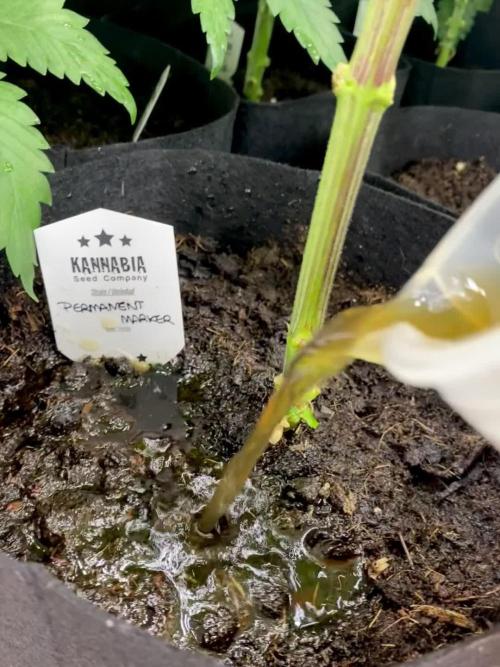

@KannaGrowing
Follow
VARIEDAD EN FASE DE TEST. NO DISPONIBLE COMERCIALMENTE. RESULTADOS EN EVALUACIÓN POR KANNABIA.
Ya estamos en prefloración, así que comenzamos a añadir a nuestra mezcla de fertilizantes, Bio Flores y Bio Boost.
Sin eliminar Bio Vega y Bio Rhizotonic, por el momento.
Regamos una vez con agua y otra con fertilizantes, solo cuando el sustrato se ha secado.
Mantenemos las luminarias y extracción a máxima potencia.

Likes
6
Share


@Young_agronomist
Follow
28.03.23- одна из девочек северного сияния в горшке 3 л начала цвести , вторая же из горшка 10 л активно ростки и не планирует останавливаться и получает лст до начала цвета .
Обе получают раствор ппм 850 и пш 6
Только для разных стадий !
Ждем дальше ❤️
01.08.23-обе девочки развиваются и кушают 👌🏻
Растение в 3 литра горшке активно цветет и получает раствор на цветение 850 ппм short flowering ph 6
Вторя в 10 литров горшке продолжает активно вегетировать получает раствор grow 850 ppm, ph 5.8
92.08.23-Обе девочки значительно выросли , та что находится в горшке 3 литра активно цветет и получает питание для цветения ! Ее размер примерно 40 см и она продолжает почти лол 😜
Девочка в горшке 10 литров набирает обороты в вегетативной стадии и получает лст ! Надеюсь она будет гораздо больше сестры
06.08.23-31 день жизни двух сестер !
Одна из них , та что в горшке 3 литра активно цветет и привыкает 60 см , вторая в горшке 12 л только вошла в предувет.
Обе выглядят очень хорошо и получают полную дозу раствора greenhouse feeding short flowering 1000 ppm,6 ph.
Сток стабилен и под контролем
09.08.23- Растение #1(в горшке 10 л) продолжает расти и получает лст тренировки , приобретая огромный размер . Растение #2 (горшок 3 л) сильно вытянулось и продолжает цвести .
Обе получают разное питание для своих стадий развития .


Likes
14
Share


@MadeInGermany
Follow
Flowering Day 9
Since time chance
To 12 / 12 h
Hey guys :-)
She grows great and is doing well in the flowering tent :-) .
Today everything below was cleaned and defoliated :-) .
A lot was removed because this time it was quite cramped in the tent and you don't lose your energy in the lowest shoots :-) .
This week it was poured twice with 1.2 l each.
Everything was checked and it looks like all trips are slowly but surely gone :-)
have fun and stay healthy 🙏🏻💚
👇🏼👇🏼👇🏼👇🏼👇🏼👇🏼👇🏼👇🏼👇🏼👇🏼👇🏼👇🏼
You can buy this Nutrients at :
https://greenbuzzliquids.com/en/shop/
With the discount code: Made_in_Germany you get a discount of 15% on all products from an order value of 100 euros.
👇🏼👇🏼👇🏼👇🏼👇🏼👇🏼👇🏼👇🏼👇🏼👇🏼👇🏼👇🏼
You can buy this strain at :
Clearwater Seeds
Water 💧 💧💧
Osmosis water mixed with normal water (24 hours stale that the chlorine evaporates) to 0.2 EC. Add Cal / Mag to 0.4 Ec Ph with Organic Ph - to 5.8 - 6.5
MadeInGermany

Likes
119
Share


@PEAKYPLANTERS
Follow
ladies and gentlemen
Welcome to peaky house gardens
We are pleased to announce that we have finished our first experience with growth made only from cuttings
Our intention was to have a lot of weed that was all THE SAME....AND I WOULD SAY THAT WE SUCCEEDED 🤙😉😋👩🏼🌾
Let us know if you liked it... we're waiting for your comments