


Likes
Comments
Share


@MaxGrowCanada
Follow
These plants are loving life.
Upped the food a bit this week, the dinamed was looking a little hungry.
I will snip clones clones tomorrow.
Hopefully I will have the flowering setup finished soon so I can move these girls over.

Likes
14
Share


@MG2009
Follow
01/27/2022
Got a couple stragglers in cups but working on getting more pots.
I apologize for rough looking leaves on the plants, I've been spraying neem oil as a preventative, and to also boost immune responses I've been doing aspirin in water regime so leaves can get beaten up being scavenged for extra energy.
(to fight a non existing threat)
At least in my experiences.
02/02/2022
Potted up a Lemon OG into ? gallon self watering pot will top dress with Coast of Maine 5-2-4 and water in for first week or two, then to 12-12 for her

Likes
19
Share


@Deepgrow
Follow
Primera semana de floracion, 7 dias, ciclo de luz 1212 y ya veo los primeros pelitos.
Empiezo a agregar pastillas easy to bloom, de Royal Queen a 2/3 de la dosis indicada por el fabricante, al bajar el PH con las pastillas agregro PH + y Ata Clean para mantener limpio el autopot, aunque se lo hecho en el riego a todas las plantas y les va bien.
Las he ido doblando las colas mas largas para equilibrarlas en altura, aunque no hizo mucha falta, quite un par de hojas muy grandes y le aplique el ultimo tratamiento de prevencion con jabon fosforico e insecticida natural de aceite de Neem, por cierto, ha venido muy bien, 0 bichos.
Quiza le aplique en un par de semanas cola de caballo para prevenir hongos.

Likes
52
Share

@FatnastyzBudz
Follow
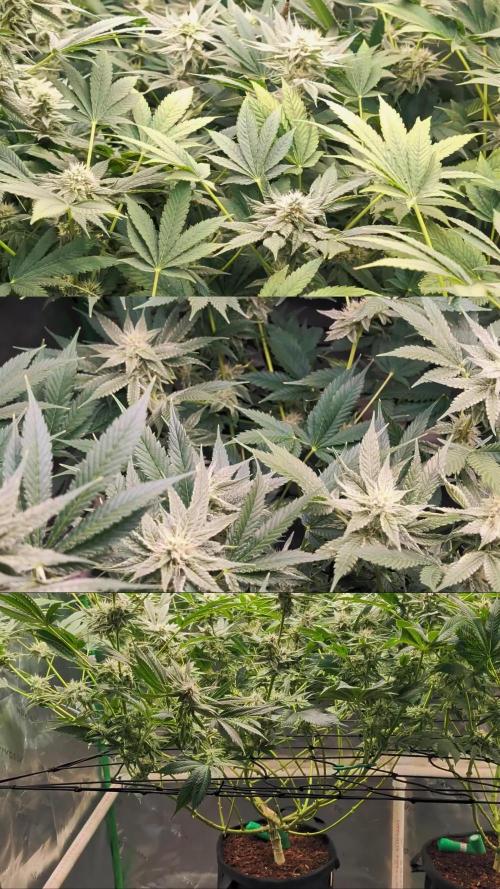
Melonade K — Flower Week 5 🍈🌸
Mel had been cruising, but joined Lung in the root-zone drama this week. Runoff started stacking hard and pH dropped into the 4s.
Did a Cal/Mag + SLF-100 reset, dropped the feed strength, and removed the boosters. She’s still drinking well, stacking flowers, and getting frosty while I work on getting the root zone balanced again.
Keeping her feed simple and letting her do her thing. ❄️🍈

Likes
34
Share


@PabloTheGrower
Follow
What's up growmies,
We reached the final stages...almost ready to cut. Its probably going to take an extra week compared to the Strawberry Cola. But the productions is maybe 30% more on this one. Veery long staked colas. Starting at the bottom of the plant all the way to the top. Sweet and fruity smells and drinking almost double the 💧 water compared to her neighbour.
One more week of nutes and then another week with plain water is what she'll have probably.
The root is a giant, white ball filling half the bucket space. I've used great white which from my experience is very very good. Doesn't perform miracles like Jesus though. The water temps in the reservoir needs to be in the correct range or else it almost always will develop phytium.
If you can't keep the water cool ( 17/21ºC) you're better off with a steril system using H2O2.
See you guys next week.
Good grows


Likes
46
Share


@eldruida_lamota
Follow
Que hay familia, vamos con la séptima semana de vida de estas Candy Rain de Zamnesia, para el concurso POWER BUDS Plagron x Zamnesia CONTEST.
Vaya color verde que se están marcando, se ven bien sanas, ya se aprecia.
Las flores van formándose y produciendo pelitos.
Esta vez regué con una aplicación de Sugar Royal, 0.8 ml x litro de agua, Alga Bloom 2 ml x litro y Power Bud 0.5 ml x litro, Green Sensation 0.5 x litro, por supuesto controlando siempre el Ph, que ahora mismo lo dejamos en 6.
Tragan alrededor de 1 litro por planta cada 48 horas.(3 riegos semanales).
La temperatura máxima está en 23.5 grados y la humedad está entorno al 55%.
Hasta aquí es todo, vamos viendo estas semanas como se forman y progresan nuestras flores.
Os comento que tengo un descuento y para que compréis en la web de Zamnesia de un 20%, el código es ZAMMIGD2023
The discount 20% and the code is ZAMMIGD2023
https://www.zamnesia.com/
Hasta aquí todo, buenos humos 💨💨💨

Processing
Likes
7
Share


@DazeDreamer420
Follow
So far things just seem to continue to get worse. Will continue to monitor. Suspecting my flush wasn't fully effective.
I flushed it again with another 8L of distilled water with some Flawless Finish to help remove slat buildup. The last 2L I mix in half a tablespoon of organic backstrap molasses.
the next day the soil was almost completely dry so she must have been really thirsty or the flush was successful. Will continue to monitor and probably give the next feeding at 25% strength just to ensure it has nutrients in the soil I don't think that could possibly hurt anything and at least it has something than nothing after this whole flushing process this week, top leaves are looking a little yellow so probably needing some Nutrients.
Feed 2L of Nutrients mixed at 25% strength. The pot was bone dry after a day. She must have been thirsty, has been really hot and humid the past few days but tent temps are stayed the same mostly. Hope that the flush was successful and it's now just able to drink up what it needs and will stop showing signs of deficiencies.
Gave her a haircut, removed some sucker leaves and some small ugly looking ones that were affected from the last week of issues.
FIM'd the rest of the outter branch nodes, ones I did last week already split in to two new nodes
Have solved my soil pH issue, up from 5.27ph last week to 6.33ph now. And run off of 420ppm now from 1870ppm. Learned I need to be more careful with the feedings and make sure I'm using straight water in-between to prevent salt build up again.
Overall the plant has a nice structure to her. Depending how next week goes I may flip into from after next week or the week after if she still needs a little more time.
Considering it did grow its first month with only 2 Amazon basic LEDs. I started off slow, also I have a 4ft tall tent so I don't want her getting too tall before I flip into flower

Likes
10
Share


@tokesly
Follow
Very fast growth. Final comparisons of germinating ~10 seeds. Tropicanna Poison on Top Left is 2nd fastest growth so far right behind Apple Cup (Apple Fritter x Banana Butter Cups) by Robin Hood Seeds. Apologies for the floor gap, I ran out of polyfilm and couldn't be bothered to get another large roll for such a small gap.

Likes
3
Share


@Ninjabuds
Follow
7I wish they didn't make me do this to get a smileI wish they didn't make me do this to get a smileI wish they didn't make me do this to get a smileI wish they didn't make me do this to get a smileI wish they didn't make me do this to get a smileI wish they didn't make me do this to get a smileI wish they didn't make me do this to get a smileI wish they didn't make me do this to get a smileI wish they didn't make me do this to get a smileI wish they didn't make me do this to get a smileI wish they didn't make me do this to get a smileI wish they didn't make me do this to get a smile

Likes
4
Share

@Hiperdobi
Follow
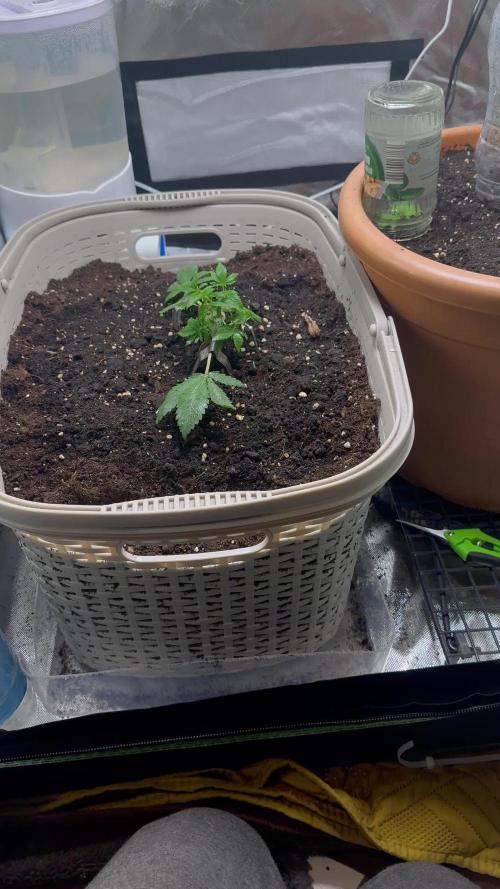
Hallo zusammen, wir sind gerade in den ersten Tag der vierten Woche gestartet und es läuft sehr gut.
Ich habe heute auch die Oberseite und die Seiten etwas abgeschnitten. ^_^(Bild 3.)
Er bekommt täglich 600 ml Wasser mit etwas Vitamin.

Likes
5
Share


@MyloGrow2019
Follow
Last week on nutrients , going on flush next sun , the 8 ball kush seems to be the happier strain with the 5 part salt nutrients , the blue OG is doing ok but the 8 ball is the chunkiest


Likes
94
Share


@DogDoctorOfficial
Follow
Discount Codes so you can save big on your next check out 💚💚💚
Kannabia - DOGDOCTOR 30% off
SeedsmanSeeds - DOGDOCTOR 10% off
CannaKan- DOGDOCTOR 15% off
terpyz.eu - DOCTOR 15% off
Fast Buds - DOGDOCT 15% off
As always thank you all for stopping by, for the love and for it all , this journey of mine wold just not be the same without you guys, the love and support is very much appreciated and i fell honored and so joyful with you all in my life 🙏
With true love comes happiness 💚🙏 Always believe in your self and always do things expecting nothing and with an open heart , be a giver and the universe will give back to you in ways you could not even imagine so 💚
Friendly reminder all you see here is pure research and for educational purposes only
Growers Love to you all 💚💚💚


Likes
3
Share


@Comfrey
Follow
This week I continued with LST and while I bend down my Kush on day 39, the stem bent over. I could fix it and within some days the plant repaired the injury quite well. At the end of the week I was surprised how good she handled this big stress. This is not the most beautiful of my plants but I love her like the other ones. 😍

Likes
5
Share


@420Hydro
Follow
Not much has changed this week..all 3 clones doing ok..back one is struggling a little think it had little nutrient deficiency..think from cloning hopefully it will green up..
Likes
10
Share


@Stacy_smokez
Follow
Went into this week just using mute from fox farm ocean then began nutrients due to deficiencies, getting in under control but overall doing well also started 3 new plants going to start a diary for them soon

Likes
2
Share


@Ultraviolet_
Follow
Remember that, however you are played, or by whom, your soul is in your keeping alone. Even though those who presume to play you be kings or men of power, when you stand before God, you cannot say, 'But I was told by others to do thus,' or that virtue was not convenient at the time. This will not suffice. Remember that.
Day:18
84°F and 65% RH (VPD) for the vegetative stage. Approximately 1.15kPa(assuming leaf temperature is about 2°F cooler than the air), which falls right into the ideal vegetative sweet spot (0.8kPa to 1.2kPa). At 1.15kPa, plants can draw water and nutrients efficiently without risking stress or wilting. It keeps the leaf pores (stomata) open, allowing for ideal carbon dioxide intake and maximizing vegetative growth. VPD is determined by the leaf's temperature, not just the ambient air. Because leaves usually run 1° to 3°F cooler than room air under bright grow lights, my actual VPD will be slightly lower, closer to the 1.0kPa mark. As she transitions from vegetative growth to flowering, one can gradually lower the humidity (to around 45–60%) and drop temperatures slightly to prevent disease from settling inside dense buds when they appear.
Night:6
At 70°F and 60% relative humidity, Vapor Pressure Deficit (VPD) is 0.86 kPa. This is right on the cusp of whats optimal for the vegetative stage. During the nighttime, plants generally close their stomata and undergo cellular respiration rather than photosynthesis. Transpiration slows to a near stop, making VPD less critical at night than during the day. However, maintaining a nighttime VPD between 0.8 and 1.0 kPa is highly beneficial in that it ensures the air is dry enough to prevent powdery mildew or bud rot, but moist enough to keep the plant from undergoing unnecessary stress. This range keeps the environment comfortable for cellular processes and prevents large atmospheric swings. Keeping it all flowing.
(Not pushing them yet, these are photoperiods)
The optimal soil (root zone) temperature for cellular root respiration and nutrient uptake in cannabis is between 68F & 72F This narrow range balances biological energy production (cellular respiration) with the dissolved oxygen levels in the soil, maximizing plant growth and health. Warmer soils hold significantly less dissolved oxygen. When soil temperature exceeds 74F oxygen depletion occurs, inhibiting cellular respiration almost entirely, At 68-72F root cells generate optimal adenosine triphosphate (ATP) via respiration to power root-tip elongation and the active transport of water and nutrients.
Too Hot (Above 78F) Root respiration increases, demanding more oxygen, while the water's oxygen-carrying capacity drops. This creates a prime environment for anaerobic pathogens and Pythium (root rot).
Too Cold (Below 60F) Root metabolism and cellular respiration slow to a crawl. This severely impairs nutrient and water absorption, leading to yellowing, wilting, and phosphorus deficiencies.
A lot depends on whether it's automatic or photoperiod; with photoperiod, there is not as much of a need to push "hard" as the real countdown only begins once the flower is initiated. Automatics, on the other hand, the chronological "clock" begins ticking the moment the seed germinates. It is of critical importance that the seedling growth gets off to the races, understanding that early growth is like compound interest, which will pay off come harvest. This reality is why getting autoflowers "off to the races" early on yields such exponential benefits. The "compound interest" is directly related to the surface area of the leaves. Larger, faster-growing seedlings process more light and build bigger root networks early on, which translates into an explosion of vertical and lateral growth during their short vegetative window.
The margins for error are so thin with autoflowers; this early-stage momentum depends on several critical practices. Seedlings exposed to increased atmospheric CO2 levels early in life will develop at an increased rate. To effectively "extend" or optimize the capacity of Photosystem II (PSII) for increased photosynthetic efficiency. In standard oxygenic photosynthesis, Photosystem II (PSII) is naturally limited to the red-light spectrum, peaking at 680nm. Extending its light-harvesting capacity past 700nm into the far-red region requires bypassing the natural limits of standard chlorophyll a. Adding 730 nm (far-red) LEDs alongside standard red/blue lights has been shown to increase canopy photosynthesis by 20–30% in several crops by acting synergistically with shorter wavelengths. However, the limitation is that excessive, pure IR/Far-red light (without accompanying red light) can trigger the "shade avoidance response," causing plants to grow tall, weak, and spindly rather than robust. Utilizing infrared light (specifically the 700-750 nm far-red range) is a viable method to boost photosynthetic efficiency. It acts as a bridge to allow PSII to utilize a broader spectrum of light, breaking the traditional 700 nm barrier. UVR8-mediated signaling (often in conjunction with CRY proteins) triggers protective mechanisms that maintain the stability of the photosynthetic apparatus (including LHCII and reaction center proteins), thus ensuring that the efficiency of Photosystem II remains higher in UV-B-exposed plants compared to plants lacking this receptor. ΦPSII indictates the rate of electron transfer from water to plastoquinone, which drives the production of ATP and NADPH. There is a close link between ΦPSII and the true rate of CO2 fixation (Φ*co2).
ETR stands for Electron Transport Rate. It measures the speed at which electrons are moved through the thylakoid membranes in a plant's chloroplasts during the light-dependent reactions of photosynthesis. Infrared light (particularly Near-Infrared or NIR) improves cellular energy by interacting directly with the electron transport chain (ETC) in mitochondria. This process boosts adenosine triphosphate production, which acts as a metabolic coefficient multiplier by accelerating enzyme activity dramatically.
Extend then multiply.
Far-Red photons interact with plant photoreceptors to accelerate the plant’s biological "clock" or trigger a shade-avoidance response. Autoflowers don't use the plant's biological clock, although the IR will initiate a shade avoidance and make them stretchy. You can just add equal measures of 660nm-680nm to negate the shade avoidance effect. Replacing nights' "darkness" with a combination of IR+ and 660nm. Because autoflowers don't require a dark period to flower, many growers just blast them with light. 18/6 24/0. However, this ignores the plant's metabolic rhythms, where daytime photosynthesis (light reactions) must be perfectly balanced with nighttime carbon fixation and assimilation (Calvin cycle) to avoid bottlenecking plant development. Cellular respiration is a 24/7 process, but it can only function while the plant has the free oxidative capacity to do so. A 100% photosynthetically active leaf cannot perform cellular respiration. The viral trend of defoliation of every leaf that isn't "getting enough light" is of great detriment overall, putting 100% of the cellular respiratory "workload" and responsibility on the 0/4/6 hours of darkness in sub-optimal conditions for enzymatic activity. Photosynthesis captures nearly 100% of the initial energy as carbon, while cellular respiration is the process that unlocks 90% of that captured energy into usable ATP so the plant can use it. Respiration is considered only roughly 30% to 40% efficient. It captures enough of the potential energy in glucose to synthesize around 30 to 38 ATP molecules per glucose molecule. The remaining 60% to 70% of the energy in the sugar is not captured in ATP; instead, it naturally escapes into the environment as heat, which helps regulate plant temperature. In plants, the primary enzymes of the Electron Transport Chain (ETC) and the ATP synthase complexes are typically adapted to function optimally in warmer temperatures (roughly 77°F to 95°F, depending on the specific plant strain). As temperatures rise within this physiological range, molecular collisions increase, speeding up respiration and ATP production. The cannabis plant has a branched respiratory pathway. During heat or cold stress, plants activate Alternative Oxidase (AOX). AOX burns sugars to dissipate energy as heat rather than coupling it to ATP production. This pathway actually functions optimally at elevated temperatures to help protect the cell from the damaging build-up of Reactive Oxygen Species (ROS) during heat stress. Enzyme activity generally scales with heat; there is a strict biological limit. If canopy temperatures in a grow room exceed 104°F, the enzymes and their supporting lipid membranes lose stability. Not saying you need to go crazy, just optimize nights the same as we optimize days.
Phosphorus is the driving force behind early seedling development. It acts as the "energy hub" of the plant, directly driving cell division, robust root growth, and the creation of DNA. Without an adequate, easily accessible supply early on, the plant's overall growth potential and final yield can suffer permanently.
Likes
8
Share


@HappyGrowMore
Follow
The humidity continues to be very high and even the small humidifier I put inside the tent isn’t bringing it to where I need to be. Probably going to go out and get a dehumidifier to cover the entire basement or vent it out my next grow. Either way, it doesn’t seem to be harming them too much.
It’s finally stopped stretching and the buds have started to fatten. Orange hairs are starting to show and most of the buds are sticky to the touch ( even brushing my arm up against them).
Still defoliating a little each day to see if that helps with the humidity.
Likes
20
Share


@Rabidreject
Follow
UPDATE - Saturday 13th
It’s been ok. The reason I have stopped filling out the amount of water I’m giving them is because they don’t get watered daily. I water them once every three or four days depending on other things going on.
With soil having a how much water per 24h is pointless because the whole point of soil is to dry out slowly and if you want a big plant you end up in a HUGE pot which takes like a week or more to dry out!
The amount I water is the amount of water in the bottom of the reservoir + 1/3 more.
Likes
9
Share


@cdxxbuds
Follow
Plants came down at day 53. Nice weight and drying commenced. More purple coloring and smell is amazingly fruity
Likes
15
Share


@MrJones
Follow
Mr. Jones Fast Buds Moby Dick
╰⊰´🌿 ╰⊰´🌿 ╰⊰´🌿 ╰⊰´🌿 ╰⊰´🌿 ╰⊰´🌿 ╰⊰´🌿
🏡Indoor - 3"x4"x8" Custom Built Grow Closet
🌾This strain likes to stretch, so a heavy training regiment will be needed.
🗓️Germenation - Soaking in Water Strait into Amended Soil.
⚱️3-Gallon Pots 📊6.4 / 6.8 PH
💧 Feeding - Gaia Green Grow / Bloom
🕷️ IPM - We will be using Green Cleaner" 1 OZ per Gallon, and CannControl from Mammoth alternating between products each month for Integrated Pest Management.
🌿╰⊰´🌿╰⊰´🌿 PLANT UPDATES 🌿╰⊰´🌿╰⊰´🌿
🗓️Saturday - 11.18.23 These girls are just blowing up, always like the flower stretch of FastBuds strains, the smells are nice and they are starting to drink more, the closet is filling up, did another PPM treatment with CanControl.
╰⊰´🌿 ╰⊰´🌿 ╰⊰´🌿 ╰⊰´🌿 ╰⊰´🌿 ╰⊰´🌿 ╰⊰´🌿
📝 Notes - Original Moby Dick Auto is a world-renowned Sativa-dominant giant created from two of the most popular strains ever, the White Widow and Haze cannabis strains which are known for the huge delicious aroma, huge size and yields; It’s an extremely easy-to-grow variety highly recommended for growers of all levels seeking for maximum yields with minimum effort as this strain grows up to 150cm and yields up to 650 g/m2 in 10 weeks without extra maintenance. Thanks to its 23% THC, this marvelous hybrid is all about happiness as it will melt your worries away while boosting your mood, leaving you with a big fat smile on your face and ready to get things done as soon as you take the first hit, making it an excellent choice for social scenarios and busy workdays. The Sativa effect comes hand-in-hand with a mix of lemony, piney, and woody terpenes that translate into that classic aroma every stoner loves.
╰⊰´🌿 ╰⊰´🌿 ╰⊰´🌿 ╰⊰´🌿 ╰⊰´🌿 ╰⊰´🌿 ╰⊰´🌿