Likes
Comments
Share
@Ferenc
Follow
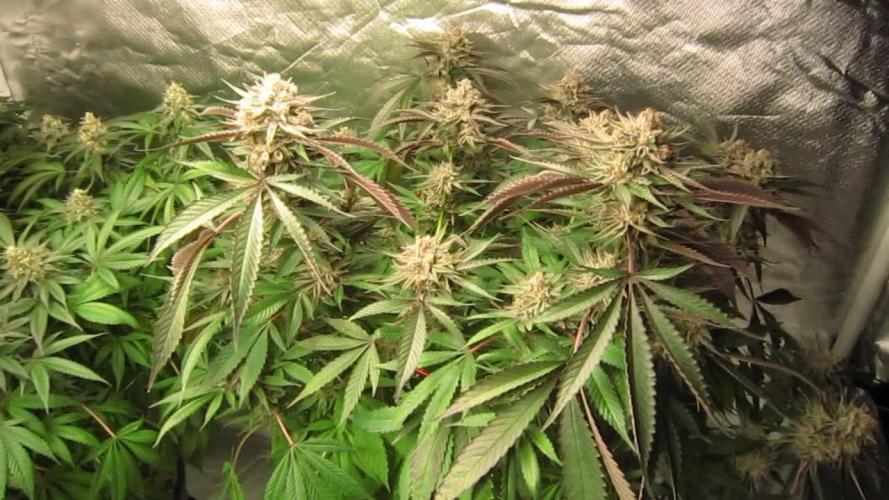
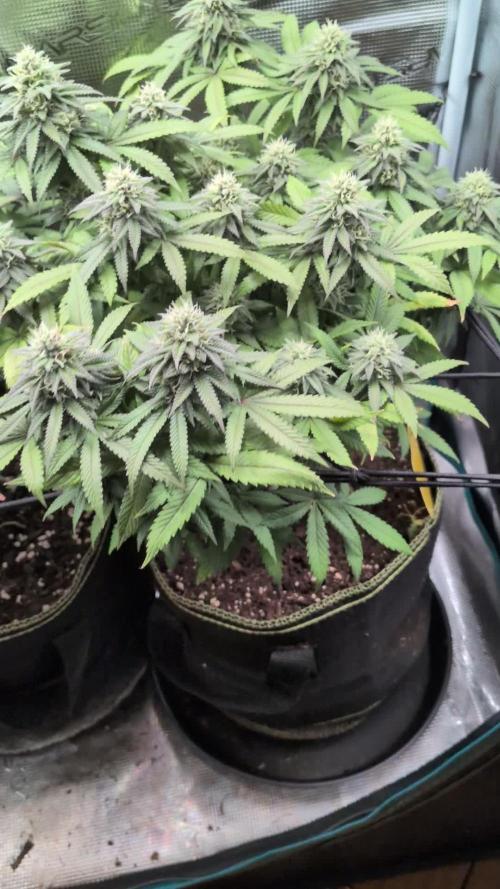
It has been raining and raining since whatever... 2 weeks....checked the trichomes nice milky white. Based on the fact the the weather won't be better and also the temperature is lower day by the now usually 6 Celsius degrees in the evening and 13-16 during the day or less, I decided to harvest next week. I was thinking to let her out 3 more weeks just to have more amber trichomes but she is OK, ready but this weather is not ... She is sativa dominant as I saw in the breeder's description so totally cool. So she ain't gonna be maturing that much she reached the point.... especially because no sun.... ... but compare to that she has som nice colas so I am excited let's see soo guys. Thanks all of you checking this progress out. Beautiful lady, large LST made her really nice literally she looks like more plant but yes ONLY ONE PLANT IN THE PICTURE AND THE GARDEN :) Have a lovely day :)
Likes
8
Share
Hi liebe Community and Welcome Back! 🌿💚 Die kleinen Äffchen wachsen prächtig! 🌄🐒 Ab jetzt habe ich die Diaries afgesplittet. Einmal hier im gesponserten Bio Tabs NL Grow, von denen diese Woche der Orgatrex Dünger zum Einsatz kam. Der andere Grow wird mit Weedefix gedüngt, welche im Prinzip sehr ähnlich funktionieren. Für den ultimativen Vergleich kommen bald noch zwei neue Diaries mit zwei identischen Stecklingen um genau zu beobachten wie was performed. Die Pflanzen entwickeln sich super gut und sind sehr robust. Die Seitentriebe bilden sich immer weiter aus. Die Blattform ist schön Breit und Buschig. Die Umgebungsgegebenheiten sind aktuell gut: ————— 🌞 Temp: 24 🌚 Temp: 18°C bis 19°C 💨 RH: 58% VPD: 0,91 kPa 💡ppfd: 330 mpm ————— Viele Grüße 👋
Processing
Likes
11
Share
They’re looking extremely healthy..gave em their first nute feed with the last watering seem to be doing fairly well..fimmed the GG and LST. Did not touch the unkown as it looks smaller to be the same age. Running GHE base line with few extra supplements. ****UPDATE**** Both are LST’d..might rethink the way I tie them. Going for a “coil” type look, we’ll see though. They’re looking great! Hoping for females!
Likes
34
Share
Yellow butterfly came to see me the other day; that was nice. Starting to show signs of stress on the odd leaf, localized isolated blips, blemishes, who said growing up was going to be easy! Smaller leaves have less surface area for stomata to occupy, so the stomata are packed more densely to maintain adequate gas exchange. Smaller leaves might have higher stomatal density to compensate for their smaller size, potentially maximizing carbon uptake and minimizing water loss. Environmental conditions like light intensity and water availability can influence stomatal density, and these factors can affect leaf size as well. Leaf development involves cell division and expansion, and stomatal differentiation is sensitive to these processes. In essence, the smaller leaf size can lead to a higher stomatal density due to the constraints of available space and the need to optimize gas exchange for photosynthesis and transpiration. In the long term, UV-B radiation can lead to more complex changes in stomatal morphology, including effects on both stomatal density and size, potentially impacting carbon sequestration and water use. In essence, UV-B can be a double-edged sword for stomata: It can induce stomatal closure and potentially reduce stomatal size, but it may also trigger an increase in stomatal density as a compensatory mechanism. It is generally more efficient for gas exchange to have smaller leaves with a higher stomatal density, rather than large leaves with lower stomatal density. This is because smaller stomata can facilitate faster gas exchange due to shorter diffusion pathways, even though they may have the same total pore area as fewer, larger stomata. Leaf size tends to decrease in colder climates to reduce heat loss, while larger leaves are more common in warmer, humid environments. Plants in arid regions often develop smaller leaves with a thicker cuticle and/or hairs to minimize water loss through transpiration. Conversely, plants in wet environments may have larger leaves and drip tips to facilitate water runoff. Leaf size and shape can vary based on light availability. For example, leaves in shaded areas may be larger and thinner to maximize light absorption. Leaf mass per area (LMA) can be higher in stressful environments with limited nutrients, indicating a greater investment in structural components for protection and critical resource conservation. Wind speed, humidity, and soil conditions can also influence leaf morphology, leading to variations in leaf shape, size, and surface characteristics. Small leaves: Reduce water loss in arid or cold climates. Environmental conditions significantly affect gene expression in plants. Plants are sessile organisms, meaning they cannot move to escape unfavorable conditions, so they rely on gene expression to adapt to their surroundings. Environmental factors like light, temperature, water, and nutrient availability can trigger changes in gene expression, allowing plants to respond to and survive in diverse environments. Depending on the environment a young seedling encounters, the developmental program following seed germination could be skotomorphogenesis in the dark or photomorphogenesis in the light. Light signals are interpreted by a repertoire of photoreceptors followed by sophisticated gene expression networks, eventually resulting in developmental changes. The expression and functions of photoreceptors and key signaling molecules are highly coordinated and regulated at multiple levels of the central dogma in molecular biology. Light activates gene expression through the actions of positive transcriptional regulators and the relaxation of chromatin by histone acetylation. Small regulatory RNAs help attenuate the expression of light-responsive genes. Alternative splicing, protein phosphorylation/dephosphorylation, the formation of diverse transcriptional complexes, and selective protein degradation all contribute to proteome diversity and change the functions of individual proteins. Photomorphogenesis, the light-driven developmental changes in plants, significantly impacts gene expression. It involves a cascade of events where light signals, perceived by photoreceptors, trigger changes in gene expression patterns, ultimately leading to the development of a plant in response to its light environment. Genes are expressed, not dictated! While having the potential to encode proteins, genes are not automatically and constantly active. Instead, their expression (the process of turning them into proteins) is carefully regulated by the cell, responding to internal and external signals. This means that genes can be "turned on" or "turned off," and the level of expression can be adjusted, depending on the cell's needs and the surrounding environment. In plants, genes are not simply "on" or "off" but rather their expression is carefully regulated based on various factors, including the cell type, developmental stage, and environmental conditions. This means that while all cells in a plant contain the same genetic information (the same genes), different cells will express different subsets of those genes at different times. This regulation is crucial for the proper functioning and development of the plant. When a green plant is exposed to red light, much of the red light is absorbed, but some is also reflected back. The reflected red light, along with any blue light reflected from other parts of the plant, can be perceived by our eyes as purple. Carotenoids absorb light in blue-green region of the visible spectrum, complementing chlorophyll's absorption in the red region. They safeguard the photosynthetic machinery from excessive light by activating singlet oxygen, an oxidant formed during photosynthesis. Carotenoids also quench triplet chlorophyll, which can negatively affect photosynthesis, and scavenge reactive oxygen species (ROS) that can damage cellular proteins. Additionally, carotenoid derivatives signal plant development and responses to environmental cues. They serve as precursors for the biosynthesis of phytohormones such as abscisic acid () and strigolactones (SLs). These pigments are responsible for the orange, red, and yellow hues of fruits and vegetables, while acting as free scavengers to protect plants during photosynthesis. Singlet oxygen (¹O₂) is an electronically excited state of molecular oxygen (O₂). Singlet oxygen is produced as a byproduct during photosynthesis, primarily within the photosystem II (PSII) reaction center and light-harvesting antenna complex. This occurs when excess energy from excited chlorophyll molecules is transferred to molecular oxygen. While singlet oxygen can cause oxidative damage, plants have mechanisms to manage its production and mitigate its harmful effects. Singlet oxygen (¹O₂) is considered a reactive oxygen species (ROS). It's a form of oxygen with higher energy and reactivity compared to the more common triplet oxygen found in its ground state. Singlet oxygen is generated both in biological systems, such as during photosynthesis in plants, and in cellular processes, and through chemical and photochemical reactions. While singlet oxygen is a ROS, it's important to note that it differs from other ROS like superoxide (O₂⁻), hydrogen peroxide (H₂O₂), and hydroxyl radicals (OH) in its formation, reactivity, and specific biological roles. Non-photochemical quenching (NPQ) protects plants from damage caused by reactive oxygen species (ROS) by dissipating excess light energy as heat. This process reduces the overexcitation of photosynthetic pigments, which can lead to the production of ROS, thus mitigating the potential for photodamage. Zeaxanthin, a carotenoid pigment, plays a crucial role in photoprotection in plants by both enhancing non-photochemical quenching (NPQ) and scavenging reactive oxygen species (ROS). In high-light conditions, zeaxanthin is synthesized from violaxanthin through the xanthophyll cycle, and this zeaxanthin then facilitates heat dissipation of excess light energy (NPQ) and quenches harmful ROS. The Issue of Singlet Oxygen!! ROS Formation: Blue light, with its higher energy photons, can promote the formation of reactive oxygen species (ROS), including singlet oxygen, within the plant. Potential Damage: High levels of ROS can damage cellular components, including proteins, lipids, and DNA, potentially impacting plant health and productivity. Balancing Act: A balanced spectrum of light, including both blue and red light, is crucial for mitigating the harmful effects of excessive blue light and promoting optimal plant growth and stress tolerance. The Importance of Red Light: Red light (especially far-red) can help to mitigate the negative effects of excessive blue light by: Balancing the Photoreceptor Response: Red light can influence the activity of photoreceptors like phytochrome, which are involved in regulating plant responses to different light wavelengths. Enhancing Antioxidant Production: Red and blue light can stimulate the production of antioxidants, which help to neutralize ROS and protect the plant from oxidative damage. Optimizing Photosynthesis: Red light is efficiently used in photosynthesis, and its combination with blue light can lead to increased photosynthetic efficiency and biomass production. In controlled environments like greenhouses and vertical farms, optimizing the ratio of blue and red light is a key strategy for promoting healthy plant growth and yield. Understanding the interplay between blue light signaling, ROS production, and antioxidant defense mechanisms can inform breeding programs and biotechnological interventions aimed at improving plant stress resistance. In summary, while blue light is essential for plant development and photosynthesis, it's crucial to balance it with other light wavelengths, particularly red light, to prevent excessive ROS formation and promote overall plant health. Oxidative damage in plants occurs when there's an imbalance between the production of reactive oxygen species (ROS) and the plant's ability to neutralize them, leading to cellular damage. This imbalance, known as oxidative stress, can result from various environmental stressors, affecting plant growth, development, and overall productivity. Causes of Oxidative Damage: Abiotic stresses: These include extreme temperatures (heat and cold), drought, salinity, heavy metal toxicity, and excessive light. Biotic stresses: Pathogen attacks and insect infestations can also trigger oxidative stress. Metabolic processes: Normal cellular activities, particularly in chloroplasts, mitochondria, and peroxisomes, can generate ROS as byproducts. Certain chlorophyll biosynthesis intermediates can produce singlet oxygen (1O2), a potent ROS, leading to oxidative damage. ROS can damage lipids (lipid peroxidation), proteins, carbohydrates, and nucleic acids (DNA). Oxidative stress can compromise the integrity of cell membranes, affecting their function and permeability. Oxidative damage can interfere with essential cellular functions, including photosynthesis, respiration, and signal transduction. In severe cases, oxidative stress can trigger programmed cell death (apoptosis). Oxidative damage can lead to stunted growth, reduced biomass, and lower crop yields. Plants have evolved intricate antioxidant defense systems to counteract oxidative stress. These include: Enzymes like superoxide dismutase (SOD), catalase (CAT), and various peroxidases scavenge ROS and neutralize their damaging effects. Antioxidant molecules like glutathione, ascorbic acid (vitamin C), C60 fullerene, and carotenoids directly neutralize ROS. Developing plant varieties with gene expression focused on enhanced antioxidant capacity and stress tolerance is crucial. Optimizing irrigation, fertilization, and other management practices can help minimize stress and oxidative damage. Applying antioxidant compounds or elicitors can help plants cope with oxidative stress. Introducing genes for enhanced antioxidant enzymes or stress-related proteins over generations. Phytohormones, also known as plant hormones, are a group of naturally occurring organic compounds that regulate plant growth, development, and various physiological processes. The five major classes of phytohormones are: auxins, gibberellins, cytokinins, ethylene, and abscisic acid. In addition to these, other phytohormones like brassinosteroids, jasmonates, and salicylates also play significant roles. Here's a breakdown of the key phytohormones: Auxins: Primarily involved in cell elongation, root initiation, and apical dominance. Gibberellins: Promote stem elongation, seed germination, and flowering. Cytokinins: Stimulate cell division and differentiation, and delay leaf senescence. Ethylene: Regulates fruit ripening, leaf abscission, and senescence. Abscisic acid (ABA): Plays a role in seed dormancy, stomatal closure, and stress responses. Brassinosteroids: Involved in cell elongation, division, and stress responses. Jasmonates: Regulate plant defense against pathogens and herbivores, as well as other processes. Salicylic acid: Plays a role in plant defense against pathogens. 1. Red and Far-Red Light (Phytochromes): Red light: Primarily activates the phytochrome system, converting it to its active form (Pfr), which promotes processes like stem elongation and flowering. Far-red light: Inhibits the phytochrome system by converting the active Pfr form back to the inactive Pr form. This can trigger shade avoidance responses and inhibit germination. Phytohormones: Red and far-red light regulate phytohormones like auxin and gibberellins, which are involved in stem elongation and other growth processes. 2. Blue Light (Cryptochromes and Phototropins): Blue light: Activates cryptochromes and phototropins, which are involved in various processes like stomatal opening, seedling de-etiolation, and phototropism (growth towards light). Phytohormones: Blue light affects auxin levels, influencing stem growth, and also impacts other phytohormones involved in these processes. Example: Blue light can promote vegetative growth and can interact with red light to promote flowering. 3. UV-B Light (UV-B Receptors): UV-B light: Perceived by UVR8 receptors, it can affect plant growth and development and has roles in stress responses, like UV protection. Phytohormones: UV-B light can influence phytohormones involved in stress responses, potentially affecting growth and development. 4. Other Colors: Green light: Plants are generally less sensitive to green light, as chlorophyll reflects it. Other wavelengths: While less studied, other wavelengths can also influence plant growth and development through interactions with different photoreceptors and phytohormones. Key Points: Cross-Signaling: Plants often experience a mix of light wavelengths, leading to complex interactions between different photoreceptors and phytohormones. Species Variability: The precise effects of light color on phytohormones can vary between different plant species. Hormonal Interactions: Phytohormones don't act in isolation; their interactions and interplay with other phytohormones and environmental signals are critical for plant responses. The spectral ratio of light (the composition of different colors of light) significantly influences a plant's hormonal balance. Different wavelengths of light are perceived by specific photoreceptors in plants, which in turn regulate the production and activity of various plant hormones (phytohormones). These hormones then control a wide range of developmental processes.
Likes
12
Share
3/23: I flushed the shortie for the first time today with about 10 gallons of warm filtered water and Sledgehammer. I'll flush her again in several days, let her dry back out a bit and stick her in the dark for a day before I sneak up on her with my lopping shears. I had let them go totally dry for a few days, so I fed the taller one with about 3/4 gallon including terpinator, signal, sweet & sticky, cal-mag, armor si, cha ching, tiger bloom, big bloom, and humic acid. This was her last feeding with any nutes, but I'll probably water her with some sweet & sticky and terpinator once more before flushing. 3/27: She wasn't completely dry yet, but I went ahead and flushed the shortie again today with about 8 gallons of warm filtered water. That's it for her....I'll give her another few days in the 'sun', and I've put a 12w MiracleLED blue bulb about 4 inches away from her, along with a 22w blue panel above her and the other shortie to make her think it's wintertime and maybe get her to put on a thicker coat of trichomes before she finishes. I gave the bigger one about 3/4 gallon including sweet & sticky, signal, terpinator, cal-mag and a little bit of cha ching. She'll get flushed for the first time once she's dry. This strain smells amazing!
Likes
346
Share
@Canna96
Follow
Hey now! This week went pretty well, I did notice my EC of my runoff was getting pretty high on day 65, it got up to about 1.9, and my nutrient solution going in was at 1.6. I ended up mixing a bucket of my normal fertilizer, and hand watering all the places my drip ring wasn't really hitting, and i got the EC back down to about 1.7. I also got a tip from MrJones to setup some type of support for the colas. I ended up tying some 550 (parachute) cord across the top of my tent poles, then I ties little loops around the colas with the same soft cord. I then used wire ties to attach the loops to the 550 cord. I also am slowly reducing my EC, as I believe I only have a couple weeks left. I am also going to be switching from Liquid KoolBloom to Dry KoolBloom at some point later in week 10. If anyone has any experience on the correct timing of this switch to ripening formula, please hit me up! I am still struggling a bit with heat and humidity, and am considering buying another dehumidifier for my next grow. As always, Thank you to everyone for all of your encouragement, support and tips!! Blaze on!
Likes
4
Share
SPEEDY BOOM AUTO by KANNABIA Week #13 Overall Week #7 Flower She's just about done the heat started to get to her towards the end of the week it was extremely hot this ☀️ summer and she still managed to flower in the heat!! Stay Growing!! Kannabia.com SPEEDY BOOM AUTO
Likes
38
Share
Plant has done really well these past 2 weeks. Buds have packed on weight. Smell developing into some really fruity and exotic. Bud development is really good. Fast-Flowering has really kicked in these past 2 weeks. Another 7-10 days to go and I'll be pulling her. Nutrients will be lowered this week and she'll be prepped to put into my drying room. Xpert nutrients have worked really well again with this crop. Some light signs of early bud rot. Leaves started to die from within/outwards. Happy with my 1st Fastbuds Fast-Flowering. DISCOUNT CODE FOR XPERT NUTRIENTS 20% OFF, CODE:GGST THANKS TO ALL MY SPONSORS and to those above m who's support has been essential to getting sponsors much appreciated to all them and whomever stop by.
Likes
Comments
Share
Likes
11
Share
What a journey it has been from seed! I made a lot of mistakes in the first few weeks of this growing journey. I feel like I had a mini-crash after finishing the first year of grad school, and although I am growing cannabis as part of my research project, I haven't been the greatest at paying attention to it. This is not an excuse. It has actually been a learning opportunity. I realized that my body needs proper schedules to function and grow, just like a plant. The problems with the plant have really been my own problems. Let's just say that a plant may be the reflection of the grower. First, the light cycles were wrong and inconsistent. I thought that I could manually control the light schedule for the plants and be alright. However, I was wrong. My sleep schedule has been very inconsistent for the past few months. Mainly because we are living through a pandemic, and secondly because I am a graduate student 😂. How naive was it of me to think that a plant could follow my own rhythms? I guess it highlights my 'plant blindness.' Second, the light intensity was low and PH levels high. In the last five days, I have learned that plants are living organisms (I knew this, but my plant blindness is quick to dismiss it, I need to stop fighting these "plant voices" (signals)) that require a proper environment to grow, similar to humans. Of course, a plant is not human, but it is alive and living. It needs water, a regular schedule (light (active) /darkness (rest), oxygen, nutrients, and an overall good environment to grow. Concern about the size of my plant at five weeks, I decided to conduct a few experiments at home. Here are my notes: Friday, July 23, 2021, I took the plant out of the tent at 6:00 AM and placed it in front of my backyard window that faces the Eastside, perfect for sunrise. On that day, I had a few errands to run, and when I arrived home, it was 2:30 PM. The sun was now hitting the West side of my house, and I had to move the plant in front of my bedroom window. At around 7:00 PM, I went to look at the plant and noticed that its leaves were looking plumpy. So, I decided to take a timelapse to see what I would be able to record. During "magic hour" (sunset), I recorded and witnessed the plant moving with the rhythms of the sun. Plant, like humans, function at their best when they are synchronized with their circadian rhythm. The pandemic has definitely disoriented us to the point that it has disrupted all of our schedules. To this day, I feel tired from everything we have all been through; how could I possibly think that a plant would thrive with such a messed-up schedule? The time lapse made me realize that the plant needs some structure to thrive, and so do I. So, as much as I like to think that I can be disciplined and follow a plant's schedule, I cannot. So, I went to the store and bought the Globe Suite smart plug to automate and schedule the light cycle to 12hrs of light and 6 hours of darkness. Saturday, July 24, 2021, the plant woke up to the set schedule of the lights. I checked on the plant first thing in the morning, around 9:30 AM. The leaves look much greener and thicker than they did the day before. Sunday, July 25, 2021. I was away overnight and did not arrive home until 2 PM. The plant looks twice the size it was on Friday! Today, I will water the plant. I got a PH test kit and realized that the way that I measured the PH level, the first few weeks was wrong 🤦‍♀️🏽. I measured the PH correctly, to 5.9, and added some Reefertilizer grow nutrients to the water. I watered from the top, distributing the water evenly around the stem. My partner pointed to me that the lights seemed dim for the stage of the plant's life. So I had my lights set at 100 watts running at 20 % 😅. I realized that I had not increased the light intensity since the first few weeks of vegetation 🤦‍♀️🏽. So I increased the intensity to 100 watts running at 60%. Monday, July 26, 2021. First check-in 7:00 AM: The plant looks like it loves all of the new changes that I have made! It is finally growing 🤗 The sun is out, but it is not as intense as it should be because tiny particles of smoke are present in our air due to the wildfires, and they create a filter that makes the human eye see the sun blood red. It is quite apocalyptic. Regardless, I decided to take the plant out from the tent and record a time-lapse. It is fascinating how much movement plants have despite showing no noticeable signs of movement (to the human eye). Tuesday, July 27, 2021. It has been five days since I have made big changes to the plant's schedule and environment. The plant is finally showing good signs of growth, and its leaves colours have changed to a deep green. I am not watering the plant today, but I am spritzing it with water. I decided to take another time-lapse of the plant, but this time inside the tent. As I was setting up the tripod for my camera, I accidentally increased the humidifier 🤦‍♀️🏽. Luckily, I noticed within a reasonable timeframe and reduced the humidity and made the environment better. I increased the light intensity to 100 watts at 100%. The plant will stay in the tent all day today because it is raining ☔️.
Likes
6
Share
@Bdog7878
Follow
All doing well. Watering every 2 days. The weather has been pretty good. 55 at night 73 to 78 day humidity around 60 to 70 rh. The one Mimosa x orange punch is starting to get some purple leaves. I noticed a slight strain from switching to bloom nutes but they seem to have moved past and are doing great. I did find a couple of buds with the very start of bud rot on the mop#1 I removed the buds and see no sign of more. I think this weekend is gonna be the last fert on the mop#1 going to start the flush and im thinking the week after for the mop#2. Most water and all fert solution goes in between 6.2 to 6.7 ph
Likes
5
Share
When the lights are off I will post another video so the green is easy to see!
Likes
13
Share
@Verde_og
Follow
Seguimos regando solo con agua esperando que quede lo mas limpia posible. Ya es cosa de dias la fecha de corte. Esperare a que se seque el sustrato y terminaré este cultivo para posteriormente ponerme a darle un buen curado. Muy contento con esta cepa de @sweetseeds 💪👨‍🌾
Likes
26
Share
@Targona
Follow
8/28/2022 - 21 days since my little girl sprouted from seeds🌱 The third week of vegetation of my Bruce Lemon Diesel 🍋⛽🌻 Nutrients: Jungle Indabox - I had to adjust the dosage, after the first dose of nutrients, the lower leaves of the plant lightened a bit, this was especially visible on her sister Orange Sherbet Auto, which burned the tips of the lower leaves - after this week I reduced the dose by half 🍃🍃 Hesi: Hesi Root Complex I give this root stimulator for root support, although Jungle Indabox also supports root growth, namely: Jungle Urban A - (N-P-K) - (2-1-6) Everything for healthy growth and formation of the root system Atami - ATA Calmag - I missed completely Advanced Nutrients - Bud Candy - I also adjusted the dosage by half 🍬🍬 Preflowering: Classic white hairs appeared on the stem this week, indicating the female gender 👩‍🌾👧🏼 Light: Mars Hydro TS1000 - really great lamp with sufficient lighting and energy-friendly 💡💡 Training: Topping: I usually top in the third week of the plant's life, just like this time. However, now the girls are very advanced in growth, so they will have more main branches 🌴🌴 LST: Two days after topping, I anchored the lowest branches to the ground with metal clips, tied the higher branches with a string towards the edges of the flower pot, so that the light would shine on each of them 💡💡 Defoliation: In the next two days, I cut off all the large leaves that were shading the branches 🌞🌞 The girl is no longer a child, she is a strong young lady, full of branches and leaves. Its color has also changed, it is now deep green again. The stem is rough, so I assume a strong root system 🌲🌴🌾 Thanks for the likes and you can follow me on Twitter 🐦: @ Targona666 See you soon 😍
Likes
6
Share
@Kannamar
Follow
05/04/2024, last pruning, rapid flush, EC down to 0.9, Falsh Clean @3ml/L, from now to harvest I will refill the tank with water EC 2 (approx. 3L/Day (target EC should be close to 0.3 at cut, Sunday or Monday). I stopped the heating control, and set day ligth to 14h and will follow decreasing 1h/day, till 8h light only. 10/04/2024 This is amazing, this year no rush to harvest, we can wait and I have to say it seems to us it's still getting fatter! My issue now is that the humidity has some pics at 100% at night! What could I do?!?!? 11/04/2024 EC dropped at 0.7 by adding only water, pH was up to 6.7 but back to 6.5.
Likes
4
Share
Nov 1st week 10. Started flowering and given some lst, a bit tall switched to flowering later than I had liked as finishing, dialing in room.
Likes
32
Share
@BudVision
Follow
Hello growers, as I mentioned last week, La Bomba was left alone in the coop and she’s doing amazing. I’m just watering now and waiting for the right moment to harvest. The aroma is incredible, somewhere between a sweet profile and that loud gassy fuel, a truly unique combination. I gently spread her branches with a few strings so the light can reach the lower buds. The buds are hard and the whole plant looks beautiful. Peace and happy growing ✌️
Likes
Comments
Share
She didn't like the toping done at week 3 at all! She it's by far the shortest in the tent. She does make up for her size by how pretty she is. Already peach/off white pistills she is going to be a beauty! Like her size she doesn't drink much .5 gal every day and she's fine!
Likes
54
Share
***Mar 28 Had to redo the reservoir a day early, she is drinking way too fast. I am going to need to make sure to top up the water level every single day now, to prevent it from drying out so fast (2 days, and its half empty!!!) I took away the Root Farms Base and doubled basically everything else. I did this because I feel like the stretch is finished, so I wanted to remove some of the nitrogen. PPM is at 2100 and Ph is at 6. She's starting to get little nugs! Not much of an ambient air smell yet, but the stem rub is very fragrant. The smell reminds me of a warm summer day by the pool, the smell of the fresh air mixed with bright flowers and lemon cut grass. A very beautiful, light, and energetic smell. Can't wait for it to finish, and wondering how the smell will evolve as flower continues. Did a root trim today as well, because it was getting a little crowded in the reservoir, now we are nice and tidy! (Hopefully wont need to do another until the end of flower but we will wait and see how it goes lol). She's filling out the tent a lot, I would say she at least doubled in size since the beginning of flower. ***Mar 30 No sign in trichomes yet, but she's starting to bulk up a little bit! Mostly just the top sites are bulking, but there is some development on some of the upper inner branches as well. ***Mar 31 2 full cups of water added to the reservoir today...! ._. Also down from 2100 to 1800 PPM, like what? I cannot get it to slow down, and I am almost worried I am not giving it enough, but, I mean, it's growing incredibly fast. Just from yesterday to today, the pistils are POPPING like mad, and I even had to do some leaf tucking (and take the top 2 fan leaves covering the inside, it's been a while since I've needed to do that!) All I can do is wait and monitor the PPM, and if it gets too close to 1000 before monday, I will add more nutes. She really acts like the more I give, the more she uses 😅 What an impressive strain. ***April 2 Topped up the reservoir, and made sure PPM and Ph were alright (1600ppm and 6.1ph). It almost looks like it stretched over night, and I had to raise the light up (it went from over 700-1000ppfd for the branches and tops, respectively, to around 500-700). I was going to add more nutrients, but it seems okay at 1600 for now, and now that it wont be getting such intense light, it wont be forced to drink more. I ended up cleaning out some more leafage around some over-layering spots, and also some inner nodes that weren't going to develop into anything other than shake. Got some close ups of the inner nodes, and a quick video showing the layout of the plant! It's amazing how big it's getting, it's already taking up the whole tent, and its only been 2 1/2 weeks since I threw her into flower! 😂 💪😁👌