


Processing
Likes
Comments
Share


Likes
25
Share


@Lou_Grows
Follow
Doing very good, starting to get coated with crystals, it took me an hour to defoliate
on very happy with it.

Likes
12
Share


@Terpyboyz
Follow
This grow should be coming to an end next 2 weeks or so some are looking to be in the last stages, only issue is having multiple strains is strains finishing at diff times.
There’s one exodus cheese that looks like she’s going to go 10/11 weeks but she’ll be cut well before that to start a new batch.
There’s 3 clones that were taken
1 being a big Buddha blue cheese that absolutely reeks of tangie/Clementine terps with a slight sour cheesey smell. This is getting revegged and cloned for the next run.
Ripper seeds - this is another strain I’m going to try to reveg as this is another keeper I should have taken cuts.
Platinum x harachata - 2 different pheno / one with rock solid nugs other is more Sativa.


Likes
31
Share


@BigBadLion
Follow
Happy new year everyone! I hope everyone had some amazing festivities! 😃
Regarding my babies I think I might be underfeeding them and one might be shocked thanks to the heat and the lack of nutrients I gave them, last week's runoff water scared me and the plants might be suffering because of that! Most of the issues starts to get more noticeable later during the week! 😖
I started giving them few nutrients to see how they would react and at the end of the week it's clear that I had to give them waaaaay more 😵 Besides that I also moved them to their final pots and I topped Pistachio, out of the two she's the one that looks the best. I also defoliated them a little. I also believe they didn't get a transplant shock (I mean, they would've been worse if that was the case haha) and I added more mycorrhizas during the transplant (I heard they help a lot with hot climates and I need help with that badly)
Anyway, thanks for reading!
Stay tuned for the next update! 😉


Likes
4
Share


@HawksGrow
Follow
This one is definitely taking her time but its looking like the end product will be worth the wait, im getting an almost lemony aroma from the tent now.
Edit: 5 days on I've just started the flush since trichs are turning cloudy.


Likes
38
Share


@MrSpooky882
Follow
Sieht alles gut aus soweit Keim Quote 24/25 aber der letzte kommt noch 😅
Typisch Barneys Farm Top Qualität!
Likes
12
Share


@Bread_n_Buds
Follow
Our Zamnesia Purple Urkle are on fire. We have a larger one that was purposely placed before the other two small ones to use different techniques. The larger one will be topped with at least 16 buds and the small ones will be left to grow straight and for this reason I vegetated them less so they don't get too tall.
We gave Power Roots 1 Ml/l , Pure Zym 1 ml/l , Sugar Royal 1 ml/l , Alga Grow 3 ml/l -
Plagron nutrients are available at Zamnesia in convenient pack formats for all growing styles. I used this one with a simple search you can find the other products.
Try a seed of this strain that drives us crazy...
---- https://www.zamnesia.io/en/11168-zamnesia-seeds-purple-urkle.html
Zamnesia Description // / A direct descendant of a Mendocino Purps phenotype, Purple Urkle is a high-performance cultivar from Zamnesia Seeds. This feminized, indica-dominant strain is sure to win over any cannabis grower. With a THC content of 20%, Purple Urkle has a lot to offer from seed to harvest and beyond. A grape-flavored adventure, Suitable for indoors, outdoors or in the greenhouse, Purple Urkle is a very resilient strain. Growers will be impressed by how easy this cultivar can be managed. Purple Urkle can reach 120cm indoors and 160cm outdoors, but if you want more control over the height you can use the LST technique.
Purple Urkle has fantastic flavors and aromas that intensify during the flowering phase. Regardless of the method of consumption, Purple Urkle offers tangy, fruity flavors that lean towards notes of grapes, berries and plums. The effects of this strain are soothing and relaxing, with uplifting sensations that make the experience suitable for any occasion, whether in a social setting or alone.
Growbox and Air System - Secret Jardin DS120w + fans + Exhaust fans and filters DF16 kit ---- https://www.secretjardin.com
All the best that mother nature can offer is on ----www.zamnesia.com

Likes
23
Share


@Chi_K24
Follow
Hey guys, Into week 10. I have only water the ladies once since last update of the usual 50mL of molassas to 5gal of water pH to 6.2. Water each plant about 6-7L each. They are getting thirsty fast.
We had a few thunderstorms roll through the area and watered the shit out of the plants. So couldn't stick to a normal watering schedual.
Plants are very bushy! Flowering will start mid/late August so I have possibly 1-2 more times I can top the plant. There is a plan for next watering for another round of defoiliation and topping. We will see...
Hope you guys are enjoying the updates. Plant is comming along nicely!
Likes
48
Share


@PapaNugs
Follow
Everything went well over vacation! The girls are doing okay overall. They needed bigger pots and it's starting to show overall. Another reason not to use autos cause I can't lollipop. But the watering process is going well.
She's not doing hot! The strawberry is looking rough still. I'm considering using synthetic nutrients in this grow to start giving for power. And this girl is the reason for it.
Dimmed to 80%
Here are the lights details:
Medic Grow Mini Sun-2 150W LED
Model: MN150-022
Spectrum mode: V1
Efficacy: 2.8 umol/J
Thanks for stopping by!
You can find the light on Grow Diaries:
https://growdiaries.com/grow-lights/medic-grow/mini-sun-2-150-watts
You can find the light on Medic Grow's website:
https://medicgrow.com/
Likes
Comments
Share


@Steviegrows
Follow
Unfortunately, the plants have numerous leaves which look unhealthy (discolored, droopy, crispy/decayed). I removed the 3-4 worst looking leaves from each plant every other day, although I know that can be harmful to autos. Started adding in "Sensi Cal" this week to hopefully rebound from potential mineral deficiencies. Still using Recharge microbes once a week. Nutrients are now being administered accurately and at 1/4 the recommended level.
Despite the unhealthy state of the plants, the pre-flowering bud sites look pretty good to me. I'm happy to see healthy looking pistils.
Needless to say, I'm very eager to get these girls back on track and looking vibrant and verdant ASAP.

Likes
12
Share

@farah4weed
Follow
Hello guys,
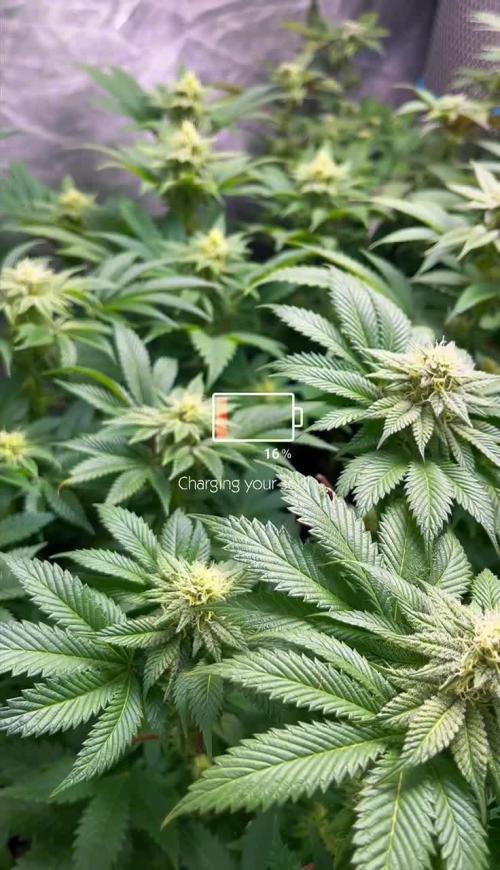
The og cream project has reached the fourth week of flowering😍
From the appearance of the plants and flowers, I can see beautiful, dense, fragrant buds.
You can see the characteristics of the mother plant in the appearance of the flowers.
But the smell is a little more pungent and intense 😋
The plants are all growing healthily.
I posted a photo of the difference in temperature between night and day😍
Thank you for your comment🙏
"farah4weed"
Likes
2
Share


@Demaro
Follow
It's starting to get better without stopping. After changing the soil in the middle of the pot to peach moss.


Likes
1
Share

@ohcibi
Follow
Update June 4th
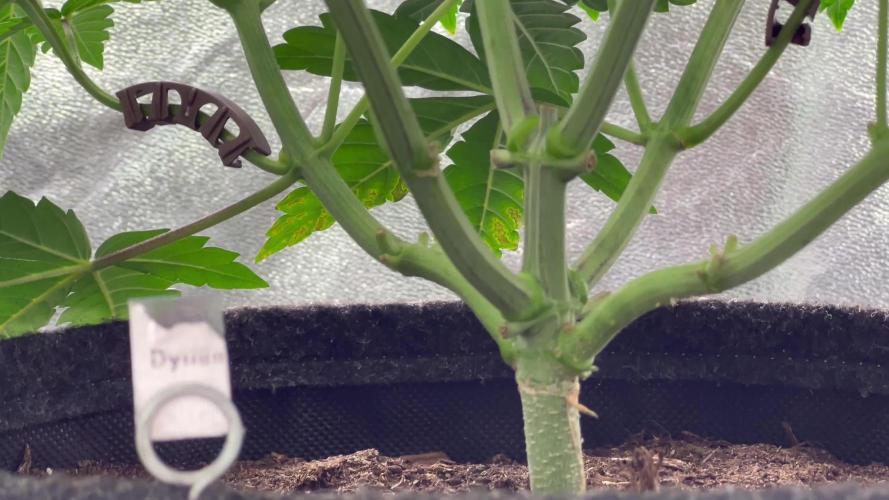
Another 3 liters fed today. As expected, this week is full of LST and scrogging only, but it’s going very well. The prep work I’m doing now is basically what I did in the first week(s) of flower in the last grow, so the foundation for flipping will be much better prepared this time. Maintenance on Taktlo$$ is even getting a tad bit simpler.
Flipping is expected on Sunday. I’ll just keep the same week marker for simplicity, even if I could flip earlier.
Update June 1st
Fed a full 3 liters again. Those plants are chugging like hell. Last grow I fed 1.5 liters per plant. This time it’s 3 liters per plant and they drink it up as fast as the last ones drank their 1.5 liters. Not saying 3L is exceptional. I was likely just too conservative before. That said, this grow I’ve been feeding roughly double since the start, so the plants are prolly just more developed overall.
Maintenance on this Dynamite Diesel strain is still much simpler than on the Royal Gorilla. Let’s see if the yield in the end is on par.
Update May 31st
Also for Samy this will be the final veggie week. This Dynamite Diesel strain is a little bit simpler to train and maintain as it doesn’t grow as bushy. Clips are easier to apply. Scrog is easier to do. Other than that the strain grows as strong and fast. No further topping plans on Samy as well. So same deal as for Takti as I will flip both at the same time no matter what (can’t do different) I might go flower half way through this week. So stay tuned!
Likes
13
Share


@High_Grade_Dadli
Follow
She's getting all the curves in the right places..this week was good can see that her intake is more due to the brown spot on the older water leaves have to increase water abit other than that she's a healthy girl


Likes
35
Share


@SAC87
Follow
Update: Took less than 3 days for all 3 seeds to pop. They’re all looking good, standing tall. Couple shells stuck to cotyledon leaves. I’m just going to leave them there. In the past my OCD has wanted them off and I’ve F’d up the leaf. I’m going to leave them covered with the cups until tomorrow, hopefully true leaves will be starting then.
I got an email from FastBuds and it showed their suggested feed schedule so I’ll try that and see how they like it.
Hi Growers. The sponsored FastBuds Auto seeds have arrived!!!! I decided to run the Pineapple Express and the Blue Dream. According to the grow info on the website they seemed to be in the same size and duration range. It should also give me a wider variety of effect as well.
I planted 3 seeds of each strain directly in 3 gal fabric pots of new Sunshine #4 mix and lightly watered with RO water. They’ll be lit by a Spider Farmer SF4000 which is on 24 hrs at the moment at 30% around 30 inches high.
I have enjoyed the FastBuds seeds I’ve grown before and was very happy to receive this sponsorship. It was very kind. Thank you.
I have always wanted to grow the Pineapple Express and am glad to have this opportunity. 👍🏻👍🏻
Anything with Blueberry genetics has always been good for my GI disorder and Blue Dream specifically has always worked well for that. My wife finds it’s great for her PTSD and anxiety too. I’ll be happy to have a bunch of bud from these two around fairly soon.
Happy Growing 🌱
Likes
23
Share


@nonick123
Follow
Día 41 (03/06) Riego 750 ml sólo H2O pH 6.2
Día 42 (04/06) Riego con 750 ml H2O + Regulator 0,15 ml/l + P-Boost 0,5 ml/l + CaMg-Boost 0,25 ml/I +TopBooster 0,2 ml/l - pH 6.2
Día 43 (05/06) Riego 750 ml sólo H2O pH 6.2
Día 44 (06/06) Riego con 750 ml H2O + Regulator 0,15 ml/l + P-Boost 0,5 ml/l + K-Boost 0,5 ml/l +TopBooster 0,2 ml/l - pH 6.2
NYC Sour D Auto está mostrando el tallo central y las ramas llenas de tricomas. Parece que algo muy interesante se avecina!
Día 45 (07/06) Riego 750 ml sólo H2O pH 6.2
Día 46 (08/06) Riego con 750 ml H2O + Regulator 0,15 ml/l + P-Boost 0,5 ml/l + K-Boost 0,5 ml/l + CaMg-Boost 0,25 ml/I +TopBooster 0,2 ml/l - pH 6.2
Día 47 (09/06) Riego con 1 Litro H2O + Regulator 0,15 ml/l + P-Boost 0,5 ml/l + K-Boost 0,5 ml/l + CaMg-Boost 0,25 ml/I +TopBooster 0,2 ml/l - pH 6.2
💦Nutrients by Aptus Holland - www.aptus-holland.com
🌱Substrate PRO-MIX HP BACILLUS + MYCORRHIZAE - www.pthorticulture.com/en/products/pro-mix-hp-biostimulant-plus-mycorrhizae
Likes
9
Share

@vyndalin
Follow
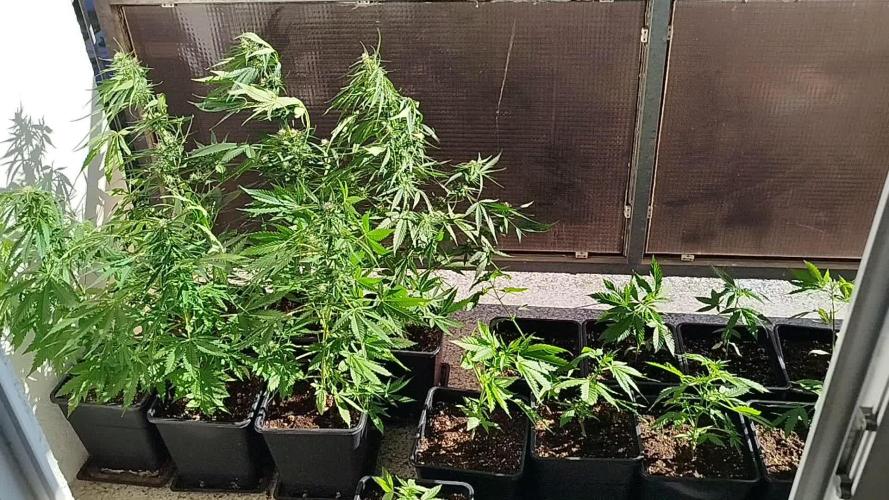
I just bend 2 of them to be more stealthy. I'm proud of them, but the milky way - it's shitty. No feed this week, just water, summer is still broken, no much sun, just windy and cloudy

