


Likes
Comments
Share


@420portois
Follow
J avais un gros soucis d humidité j ai pu corriger, j ai mi d autres lumières c est éblouissant


Likes
64
Share

@Natrona
Follow
Auto Purple Hulk Auto by MSNL Outside
👉Sponsored Grow👈
W5F1
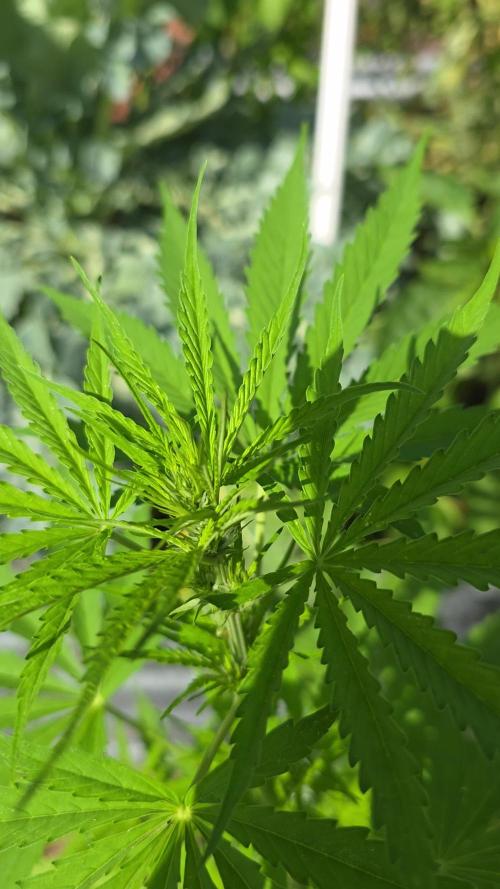
The weather was rainy with thunderstorms early in the week becoming hot, humid and overcast. I only got to fertilize once this week but with the super soil she doesn’t show any deficiencies. I fertilized with I49 grow 1 tbsp/gal & 2 tbsp I49 Flower. I added this more as a preventive measure since I’m seeing issues with AK-47xl also outside in super soil. With the extreme heat and rain, my purple hulk is a HULK. She almost doubled height (grew 15 inches) this week and is now 33 inches tall and starting flower. She demonstrates resistance to fungal diseases and bug damage.
In the background noise on the video is Cicadas. When they hatch, they crawl onto a tree or plant and molt. The adult has wings. This is the empty body casing. This year there are some but not a lot as in many years of their 17-year cycle.
As always, thank you all for stopping by, for the likes and most of all growers’ love and support.
Stay green, growers love 💚🌿
💫Natrona💫

Likes
26
Share


@1Right_Angle
Follow
Starting week 7 of Flower finds me planning the next 6, including scheduling a Flush and Tapering the Nutrients off in the next month.
- ReStaked a few branches for even spacing & At the End of last week I top-dressed both pots with fresh Soil n Sand.
-fresh material at play and the plants are using a lot of water.
-able to feel when the big pots are drier and ready for water, by lifting one-end regularly. Just to gauge weight... it’s working.
This grow has me trying to establish a much bigger root-ball; re 15 gal pots / 16 litre feeds ... I’ve laughed at some of the previous ones.
Feb 2nd, Buds are touching, conditions are being changed slowly mid-flower & hoping they get real chubby in the coming weeks.
With the constant reminders that quality grows take longer to mature in Flower than the literature usually states; my plan is to Flush sometime during week 10 (month end)
- Three weeks to make it count. Trichomes to dictate
Feb 4,
- getting my head around htf I’m going to flush this pair in 3+ weeks. Low ceiling+tall sink+tall plant.
Feb6
- slight reduction in Calimag and the next feed will see rapidstart reduced as well. Small moves but in the right direction.
- tonight is a scheduled feed. Volumes have been big over the last 3 weeks and I am deciding to give the plants an extra couple days without Water, to make sure it is on the dry side as we enter the 2nd half of flower.
Feb 7th
- the UV-B light just might be having an impact on the buds of the R plant. There are a number of buds that are becoming obviously covered in Resin Glands.
- used a moisture meter, the bottom of both pots is a bit wet. Patience wins...
This is the plant that physically is still ~ 10 days behind the L plant. just an observation...
As this week wraps-up, my plans for next week are to reduce the light cycle by 30 min to 11.5 hrs lite per day. And to drop the humidity another 2%. But that’s for next week.
All is going strong at this point, Buds are filling out, smell at the door of the tent is obvious; earthy & dank. Up close from touching a bud it explodes of a Citrus smell. That’s the best description so far
Feb 9th, almost a week since last water/nutes, tonight is a green light. Actually felt the pot lighter. Moisture Meter agreed. 17L later ...
- balanced the branches / supports and found a good fit between the two pots under the one light.
-adding more fresh air to the tent also helped drop the RH a bit.
Ready for this transition.
- A dry week in reality, cannot wait to see the changes next week after this last, big Max nutrient feed.
** bottom leaves had just began to droop as I watering the plant. Did manage to take it close to the edge mid-way through flower, now it’s Hungry at a critical time. Come on week 8

Likes
8
Share


@Papastroumf
Follow
Day 66 : The lady seems to be stabilized with the burns , so i started some juices to her water in order to help her with fattening. Hope to wake her a bit and produce some terpenes.
Edit Day 70 : I increased again juices to 3ml / L. Also added 1ml / L CalMag. She started to turn purple.

Likes
13
Share


@DrewbieDoobieNoobie
Follow
1st week of flush is done the expected results is the fade, this ladies are coming to the end of their cycle. one more week of just water, I will flush again on 2/1 then let them dry out in the pots for the last week 13. When they are dry I will black out for 48hrs to increase the Trichomes and then the chop. they look to have slowed down in growth from the time-lapse I don't think they will get significantly bigger than they are now. so I hope the flush will help with the smoothness and curing and white ash as a result.


Likes
24
Share


@Jays_Not_Here_Man
Follow
The Apple Betty babies are doing great 😊 I’m very pleased with the results so far, I just wished I would have known they would have such a large stretch, they D almost doubled in size in 14 days.
At day 8 I stopped tucking the branches and allowed them to grow up. In hindsight, I probably should have kept going for another couple of days. They continued to stretch rapidly all the way up to date 12 or so, much more than my other strain that I have going as well.
At day 10 I cleaned up some of the small bud sites and leaves that were below the 1st trellis. These sites do not get enough light to make anything good, and take away energy from the main tops as they grow and compete. A quick snip here and there will really help the end result.
At day 13 I decided to add a second trellis net to provide support to the tops that came up so fast. They seem to have stopped their main stretch faze, and are looking happy and healthy now. I’ve continued my water, water, feed schedule and have not seen any cause for concern. The girls are taking a little over a gallon of water every 72 hours at this point.
Humidity is being controlled automatically with my in-line fan and humidifier. RH is set to 57% and temps hover between 77-80 degrees with lights on, and about 70-72 with light off thanks to my furnace being back on for the cooler temps.
The 2x4 5 gallon girl is doing great as well. 😊During the stretch, she flourished just as the girls in my big tent did as well. She is going to have some great bud, the branch structure is nicely developed with tight node spacing and large tops.
I’ve been plucking off all the lower growth, and tucking leaves as they block bud sites. I will be doing a defoliation next week. Happy Gardening 🇨🇦👊❤️

Likes
8
Share


@Chubbs
Follow
420 Fastbuds Week 2
Cherry Cola Auto
This week has been good. I know it's been 4 days since last updated but I was out of town last week and was late to update by a couple days. They have definitely grown substantially since last updated. I'm still keeping every thing the same as far as watering, light schedule, and preventative maintenance.
All in all Happy Growing
Likes
22
Share


@chupacabra80
Follow
1
glue gelato
120 cm
начал цвести в
34- 35 дней
2
runtz
90 cm еще не начал цвести.
вот вот расцветет
3
weedding cake
120 cm
начал цвести
40-41 день
4
do si dos
130 cm
начал цвести
40-41 день
5
Gorilla glue
120 cm начал цвести
40-41 день
сегодня я промыл
2 мл/1 л
floraClean,
Gorilla glue , wedding, do si dos поели по 3 литра, glue gelato 2.5 литра,
runtz меньше 2 литров,
runtz
мало ест и пока тормозит)))), в основном все нормально,я максимально не трогаю растения хочу посмотреть полный потенциал,я срезал лишь пару листьев и все,думаю это не проблема,

Likes
31
Share


@Sider79
Follow
Some Faded bottom leaves . Temps are lower . Not sure if my questions are seen but moving forward with my first Auto Blow Dream grow.


Likes
3
Share
@Olduffybastard88
Follow
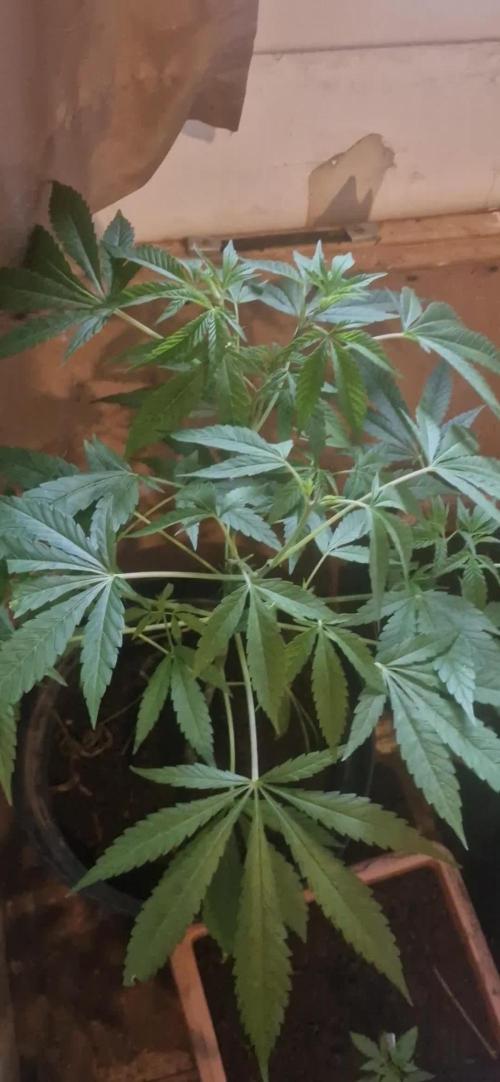
Cleaning out the big tent and getting it all set for my kannabia plants here is the kannabia soap I've topped twice now and is by far the biggest plant

Likes
25
Share


@GangbudsGenesgdl
Follow
04/01/21. inicio de semana creo que me pase con el fertilizante note algunas quemaduras que creeo son ecxesos de nutrientes😕
07/01/21.hoy la pase a fotoperiodo12/12 con 120 cm de altura
10/01/21. cierre de semana con 125cm de altura fotoperiodo de 12 12 ya lista para la floracion
Likes
105
Share


@Green_Friends_Inc
Follow
Overall a great strain. Would def recommend to just about anyone!


Likes
3
Share

@SkullRipper
Follow
Hi all,
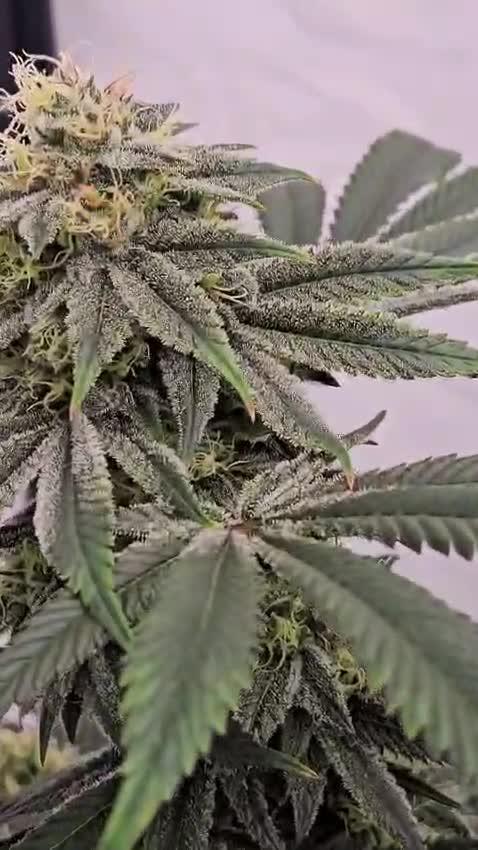
End of week 6 flowering, this week I noticed some of the plants seemed to have nutrient burn from overfeeding even though I had lowered the EC from previous run.
So all the plants got flushed with 6.2 pure RO water and the run off measured 1.2 EC with 5.9 PH so I will give them a second flush in the coming week.
Also the plants are becoming unstable due to the nicely forming dense fat nuggs so need to keep humidity under control to avoid bud rot and tie them up for support..
Happy growing,
💧 Watering: Every fith feed
🌡️ Temp: 24–28.5°C
💦 Humidity: 57% RH
📈 VPD: ~1.2 kPa
💡 Light: ~850 PPFD
💨 C02 900 ppm
Ttfn Skuuly

Likes
2
Share


@Groweedo
Follow
Je l’ai tiré au maximum que j’ai pu, trychomes mixtes du brun, laiteux, opaque … 2 semaines de sechage, je penses quelle va être bien bonne vu l'odeur


Likes
Comments
Share


@Mr_nugs_lover_David
Follow
In love with all of my 5 plants of black cherry punch but this one is one of the most beautiful ones, 100% purple flowers, very dense and awesome fruity sweet smell love it!


