


Likes
Comments
Share


@Weedganja420
Follow
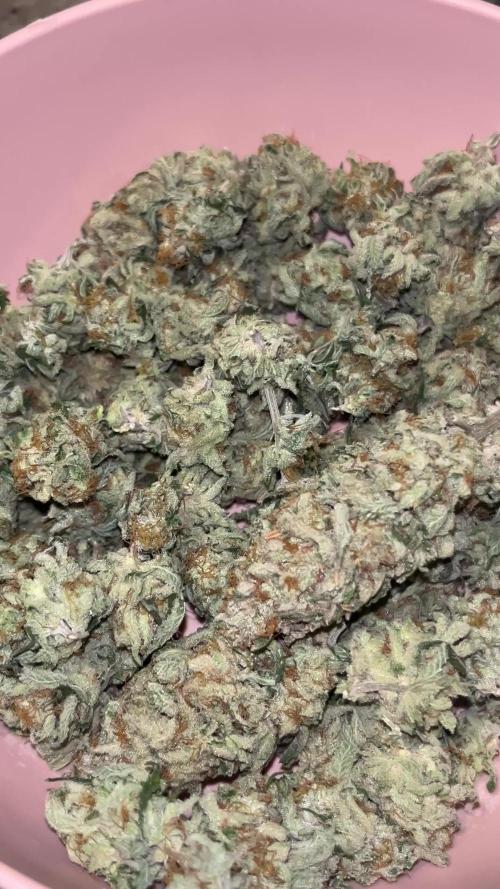
Muy buenas amig@s!!
Preciosos los colores de esta cepa!
Empieza a tener su olor tan unico, la que cultive en exterior olia igual y seguro que de sabor estara igual de bien o mejor!!

Likes
1
Share

@LokalGrenz
Follow
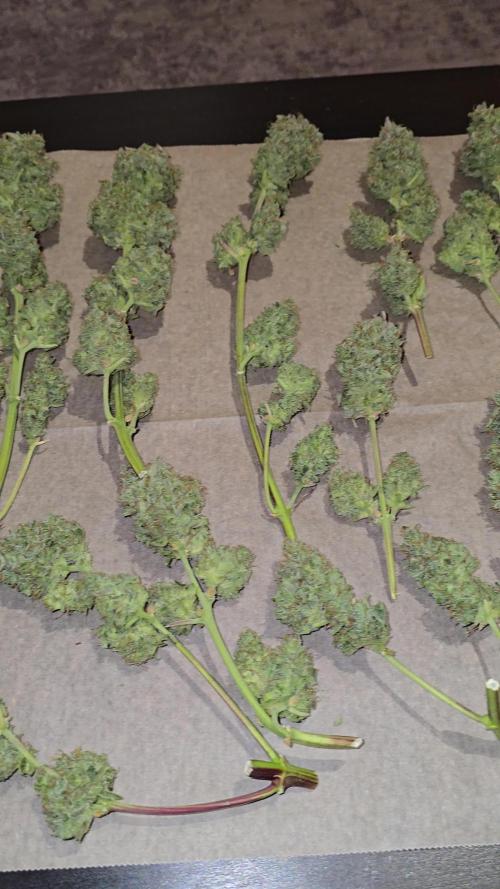
Cut down 9/6 will hang for week or two will give me detail up dates late
9/16 branches snapping so I cut down and trimmed
Not to happy with the amount but I am really happy with the quality thing is sticky frosty wish I could take better pics

Likes
32
Share


@BarneyGreen
Follow
Hello fellow growers and users of my favorite lady Mary Jane. Yes we harvest the ladies and they give me 408 Grams dry of nice smelling bud that are compact and thick and sticky. The fun part is that the leafs turn purple. That was the first time I saw this.

Likes
15
Share

@Naujas
Follow
Harvest day has finally arrived for my Frostbanger Auto, and I’m very happy with how this run turned out.
She finished at 69 days from seed and impressed me from start to finish. Throughout flowering she developed a strong, sweet aroma that became richer and more noticeable every week. By harvest time, opening the tent released an amazing smell that filled the entire room.
The buds developed beautifully, with excellent frost coverage and plenty of sparkling trichomes covering the flowers and sugar leaves. Visually, she became one of the prettiest plants I’ve grown, showing great structure and dense, resin-coated buds.
Final wet weight came in at 230g, which I’m very pleased with. The plant stayed healthy, responded well throughout the grow, and rewarded me with a solid harvest and outstanding bag appeal.
Overall, Frostbanger Auto was a pleasure to grow. Great aroma, heavy trichome production, beautiful buds, and a satisfying yield. Now it's time for drying and curing, and I can't wait to see how the final quality develops over the next few weeks.
Final stats:
🌱 Strain: Frostbanger Auto
📅 Harvested: Day 69
⚖️ Wet Weight: 230g
❄️ Trichome Production: Excellent
👃 Aroma: Sweet, strong, and very pleasant
🌿 Overall Impression: Beautiful plant with great resin production and a rewarding harvest
⭐⭐⭐⭐⭐ Very enjoyable grow from start to finish

Likes
4
Share


@GERGrowDesigns
Follow
Welcome to Flower Week 1of Sweet Seeds Strawberry Cola Sherbet F1
I'm excited to share my grow journey with you from my
Sweet Seeds Project . It's going to be an incredible ride, full of learning, growing, and connecting with fellow growers from all around the world!
For this Project , I’ve chosen the Feminized Photo strain Strawberry Cola Sherbet F1 :
Here’s what I’m working with:
• 🌱 Tent: 120x60x80
• 🧑🌾 Breeder Company: Sweet Seeds
• 💧 Humidity Range: 50
• ⏳ Flowering Time: 7weeks
• Strain Info: 18-22%THC
• 🌡️ Temperature: 26
• 🍵 Pot Size: 16
• Nutrient Brand: Narcos
• ⚡ Lights : 600W x 2
A huge thank you to Sweet Seeds for allowing me to try my Best with this amazing collection from Photo Strains they managed to Sponsore . Big thanks for supporting the grower community worldwide! Your genetics and passion speak for themselves!
I would truly appreciate every bit of feedback, help, questions, or discussions – and of course, your likes and interactions mean the world to me as I try to stand out in this exciting competition!
Let’s grow together – and don’t forget to stop by again to see the latest updates!
Happy growing!
Stay lifted and stay curious!
Peace & Buds!


Likes
38
Share


@PolishFarmer
Follow
Hi:) it’s day 72 today. 2 days ago I feed them with nutrients for last time. I will flush every single girl with 15l water plus canna flush And then water with terpinator only for another 12 days and happy harvest :) can not wait. I also welcome to see my new project baby’s from fast buds :) nice strains are coming! Bless guys, see you soon !


Likes
2
Share

@BudBeezy
Follow
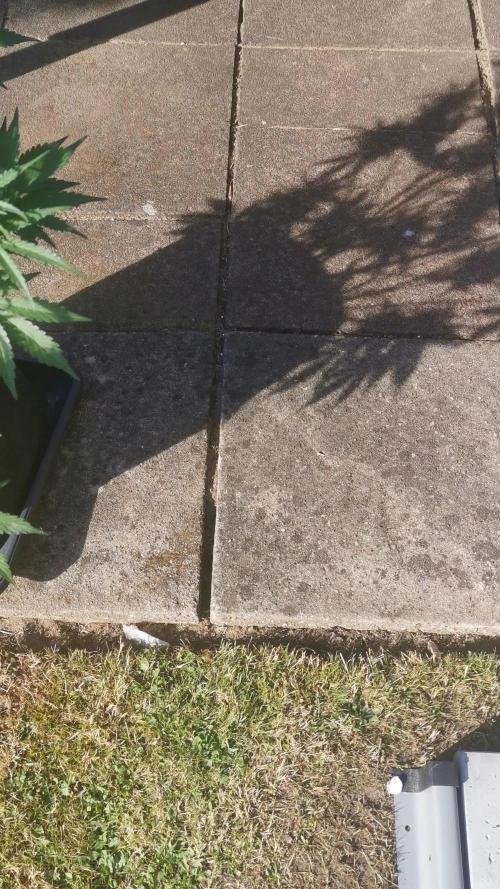
Welcome to week 9 of my grow diary. In the middle of the week, I decided to pull the four main shoots apart using plant wire and binder clips, as the side shoots in the middle weren't getting enough light. Fortunately I couldn't find any more mildew. The weather continues to be great.
See you next week!
Likes
7
Share


@Ereks007
Follow
It's been a smooth grow year ..I am only using flora nova ...and pro tekt. Silica ..water is from local tap ..filtered with rv filter. There is movement og ,fatso bx1 x wilson, sunset sherbert x Sunday driver x Natrual Born Killer strains ....thanks for viewing
Likes
13
Share


@420DeepGrow
Follow
Gracias al equipo de AnesiaSeeds, Marshydro, XpertNutrients y Trolmaster sin ellos esto no sería posible.
💐🍁 Oracle Octane:
Oracle Octane es una cepa altamente potente y con un alto contenido de THC elaborada a partir de una Blackberry Octane seleccionada, excepcionalmente rica en THC y aromática, y de la pesada Blackberry Oracle, inédita, de nuestro propio acervo genético. El desarrollo de esta carismática e impresionante variedad abarcó 8 generaciones y un enorme esfuerzo de cría.
La variedad tiene un sabor intenso e inolvidable que recuerda a bayas dulces y limones frescos.
Las plantas a partir de semillas crecen increíblemente hermosas y sus hojas y cogollos a menudo desarrollan tonos de rojo, morado intenso e incluso casi negro.
Esta cepa vigorosa y ligeramente índica dominante tiene un tiempo de floración de unas 9 semanas, produce hojas grandes y alcanza una altura de unos 120-130 cm en el interior.
📆 Semana 1:
Ha sido una buena semana, ella ha dado otro gran cambio en su lugar definitivo 😎.
La carpa está ocupada al 75% y comienza una floracion explosiva gracias a @Marshydro y @Xpertnutrients y @Trolmaster con esta gran genética 💪.
A partir de ahora se riega manualmente con las dosis recomendadas por el fabricante.

Likes
10
Share


@PolezGardn
Follow
week two flower everything looks healthy :D
today i defoliated them
i watered them with 1.5l every 48h
the light i use was set to 80% and it hangs 80cm away from the tops

Likes
8
Share


@TechDCo
Follow
04/03/2026
Switched to flower week 10 of vegetation!
Now we're off to the races! Finally!
....
05/03/2026
Supercropped some colas and tuck some under the net!
Table-Top Canopy!
....
06/03/2026
Added 5L of Sensi Bloom 4ml/L + 20ml of Hydrosol liquid Feed! Suppercropped another 2 colas.
08/03/2026
#Back to The Future - DC Seeds: is already showing signs of pre-flowers it's only been 4 days since the switch over.
I defolled a little and tucked the colas under 5h3 netting as she stretches.
Bubblegum Femaleseeds
No sign of flowering yet and to be honest she ain't ready!
08/03/2026
Midday - Secondary Scrog Net Added!
Removed training wires.
09/03/2026
Defolled and tucked!
10/03/2026
Big defoll
11/03/2026
Likes
20
Share

@420DeepGrow
Follow
Gracias al equipo de MSNL y XpertNutrients sin ellos esto no sería posible.
💐🍁 Forbidden Fruit Auto:
Forbidden Fruit Autoflower, llamada así por sus deliciosos sabores, es un cruce entre Cherry Pie, Tangie y Siberian Ruderalis. Esta variedad ofrece efectos estimulantes y relajantes con un sabor afrutado, cítrico y a pino. Ideal para quienes buscan un dulce escape.
🚀🌻 Consigue aqui tus semillas:
💡TS-3000 + TS-1000: se usaran dos de las lámparas de la serie TS de Marshydro, para cubrir todas las necesidades de las plantas durante el ciclo de cultivo, uso las dos lámparas en floracion para llegar a toda la carpa de 1.50 x 1.50 x 1.80.
https://marshydro.eu/products/mars-hydro-ts-3000-led-grow-light/
🏠 : Marshydro 1.50 x 1.50 x 1.80, carpa 100% estanca con ventanas laterales para llegar a todos los lugares durante el grow
https://marshydro.eu/products/diy-150x150x200cm-grow-tent-kit
🌬️💨 Marshydro 6inch + filtro carbon para evitar olores indeseables.
https://marshydro.eu/products/ifresh-smart-6inch-filter-kits/
💻 Trolmaster Tent-X TCS-1 como controlador de luz, optimiza tu cultivo con la última tecnología del mercado, desde donde puedes controlar todos los parametros.
https://www.trolmaster.com/Products/Details/TCS-1
📆 Semana 3:
Ha sido una buena semana, ella ha dado un gran cambio en su lugar definitivo 😎.
Se le ha aplicado un tratamiento insecticida con agua + tierra de diatomeas ( 1 cucharadita por litro de agua), también se le aplica un tratamiento fungicida con una infusión de cola de caballo para evitar futuro moho.
A partir de ahora se aplica riego por goteo, 1/3 de la dosis recomendada por el fabricante ya que al estar en exterior y en buena tierra, ya tiene bastante comida.

Likes
80
Share

@Natrona
Follow
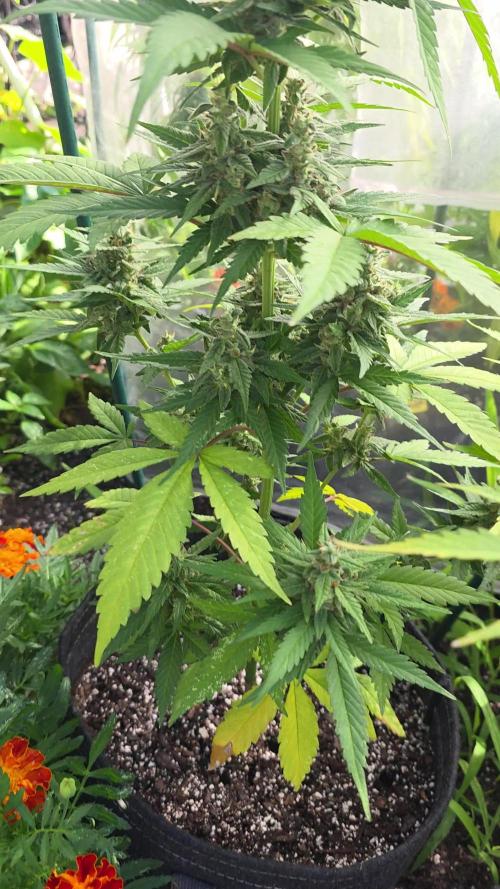
Whorled Phyllotaxy-Hawaiian Snow auto
Outside 2026- @GanjaFarmer
6/28-7/4 W8 F5
Hello Friends,
We have had several thunderstorms this week due to the heat. We are under a heat advisory with temperatures reaching 100 with a heat index to 110 later in the week.
I defoliated a few yellow fan leaves near the bottom. Since some fans are yellowing, I top dressed with azomite and rose and flower fertilizer and watered well.
Trichome formation is well underway but only a few pistils are turning brown. So far, no pests (using mesh bag) and no mold issues. Hawaiian Snow has reached her max height at 29 inches tall. Next week the weather looks the same. Hot and humid.
That’s all for this week.
Stay green, growers love 💚🌿
💫Natrona💫

Likes
4
Share


@eYo4Terpz
Follow
Stretch ist jetzt im vollem gange
Bei der Jehova auch schon beinahe zusende
Die Acid Snow ist jetzt dabei.
Die Pflanzen sehen alle aus als wären sie getoppt worden. Wurde aber keine!!!!

Likes
12
Share


@Franco123
Follow
Hi, the plants are all fine in the photos, they're a little down because the photos are taken after four hours of lights off. The plants all showed the sex, a male tangie emerged and isolated it in order to limit the shedding of pollen, it seems like a lot of bullshit but I can assure you that the method already used works, the plants have almost all been defoliated in such a way heavy yesterday and today were already better. He was given only water once in the middle of the week and today instead 3 liters of nutrient solution 12ml of plagron alga blomm and 3 of power bud and 3 of sugar royal
Likes
45
Share


@BodyByVio
Follow
Beautiful flower full of trichomes. Smell and test fantastic. Very fast flowering. She was done on day 49 but I cut her down few days later.
I love the strain, the only thing that I will like this strain to have is a better yield. Beast quality buds I ever grew.


Likes
42
Share


@KrautFabrik
Follow
Day16: nutrients like plan
Day 18: i added 2 secret jardin tled 42w bloom
---------------------------------------------
She seems to stuck because of the heavy deflotation last week, but ok lesson learned 🤷♂️
Maybe someone have some experience with secret jardin tled can can tell me how far i should place them? 😅
Merry Xmas everyone 🎄🦍
