The Grow Awards 2026 🏆
Likes
Comments
Share
@Crwfz1
Follow
Everything going ok about done but just cant get ph low enough so flushing and shell be dome by end of this week
Likes
20
Share
Likes
2
Share
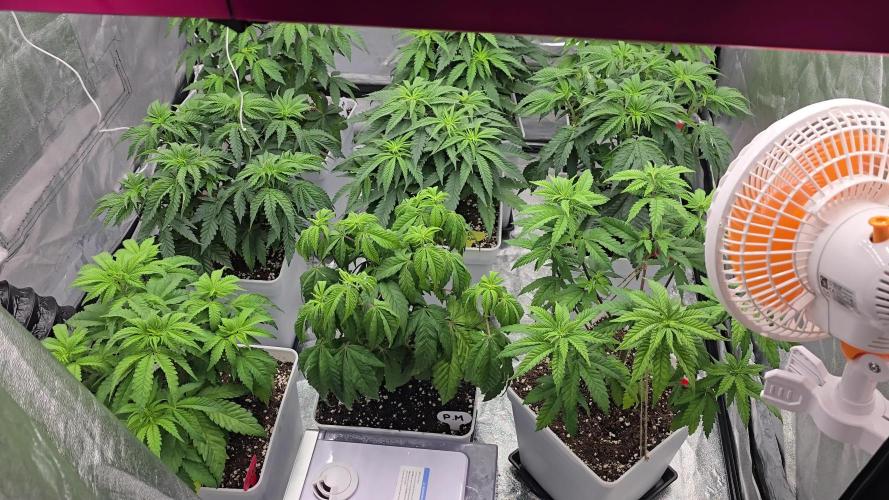
Zkittlez taking off and cream cookies not far behind.
Likes
8
Share
@R1pp3r
Follow
Por horarios y trabajo este fin de semana defloriaré por última vez la planta, quizás es un poco precipitado decir que ya entro en flora, pero creo bastantes pistilos de un día a otro
Likes
47
Share
Info: Unfortunately, I had to find out that my account is used for fake pages in social media. I am only active here on growdiaries. I am not on facebook instagram twitter etc All accounts except this one are fake. Have fun with the update. Hey everyone 😃. Another week of beautiful growth goes by 😀. She continues to develop very well and beautifully. All shoots were topped up again. I think I'll go back a few more times do topping before it goes into bloom :-). The tent was cleaned and the humidifier refilled 👍. Otherwise nothing exciting happened this week. I wish you all the best and have fun with the update 👍. Stay healthy 🙏🏻 You can buy this Strain at : https://www.exoticseed.eu/ Type: Herz Og ☝️🏼 Genetics: Larry OG X Kosher Kush Indica 60 % / Sativa 40 % 👍 Vega lamp: 2 x Todogrow Led Quantum Board 100 W 💡 Bloom Lamp : 2 x Todogrow Led Cxb 3590 COB 3500 K 205W 💡💡☝️🏼 Soil : Canna Coco Professional + ☝️🏼 Fertilizer: Green House Powder Feeding ☝️🏼🌱 Water: Osmosis water mixed with normal water (24 hours stale that the chlorine evaporates) to 0.2 EC. Add Cal / Mag to 0.4 Ec Ph with Organic Ph - to 5.5 - 5.8 .
Likes
26
Share
@Targona
Follow
12/09/2022 - 36 days since my little girl sprouted from seeds🌱 The first week of flowering my Bruce Lemon Diesel 🍋⛽🌻 Nutrients: Jungle Indabox - This week I adjust the dose of nutrients to support flowering and added nutrients - flowering stimulators: Jungle Urban A: 0.5 ml Jungle Urban B: 1.5 ml Jungle Urban M: 1 ml Flower stimulators: Jungle Environ X: 1ml Advanced Nutrients - Bud Candy 2 ml Advanced Nutrients - Bud Ignitor 1 ml Advanced Nutrients - Big Bud 2ml Hesi Root Complex - 5ml - last week of adding this nutrient Atami - ATA Calmag - when growing under LED lights it is recommended to use Calmag and Atami is an excellent brand, I give the same as in vegetation: 0.5ml. Lights: I don't change Bloom light, I still use Mars Hydro TS1000 - 150w full spectrum, great light to use both in vegetation and flowering 💡💡 Training: LST: third attachment of all twigs where flowers are formed 🌸🌸 Defoliation: the first big defoliation took place in the middle of the week, I removed the large leaves at the bottom of the plants and those that shaded the flowers 🍃🌞 The little girl has only grown by 5 cm since last week, she is already putting all her strength into flowering. The pistils at the ends of the twigs already form white tufts 😊💓 I can smell a subtle scent of herbs and flowers, but very subtle indeed. I'm already looking forward to the girl smelling the whole room and I can smell all the notes of her aroma🌼 Thanks for the likes and you can follow me on Twitter 🐦: @ Targona666 See you soon 😍
Likes
49
Share
All are frosty af but I think the star of the show is the buttermilk biscuits. In-house has earned the rep that they have for frostiness FS. Everything goin smooth and I'm excited to get this one done. Only water here on out.
Likes
11
Share
🌱🌱🌱Continuamos este cultivo, con esta hermosa cepa de FastBuds, Girl Scout Cookies Auto, entrando en el periodo de crecimiento mas exuberante vegetativo.🌱🌱🌱 👨‍🍳👨‍🌾🏻 Nutrición y Bitácora 👨‍🌾🏻👨‍🍳 Día 15 se riega con una solución nutritiva NPK de 1 Litro con Plagron Power Roots (0.3 ml), Plagron Pure Zym (0.5 ml), Plagron Alga Grow (0.7 ml) y Plagron Sugar Royal (0.3). Día 16, se mantiene saludable creciendo 👨‍🌾🏻, asimilando de muy buena manera el riego nutritivo del día 15 Día 17, sigue creciendo y creciendo y cada vez mas hermosa esta bella planta 😍 Día 18. Se ajusta el LST para bajar el apical. Se riega con una solución nutritiva NPK de 1 Litro con Plagron Power Roots (0.3 ml), Plagron Pure Zym (0.5 ml), Plagron Alga Grow (0.7 ml) y Plagron Sugar Royal (0.3). También se ve la producción de mas ramas bajas que comienzan a tomar fuerza como posibles colas principales y también se ve la aparición de los primeros pistilos, así que estamos prontos a comenzar la Pre Floración, pero aun le queda un buen tiempo en su etapa vegetativa de máximo crecimiento. Día 19 sin novedades. Día 20 se instala la malla para direccionar las ramas. Se realiza defoliación para mejorar la penetracion lumínica y se riega con 1 litro de solución NPK + Trichodermas. Día 21 la malla mejora el uso del espacio, mejora considerablemente la penetracion lumínica y el crecimiento sigue de manera constante. La planta ya esta pidiendo mas alimentación y riegos, en 24 horas el sustrato se encuentra casi seco. Va de maravilla entrando a la cuarta semana 💪 🚀Equipamiento🚀 Indoor de 60x60x159 cm y una iluminación BlackCob F320, se activa solamente 1 modulo (160w) a 70cm para estimular su crecimiento, pero evitar estrés lumínico (en el día 21 se ajusta la iluminación a 55cm del canopy), se agrega un humidificador HUMIPRO para mantener estable entre 55 y 65 % la Humedad, intractor de 100mm, extractor de 100mm, filtro de carbon, ventilador "oscilofan", ventilador "clip fan", 2 termohigrometros y se agrega el día 20 una malla SCROG de kanovi Acompáñenme para ver los resultados de este hermoso desafío, un saludo cultivadores 🔥🔥🔥
Likes
15
Share
@Tmasm
Follow
Descarregar de 2 semanas cou ulitama de ph 8.1 Última 48h em escuridão com temperatura rodar 6c⁰ a 13c⁰ Cortada e pendurada com mesmas temperatura baixas para secar lentamente.
Likes
15
Share
@Uwish
Follow
With the last heat wave, I had an answer to one of my questions, clearly my chiller is not doing the trick. I have water temperatures that went up to 27°, which is way too much, the plants deprived of oxygen, started to declare several deficiencies due to an assimilation slowed by the lack of oxygen. It is then that a nasty fungus came to say bijour, it is me MR pythium! It was necessary to act, at the risk of having to restart the culture. So I applied hydrogen peroxide and ROOT ROT X, and both products are doing harm to this nasty pythium, things are now back to normal. On the other hand, the plants had a decreased growth for 10 to 15 days, so I'm going to extend my growth for 10 to 20 days, that is to say 1 or 2 soups, I'll choose according to the root development of the plants. Before going to flowering, I have to catch up this delay in order to make a nice crop.
Likes
3
Share
Likes
15
Share
@MG2009
Follow
03/25/2021 Flowering has begun! I hope you can see in video, pics of close ups soon!But till then I have made banana peel tea, and mixed 1 tbls. To 2 liters water she drank it all no run off but soil wasn't dry either will check weight of pot tomorrow and then water as needed. I want her drink her tea!
Likes
15
Share
~ FASTBUDS TESTER #2201 ~ Well friends, here we go on another 'canna-venture' together! The grow room has had a complete remodel and some upgrades done to it including brand spanking new 4x8 and 4x4 tents and a Trolmaster Hydro X controller along with a new Control Panel. This tester strain is one of six tester strains that FastBuds has graciously provided me with and I'm looking forward to seeing what this girl has to offer when she's grown to her full potential! One drawback of 'testers' is I have little to no information on it other than its number and that it's an autoflower... 🤪 But, it's ALWAYS a blast growing them for me because not knowing a lot allows me to just concentrate on the essentials: Light, Environment, Water, Nutrients and possibly a bit of LST... not complicated, just basics like keeping a constant temperature and RH in the tent at a level that gives a good VPD, watering when almost dry and maintaining proper light levels according to their stage of growth. ____________________________________________________________________________________________________________________________________________________________________________________________________________________________________________________________________________________________________________________________________________________________________________________________________________________________________________________ ~THE SETUP~ ~Initially seeds were lightly scuffed, then soaked for 3 hours in 78℉ distilled water after which they were transferred to moist paper towels laid out in a Jiffy Pellet plastic starter tray with lid. Underneath the tray was placed a Mars Hydro Heat Mat with Controller that was set to 78℉ where they stayed until their tap roots emerged. ~Planted into Jiffy Peat Pellets that were hydrated with distilled water warmed to 78℉ with a 7.0 ph. ~Once roots emerge from the Jiffy Pellet they're transferred to their fabric pots. ~Grown 100% organic in a 4g Gronest fabric pot and a 3g fabric pot by Wraxly filled with Mother Earth 70/30 Coco/Perlite medium and initially amended with Dr. Earth 4-4-4 / Earthworm Castings / Dr. Earth Flower Girl 3-9-4 and Coast of Maine Stonington Blend Organic Plant Food 5-2-4. ~19/5 light cycle for the entire run with supplemental UVA added during flower. Lights are controlled by a Trolmaster Hydro X controller set for a 15min Sunrise/Sunset simulation. ~Top dressing every 3-4 weeks with slow release dry amendments and Earthworm castings. ~Straight water ph'd @ 6.2-6.8 when needed and bi-weekly Compost Tea's. ____________________________________________________________________________________________________________________________________________________________________________________________________________________________________________________________________________________________________________________________________________________________________________________________________________________________________________________ Weekly Updates: 12/29- Here we go into Week One of Flower! It's been a month since this pretty lady popped out of the ground and she's looking perfect with pistils popping out everywhere! Her 4g Gronest fabric pot was still heavy when lifted, and she looked happy, so I skipped watering today and will check on her tomorrow morning after the lights come on. Since being topped roughly a week ago, she has two new shoots that are emerging and she continues looking extremely healthy with excellent vigor and have a beautiful healthy green color! She's up to 9" =/- now and even though she's beginning to flower, she's continuing to stretch which I'm attributing to her having some Sativa dominate genetics in her....This girl has long legs! 12/31- Today was a 'dry day and all I did was refill the humidifier and some canopy maintenance, tucking shade leaves and gently bending branches. It's been a little over four weeks since she was planted in her amended medium and it's time to give the microbes a good feed so they can continue to provide her with all the macro and micro nutrients she needs so, yesterday she got a good watering with 0.5g of de-chlorinated water with GreenGro's Veg, Flower, Green Aminos, Natures Brix and Granular Myco added to it @ 1.5 tsp/g and then ph'd to 6.4 @ 73℉. 01/02- Yesterday I watered her from the bottom with 0.5g of de-chlorinated water to which I added 3ml/g of Earth Juice OilyCann cal-mag to prevent any Cal-Mag issues before they arrive. I also have the HLG 650R set 36" above canopy and it's set at 60% power which is being controlled by a Trolmaster HydroX controller. The tent environment is on point with temp's running 70 when the light's off and 74℉ with the light on. I'm keeping the RH at 55-60% right now but will drop it as flowering progresses. Finally, I've been keeping the VPD in the tent running 0.85 - 1.05 which I'm happy with! 01/04- She's been doing well getting watered every other day and yesterday she received 0.5g of de-chlorinated water with 3ml/g of Fish Head Farms Fish Sh!t Soil Conditioner which was then ph'd to 6.3 @ 72℉. She's definitely a big girl and with her wide node spacing doesn't really require any defoliation, just some LST and watch her grow! She's maintaining great color, vigor and is progressing into flower nicely! Well, there goes another week in our journey and I'm looking forward to the coming weeks as flowering gets cranked up! 😍👍 😎💚 Thank you for checking out my passion in life! Please visit as often as you wish and I hope you enjoy this journey as much as I know I will! Much love 💚 and Grow Strong! 💪😎🤙
Likes
30
Share
This week has been such a gift! I have learned so much about proper care for a plant I had no idea how little I knew sitting down and observing these majestic trees produce such a potent flower has really humbled me. Premium cultivars strain has shown resilient and self sustaining easy to grow traits that it is hard to mess up. (Which I’ve done a few times lol) Notice the trichomes (I put the zoom lens on and got up in there so they could be better seen the bud itself is slathered in them ! This is going to be an amazing smoke! Also looking at the structure of the bud it’s self it has volume very full bodied bracts with pistils throughout It’s just an all-around beautiful thing to observe
Likes
19
Share
Yellow butterfly came to see me the other day; that was nice. Starting to show signs of stress on the odd leaf, localized isolated blips, blemishes, who said growing up was going to be easy! Smaller leaves have less surface area for stomata to occupy, so the stomata are packed more densely to maintain adequate gas exchange. Smaller leaves might have higher stomatal density to compensate for their smaller size, potentially maximizing carbon uptake and minimizing water loss. Environmental conditions like light intensity and water availability can influence stomatal density, and these factors can affect leaf size as well. Leaf development involves cell division and expansion, and stomatal differentiation is sensitive to these processes. In essence, the smaller leaf size can lead to a higher stomatal density due to the constraints of available space and the need to optimize gas exchange for photosynthesis and transpiration. In the long term, UV-B radiation can lead to more complex changes in stomatal morphology, including effects on both stomatal density and size, potentially impacting carbon sequestration and water use. In essence, UV-B can be a double-edged sword for stomata: It can induce stomatal closure and potentially reduce stomatal size, but it may also trigger an increase in stomatal density as a compensatory mechanism. It is generally more efficient for gas exchange to have smaller leaves with a higher stomatal density, rather than large leaves with lower stomatal density. This is because smaller stomata can facilitate faster gas exchange due to shorter diffusion pathways, even though they may have the same total pore area as fewer, larger stomata. Leaf size tends to decrease in colder climates to reduce heat loss, while larger leaves are more common in warmer, humid environments. Plants in arid regions often develop smaller leaves with a thicker cuticle and/or hairs to minimize water loss through transpiration. Conversely, plants in wet environments may have larger leaves and drip tips to facilitate water runoff. Leaf size and shape can vary based on light availability. For example, leaves in shaded areas may be larger and thinner to maximize light absorption. Leaf mass per area (LMA) can be higher in stressful environments with limited nutrients, indicating a greater investment in structural components for protection and critical resource conservation. Wind speed, humidity, and soil conditions can also influence leaf morphology, leading to variations in leaf shape, size, and surface characteristics. Small leaves: Reduce water loss in arid or cold climates. Environmental conditions significantly affect gene expression in plants. Plants are sessile organisms, meaning they cannot move to escape unfavorable conditions, so they rely on gene expression to adapt to their surroundings. Environmental factors like light, temperature, water, and nutrient availability can trigger changes in gene expression, allowing plants to respond to and survive in diverse environments. Depending on the environment a young seedling encounters, the developmental program following seed germination could be skotomorphogenesis in the dark or photomorphogenesis in the light. Light signals are interpreted by a repertoire of photoreceptors followed by sophisticated gene expression networks, eventually resulting in developmental changes. The expression and functions of photoreceptors and key signaling molecules are highly coordinated and regulated at multiple levels of the central dogma in molecular biology. Light activates gene expression through the actions of positive transcriptional regulators and the relaxation of chromatin by histone acetylation. Small regulatory RNAs help attenuate the expression of light-responsive genes. Alternative splicing, protein phosphorylation/dephosphorylation, the formation of diverse transcriptional complexes, and selective protein degradation all contribute to proteome diversity and change the functions of individual proteins. Photomorphogenesis, the light-driven developmental changes in plants, significantly impacts gene expression. It involves a cascade of events where light signals, perceived by photoreceptors, trigger changes in gene expression patterns, ultimately leading to the development of a plant in response to its light environment. Genes are expressed, not dictated! While having the potential to encode proteins, genes are not automatically and constantly active. Instead, their expression (the process of turning them into proteins) is carefully regulated by the cell, responding to internal and external signals. This means that genes can be "turned on" or "turned off," and the level of expression can be adjusted, depending on the cell's needs and the surrounding environment. In plants, genes are not simply "on" or "off" but rather their expression is carefully regulated based on various factors, including the cell type, developmental stage, and environmental conditions. This means that while all cells in a plant contain the same genetic information (the same genes), different cells will express different subsets of those genes at different times. This regulation is crucial for the proper functioning and development of the plant. When a green plant is exposed to red light, much of the red light is absorbed, but some is also reflected back. The reflected red light, along with any blue light reflected from other parts of the plant, can be perceived by our eyes as purple. Carotenoids absorb light in blue-green region of the visible spectrum, complementing chlorophyll's absorption in the red region. They safeguard the photosynthetic machinery from excessive light by activating singlet oxygen, an oxidant formed during photosynthesis. Carotenoids also quench triplet chlorophyll, which can negatively affect photosynthesis, and scavenge reactive oxygen species (ROS) that can damage cellular proteins. Additionally, carotenoid derivatives signal plant development and responses to environmental cues. They serve as precursors for the biosynthesis of phytohormones such as abscisic acid () and strigolactones (SLs). These pigments are responsible for the orange, red, and yellow hues of fruits and vegetables, while acting as free scavengers to protect plants during photosynthesis. Singlet oxygen (¹O₂) is an electronically excited state of molecular oxygen (O₂). Singlet oxygen is produced as a byproduct during photosynthesis, primarily within the photosystem II (PSII) reaction center and light-harvesting antenna complex. This occurs when excess energy from excited chlorophyll molecules is transferred to molecular oxygen. While singlet oxygen can cause oxidative damage, plants have mechanisms to manage its production and mitigate its harmful effects. Singlet oxygen (¹O₂) is considered a reactive oxygen species (ROS). It's a form of oxygen with higher energy and reactivity compared to the more common triplet oxygen found in its ground state. Singlet oxygen is generated both in biological systems, such as during photosynthesis in plants, and in cellular processes, and through chemical and photochemical reactions. While singlet oxygen is a ROS, it's important to note that it differs from other ROS like superoxide (O₂⁻), hydrogen peroxide (H₂O₂), and hydroxyl radicals (OH) in its formation, reactivity, and specific biological roles. Non-photochemical quenching (NPQ) protects plants from damage caused by reactive oxygen species (ROS) by dissipating excess light energy as heat. This process reduces the overexcitation of photosynthetic pigments, which can lead to the production of ROS, thus mitigating the potential for photodamage. Zeaxanthin, a carotenoid pigment, plays a crucial role in photoprotection in plants by both enhancing non-photochemical quenching (NPQ) and scavenging reactive oxygen species (ROS). In high-light conditions, zeaxanthin is synthesized from violaxanthin through the xanthophyll cycle, and this zeaxanthin then facilitates heat dissipation of excess light energy (NPQ) and quenches harmful ROS. The Issue of Singlet Oxygen!! ROS Formation: Blue light, with its higher energy photons, can promote the formation of reactive oxygen species (ROS), including singlet oxygen, within the plant. Potential Damage: High levels of ROS can damage cellular components, including proteins, lipids, and DNA, potentially impacting plant health and productivity. Balancing Act: A balanced spectrum of light, including both blue and red light, is crucial for mitigating the harmful effects of excessive blue light and promoting optimal plant growth and stress tolerance. The Importance of Red Light: Red light (especially far-red) can help to mitigate the negative effects of excessive blue light by: Balancing the Photoreceptor Response: Red light can influence the activity of photoreceptors like phytochrome, which are involved in regulating plant responses to different light wavelengths. Enhancing Antioxidant Production: Red and blue light can stimulate the production of antioxidants, which help to neutralize ROS and protect the plant from oxidative damage. Optimizing Photosynthesis: Red light is efficiently used in photosynthesis, and its combination with blue light can lead to increased photosynthetic efficiency and biomass production. In controlled environments like greenhouses and vertical farms, optimizing the ratio of blue and red light is a key strategy for promoting healthy plant growth and yield. Understanding the interplay between blue light signaling, ROS production, and antioxidant defense mechanisms can inform breeding programs and biotechnological interventions aimed at improving plant stress resistance. In summary, while blue light is essential for plant development and photosynthesis, it's crucial to balance it with other light wavelengths, particularly red light, to prevent excessive ROS formation and promote overall plant health. Oxidative damage in plants occurs when there's an imbalance between the production of reactive oxygen species (ROS) and the plant's ability to neutralize them, leading to cellular damage. This imbalance, known as oxidative stress, can result from various environmental stressors, affecting plant growth, development, and overall productivity. Causes of Oxidative Damage: Abiotic stresses: These include extreme temperatures (heat and cold), drought, salinity, heavy metal toxicity, and excessive light. Biotic stresses: Pathogen attacks and insect infestations can also trigger oxidative stress. Metabolic processes: Normal cellular activities, particularly in chloroplasts, mitochondria, and peroxisomes, can generate ROS as byproducts. Certain chlorophyll biosynthesis intermediates can produce singlet oxygen (1O2), a potent ROS, leading to oxidative damage. ROS can damage lipids (lipid peroxidation), proteins, carbohydrates, and nucleic acids (DNA). Oxidative stress can compromise the integrity of cell membranes, affecting their function and permeability. Oxidative damage can interfere with essential cellular functions, including photosynthesis, respiration, and signal transduction. In severe cases, oxidative stress can trigger programmed cell death (apoptosis). Oxidative damage can lead to stunted growth, reduced biomass, and lower crop yields. Plants have evolved intricate antioxidant defense systems to counteract oxidative stress. These include: Enzymes like superoxide dismutase (SOD), catalase (CAT), and various peroxidases scavenge ROS and neutralize their damaging effects. Antioxidant molecules like glutathione, ascorbic acid (vitamin C), C60 fullerene, and carotenoids directly neutralize ROS. Developing plant varieties with gene expression focused on enhanced antioxidant capacity and stress tolerance is crucial. Optimizing irrigation, fertilization, and other management practices can help minimize stress and oxidative damage. Applying antioxidant compounds or elicitors can help plants cope with oxidative stress. Introducing genes for enhanced antioxidant enzymes or stress-related proteins over generations. Phytohormones, also known as plant hormones, are a group of naturally occurring organic compounds that regulate plant growth, development, and various physiological processes. The five major classes of phytohormones are: auxins, gibberellins, cytokinins, ethylene, and abscisic acid. In addition to these, other phytohormones like brassinosteroids, jasmonates, and salicylates also play significant roles. Here's a breakdown of the key phytohormones: Auxins: Primarily involved in cell elongation, root initiation, and apical dominance. Gibberellins: Promote stem elongation, seed germination, and flowering. Cytokinins: Stimulate cell division and differentiation, and delay leaf senescence. Ethylene: Regulates fruit ripening, leaf abscission, and senescence. Abscisic acid (ABA): Plays a role in seed dormancy, stomatal closure, and stress responses. Brassinosteroids: Involved in cell elongation, division, and stress responses. Jasmonates: Regulate plant defense against pathogens and herbivores, as well as other processes. Salicylic acid: Plays a role in plant defense against pathogens. 1. Red and Far-Red Light (Phytochromes): Red light: Primarily activates the phytochrome system, converting it to its active form (Pfr), which promotes processes like stem elongation and flowering. Far-red light: Inhibits the phytochrome system by converting the active Pfr form back to the inactive Pr form. This can trigger shade avoidance responses and inhibit germination. Phytohormones: Red and far-red light regulate phytohormones like auxin and gibberellins, which are involved in stem elongation and other growth processes. 2. Blue Light (Cryptochromes and Phototropins): Blue light: Activates cryptochromes and phototropins, which are involved in various processes like stomatal opening, seedling de-etiolation, and phototropism (growth towards light). Phytohormones: Blue light affects auxin levels, influencing stem growth, and also impacts other phytohormones involved in these processes. Example: Blue light can promote vegetative growth and can interact with red light to promote flowering. 3. UV-B Light (UV-B Receptors): UV-B light: Perceived by UVR8 receptors, it can affect plant growth and development and has roles in stress responses, like UV protection. Phytohormones: UV-B light can influence phytohormones involved in stress responses, potentially affecting growth and development. 4. Other Colors: Green light: Plants are generally less sensitive to green light, as chlorophyll reflects it. Other wavelengths: While less studied, other wavelengths can also influence plant growth and development through interactions with different photoreceptors and phytohormones. Key Points: Cross-Signaling: Plants often experience a mix of light wavelengths, leading to complex interactions between different photoreceptors and phytohormones. Species Variability: The precise effects of light color on phytohormones can vary between different plant species. Hormonal Interactions: Phytohormones don't act in isolation; their interactions and interplay with other phytohormones and environmental signals are critical for plant responses. The spectral ratio of light (the composition of different colors of light) significantly influences a plant's hormonal balance. Different wavelengths of light are perceived by specific photoreceptors in plants, which in turn regulate the production and activity of various plant hormones (phytohormones). These hormones then control a wide range of developmental processes.
Likes
13
Share
Happy with the result when i started with a seed. Mother : 100gr dried Clone 1: 70gr dried Clone 2 + 3: 90gr dried
Likes
4
Share
@Fortunato
Follow
Fed the plants for the first time. They produced their first big fan leaves which was exciting to me. Humidifier stopped.
Likes
15
Share
@GodG420
Follow
Great week for my girls! I have removed the fan leaves and some of the underneath small stems. Increased feeding twice this week - first to 1.25L and that was just not enough for them and second to 1.5L as they are growing really fast, requiring more solution. From the following week I will switch them to 12/12