


@ButterfliesLittleFarm
Follow
Hello Diary.
We have reached the 9th week, 6 weeks of flowering and are slowly coming to an end. My estimate is another week until harvest, although the flowers look different on Mimosa # 1 and Mimosa # 2, the appearance of the trichome tells me it will soon be time to harvest.
Most trichomes are milky and now I am waiting for the brown ones to start appearing. It’s a sign to me that it’s harvest time.
Along with Mimosa, there is also a Sherbet Queen on the "Farm", so it's quite crowded in the grow-box. That's why it became quite difficult for me to take them out of the grow box so as not to damage them.
So this week I only photographed Mimosa # 2 on a black background while I take photo of Mimosa # 1 inside the grow box.
The color of the leaves slightly takes on a lighter green color which slowly becomes yellowish, the flowers are nicely filled as far as Mimosa # 2 is concerned, although it grew almost 120 cm high and the lower branches were quite far from the light.
Bending clips helped a lot by throwing the branches outwards and thus giving them more light. The branches are heavy under the weight of the flowers so I had to tie it a bit to a stick.
As for Mimosa # 1, the flowers are full of trichomes, the smell is divine, much stronger than in Mimosa # 2, but the flowers remained small and airy, not filling and hardening. Probably most of the flowers will go into the trim.
Due to the height of the plants that are inside my 180 cm tall grow-box, the lights are much closer to the top of the plant than recommended by Migro, but I didn’t notice that their light is too strong, so bravo Migro.
The temperature was high this week, around 30 degrees, and this is caused by the great heat outside which was above average this week.
Humidity is a little above 50%, which is more than would be ideal, the cause is also heat, so the soil evaporates more and releases moisture.
I have two fans that blow for 24 hours and thus prevent the potential occurrence of mold or similar problems. Ventilation also works at maximum power.
Watering is still every two days, and more or less that’s all that happened this week, I’m patiently waiting for the harvest.
Here is a brief overview of the week.
11/07/2021 - Day 57.
Watering. I always prepare about 8 liters of water, p.H I adjusted to 6.4 and watered all three plants evenly.
Temp / Humidity on the farm - 30 degrees and 50% humidity.
13/07/2021 - Day 59.
Watering. Same procedure as two days earlier.
Temp / Humidity on the farm - 31 degrees and 55% humidity.
15/07/2021 - Day 61.
Watering. p.H - 6.2
Temp / Humidity on the farm - 30 degrees and 53% humidity.
17/07/2021 - Day 63.
Watering and photography.
Temp / Humidity on the farm - 30 degrees and 60% humidity.
That’s it for this week, we’ll see more of what it will look like next week but it will very likely be harvesting all three plants at the same time. Until then, enjoy.


@Mosquito_Haarlem
Follow
We zitten in week 11.
Ze wordt steeds mooier en mooier.
Ze ruikt zeer sterk zoet en heeft harde toppen bedekt met thc.
Ik heb wat meer bladeren weggeknipt
Ik zal haar deze week proberen nog meer op te pompen en waarschijnlijk vanaf volgende week alleen maar mineraalwater geven. ( denk ik)
Laten we kijken hoe ze zich deze week ontwikkeld.
Gedurende de week zal ik nog verse foto's updaten dus hou het in de gaten 🧐

shorts_status_processing


@mastermind74
Follow
Day 1 Just planted seed direct to coco coir, bagged for humidity, no exhaust fan as of yet, COBs dimmed to 1/10th power...let's see how this goes also sprinkled seed holes with great white mychorrhizae.
Day 3- Sproutling Partially Unearthed , Installed AC Infinity T6
Day 4- I have little sproutlings 100% germination and 3 above ground girls. Combated low humidity yesterday with an asthma nebulizer lol. Decided to invest in a humidifier today. So far so good.👍🏾
Day 5- Today coco was a little dry. Gave them Cal-Mag and Great White myko mixed water Ph balanced to 5.8.
shorts_status_processing


@KrudBuddysExotics
Follow
Hey good morning Growers hope all is well with everyone and their family and plants
Well there’s a lot going on over here at the 48219 Krud Buddy’s Grow House I found out when I transplanted my Wedding cake and Sherbertlato I put them into super soil I feed them twice lightly thank god cause I don’t have any burns or anything n their growing good to me everything is growing good to me way better than the auto flowers I started with but I did some cloning of my own and I’m loving how their taking on as well
So here’s what’s going on strain by strain
Gorilla Cookies & Peanutbutter Breath : as of Today April 25th they are on day 60 since I got them and have been sitting in the dark since last night for their 24hrs of darkness before flip to flower starting tomorrow morning thinking a good timing would b from 6/6 or 7/7 also I have them under my 600w budget led hanging 12’ above I can’t wait to see how they out and I have them under an scrog net I made
Wedding Cake & Peanutbutter Breath: on May 5th it’ll be 60 days since I’ve had them I pretty much told everything bout them at the beginning
Grape Pie & Girl Scout Cookies: it’s Been about 3 weeks And I must say they stretched fast their already 15’ tall the grape Pie is spreading faster any of the other clones I got I’m loving it
I recently got Cherry Pie & Guava Cake x Cookie it’s bout week one going on two weeks and I must say when I got them I was kinda skeptical about them because they were so weak looking and the cuts on them were terrible but they look like they might turn out into something amazing idk but the pictures show it all as well as the clones I cut myself in clear plastic cups ands their on their second week of life I noticed roots on the 10th and put into cups on the 11th if I’m not mistaken I’m not around my chart so I’m not for sure but everything is going swell over here to me


@GutterHoe
Follow
Last week was normal. The buds are fattening up. Had a short lock out from Mag. for about a day and a half. Back drinking normal.
Couple of the top colas smaller buds are merging into one giant bud.
Was a good week. Getting a lot fatter.



shorts_status_processing


@marzochi_mirror
Follow
PS: I need to buy a dehumidifier to keep the humidity level lower.
Doubts:
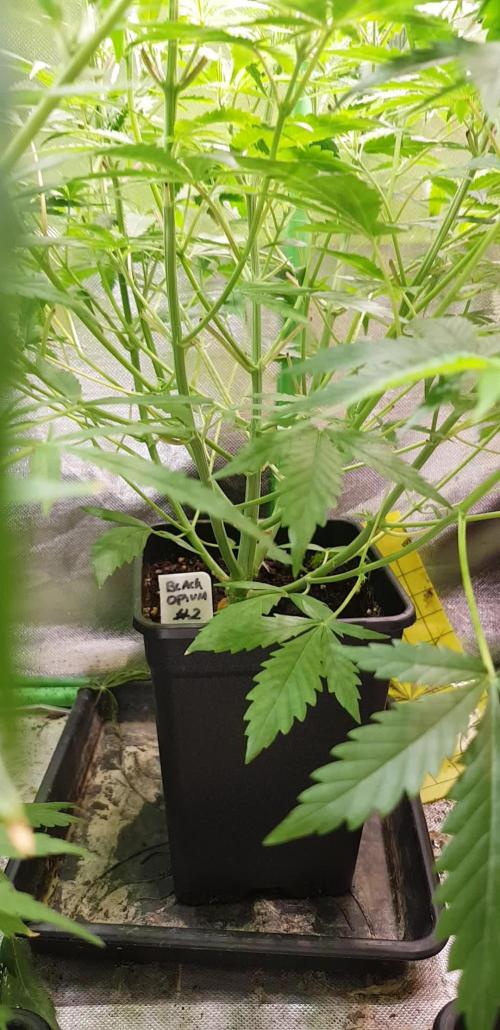
I'm still not sure about the amount of water in the irrigation, however the technique I try to keep is 2l of water per plant every two days as it is the time it takes to dry and ask for more water.



@GERGrowDesigns
Follow
Welcome to Flower Week 1 of Divine Seeds Auto Black Opium
I'm excited to share my grow journey with you all as part of the Divine Seeds Autoflowering Competition 2025. It's going to be an incredible ride, full of learning, growing, and connecting with fellow growers from all around the world!
For this competition, I’ve chosen the Feminized Automatic strain: Auto Black Opium
Here’s what I’m working with:
• 🌱 Tent: 120x60x80
• 🧑🌾 Breeder Company: Divine Seeds
• 💧 Humidity Range: 50
• ⏳ Flowering Time: 60-63 Days
• Strain Info: 25%THC
• 🌡️ Temperature: 26
• 🍵 Pot Size: 0.5l
• Nutrient Brand: Narcos
• ⚡ Lights : 200W x 2
A huge thank you to Divine Seeds for allowing me to be a part of this amazing competition and Sponsoring the Strains. Big thanks for supporting the grower community worldwide! Your genetics and passion speak for themselves!
I would truly appreciate every bit of feedback, help, questions, or discussions – and of course, your likes and interactions mean the world to me as I try to stand out in this exciting competition!
Let’s grow together – and don’t forget to stop by again to see the latest updates!
Happy growing!
Stay lifted and stay curious!
Peace & Buds!


@DaddyPrime
Follow
7/8 still looking good still. Put her outside today and set up my drip irrigation for while im on vacation
7/10 had her outside for 2 days and she shot up like 4 inches. She's praying super hard. Shes loving the sunshine💚


@Buddyhighs
Follow
So another week down and we started the scrog. As we draw closer to sexual maturity we are preparing to flip to flower.
More compost tea and knf this week really trying to bring this soil to life. The health of this plant is showing me the efforts are not in vain. How ever I have had to cut some yellowing leafs from the bottom. Maybe a calcium this so I’ve added wsc (water soluble calcium) to the pantry of nutes.
With the left over plant matter from making the fpj I added to water with a vinegar mother and she turned it into vinegar for me. I then added blended and roasted eggshells. And that’s given me my wsc.
Anyways back to the plant, this genetic seem really strong. I’m loving vegging this girl. I’m just waiting for the last branch to reach the canopy before I get her ready to flip.
Until next week let’s get it!!! 💪🏽💪🏽💪🏽


@Smoking_Joe_Frasier
Follow
Week 9: Late Flowering and Ripening
Signs of Maturity
As we enter week 9, the plants are well into the late flowering stage, with the buds ripening beautifully. The trichomes are becoming more prominent, and there's a noticeable increase in resin production. The aromas are intensifying, making the garden a fragrant delight. The plants are showing clear signs of maturity, indicating that harvest time is approaching.
Nutrient and Watering Adjustments
To accelerate the ripening process and boost bud production, I'm using FinalPart by Terra Aquatica for Banana Purple Punch and Blue Dream. As from T.A recommended I use it alone with no other nutrients combined. I use it at full dosage but I hope I don't burn them in the end. No risk no fun.
However, for Tangie and Gorilla Cookies, I have not changed the nutrient composition, as these plants will likely need another three /four weeks to fully mature. The watering schedule remains consistent, ensuring the plants are hydrated but not overwatered, which is crucial during this delicate phase.
Pest Management and Plant Health
To combat thrips, I've placed yellow and blue sticky traps around the plants. Fortunately, there have been no further signs of aphid infestation. The plants appear healthy and vigorous, showing no additional pest issues.
Individual Plant Observations
Blue Dream:
Some pistils are starting to change color, and the main bud is becoming denser. The fan leaves are also transitioning from green to yellow, indicating that the plant is drawing nutrients from them. The trichomes are becoming more cloudy.
Banana Purple Punch:
The plant is experiencing slower growth, with minimal bud expansion. The pistils are changing color, and the buds are developing a beautiful purple hue. The fan leaves are turning yellow as the plant draws nitrogen from them. I’m hoping FinalPart will stimulate a final boost in bud production.
Gorilla Cookies:
Bud development is also progressing slowly. However, all the large leaves are still green, so I’ll hold off on FinalPart until at least next week. My goal here is to maximize yield. The resin production and aroma are intensifying daily.
Tangie:
Still in a growth phase, Tangie is a real eye-catcher. While the bud production is underway, the plant may need at least three, possibly even four more weeks to reach full maturity. The resin production and aroma are not yet as advanced as with the other plants, but Tangie looks very vibrant and healthy.
Seeking Final Tips and Harvest Advice
As we approach the final stages, any tips or advice on maximizing flavor, potency, or overall plant health would be greatly appreciated. I'm looking forward to gear up for the most exciting part of the grow cycle—harvest!
Update 27.07:
Today, I decided to switch my Gorilla Cookies plant to FinalPart as well. This should give her a boost in trichome production and aroma, and hopefully enhance the flavor too.
Tangie is the only plant still on regular bloom nutrients, as she clearly needs another three, maybe even four weeks to fully ripen. Judging by her current growth, she seems poised to yield the most by far.


@Terpio1500
Follow
Week 2
I got Pistils showing
The New
Check out my other Dairies (Gelato Cake & The New)
Nutrients (floraflex) are in Grams/gal*
Light: HLG
Follow my IG @therealterpio for more updates & content!
I tend to low feed the first 2 weeks then ramp it up a little later into flower

@KannaGrowing
Follow
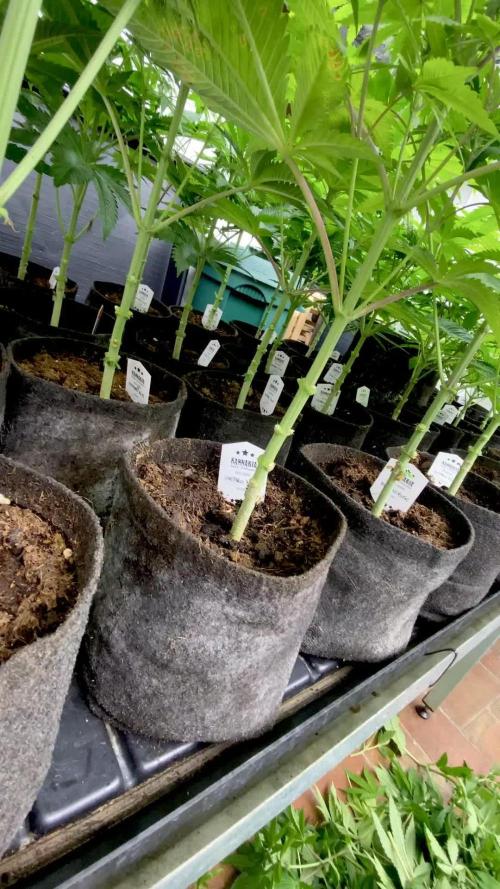
Esta semana ya estamos en plena floración, así que eliminamos Bio Vega y doblamos la dosis de Bio Flores.
Realizamos una segunda poda baja de toda la sala.
La potencia de las luminarias LazerLite Pro 720w la ajustamos al 100%.
En fase nocturna no conectamos los calefactores, ya que queremos que pasen algo de frío controlado.



@Ultraviolet
Follow
ANTHOCYANIN production is primarily controlled by the Cryptochrome (CR1) Photoreceptor ( !! UV and Blue Spectrums are primary drivers in the production of the pigment that replaces chlorophyll, isn't that awesome!
1. Diverse photoreceptors in plants
Many civilizations, including the sun god of ancient Egypt, thought that the blessings of sunlight were the source of life. In fact, the survival of all life, including humans, is supported by the photosynthesis of plants that capture solar energy. Plants that perform photosynthesis have no means of transportation except for some algae. Therefore, it is necessary to monitor various changes in the external environment and respond appropriately to the place to survive. Among various environmental information, light is especially important information for plants that perform photosynthesis.
In the process of evolution, plants acquired phytochrome, which mainly receives light in the red light region, and multiple blue light receptors, including his hytropin and phototropin, in order to sense the light environment. .. In addition to these, an ultraviolet light receptor named UVR8 was recently discovered. The latest image of the molecular structure and function of these various plant photoreceptors (Fig. 1), focusing on phytochrome and phototropin.
Figure 1
Ultraviolet-visible absorption spectra of phytochrome, cryptochrome, phototropin, and UVR8. The dashed line represents each bioactive absorption spectrum.
2. Phytochrome; red-far red photoreversible molecular switch
What is phytochrome?
Phytochrome is a photochromic photoreceptor, and has two absorption types, a red light absorption type Pr (absorption maximum wavelength of about 665 nm) and a far-red light absorption type Pfr (730 nm). Reversible light conversion between the two by red light and far-red light, respectively(Fig. 1A, solid line and broken line). In general, Pfr is the active form that causes a physiological response. With some exceptions, phytochrome can be said to function as a photoreversible molecular switch. The background of the discovery is as follows. There are some types of plants that require light for germination (light seed germination). From that study, it was found that germination was induced by red light, the effect was inhibited by subsequent far-red light irradiation, and this could be repeated, and the existence of photoreceptors that reversibly photoconvert was predicted. In 1959, its existence was confirmed by the absorption spectrum measurement of the yellow sprout tissue, and it was named phytochrome. Why does the plant have a sensor to distinguish between such red light and far-red light? There is no big difference between the red and far-red light regions in the open-field spectrum of sunlight, but the proportion of red light is greatly reduced due to the absorption of chloroplasts in the shade of plants. Similar changes in light quality occur in the evening sunlight. Plants perceive this difference in light quality as the ratio of Pr and Pfr, recognize the light environment, and respond to it.
Subsequent studies have revealed that it is responsible for various photomorphogenic reactions such as photoperiodic flowering induction, shade repellent, and deyellowing (greening). Furthermore, with the introduction of the model plant Arabidopsis thaliana (At) and the development of molecular biological analysis methods, research has progressed dramatically, and his five types of phytochromes (phyA-E) are present in Arabidopsis thaliana. all right. With the progress of the genome project, Fi’s tochrome-like photoreceptors were found in cyanobacteria, a photosynthetic prokaryotes other than plants. Furthermore, in non-photosynthetic bacteria, a homologue molecule called bacteriophytochrome photoreceptor (BphP) was found in Pseudomonas aeruginosa (Pa) and radiation-resistant bacteria (Deinococcus radiodurans, Dr).
Domain structure of phytochrome molecule
Phytochrome molecule can be roughly divided into N-terminal side and C-terminal side region. PAS (Per / Arndt / Sim: blue), GAF (cGMP phosphodiesterase / adenylyl cyclase / FhlA: green), PHY (phyto-chrome: purple) 3 in the N-terminal region of plant phytochrome (Fig. 2A) There are two domains and an N-terminal extension region (NTE: dark blue), and phytochromobilin (PΦB), which is one of the ring-opening tetrapyrroles, is thioether-bonded to the system stored in GAF as a chromophore. ing. PAS is a domain involved in the interaction between signal transduction-related proteins, and PHY is a phytochrome-specific domain. There are two PASs and her histidine kinase-related (HKR) domain (red) in the C-terminal region, but the histidine essential for kinase activity is not conserved.
3. Phototropin; photosynthetic efficiency optimized blue light receptor
What is phototropin?
Charles Darwin, who is famous for his theory of evolution, wrote in his book “The power of move-ment in plants” published in 1882 that plants bend toward blue light. Approximately 100 years later, the protein nph1 (nonphoto-tropic hypocotyl 1) encoded by one of the causative genes of Arabidopsis mutants causing phototropic abnormalities was identified as a blue photoreceptor. Later, another isotype npl1 was found and renamed phototropin 1 (phot1) and 2 (phot2), respectively. In addition to phototropism, phototropin is damaged by chloroplast photolocalization (chloroplasts move through the epidermal cells of the leaves and gather on the cell surface under appropriate light intensity for photosynthesis. As a photoreceptor for reactions such as escaping to the side of cells under dangerous strong light) and stomata (reactions that open stomata to optimize the uptake of carbon dioxide, which is the rate-determining process of photosynthetic reactions). It became clear that it worked. In this way, phototropin can be said to be a blue light receptor responsible for optimizing photosynthetic efficiency.
Domain structure and LOV photoreaction of phototropin molecule
Phototropin molecule has two photoreceptive domains (LOV1 and LOV2) called LOV (Light-Oxygen-Voltage sensing) on the N-terminal side, and serine / on the C-terminal side. It is a protein kinase that forms threonine kinase (STK) (Fig. 4Aa) and whose activity is regulated by light. LOV is one molecule as a chromophore, he binds FMN (flavin mononucleotide) non-covalently. The LOV forms an α/βfold, and the FMN is located on a β-sheet consisting of five antiparallel β-strands (Fig. 4B). The FMN in the ground state LOV shows the absorption spectrum of a typical oxidized flavin protein with a triplet oscillation structure and an absorption maximum wavelength of 450 nm, and is called D450 (Fig. 1C and Fig. 4E). After being excited to the singlet excited state by blue light, the FMN shifts to the triplet excited state (L660t *) due to intersystem crossing, and then the C4 (Fig. 4C) of the isoaroxazine ring of the FMN is conserved in the vicinity. It forms a transient accretionary prism with the tain (red part in Fig. 4B Eα) (S390I). When this cysteine is replaced with alanine (C / A substitution), the addition reaction does not occur. The effect of adduct formation propagates to the protein moiety, causing kinase activation (S390II). After that, the formed cysteine-flavin adduct spontaneously dissociates and returns to the original D450 (Fig. 4E, dark regression reaction).
Phototropin kinase activity control mechanism by LOV2
Why does phototropin have two LOVs? Atphot1 was found as a protein that is rapidly autophosphorylated when irradiated with blue light.
The effect of the above C / A substitution on this self-phosphorylation reaction and phototropism was investigated, and LOV2 is the main photomolecular switch in both self-phosphorylation and phototropism. It turns out that it functions as. After that, from experiments using artificial substrates, STK has a constitutive activity, LOV2 functions as an inhibitory domain of this activity, and the inhibition is eliminated by photoreaction, while LOV1 is kinase light. It was shown to modify the photosensitivity of the activation reaction. In addition to this, LOV1 was found to act as a dimerization site from the crystal structure and his SAXS. What kind of molecular mechanism does LOV2 use to photoregulate kinase activity? The following two modules play important roles in this intramolecular signal transduction.
Figure 4
(A) Domain structure of LOV photoreceptors. a: Phototropin b: Neochrome c: FKF1 family protein d: Aureochrome (B) Crystal structure of auto barley phot1 LOV2. (C) Structure of FMN isoaroxazine ring. (D) Schematic diagram of the functional domain and module of Arabidopsis thaliana phot1. L, A’α, and Jα represent linker, A’α helix, and Jα helix, respectively. (E) LOV photoreaction. (F) Molecular structure model (mesh) of the LOV2-STK sample (black line) containing A’α of phot2 obtained based on SAXS under dark (top) and under bright (bottom). The yellow, red, and green space-filled models represent the crystal structures of LOV2-Jα, protein kinase A N-lobe, and C-robe, respectively, and black represents FMN. See the text for details.
1) Jα. LOV2 C of oat phot1-to α immediately after the terminus
Rix (Jα) is present (Fig. 4D), which interacts with the β-sheet (Fig. 4B) that forms the FMN-bound scaffold of LOV2 in the dark, but unfolds and dissociates from the β-sheet with photoreaction. It was shown by NMR that it does. According to the crystal structure of LOV2-Jα, this Jα is located on the back surface of the β sheet and mainly has a hydrophobic interaction. The formation of S390II causes twisting of the isoaroxazine ring and protonation of N5 (Fig. 4C).
As a result, the glutamine side chain present on his Iβ strand (Fig. 4B) in the β-sheet rotates to form a hydrogen bond with this protonated N5. Jα interacts with this his Iβ strand, and these changes are thought to cause the unfold-ing of Jα and dissociation from the β-sheet described above. Experiments such as amino acid substitution of Iβ strands revealed that kinases exhibit constitutive activity when this interaction is eliminated, and that Jα plays an important role in photoactivation of kinases.
2) A’α / Aβ gap.
Recently, several results have been reported showing the involvement of amino acids near the A’α helix (Fig. 4D) located upstream of the N-terminal of LOV2 in kinase photoactivation. Therefore, he investigated the role of this A’α and its neighboring amino acids in kinase photoactivation, photoreaction, and Jα structural change for Atphot1. The LOV2-STK polypeptide (Fig. 4D, underlined in black) was used as a photocontrollable kinase for kinase activity analysis. As a result, it was found that the photoactivation of the kinase was abolished when amino acid substitution was introduced into the A’α / Aβ gap between A’α and Aβ of the LOV2 core. Interestingly, he had no effect on the structural changes in Jα examined on the peptide map due to the photoreaction of LOV2 or trypsin degradation. Therefore, the A’α / Aβ gap is considered to play an important role in intramolecular signal transduction after Jα.
Structural changes detected by SAXS
Structural changes of Jα have been detected by various biophysical methods other than NMR, but structural information on samples including up to STK is reported only by his results to his SAXS. Not. The SAXS measurement of the Atphot2 LOV2-STK polypeptide showed that the radius of inertia increased from 32.4 Å to 34.8 Å, and the molecular model (Fig. 4F) obtained by the ab initio modeling software GASBOR is that of LOV2 and STK. It was shown that the N lobes and C lobes lined up in tandem, and the relative position of LOV2 with respect to STK shifted by about 13 Å under light irradiation. The difference in the molecular model between the two is considered to reflect the structural changes that occur in the Jα and A’α / Aβ gaps mentioned above.
Two phototropins with different photosensitivity
In the phototropic reaction of Arabidopsis Arabidopsis, Arabidopsis responds to a very wide range of light intensities from 10–4 to 102 μmol photon / sec / m2. At that time, phot1 functions as an optical sensor in a wide range from low light to strong light, while phot2 reacts with light stronger than 1 μmol photon / sec / m2. What is the origin of these differences? As is well known, animal photoreceptors have a high photosensitivity due to the abundance of rhodopsin and the presence of biochemical amplification mechanisms. The exact abundance of phot1 and phot2 in vivo is unknown, but interesting results have been obtained in terms of amplification.
The light intensity dependence of the photoactivation of the LOV2-STK polypeptide used in the above kinase analysis was investigated.
It was found that phot1 was about 10 times more photosensitive than phot2. On the other hand, when the photochemical reactions of both were examined, it was found that the rate of the dark return reaction of phot1 was about 10 times slower than that of phot2. This result indicates that the longer the lifetime of S390II, which is in the kinase-activated state, the higher the photosensitivity of kinase activation. This correlation was further confirmed by extending the lifespan of her S390II with amino acid substitutions. This alone cannot explain the widespread differences in photosensitivity between phot1 and phot2, but it may explain some of them. Furthermore, it is necessary to investigate in detail protein modifications such as phosphorylation and the effects of phot interacting factors on photosensitivity.
Other LOV photoreceptors Among fern plants and green algae, phytochrome ɾphotosensory module (PSM) on the N-terminal side and chimera photoreceptor with full-length phototropin on the C-terminal side, neochrome (Fig. There are types with 4Ab). It has been reported that some neochromes play a role in chloroplast photolocalization as a red light receiver. It is considered that fern plants have such a chimera photoreceptor in order to survive in a habitat such as undergrowth in a jungle where only red light reaches.
In addition to this, plants have only one LOV domain, and three proteins involved in the degradation of photomorphogenesis-related proteins, FKF1 (Flavin-binding, Kelch repeat, F-box 1, ZTL (ZEITLUPE)), LKP2 ( There are LOV Kelch Protein2) (Fig. 4Ac) and aureochrome (Fig. 4Ad), which has a bZip domain on the N-terminal side of LOV and functions as a gene transcription factor.
4. Cryptochrome and UVR8
Cryptochrome is one of the blue photoreceptors and forms a superfamily with the DNA photoreceptor photolyase. It has FAD (flavin adenine dinucle-otide) as a chromophore and tetrahydrofolic acid, which is a condensing pigment. The ground state of FAD is considered to be the oxidized type, and the radical type (broken line in Fig. 1B) generated by blue light irradiation is considered to be the signaling state. The radical type also absorbs in the green to orange light region, and may widen the wavelength region of the plant morphogenesis reaction spectrum. Cryptochrome uses blue light to control physiological functions similar to phytochrome.
It was identified as a photoreceptor from one of the causative genes of UVR8 Arabidopsis thaliana, and the chromophore is absorbed in the UVB region by a Trp triad consisting of three tryptophans (Fig. 1D). It is involved in the biosynthesis of flavonoids and anthocyanins that function as UV scavengers in plants.
Conclusion
It is thought that plants have acquired various photoreceptors necessary for their survival during a long evolutionary process. The photoreceptors that cover the existing far-red light to UVB mentioned here are considered to be some of them. More and more diverse photoreceptor genes are conserved in cyanobacteria and marine plankton. By examining these, it is thought that the understanding of plant photoreceptors will be further deepened.


@Ganjagrandaddy
Follow
Day 43 flowering today. She is still looking rough from the calmag issue but is doing ok in general. Her buds are still forming nicely but lack of anything takes its toll . she smells sweet/skunky at the moment but her nugs are solid now. so sad i fucked up on her with the cal mag miss. She looks close to being done now so will be watching her trichs. come on girl bulk up.


@samuraifroggig
Follow
This actually went way better than I expected. I'm going to slam the nutes this week and then do some LST daily as it grows. watered 2x with 2 gals, Floralicious Plus foliar spray 2ml/gal ro water ph6 1 day.


@diiiiii
Follow
At first, I couldn't adjust the temperature, but when I did, it soon increased mmmmmmmmmm



@WhiteWidow
Follow
Absolutely enjoying this period of forming buds, crystals and smell. Just let her do her thing for a couple more weeks and then be the happiest dude alive :D
Perfect color perfect shape no nutrient problems, biobizz straight A, 5/5, amazing