




Likes
107
Share


@DogDoctorOfficial
Follow
Greetings, dear plant companions! Can you believe it? Week 17 has unfolded, and our journey with Purple Lemonade Fast Flower reaches its climax—a splendid harvest at day 69. As I stand here, reflecting on the wait and the wonder, let's delve into this momentous update.
The Ultimate Waiting Game <3
Oh, the extra waiting time felt like a lifetime, didn't it? But you know what they say—the best things in life are worth waiting for. And let me tell you, this journey has been an ode to patience and a symphony of anticipation.
A Marvel to Behold <3
Behold our Purple Lemonade in all her glory! If beauty could be bottled, she'd fill an entire garden. Her buds are a testament to love, care, and the dedication poured into this journey. It's like witnessing a masterpiece in horticultural art.
The Trichome Revelation <3
As the days stretched, the trichomes prepared for their moment of glory. And what a sight it was! I took a sneak peek under the microscope, and oh my, the colors and trichome numbers are beyond imagination. It's like peeking into a secret universe of brilliance.
A Full Cycle: The Journey Revisited <3
From seed to this awe-inspiring harvest, our journey has been a symphony of growth, learning, and beauty. Every week, we embraced new lessons, nurtured each phase, and reveled in the miracles of cultivation. The cycle is a testament to our connection with the plant world and the wonders it bestows.
Time to Rest and Reflect <3
Now, our Purple Lemonade enters a period of rest on the drying rack. For about two weeks, she'll transform further, preparing for her final debut. It's a time of patience once again, as flavors deepen, aromas evolve, and magic intensifies.
The Upcoming Full Report <3
In the near future, get ready for a comprehensive report on the fruits of this labor. We'll explore the buds, savor the tastes, bask in the effects, and celebrate the cycle as a whole. It's a chapter that encapsulates the essence of this cultivation journey.
A Thank You to the Community <3
A heartfelt thank you to the @Fast_Buds team for crafting this botanical marvel. @aptus_holland, your support has been integral. And to @grow.diaries and the entire community, your camaraderie has fueled this journey.
Cultivation, Celebration, Connection 💚🌿
As this chapter concludes, let's celebrate the culmination of growth, the dance of patience, and the connection we share with the natural world. From seed to harvest, we've written a story of love and green magic.
Thank you for being part of this journey. Until we reconvene for the final chapter, let's continue to nurture, learn, and celebrate the beauty of plants.
Genetics - Fast Buds Purple Lemonade FF
Ligth - Lumatek ZEUS 465 COMPACT PRO
Food - Aptus Holland
#aptus #aptusplanttech #aptusgang #aptusfamily #aptustrueplantscience #inbalancewithnature #trueplantscience #fastbuds #dogdoctorofficial #growerslove
With true love comes happiness <3 <3 <3 Always believe in your self and always do things expecting nothing and with an open heart , be a giver and the universe will give back to you in ways you could not even imagine so <3 <3 <3
All info and full product details can be find in can find @
https://2fast4buds.com/
https://aptus-holland.com/
https://autopot.co.uk/
https://lumatek-lighting.com/
<3 <3 <3 Growers love to you all <3 <3 <3
" Arising from a cross between purple and citrus Cali genetics, Purple Lemonade FF (Fastflowering) offers a complex high made up of perfectly balanced cerebral and body effects that are ideal for daytime use. Expect an extremely enjoyable high that boosts your mood while deeply relaxing your whole body and getting rid of muscle pain. This meticulous cross produces up to 550 g/m2 of some of the most beautiful purple buds, with pinkish and reddish hues that will catch everyone’s attention. The beautiful purple buds are ready for harvest in 7-8 weeks and come hand-in-hand with unbelievably sugary citrus terps that are just as refreshing as a cold lemonade on a hot Summer day. It’s the ideal variety for the sweet-tooth stoner seeking strains that deliver both in quality and quantity of resin.
Bud Description
Purple Lemonade FF grows chunky, spade-shaped buds that boast a whole range of pinkish-purple hues with rich, dark orange pistils shooting out of every direction. This variety stands out for the, oftentimes, lilac trichomes that give them a gorgeous pink tint and make for outstanding purple concentrates. The buds give off a delicious tart lemon aroma that reveals a sweeter, more fruity scent as you break the buds open. Definitely a must for flavor chasers and those looking for pungent terpene profiles. Smoke Reports
Purple Lemonade FF offers an effect that’s just as unique as the flavor. Expect a potent uplifting high that gives you that energy boost you need to get things done while 100% happy and stress-free. The effect gradually transforms into a wave that works its way along the limbs and through the muscles, deeply relaxing your body and putting you in the right mindset to go through a busy day with a huge smile on your face. This is an excellent all-day smoke as it not only increases energy but can also help combat chronic pain, migraine and stress. Plant Appearance
This feminized photoperiod variety develops a thick and strong structure, growing a medium-sized main cola with multiple shorter side branches, typical of hybrid strains. Purple Lemonade FF develops fairly short internodal spacing with gorgeous purple buds growing stacked on top of each other, making it the perfect choice for growers of all levels looking to get lots and lots of top-shelf purple weed, as this variety can produce up to 550 g/m2 in a 7-8 week flower cycle.
Grow Tips
This is a super fast feminized photoperiod version that takes approximately 7-8 weeks to flower with a 5-week vegetation cycle,, this means you can have faster harvests by shortening the veg cycle or have a longer veg cycle for bigger yields. Purple Lemonade FF (Fastflowering) makes for a great candidate for growers of all levels as it’s a vigorous strain that will thrive with basic maintenance both indoors and outdoors. This is a resin powerhouse so make sure to have your trim bin close by as all the resinous sugar leaves will make for the most mouth-watering hash and extracts. Flavor
Expect a long-lasting citrus zest that taste just like it smells. Purple Lemonade FF reeks of a delicious blend of sweet fruits and tart citrus that’ll make your mouth water. On the inhale, expect sour flavors that taste just like lemon candy with hints of orange and a really subtle earthy background. And on the exhale, the citrus flavors open up, giving place to a more sugary berry fruitiness that leaves your whole mouth tasting like an extremely sweet weed-infused lemonade.


Likes
14
Share


@CampaCavallo
Follow
6ª Settimana di Fioritura 💐💐💐💐💐💐
Amici della Cannabis 💚, guardate che belli che stanno diventando i fiori della RUNTZ 💓🗿💙!
Belle cime gonfie ed innevate😍🏔️
Un abbraccio a tutti 😘💪🏻💚

Likes
7
Share


@Hommero75
Follow
I'm excited for the Purple Lemonade FF she is stretching and growing nicely.
Today she was fed a good serving of Goldleaf feterlizer, IBex Catapult to boost the development and cal-mag to help with any issue.
Likes
30
Share


@ButterfliesLittleFarm
Follow
Hello Diary.
We have reached the end of the third week of flowering, Sherbet Queen is already a real beauty.
She reached 89 cm which is one cm more than last week which means she has reached her final height.
The flowers fill nicely, the scent is more and more intense and they stick to the fingers to the touch.
The leaves are dark green in color and shine in the light.
I cleaned the lower part of the plant earlier so that there is a good flow of air through the plant itself.
Impressive plant, shape, height, ideal dimensions for my Farm.
I water the plants every two days, they drink really a lot of water. This week I added Bio Grow, Bio Bloom and Alg-a-Mic from BioBizz to one watering.
The temperature is around 29 degrees, during the day it even rises a little above 30 degrees, but so it is in summer, I hope it will not cause stress to the plants.
Here’s what it looked like last week.
20/06/2021 - Day 36.
Watering. I added 1ml / lit CalMg to 8 liters of water, I lowered the p.H. at 6.5 and with that amount evenly watered all three plants.
Temp / Humidity on the farm - 29 degrees and 60% humidity.
22/06/2021 - Day 38.
Watering. This time I just regulated p.H at 6.3. I did not add any nutrients.
Temp / Humidity on the farm - 28 degrees and 47% humidity.
24/06/2021 - Day 40.
Watering. I added Bio Grow 1.5 ml / lit, Bio Bloom 1 ml / lit and Alg-a-Mic 1ml / lit. p.H. I dropped to 6.4.
Temp / Humidity on the farm - 31 degrees and 52% humidity.
26/06/2021 - Day 42.
Watering and photography. p.H. I dropped to 6.5.
Temp / Humidity on the farm - 28 degrees and 45% humidity.
That’s all from me for this week, thank you all for your support, see you soon.

Likes
1
Share

@Seabass
Follow
20.7.
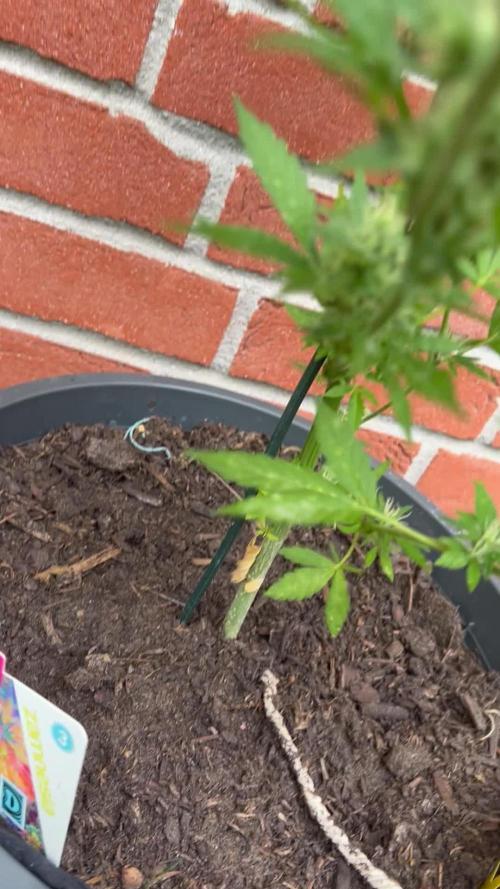
Mehltau ist auf einer Pflanze deutlich sichtbar. Getrocknet aber Morgen gehts weiter mit Regen und hoher Luftfeuchtigkeit.
Likes
19
Share


@CommanderCannabis
Follow
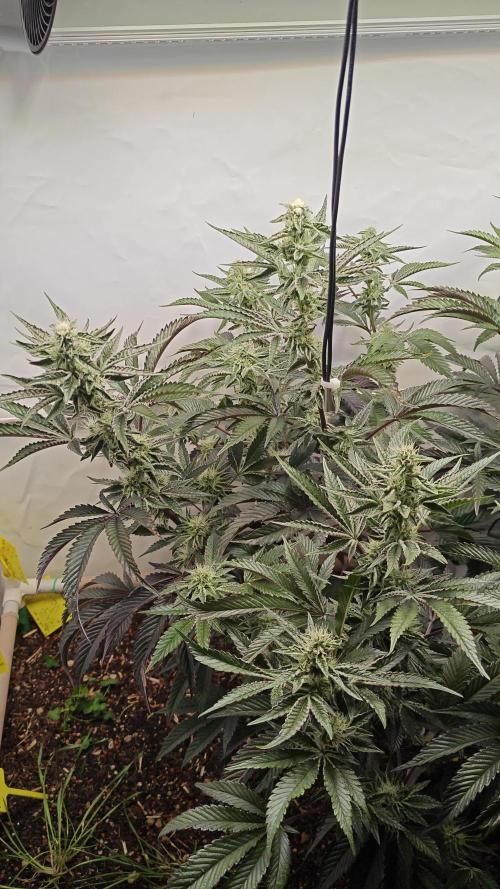
Very busy week. Completed three upgrades to chamber. 1. Got new 1200W COB LED light. Bright sharp light. 2. Got new Humidifier which has a built in hydrostat and is set to 55%. 3. Got a Autopilot APC8200 CO2 controller and can now inject CO2 automatically based on set range around 1300PPM. The CO2 is injected to chamber with the intake fan on and it seems to hang very well. At night I turn the exhaust fan on to make it cooler for dark period. Hopefully growth will increase this week. Also started LST with both.



Likes
93
Share


@MrJones
Follow
Mr-Jones Shockwave F2
🔹🔹🔹🔹🔹🔹WEEKLY GOALS🔹🔹🔹🔹🔹🔹
🌞Environment - 75/80℉ and 45/50% Humidity
💧 Feeding - Using "Super Coco" amended soil. compost teas, Dechlorinated H20 PH/6.5 Fish Fertilizer, Started feeding the plants because they are only in 1-gallon pots.
🍃Training / towards the end of the week will be Schwazzing the plants, along with cleaning out the bottoms,.
🕷️ IPM - Will be using Green Cleaner" 1 OZ per Gallon, and CannControl from Mammoth alternating between product each month for Integrated Pest Management.
💡Mars Hydro FC 4800 / 480W Led Grow Light - "Instagram: MarsHydro_Aliexpress"💡
🔹🔹🔹🔹🔹🔹🔹🔹🔹🔹🔹🔹🔹🔹🔹🔹🔹🔹
📜- Rambling - Just feeding the plants Dechlorinated H20 PH@ 6.2/6,5 - that are still packing on bud weight, this could be the last week as the trichomes are starting to show cloudy, I like about 5/10%, Ambers - Have identified 3 maybe 4 of these girls to re-veg after I transplant into larger pots.
🔹🔹🔹🔹🔹🔹🔹🔹🔹🔹🔹🔹🔹🔹🔹🔹🔹🔹
▶️Sunday 01.03.21 / Watering with Dechlorinated H20 PH@ 6.2
▶️Monday 01.04.21 / Watering with Dechlorinated H20 PH@ 6.2
▶️Tuesday 01.05.21 / Just Watering with Dechlorinated H20 PH@ 6.2
▶️Thursday 01.07.21 / Just Watering with Dechlorinated H20 PH@ 6.2
▶️Friday 01.08.21 / Just Watering with Dechlorinated H20 PH@ 6.2, they are getting very close!
▶️Saturday 01.09.21 / They are looking great will be harvesting tomorrow!
🔹🔹🔹🔹🔹🔹🔹🔹🔹🔹🔹🔹🔹🔹🔹🔹🔹🔹

Likes
Comments
Share

@Growfather1
Follow
Hello everyone,
Welcome to the Family business.
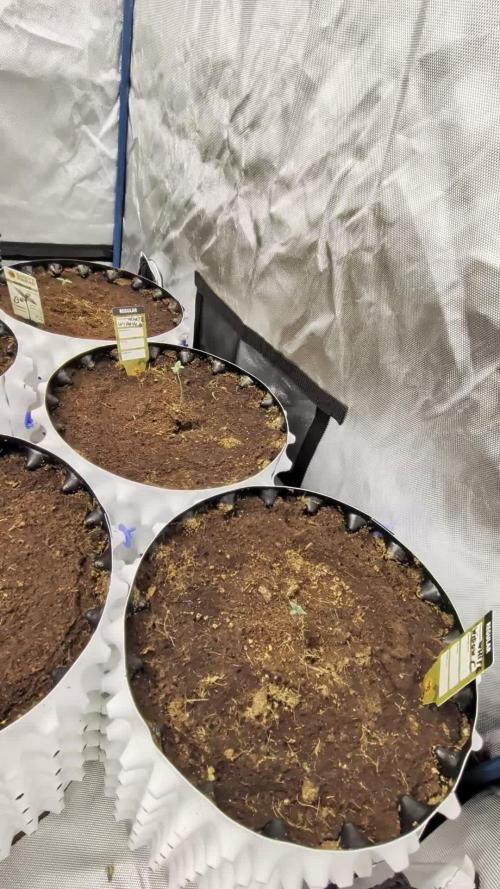
You might be wondering why this White Widow diary reads like a classic mob chronicle. The truth is simple: we are working with regular seeds here. In this operation, every single seed gets a seat at the table from day one—but not all of them will make it to the final crew.
As the weeks unfold, we will be watching closely to see who shows their true loyalty. The strong, productive females will rise to take over the empire. As for the males? Well, let's just say the moment they show their true colors, they will be taken care of. They won't be around to compromise the compound; they are going to end up sleeping with the fishes.
This isn't just a grow; it's a calculated operation where only the chosen ones make it to the final harvest. Pull up a chair, light one up, and watch how the family protects its own.
White Widow: Part III – The Consigliere’s Harvest
The three siblings in this family business exhibits calm precision. She is preparing for training, ready to be shaped into a masterpiece of yield. We will treat her with the respect she deserves, ensuring her leaves are perfectly manicured, and the buds become as dense as an offer one simply cannot refuse.

Likes
48
Share


@Nvchods3
Follow
esta semana le aplique big one de forma foliar para empezar a estimular la Pre-floracion !

Likes
18
Share


@TheCannaProphet
Follow
~ FASTBUDS CHEMDAWG AUTOFLOWER~
'The history of the Chemdawg strain starts in the early 90s where a group of cannabis breeders from Colorado were following a band on tour and took some of their weed with them, they had named this weed “chem bud” due to the unique chemical and diesel flavors.
When they got to one of the shows, they sold a couple of grams to a group of friends who quickly realized those were some special buds and, lucky for them, the buds had a couple of Chemdawg seeds (before they actually knew what they were) which they stored.
When one of the friends, who was also a cannabis grower, went back to his home on the East Coast, he germinated some of the seeds and started selecting the best phenotypes to continue developing those genetics even further.
As you may know by now, his effort paid off, and soon enough there were two versions of this strain going around, one was Indica-dominant and the other was a Sativa-leaning hybrid.
Both of these versions quickly spread around and several breeders developed new strains with these genetics, getting known by almost every cannabis consumer, becoming extremely popular and giving birth to a lot of famous strains such as Sour Diesel and OG Kush, although this isn’t confirmed, several old-school growers swear by it.' *content credit to FastBuds
____________________________________________________________________________________________________________________________________________________________________________________________________________________________________________________________________________________________________________________________________________________________________________________________________________________________________________________
The Spec's:
'These precious genetics were boosted by the Fast Buds team to provide a super tough, potent, and easy-to-grow strain.
This Chemdawg Auto from their 'Originals' line grows around 90cm and is very resilient to diseases and colder climates but watch out because if you’re growing outdoors, your neighbors will be able to smell it easily!
This strain can be cultivated even by beginner growers due to it requiring minimal maintenance and can produce up to 400gr/m2 in 8-9 weeks, this is one of the shortest varieties FastBuds offers and can be the perfect choice for those growing on a balcony or in a limited grow space.
As soon as the trichome production starts, you can expect a terpene profile that resembles a mix of chemicals that is a delicious blend of diesel, gasoline, and petroleum.
With up to 20% THC, you can expect a super potent high that will take you into another world and leave you there, while you relax with a strong corporal high that will leave your whole body melting, a perfect effect to relax after a long day of work or inducing a good night of sleep.' *content credit to FastBuds
~Chemdawg Auto~
Genes: Sativa 20%/Indica 80%
Genetics: Chemdog Autoflowering
Flowering: 8 – 9 weeks
Harvest: 350 – 400 gr/m2
Height: 60 – 90 cm
THC: Up to 20%
CBD: < 1%
Autoflowering: Yes
____________________________________________________________________________________________________________________________________________________________________________________________________________________________________________________________________________________________________________________________________________________________________________________________________________________________________________________
MY SETUP:
Planted into Jiffy Peat Pellet that was hydrated with de-chlorinated water with SuperThrive added then ph'd to 6.0 @ 80℉ where it took 3 days for her to break ground.
Grown 100% organic in 4g fabric pot by Gronest filled with Mother Earth 70/30 Coco/Perlite medium amended with (my 'Secret Recipe): 2tbs/g of Down To Earth 4-4-4 / 2 cups/g of Earthworm Castings / 1tbs/g of Dr. Earth Flower Girl 3-9-4, 1tbs/g of Dr. Earth Bat Guano, 3/4 cup of Down To Earth Azomite and 1 tsp/g Down To Earth Fish Bone Meal.
24hr light cycle during Germination, 19/5 light cycle for the remainder of the run under UnitFarm's UF-4000 and UFS3000 LED's which I have to say just blew me away with the results they gave!!!
If you're on a budget and want a light that is about as low profile and cool running as they get you really need to check out UnitFarms lights. Believe me... I run a pair of HLG 650R's and a HLG 225 in my 4x8 so I'm no stranger to 'high end' lights but lemme tell ya, these two UnitFarm lights absolutely blowup my 4x4 and don't overheat the tent!
She received straight water ph'd @ 6.2-6.8 when needed and weekly Compost Tea's for the entire grow which is one of the beauty's of growing 100% organic, you establish a microbial colony in your medium, then feed the microbes every 3-4 weeks keeping them fat and happy... They, in turn, through their life processes take care of feeding the plant. Pretty freaking cool if I may say so, and there's no simpler way to grow IMHO.
This Chemdawg's structure was perfect and didn't require me to top her, only requiring minimal LST and tucking shade leaves that were blocking light penetration. She grew fairly tall to 30" with wide node spacing allowing for excellent light penetration making her a growers dream, low maintenance, extremely tolerant of temperatures and disease/pests ) and a healthy yield of some epic GASSY buds glistening with trichomes... What more could you ask for? 😍💖
All in all, this strain has made it's way onto my 'list' and you'll be seeing it run again by me for sure as she's a hard one to stay away from! I highly recommend this one... Go grab some and put a huge smile on your face too! 😁👍💚
Likes
7
Share


@StonedandSteady
Follow
8th W/Flower: 8th Feed of #HumboldtCountysOwn Packed, Stacked Up and Lights Upgrading under way! Cloned with my Steady's Saliva!!!
8th w/ Flower: Budz getting Outstandingly Huge, Plump, Dense, Juicy and Everything is Supreme, Savory, Stinky, Sweet, Swelling Out, Skunky and Gasy at thier 8th week of Flower!
8th Week of Flower: 8th Flower Feed of #HumboldtCountysOwn and the Ladies Love the Bloom portion of Nutrients! They're Stacking Up Great and Filling Out thier Mighty Branches with Giant Gorgeous Budz! 5 Confirmed Females!!!
It's been a few days since I gave the Ladies thier 8th Feed of #HumboldtCountysOwn Nutrients and they look Fantastically Divine!!! We'll definitely Grow back to everything here soon! 11th w/ Veg and Flowers Update #Pre-Sexed🚺 #SuperCropped #Defoliated #Lollipoped
Good Day and Happy Growing Everyone! These Ladies were Growing into thier 11th Week of Veg and Looking Totally Tight and Phenomenally *Femed* from the Right!
#Pre-Sexed 4/9/21 #Opium/#PabloEscobar *Fems* breed by Team #DivineSeeds #DivineSeedsSquad #DivineSeedsBreedingCompany and #SuperCropping continued! I'm Very Excited and Extremely Gracious!!!
Heck Yeah Growmies and Growmets!!! Check Out these Confirmed Females with thier Wild Pistol Hairs popping and I'm still Training and Widening them Out with #SuperCropping Everything looks Expanded and Growing Great!
After #SuperCropping the plant will Grow Bushier, Produce More Buds, and possibly even Produce More THC! This is how the plant naturally responses to danger and protects itself! Growers take advantage of this technique to get Bigger Yields and More Potent Buds than would be produced otherwise!
Getting Trained out into thier 11th Week of Veg and Looking Mighty Fine!!! Thier getting Humongous and Hearty in thier 10 gallon Grow Bag from Broski #www.as420.ca These Cannabis plants are Camping out in the Closet for a week or so! Lol
This is my 2nd run using the Osree.Light QB1000w and Everything is Mesmerizing!!!
My #Opium and #PabloEscobar *Fems* from #DivineSeeds Regs: SalamiLegF3's×2 and FireAlienRomulan look$ Outstandingly Awesome and Growing Up Phenomenally Fine into thier 11th week of Veg in our 2- 10 gallon The Grow Bags from Broski #www.as420.ca and also 2- 5 gallons as Well! Our others are Super and Breed by #thehumancannabiniod #AlienBloodGenetix #TNBNaturals #Foop
Yo!!! Thanks Again for All the Love and Support my fellow Growmies and Growmets!!! These Magnificent and Magical Ladies were Growing in our 48×24×60 ViparSpectra Official Club 🌿 ®️ Grow Tent and under our #Osree QB1000w and #GrowStarStore Kokokala QB1000w and our Purple Rose Cutting×2, Aloe Vera Cutting, Maters×3, Morel Mushroom, Lavender×3, Sunflowers×5 and The 5 Brand New and Fresh Starts are Wonderful with a Huge Hint of Fantastical Fire is my #SalamiLegF3×2 by Broski #thehumancannabiniod #DankFlowGenetics #EastCoastSeedBank #FireAlienRomulan by Broski #AlienBloodGenetix my #PabloEscobar and #Opium by Team #DivineSeeds #DivineSeedsBreedingCompany We Grow with #Growatt 600w with #FoopOrangicBioSciences and #TNBNaturals The Enhancer Co2 Despersal canister and ph'd them w/ Declorinated watering w/ TNB ph Up and Down! Totally Top Quality Topz all Around! Thanks Again #GallowGlas420 #HarleyGrower #thehumancannabiniod #AlienBloodGenetix #TNBNATURALS #FoopOrangicBioSciences #www.as420.ca #divineseeds #divineseedssquad #divineseedsbreedingcompany #BioFlux Family's and Teams!!! Your Genetics are Merry Magnificent, Mega Marvelous and Mighty Medical! Love um!!! I really Can't stress enough how Thankful and Grateful I am of All of you and what you've Shared with Us! Means the World!!! It's definitely a Pleasure being able to Grow with these Phenomenal Grow Lights! Please Enjoy! BudBrothers4-Life! Cheers Famz!!! Much Props and Much Topz!💯🔥 #Osree #GrowStarStore #Growatt #TNBNaturals #TNBTeam #FoopOrangics #GrowYourOwn #Bliss
HumboldtCounty'sOwn:
Email: [email protected]
Phone: (707) 725-4119
Toll free: (866) 872-9434
Humboldt Bottling
Po Box 429 · Fortuna, CA 95540
HumboldtCounty'sOwn Website Link: https://humboldtcountysown.com/
HumboldtCounty'sOwn Instagram Link: https://instagram.com/humboldtcountysown?igshid=1qj809qkkwych
https://instagram.com/osree.light?igshid=1vrsbdyhzg2h8
https://instagram.com/growstarstore?igshid=2yjn0r00r6ru
https://instagram.com/divine.seeds?igshid=1r90iwe9xiwz8
https://instagram.com/thehumancannabinoid?igshid=17k159pumklkq
https://www.instagram.com/alienblood_genetix_official/
https://instagram.com/as420.ca?igshid=1f116alw054wp
The Grow Bags: https://www.as420

Likes
12
Share


@Tagadatek
Follow
Il me semble que les puissante brûlure son due au pk13-14.
J'ai effectuer un rinçage . En attente de résultats, espérons ne pas brûler les bud
Likes
12
Share


@chrisss
Follow
Week 6 D36) nitrogen toxicity signs so I flushed with 2 gallons of distilled water, then gave half a gallon of recharge,runoff PH was 6.4 ,ppm got down to 1800 so I gotta feed less,saw her first pistol yesterday so think this week will be the first flower week
D37) lst
D38)added small fan , lights at 100W
D39) fed 7,5 ml bloom to half a gallon, ppm 600 , ph 5.5- don’t want to over feed but they also need some more P rn
D40) worried about deficiencies, took out heating mat
D41) fed half gallon with 5 ml bloom .5 ml calmag
Day 42) think ph is to low , calcium def but shouldn’t be low on calcium


Likes
62
Share


@Reyden
Follow
Purtroppo le 4 gorilla 🦍 hanno delle carenze importanti e anche dei moscerini che girano nella terra e nelle radici, penso siano i moscerini dei funghi e se tengo le piante senza annaffiare più tempo loro soffrono perché gli piace l umidità e materiale organico di cui nutrirsi, ho sbagliato due settimane fa a preparare quella soluzione forse un ambiente troppo dolce gli ha richiamati…spero di non avere ancora più danni ormai le piante


Likes
4
Share


@Marley55
Follow
Getting ready🙃 this guy must be glue gellato, but i dont know why its purple. Something gone wrong or mby there was mistake and i took a wrong seed. Mby its purple punch. Or what do you think? Its massive with strong and big buds. Cant wait to smoke it. Smell is nice 💪
Likes
7
Share

@MrLahey
Follow
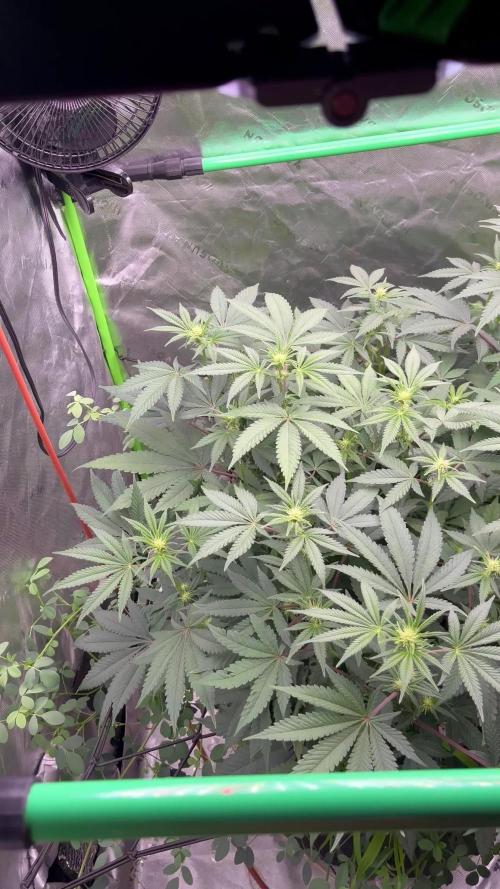
Looking great so far. She was thirsty as heck some days last week. Used close to 2 gallons of water a day. Smell is starting to come on. Veryyyy slight syrupy smell possibly but it’s too early to be sure, to be quite honest. Regardless, she’s starting to create her smell it seems.
Gonna give her maybe five or six days and then do a lollipopping and considerable canopy clean up to make sure that the lower bud sites don’t get too deprived of light. Learned my lesson on my last grow with that. After that I’ll be pretty hands off the rest of the grow other than maybe some flower amendments.