


Likes
Comments
Share


@DrDuhboto
Follow
Trying to learn what plants I like to grow the most. This run is a test of each strain I ordered from seedsman.
Blueberry is a clone from a seed, As I only had one of these seeds I didnt want to risk flowering it and losing a good pheno, So instead I grew that seed and cloned off of it.
Maui Waui is from seed, and looks pretty wonky here, it got a bit out of hand during veg as I didn't have a screen in there. The seed has been vigourous though and I have high hopes for it being the only pure sativa in the bunch,
Cheese is a clone taken from my last grow. I cloned it off the seeded plant before they went into flower. My last run with cheese went well with dense buds and good potency.
Buttercream gelato is from a seed and has pretty interesting growth. It has been hard to keep nitrogen up in it and pales to lime much quicker than the other plants around it.
Buttercream and Maui waui have been vegging for 2 months.
Blueberry and chees have been vegging for 6 weeks


Likes
100
Share


@DogDoctorOfficial
Follow
🌾 Harvest Day — The Grand Finale of the Eternity Grow Cup 🌾
Days 72–73 | Trimmed on May 25 | Posted May 27
What a journey this has been — and what a finish. These five incredible Runtz phenos have now completed their cycle, and today, we celebrate the final stage of their flowering life: the Harvest.
We sent the girls into darkness on Day 70, allowing them a full 48+ hours of rest and reset. The dark period was just a bit longer, truth be told, because time… it flows as it must. This extended dark time helps increase resin production, allowing the trichomes to mature just that final bit more.
On Days 72 and 73, we harvested them with care and reverence.
Each plant was hung upside down, whole, in a perfectly controlled 60% humidity environment for 13 full days. Before hanging, we gently removed only the fan leaves, leaving all trichome-rich sugar leaves in place — a natural armor for the delicate resin glands during drying. Why do we do this? Because those sugar leaves help protect the essential oils and terpenes, preserving potency, flavor, and aroma for the smoothest experience later on.
🌿 The Dry Room & The Trichome Guardians
Throughout the drying, we used a moisture meter to monitor the moisture content in the stems. Once it dropped to around 12–13%, we knew it was time. This tool is a simple but game-changing ally in ensuring a perfect dry — not too fast, not too slow.
We then trimmed everything by hand over a 6.5-hour focused session. Armed with trim bins and good energy, we collected an abundance of glistening trichome heads in the process — a golden bonus from these resin-packed beauties. The leaves themselves told a story: deep purples, near-black shades, autumn fades and metallic tones — just stunning.
Each girl was trimmed in order:
#5 → #4 → #3 → #2 → #1,
revealing dense, chunky buds all the way from top to bottom. Not a single pop-corn bud among them — only rock-solid nugs, heavyweight champions in every sense.
📦 Cure Begins – Grove Bags & Glass Jars
Once trimmed, the buds were tucked carefully into Grove Bags and glass jars, each stabilized at around 61% RH. The Grove Bags handle the microclimate beautifully, keeping humidity between 58–61%, perfect for preserving all that hard-earned quality.
We’re now opening the jars daily, monitoring aroma and feel. This part of the process — the cure — is where the soul of the flower truly comes to life.
☀️ UV, Reds & The Perfect Run
Part of what made this run so special was the precision in light spectrum. 40% whites, full reds, UV and IR, and the girls responded like royalty. The UV pushed trichome development to the max. The deep reds gave us thickness, color, and weight. All of it under ThinkGrow Model Ones powered through the Trolmaster ecosystem — everything syncing in harmony.
This run was stable, lush, expressive — a grower’s dream. To my eyes, this was a perfect run.
⚖️ Final Yield: 1,302 Grams (1.3 kg)
In a 4x4 tent — that’s just 1.2m x 1.2m for metric friends — we pulled in 1,302 grams of flower, not even counting the buds that were taken for filming, photos, or “quality control testing” along the way. 😉
Dense. Loud. Sticky. Resinous.
🌿 The Hidden Half: A Tribute to the Roots
In every grow, there’s a part we don’t always see — a part that lives underground, quietly holding everything together. The roots. And this time, I wanted to honor them too.
When we unpotted the plants after harvest, we were met with massive, dense root systems, completely filling the Autopot trays. These roots were vibrant, white and healthy, looking like noodles in a thick herbal soup — a true sign of vitality. The Autopots system, combined with the Aptus Holland Clean Program and Plagron Green Sensation, made sure they had the perfect environment to expand, absorb, and thrive. The PRO-MIX soil was the perfect foundation — light, fluffy, with excellent aeration. It all worked in harmony.
After unpotting, I carefully washed every root system, removing all soil to prepare them for the next chapter of their story. Now, they’re hanging and drying — and will be left to cure for at least one month, possibly more, in a dry, dark, and well-ventilated space.
But why keep the roots?
Because cannabis roots hold ancient value — both medicinal and ritualistic. Though they don’t contain cannabinoids like THC or CBD, they are rich in alkaloids, triterpenoids, sterols, and other therapeutic compounds that can be anti-inflammatory, analgesic, antifungal, and calming.
Medicinal Benefits of Cannabis Roots:
• Friedelin – known for liver protection and anti-inflammatory effects
• Pentacyclic triterpenoids – believed to support immune and anti-tumor functions
• Alkaloids – some studies suggest pain-relief and muscle-soothing properties
• High levels of fiber and tannins – excellent for digestive and skin applications
🍵 Root Medicine — Ways to Use Dried Roots:
Once fully dried (they should snap like twigs, not bend), they can be gently crushed, powdered, or infused:
🌿 Cannabis Root Tea
Soothing & Detoxifying
• 1 tablespoon of dried, ground roots
• 3 cups of filtered water
• Simmer gently (do not boil) for 20–30 minutes
• Add a bit of ginger or lemon for taste
• Sip warm, especially good for menstrual discomfort, inflammation, and general relaxation
🍲 Healing Root Soup Base
Brothy & Nourishing
• Add a handful of dried roots into a veggie broth or bone broth
• Simmer for 2+ hours
• Strain before serving
• This adds a subtle earthy tone and allows the healing properties to infuse your meal
Topical Root Cream or Balm
Great for sore muscles or irritated skin
• Infuse roots in olive oil or coconut oil (low heat, 2–3 hours)
• Strain and mix with beeswax to form a balm
• Add essential oils like lavender or eucalyptus
• Apply to temples, joints, or sore areas
🛁 Root Soak Bath
Perfect for grounding and full-body relief
• Bundle dried roots in muslin or cheesecloth
• Steep in hot bathwater for 15 minutes before entering
• Let the soak draw out toxins and ease tension
⸻
The roots are more than just the anchor of the plant. They are its memory, its foundation, its quiet miracle. By using them, we honor the entire lifecycle — nothing is wasted, and everything has a purpose.
This part of the process is new for many growers, and I truly encourage anyone reading this to try saving and reusing the roots. Dry them, process them gently, and let them offer you one final gift.
Much love to Aptus Holland, Plagron, Autopots, and PRO-MIX — this wouldn’t have been possible without their harmony working underground while the beauty bloomed above.
🌱 The Gift That Keeps Giving: Reusing the Soil
As we say goodbye to one incredible season, we begin quietly preparing for the next. But not everything gets thrown away. In this garden, nothing is wasted. Just like the roots, the soil gets another life.
After each harvest, I carefully remove the remaining roots and break up the soil. I inspect it, rejuvenate it with compost and beneficial microbes when needed, and most importantly, I repurpose it — giving it a second life in my outdoor veggie garden.
Why do I do it?
Because this soil has already done something extraordinary. It has supported life, held moisture, breathed air, balanced nutrients, and fed plants that became medicine. It’s not just dirt — it’s a living ecosystem. And to throw it away would be to ignore its potential.
In my veggie garden, this recycled soil now nurtures cucumbers, tomatoes, courgettes, and so many other little miracles waiting to unfold. It’s a beautiful way of continuing the cycle, taking all the energy and intention that was once used to grow cannabis and transferring it into growing food. 🌞🍅🥒
🌾 The Benefits of Reusing Soil:
• Sustainability — less waste, less environmental impact
• Cost-effective — no need to constantly buy fresh medium
• Soil memory — rich in organic material, microbial life, and structure
• Nutrient potential — amended soil still holds value for many plants
• A deeper connection — a way to honor the entire cycle of growth
When we reuse our soil, we’re not just being resourceful — we’re believing in tomorrow. We’re trusting that what we’ve built can be rebuilt. That what has been used can become useful again. That from what seems like an ending, something new can always emerge.
And maybe that’s the most powerful message of all in this journey:
Planting is believing in tomorrow. 🌍🌱
Every seed in the ground is a little act of faith.
So as this season comes to a close, the first tomatoes have been planted. The cucumbers are reaching for the sun. The courgettes are settling in. And the same soil that once gave us dense, resinous flowers is now feeding the vegetables that will grace the table.
From harvest to hope — the cycle continues. And it’s beautiful.
🎉 The Final Touches
Fun fact:
• Trimmed on May 25
• Photo shoot on May 26
• This report: May 27
• Dry Bud Exclusive Photo Set: Coming soon
Stay tuned — the next upload will be something special, just in time before the Eternity Grow Cup closes on May 31st.
⸻
💚 Thank You
To Zamnesia — your genetics were nothing short of extraordinary.
To GrowDiaries, for hosting such a powerful space for community.
To everyone following this journey, your support, love, and kind words fuel this project and keep the spirit alive.
Let’s keep pushing boundaries, together.
With roots deep in the earth and eyes on the stars — the next chapter begins soon.
Much Growers love always,
🌱 Dog Doctor Official 🌱
Genetics - Runtz https://www.zamnesia.com/6000-zamnesia-seeds-runtz-feminized.html
Nutrients - Plagron https://plagron.com/en/hobby
- Aptus Holland https://aptus-holland.com/
Controls - Trol Master https://www.trolmaster.eu/
LED - https://www.futureofgrow.com/en
LED - https://www.thinkgrowled.com
Soil - https://www.promixgardening.com/en
Germination - Cannakan https://cannakan.com/?srsltid=AfmBOopXr-inLXajXu3QFgKXCXXos4F1oEvScjMKIB5MR5dk8-GJ-F49
DOGDOCTOR 15% off
Smoking Papers - https://ziggioriginal.com/
Terpene saver - https://grovebags.com/
As always thank you all for stopping by, for the love and for it all , this journey of mine wold just not be the same without you guys, the love and support is very much appreciloved and i fell honored with you all in my life
With true love comes happiness Always believe in your self and always do things expecting nothing and with an open heart , be a giver and the universe will give back to you in ways you could not even imagine so
As always, this is shared for educational purposes, aiming to spread understanding and appreciation for this plant. The journey with nature is one of discovery, creativity, and respect. Let’s celebrate it responsibly and continue to learn and grow together!
Growers Love To you All 💚
#EternityGrowCup #RuntzHunt #GrowersLove #CannabisCommunity #AptusHolland #ProMixSoil #TrolMaster #Zamnesia #Plagron #ZiggiPapers #Grovebags

Likes
17
Share

@MuckmanMelts
Follow
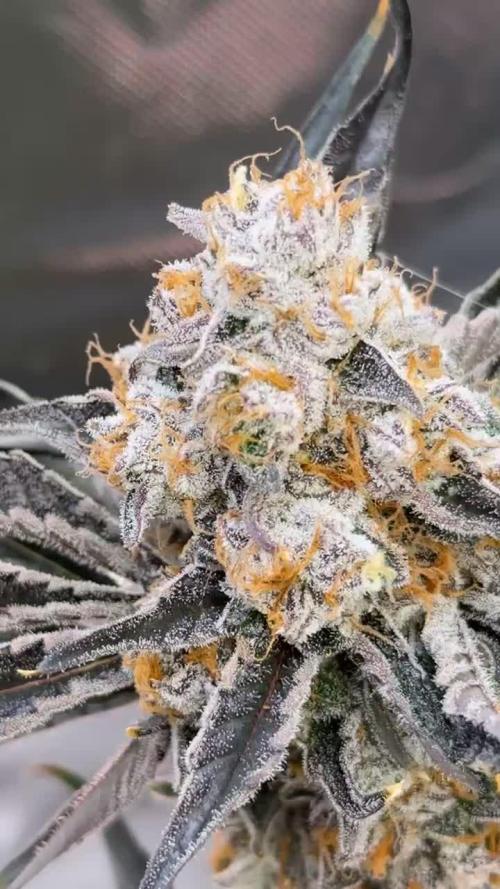
Processed 2 plants and took some colas off one of the remaining plants make sure my washing volume is consistent. Holy smokes some amazing rosin. Consistency and terps are loud and stinky. Very potent effects. This mfker will put you on ur ass. The fresh press rosin is just outta this world. This strain dumps trichromes. What a great experience. Half way done and I have nearly 80 grams of rosin. Insane! Business is boomin

Likes
12
Share

@BlaKX
Follow
Ai Gude Growmies Plan B mit EPN Dünger und nur Wasser Gießen!
Musste wieder entlauben und Triebe stuzen da mehr Blatt Masse bei er Hitze leider 2 mal dazu führte das es substrat fast komplett austrocknete da ich nicht mit gerechnet habe das sie 3-4 L an einem Tag verbraucht.
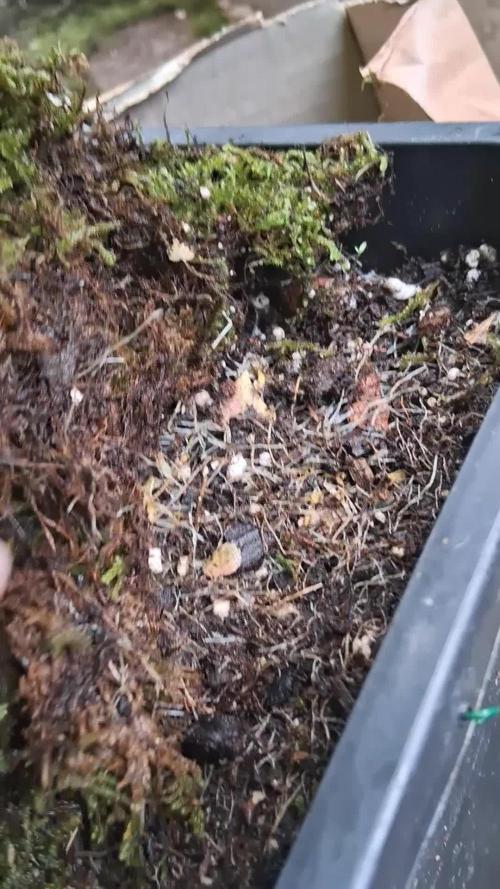
Habe seit dem 1 Tag outdoor die topf Oberfläche mit moos abgedeckt weil es 1. Das Gießwasser aufsaugt and gleichmäßig an die erde abgibt habe noch nie gesehen das die Wurzeln so dicht unter der Oberfläche wachsen!

Likes
8
Share

@India_Calcoen
Follow
27-08-2026
Somehow it’s hard for me to keep updating the progress of my cannabisplants. I wanted to do it weekly, but it just doesn’t happen. Our fruits and vegetables need to be harvested and our animals want a lot of attention too! I’m so happy growing with Biotabs, I hardly have to do anything and if I don’t have time, my plants are growing anyway.
In week 16 (first signs of pre-flowering) all the plants got watered with 5 litres of water with 20 ml of Bio PK 5-8 and in week 20 again, 20 ml of Bio PK 5-8 diluted in 5 litres of water. This is the third time I had to water the plants manually. I just love this way of growing. Perfect for someone with a chronic illness.
Flowering started one month earlier than last year. I’m so happy, maybe these Early Versions will finish in time, before the autumn rains are coming.
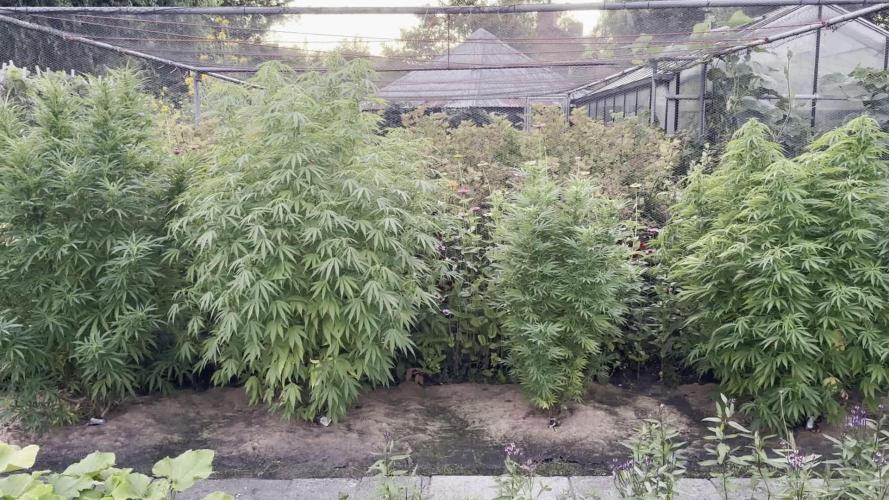
Appalachian Kush has overcome all her difficulties. She is a nice, green, vigorous plant! She is the smallest one, but she's absolutely healthy.
All plants have a nice green colour. I still need to ‘shave the legs’ and cut some branches and leaves away at the inside of the plant. Especially now when it rains sometimes I want them to dry quickly. I already removed two baskets of leaves and small branches from NL x Big Bud and Burger Kush.
GMO Fast isn’t flowering yet. She is only showing a few pre-flower hairs. I think she won’t make it in time… GMO Fast also had some issues during a summer storm with heavy winds and rain. One of her main branches came down. It was still attached to the centre of the plant, but it began to rot and I had to cut it out. I lost 25% of this plant. It’s my own fault. She is over 2,5 metres now and her height makes her susceptible for wind. It makes me think about securing all my plants with long bamboo-poles or sticks. If the flowers start growing, all those branches will get heavy eventually. Maybe it’s time to prioritize the cannabisplants at this moment…

Likes
6
Share


@Jakep721
Follow
Began flush
Canna boost is only additive till harvest
Punch Berry will be chopped within week
Tagalongz within next 2 weeks


Likes
4
Share


@Jakevns
Follow
This week brought a mix of progress and a little drama. On Day 30, the Do-Si-Dos Auto was top-dressed with worm castings, Stonington Plant Food, and fish bone meal, then watered with a Big Bud nutrient solution (2 ml/L). She responded well and showed continued healthy growth.
On Day 32, a surprising discovery: the main stem had snapped during earlier LST without being noticed, effectively topping the plant. The damage was clean and the plant adjusted quickly, redirecting growth to surrounding branches. LST ties were released temporarily to reduce stress, and leaves were tucked to expose new growth. Light LST resumed later in the week to maintain an even canopy.
Humidity ranged from 53–65% and temps hovered between 75–81°F. Lighting was gradually increased to nearly 75% over the course of the week, with the light height raised to 21" above the canopy after redesigning the desk setup. The plant was placed onto a new auto-watering base, raising the pot height and improving drainage and airflow.
No Cal-Mag was applied this week, but a Cal-Mag watering is planned for early Week 6.

Likes
42
Share


@MadeInGermany
Follow
Flowering day 63
since time change
to 12/12 h.
Hey everyone 😀.
Both phenotypes continue to develop very nicely :-).
The buds begin to ripen and smell very tasty 😍.
The trichomes are 70% milky, 15% amber and 15% clear.
As soon as the next 7-12 days are 70% milky and 30% amber, I will harvest.
That's why I start flushing tomorrow 👍.
It was watered twice this week with 1.2 l per watering per plant.
The tent was cleaned and everything checked for health 👍.
We'll see you again next week :-)
Until then, I wish you and your families a Merry Christmas 👍😀🙏🏻.
Stay healthy and let it grow 🍀
You can buy this Strain at :
https://sweetseeds.es/de/cream-caramel/
Type:
Cream Caramel
☝️🏼
Genetics:
Blue Black
x
Maple Leaf Indica
x
White Rhino
👍
Vega lamp:
2 x Todogrow Led
Quantum Board 100 W
💡
Bloom Lamp :
2 x Todogrow Led
Cxb 3590 COB 3500 K 205W
💡💡☝️🏼
Soil :
Canna Coco Professional +
☝️🏼
Fertilizer:
Green House Powder Feeding
☝️🏼🌱
Water:
Osmosis water mixed with normal water (24 hours stale that the chlorine evaporates) to 0.2 EC. Add Cal / Mag to 0.4 Ec Ph with Organic Ph - to 5.5 - 5.8 .

Processing
Likes
43
Share


@Jack_Greenstalk
Follow
added trellis netting this week to start SCROG. two layers close to eachother so I don't have to wait for entire square of growth to tuck under higher growth to keep flat even canopy. also minimizes my need for zip tie and garden ties needinf adjustment. I'm happy with veg growth thus far, and once the screen fills up with more green in a week or two these two ladies will both be ready to flip to flower. waiting on lower nodes to develop a bit more and get best use I can from a big(ish) 315 w LEC light.
the girls are getting foliar every 3 or 4 days. using heavy 16 foliar only at the moment but will follow their foliar mix as grow progresses.
smell has gotten much heavier, especially in nemo, the more blueberry pheno of the two, looking at the fan leafs I think V is more haze pheno with super thin sativa leaf structure.

Likes
37
Share


@masterofsmeagol
Follow
8/19 Rained again last night. No damage but medium is drenched. The 9lb kush I've been struggling with seems to be improving. I spent a lot of time on her yesterday and at least an hour this morning defoliating and pruning her. New growth and flowers look promising. I'm cautiously optimistic. I defoliated what needed it. I needcto qpplyvorganocide again. I can see random signs of septoria leaf spot. I really have been off my fame lately. I'm back on it now. This week the garden will be rearranged and I'll pull that big GDP back and better support the blueberry for flower. That NYCSA is a beast. It's resilient as all hell and just continues getting bigger and fuller. Despite pr9blems in the garden this girl seems absolutely fine. At least I don't have that defeated feeling anymore. I've got flowers on a few different plants. I'll try to get a couple pictures. I may take rapacaps advice and add a cheap plastic roof for later flower. I'm not sure if the explosive flower growth is due to the liquid kool bloom but I think I'm going to switch back to tiger bloom as it works better with the other nutes. I'll jeep this updated but I've got work to do.
8/20 Well it Rained again last night. This is getting discouraging. Now my other 9lb kush has the bottom branch all droopy like there's a borer or something. Realistically with the temp swings and the weather I think it's a firm of root rot or pythiym damage which isn't good. I posted pictures of the stalks and would be grateful if anyone has any advice. I'm go8ng back down to look again for a borer hole but i didn't see one. What it looks like to me is that the petroleum jelly I put on the stalks (to battle ear wigs) seems to keep them moist or something inviting mold or fungus. I'm kind of at a loss. I don't really know where to go from here. I don't know if I should just replant the severely damaged plant away from the rest of the grow, bag it and get rid of it or leave it be and hope for the best. I certainly don't want anything spreading. I'm getting tigerbloom today as my plants still need to eat and I'm nervous about the liquid kool bloom. It's probably fine but still. I'll update after I put in more work and research more today. Any advice helps. UPDATE: No borer holes. The stalk looks fucking horrible. It's supposed to rain today. I'm going to give it one more day then I'll amputate that branch and get rid of the other plant if I don't see an improvement. Perhaps I'll plant it in the ground. Don't really know what to do. Family bar b que today so my options are limited.
8/21 FED TWO GALLONS TO THE GARDEN. ONLY USED .5TSP/GAL OF LIQUID KOOL BLOOM. Did not feed dieing plant. Back to super hot weather 80° at 9am. Did a lot of research last night. I also went to several commercial growers and asked advice. What I came up with was a fusarium infection of pythiym infection
(Crown rot). I looked at all my stalks and they all have bark and are darker where I applied the petroleum jelly. I'm also NEVER using DE again. It fucking ridiculous amounts of water. Everyone swears by it bit it's not going in my garden again. Since use I can just watch water sit right on the GD soil. I tried to get some examples of what I'm talking about with the stems. I amputated that lowest bottom branch I trained (which was huge). I didn't have time to dispose of the other plant before my wife's doctor's appointment. I'll update when I go back over. I'm sure this won't help and may hurt but I used Bee Safe 3 in 1 on the wound and around the stalks of the plants I saw discoloration on. I didn't touch the NYCSA even though I see some discoloration. I may just be seeing things. That plant I'd super healthy and I don't want to risk losing it. It doesn't seem to have the stem rot like the others. At least I'm not the only one having problems. I hears some pretty bad stories. Still. I'm heart broken. I'll keep this updated after I go back over. FUCK. I MAY just go back to indoor. UPDATE: Got back from the appointment and the rest of the plant was all droopy just like the other 9lb kush (and the branch amputated). I wondered about that because other branches looked worse. I got the totally dead 9lb kush out and found some root rot. AFTER wheeling the bag out I found earwigs and other insects where the bag had been. Awesome. I used h202 to try to wipe down anything that looked Fingal in the stem. It sucks because it seems like that liquid kool bloom pushed them over the edge into flower. Cotton balls where there was nothing. So that's both my 9lb kush plants and the largest plant of the year the GDP that have all bit the dust. If you grow cannabis you know how I'm feeling. I KEEP TRY8NGVTO UPLOAD THE MINUTE VIDEO I TOOK BUT I CLICK ON SOMETHING ELSE AND IT DISAPPEARS. WIFI SLOW. HAVE TO WAIT FOR 5G
8/22 What do I say? Fusarium? Pythium? Stem rot? I'm going to have to get a tent to do some indoor to get the medicine I need for me and my wife. I took the last 9lb kush out and disposed of it. Well it's still in the bag. I'm hoping maybe it might come out of it (beyond hope and far away from the others (but I'm going to toss it today). This blows so hard. Flowers are just starting to develop. I like the liquid kool bloom. It seems to make flowers explode when there was none before. At least on the plants I have left. Actually even the dieing ones started flowering. I'm really concerned considering that one plant (at least) has septoria and every plant has that petroleum jelly on it. Cautio to people that use that. It seems thats where the rot started or is. In spots I spread the petroleum jelly. Anyway my NYCSA has the smallest amount of "funky looking stuff on the stem" so I'm hoping it will make it. Cotton balls starting to appear. If I lose the whole fucking crop I'm gonna go ape shit. UPDATE: Spoke with a few others and did more research. I removed my braces on the bottom of all the plants. It looks like the pjelly and the brace allowed for some type of contaminate. Other growers think I'm being too bleak. They think things will turn out okay. They are more knowledgeable about cannabis than me but I'm with these particular plants everyday. They're probably right and my anxiety is just getting g to me. It's scary seeing a healthy plant completely die in such a short time. After removing the other 9lb kush I could easily see extreme rootbound roots still too the size of the 1 gallon they came in. The bag was PACKED FULL of tight roots so they definitely made it down. The plant however just fell over when I pushed it. I had roughed it up a big before. Anyway I'm praying to the cannabis gods to not take what I have left.
8/23 Fucking pouring again. This sucks. I've gotten loads of advice and made another friend on here. I forgot my phone so I couldn't take pictures this morning. My spirits are up a little seeing that others are at least attempting to help. I'm headed to the grow shop after a night of research to grab supplies to battle this. I'll update later. EDIT: I picked up plant doctor at the grow shop. It was 50% off and I couldn't find anything with trichodermia. However, I've heard good things about this plant doctor. It's systemic and can be used as a root drench and a foliar spray. BIGGEST selling point for me is that it SPECIFICALLY lists fusarium, grey mold. Pythiym crown rot, black mold and all kinds of other shit. The thing that sucks is it's raining and it's not supposed to stop for a few days. That's going to make application more difficult. Oh well. I think I may do a root drench on the one plant that has a wilted bottom branch. I'll keep this updated. Thank you everyone who reached out. Especially growing grannies and my commercial buddy who is always here for me. However he has no experience with this so I'm kinda on my own here. EDIT: I couldn't find trichodermia and I don't have time to wait around and order. I found plant doctor which literally lists it treats all the possibly pathogens my issue could be. Even has a section for medical Marijuana. I did a root drench on the plant up front in the middle AND I did a foliar spray. Might as well get the septoria too. It's systemic but it gets in faster through the leaves I guess. It started sprinkling and I want to test this stuff out before I go ham with it. I did give some to the to other plants bit left my best AND THE TWO SMALLER ONES alone for now. I'm not seeing those issues on the NYCSA and I don't want to risk damaging it. I chose tge root drench as it's raining and the instructions for fusarium WAS a root drench. Thank you all for your help. I will close out tge question once I know it's figured out. Wish me luck. DID A SHORT VIDEO BUT WIFI IS SUPER SLOW SO I NEED TO WAIT TO UPLOAD IT. Went back over. Finished foliar spraying the other two and left the NYCSA and two Littles alone. Hopefully this works. I did I short video. Who knows if it uploads. UPDATE: Went back over and finished foliar spraying. Took a bunch of pictures and did a video but it didn't upload. I'm hoping this will do it. Plants actually look good. And they're flowering nicely! It's too bad I had to do a foliar bug this us supposed to combat PM and septoria as well.
8/24 It Rained last night but hasn't Rained today yet. It's supposed to and uts overcast. I'm really considering putting a roof on my grow (like rapacap suggested) for flower to decrease mold chances. Plants looked happy. I saw no negative effects from the Plant Doctor. I even sprayed a branch of the NYCSA and the stem and a little around tge roots. I finally feel like I can take a breath. I've been working so hard and worrying about losing g everything. I may have been able to save that 9lbkush but I don't think bit was worth taking the chance. The sun is peaking out now. My buddy at the grow shop called and set a side general hydroponics armor si 0-0-4 silica supplement cause it was 90% off. I pad like a buck sixty lol. I'll incorporate that next feed or water. Whatever comes first but it will be good to get it in the regimen. I was worried plant doctor might hurt but the girls seemed to kike it and I went ham on the worst plant. I mixed according to medical Marijuana guidelines on the label
(Theres another label on the internet, it's not on this one, it's at the very bottom and just recommdations from commercial growers. I hope this stuff works. Things look better already though. That liquid kool bloom is the bees knees. That's making flowers pop up like crazy! I think I'll stick with it. I was going to use beastie bloom and cha ching later on (and still might) but I hate the lockout bullshit. I've done a bunch of videos but most don't get uploaded as i forget to upload when I leave and wifi is slow here. Anyway at least I've got a few good ones left and pleating the words of my commercial poll buddy, "barring anything catastrophic you should be fine. I know your anxiety gets the better of you sometimes." Couldn't be a truer statement. I'm still getting a tent and doing indoor though. I'm going to need to.
8/25 Did some slight defoliation. I think today I'm going to reorganize my grow space. Things are looking better though. Plants look healthier. Flower is on and they are going to beat hell. I'm glad I took a cutting from NY 9lb kush. I also took one from the NYCSA. THose are tge little ones. The 9lb kush is flowering pretty good. Too bad it's just on a 3 gal. The NYCSA us in a 10 gal grow bag though and is doing amazing. I still see septoria on the leaves. I'm sure I'll need to reapply plant doctor but thus far I'm impressed. Things LOOK better. I don't even remember the last time I watered. It Rained last night. Looks sunny today. I'm going to feed tomorrow. I want the soil to dry out though. We usually don't get consistent rain like this. It's a first for me. I'll update later if I get stuff done.still wondering if I should amputate that wilted branch or give it a bit. It's still attached right now. I'll get some sealant and do some more research.



Processing
Likes
2
Share


@PlantGod
Follow
This thing is insane!
Rapidly growing everyday. I need to keep it under control for another for about 30 more days before I can fit it in my other tent.

Likes
20
Share


@ohighoan
Follow
Now that I see how these girls turned out it was probably a blessing I had some herms to cut out because there would’ve been no room. Especially in the pc/ssh tent because Pcrit and Sundae Driver were looking to be the biggest plants before I found balls and cut them down. The humidity has been surprisingly high but we’ve had warmer, wet weather for this time of year. I’m not sure I would’ve been able to keep it down with a tent packed wall to wall. I’m just thankful for how everything has worked out. If I ever do two plants per earthbound again I’ll make sure to veg for less time. I’m hoping to give these girls another week but the weather once again is going to be warm and wet so I will probably need to cut them down


Likes
3
Share


@High_Class
Follow
I veg them for 10 weeks. The two on each end are Blue Dream, the back left is Purple Urkle, the back right is Grandaddy Purple, and the one up from in the middle is Wifi OG.
Likes
13
Share


Likes
9
Share


@GYOweed
Follow
To my haters: I love oxygen, so put a bag over your heads.
Temps are dippin.
They drink half gal a day!
Hooo wee mofos so this week i got too high and over corrected ph up and down a medium bap cytokinin spray basically did what i want stunt height but also kinda burned it 😅
The trichomes did go bonkers so i dunno. Seems kush mints bottom right doesnt wanna move fast.

Likes
22
Share


@DogDoctorOfficial
Follow
Week 9 Veg – White OG 🌿🔥 “The Topping Madness Begins”
Welcome back, fellow growers, to another wild chapter in the White OG road trip! 🚐💨 This week, it’s all about structure, training, and control—or should I say, complete madness? Because, my friends, I went full throttle with the toppings! Did I count them? No. Did I stop to think about it? Also no. I just let my instincts take over, snipping away like a sculptor carving a masterpiece! 🏆
My vision? A massive, wide, fierce bush—one that will command attention and demand respect in the grow tent! With each topping, the lower branches gain strength, new nodes emerge, and the canopy expands like an explosion of green energy.
💡 Why top so much?
• Forces the plant to spread wide instead of growing tall.
• Encourages equal light distribution to all sites.
• Increases potential flower sites for a bigger yield.
• Strengthens stems & structure to support those future fat buds!
This is plant architecture at its finest, and I’m here for it. 😎
Nutrients & Water – Keeping It Clean & Simple
I’m still riding the clean wave with Aptus Holland Clean Mineral Line, and it’s keeping this girl in top form. 💎🌊
Feed Schedule:
✅ Regulator – The silica magic keeping her strong, flexible, and stress-resistant.
✅ RO Water Conditioner – Pure hydration, setting the perfect stage for nutrient absorption.
✅ All-in-One Liquid – The full package, giving her everything she needs in one smooth delivery.
📊 Readings:
📏 pH: 6.03 (Let’s call it 6.0, perfection in balance)
⚡ EC: 1.12 (Precision feeding, steady and strong)
This plant is drinking like a beast now, and I love watching her transformation! Her color is deepening, the growth is picking up speed, and she’s responding to the training better than expected.
⸻
💡 Grow Conditions – The Perfect Playground
Under the FOG LED, every leaf is catching that perfect spectrum of light, while the TrolMaster keeps everything dialed in. The environment remains stable, and this girl is flourishing.
🔹 Temperature & RH: Same steady balance, keeping the plant happy & stress-free.
🔹 Airflow: Increasing to keep her breathing fresh & growing strong.
🔹 Defoliation: Light trims to expose lower growth & keep airflow optimal.
⸻
📢 A Big Shoutout to the Whole Squad
None of this would be possible without the dream team behind the scenes! 🙌 Much love to:
🔥 Seedsman Seeds – For this legendary strain that just keeps impressing me.
🔥 Aptus Holland – Keeping her nutritionally dialed in and thriving.
🔥 TrolMaster & Future of Grow LED – Precision control & lighting for the ultimate environment.
🔥 PRO-MIX Soil – The living foundation fueling these roots!
🔥 Cannakan, Grow Diaries & The Community – For all the love, support & passion we share.
And of course… huge respect to YOU, whether you’re here to learn, cheer, hate, or just be curious—this space is for everyone! 🎤🔥
⸻
📣 Join the Journey! 🚀
This week, I’m launching something new & exciting over on Instagram, and I want all of you to be part of it! 🎥💚 So hit me up, let’s connect, and keep pushing the plant love movement forward!
💬 How do you train your plants? Topping, LST, super cropping? Let’s talk plant training styles in the comments! 👇💬
Until next time, grow strong, grow happy, and keep the passion alive! 🌱💨🔥
#GrowDiaries #WhiteOG #ToppingMadness #AptusHolland #Mainlining #PlantTraining #GrowersLove #SeedsmanSeeds
As always, this is shared for educational purposes, aiming to spread understanding and appreciation for this plant.Let’s celebrate it responsibly and continue to learn and grow together!
💚Growers Love 💚 🌿
DISCOUNT CODE - SeedsmanSeeds - DOGDOCTOR 10% off
As always thank you all for stopping by, for the love and for it all , this journey of mine wold just not be the same without you guys, the love and support is very much appreciated and i fell honored and so joyful with you all in my life 🙏
With true love comes happiness 💚🙏 Always believe in your self and always do things expecting nothing and with an open heart , be a giver and the universe will give back to you in ways you could not even imagine so 💚
Friendly reminder all you see here is pure research and for educational purposes only
💚Growers Love To you All and remember to keep that smile big and alive 💚
Likes
144
Share


@TOTEM
Follow
Neem oil + B-52 sprayed on leaves last week made them curl down a bit. But she’s feeling good. I think some N is needed (some leaves are about to turn yellow). It’s definitely time to start with NPK nutes!
Day 18 update: changed reservoir solution (removed the one with Voodoo Juice, Tarantula, Piranha and Rhino Skin) and added the first NPK nutes. 1ml/L of Connoisseur A+B didn’t trigger the PH Perfect formula in the solution: it decreased the PH a little, but not totally. I had to fix with some PH- from General Hydroponics. With a starting PPM of 130 (tap water), actual PPM in the reservoir is 547. Will see how runoff one changes over next days.
Day 19 update: on day 18 I noticed a burned leaf. Today I got a couple more, which means that some overfeeding’s going on. I immediately switched back to tap water with PH 5.8. I don’t know if that’s related to foliar solution of B-52 + Neem oil, or to nutes I gave her for one week (fungi and bacteria + silica). What I understood here is that Silver Haze doesn’t like nutes too much. Will be giving half dosage and not more in the future!
Day 21 update: I had some days with just tap water and the baby seems healthier now. Since runoff PPM was 137, I added NPK nutes + B-52 + Voodoo Juice + Rhino Skin back, with dosage of 1/6 of the usual 2ml/L: 21L of reservoir water + a few more liters for eventual evaporation + 7ml of each product instead of 42ml each. New PPM in the reservoir is 234.
Likes
1
Share

@Dabking
Follow
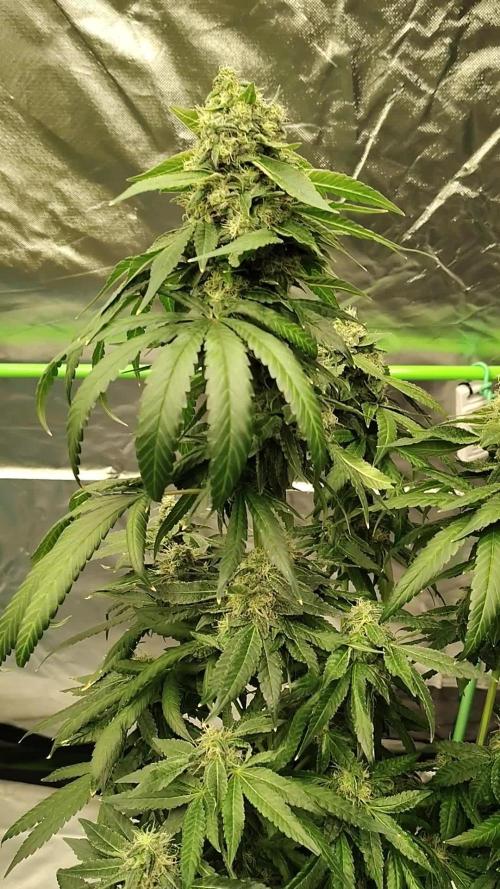
Some more light defoliation, and propped her up as the buds are VERY dense and she started leaning over.