









@GeminiCQC
Follow
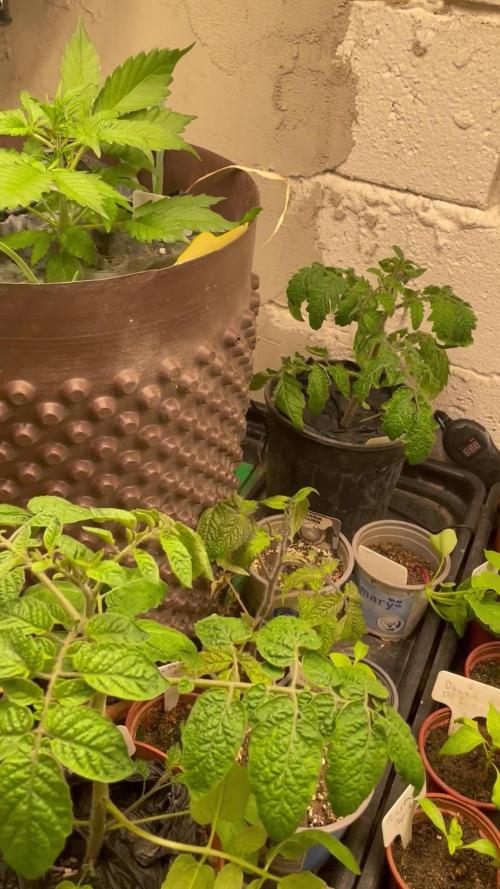
ABxRKO is about 42.5" tall, and has been top dressed with about 3tsp of grow dots to give it a phosphorus boost in flower
HBSS is about 26.5" tall and has been top dressed with about 2tsp grow dots as I believe it is fighting a phosphorus deficiency. She is giving all the smells, a bright red starburst like fruity smell with a stark citrus note.




@Ultraviolet
Follow
What's in the soil? What's not in the soil would be an easier question to answer. 16-18 DLI @ the minute. +++ as she grows.
Probably not recommended, but to get to where it needs to be, I need to start now.
Vegetative @1400ppm 0.8–1.2 kPa 80–86°F (26.7–30°C) 65–75%, LST Day 10, Fim'd Day 11
CEC (Cation Exchange Capacity):
This is a measure of a soil's ability to hold and exchange positively charged nutrients, like calcium, magnesium, and potassium. Soils with high CEC (more clay and organic matter) have more negative charges that attract and hold these essential nutrients, preventing them from leaching away.
Biochar is highly efficient at increasing cation exchange capacity (CEC) compared to many other amendments. Biochar's high CEC potential stems from its negatively charged functional groups, and studies show it can increase CEC by over 90%. Amendments like compost also increase CEC but are often more prone to rapid biodegradation, which can make biochar's effect more long-lasting. biochar acts as a long-lasting Cation Exchange Capacity (CEC) enhancer because its porous, carbon-rich structure provides sites for nutrients to bind to, effectively improving nutrient retention in soil without relying on the short-term benefits of fresh organic matter like compost or manure. Biochar's stability means these benefits last much longer than those from traditional organic amendments, making it a sustainable way to improve soil fertility, water retention, and structure over time. Needs to be charged first, similar to Coco, or it will immobilize cations, but at a much higher ratio.
a high cation exchange capacity (CEC) results in a high buffer protection, meaning the soil can better resist changes in pH and nutrient availability. This is because a high CEC soil has more negatively charged sites to hold onto essential positively charged nutrients, like calcium and magnesium, and to buffer against acid ions, such as hydrogen.
EC (Electrical Conductivity):
This measures the amount of soluble salts in the soil. High EC levels indicate a high concentration of dissolved salts and can be a sign of potential salinity issues that can harm plants.
The stored cations associated with a medium's cation exchange capacity (CEC) do not directly contribute to a real-time electrical conductivity (EC) reading. A real-time EC measurement reflects only the concentration of free, dissolved salt ions in the water solution within the medium.
98% of a plants nutrients comes directly from the water solution.
2% come directly from soil particles.
CEC is a mediums storage capacity for cations. These stored cations do not contribute to a mediums EC directly.
Electrical Conductivity (EC) does not measure salt ions adsorbed (stored) onto a Cation Exchange Capacity (CEC) site, as EC measures the conductivity of ions in solution within a soil or water sample, not those held on soil particles.
A medium releases stored cations to water by ion exchange, where a new, more desirable ion from the water solution temporarily displaces the stored cation from the medium's surface, a process also seen in plants absorbing nutrients via mass flow. For example, in water softeners, sodium ions are released from resin beads to bond with the medium's surface, displacing calcium and magnesium ions which then enter the water. This same principle applies when plants take up nutrients from the soil solution: the cations are released from the soil particles into the water in response to a concentration equilibrium, and then moved to the root surface via mass flow.
An example of ion exchange within the context of Cation Exchange Capacity (CEC) is a soil particle with a negative charge attracting and holding positively charged nutrient ions, like potassium (K+) or calcium (Ca2+), and then exchanging them for other positive ions present in the soil solution. For instance, a negatively charged clay particle in soil can hold a K+ ion and later release it to a plant's roots when a different cation, such as calcium (Ca2+), is abundant and replaces the potassium. This process of holding and swapping positively charged ions is fundamental to soil fertility, as it provides plants with essential nutrients.
Negative charges on soil particles: Soil particles, particularly clay and organic matter, have negatively charged surfaces due to their chemical structure.
Attraction of cations: These negative charges attract and hold positively charged ions, or cations, such as:
Potassium (K+)
Calcium (Ca2+)
Magnesium (Mg2+)
Sodium (Na+)
Ammonium (NH4+)
Plant roots excrete hydrogen ions (H+) through the action of proton pumps embedded in the root cell membranes, which use ATP (energy) to actively transport H+ ions from inside the root cell into the surrounding soil. This process lowers the pH of the soil, which helps to make certain mineral nutrients, such as iron, more available for uptake by the plant.
Mechanism of H+ Excretion
Proton Pumps: Root cells contain specialized proteins called proton pumps (H+-ATPases) in their cell membranes.
Active Transport: These proton pumps use energy from ATP to actively move H+ ions from the cytoplasm of the root cell into the soil, against their concentration gradient.
Role in pH Regulation: This active excretion of H+ is a major way plants regulate their internal cytoplasmic pH.
Nutrient Availability: The resulting decrease in soil pH makes certain essential mineral nutrients, like iron, more soluble and available for the root cells to absorb.
Ion Exchange: The H+ ions also displace positively charged mineral cations from the soil particles, making them available for uptake.
Iron Uptake: In response to iron deficiency stress, plants enhance H+ excretion and reductant release to lower the pH and convert Fe3+ to the more available form Fe2+. The altered pH can influence the activity and composition of beneficial microbes in the soil. The H+ gradient created by the proton pumps can also be used for other vital cell functions, such as ATP synthesis and the transport of other solutes. The hydrogen ions (H+) excreted during photosynthesis come from the splitting of water molecules. This splitting, called photolysis, occurs in Photosystem II to replace the electrons used in the light-dependent reactions. The released hydrogen ions are then pumped into the thylakoid lumen, creating a proton gradient that drives ATP synthesis.
Plants release hydrogen ions (H+) from their roots into the soil, a process that occurs in conjunction with nutrient uptake and photosynthesis. These H+ ions compete with mineral cations for the negatively charged sites on soil particles, a phenomenon known as cation exchange. By displacing beneficial mineral cations, the excreted H+ ions make these nutrients available for the plant to absorb, which can also lower the soil pH and indirectly affect its Cation Exchange Capacity (CEC) by altering the pool of exchangeable cations in the soil solution.
Plants use proton (H+) exudation, driven by the H+-ATPase enzyme, to release H+ ions into the soil, creating a more acidic rhizosphere, which enhances nutrient availability and influences nutrient cycling processes. This acidification mobilizes insoluble nutrients like iron (Fe) by breaking them down, while also facilitating the activity of beneficial microbes involved in the nutrient cycle. Therefore, H+ exudation is a critical plant strategy for nutrient acquisition and management, allowing plants to improve their access to essential elements from the soil.
A lack of water splitting during photosynthesis can affect iron uptake because the resulting energy imbalance disrupts the plant's ability to produce ATP and NADPH, which are crucial for overall photosynthetic energy conversion and can trigger a deficiency in iron homeostasis pathways. While photosynthesis uses hydrogen ions produced from water splitting for the Calvin cycle, not to create a hydrogen gas deficiency, the overall process is sensitive to nutrient availability, and iron is essential for chloroplast function.
In photosynthesis, water is split to provide electrons to replace those lost in Photosystem II, which is triggered by light absorption. These electrons then travel along a transport chain to generate ATP (energy currency) and NADPH (reducing power). Carbon Fixation: The generated ATP and NADPH are then used to convert carbon dioxide into carbohydrates in the Calvin cycle. Impaired water splitting (via water in or out) breaks the chain reaction of photosynthesis. This leads to an imbalance in ATP and NADPH levels, which disrupts the Calvin cycle and overall energy production in the plant. Plants require a sufficient supply of essential mineral elements like iron for photosynthesis. Iron is vital for chlorophyll formation and plays a crucial role in electron transport within the chloroplasts. The complex relationship between nutrient status and photosynthesis is evident when iron deficiency can be reverted by depleting other micronutrients like manganese. This highlights how nutrient homeostasis influences photosynthetic function. A lack of adequate energy and reducing power from photosynthesis, which is directly linked to water splitting, can trigger complex adaptive responses in the plant's iron uptake and distribution systems.
Plants possess receptors called transceptors that can directly detect specific nutrient concentrations in the soil or within the plant's tissues. These receptors trigger signaling pathways, sometimes involving calcium influx or changes in protein complex activity, that then influence nutrient uptake by the roots. Plants use this information to make long-term adjustments, such as Increasing root biomass to explore more soil for nutrients. Modifying metabolic pathways to make better use of available resources. Adjusting the rate of nutrient transport into the roots. That's why I keep a high EC. Abundance resonates Abundance.


@I_Identify_As_A_Dan
Follow
Week 8 for Space Panda by Atlasseed,
Unfortunately pheno 1 was a bit mishandled and 1 of her mains was broken 😥 from 4 down to 3. Still going to keep her and continue main-lining her she will just end up with 12or15 mains instead of 16.
Other than that they both seem fairly happy, growth speed isn't too bad either. Think this strain will absolutely explode when shes transplanted into 25L pot from her insane root production.


shorts_status_processing


@OrganicAlphapak420
Follow
Here she is ! DAWG DAZE at Day 78/ Week 11 from seed. Standing strong at 22 inches tall from top of soil. Using only 2x 100w closet case LED @spectrum_king_led kept at 10 inches from tops. She's grown in a 3 gallon smart pot @smartpots with 2 1/2lb kind soil and filled rest with cocoloco bush doctor soil and fed only tap water every 2 days as needed..kept the daily temps between (day) 80°-65° (night ) and humidity between 30%-45%. My preference. ..did her final minor lst training to get them left side colas in line. She fattening up real good now and her aroma is a strong sweet lemon pine . Great to enjoy everytime I walk in. Shes reaching her final weeks of flowering now. Maybe 2 more solid weeks . Looking forward to it. Will update next week on her organic growth. Enjoy.


@Nitrous
Follow
What a difference a week can make!
This week, the plants have been improving day after day. At the end of Week 6 and going into this one, I continued feeding with:
-Biobizz Bio-Grow (1ml/L)
-Root-Juice (2ml/L)
-Bio-Heaven (2ml/L)
-Alg-A-Mic (2ml/L)
They’ve definitely started to perk back up and are growing much better again.
I’ve also been doing LST every day, just minor adjustments to keep the canopy nice and flat. The branches bounce back quickly and orient themselves toward the light with no issue.
Speaking of the light — I realized it had been too close for a while (only around 30 cm…), and I was seeing signs of light stress and tip burns. So I raised the Spider Farmer SF2000 EVO to 50 cm and kept it at 80% power, which gives me around 510 PPFD according to the Photone app. Since that change, the leaves have returned to a healthy green and overall posture has improved even more.
Big thanks to all the growers who helped out — your tips have been super helpful and honestly saved this grow. I’ll keep things stable now, as the plants finally seem to be back on the right track!


@GuerillaGorilla
Follow
2 october
What more can I say
Busy with harvest, last minute changes relocating stuff. Pfff
She has some time left. Some sunny weather once again. She is doing well.
I hope she holds on for another 3-4 weeks. My schedule is full. Sexbud is clming. The guerilla grow is coming to an end. Shit got hot..at last
Girls need it to finish😛


@Nutrient_gro
Follow
Just been adding water when dry. Adding some pure worm castings top dresses. Will be adding Gaia green all purpose in a week or 2 when needed.


@DeepRootsGrowTrees
Follow
COLOMBIAN JACK BY KANNABIA
Week #8 Overall
Week #8 Veg
This week she recovered from being topped and being pruned she's going great it's also crazy hot right now and she's dealing with the heat she's got some great genetics!! Stay Growing!!


@Monks_Garden
Follow
It down half the closet sherbet autos half left got about 2-3 weeks on them. Any questions feel free to ask n comment 🤙



@gammacrowns
Follow
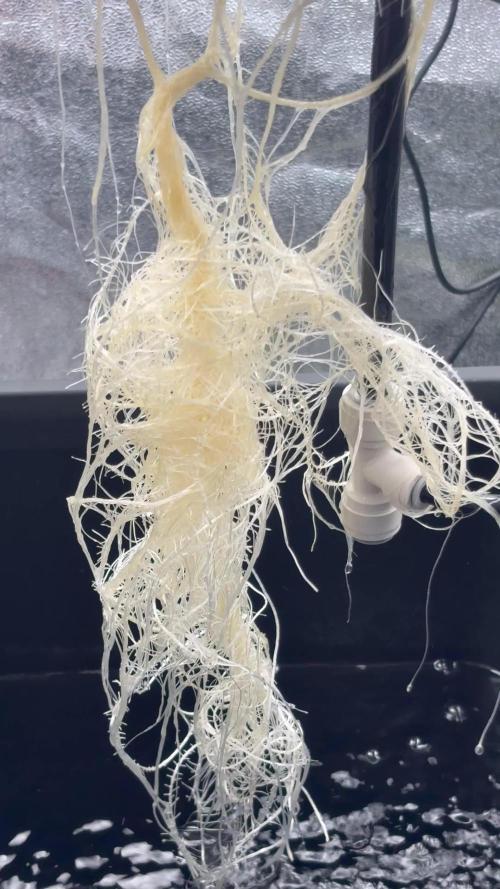
Fixed the splashing issue from the top-feed DWC drip system. Also cleaned up the lower suckers and weak damaged branches.


@Minniesturps
Follow
This bad girl just looks like iv dipped her in sugar , been feeding her 2.5l every 2nd to 3rd day depending of soil moisture , she is as happy as can be im super pumped for this one shes starting to smell real pungent and sticky and we still have awhile to go , herbies again with the goods , these were free seeds i won amx i am not disapointed , the other is only purple cause she got put out side for 3 weeks as i was waiting on my new tent


@SamDo
Follow
Semaine 2 – Croissance Mother Gorilla
On continue sur une bonne lancée avec cette deuxième semaine de croissance ! La plante est bien vigoureuse, elle a clairement pris du volume depuis la semaine dernière. J’estime qu’elle a quasiment doublé de taille, on est maintenant aux alentours de 15-16 cm. C’est un bon signe, elle se plaît dans son environnement et ça se voit aussi au niveau des racines : elles ont bien évolué en quelques jours, bien blanches et en pleine forme.
Côté constantes, on reste sur 18h de lumière par jour. La température oscille entre 22-23°C en journée et descend à 18°C la nuit, donc l’amplitude reste raisonnable. Niveau pH, il a un peu bougé et est monté à 6, mais rien d’inquiétant. Je vais surveiller s’il continue de grimper, et si besoin, je le redescendrai à 5,8.
Pour l’humidité, j’ai baissé légèrement à 70 %, et je prévois de continuer dans cette direction la semaine prochaine pour descendre entre 60 et 65 %. L’objectif est de garder un VPD entre 0,4 et 0,8 max, histoire de rester dans une bonne fourchette pour la croissance.
Aucune modification sur la plante pour l’instant : je ne l’ai pas encore topée, je préfère lui laisser encore une semaine d’acclimatation avant de commencer le travail de structure. Même chose pour la solution nutritive, je suis toujours sur la même que la semaine dernière. Pour l’instant, pas de signe de carence ou de besoin particulier, donc je continue comme ça.
En résumé, tout roule ! La plante est en bonne santé, ses feuilles sont bien larges, et son système racinaire est top. On va continuer sur cette lancée et voir comment elle évolue la semaine prochaine !
🇺🇸Week 2🇺🇸 – Mother Gorilla Growth
We’re still on track with this second week of growth! The plant is looking strong and has clearly bulked up since last week. I’d say it has almost doubled in size, now standing around 15-16 cm. That’s a great sign—it’s thriving in its environment, and you can see it in the roots too. They’ve developed really well over the past few days, nice and white, just the way we want them.
As for the conditions, we’re sticking to 18 hours of light per day. Temperature stays between 22-23°C during the day and drops to 18°C at night, which is a good range. The pH has fluctuated a bit, sitting at 6 now, but nothing concerning. I’ll keep an eye on it—if it keeps rising, I’ll adjust it back down to 5.8.
Humidity has been slightly lowered to 70%, and I plan to keep decreasing it next week to around 60-65%. My goal is to maintain a VPD between 0.4 and 0.8 max to keep things ideal for growth.
No plant training yet—I haven’t topped it, as I want to give it another week to settle in before I start shaping it. Same goes for the nutrient solution—I’m still using the same mix from last week. The plant isn’t showing any deficiencies or issues, so I’m keeping things steady.
Overall, everything’s looking great! The plant is healthy, leaves are nice and wide, and the roots are thriving. Let’s keep this momentum going and see how things progress next week!
🤘😎🤘


@Ixnay
Follow
Cut down on day 110, after 30 hours of darkness.. Added ice blocks to the substrate over the last couple days and got some lovely red and purple notes from it...
Found one more spot of mould in a main cola, total loss of 40 grams of wet flower.
Not a huge problem seeing as I still have colas the size of my forearm.
Half wet trimmed on the large colas to reduce risk of mould, left less dense and smaller nugs with most leaves on to aid a slow dry.
Hung in as little light possible in ~19°c at ~55%RH with filtered air from outside and extract system, dehumidifier circulating air in the room. Air refresh rate is ~90 seconds.


@bioaccessory
Follow
Hello!
All plants have entered the active flowering phase (the left one is slightly behind), and have practically stopped in height. I like how the purple phenotype turned out, I will continue to monitor😎
Thank you for stopping by, and be healthy! 🙏
To be continued... 😶


@TheCupboardGrower
Follow
The heat is getting to her, all leaf foliage gone, the buds are browning, I'm keeping an eye on the trichomes all ok so far.
Big yeild 3 week 5, seams to be more bud sites, the main stem is higher than the reat but spread out so will c how she flowers.
