The Grow Awards 2026 🏆 








Likes
182
Share
@Sorsdetacachette
Follow
D92 - rien
D93 - rien
D94 - rien
D95 - rien
D96 - jour de récolte🤩
Beaucoup de travail aujourd’hui 💪
Plus de 13heures pour la manucure du gorille 🤪
Début du séchage pendant une dizaine de jours en essayant de maintenir l’humidité de la pièce à 50% , une température de 21 degrés, le tout dans le noir
Hâte de voir combien cette jolie plante va me donner ……..⚖️🔮


Likes
22
Share
@TechDCo
Follow
16/08/2024
Lights On!
Mid-day! Looking very colourfull!
17/08/2024
Lights On!
I think my 'plants' are turning gay as they mature! Being very colourfull!
Mid-day check: Took some photos of all the colours 😍 👌 📸
"Daydream; I feel asleep amongst the flowers for a couple of hours on such a beautiful day!" 🎶
18/08/2024
Lights On!
They're Sprouting new pistils!
Going to just judge harvest by what the trichcomes are saying because the buds are still growing! Might be able to push to week 10-
Night time before sleep check!
#Night time before sleep check video! video!
19/08/2024
Lights On!
All is swell!
I've inserted colour coding within all my diaries of/for prior events vier the title for predictions.
I planted On the 1st.
Pablo Pisasso X The Future X Monkey Slapz
The Future = Yellow/Green {Warning!)
Bubblegum GPP = Blue {Blue Lipz)
Monkey Slapz = Yellow {Yellow Fever) SlaPped with a diagnosis of proxy!
Red - Pablo Picasso = Red {Alert! Dangerous Art Show of Chemicals)
20/08/2024
Lights On! I can see some more colours coming through on Peyote Wifi CBD 2:1
Overall; the colours seem more vibrant this evening!
20/08/2024
Mid-day:
Early try cut; just over 1'ounce wet.
"Mind I have been smoking the leaves and the very very early buds underneath, I kept a few branches I could nibble at as I wait! Smoking leaves and very early buds, doesn't get you stoned in that way! But it's very spacey feeling with no buzz! Defdo gets rid of anxiety smoking the leaves alone! FHC is one of my best I've grown in euphoric-wise highs".
21/08/2024
Lights On!
PB is sprouting new pistils and still phattening up! I've dimmed light to 333watts21/08/2024
Lights On!
PB is sprouting new pistils and still phattening up! I've dimmed light to 333watts for the last two weeks; unless they ask and show they csn handle more! They need a rest to mature a little!
21/08/2024
Lights Off!
You can Zoom right into the trichcomes and see that they're all mostly cloudly and clear! 75%25% - I would like about 15-20% Amber
23/08/2024
Lights On!
23/08/2024
Some little FHC early nugs to try! Very colourfull!
23/08/2024
Little early nugs to try!


Processing
Likes
10
Share
@Stanp
Follow
This week starts with smelly Blue Cheese Automatic. It’s growing great. Week 9
The Fruit spirit is getting bushier and looks healthy. Week 10
3G is growing slowly but surely. Looks great! Week 6th

Processing
Likes
23
Share
@GrowGuy97
Follow
Frosty Frosty Frosty! To be a bunch of bag seeds I am beyond happy so far! Have not had very many problems, they have been great with LST and defoliation!
Processing
Likes
12
Share
@TrueNorth
Follow
-Strain: Purple Lemonade - Fast Buds
-Tent: 5x5 Gorilla Grow Tent
-Lights: Budget LED Grow Lights 2 x 250 Watt
LED Full Spec/Red Spec mixed boards
-Light Cycle: 18/6
-Soil: Fox Farm
-Air Circulation: AC Infinity Cloudline T4 Inline Duct Fan
WECLOME BACK GROWMIES! Week 8 here with our STRAWBERRY NUGGETS by MEPHISTO
January 14, 2020 (DAY 52) - Hey there growmies sorry for the one and only update this week, i got sick and just cant do it. i hope you all understand.

Likes
24
Share
@Mr_Cannuccia19
Follow
Ottimo raccolto, bei fiori sani buoni e sopratutto forti. Sono contento di avere da parte 2 semi nuovi da coltivare!! La pianta da subito è cresciuta in altezza mantenendo lo spirito sativo


Likes
13
Share
@Rangaku
Follow
Changed to 12-12 a week ago and she’s into the stretch fully , I’ll need to defol and remove some lower branches and tie it down some more next week . Very stable genetics handling hot temps in her stride . You can already taste the orange when chewing on the leaves , can’t wait for this one to be getting smoked

Likes
19
Share
@Luv2Grow
Follow
Day 43 - Starting week 7 and gave her the first feed of the week. She’s still stretching but she’s starting to fill in quite a bit too. Starting to have a pineappley scent to her as well.
Day 44 - For the most part, all looks pretty good. I did spot a couple leaves that look like there may be some sort of deficiency but trying to research and figure it out. It’s only on a couple leaves so not really spreading. Checked for any sort of bugs and nothing. Hopefully I can get it figured out and turned around.
Day 45 - Gave her a full feeding of straight pH’d water and upped the cal-mag a little to see if maybe I have the start of a magnesium deficiency. Got advice from someone on a different site so we’ll see if this is corrected. She’s really starting to fill in more and more each day. Not a very strong smell coming from her right now but my fingers smell amazing, pineapple/citrus after doing some leaf tucking and I love it. Just for shits and giggles, I did a test of the runoff and measuring out at 6.7, just like what’s going into her so thinking that’s a good thing. Looking forward to the next and final few weeks.
Day 46 - All looking good I think! Upped the cal-mag and bit and noticed one more leaf that was off. Everything else is looking green and healthy and the buds seem to be filling in and starting to fatten up nicely.
Day 47 - Gave her the last feeding of the week and she starting to really fill in and fatten up. Starting to get pretty frosty and smelling wonderful!
Day 49 - Good lord she’s starting to really smell amazing, tropical citrus. Can not wait to chop but still got some time. Will start the week 8 feeding schedule tomorrow, letting her really dry out.
Processing
Likes
14
Share
@RealPuffDaddy
Follow
Last week of veg for lil Junebug. Ph water, no nutes this week to clean her roots of all the buildup. Flushed her yesterday and she’s in 18 dark hours to initiate the flip. Weekend feed will be week 1 bloom. She could easily veg and veg but we’re gonna make sure she’s got plenty of room to stretch and thrive within the heart of the HPS bulb. Appreciate the views and comments. Now the fun begins. Till next week.
Likes
17
Share
@scharpmeister
Follow
Not much to do at this point but sit and wait. Rocking and average ppfd of like 1000 at the moment and plants haven’t shown any signs of stress, even though some of the higher cola are only like 4 inches from the 300w led panel
Likes
55
Share
@BodyByVio
Follow
Just got done with trimming the 4x4 @greenhouseseedco Super Silver Haze / @blimburnseeds Silver Surfer Haze tent.
The final yield is exactly 1000g plus some (kind of a lot)that I smoke in the last 2 weeks 😃
Also got 6, gallon size ziploc bags filled with good quality trim for concentrate.
To be honest I was expecting a little more but keeping in mind that this grow I did not supplemented with bottled CO2 I think I’m good with the results.
Definitely I enjoyed a lot this grow and I’ve learned even more.

Likes
Comments
Share
@Thedibber
Follow
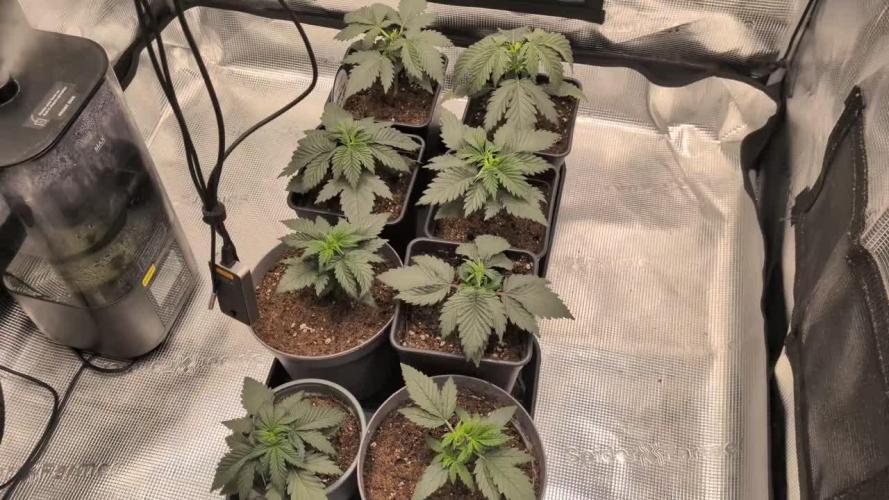
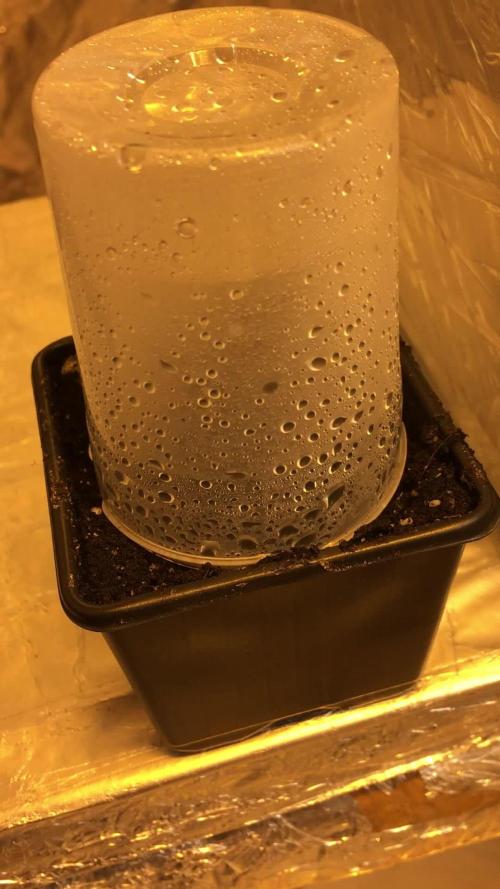
Its been 17days since planting all the seedlings and they are happy except 2 which took a beating yesterday when the humidifer ran out of water but 1 has recovered overnight im sure the other will be fine soon 🙏
3x Pyschoberry Cheese F2 are in the 3 round pots 👌
Likes
45
Share
@masterofsmeagol
Follow
9/3 Shook the plants off this morning and took a few pics and did a video. Let's see if it uploads. Plants are doing good. Toasted toffy is due for another plant doctor application tonight. It seems like I'm losing lots of leaves. Looking back on my other diaries I guess it's normal. BUT I could've had pest/pathogen problems then. I'm over thinking it. Toasted toffy only needs a few more weeks. It will definitely outvrun the disease. The nugs are super dense too. The plant in the 50 is loosing leaves faster than I'd like. It is also one of the furthest along. The big leaves that turn yellow look like it's a calcium/magnesium issue. The stalk and branches are all bright green and healthy looking. So are the flowers. It could be something below the soil. I couldve been overwatering but last time I waited until it drooped. It will be fine though. I'm happy with my results so far. Not my best or biggest year but I'm going to put in the work and Mae these plants produce the best quality cannabis that im able too. Also I think plant doctor may kill insects. K bicarb with dawn does too. I've found a few dead bugs like flies and pillars. Pillars actually seem to be gone. Not many moths either. Unless I see them I'm not going to treat them for it. This is that magical time where you get to watch the plant produce those beautiful flowers. Despite some small problems I'm very grateful for what I have. I've worked hard for it.
9/4 Watered everything but the sherb pie which was still heavy with leaves yellowing. It's tied for the furthest behind in flower with the seed in the 10. I treated the toasted toffy with 1/4 gallon (4tsp/gallon) of plant doctor. I avoided flowers as much as possible and tried to just get a few leaves. I used the rest on the soil. I just wanted it to absorb a little faster. That's why I sprayed the foliage. It's not 4 days it's 14 days when tje plant doctor just leaves behind a bunch of potassium and phosphorus after it's done its job. Can't be used in a 14 day interval with copper and I think that's what treats septoria best. I dontvknow if I can use that in flower. Doesn't really matter. Things are looking good. Plant Doctor and the K bicarb seem to be doing there job effectively as long as i stick to the application times. I made a short video but didn't upload. I'll try again but I may have some medical emergencies that need to be dealt with. If not I should defoliate and tie down some event horizon branches. I thought about treating the other event horizon as well. I'm not positive it has septoria but it wouldn't hurt anything to be practice. It AT LEAST has a couple suspucuous spots. I smelled a skunk as soon as I got out of my car. It can't get in my grow but I might put out traps to catch it. We'll see how it goes. Video seems to be uploading. It's at 31% so I'll wait for it. I think I've got like four or five weeks on my toasted toffy and one event horizon and the one in the 50 that I THINK is red runtz. That's good that I'll have different plants to harvest at different times. It's seeds from here on out though. It was hard to find info on some of the strains I'm growing but they all have ONE thing in common. They are EXOTIC and they are at least MODERATELY DIFFICULT to grow. AT LEAST lol. Last year I picked the right seefs and strains and it greatly helped. Still, if these are difficult strains to grow, then I'm doing a good job.
EDIT: I WAS STONED BUT IM PRETTY SURE I TREATED THE PLANT IN THE 50 WITH PLANT DOCTOR. DIDNT SPRAY BUDS. TRIED TO GET THE LEAVES THEN USED THE REST ON THE SOIL. I REMEMBER BECAUSE A STREAM ACCIDENTLY HIT A COUPLE LEAVES ON THE HUGE PLANT IN THE 10.
9/5 Sherb Pie was light and drooping. It's not to far in flower and still seemed moist yesterday with a little bit of weight. I watered it a gallon. I defoliated a little but I need to go through that plant. I have a bunch of plants that need a little work. The 50 gal seed is losing lots of leaves. I must not be feeding it enough, overwatering or maybe theres some sort of lock out. The plant looks nice and healthy. Leaves just turn yellow and die. Looked like a calcium or magnesium deficiency but i saw a septoria spot. I wouldn't think I've over feed or locked out using the small amounts of nutes I've used. It will be time to feed again soon. It's in the middle of flowering and still has leaves. I'm hoping things work out. I just have an anxiety disorder and worry too much. I'm GOING To have a great harve! I just need to keep moving forward and putting in the work.
9/6 What a fucking shitty morning. I did research on how to keep skunks out of your garden. Because I smelled it and the neighbors shot a few. Dad put traps out and it caught one. It wasn't a no spray trap so I approached it with him. Both had tarps. I kept telling him to throw it while I was distracting it bur he got a cramp and only got it over half. The half away from my garden. It's pretty far and down in a field but still. We had talked all morning about how to release it. I offered to drive their dog to take it for a walk so his alcoholic girlfriend wouldn't spiteful put the dog on its run. It wouldn't be sprayed but I made it out like it would ruin my plants. Picked dad up and got him to the bathroom. In that 30 seconds the stupid bitch grabbed the dog and brought it outside despite me YELLING "Can't you wait 5 minutes!? We've been dealing with this all morning. I heard fuck you in my head and she did it anyway. Dog ran at the skunk barking and it sprayed. Not a lot but I was fucking pissed. She's a full blown alcoholic and doesn't like me around early or the fact that my old man's 80 and house is mine. Anyway I got back and there was NO SKUNK SMELL. AT ALL! I WATERED EVERYTHING BUT SHERB PIE AND FED EVERYTHING BUT SHERB PIE. ILL FEED AND WATER THAT TOMORROW. WATERED A GALLON WITH A QUART OF FEED. Researched my strains found out they were all "difficult" to grow. One year ago to the Day I cut my first tenth planet. I got a couple close to a few weeks but the others will be later. If I can pull this off though I'll have some crazy quality! Grateful for what I have that's for sure! I doubled beastie bloom this time. We'll see how it goes.nothings uploading. I did some vids a pictures but I'll have to upload today.
9/7 I think it rained last night. I forgot to water and feed the sherb pie but I'll do it when I get back. I shook off the plants the best I could. I need to get the leaf blower out now and put it to use. Buds are swelling like crazy. GMOs are very tight flowers. Same with the event horizon. Rock hard nugs. With the gmo's I'm not worried. The were monster cropped so they have enough leaves even if some do die off. The toasted toffy only has like four weeks left. Same with the event horizon. The plant in the ten is the furthest behind but it's extremely healthy. I removed some leaves from the bottom and large fan leaves. The plant in the 50 I hope finishes before it loses all its leaves. I treated it with plant doctor and SOME people strip their plants but I don't. I'm grateful for what I've got. Won't be the biggest harvest but WHEN I make it to the finish line I will have some incredibly potent strains. I'm proud of myself to even get these to finish seeingvthe level of difficulty on cultivation. I'm trying to upload some stuff. We'll see.
9/8 Apparently it rained pretty hard last night. Took forever to go through and shake everything off and defoliate what needs it. Sherb pie is praying to the sky and almost totally purple. It's flowering so much more in the last couple days. Everything has. Even the one in the ten is stacking up! I defoliated most of what needed it and I was soaked. I noticed a branch on the middle gmo that was getting heavy and starting to break away from the trunk. It wad wobbly but I don't think there was a break un the Cambrian. I made a sling with rope (couldn't find zip ties) and I pulled it tight amd secured that branch to the tomato cage. GMO buds are hard as rocks. Everything is in overdrive. They liked that beastie bloom. I have cha ching but nothings ready for that yet I don't think. We'll the event horizon and toasted toffy might be I'll have to check. It's been beautiful today but not too hot. Lots of wind which is good. I'll upgrade supports as needed. Flowers are progressing at an amazing rate. Weather is supposed to be great the next few days. I'll keep this updated.
9/9 Had to shake the plants off. WATERED EVERYTHING BUT THE SHERB PIE WHICH WAS REALLY HEAVY. It's also lost a lot of leaves and the majority of leaves have turned purple. Toasted toffy and event horizon and red runts are pretty far into flower. I tried to take some pictures. Even the ten is blowing up! That looks like I'm going to switch to cha ching when flower gets further. Trichs are developing nicely on the ones further in flower. This year it's going to be quality over quantity. All these strains are ranked HARD to grow but have insane cannabinoid profiles and high THC %'s. So if I can keep it together for another month I'll be golden. Looking forward to it. This is the fun part. It's also the anxiety provoking part. I've learned a lot just since joining grow diaries.

Likes
2
Share
@Tried_and_Tested
Follow
In this dairy I will be growing two, Critical + photoperiod plants alongside 4 others (see other dairies) using the methods of Topping, Low Stress Training, ScrOG and slight defoliation under the screen. I am growing in a 4x4 area and will be using a 250W MH, 400W & 600W HPS over the grow period. The other 4 plants will be grown using the same technique and environment, I am just splitting the dairies into separate strains as recommended by GrowDairies.
The seeds were placed directly into solo cups that were pre-soaked with plan, pH'd water overnight beforehand. After three days all seedlings had emerged, and I placed them in the shadow of my other plants currently being grown for three more days. After this I transplanted them directly into the 11L pots that they will be in until harvest (see photos).
I will be growing the plants until the are roughly 6 weeks old or 1m tall, whichever comes first. I will be bending them and keeping the branches low to build an even canopy, so this time period could change. All of the seedlings are being grown in BioBizz all-mix soil, so I will not be using nutrients either for the first 1-2 weeks.
Any questions or recommendations, please let me know! Thanks :)

Processing
Likes
28
Share
@Bud_E_grows
Follow
Well according to grow site dark devil should be approaching her finish. As you can see we still have tons of new growth and pistils popping up. Feeding her week 10 nutrients at 70% strength. Upped water to 1.25 gals. Fed with ph of 6.2 runoff was 6.4 highs and lows high 82F w/47% RH low 68F w/40% RH.
Just trucking right along. Tent is almost full to capacity having to give away the photoperiod. Taken a couple tester clones though. The main top that was HST has grown back to height of other tops now. Really learning a lot and wondering a lot more with this devilish little mama!
Likes
Comments
Share
