


Likes
Comments
Share


@Professor_Daank
Follow
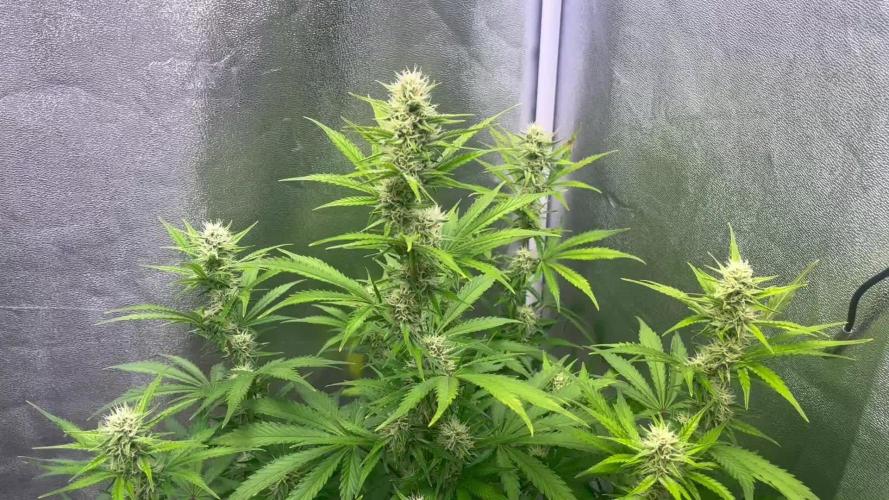
Cruise control baby!
Nothing wrong. No issues. All growing extremely well. Keeping to my EC and my pH and all is well. Let's see what the next week is going to give us.


Processing
Likes
67
Share


@Ageddd
Follow
Whats up GD !!!
------------- GROWTH-------------
I have been bending the plants like each 3 days, and topped again.
------------- IRRIGATION-------------
1l per plant, watering each 2 days.
1 of 2 irrigations with nutes, and the other with water.
------------- NUTRIENTS-------------
Bio-Grow (2ml/l).
---------------------------------------
Good vibes !!
_06/05/2018_

Processing
Likes
70
Share


@CBD_Sweden
Follow
@MephistoGenetics,
Hi all the happy people here in GrowDiaries.
This is my second cultivation ever and it will be fun to try a bigger space than my closet grow.
First, I'm just going to say I'm done with the construction of my new growroom.
The room is 2.14 meters by 1.7 meters and has a ceiling height of 2 meters.
It provides a floor area of 3.6 square meters.
I use a 54 Watt Lightwawe T5 for germination and 2 Pcs 400 Watt HPS lamps.
I have a channel fan that replaces the room air about 40 times an hour to get a comfortable environment in the room, the air enters a fresh air intake from the outside.
The air is purified through a carbon filter to then leave the room to the rest of the basement.
Then I use that heat to heat the rest of the basement.
I will use 10 pcs 15 liter Autopots to grow with and a 100 liter water tank that supplies the pots of water and nutrition.
I will grow completely organically in soil and will watercure my buds to get the best possible medicine for me.
But there are no cultivation rooms to be displayed here, so I continue with what is most important.
Today I have put my seeds in paper towel and hope the seeds have germinated within a few days.
I am very excited to see how the new growroom will work and how this Illuminauto 21 - Sour Crinkle will turn out.
Illuminauto 21 - Sour Crinkle (Grape Crinkle x Sour Crack)
Two of our fastest and frostiest varieties collide to make a sweet and sour delight!
Expect super frosty, compact nugs that won't be a toke for novices.
Destined to be a great strain for extraction work too!
Plant size - Small - Medium
Cycle time - 60-65 days from sprout
Indica/Sativa - 80/20
Frost level - Extra Ridiculous
https://www.mephistogenetics.com/product-page/illuminauto-21-sour-crinkle
.................................................................................................................................................................................................................................................................................................................................................
2017-08-21. Started to germinate the seed.
.....................................................................................................................................................................................................................................................................................................................................................
2017-08-23. Seed germinated and put in small pot in the humidity dome.
.........................................................................................................................................................................................................................................................................................................................................................
2017-08-27. Slow and steady she grows.
---------------------------------------------------------------------------------------------------------------------------------------------------------------------------------------
2017-08-28. Transplanted in 15 liter autopot. Check the roots on this girl
-----------------------------------------------------------------------------------------------------
2017-08-29. New movie of the girl.
-------------------------------------------------------------------------------------------------------------------------------------------------------------------------------------------------------------
2017-08-29.
Hello to you who read my diary, I just want to say that I am pleased that you have chosen to check in with me and in my diary.
I just want to say that I do this for myself and for a steady flow of my medicine.
Everything you read and see in my diary is 100% honest and I will never distort or beautify anything here.
I document my crops so that I can learn from my mistakes and also to look back at those different crops.
I try to update with pictures every day and with text if something special has happened in the garden.
This is my strainhunt for the best medicine and the beginning of my journey with cannabis and the cultivation of it.
-----------------------------------------------------------------------------------------------------------------------------------------------------------------------
2017-08-30. Cleaned the room this morning, just vacuuming and cleaning with chlorine solution. Im testing the fan to control temp and humidity, it works great.
Added some pics and a movie. Everything is looking great right now.
-------------------------------------------------------------------------------------------------------------------------------------------------------------------------------
2017-08-31. 3 new pics.
---------------------------------------------------------------------------------------------------
2017-09-01. New pics and a video from the grow room today.
------------------------------------------------------------------------
2017-09-02. New pic.
----------------------------------------------
2017-09-03. New video from this morning.
---------------------------------------------------------------------
2017-09-04. Week 2 starts now, new pics.
-----------------------------------------------------------------------------------------------------------------------------------------
2017-09-05. KL 08.00. Cleaned the room this morning, just vacuuming and cleaning with chlorine solution.
KL 12.00. The girl got 2 liters of water with nutes in it, added a video.
---------------------------------------------------------------------------------------------------------------------------
2017-09-06. KL 08.00. The girls woke up after their beauty sleep, the leaves are always a bit down after 6 h of darkness, but they will stretch now when the HPS lamp starts.
Everything looks good and I keep trying to tuck the leaves so they get the maximum amount of light where needed. Added pics and video.
--------------------------------------------------------------------------------------------------------------------------------------------------------
2017-09-07. Day 17 from sprouting. I have never tested PH in my grows, when growing organic in soil iv learned that it adapt PH by it self. But im curious by nature so i had to test.
Kl 10.00 Tested PH in the soil, it was 6.9 and tested my tap water and it was 6.8. Added video of the girl.
Kl 22.30. New pics.
------------------------------------------------------------------------------------------------------------------
2017-09-08 KL 08.00. Good morning, added new video.
2017-09-08. Kl 23.50. Gave every girl 3 liters of water and nutes, added new video.
------------------------------------------------------------------------------------
2017-09-09. Kl 21.00. Defoliated a lot and added pics.
-----------------------------------------------------------------
2017-09-10. Kl 08.00. Last day of week 2. New video.
2017-09-10. Kl 23.00. 3 new videos.


Likes
63
Share


@Wicked_Stix
Follow
Shes big
Shes beautiful
Shes a beast!
Shes my winner. The last plant standing of this run and she is getting flushed with ro water. I have taken late flower clones of this girl because it would be inhumane to let her die. I will reveg them if they root and dose one with silver to make a lot of beans. Beaming her with 720 watts of light her last week of life just because I can.
Ps. If she dont win diary of the month then its rigged🤣🤣
Likes
4
Share


@Growstopher
Follow
Fastbuds seeds
LSD-25 auto #2
Only using spring water for first week and spraying with foop mist every night.
Going to be using foop nutrients with Humboldts secret cal/mag and nectar for the gods ph up and down.
Here we go!

Likes
6
Share


@madlangs
Follow
Started with a slight magnesium deficiency so sprayed Epsom salts and will start to add calmag
Forbidden runtz is starting to look better and new grow is normal now. It’s a long way behind the other 4
Started training on day 14. On the og kush and gorilla zkittles. Chopped top two fan leaves off and moved the bottom two out of the way.
17.9.22 light 51cm . 50% strength Ppfd 267-306
19.9.22 pots weigh 8.8kg
21.9.22 pots weigh
Forbidden runtz 8.4kg
Gorilla zkittles 8.4kg
Og kush 8.7kg
21.9.22 turned light to 75% 51cm
Ppfd ends 430 & 400 middle 480
21.9.22 Gave all 1.5L water.
Bio tabs water
Sour stomper 1L half strength biobizz to give a little boost
Biobizz week 2. ec 1.4 ph6.5
23.9.22
Og kush both 11cm
Gorilla zkittles both 10cm
Forbidden runtz 7.5cm
Sour stomper 4.5cm
23.8.22
Og kush and gorilla zkittles all got there top two fan leaves cut of and bottom two tucked and sprayed overgrow
24.8.22
Spayed
500ml water
Transport 2ml
Alg a mic 1ml
Acti Vera 1ml
Epson salts 1ml
Small magnesium deficiency
Likes
13
Share


@High_Grade_Dadli
Follow
Seeds are coming in lovely (see nxt diary for growth) clip the branches that I had breed first gonna allow the main colar a few more days....can't wait to see what's it like.....it got scent n looks let's see what the thump is like 🤔

Processing
Likes
10
Share


@Reaper
Follow
day 15: flowers start to appear
day 16-17: temps go 24 celcius, i throw ice bottles in the res
day 25: insane stretch stops flowers fatten up, even crystals around the young budz.


Likes
11
Share

@GreenEldritchGardens
Follow
She seems with Potassium deficiency but the addition of more bio nutrients and the additional seems to have kicked in.
Also the cheese terpines have kicked in and I personally prefer WC only, but maybe that changes my mind later on.
Processing
Likes
11
Share


@Newbie5648
Follow
Day 57. Nutes increased for more growth hopefully.
Day 58 notice alot what looks like thc from leaves and hairs.
Day 59 to 63 see more orange hairs and trychomes. See videos
Average 200ml water everyday.
Likes
86
Share

@Ageddd
Follow
-------------------------
| BLUEBERRY HARVEST |
-------------------------
After two sunny days it is harvest time !!
- Finally, 16 days of flush -
At first thought, the trimming would be easier compared to my previous plants, but when removing more leaves, more buds appearing too hahaha so it took like 4 hours or more..It is not the most accuurate trimming but i had not much time that day, i removed all the leaves and branches after weighting it all..
Like i said on the last post, im harvesting having in mind my bud preferences (the later the better), weather, humidity and sunlight, so the first of the cloudy/rainy days she was chopped in the moring, attending the principle of thc regeneration at night..
Got to say that, i wasnt expecting such production (8 days until it was well dried), this plant started as the season saver because the Cheese started to flower in march, revegged etc.. and i have been rewarded with this BB, a true genetic portent !! If i could, i would keep her as mother forever ^^
The quality is awesome, she looks more like a WW talking about that coat of thc..
Flavour without proper cure, is deep earthy at first, transitioning to a fruity, sweet one, it is a pleasure to smoke, delicious sweet aftertaste..
Maybe, this is the last year with this awesome climate, because im planning to leave Spain..
Thank you for follow and check !!! I hope you liked the diary :)
Song of the week : Radiohead - Codex
Good Vibes GrowDiaries !!
----------------------------------------------------------------------------------------------------------------------------------------------
000000000000

Likes
43
Share


@Jack_Greenstalk
Follow
Increased the amount of nutrients in the feed this week and got a little bit of burn on V, Nemo handled it no problem! removed the yellow spotted fan leafs as part of general defoliation for this point in flower. Continuing to pluck and tuck, meaning removing extra fan leafs (plucking) and bending tallest colas back under the scrog (tuck). shooting to keep all budsights 18 to 22 inches from the light to prevent burn and allow healthy development. I can see where proper distance has been kept best development has occured.

Likes
5
Share


@Highclass
Follow
Allright, fatening and rosining up. TM 2 looks fucking amazing.
The plants started to show some minor issue, little burn dots appeared in a few leaves. I gues it can be some micronute deficiency, maybe Ca? Im doing an extra watering wit calmag and 7 ph.
Day 57: 800ml water + 2ml/l top candy + 1ml/calmag + 2ml/l atazyme (ph 7)
Day 59: 900 ml + 4ml/l biogrow + 3 ml/l biobloom + 1,3 ml/l bibloombastic
Day 61: 1L + 2ml /l calmag
Day 63: 1L + 2ml/l top candy + 2 ml/ atazyme


Processing
Likes
12
Share


@GrowGuy97
Follow
Have seen a lot of good diary’s on these had to get some for myself to see how it goes! Hopefully we get some super purple buds! Stay tuned & happy growing friends!🤙🏼✌️🏼🌱
Day 1 - Finally got them planted & water with fox farm big bloom (6tsp per gal)
Day 2 - all 5 have sprouted & doing great!
Day 3 - 2 out of 5 seeds have fallen off but they are all still growing & looking good! Watered them a little more this morning👍🏼
Day 4 - Looking great🙏🏼
Day 5 - Grow babies Grow!!
Day 6 - Plain PH water 6.4


Likes
47
Share


@terpproducer
Follow
👇 This week:
---
Watered as always. Now in flower 2L every 2 days. Ladys are hungry!
PPFD at canopy height approximately 650-700 (Increase slowly), VPD ~1 - 1.2
Removed the autopots for now, because i had big problems with PH. Didnt washed the clay pebbles enough i think..
Orange Creampop #2 test results for HLVd this week
---
Happy growing and thanks for checking out my report! I really appreciate you! 😁💪🙏

Likes
33
Share


@Ksouth1
Follow
Last week went well after I realized that I had the light a tad too close and I had to up cal-mag 1 mL per gallon more. She is showing improvement. It seems that she just had some spotting on some fan leaves as a result of the light being too close. Adjusted the lst ties and other than that, it's been smooth sailing for her. Started giving her big bud during feedings. I am going to say that the next run of this strain will be a good one! Has great potential. Wish I had the light for her to be under by herself from the start, but things happen. I am a believer in the quality of Mars Hydro LED lights and I am going to be using them from now on. I will update as she progresses. Until next time happy growing to everyone!