


Likes
Comments
Share


@Kitties_and_Colas
Follow
6th week of flower, I just started increasing N because their color was starting to fade a little sooner than I'd like for a 10-11week strain..

Likes
2
Share


@GRow_M8s
Follow
Leave's edges have turned yellow and it was fed with a good amount of 6.5 ph water to give her a break.
Watered for second time this week with just 6.5 ph water.

Likes
52
Share


@DogDoctorOfficial
Follow
I'm absolutely thrilled to share my with you as I see my Cosmos F1 from Royal Queen Seeds enter the first week of flowering. Let me tell you, this CBD strain has exceeded my expectations in every way!
First off, can we talk about how big she's gotten? I'm amazed at the growth spurt during the vegetative stage. I've been bending the leaves gently to promote an even canopy and ensure that every bud site gets enough light. She's looking so healthy and vibrant, and it just fills my heart with joy.
As for nutrient boosters, I've started incorporating some key products from Aptus Holland into my feeding regimen. I've added extra phosphorus (P) to support flower development, as well as a topbooster to enhance essential oil production. These supplements are designed to optimize plant health and yield, and I've already noticed a difference in the overall vigor of my Cosmos F1 since I started using them.
Now, let's talk about the importance of the pre-flowering stage. This is a critical period in the cannabis life cycle, as it sets the stage for the upcoming flowering phase. During pre-flowering, the plant undergoes hormonal changes that trigger the transition from vegetative growth to flower production. It's crucial to provide the right conditions and nutrients during this stage to ensure a successful flowering phase.
One of the main reasons why I started using nutrient boosters during the pre-flowering stage is to help my Cosmos F1 build up the necessary resources for flower production. The extra phosphorus promotes strong bud development and enhances the plant's ability to produce flowers, while the topbooster stimulates that plus essential oil production, which contributes to the overall potency and aroma of the buds.
Moreover, using nutrient boosters during the pre-flowering stage can help prevent nutrient deficiencies and ensure that the plant has all the nutrients it needs for optimal growth. This is especially important during the transition to flowering, as the plant's nutrient requirements change, and deficiencies can negatively impact flower development and yield.
In conclusion, the pre-flowering stage is a crucial time for cannabis plants, and using nutrient boosters like extra phosphorus and topbooster from Aptus Holland can greatly support your plant's health and development during this critical period. I'm absolutely loving the results I'm seeing in my Cosmos F1, and I can't wait to see her bloom into a beautiful CBD-rich harvest.
As always thank you all for stopping by and for supporting me on this journey, i am super passion about growing and fell blessed to have you all with me on this new journey <3 <3 <3
Genetics - RQS COSMOS F1
Ligth - LUMATEK ZEUS 465 COMPACT PRO
Food - APTUS HOLLAND
All info and full product details can be find in can find @
https://www.royalqueenseeds.com
https://aptus-holland.com/
https://autopot.co.uk/
https://lumatek-lighting.com/
With true love comes happiness <3<3<3 Always believe in your self and always do things expecting nothing and with an open heart , be a giver and the universe will give back to you in ways you could not even imagine so <3<3<3
<3 <3 <3 Growers love to you all <3 <3 <3
Cosmos F1: The World's First F1 CBD Cannabis Variety
Cosmos F1 is the largest autoflowering cultivar in RQS catalogue of F1 hybrids. With her tall, typical Christmas tree structure and bright green foliage, Cosmos F1 is a testament to the beauty and vigour of Cannabis sativa. Plus, thanks to her pure genetics, which descend from Oregon CBD, she boasts the highest CBD concentration in our entire F1 seed selection.
Aromas, Flavors, and Effects of Cosmos F1: A Vibrant CBD Super Variety
True to the pure lineage from which she descends, Cosmos F1 boasts a delicious aroma that combines the freshness of crisp pine with the full-bodied, almost creamy aroma of modern Cookies varieties, and an unmistakable peppery bite. Thanks to her high concentration of CBD and low levels of THC, Cosmos F1 offers a balanced effect without intoxication. Cosmos F1’s terpene profile is dominated by myrcene, farnesene, limonene, pinene, and caryophyllene. Combined with high concentrations of CBD, Cosmos F1 produces a clear, meditative effect that relaxes the body while leaving the mind functioning and focused. Her effects help unite the mind and body, creating a state of cosmic order.


Likes
51
Share


@nonick123
Follow
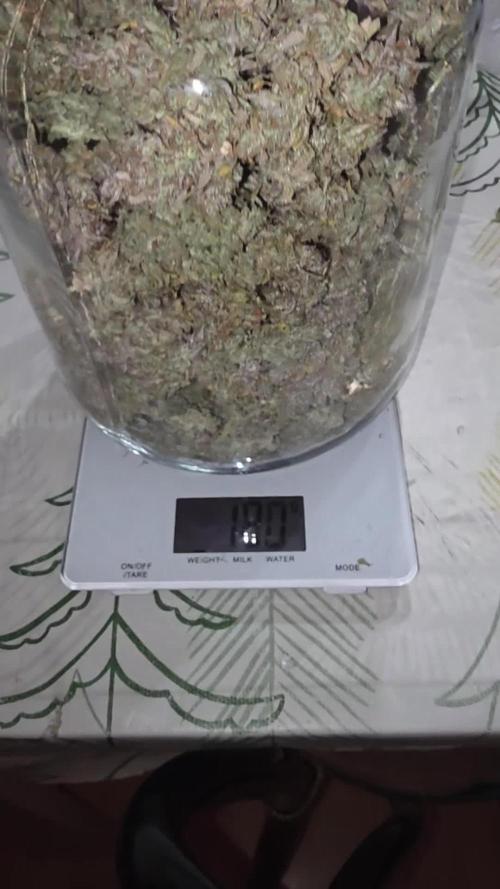
Día 85 (13/01) CBD Auto 20:1 #1 - Los cogollos se siguen formado y engordando. Muy sativa!
Es un poco misterio saber cuando estará lista!
Día 86 (14/01) CBD Auto 20:1 #1 - Cogollos engordando y poniendose duros!
Día 87 (15/01) CBD Auto 20:1 #1 - Se va la luz de mi casa durante 3,5 horas y la temperatura baja a 14,5 ºC... A ver como le afecta
Día 88 (16/01) CBD Auto 20:1 #1 - Retiro algunas hojas de abanico amarillas por senescencia. Los cogollos siguen engordando 😁
Día 89 (17/01) CBD Auto 20:1 #1 - Nunca tuve una Auto con tanto tiempo de vida. ¿Alguien tiene alguna idea de cuando acabará? 😵
Día 90 (18/01) CBD Auto 20:1 #1 - Busy day
Día 91 (19/01) CBD Auto 20:1 #1 - Muchas hojas de abanico amarillentas! Parece que se acerca la senescencia!
FastBuds 15% DISCOUNT code "NONICK" 2fast4buds.com @fast_buds_official_ @fastbuds.official
💦 BioTabs 15% DISCOUNT code "GDBT420" biotabs.nl/en/shop/ @biotabs_official
🌱Substrate PRO-MIX HP BACILLUS + MYCORRHIZAE @promixmitch @promixgrowers_unfiltered
💡2 x Mars Hydro FC1500 EVO Led Grow Light (2024 NEW FC 1500-EVO Samsung LM301H 150W LED) - https://marshydro.eu/products/fc1500-evo-led-grow-lights/ - https://www.amazon.de/dp/B0CSSGN5D8?ref=myi_title_dp
Likes
2
Share

@BudBeezy
Follow
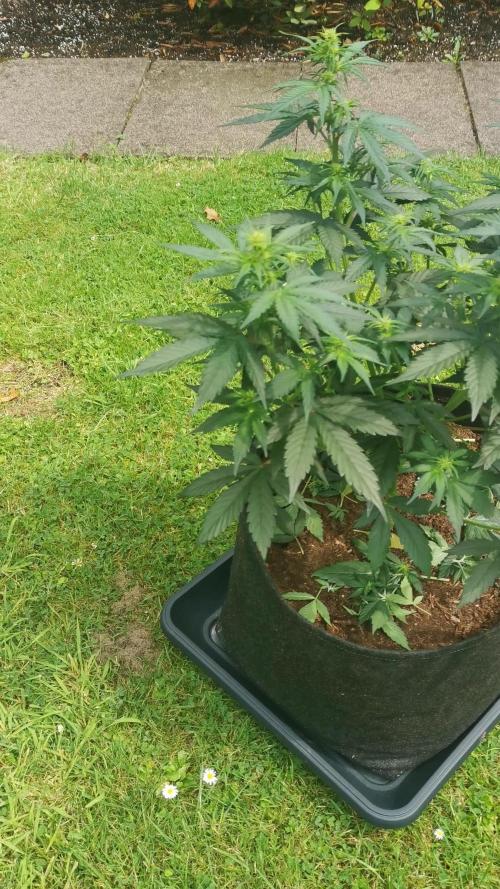
Welcome to week 5 of my grow diary. The growth boost has continued. The Sugar Royal in combination with the strong Sativa strain is causing the plant to grow extremely well. This week, I removed a few more leaves so that all shoots get an equal amount of sun. Since I increased the watering to 4 liters, I have less confidence in my support construction for the pot. The weight simply became too high and I didn't want it to break and the plant to fall into the depths. The new place is now on the bench, which will hopefully keep the snails from eating the plant. Now that I have reduced the Epsom salts, the curling of the leaves has decreased and the leaf color has also become lighter. In addition, pre-flowering has begun.
See you next week!
Processing
Likes
24
Share


@GrowGuy97
Follow
Day 14 - Everything seems to be going great, not much to say right now! Will be feeding tomorrow! Happy growing friends!✌️🏼🌱
Day 15 - Feeding day, started a nutrient comparison test between fox farm & technaflora which is why I have both of them listed but I am not mixing them! I have 2 plants on the fox farm & 1 on technaflora! We shall see which comes out better!
Day 16 - Ladies are looking great!✌️🏼
Day 17 - Got watered with PH at 6.4 today, all 3 ladies are coming along nicely😍
Day 18 - 🌱✌️🏼
Day 19 - Ladies got watered again today with PH at 6.4, will probably be starting some LST in the next week sometime! Thanks for following friends & happy growing!✌️🏼🌱
Day 20 - End of week 3 & could not be happier with how things are going! Can’t wait to see some buds on these ladies!😍

Likes
2
Share


@theicyeffect
Follow
A diary dedicated to the rest of my special girls. Check out my profile to see the Gorilla Glue up close (she will still appear here from time to time).
Germinated them directly in the soil with natural sunlight, achieving a 100% success rate.
All came out the soil with remarkably thick stems already, excited to see how these old school genetics will behave.
Lots of growth during their first week of life, reaching the end of it with 2 pairs of leaves each. We surely got some sturdy girls here.
Sunset Sherbet had some damage from struggling to hatch and is now slowly recovering, I’m sure she’ll catch up with time. Nothing good nutrition and proper lighting won’t fix.
Bruce Banner turned out to be incredibly big for her age, never grown a seedling like her! You can tell she’s already finding her germination vase too small. Making a statement with her presence.
Biscotti Mintz also looking big and very healthy.
Let’s watch them grow and see what they’ve got 🌱💪


Likes
109
Share


@Wackytabacky_420
Follow
Hey fellow growers week 13 update of my sole survivor critical purple #1. This plant is now in week 8 of flower and will be removed any day now!!! She's only been Watered once this week with a ph of 6.3. So close to starting next grow so stay tuned!!! I also updated my pineapple auto harvest weights to include both plants. Will update critical purple once harvested and dried.
Thanks for all the love and support ❤️ through my first two grows! Can't wait to share my third grow with my growmie's!!!🤟🌱💚💪💪
Likes
11
Share


@Mcdiggley420
Follow
Day 35 and plants are going good alot of lst last few days some more to go photos of individual plants will be uploaded later

Likes
3
Share


@RezaM
Follow
This week, I gave my plants more fertilizer to test if they show any signs of burning. Now, I'm stressed out! I think I should give myself some seaweed to relieve the stress 😂
The girls show signs of calcium deficiency. I sprayed a small amount of calcium and magnesium on them to help them recover faster. I’m not sure why the new leaves are very pale. Could they be lacking iron? I think the high soil moisture might be causing issues with iron absorption, but I’m not completely sure. I’ll wait and see what happens this week. Considering that I use regular water, I expected them not to have a calcium deficiency.


Likes
7
Share


@Jays_Not_Here_Man
Follow
Girls are on cruise control, gave them another big feed of the Cronk Nutrients. The info says this strain is 70-75 days, we’re at day 63 and they are still putting on weight. I’m thinking around the 22-25 of September is when I’ll start checking the trichomes more often. Checked today, most are cloudy, still quite a few clear though. I want to harvest my two strains together and as long as they stick to the timeline they say (give it take) we should be good 😊 Happy Gardening 🇨🇦❤️🌱😎💨

Likes
6
Share


@Rabidreject
Follow
Thursday
this week has been good so far, I pulled each plant out yesterday and tidied everything up. I got rid of all the tiny lateral branches that didn’t make the cut and I got Rid of everything that was below about half way down the plant. Obviously the lateral branches that grew to the same height as the canopy are staying it’s just all the non starter stuff below.
I annoyingly had my in take fan die on me. We’ll sort of, it just keeps tripping the fuse on my electric so I assume it’s from when I had my res flood onto the floor - I forgot it was there on the floor because it was hidden behind the res

Processing
Likes
3
Share


Likes
11
Share


@JaysBuds
Follow
I'm clearly going to have some tucking and training ahead of me again this week...For anyone who wonders if heavy defoliation is detrimental - last week these plants were almost totally stripped and were ALL pulled back under the screen - and I'd said that you'd never know they were bare. Well, here we are a week later and we're pretty much doing the same thing again!
I'm blindly hoping to avoid tucking much more. The screen is full and the girls are powerlifting it off the floor - we'll have to get some weights on to keep the canopy level, but what do we really expect from Bruce Banner?? I've also got my fingers crossed that we can manage the rest of the stretch with defoliation, though that's probably unlikely and we'll be working a very full scrog and tent for the next few weeks (based on some diaries it's about 4 weeks of stretch before they settle into a solid budset - I wish I had read that before vegging the screen to 80% capacity!

Likes
15
Share


@HighOhioAn
Follow
Growing for FastBuds420 has truly been an honor their genetics are truly Best in the world in my book strange our name beautifully mimicking the smells and appearances of their names. Pineapple express is one . They nailed the name right on the head. This plant truly smells just like a pineapple and almost looks like a pineapple once the fade starts one of the biggest autos I’ve ever grown truly thankful for the opportunity to grow this plant
FastBuds420. 4 Life 🌿💨💯
Likes
8
Share


@Naujas
Follow
well, it's exactly 12 weeks :) and my house is full of lemon aroma :) the girl endured really difficult growth, but she coped with everything perfectly :) who followed the growth, you saw that she grew on the balcony for 10 weeks, and she spent the last 2 in the grow tent :) 500 gr wet weight !!!!:) , before putting it in the ground I expected less than 10 g dry yield :D then this growth turned out super well, if it wasn't for my vacation I would have let it grow for about 2 weeks I think. but everything is still very good, I'll go home, fix it and do a smoke review :).

Likes
28
Share


@Master_weeda
Follow
Jour77 arrosage avec 2 litres d'eau ph6.3
Jour82 arrosage avec 2 litres d'eau ph6.3
Likes
17
Share

@Naujas
Follow
This is my second growth in a suitcase, I got 30 grams of dry flowers from the first growth, but this growth together with FastBuds is obviously much better than the first one :) although the girl's leaves burn from the light, which is only 10-15 cm from the flowers, but the girl copes with it perfectly :) good luck to everyone.