


Likes
Comments
Share


@rhodes68
Follow
Typical indica harvest, larger leaves but lots of them.
Largest producer so far of the FFT line if you let them go long enough but will foxtail to get that yield
12/19 Having some trouble getting the first plant to dry keeping as much air on it as we can do not want anything going wrong now. Ungodly dense buds
12/22 Weighed both plants just to check on drying and found both lost @1200 grams of water 10-1 was at 500 grams(five days of dry) 10-2 was at 720 grams (three days of dry).
10-1 will be finished tomorrow and 10-2 prob a day after or so
12/23 Yield on FFT-10-1 379 grams or 13.5 oz 10-2 will be ready in a day or two
12/24 Yield on FFT-10-2 436 grams 15.6 oz just missing the one pound mark
Together 815 grams 29.1 oz


Likes
8
Share


@Elixire
Follow
• Just get the seeds already soaked them up on water waiting them to crack open 😝.
• 48h after 2 of them pop out the fast honey cream and also the critical.
• They finally all pop out and looking nice and healthy after a complete 72h
18/05/2020
• I lower the light yesterday the 🌱 did not react . They didn’t stretch at all they look green and healthy Day 2.
• everything seems ok hot days on my place fighting the heat 30c inside the tent today
• after 6 days little bit of red stem due to light level, i raise up the light until the stem turn back to green. No deficiency for know they look healthy and 😃

Likes
19
Share

@Zdenda
Follow
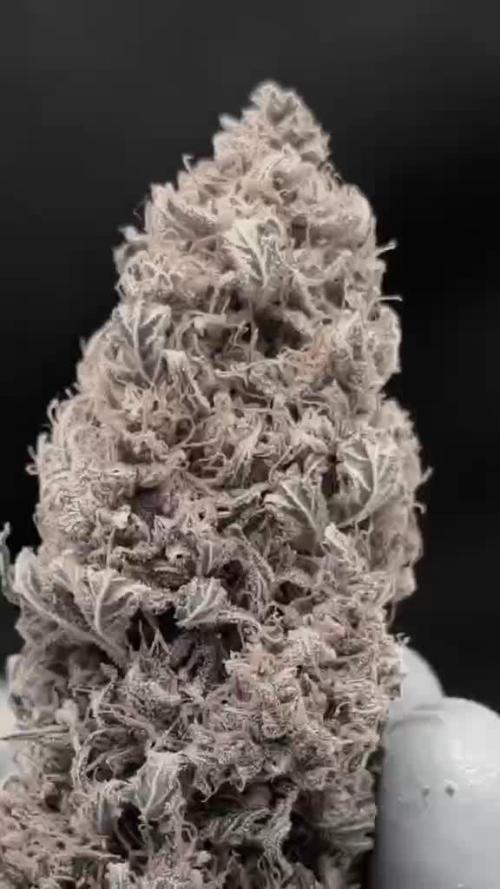
Před čtyřmi dny jsem sundal která jednu už byla.. trichomy už začaly mít i jantarovou kterou nechávám jen trochu..ani né třetinu.Světlo jsem dal na 75%..No a dneska jsem sklidil zbytek. Prorostlé a tvrdé. Lepkavá brokolice mi voní a vypadá to pěkně.. těším se na kouř. Pověsil a nechám schnout.. potom zvážím až suché a ostříhané.


Likes
54
Share

@Natrona
Follow
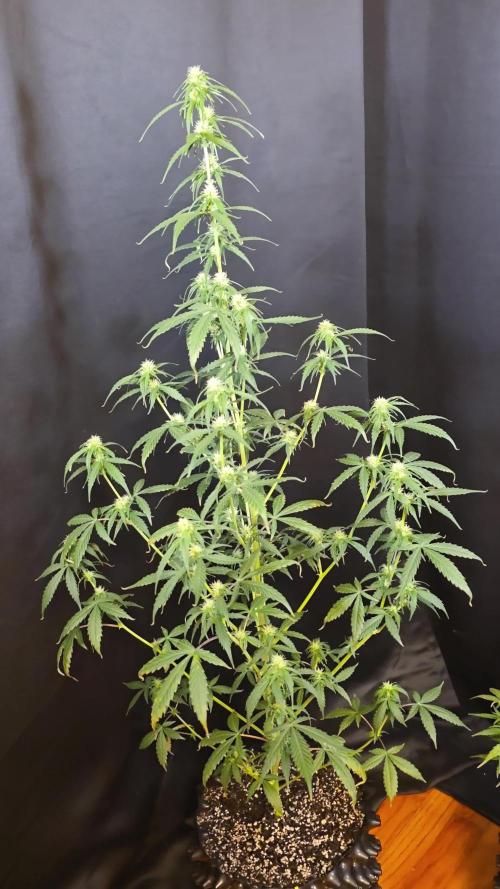
Godfather OG- MSNL
👉Sponsored Grow 👈
W6F3 11/9-15
This week I had to increase watering on GFOG #2 4.5 liters and #1 3 liters.Since NYC Diesel leaves look so dark green with some clawing and all the gals in the tent are receiving the same nutrients as NYC Diesel, I determined I ‘ve overfertilized. The Godfather OGs have some leave with mottling so to be cautious I gave them Calmag the first time and the second only PH 6.15 water with a 1 gallon flush. I defoliated some large fans that were damaged by low cal mag. GF OG #1 has roots growing out of the base of the stalk.
Stay green, growers love 💚🌿
💫Natrona💫

Processing
Likes
1
Share


@BloodBath
Follow
Sour wiz came out amazing. Not many problems during her grow. Each pheno came out really different but that’s from my doing. I trained each plant differently to see what the difference would be. Responds really well to stress and training. I can’t tell you in words how great the flowers are. They’re literally coated in trichomes and smell and taste so damn good. Fruity sweet gasoline. Enjoy and thanks everyone who looks and follows.0
Likes
26
Share


@XperencdGmanXG
Follow
Well, these girls are well on their way into bloom. They are really stacking it on since the addition of the worm castings. I strongly suggest everyone use worm castings in your soil mixes, even if you are using salt-based nutrients.


Likes
57
Share


@Wastent91
Follow
Eccoci qua all ultima settimana di vegetativa di questa bestia! Penso che le piante crescano davvero meglio con questi casi antispiralizzazione, prima pensavo fossero dicerie, ma sto sperimentando che le ragazze crescono molto di più rispetto rispetto alle sorelle nei vasi normali, questa ad esempio è germinata 10 giorno Circa dopo le sorelle, e sta rapidamente raggiungendo le stesse dimensioni! Anche la sour Apple di anesia ho dovuto spostarla e portarla in fioritura una settimana prima di queste, xke stava diventando troppo grande, ora è a 80 cm di altezza rendetevi conto! Al prossimo giro tutte le mie ragazze avranno un nuovo vestito, ovvero il vaso antispiralizzazione che permette alle radici di avere un accesso maggiore all ossigeno, e ci sono maggiori cicli asciutto/bagnato significa che la pianta respira e cresce meglio, raddoppia la velocità di fotosintesi secondo me! Merito anche dei nutrienti di Terra Aquatica naturalmente sono orgoglioso di fare parte della loro famiglia e utilizzare i loro nutrienti famosi ed orgoglio in tutto il mondo! Un buon 420 a tutti alla prossima settimana 💪😸

Likes
10
Share


@TegridyCal
Follow
Automatic Royal Amnesia is growing at a rate that we really like a lot and with a very stable and orderly regularity. We made the topping leaving 2 floors of branches underneath that one as our usual style. She looks really strong, healthy and very beautiful.
Likes
4
Share


@EileanDonanCastle
Follow
It’s been a long day potting these girls into there new home.
All is looking well. Little bit of heat stress but ime sure they will cope 🤞

Likes
3
Share


@The_Lonely_Farmer
Follow
So the end of 3 and entering week 4 these girls are a little sad today as been working on finishing their little grow space which hopefully they'll settle into over the next few days.
I have tried too upload images but no luck keeps saying resizing no matter where I upload from 🙄
The girls are taking off and I can see the difference in growth allthough they've been unsettled past few days 🌱
Still loving the aptus range and so am I its keeping these girls healthy even the topped girl hasnt really reacted too being topped 🌱👌
I will be doing some hst/lst with the other 2 this week as neglected them slightly as having the fastbuds testers all potted up into new shoes.
I will try update more images tomorow...
Stay blessed 💚


Likes
Comments
Share

@DogDoctorOfficial
Follow
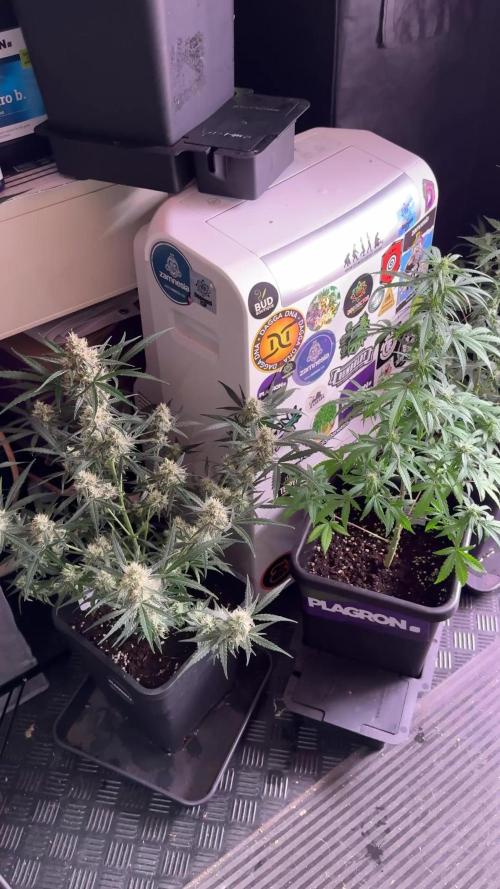
🌿 Frosted Guava Auto by Zamnesia | Pheno B | Week 8 (Flower Week 5) 🌿
Small Plant. Big Personality. And Now… A Little Less Green.
There are plants that follow the plan.
And then there are plants that write their own story.
Frosted Guava Pheno B has been doing the latter from the beginning.
She has never been the biggest plant in the room. She hasn't chased height, hasn't tried to dominate the canopy, and hasn't demanded much intervention.
Instead, she has quietly developed her own personality.
Compact.
Elegant.
Beautifully structured.
And increasingly covered in flowers.
Now, entering her fifth week of flowering, she has reached another important moment in her journey.
This week, she joined the group receiving a selective flowering defoliation.
Not because she was struggling.
Not because she was unhealthy.
And certainly not because every plant needs to be defoliated.
Quite the opposite.
She was looking fantastic.
But after looking carefully at her structure, her development, and the way light and airflow were moving through the plant, I felt that removing some unnecessary foliage was the right decision.
So we went in.
We cleaned her up.
And now we're going to see what she does with the extra space.
🌸 Week 5 Flower – Her Own Story
Frosted Guava Pheno B is currently around 108 cm tall.
That still makes her one of the more compact plants in the room.
But honestly?
I don't think she cares.
😂
She has found her own architecture and she's sticking with it.
The flowers continue developing beautifully, with increasingly visible frost and those characteristic white pistils reaching outward from the developing buds.
Her foliage has remained lush and healthy, with that beautiful deep green colour we've been following since the beginning.
The plant looks comfortable.
The flowers are developing.
And now we're starting to see more definition between the different parts of the plant.
This is exactly the kind of moment where stepping back and looking at the whole plant becomes important.
Because sometimes the question isn't:
"Can I remove this leaf?"
The better question is:
"Does this leaf still have a useful job to do here?"
And that's where this week's defoliation came from.
✂️ Defoliation – What We Actually Did
This wasn't a complete strip.
It wasn't a race to make the plant look naked.
And it wasn't about removing leaves simply because they were large.
The approach was selective.
I removed most of the fan leaves carrying their own petioles, particularly where they were contributing to unnecessary shading or creating congestion inside the plant.
I also cleaned the lower and interior portions of the plant where some flowering sites were positioned so far below the productive canopy that I didn't expect them to develop into meaningful flowers.
Those areas are what I would consider the true bottoms on a compact plant like Frosted Guava.
And that's an important distinction.
Because this plant is small.
Her lower sites really are lower.
Even with the Lumiflora under-canopy lighting helping bring additional photons into the lower canopy, the primary productive zone of the plant remains higher up.
So rather than allowing the plant to spend resources maintaining foliage and very low sites that are unlikely to contribute much, I decided to clean those areas selectively.
But I didn't remove everything.
Some lower flowering sites remain.
I want to see what they can actually do.
That's part of the experiment.
🌿 What Is Defoliation?
For anyone new to growing:
Defoliation is the intentional removal of selected leaves from a plant to alter the structure of the canopy.
The goal isn't simply to have fewer leaves.
The goal is to create a better balance between:
light penetration + airflow + canopy structure + productive flowering sites.
Leaves are extremely valuable.
They're the plant's solar panels.
So removing them should never be treated as something automatically beneficial.
Every leaf removed is a piece of photosynthetic machinery removed.
That's why I don't approach defoliation as:
"Flower started. Time to strip the plant."
Instead, I look at the plant in front of me.
Is the canopy becoming too dense?
Are leaves heavily shading developing flowers?
Are there congested areas where airflow is poor?
Are there leaves that are doing very little because they're buried underneath several layers of foliage?
Are there lower sites that realistically have very little opportunity to develop?
If the answer is yes, then selective defoliation can make sense.
If the answer is no...
Leave the plant alone.
🚫 What Defoliation Is NOT
This is probably even more important.
Defoliation is not:
❌ Removing every fan leaf
❌ Trying to expose every single flower to direct light
❌ A substitute for good plant structure
❌ A guaranteed way to increase yield
❌ Something every plant needs at the same time
❌ An excuse to strip a healthy plant simply because you can
The objective isn't to make the plant look clean for the sake of appearance.
The objective is to improve the functional canopy.
And there's a big difference.
A beautiful green leaf isn't a problem simply because it's a beautiful green leaf.
If it's healthy, receiving light, contributing to photosynthesis and helping the plant, I have no reason to remove it.
But when the canopy becomes crowded and certain leaves are contributing more obstruction than productivity, that's when selective removal becomes interesting.
✂️ How I Approach It
My approach is simple:
I observe first.
I don't start with a predetermined number of leaves that must disappear.
I start by looking at the structure.
Then I work from the outside toward the interior and from the top toward the lower portions, looking for unnecessary congestion.
Leaves that are heavily shading productive flowering sites can be candidates.
Leaves buried underneath several other leaves can be candidates.
Leaves occupying congested interior areas can be candidates.
And lower growth that is so far beneath the productive canopy that it has little realistic opportunity to develop can also be considered.
But I always keep the plant's overall health in mind.
The goal is balance, not maximum removal.
That's why Pheno B still has plenty of green.
She's not naked.
She's simply better organized.
💡 The Under-Canopy Question
This is particularly interesting with Frosted Guava Pheno B because we're running Lumiflora under-canopy lighting.
Someone might reasonably ask:
"If you have light underneath, why remove the lower growth?"
That's a very fair question.
And the answer is that under-canopy lighting doesn't magically make every lower flower equal to a top flower.
On a compact plant like this, the very lowest parts are still extremely low relative to the main productive canopy.
The under-canopy lighting is helping reinforce the lower and interior areas, but I still want to observe where the plant naturally allocates its energy.
That's why I deliberately left some lower flowering sites behind.
I don't want to assume.
I want to watch.
Will those remaining lower sites develop?
Will the extra light make a noticeable difference?
Will the upper flowers continue dominating?
That's exactly the kind of question this project allows us to explore.
And the harvest will eventually give us the answer.
☀️ More Light Where It Matters
The Future of Grow Black Series LED continues providing the primary light from above, with approximately 1,000 PPFD across the upper canopy.
Frosted Guava may be compact, but she certainly isn't short on photons.
She's been sitting underneath that light throughout flowering, converting those photons into leaves, flowers, structure and now increasingly visible resin.
And with the selective defoliation, we're changing how some of those photons move through her architecture.
We're not creating more photons.
We're simply trying to make better use of the ones already available.
That's the idea.
Don't waste energy chasing light.
Build a canopy where the available light can actually do its job.
❄️ And The Frost Is Getting Serious
The name Frosted Guava continues becoming more appropriate every week.
The flowers are developing beautifully, and the resin production is becoming increasingly visible.
Those white pistils are still everywhere, creating an incredible contrast against the deep green foliage.
And underneath all those hairs, the flowers are beginning to gain more structure and density.
This is the stage where I love looking at the same plant from week to week.
Because the change isn't always dramatic overnight.
But compare the plant to where she was a few weeks ago...
And suddenly you realize:
She's building.
She's filling out.
She's gaining flower volume.
She's becoming increasingly defined.
She's becoming Frosted Guava.
🌿 Small Plant. Big Character.
I've said this about her before, but this week makes it even more obvious.
Frosted Guava Pheno B doesn't need to be the tallest plant in the room.
She's already found something more interesting.
Character.
Her sister Pheno A has followed a different path.
And that's one of the beautiful things about running phenotypes together.
Same genetics.
Same room.
Same light.
Same nutrition.
Same philosophy.
Different personalities.
Pheno B has chosen to remain compact and elegant.
And now, as flowering progresses, she's showing us exactly what that compact structure can become.
💧 Nutrition & Hand Watering
We're continuing with hand watering throughout the room.
Current feeding remains centered around the Plagron flowering program:
Terra Bloom — 2.2 ml/L
Power Buds — 1 ml/L
Sugar Royal — 1 ml/L
Green Sensation — 1 ml/L
Lemon Kick — 0.03 ml/L
Current recorded parameters are around:
pH: 6.0
EC: approximately 2.0 mS/cm
Solution temperature: 21°C
Root-zone temperature: 21°C
Watering: approximately 1.2 L per 24 hours
Hand watering has also given me another opportunity to observe this plant closely.
Every time I water her, I get another chance to look at the flowers, inspect the leaves, check the structure and notice those tiny changes that are easy to miss when everything is automated.
It takes more work.
But it also brings you closer to the plants.
And sometimes that's where the best observations happen.
🌡️ Environment
The room continues running under stable conditions:
Day temperature: 29°C
Night temperature: 25°C
Relative humidity: approximately 72%
Solution temperature: 21°C
Root-zone temperature: 21°C
CO₂: approximately 639 ppm
With the canopy becoming increasingly dense, airflow and humidity management become even more important.
That's another reason selective defoliation can be useful at this stage.
Not because leaves are inherently bad.
But because a dense flowering canopy can create small pockets where air movement becomes less effective.
Opening selected areas gives the room a little more breathing space.
And that's particularly valuable as the flowers continue developing.
🔭 Looking Ahead
Now comes the interesting part.
We've changed the architecture.
We've removed some unnecessary foliage.
We've cleaned the lower sections.
We've opened some of the interior.
And now...
we wait and observe.
I want to see how quickly she responds.
I want to see how the flowers develop with the improved canopy structure.
I want to see what happens to those lower sites we deliberately left behind.
And most importantly, I want to see how Frosted Guava Pheno B continues writing her own story.
Because she's already made one thing very clear:
She doesn't need to follow anybody else's timetable.
❤️ Final Thoughts – Let Her Shine
Frosted Guava Pheno B has been one of those plants that quietly earns your attention.
She didn't arrive in the room demanding the spotlight.
She didn't become the tallest.
She didn't become the biggest.
She simply kept growing.
And week after week, she became more beautiful.
Now she's entered another chapter.
A little less foliage.
A little more breathing room.
A little more light moving through the canopy.
And plenty of flowers left behind to show us what she's capable of.
The important thing about this week's defoliation isn't how many leaves we removed.
It's why we removed them.
Because good cultivation isn't about following a recipe blindly.
It's about looking at the plant in front of you and making decisions based on what she's actually telling you.
And Frosted Guava Pheno B was telling me:
"I'm ready."
So we listened.
Now let's see what she does.
A huge thank you once again to Zamnesia for these beautiful genetics, Plagron for the nutrition, Future of Grow for the Black Series lighting, Lumiflora for helping illuminate the lower canopy, TrolMaster for environmental control and of course to everyone following this 8×8 Adventure on GrowDiaries.
Every week, every phenotype tells us something different.
And that's exactly why I love this project.
Until next week...
Let her shine. She has earned her spotlight. ✨🌿❄️
Growers love and happy growing! 🌱💚
Likes
2
Share


@KeemBboomin
Follow
So at the bottom tent we have amnesia haze who is very frosty with a sweet gassy smell.
Then there is bubble gum more on the earthy side.
At the top tent we have that GMO Cookies I got from the bottom of a bag is extremely frosty out of the three in there
Likes
33
Share

@Hashy
Follow
********************************************
📋 Comments
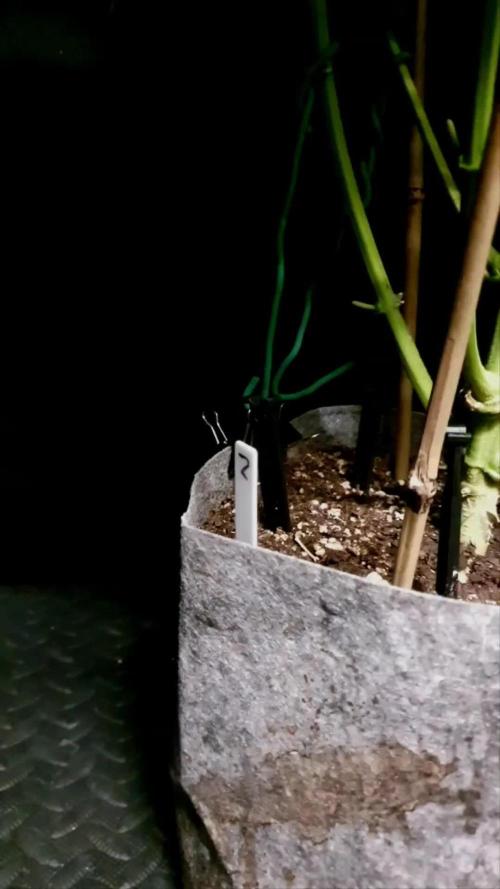
I really like the structure of this plant, and I'm tempted to do another just because she looks awesome.
📋 Data
Seed to havest=114 days.
Veg time=28 days.
Flower time=86 days.
Wet weight=805g
Dry weight=86g
📋 Smoke report
This smoke is nice, slight skunk taste with a bit of a sour lemon after taste. Strength wise I'd guess she'd be around the 25% THC mark.
📋Grow stats for GDG 23
#1 Runtz=50g
#2 Fat Bastard=86g
Total=136g
Lights on.
20hrs×7days=140hrs
18hrs×21days=378hrs
12hrs×86days=1032hrs
Total hours=1550hrs
Light power=159.09Kw
Rad power=105.69Kw
Extractor=39.93Kw
4 gang=50.91Kw
Top fan=21.36Kw
Total electricity=376 98KW
Electricity cost @£0.25/Kw=£94.25
Average light power a day=1.4Kw
Average watt per hour=102w
g/watt=(136÷102)=1.33g/w
£/g=£0.73/g
📋Final word.
Trimed on the 14/6/25. Trimming was quite easy, not to long in trim jail. 86g of solid nugs and 7g of nugs I couldn't be bothered trying to trim, they can go with the trim for hash. I would highly recommend growing this strain.
Back soon.
Take it easy.
********************************************


Likes
6
Share
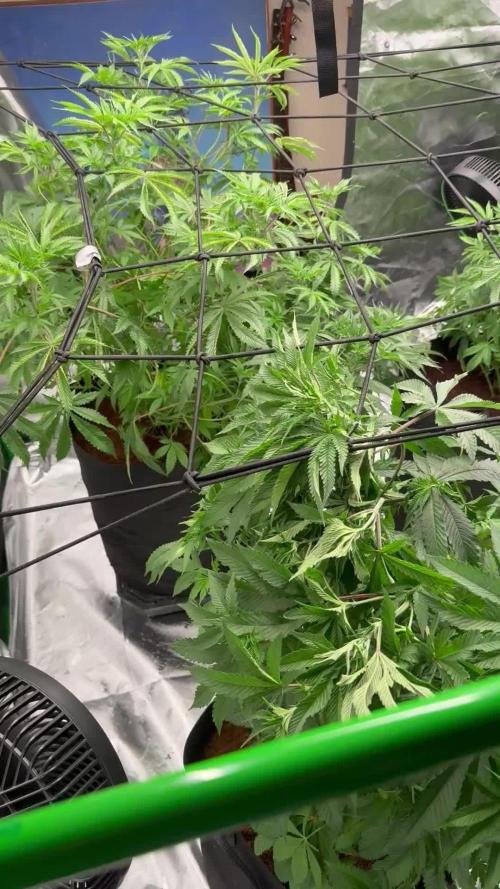


Likes
22
Share


@SirBudAlotts
Follow
Last week I was very concerned that she went into too soon.
But she has performed astonishingly This past week!
She grew tall and started branching out.
She is getting real hungry but will stick to her compost tea for now
Likes
2
Share


@GreenLupinCWB
Follow
Ficando super tricomada ,gorda e cheirosa,lembra limão e chiclete de Tutti fruit.