




Likes
21
Share

@DogDoctorOfficial
Follow
🌌 Cosmic Noodles
Week 8 From Seed
(Week 4 Flower — 12/12 From Seed)
⸻
How Did We Get Here?
These girls have been on 12/12 from seed.
No veg phase.
No long structural preparation.
No topping cycles.
No extended shaping.
They expressed themselves naturally — and we simply guided them.
We are calling this Week 4 Flower based on visible floral development, even though biologically it’s Week 8 from seed.
Two phenotypes.
Two structural expressions.
Two approaches.
And this week… two very different stories.
⸻
👑 Plant #1 — “The Big Walla” (No Test)
She is exactly what a healthy plant should look like under pressure:
• Deep, lush green
• Aggressive bud stacking
• Strong apical dominance but with lateral competition
• Defoliation response? Like nothing happened.
• In and out of the studio — no stress expression
• Structural integrity intact
She had light low-stress training, nothing extreme. Just guidance.
You can see in the time-lapse frames how robust she is.
She’s not surviving the environment.
She’s thriving in it.
This is our control plant.
⸻
Plant #2 — The Overwatering Test (Autoflower)
Now the real talk.
This plant was intentionally overwatered.
She was left sitting in runoff water for approximately 36 hours.
Immediate reaction.
Within that window:
• Drooping leaves
• Loss of turgor pressure
• Slowed metabolism
• Oxygen deprivation at root zone
• Visual stress expression
This is what root hypoxia looks like.
After 36 hours, we elevated her and drained everything.
Now we’re seeing:
• Necrotic leaf tissue
• Some dead lower leaves
• But… white pistils still pushing
• Bud development continuing
She’s stressed.
But she’s not done.
⸻
🌱 Why Overwatering Is Worse Than Underwatering
Underwatering:
• Roots search for moisture
• Oxygen availability increases
• Root mass expands
• Enzymes help break down dead root matter
• Temporary droop, usually reversible
Overwatering:
• Roots suffocate
• Anaerobic conditions form
• Microbial imbalance can develop
• Nutrient uptake becomes impaired
• Tissue death can occur
Water fills pore spaces in soil.
No air = no oxygen = no respiration.
Roots breathe.
When they can’t — the whole plant pays for it.
And with an autoflower, recovery window is shorter.
A photoperiod could be vegged longer to recover.
An auto?
Clock is ticking.
⸻
Environment — Playing on the Edge (But Controlled)
Current room conditions:
• Canopy Temp: ~28°C
• RH: ~70%
• CO₂: 1000+ ppm
• PPFD: 800 → 1300 µmol/m²/s
On paper, 28°C + 70% RH sounds high.
But here’s the key:
Massive Airflow
We have:
• Strong horizontal airflow
• Vertical movement
• Air exchange
• Under-canopy circulation
Airflow changes everything.
⸻
🍃 Leaf VPD vs Room VPD
Room VPD at 28°C / 70% RH is moderate-high humidity.
But leaf temperature under strong light + airflow is often slightly higher than ambient.
This increases transpiration.
Add 1000+ ppm CO₂:
• Stomata don’t need to open as wide
• Photosynthesis rate increases
• Plants tolerate higher humidity
• Metabolic rate remains high
This is why they’re thriving.
We are pushing high PPFD — up to 1300 µmol in larger tops — but only where plant size can handle it.
Smaller plants receive ~800 µmol.
Light intensity is scaled to structure.
⸻
💡 Lighting Strategy
We are running:
• Top lighting
• Under-canopy lighting
• End-of-day red (15 minutes)
Let’s break this down.
⸻
🔦 Under-Canopy Lighting — Why?
Purpose:
• Illuminate lower bud sites
• Reduce larf
• Stimulate lower photosynthesis
• Improve uniformity
• Reduce shading stress
We are not trying to replace top light.
We are supplementing energy where dense canopy blocks photons.
It also improves airflow around lower sites because buds stay active and not shaded/degrading.
⸻
🔴 End-of-Day Red (15 Minutes After Lights Off)
We run 15 minutes of red spectrum at lights-off.
Why?
Phytochrome manipulation.
Plants have two main light-sensitive phytochrome states:
• Pr (red-absorbing)
• Pfr (far-red absorbing)
Red light converts phytochrome into its active Pfr state.
When lights go off, Pfr slowly converts back to Pr in darkness.
By giving a short red pulse:
• We influence phytochrome equilibrium
• Potentially enhance flowering signaling
• Encourage elongation control
• Improve transition consistency
It does not extend photoperiod.
It manipulates light signaling.
We are experimenting — not claiming magic.
But we document everything.
⸻
🌱 EC & Feeding
Soil EC: 0.9
Feed EC: 2.4
This tells us:
They are eating aggressively.
If runoff EC stays stable and doesn’t climb, we maintain feed strength.
High metabolic demand requires high input.
But we monitor carefully.
If soil EC begins rising?
We adjust immediately.
⸻
Structural Differences
Plant #1:
• Slight LST
• Strong lateral competition
• Dense but controlled canopy
Plant #2:
• Some training
• More natural expression
• Slightly smoother, smaller phenotype
Even genetics within the same strain express differently.
And that’s the beauty of 12/12 from seed.
You see who they truly are.
⸻
🔮 What This Week Represents
This week is about:
• Stress response
• Root health
• Environmental boundaries
• Recovery observation
• Real learning
Not hype.
Not perfection.
Reality.
⸻
📅 What to Expect Next Week
For the Big Walla:
• Continued stacking
• Increased resin production
• Structural thickening
• Possibly slight nutrient demand increase
For the Overwatered One:
• Either:
• Gradual recovery with reduced leaf mass
• Or stalled development if root damage was severe
We do not expect explosive rebound.
We expect stabilization first.
⸻
❤️ Gratitude
To:
• The OGs who’ve been here since day one
• The new followers discovering the journey
• The skeptics who keep us sharp
• The haters who fuel consistency
• Sponsors supporting experimentation
• GrowDiaries platform
• Discord family
• Instagram community
This is not a solo grow.
This is shared documentation.
⸻
🌌 Final Thought
Nothing in nature is perfect.
And that’s exactly why this works.
This week proves it.
One queen thriving.
One queen struggling.
Both teaching.
Cosmic Noodles — Week 8.
Let’s recover one.
Let’s push the other.
Let’s document everything.
For the Big Walla:📡 DELETED @ 1K Please stay tuned.we never quit https://www.youtube.com/@DOGDOGTHEDOCTOR NEW
🙏 Thank you for your patience and continued support.
FOR DISCOUNT CODES AND MORE JUST FOLLOW THE LINK https://website.beacons.ai/dogdoctorofficial
📲 Don’t forget to Subscribe and follow me on Instagram and YouTube @DogDoctorOfficial for exclusive content, real-time updates, and behind-the-scenes magic. We’ve got so much more coming, including transplanting and all the amazing techniques that go along with it. You won’t want to miss it.
GrowDiaries Journal: https://growdiaries.com/grower/dogdoctorofficial
Instagram: https://www.instagram.com/dogdoctorofficial/
YouTube: https://www.youtube.com/@dogdoctorofficial Deleted by Youtube
Vimeo : https://vimeo.com/dogdoctorofficial Under construction stay tuned ⸻
Explore the Gear that Powers My Grow
If you’re curious about the tech I’m using, check out these links:
🔆 Lighting & Environmental Control
• Future of Grow — Advanced LED lighting technology
https://www.futureofgrow.com/
DISCOUNT CODE: DOG20
• Lumiflora — Under-canopy LED lighting
https://lumiflorade.com/
• TrollMaster — Environmental controllers and automation gear (past collaboration)
⸻
Genetics
• Zamnesia Seeds — Genetics used in this project
https://www.zamnesia.com/
⸻
🌱 Soil, Substrates, Boosters & Root Support
• Plagron — Substrates, bio mixes, and supportive products
https://plagron.com/en/
⸻
🎒 Storage, Curing & Preservation
• Grove Bags — Curing and storage solutions
https://grovebags.com/
⸻
📸 Photography Equipment & Tools
(Not sponsors, but part of my creative toolkit)
• Sony A6700
• Sony full-frame macro lens + few more
• Stacking photography workflow - learning
• iPhone (for behind-the-scenes shots)
We’ve got much more coming as we move through the grow cycles. Trust me, you won’t want to miss the next steps, let’s push the boundaries of indoor horticulture together!
As always, this is shared for educational purposes, aiming to spread understanding and appreciation for this plant. Let’s celebrate it responsibly and continue to learn and grow together.
With true love comes happiness. Always believe in yourself, and always do things expecting nothing and with an open heart. Be a giver, and the universe will give back in ways you could never imagine.
💚 Growers love to all 💚
📸 P.S. – The Eye Behind the Lens
All photos in this diary (for now — except for the ones showing the camera, which I took with an iPhone) are taken with a Sony A6700 paired with a Sony full-frame macro lens and a few more.
Photography is part of the story — it’s how we share the fine textures, the glow, and the quiet details that words can’t always capture.
I’ve also started experimenting with photo stacking — a technique where multiple images, each taken at a slightly different focus point, are layered together to create one perfectly sharp image from front to back.
It’s not digital enhancement or AI; it’s pure photography — a way to reveal the plant’s beauty in microscopic depth, from trichome to petal.
You’ll even see a few shots of "ghost me" capturing the shots — camera, lens, setup — because every grow deserves not just to be cultivated, but documented like art.
FOR DISCOUNT CODES AND MORE JUST FOLLOW THE LINK https://website.beacons.ai/dogdoctorofficial
NEW DISCORD - Official Server Invite Link : https://discord.gg/ksjAkA5T74

Likes
30
Share


@datrobspeoria
Follow
Loving the Colors of this strain and the Smells are Gassy with Fruity undertones.. I have been lucky to have anything get this far for this season but I made it.. Couple more weeks left I am guessing..
Have had Red wigglers in my Pots since around Week 2 of Flower and they are Thriving..


Likes
8
Share


@mikearon
Follow
April 26th - Day 69 : Oh my god look at them.. So bushy after that defoliation. They're doing great I think.. The only concern was the laggyness of the leaves but I guess it's due to overwatering so I'll chill with water for a day or two. I started trimming the lower branches that I think aren't getting enough light. I'm trying to push the veg stage as much as I can let's see if they can take an extra few weeks.


Likes
3
Share


@HowtoBubatz
Follow
The first week of flowering is here, and things are finally looking much better!
Both plants have recovered well and are now growing much healthier.🌱
#1 has already started stretching significantly, really picking up speed. It’s exciting to see how quickly it’s developing! Meanwhile.
#2 spent about half the week still in vegetation, but towards the end, I finally spotted the first signs of flowering.
Now that both are officially in bloom, I’m looking forward to seeing how they continue to develop over the next weeks. On to the next phase! 😊
Likes
8
Share


@Skinnytalls420
Follow
Day 26-21/05/22 everything looking good most of them going into flower now!!!
Day 29-24/05/22 all looking good!!! Gonna start giving bloom nutrients this week.
Day 32-27/05/22 all looking good started to give bloom nutrients. I feel like they should be bigger maybe not?
Likes
51
Share


@kansasscott725
Follow
Little bit of a delay. Wanted to get climate perfect before the flip. Upgraded ventilation and have the tent dialed in well at 74 degrees and 60% humidity during day and 70deg/ 55% at night.
Started a second scrog on Day 42. Nervous about the stretch but hopefully I can maintain it (I wish T5 lights could flower...)
Did extensive trimming underneath clearing pretty much anything that will never reach the ceiling of green above it.
Day 45 marks last day of Veg
Day 46 marks first day of flower
AND.
HERE.
WE.
GO.


Likes
6
Share


@TheMayor4434
Follow
In week 8 iv come to the sad realization that nearly all of the plants are at different stages of development. Dispite all the seeds being germinated at the same time. So iv had to take them off the wilma systems and am feeding them manually and there all on different diets. Which is an absolute headache especially as there is 16 plants to tend too. I think iv bit off abit more than I can chew for my first grow I maybe should have started with a couple of plants. I think the large wilma setups are designed for clones really so you know they are all going to progress and eat the same amount at once. It's not for autos . There all looking healthy though:)

Likes
14
Share


@420Somewhere
Follow
Growing this again. And again. Humboldt have a gem with this strain. Tastes like tangerines with a happy, creative high which sets me up for the day. Biggest yielder of the 4 plants I grew in this harvest. My go-to morning smoke.

Likes
20
Share


@Bread_n_Buds
Follow
And here we are at our Zamnesia harvests, Northern Lights 1 - Born on 01.09.2024 - Harvested on 14.11.2024 precisely ten weeks and 4 days of life on this earth.
ATTENTION - The other plant was harvested and documented in the previous week, for convenience and to better distinguish them at harvest time I divide them for you.
Even though we are growers in our small intensive it is always a little displeasure to prune these masterpieces of nature and cannabis breeding but on the other hand the purpose for which it produced these buds full of resin is noble and if it remained there for a long time it would not come to a good end, so without further ado it is harvested.
We evaluated the harvest because the flowers seemed to have been ripe for a while, very mature pistils, rock flowers that seemed ready for about a week but I still flushed for the best possible result in terms of organoleptic cleanliness of the flower. Pistils ripe at 80-90% and trichomes mostly clody, quite a bit amber and in the violet shades of the leaves reddish and violet gorgeous, really a beautiful show of trichomes.
The scent is truly wonderful at the time of harvest I could not distinguish it well then slowly something sweet and fruity mixed with spicy came out a mix that always intoxicates me.
The results in terms of quantity are not bad at all we will be around 30-40 the first one already harvested and 50-60 this one.
We are very happy to be on Zamnesia's side and to show you what work they are doing with breeding.
Soil - The plant was grown with the 100% organic Plagron Promix soil, which I really appreciated for its fantastic absorption coefficient and for an airiness that would not even require perlite, which I added in some cases.
Fertilizers - From day one, fertilizers were calculated with the module on the Plagron website that allows you to calculate your customized fertilization schedule. I used: Alga Grow and Algra Bloom as basic fertilizers, Power Roots as a rooting agent, Sugar Royal amino acids, the very important Pure Zym enzymes that process the dead parts of the plant and transform them into fertilizer, Vita Race as a strengthening foliar, Power Buds that stimulates a very fast production of buds for real and the legendary Green Sensation booster without equal on the market.
They are all available on the Zamnesia website in convenient packs perfect for growing, just do a simple search if you use mineral fertilizers and you will find the line that best suits you //
At the link --- https://www.zamnesia.io/it/11457-plagron-easy-pack-natural.html
On the Plagron website instead you can find the info and calculate your custom growing schedule
At the link --- https://plagron.com/en
The DS120w Growbox and the fantastic DF16 ventilation / filtration system are from Secret Jardin, there was a change of growbox between autoflowering and photoperiodic at a certain point for a height emergency if you notice discrepancies on the light models and growbox it is for this but everything should be fine. Highly recommended and with an excellent quality / price all the fans.
At the Link --- https://www.secretjardin.com/
The light is from Viparspectra, always super reliable and productive,
At the Link --- https://www.viparspectra.com/
The seeds and an unmissable series of accessories from the world of ganja and not only on the best site of the situation,
At the link --- www.zamnesia.com
Likes
7
Share

@FROZENGARDENER710
Follow
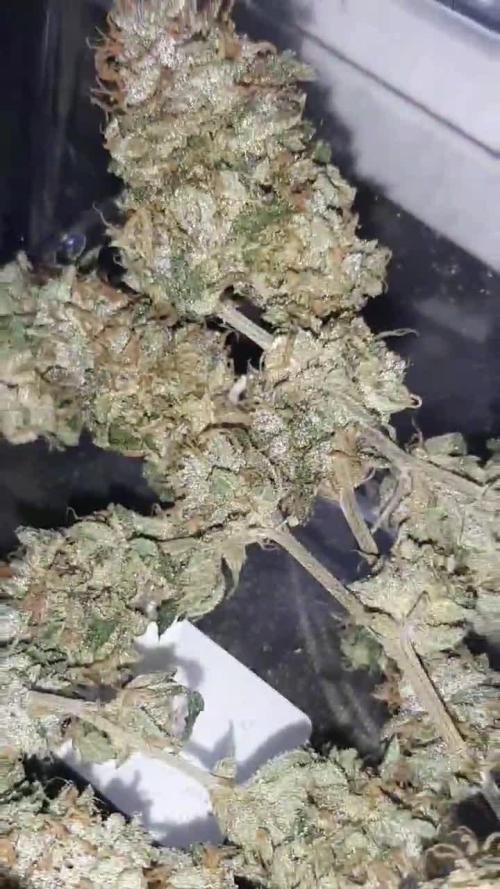
Without much to declare, organic runoff from the pots was at 200ppm, no nutrients were added in the last week, I increased air circulation, and harvested these plants on day 63 of flowering. I feel that if I wanted I could have left them longer, but one bud from one plant got infected with spider mites and I preferred to harvest everything to avoid infecting the others.

Processing
Likes
4
Share


@chiefredeyes
Follow
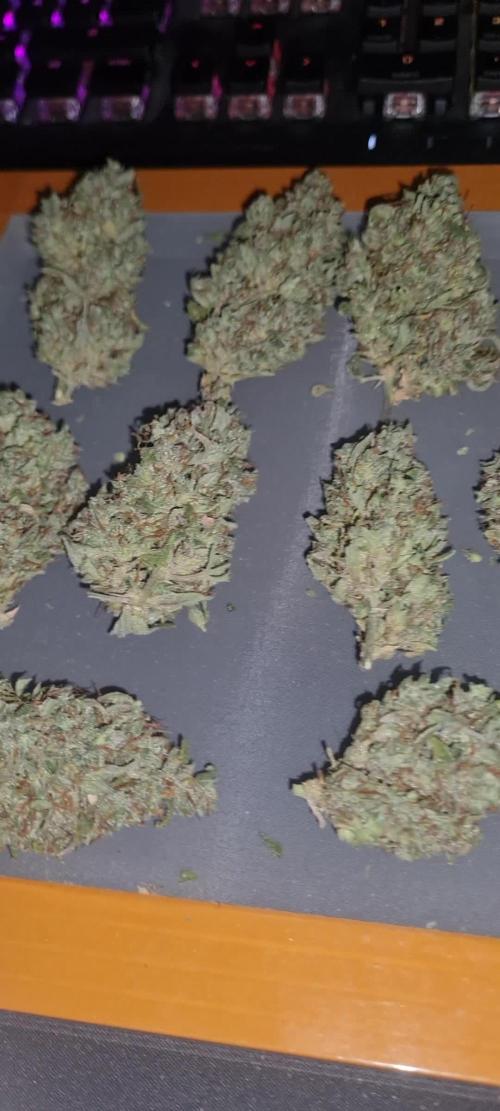
Week 12 - Venom OG and an unknown seed strain.
Tap water and Espoma Bloom full dose - 18hr light schedule
At this point I learned that I need to really make more use of my area for my plants by fiming, LST, SoG, etc.... I plan to try to monster crop the Venom OG and try to get some different results. It's not an auto-flower plant so I'll have some time to veg it to the way I want to see it before it gets too big.

Processing
Likes
16
Share


@Joehydro
Follow
Finally starting to smell that heavenly smell and seeing budlets exploding everywhere. Both girls were defoliated a little at a time over the past week to expose any prime bud sites. So far both strains have been lovely and easy to grow as long as Nutes are fairly light. Will keep updates through the week and as always happy growing everyone!😊🤙
Likes
1
Share


@InsideAz
Follow
Not much growin on this week just watering and letting them grow.
No smell yet
Increasing light to 80%
Nutrients in previous week and next week


Likes
55
Share


@w33dhawk
Follow
10.05.21 Anfang der 7. Woche alles läuft ganz gut hab heute wieder gegossen für jede Lady 4,5 l wasser mit Zusätzen bis auf lady #2 die hat nur green sensation bekommen da sie den anderen voraus rennt mal schauen was diese Woche so bringt......
11.05.21..................................................
12.05.21 hab es gestern leider nicht geschafft den Bericht zu aktualisieren hab aber auch gestern nix an den Pflänzchen gemacht hab heute mal ein paar buds fotografiert und das erste mal geprüft wie fest die buds sind also gelato 41#2 ist wie ein Felsen die anderen 3 Ladys sind eher fleischig aber dennoch fest (fast wie ein Hüft steak Medium rare) sieht auf jeden fall viel Versprechend aus und der Duft an den fingern nach dem prüfen, ein hauch von zitrone trifft auf leichte Minze mit cremiger Dunst note schon ziemlich geil muss ich sagen freue mich schon drauf wie ein kleiner junge auf sein Eis......
13.05.21..................................................
14.05.21 hab mich dazu entschieden nur noch alle 2 Tage was zu posten ab jetzt passiert nicht mehr viel sie wird nach und nach fetter und die trichome sind zum größten Teil milchig werde Sonntag die Spülung beginnen das währe dann Tag 57 nach flip und somit tag 49 der blüte, demnach sollte ich an Tag 63 fertig sein plus 1 bis 2 Tage dann hat sie 9 Wochen blüte hinter sich und 10 Wochen 12/12 der breeder selbst gibt an 7 bis 9 Wochen flower sollte also hin hauen die Angabe bin gespannt wie sie am Ende aus sieht. Werde Sonntag mal versuchen die trichome zu fotografieren aber mein kleines Taschen mikroskop zu fotografieren während ich es an die Blüten halte is etwas kompliziert für mich hab einen ruhe tremor fehler sprich ich zitter sobald ich etwas mache was mit fein Arbeit zu tuen hat, nicht stark,aber ein Bild machen is da schon schwer, werde es Sonntag versuchen an meine Kamera vom Handy zu kleben mit Maler crepp und dann mal schauen ob es einiger maßen klappt.....
15.05.21.................................................
16.05.21 so liebe growmies und canna begeisterte heute war der Tag der Spülung hab jeder Pflanze 22,5 Liter Wasser verpasst so das eigendlich fast alles an Dünger und Zusätzen raus sein sollte die Suppe die am Ende unten raus kam war fast komplett klar wie wasser sein sollte. bitte schimpft jetzt nicht mit mir das ich so hart flushe, ich hab mir gefühlt 1000 blogs durch gelesen von Zamnesia bis royal queen über Humboldt usw. Zum Thema flush und da gibt es ja echt viele Möglichkeiten wie man das ganze angeht der eine giesst normal weiter halt nur mit Wasser der nächste spült mit doppelter Menge von gewohntem giessen und wiederum andere stellen die Pflanzen in die Dusche und spülen da eine ganze Badewannen durch die Erde. War mir da einfach nicht mehr sicher wie ich das am besten an gehe und bin halt am ende auf die idee gekommen wenn das wasser gut klar ist Dann Sollte doch gut gespült sein hoffe ich zumindest in ca 14 tagen hack ich die Ladys Dann ab ihr könnt euch gar nicht vorstellen wie ich mich auf den Tag freue wenn ich schneiden darf ist wie Geburtstag und Weihnachten auf einem Tag........

Processing
Likes
8
Share


@4F1M6
Follow
I started germination of this Gold Bar Kush bean on 29/12/2020. I pre moistened my rockwool cube with ph balanced water to 6.4. Made sure the plug was just damp and not soaked. Using a small wooden dowel I increased the size of the plugs pre made hole. Than I sowed my bean into the hole. Ripped off a small piece of rockwool and mulched it up. Lightly filled the hole in with the mulched rockwool. Than stuck the plug into a misted humidity dome, to complete germination.
Shouldn't take anymore than 4-5 days to see a sprout. Once I see some cotlydon leaves bursting to the surface. I will get the plug planted into a 1 gallon pot. Plus get this lady situated into her new home. Cant wait!
Some background information on my first run with GBK. It's a VERY robust variety packing hella branches, hella quick. Prime candidate for continues ongoing lst work. To maintain a clean,uncongested even canopy. She can become a jungle quick if left untamed. Shes very easy going in the nutrient department. Not hard to keep this one happy. Packs on lots of weight everywhere towards end of flower. Branches most definitely need some support or they will come crashing down.
The flavor and aroma from this variety sre majestic. The intense indica effects are heavenly. Not hard to guess why it's back in the grow room for round 2.


